
2025 in Review: Autonomy, Cybersecurity, AI and Startups – with Ben O’Brien
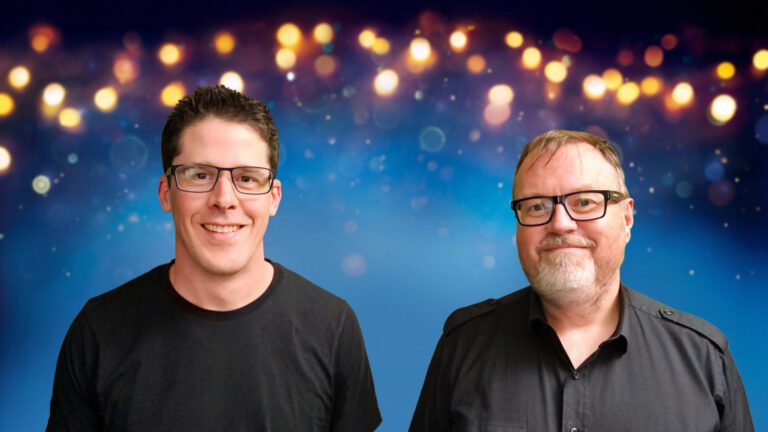
Hear from Paul Spain and Ben O’Brien as they unpack the latest tech news including NZ Police’s redaction glitch, a new Government Digital Delivery Agency, smart TV privacy concerns, James Powell’s transition from Dawn Aerospace and Waymo’s outage pause and the future of autonomous vehicles. Plus, Ben O’Brien shares insights from his upcoming book for founders. A must-listen for tech enthusiasts and entrepreneurs!
Audience Survey – December 2025 – NZ Tech Podcast We’d love to get your feedback, please fill in our short survey and go into the draw for some great tech giveaways.
Read the full transcript
Transcript is computer-generated and may contain errors.
Paul Spain:
Hey folks, greetings and welcome along to the New Zealand Tech Podcast. I’m your host, Paul Spain. And great to have Ben O’ Brien joining us for the first time. How are you, Ben?
Ben O’Brien:
Great. Really great to be here, Paul.
Paul Spain:
Yeah, look, fantastic to have you joining us for this, our virtually Christmas Eve episode.
Ben O’Brien:
In fact, Christmas Eve Eve.
Paul Spain:
We’re recording on Christmas Eve Eve, but a lot of people will probably be listening in Christmas Eve, the audio tends to go up a little bit later than the live stream, but obviously folks will catch the live stream and so on as well. Maybe you can introduce listeners to where you fit into this big wide world of tech entrepreneurship startups.
Ben O’Brien:
Awesome. Yeah. So my name’s Ben o’. Brien. I’m an engineer. Originally I did a Bachelor of Engineering and mechatronics and a PhD in bioengineering. 2012 I started a company called Stretch Sense. We were focused on making super soft stretchable sensors for measuring human body motion.
Ben O’Brien:
I was co founder, senior CEO for about 11 years. Stepped down a couple of years ago. These days I’m working on writing a book on entrepreneurship that explores really hard situations that entrepreneurs find themselves in. And I’m also mentoring founders who want to start companies or have recently started companies.
Paul Spain:
Fantastic. Now I should just mention it while you talk. You’ve mentioned you’re writing the book.
Ben O’Brien:
Yes.
Paul Spain:
For folks who are interested in Ben’s book. We will mention this again later, but bottomofthecliffbook.com yes, is where you can actually go to register interest if you’d like to hear about that.
Ben O’Brien:
Thank you.
Paul Spain:
When it comes out. Is that right?
Ben O’Brien:
Yes, that’s exactly right.
Paul Spain:
Now, big thank you of course to our show partners, to One NZ, 2degrees, Spark, Workday, and Gorilla Technology for keeping us streaming and on the air. All those sorts of things. And a little reminder, or if you haven’t heard it before, we are doing a little survey and giveaway at the moment. This gives us a bit of your feedback so we can look at what can we do to improve the New Zealand tech podcast. You can complete it probably in about 60 seconds depending on if you want to write a whole lot or whether you just want to tick a few boxes. So really quick and easy and we’ve got some giveaways there. One NZ Warriors Jersey Logitech CASA pop up desk, which is a little portable kind of keyboard, trackpad and stand for a laptop.
Ben O’Brien:
All in one.
Paul Spain:
All in one that just. It’s about the size of a. It’s small and light but sort of similar form factor to a laptop and then you just fold it all out and it gives you a nice laptop stand. It’s very cool. So there’s a couple of those. The Logitech keys to go to, which is a portable keyboard you can hook onto your phone if you need to do some serious typing without having a laptop with you. And the Motorola Edge 60 fusion smartphone. So some very nice things in there.
Paul Spain:
If you would be so kind as to complete the survey. And the other thing it does for us is when we’re, I guess, keeping in touch with our partners and when new partner inquiries come in, it’s helpful for us to have a few data points on who our listeners are. So there’s one or two things in there as well that help with that feedback. And ultimately, if we have more partners and more sponsors, we have more money to invest back into the show. So good for everybody. All right, and that is at nztechpodcast.com/survey. All right, let’s jump in. So starting on the.
Paul Spain:
The New Zealand front. Interesting and concerning to hear around the police in New Zealand leaking some, what looks like reasonably, you know, critical data in, in relation to, you know, various cases. They, you know, they regularly will send out criminal case files to lawyers. But you can imagine in a criminal case file there will be names and details that, you know, must be redacted, right? You know, very serious information. If someone who’s made an anonymous, you know, complaint to police, their name, yes, of course that’s gonna be documented in the files. But if that makes it through to not great criminal, then that is, you know, potentially serious. You know, these are the sorts of things where, you know, in years gone by there, I think plenty of cases around the world where people have disappeared or what have you in the most serious circumstances. So, yeah, it’s shocking to hear that New Zealand police had a window there of about two weeks where their, whatever their approach to redaction was, was, was not.
Paul Spain:
Was not working correctly. It reminds me of a scenario we saw with a client some years ago, and they redacted some documents and asked us to help them publish those documents. And we were aware that some people did a form of redaction that was like blacking out the text that you don’t want to get to, you know, you don’t want to be seen without recognising that with a PDF, you could just highlight the text behind the black and copy and paste it out. So I’m actually incredibly familiar with the fact that these things can go wrong. But for the police to get this wrong I think is very, very serious. How do you feel about this, Ben?
Ben O’Brien:
Yeah, I think there’s an interesting lesson in. Okay, first of all, I feel terrible for anyone that’s been affected by this. And also I’m sure there was some IT manager that got the worst phone call of their life when this went wrong. But I think the interesting lesson is as we move to automate more and more systems, I noticed in the articles that there was some kind of disclosure infrastructure, some piece of software that was responsible for it. What you’re doing is you’re taking away the ability for people to just see and check with their common sense and their experience of is the system actually working. So if you go back 50 years when there was a piece of paper and someone had to physically cross it out, the person posting that information out, they would have had a pretty good idea of whether it was being properly redacted or not. You’ve got humans in the loop checking the quality of systems, but as things become more and more automated and as it just becomes like click a button, send file to all, or what have you, all of a sudden people are actually removed from the point of service delivery. And that means that problems like this can get massively inflamed or exaggerated compared to the damage that could have been done in the past.
Ben O’Brien:
And so I think it’s like a really interesting challenge for organizations. I’ll give you an example. We put in place once upon a time, a customer support line where customers could send in tickets. Right. This is stretch sense. Yeah, yeah, yeah, exact, exactly. Many years ago, probably like 10 years ago almost. And then one of the things that happened was there was some mistake so that support tickets were just getting lost into a void.
Ben O’Brien:
If you have an automated system like that that’s failing, but nobody has visibility on it anymore because you’ve changed from ticket to email inbox to person looking at it to just straight into JIRA or whatever, whatever system you’ve got problems don’t get seen and they can run amok and you have huge problems. So yeah, I guess to me this is a cautionary tale. I’m sure there’s lots of details, but from a distance, a cautionary tale about the dangers of automation.
Paul Spain:
Yeah. Now, also on the New Zealand front, heard today via LinkedIn that James Powell, who is co founder at Dawn Aerospace, has exited the business after eight years there. And it looks like he’s moving on, you know, fairly swiftly into a new role, which no doubt we will hear about in the not too distant future. So yeah, it’s quite a, quite a big deal. You know, I think Dawn, Dawn Aerospace is probably, you know, our most well known aerospace company behind, you know, behind Rocket Lab. You know, what, what, what they’ve done and what, what James has achieved there, you know, with, with their space plane and all the other things they’ve got, with you know, environmentally friendly propulsion technologies and so on that they’ve got out there in space, you know, right now.
Ben O’Brien:
And really cool promo videos too.
Paul Spain:
Yeah, yeah, always awesome. Right? So, yeah, so a bit of a, bit of a changing of the guard I guess with James leaving his brother Stefan Powell still the chief executive there. And of course, you know, we’ve done some podcasts with him over the years for folks that are curious to learn a little bit more about Dawn Aerospace. Then we do have New Zealand tech podcast and New Zealand business podcast episodes, sort of. Yeah, delving in there into Dawn Aerospace. James remains a significant shareholder and it’s gonna be really interesting to follow what dawn has over the years ahead, but also what James gets up to in whatever he’s had his arm twisted into doing or whatever new thing that he’s involved with. So yeah, really it’s so exciting actually just to see New Zealand’s growth in the world of aerospace. Also on the aerospace front, we saw Rocket Lab for the first time hit a market cap which in New Zealand dollars of over $70 billion, which is an absolutely astounding.
Ben O’Brien:
70 billion astounding number.
Paul Spain:
And you know, this is ahead of them launching Neutron and a whole lot of other things ahead. Obviously off the back of some pretty big news there in terms of a very large US Contract, the Space Force. There’s alongside some, some really big, you know, US Defense contractors who who have also, you know, won similar sized contracts. So yeah, very exciting time for, for aerospace. They achieved 21 launches this year. So last year was, was 16. So really? Yeah, that’s a pretty sizable. It’s crazy, you know, step, step up.
Paul Spain:
And Yeah, I imagine 2026 is going to be a really exciting year for them. Continuing to focus on some pretty big challenges, but pretty exciting for New Zealand. And I’ve probably mentioned it before, but just in case I didn’t, Rocket Lab’s book is out now and is a great Christmas present either for yourself or someone else. It’s called the. The Launch of Rocket Lab. Fantastic book and authored by Peter Griffin, one of our great tech journalists and podcasters here in New Zealand. So yeah, really encourage people to get their hands on that if you can. What I like about this book is it covers the 20 year journey of Rocket Lab, but it’s kind of a zoom in on startup life.
Paul Spain:
And, you know, there’s just so much kind of packed, packed in there that I think anyone who has any interest in tech and startups, in aerospace, in entrepreneurship, you’re gonna enjoy picking it up. And because Rocket Lab themselves have been involved, it is absolutely packed with pictures from that journey. And going back to Pete in his childhood, I think there’s. And earlier years before he started Rocket Lab, there’s one with him on a bike that’s rocket powered that I think back when he’s a youngster in Invercargill or something. So there’s lots in there.
Ben O’Brien:
I mean, I think the thing that’s both these two stories, the Dawn Aerospace one and the Rocket Lab story, the thing that’s most exciting is you can see multiple generations of founders and companies recycling into the ecosystem, whether that’s through talent or money. And I can remember going back again 15 years, people were saying, hey, we just have to kickstart the ecosystem, we have to get it going such that people can have their experiences, have their lessons and then bring them back. If you look at mature ecosystems, that’s what happens. You just get this recycling effect. It just makes me really happy to see this starting to happen, this flywheel of success. Yeah.
Paul Spain:
Oh, it’s, it’s so good. So good. And then also on the New Zealand front, we’ve got news of government, you know, formally announcing that they will centralise digital investment and procurement by the launching of the government Digital Delivery Agency April 2026. That will sit under the Public Service Commission, centralizing their IT investment and procurement. They’re talking around expected savings of 3.9 billion over five years. That’ll help modernise services, reduce duplication and improve efficiency. So, yeah, this is something that Minister for Digitising Government, you know, Judith Collins, is, I guess, pushing and making happen these things. I always find them fascinating because you can look at them and you can see, wow, there’s a bunch of benefits, but there’s usually a bunch of challenges as well.
Paul Spain:
And I’m sure some of those listening in there will be some that will be concerned around aspects of, well, you centralize too much. Does that mean that, say, some of the smaller players get less visibility? Does it slow? Certainly certain things down. And this idea that, you know, that Minister Collins has highlighted, there was a comment in one of the news release, said taking a centralised approach to digital investment and procurement could save up to 30% on the projected $13 billion technology spend across the public sector in the next five years. This means the, you know, potential savings of 3.9 billion. You know, that’s quite a, quite a large chunk. And so, you know, interesting to delve into. Well, where does that 30% come from? Because there isn’t usually necessarily sort of 30% margin and probably most of the things that they’re buying that’s sort of spare and available, but there can be varying efficiencies and, and so on. But yeah, it will certainly, I’m sure, lead to some pain for some out there as well.
Paul Spain:
So happy to hear from anyone. Always interesting to hear feedback. So feel free to share any thoughts on that if there’s any insights as a listener that you want to share. Any immediate thoughts come to mind for you, Ben?
Ben O’Brien:
Yeah, I think this is something that has peril and opportunity. So I think the peril is like you say, you could freeze smaller players out. Potentially the deal just goes to one big tech contractor and that’s done. You’ve also got centralization of all services under one system means that if that system fails, it’s not just the police that has a problem, it’s like the whole country has a problem. So this is a huge peril. I think there’s opportunity though. If you look at like, I think pharmac, for example, is one of the crown jewels of the New Zealand government system. It lets us negotiate, get good drug prices, punch above our weight and all that.
Ben O’Brien:
And I think centralization gives you an opportunity to get muscular with offshore vendors if need be. I think also if you think about like data sovereignty and who controls the systems of government, it’s also an opportunity to fix some of those issues. Like, I know you have to play with the world, right? New Zealand’s an open trading nation, but we also should make sure that core capable infrastructure is managed and owned by ourselves because that’s part of being a sovereign nation. So I, you know, without looking into the details, I think there’s peril and opportunity and it really depends how it’s managed whether we get to one or the other.
Paul Spain:
Yeah, look, I think there’ll be probably a bit more discussion on this one, you know, over time. Now onto sort of the global front. One, I guess, story that caught my attention was reading about TV manufacturers getting caught in Texas. So it’s the state of Texas that has gone after them now for taking screenshots across five manufacturers. So this come from the Texas attorney General, you know, suing five manufacturers. So Sony is in there, Samsung, LG Hisense and tcl. So, you know, the biggest, you know, names are right there. This also comes after there was a bit of a backlash, I know, in recent weeks around a partnership between Microsoft and lg, where Copilot’s being pushed onto the Copilot app, being pushed onto LG TVs without any direct consent from the owners of the TVs or even an ability to uninstall the Copilot app.
Paul Spain:
And, you know, and now we’re hearing that, yeah, they’re basically using what’s called automated content recognition technology to capture what customers are watching at a given moment. And it’s able to. Well, yeah, according to the filing, they’re able to take screenshots to a second, so every half, half a second to understand what a user is watching in real time and then send that back to the TV manufacturer without any, you know, explicit consent from the. From the end user. And, you know, of course, you know, TEVs aren’t just watched, used to watch TV. You know, some people will be having business meetings on them, teams meetings, you know, I mean, these things get used at all levels of government, business, you know, and so on. Right. And yeah, people will share their private content onto their TVs.
Paul Spain:
So this definitely. I’ve sort of was somewhat flabbergasted that these names that we trust, the likes of, say, Samsung and LG and Sony, who are really, really big names that have been around for a long time, and you would think, well, these are really trustworthy companies in a general sense, are being pulled up for this. So obviously he hasn’t gone to court yet. We don’t know exactly what is and isn’t true, but it seems like a real shocker to me.
Ben O’Brien:
I mean, I just think the concept of a smart TV is just blows my mind. It’s like you go to buy some curtains and the curtain company comes and they install the curtains and you’ve got them all nicely hung up and then they leave and there’s this guy standing in the corner of your bedroom and you’re like, well, who’s that guy? Oh, that’s Jim. He comes with the curtains. He’s there just to, like, help you open and close them. If you don’t like anything about the curtains, he’ll report back to us who feeds him. Oh, we’ve got people who feed Jim. He’s just gonna stand in my bedroom? Yeah. It’s like, that’s how I feel about smart TVs.
Ben O’Brien:
Like, I went to buy one, actually did buy one, about two, three Weeks ago. And the sales guy didn’t understand when I said, I do not want a smart TV because all their TVs like, smart this, smart that. And he was like, why? And I’m like, well, think about it. It’s listening to your conversations. So do I want something listening to my conversations in my living room? No, I do not. On top of that, these companies, you buy a TV for $1,000 or something, so their margin’s what, 50 bucks? Because it’s like a high volume, low margin play. So are they going to pay an army of software engineers to update the apps for the next 10 years? No, there’s no possible way they can do that. So what that means is it’s this unpatched hole into my local network because it’s talking, so it’s listening to everything I say.
Ben O’Brien:
It’s an unpatched hole. On top of that, you’ve got the stalker stuff in Texas, which is just insane. And then you’ve got the AI stuff being forced upon you. It’s like, really is like this dude who comes with your curtains. And then anyway, he said, well, fine, you can turn off the WI fi and then the TV won’t communicate outside. Yeah. So I was like, okay, fine. So I bought a TV and very happy with it and installed it.
Ben O’Brien:
And then it was kind of funny. Like, a couple of days ago, my son comes down and he’s eight, and he says, dad, I can’t get Netflix to work on the tv. And I said, oh, don’t worry about that. I’ve turned off the WI fi so the TV won’t work. You have to go through the Apple tv. He said, oh, no, don’t worry. I turned the WI fi on, dad. And so he’s like, I’d gone to all this effort to keep it clean, and then my son just.
Ben O’Brien:
You just put a hole in the system. So anyways, we’ve had a chat about proper security with them, and it’s all good.
Paul Spain:
Yep, it is. Actually, you know, it’s a good time. You know, when, you know, children are growing up, there are lots of opportunities to chat through.
Ben O’Brien:
Oh, yeah.
Paul Spain:
You know, the risks of, you know, from a cybersecurity and data privacy perspective, all the varying things. And yeah, I remember being. Being in the mall with my son, who’s a fair bit younger, and, you know, we were in a big china. Something like Wood calls, and he’s like, dad, they’re running Windows 7. You know, this is a cyber security problem. I was like, perfect, go, sir.
Ben O’Brien:
You’ve Succeeded.
Paul Spain:
So, you know, they do, they do pick that, Pick things up pretty quick. Yeah. So I think this will be a really interesting one to watch and to see, you know, is what Texas have called out actually happening? And if it is, then. Well, kind of regardless of if it is, I think that we need to, you know, step up in New Zealand our data privacy regulations. Although what we’ve got is reasonably new. There’s, you know, there’s not really any significant kind of teeth to, to the current regulations. Let’s say this is happening in New Zealand. So let’s say everyone listening, if you’ve got one of those TVs in your home, let’s say it is pushing data out.
Paul Spain:
That’s screenshotting. Well, maybe, maybe not, but. Yeah, how would you feel about that? And what would be an appropriate, you know, level to, you know, to compensate for that? And I think obviously depends on each. In each person’s case, if you’re just watching normal TV and it’s completely anonymized and it doesn’t link back to you, but if you’ve had confidential, you know, family photos, whatever else it is, you know, you’ve. You’ve projected, you know, confidential stuff onto. Onto your TV and that’s got caught, kind of caught up in it. I don’t know how you, you know, how you make that right with people. So I’m sort of surprised actually that this particular story hasn’t had a whole lot of media attention.
Paul Spain:
But we will follow it with interesting. Yeah, Waymo and power outages in San Francisco. You followed this one as well. The basic situation is a blackout in San Francisco. That meant that traffic lights weren’t operating in parts of the San Francisco area. And what that led to in the case of San Francisco, where you’ve got all these Waymo Robo taxis driving around with no drivers, is there were bunches of them just stalling and freezing up. And I remember seeing, you know, seeing a Waymo that had. That got a bit stuck when I was in San Francisco and trying out a bit of tech on the road there.
Paul Spain:
And I hadn’t seen that before. I hadn’t seen one get stuck. But this was sort of next level. If you looked at some of the videos online, like, if you’ve got enough vehicles that are just freezing up, then you create, as you say, gridlock situation, which is, you know, it feels like some sort of, yeah, crazy future. But actually this is the world we’re in now. Actually. I remember seeing some footage from a movie that featured a whole lot of Tesla vehicles that were being autonomously controlled or that had been supposedly autonomously controlled but they had all, you know, they’d all just stopped, you know, where they were. So I guess this is the world where we’re moving into, where these are the sorts of possibilities.
Paul Spain:
Also saw some concerns coming out of the uk. Yeah. Reasonably recently around vehicles coming from parts of the world that the UK might not be quite so friendly with and highlighting that those vehicles can be remotely disabled.
Ben O’Brien:
Totally.
Paul Spain:
And so what would be the consequences if. Let’s just say, you know, China and the UK or US uk, you know, whoever’s making vehicles delivered to the UK market is not getting on so well. An extreme scenario could be alright, we’ll freeze up your fleets of cars like this, but potentially on a much, much larger scale in the future.
Ben O’Brien:
Yeah, it’s funny you say that. I recently got a home solar system and all the different components come with apps and one of the providers could do everything all in one and the other provider would do different, essentially different companies that focus on different parts of the value chain. And in the end I went with that partly for this reason was just I figured if all these different systems have to talk to each other, then it means the chance of one system taking it all down. Whether it’s cause there’s been some third world war or just because a bug got into the system, you’ve kind of got some protection. And I think same thing with the Waymos, right. Like it was traffic lights going out, but it could very easily be a software bug or it could be a nation state that’s grumpy at another nation state or it could be just any one of a whole bunch of other problems. And if we’ve put all our eggs into one or two baskets, we become very vulnerable. Like it’s.
Ben O’Brien:
It doesn’t take World War three to trigger that. It can just be human error, which is a scary. But it’s also, I should say I’ve been in the Waymos and they are fantastic. Like it’s is definitely an incredible experience. This is like, you know, as you rush towards a cliff, the view keeps getting better kind of situations.
Paul Spain:
I just looked up that, that movie as the. It was a 2023 movie, Leave the World behind, described as an apocalyptic thriller featuring a prominent scene where a fleet of self driving Tesla vehicles are hacked and forced to crash into each other on a highway, creating a massive roadblock. So yeah, it is kind of odd when you see elements of fiction, you know, become real in one way or another.
Ben O’Brien:
I mean Wait till we all have humanoid robots and that happens. That’s going to be super creepy.
Paul Spain:
Yeah, that’s too creepy. It’s freaky. But as we’re kind of, you know, almost at the end of the year here, there will be an episode actually that’s been pre recorded for next week and over the break. So if you are wanting to kind of keep your, you know, keep updated on the tech front, you will find some good content. But looking, I guess looking back at 2025 and you know, what’s been happening in the autonomous, you know, vehicle front. Cause this is I guess a front we don’t talk about quite so often these days. But it was certainly a huge fascination for a while, especially when Tesla were promising all the time for a. Which I guess they still are, their autonomous vehicles and robo taxis.
Paul Spain:
But that just got a little bit long in the tooth because they talked about it for so long and didn’t quite deliver. But I mean this year we have had the full self drive capability launched in New Zealand. However, those who maybe paid for a vehicle six years ago, like myself, are the suckers because at this stage the FSD full self drive sort of supervised software only works on the latest hardware.
Ben O’Brien:
Yes. Need all the fancy sensors at the moment.
Paul Spain:
So there’s a little bit of a no go there. But it is cool that you can try that technology out in New Zealand. You can go and visit Tesla and, and you know, test drive that tech. So definitely fun, fun to do if you haven’t had a go with that. But also some or continued sort of innovation I guess from Kiwis that are involved in this sort of, you know, autonomous vehicle world. But before we jump into that, before you were talking, Ben, before we started the stream around a Kiwi project that goes back quite a few years that I hadn’t, I certainly don’t remember hearing about.
Ben O’Brien:
Yeah, no, it was just a shout out, just talking about the history of Waymo. And that came out of something called the DARPA Grand Challenge originally which was DARPA’s Defense Advanced Research Projects. I think it’s a US government thing where they put money into prizes for companies to try and solve problems for the military. And this particular one was self driving cars. And the Waymo team famously came out of Stanford. Their car Stanley successfully drove through, I think it was the Nevada desert, I believe I might have my desert.
Paul Spain:
It was quite a big hike that they had to do, wasn’t it?
Ben O’Brien:
Yeah, like 170 miles, something like that. And it was, yeah, very famously on the second pass through that it successfully did. I think the first time the car that got furthest was like 10 miles, something like that. But anyway, there was a New Zealand team, they started a company. I was very, very, very, very tangentially associated as a student but full credit to them, they started a company called Inro that was originally a team that entered the DARPA Grand Challenge and then Inro was focused on warehouse automation and Focus forklifts. I think it was eventually sold to Crown and really, really great team, great guys. I think you looked it up and it was around 2007 when they exited. But it’s a great example of a Kiwi success story.
Paul Spain:
Yeah, Incredible. Goes back 20 years and yeah, most of us had never heard of it.
Ben O’Brien:
No, they’re awesome guys.
Paul Spain:
That was really cool. Also some Kiwi kind of connections. So a couple of the big, the big players in the world of autonomous driving have very strong Kiwi connection. So Nuro who we have an interview with him on the co founder Dave Ferguson on the New Zealand business podcast. That’d go back a few years but really fascinating. Listen. So yeah, co founder Dave Ferguson this year his role has changed. He’s now co CEO as well.
Paul Spain:
They have raised a Series e funding round, $203 million and currently have a valuation coming in at about US$6 billion. So yeah, quite, quite an achievement on the, the funding front. But also in terms of their achievements, they’ve been partnering with Uber and Lucid on what they’re titling a global robo taxi program. And you know, of course companies like Uber have, you know, have more than one partner when it comes to this, this type of technology. They’ve announced California Bay Area as their first market for that program. But we’ve seen their tech being widely tested and they’ve been getting data in varying places as well. I think 200 cities across the US their tech testing and training and demonstrations have reached out internationally. So they’ve got video footage online of the Neuro autonomous technology being used in Tokyo.
Paul Spain:
And yeah, there’s, there’s a, there’s a whole bunch of, you know, bunch of stuff online. They’ve got a really good this year, Neuro accelerated Into the future 2025 video if you’re curious. So yeah, if you, if you Google Neuro Nuro, you have a little bit of a look at that and it sort of goes through some of those highlights for the year. But yeah, really good to see Kiwis, you know, deeply involved in that. And Dave Ferguson was also involved in Google’s Self driving car for quite a number of years before, you know, I don’t know whether it was in the era that it was called Waymo, I think it was probably prior to that. But yeah, very, very, very key talent there. And then we’ve also got waveai, whose CEO and co founder is Alex Kendall, who’s a Kiwi. And Wave AI have announced, you know, autonomous taxis for London.
Paul Spain:
And they’ve been working through, I think it was around mid year they, they highlighted a demonstration of hitting 90 cities in 90 days with their autonomous driving technology. So just testing it, you know, in many, many cities.
Ben O’Brien:
Do you think the engineers.
Paul Spain:
Lots of countries, as I said.
Ben O’Brien:
Do you think the engineers were asked before the marketing team went live with that or do you think it was.
Paul Spain:
Well, that, that, that’s a really interesting point. One of the things that I’ve been noticing lately, and I mean this is a long term trend, is just the difference between kind of a tech led company. Right. And by that I mean someone that’s got all the business now and so on, but is actually deeply technical, like say Sir Peter Beck from Rocket Lab and what that type of firm can achieve and how they operate versus those that have. Maybe there’s less tech expertise. And my understanding is Alex Kendall is pretty switched on these sort of things technically. So it creates a scenario where, yeah, it’s going to be a bit more than just marketing involved, I’m picking. Yeah.
Paul Spain:
But they’ve done some interesting things this year as well and so, yeah, just exciting to see what’s going on and what’s being achieved.
Ben O’Brien:
No, it’s awesome.
Paul Spain:
Yeah. Ben, keen to hear a little bit more about your journey and what you’ve been involved in. We are planning a separate, you know, kind of a full New Zealand business podcast episode to sort of hear more of your story and the full story of Stretch Sense. So, you know, folks will have to sort of hold on for that one, but maybe you can give us kind of a, you know, a short version of the Stretch Sense story and then we can, you know, delve a bit more into other topics on the entrepreneurship and startup front.
Ben O’Brien:
Fantastic. Where to start? So I did my PhD at the University of Auckland in the Auckland Bioengineering Institute. And while I was there, myself and some other people in the lab and our professor, we started selling custom high voltage power supplies. And so this was kind of a random place to start actually, but we had been going to conferences and showing off prototypes to people. And these prototypes required high voltage power supplies, the systems we work with Artificial muscles required high voltages. And so people saw that and they started saying, hey, could you make these supplies for us? And so that was totally market led, totally surprising. We didn’t set out to become high voltage power supply salesmen, but that’s what happened. And so for the Next sort of three years, from 2009 through to 2012, we did, I think we sold about half a million dollars of these things, these little desktop 5000 volt power supplies, plus a few projects on the side of it.
Paul Spain:
And why was there that demand? What was pushing the demand?
Ben O’Brien:
Because there were lots of people interested in the technology. Artificial muscles, they’re basically like rubber bands that would expand or contract when you applied a voltage. So you could make like Ironman power suits or smart prosthetics or soft robots. That was the dream and that is the goal of that research space. But the problem is that if you can’t actually make a working device that operates, it’s useless, it’s academically useless. What we became very good at was taking like, okay, here’s this technology, but how do we make it useful? And that typically involved a combination of things. But yeah, custom high voltage electronics was one of them. And then of course actually designing and working with soft systems was another.
Ben O’Brien:
And so yeah, people found around the world they were very good maybe at the soft materials part, but they couldn’t do the electronics. And so they just started buying from us and we got a reputation. It was all supported by the university at the time. So we had lots of support from University of Auckland and uni services on a shout out to them and also the ABI who gave us space and let us use equipment and all that kind of stuff. So we were well supported by the environment that we were in and we got a taste for it. Honestly, it’s very satisfying to ship a product to someone because you’re solving their problem. And when they say thank you because you’ve completely unblocked their research or you’re enabling them to make a new product or do something great and then they give you money as well as saying thank you, it’s kind of addictive. And so we wanted to set up a business stress sense, kind of the.
Ben O’Brien:
Originally we were going to make a generation energy harvesting company, but we saw more demand from people that wanted to sense soft movement of the human form. So basically measuring how people move, how objects interact with people. We set the company up, focused on that application. It was also low voltage. It’s kind of funny because we built all this capability in high Voltage electronics and then jettisoned it all to go after low voltage sensing systems. And that was the beginning of the company again. We’re going to talk more later, but StretchSense, we went on the full startup journey. So we built a business selling soft stretchable sensor development kits to companies in sports and fitness and consumer electronics and virtual reality industries.
Ben O’Brien:
Basically anyone who wanted to measure and precisely digitize how a human moved. The company went through multiple rounds of funding. We had some big upsets along the way. We had a big contract with a Japanese strategic investor fall over around 2009. So that was pretty hard period of the company’s existence when had to lay off a lot of people, which really sucked. So yeah, full ups and downs. But then recapitalized the business. It was bought out of administration by GD1 Global from day one and a new company was formed and went after.
Ben O’Brien:
So we’d actually learned some lessons along the way. One of them was to try and rather be a component business, to focus on the end user as much as possible and try and actually deliver something where you get to talk to the person who’s actually using the product as opposed to say selling to a business that wants to make a product. So we went after the movie and games industry, specifically helping actors digitize their movements of their hands because hands turns out to be a really great application of the sensor technology. So kind of my claim to fame there is that Snoop Dogg’s worn out gloves we made, which is pretty cool. So there’s a music video you can watch of Snoop Dogg. It’s like a Larry Page homage, which is pretty cool. I stepped down a couple of years ago from being CEO, but I’m still on the board as a director and today the company’s really focused on training. So basically helping solve the global retraining crisis.
Ben O’Brien:
Because of globalization, AI and just generally the rapid pace of technology, people having to learn new skills really, really fast. And so turned out that all our experience with soft sensing and all our experience with digitizing human body motion for the movie industry is absolutely perfect for letting people be present inside virtual worlds. So basically reach out, touch, interact with virtual environments. And those are perfect for, for training people on how to use new like fly vehicles, use equipment, run plant, manage logistics, things like that. So got a really great CEO in there, Great, great sales team focused on going after that.
Paul Spain:
That’s fantastic. And so with this book you’re writing. Yes, the bottom of the cliff.
Ben O’Brien:
Yes.
Paul Spain:
As this is sort of essentially kind of wrapping up all the different learnings you’ve had from your own business and observing and interacting with others in the field.
Ben O’Brien:
Yes, sort of. So I should say off the bat it’s fiction, but maybe I should start somewhere a little differently, which is like, why does the world need another book for entrepreneurs, it’s probably a good place to start. And I kind of have three observations when I look at the literature out there. So the first is most books for entrepreneurs focus on best practice. So they say, here’s my story, here’s what went wrong. Or maybe I studied some other people and here’s what went wrong, here’s the lessons I learned from it, and then here’s my plan that you can follow so that you don’t make the mistakes I did and you succeed. Right? That’s best practice. Here’s best practice.
Ben O’Brien:
So the problem with best practice is that real business people, real founders, real entrepreneurs will make horrible mistakes. You just make horrible mistakes and then eventually everything goes wrong because of those mistakes. And the problem is, in that moment, being told what you should have done differently 18 months ago is too late. It’s not wrong, but it’s too late. Right? If you have to lay off most of your team cause you’ve run out of money and lost the faith of investors and everything’s gone wrong, being told that you shouldn’t be in that situation and that two years ago you made some bad business decisions and is just too late. Right. So that’s kind of one thing. Best practice is too late.
Ben O’Brien:
You need to deal with situations as they are, where they are. My second kind of core observation is most advice for entrepreneurs isn’t from the entrepreneur’s corner. It tends to be written from either the perspective of professional investors and professional investors. Nothing wrong with professional investors, but they’re trying to optimize value across a portfolio, so they’re trying to create value across 10, 20, 30, 40, 50 companies. Whereas you’re trying to optimize value in a single company and the decisions you would make, the risk profile that you would take, and the investments in time and effort are just different. It’s different running a good company on its own from running a company in a portfolio. And so there’s nothing, again nothing wrong with being a professional investor. But if you as a founder don’t realize that perspective and where that coming from, you’re going to run aground, you’re going to have problems.
Ben O’Brien:
The other variant of not being in the entrepreneur’s corner is a lot of it’s written by successful founders, people who have succeeded, they’ve Exited, they’ve retired, what have you, and they go and whitewash history. They go and tell the story that they want to have told. And so that’s kind of the second thing. And then the third thing is running a business for the first time is this profoundly challenging emotional journey. And like the level of professional mental development that you go through, going from nobody to running a team, all the ups and downs, all that’s huge. And most books out there either focus on the emotional mental health part or they ignore it. But real problems are at the synthesis of the two. Real problems are this complicated mess of feelings and emotions and people and leadership and actual business problems and maths and logic.
Ben O’Brien:
It’s just this mess. And so anyway, I wanted to write a book that addressed those three problems. It explores tough situations that occur all the time in startups, but from the perspective of where you are as you are. So no preaching to you about best practice. It’s in your corner. So it recognizes your personal risk profile, what you’re trying to achieve as the founder, and it doesn’t shy away from the complicated, tangled mess of emotional problems. And just like business problems that face founders.
Paul Spain:
Yep, sounds good, sounds good. How far away are you thinking until it’s. I don’t know, Is it a 2026?
Ben O’Brien:
I think so, yeah. So there’s a wait list. So thank you. Bottomofthecliffbook.com so you can go, anyone can check that out. I’ve written a first draft and I’m about half the way through the rewrite now, so I hope middle of this coming year.
Paul Spain:
Yeah, yeah, that’s great. Oh, just one thing I’ll flip back to on that last topic we were Talking about wave AI, the 90 cities was earlier on in the year, they actually expanded that to 500.
Ben O’Brien:
Fantastic.
Paul Spain:
And so that was kind of their latest achievement and they’ve done a bit of a wrap up for the year blog post as well, talking around training data and yeah, all sorts of fascinating insights. So I know there’ll be a few people here that would quite like to sort of delve down these rabbit holes a little bit more. And yeah, so go and have a look at the Wave AI website or the Neuro site to learn a little bit more about how they’re going and I know some listeners will probably be investing in some of the companies that you can invest in and we’ll be curious to understand the broader landscape. So it might be useful.
Ben O’Brien:
Very interesting.
Paul Spain:
Yeah, well, that’s us for this episode. It’s been really great to have you Join the podcast for the first time. Ben, I know it’s probably quite a few years since we first met and I came out, visited you at Stretch Sense and so on. Certainly the show runs a bit more smoothly in terms of booking guests and coordinating things. Thanks to having some sponsors, having Jo-Ellen, our amazing producer, we’re definitely headed in the right direction. And yeah, we’ll look forward to scheduling something in and having a broader chat. Sounds great in 2026. So, yeah, thanks for joining the show.
Ben O’Brien:
Thank you for having me.
Paul Spain:
And of course, a big thank you to those show partners to Workday, Gorilla Technology, Spark, 2degrees and One NZ for their support. And of course, another reminder, please complete our survey if you haven’t already. nztechpodcast.com/survey, you can do it in 60 seconds or you can spend a bit more time on it, but it will help us improve, improve the show. And there’s some really, really cool giveaways in there as well. So thank you to Motorola, Logitech and One NZ for prizes that they’ve shared. And that will be wrapping up, I think, early in the new year. Now’s probably your best chance to get in. And a reminder that most listeners don’t get round to doing this, so the odds are actually pretty good if you fill it out.
Paul Spain:
So, yeah, excellent. All right, thanks, everyone. Don’t miss out on those episodes that’ll be running through the break as well, but we’ll be back into live episodes the second week of January. Good stuff, and thank you, Ben, for joining us.
Ben O’Brien:
Thank you so much.
Paul Spain:
Cheers.