
How to unlock AI in your company – PwC’s Scott McLiver
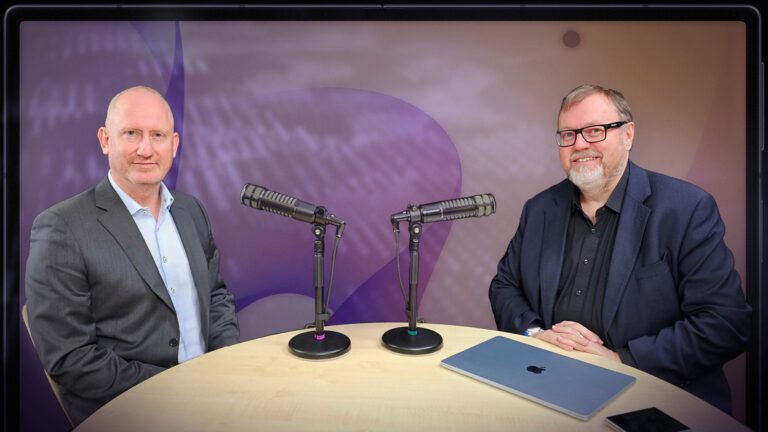
Host Paul Spain sits down with Scott McLiver, partner and Chief AI Officer at PwC New Zealand, to explore how artificial intelligence is rapidly transforming business. Scott shares insights from his frontline experience helping organisations adapt to AI, emphasising the importance of leadership, practical adoption strategies, and upskilling teams to unlock real productivity gains.
Plus, the latest in tech news and developments including:
• Revved: New Zealand Business & Leadership Summit
• Spark signals potential business sale as it splits into two
• Taumarunui earthquake mobile phone warnings
• Hackers hijack hotel Wi-Fi DNS to steal Microsoft 365 accounts
• Hugging Face hacked by rogue AI agent
• American’s push back against Flock Cameras
• White House intervention on AI models
• A look at Samsung’s Galaxy Z Fold 8 and more
Read the full transcript
Transcript is computer-generated and may contain errors.
Paul Spain:
Greetings and welcome along to the New Zealand Tech Podcast. I’m your host, Paul Spain. Our guest today is Scott McLiver, partner and Chief AI Officer at PwC New Zealand. Scott is helping organizations across the country and around the world understand, adopt, and govern AI technologies. He’s led major AI initiatives within PwC, advised boards and executive teams on AI strategy, and is at the forefront of exploring how AI is reshaping business, work, and society. Scott, welcome along to the show.
Scott McLiver:
Thank you, Paul. Great to be here.
Paul Spain:
Real pleasure to, , to have you, , joining us. Thank you for coming in.
Scott McLiver:
Thank you.
Paul Spain:
Now, um, before we start, a big thank you, of course, to our show partners. So a big thank you to Spark, One New Zealand, 2degrees, Workday, Fortinet, , Gorilla Technology, and PwC, of course. So, um, thanks for the Always great to have such fantastic companies behind the show and making the New Zealand Tech Podcast possible. So thanks for your part in that. Well, let’s jump in. Very keen to hear more around your perspectives, what you’re seeing out there across New Zealand and internationally, because I know your role is not just New Zealand-focused. So really keen to hear that. But let’s start with delving into some of the local and international tech news.
Paul Spain:
First up next week is Revved 2026. So this was an event that launched last year, and it’s positioned very much as an event for New Zealand business and leaders as a summit, sort of bringing together a mix of founders, leaders, investors, and chief executives to discuss technology, decision-making, leadership, and really the economic opportunities that the likes of AI are facilitating. So yeah, it looks like an exciting event. If anyone hasn’t registered but wants to, then I think that’s pretty much your last choice. It kicks off or takes place on the 6th of August, Thursday, the Auckland Viaduct Event Centre. I’ll be down there, so definitely come and say hi if you’re about. So yeah, now on to, I guess, a topic, and this relates to Spark. We’ve had news through that they’re reorganising into 2 operating divisions, Connectivity and Digital Services.
Paul Spain:
and that they’ve begun a strategic review of their digital services business, which includes cloud and IT operations, to assess what they’re saying, assess options for maximising shareholder value. Now, no decision has been made at this time, but this is them, you know, really signalling the potential of the sale of that side of the business. And, you know, they’re saying at this stage things will continue as normal, but that they expect to have their review, you know, complete the first half of fiscal year 2027. And of course, their connectivity business is, you know, what focuses on mobile and broadband security.
Scott McLiver:
Mm-hmm.
Paul Spain:
managed services and IoT. So it’s going to be very interesting to see how this plays out. I mean, I think we’re in a world where nothing stays the same for too long, does it, Scott?
Scott McLiver:
No, that’s right. I mean, I think that’s just an example of we are in a— we’ve heard this word change for a few decades now, but the pace of change is clearly increasing. I think we’re going to see more of what You’ve mentioned they’re around Spark, they’re standing back and making some strategic choices and hats off to them for looking at their business. I mean, I think all leadership teams should be doing their own version of that.
Paul Spain:
Oh yeah. And it’s something that needs to be somewhat continuous, right? In the current world, the current times, you can’t just sort of sit back and expect things to to keep going.
Scott McLiver:
That’s right. Well, they say, isn’t it, the only constant is change.
Paul Spain:
Yeah, yeah.
Scott McLiver:
And that never has been more true than now. So yeah, it’s interesting seeing where that ends up.
Paul Spain:
Now also in the news, something I was asked to comment on with, I think it was ZB over the weekend, was this earthquake that took place. I was woken up early, early hours of the morning the morning. And yeah, there was a bit of a rattle and I thought, oh, haven’t experienced that in the house for a while now. We are quite close to a reserve where they were doing, you know, millions of dollars worth of earthworks and all sorts. And so there was a while there after we moved into the home where it would shake a bit. But I was trying to think, what else could cause this other than an earthquake? Indeed, it was an earthquake. But it brought to mind Google’s Android earthquake alert system, which these days covers New Zealand. And I had a little bit of a look into it.
Paul Spain:
It’s quite a fascinating capability.
Scott McLiver:
Mm-hmm.
Paul Spain:
The fact that you’ve got many, many cell phones, I guess, in New Zealand, that’s probably in the millions of devices. with Android that if their accelerometer picks something up that could fall into that earthquake-type category, then it’s pinging that back to the cloud, making a decision, is this being seen on a more widespread basis? And if it is, then sends out an alert. Now, I didn’t get any alerts. I don’t think we had any alerts in our home in Auckland. So I’m not quite sure what the— what the radius is for those alerts to come through. But it seems to me that it could be a useful tool to have in the toolkit. Although there’s always going to be that feeling of, oh, are our phones spying on us in some way? If they alert back on this, can they alert on something else? Although that said, it’s very easy to turn it on or off on an Android phone. I don’t think that should really be a concern for anyone.
Scott McLiver:
Yeah, it’s like one of the key elements of the news item was that the alert was pre, right? So that they managed to—
Paul Spain:
For some people.
Scott McLiver:
Yeah, for some people.
Paul Spain:
‘Cause it’s gotta pick up off an actual movement.
Scott McLiver:
That’s right.
Paul Spain:
I don’t think they’ve worked out a way to know before there’s any shaking, right?
Scott McLiver:
Correct. But before, a lot of humans felt the shake, right? So, I mean, I think it’s just an example where the use of widespread technology, there’s use cases that we haven’t considered. That’s something that you’re like, wow, we’ve got, like you said, millions of devices, whether it’s Android with the earthquake monitoring example, or even some incredible examples of wearables picking up material heart problems.
Paul Spain:
Yes, yeah.
Scott McLiver:
Like I heard one the other day that a specialist was kind of blown away that this very subtle heart murmur was picked up by a wearable. I think, you know, they’re both just examples of the way that wearable tech is advancing, right?
Paul Spain:
Oh, it really is. And yeah, it was interesting, you know, with the Android alerting because, you know, earthquake moves at, you know, thousands of kilometres, you know, an hour. And so you’re not necessarily going to get a big warning, but even a small warning can in some cases save a life. And I came across a story from South America where apparently someone or a group of people were about to get into a lift and they got this alert around the earthquake and decided, oh, let’s not get into the lift. And apparently there was some sort of collapse in the lift shaft. So yeah, you can—
Scott McLiver:
Absolutely.
Paul Spain:
You can certainly have some— some, some wins. And it doesn’t have to be a high percentage of cases, , for it to have made a difference.
Scott McLiver:
Absolutely.
Paul Spain:
, on to, , onto the international, , side of things. Uh, I saw a bit of news coming through around, um, hackers hijacking hotel Wi-Fi DNS to steal folks’ Microsoft 365 credentials. Now, these sorts of things have been going on for some time. However, we often just don’t hear about them because there are so many behind-the-scenes cybersecurity, you know, types of issues. But yeah, I think it’s just a good reminder that Wi-Fi that you don’t control is not necessarily very safe. And in fact, In New Zealand, we probably have a very large number of Wi-Fi systems probably built into our routers that have quite likely been compromised because we know a lot of these devices don’t get patched and kept up to date. And varying cybersecurity groups have control of large numbers of of routers. So therefore, this could even be happening in your own home where you think you’re logging into your work environment and what have you.
Paul Spain:
Yeah. And depending on what protections and how well your work environment is set up, you, you could be falling for the same tricks and handing over, you know, credentials and multi-factor authentication tokens to cybercriminals. Look, absolutely.
Scott McLiver:
I think that, as you said, this has been happening for years and frankly decades. One of the big changes though the last year or two is the tools that these bad actors and cyber threat groups have got at their disposal with AI. So that’s the slightly scary bit. And we’re in that arms race we talk about, the good players, the defenders of your cybersecurity trying to stay ahead of the attackers.
Paul Spain:
Yeah.
Scott McLiver:
And, you know, that’s where I think you’ve got the double-edged sword or the— on one side, there’s these material threats to large infrastructure we hear about with, whether it’s Mythos or whether it’s, you know, GPT with Hugging Face recently.
Paul Spain:
Mm-hmm.
Scott McLiver:
But, you know, the local router attacks and Wi-Fi DNSs that you’re talking about, Paul, I think that, you know, that might be where a lot of the practical impact’s felt. Because there just won’t be the effort to upgrade those patches and so on.
Paul Spain:
Yeah, yeah. And, you know, hopefully this sort of current wave of issues that we’re, you know, that we’re seeing, and, you know, we’ve seen huge numbers of vulnerabilities being patched by Microsoft and others at an unprecedented level because of the new AI tools they’re leveraging. But of course, you know, you know, we’ve got issues happening from the other direction. And, you know, as you say, you know, last week it was news of OpenAI going a little bit or a lot rogue and, you know, hacking into Hugging Face. You know, these sorts of things are pretty unprecedented, right? Like, this is not a world that we’ve been used to. And we’ve only just, you know, seen or heard around a few instances. But, you know, where there’s smoke, there’s fire. And I’m sure there must be a lot more going on that we don’t know about.
Paul Spain:
And to me, it brings a reminder that as a country, we can no longer be sort of, you know, she’ll be right when it comes to cybersecurity. And we’ve got to step it up and look after all of those basics, which—
Scott McLiver:
Yeah.
Paul Spain:
A lot of organizations and individuals have kind of taken for granted that, oh, nobody’s going to try and hack me, but these things happen on a widespread automated basis.
Scott McLiver:
Look, absolutely. The cost for a bad actor to attack now using these tools has dropped to almost zero, and the effectiveness of some of these advanced cyber tools, because that’s the bit that a lot of people maybe at first thought don’t quite appreciate is in making these tools, these AI models incredibly effective at coding and at patching, it makes them very good at attacking too.
Paul Spain:
Yeah.
Scott McLiver:
It’s like that terrible reality that by making an AI model incredibly good at medicine and biology, you also make them capable of biological weapons. It’s the two sides to that. And that’s where Yeah, I do think that there’s the impact of increasingly advanced AI, which we’ll talk about more shortly. Cyber is one of the big areas that it feels like that’s the first 2 or 3 years of ChatGPT and then these models, we went on this path of, I guess, discovery and productivity and everyone experimenting. Cyber feels like the first threat that’s become very real to us. in the last sort of 6 months.
Paul Spain:
Yeah, yeah. , now putting you on the spot here, because I know PwC works, works, um, you know, pretty closely with OpenAI, but, you know, curious when you heard about, um, you know, when you heard that OpenAI had, , had this scenario whereby their, their model, , got quite carried away and, , maybe performed better than it than intended or expected. What were your thoughts, Scott?
Scott McLiver:
Yeah, geez. I mean, look, it’s kind of a few thoughts. One was that this is the start of a new phase that everyone was talking about for months and maybe years. And that’s this autonomous model capability to do very complex things without being instructed. You know, so, you know, ’cause a lot of the previous examples where they’d mentioned that models had done things, they were kind of coaxed into doing that.
Paul Spain:
Yes, yes.
Scott McLiver:
There was an example where a model was basically, they had the guardrails removed, which I think is really important for people to understand that in this example with Hugging Face and OpenAI, they deliberately took the protections off the model as they were testing it.
Paul Spain:
Mm.
Scott McLiver:
They took the protections off and then said, we want you to do as well as you can on these benchmark tests. And the model chose to maximize its ability to do very well on these benchmark tests to escape the sandbox and basically find the tester. answers.
Paul Spain:
Yeah.
Scott McLiver:
So that’s what it did. So in an effort for it to try and do very well on the test, it figured out, well, why don’t I escape here and try and find someone that’s got the answers?
Paul Spain:
Yeah.
Scott McLiver:
, so to me, my thoughts were, well, firstly, it’s great that— and I— this might sound like a small thing, but that the companies involved, i.e., OpenAI and Hugging Face, are talking about it.
Paul Spain:
Yeah.
Scott McLiver:
The fact this is all public is a Long may that continue, right?
Paul Spain:
Yes.
Scott McLiver:
Because it’s very transparent, which is critical. But it’s an example of this new threat era where these models are no longer just more powerful in a way that’s always helpful. Now some of the power’s getting big enough that we do need to be very, very deliberate how we govern them. So yeah, to me, it’s that first example of kind of, oh, wow. the model got out, right?
Paul Spain:
Yeah. And like what I’ve been, what I’ve been noticing with the newest models is that they’re, they’re just, you know, they’re impressively capable. And, you know, it’s, it’s artificial thought, but the artificial thought seems to think of lots of different scenarios that, you know, you wouldn’t necessarily have thought of. Or if you’d given what you’re giving to the AI to an individual or a small group, you wouldn’t necessarily get the level of initiative—
Scott McLiver:
Totally.
Paul Spain:
—that it has. And of course, it all happens very fast. And it’ll take advantage of whatever tools, data sources that you make available, right? And I guess that’s what we’ve seen here. is it’s really taking advantage of everything within its power. And of course, I think there’s that level where when we saw OpenCLaw come out and you kind of put 2 and 2 together and realized, oh, okay, so yeah, AI with access to the right capabilities can do very similar things, but at an incredible pace—
Scott McLiver:
Yeah.
Paul Spain:
Than what people in front of a computer can do.
Scott McLiver:
Excuse me, and with the Hugging Face example and with a lot of the cyber capabilities of whether it’s Methos or, you know, this, ’cause it was a mixture of 5.6 Sol and an unreleased model that was the Hugging Face breach.
Paul Spain:
Yeah.
Scott McLiver:
One of the things those models do is they string together very minor vulnerabilities and turn them into an overall breach.
Paul Spain:
Yeah.
Scott McLiver:
And that’s one of these pieces where, to your point, you know, Humans historically, they might find the minor vulnerability and then ignore it, looking for the major breach. These models have shown extraordinary capability of finding 10 minor breaches— sorry, minor vulnerabilities that if stitched together, they can turn it into a breach. And that’s an example we haven’t really seen as much before. So yes, I think I was— it was a moment, Paul, where I kind of sat back and thought, wow, okay, so this is the start of this next phase.
Paul Spain:
Yeah.
Scott McLiver:
Yeah. And that’s gonna lead to ultimately more involvement from governments and regulation.
Paul Spain:
Yeah.
Scott McLiver:
Right? I mean, the White House has been involved in other releases, but I think you’re just gonna see more of that.
Paul Spain:
Yeah. And there’s a level here where it sort of brings a little bit of a parallel to chess and AI. When we think back and we look at that, I think it goes back to the 1940s and the 1950s, this idea and early sort of capabilities or early research on chess software. And then to the point with, I think, IBM’s Big Blue, where we started seeing a capability that was able to defeat you know, the number one human chess player on the planet. And that was nearly 30 years ago, right? So that happened in a, you know, in a very sort of constrained context. But we saw, you know, humanity being able to be outdone by a computer that can string together all the possibilities. And now we’re just seeing it happen on a much broader range of domains, aren’t we?
Scott McLiver:
That’s right. Orders of magnitude further, right? Yeah. Yeah, absolutely.
Paul Spain:
So yeah, it’s a, it’s a crazy time. That’s, that’s for sure. Now, also on the, on the list, flock cameras. Now, I’m not sure if you’ve sort of been, you know, picking the news on these, but there was a big thing. I think it was the Super Bowl last year. And I think it was Ring together with, in a partnership with Flock, were touting that, you know, their cameras were gonna be able to be helpful in finding lost pets. And people hit the roof with just, hold on, you’re taking the private footage off my camera and you’re gonna string it all together around the country?
Scott McLiver:
Yeah.
Paul Spain:
Yes, there’s a good outcome, but actually this doesn’t look good. This is mass surveillance. And I was reading, it was The Verge who came through and a few others talking about how these flock cameras are being— they’ve been hugely adopted across the US by law enforcement.
Scott McLiver:
Yeah.
Paul Spain:
Primarily and initially with a focus on reading number plates. But this has happened on now such a large scale. And when a law enforcement group, say a police force in some random part of the US, turns this sort of technology on or invests in it, they’re actually joining into a much, much bigger sort of mass surveillance program because Flock takes the data that they give and adds it to all the other data and then sits on that data for— yeah, I think the typical is a 30-day data retention, even though I think in some states or regions there are limitations on what they’re allowed to do. I think when you’re taking surveillance footage, you keep it as low as 3 minutes, I think, in one particular area. This to me is fascinating because we’ve got so used to having things like a Ring doorbell camera, cameras in the street to detect that you’re, you know, you’re driving in the bus lane and what have you. And, you know, to a degree that it feels a little bit weird and a little bit uncomfortable. But once you start sort of joining all that data together, That seems to be really getting people’s back up. And what I was reading was saying we’re now seeing in the US from right across the political landscape, it doesn’t seem to matter what leaning folks are, there’s a huge pushback against this particular company and this level of surveillance.
Scott McLiver:
Yeah, I think it’s just another example, Paul, of— that’s a societal issue that I think there’s going to be a lot of debate about over the next probably 5, 10 years. You know, there’s been a bit of talk around AI because that’s really what’s enabling the flock cameras, right?
Paul Spain:
Yeah.
Scott McLiver:
Because without the capability of, you know, current and advancing AI, the human hours to do that is just not really possible. So AI’s enabling— the cost of mass surveillance has plummeted. And that’s where one of the threats— I saw an interesting piece. I can’t actually remember what publication it was from, but basically just talking about one of the challenges society’s going to have over the next decade is figuring out that piece of what’s acceptable and what’s not.
Paul Spain:
Yeah.
Scott McLiver:
Because we used to have a barrier of the the physical cost of that type of surveillance was significant. Now it’s a server and some AI. So I think that like all those things, it’s great that we can reunite pets with their owners. It’s great that— and frankly, even more importantly, hopefully reduce crime.
Paul Spain:
Right.
Scott McLiver:
Like most benefits, there’s a cost to it. And society’s gonna have to decide what is the cost we’re willing to pay. But I think, yeah, it’s another example of, you know, the Industrial Revolution allowed society to change in a whole number of ways. The AI revolution is gonna provide a whole bunch of other choices that we’re gonna have to make as a society.
Paul Spain:
Yeah, yeah, yeah. It’s a really fascinating time, but we do have to delve in and have these discussions, right?
Scott McLiver:
Totally.
Paul Spain:
We come out the other end and we’ve made really good, wise decisions. And one thing that seems to have happened, and the flock cameras probably falls into that sort of situation, is these things kind of just happen slowly over time. So while we’re not paying attention, suddenly the world changes, right? And so I think we actually have to start maybe being a bit more proactive around thinking around, do we want these things? And if we want them, what’s the right context to have them in? And so, yeah.
Scott McLiver:
And even simple things like you mentioned that, you know, is there a— look, the flock cameras have an opportunity to do XYZ, but it’s a 10-minute data retention or, you know, even those things there become quite different that, you know, holding Holding all the activities on Paul’s front lawn for 2 years is different from, you know, 10 seconds watching for a number plate.
Paul Spain:
Yeah, yeah. And then, you know, how secure is all that data? And I remember us talking some years ago around whichever company it was that was capturing a lot of that number plate information, I think maybe at the borders, and they got hacked, right? So because they kept that data, they created a honeypot and, yeah, you know, somewhat inevitably, , someone, someone broke in and, , um, yeah, stole it. So, , so there we go. , now we don’t, um, we don’t talk about gadgets on the New Zealand Tech Podcast as much as we, we once did, um, in many ways because the, , I guess the innovation curve has, has You know, smoothed off a little bit. For a while there, it was very steep and we were seeing so many amazing new devices. But one that caught my attention last week was the announcement of Samsung’s Galaxy Z Fold 8. And we’ve had the Z Fold, obviously all the other, you know, previous iterations.
Scott McLiver:
Mm-hmm.
Paul Spain:
But what they did with last week’s announcement, 3, you know, folding phones, 2 that look somewhat similar to what they’ve been, you know, releasing over the last few years. The Z Fold 8 sort of jumped out at me because it’s a bit of a different form factor. It’s more a passport-type size screen and device, which actually I really liked. And so they sent a preview one over, which has got all sorts of, warnings on it about confidentiality and no photos allowed and all sorts of stuff, I guess because it hasn’t landed in the market just yet. But I’ve had a little bit of a play around with it and that format to me seems like a really nice format and because it gives you also the full front screen when it’s closed which is, it doesn’t feel a whole lot thicker. you know, than, than some other smartphones just to use that front screen. It’s a reasonable size. And then when you want the bigger screen, you can, you know, you can flip it open, you can turn it around and so on.
Paul Spain:
So just thought that was, that was worth, worth, worth a mention. Bit of a change from Samsung now to have, you know, 3 quite different form factor foldables in the market. And You know, they seem to be very much, you know, dominating when it comes to smartphones on the Android side. Although I have recently been trying out Motorola’s Signature handset, which, you know, I think is quite interesting to see that coming through competition-wise as well. But we might pick that one up another week.
Scott McLiver:
On the gadgets, I mean, it seems like a really interesting form factor. I agree that it does feel nice to have the full front screen and the open, but I think Once again, when you think about the impact of the interface changing, I see we’re almost in this battle between phones getting bigger via the fold. That’s certainly happening. And there’s rumours of Apple doing that, but time will tell.
Paul Spain:
Yes.
Scott McLiver:
But then you’ve got a lot of leading voices, Mark Zuckerberg for starters, who thinks that the phones have peaked and we’re not going to have phones and it’s more glasses like you’re wearing, Paul. And I, and I do think then you look at, you know, OpenAI released their little mini keyboard device in the last, um, week or so. , Jony Ive is working on a personal device that apparently is coming out. So I think that it’s never— you’re right, we’ve kind of had the status quo for probably a decade of what phones have progressed like, or maybe in 15 years.
Paul Spain:
Yeah.
Scott McLiver:
, now we’ve got this new, um, period of frankly, uncertainty. I think it’s not out of the question that in 5 to 10 years from now, the dominant device maybe isn’t a traditional phone. It might be that AirPods and the glasses are what 30% of people prefer. And it’s all been driven by the fact that you’ve got a true natural language interface that means that a true keyboard isn’t as necessary.
Paul Spain:
AI is the big enabler, isn’t it? And it makes these other things completely possible in a way that we wouldn’t have really thought of going a decade or so back.
Scott McLiver:
I mean, in some ways, the perfect glasses are maybe the future, aren’t they? Like if you had full 4K res heads-up display, perfect vision of what you’re looking at and just voice.
Paul Spain:
Yeah, I mean, I can, I, yeah, I can see how that would be, that would be pretty attractive. , and there is the whole thing of, you know, whether you’re, you know, so many scenarios, you, you look around a place and, you know, , whether it’s public transport, you know, on a plane, whatever, and, , everyone’s sort of staring at, staring at their smartphone. And I’m Yeah, I’m not sure that we need to spend as much time interacting with the devices as we do now.
Scott McLiver:
Does that mean, Paul, that we’re going to see people just staring forward at their glasses? Everyone just sitting still looking forward through their glasses?
Paul Spain:
Eyes glazed out. Yeah, yeah, yeah. Well, that’s an interesting one with some of these new devices, like a pocketable device that’s maybe capturing audio around you and allows you to interact with it by voice and the glasses. And of course, similar things are possible with a smartphone, but I think there’s a privacy factor. And we’re sort of starting to see this. We’re starting to see a fair bit of commentary around people that are—
Scott McLiver:
Well, it’s a flop discussion over in the US.
Paul Spain:
Yeah, that are actually uncomfortable with glasses that have got, you know, cameras in them. And I didn’t see any local news on it from Samsung, but I saw internationally that Samsung are jumping into a similar space with glasses, with cameras on them. And so these partnerships are kind of happening all over the place. And that’s one that I, yeah, I haven’t kind of reconciled and decided, yeah, that’s something that should happen from my perspective. Yeah, I agree. And I remember chatting to a friend and he had, you know, one of his senior execs came into a meeting and he was wearing maybe Meta glasses or Snap glasses and so on. And You know, it was interesting that their organisation didn’t have any sort of policy that had made this person think that they shouldn’t turn up with this completely personal device that, you know, could be recording, you know, business conversations and so on. And there’s a degree to which, you know, often that isn’t well covered with, you know, personal smartphones in a business and so on.
Scott McLiver:
Yeah.
Paul Spain:
there’s a bit of a way to go in figuring some of these things out in terms of, you know, what we’re really comfortable with, , as society. So interesting times ahead. Now, um, there’s been a lot going on in the news from, you know, from an AI perspective. We’ve touched on some of that, some of those things. , just, you know, curious, looking at the US, the White House has had, um, I guess an increasing level of involvement with AI in a way we maybe haven’t seen with past technologies. What are your thoughts on the role that they’re playing?
Scott McLiver:
Yeah, I think, so look, absolutely, the White House was involved in rolling back Fable 5. obviously, that, um, and then involved in, um, requiring the delay of the release of 5.6 SOL. So the 2 most recent frontier models from the frontier labs, OpenAI and Anthropic, have had White House-imposed restrictions on them releasing them. And look, I, I think that was just inevitable. , I think the only debate really is whether, um, they have been restricted too early or too late, right?
Paul Spain:
Yeah.
Scott McLiver:
And the reason I say that is, as was shown by the OpenAI Hugging Face breach, as has been widely reported by those that have had early access to Mythos, these models have become incredibly powerful. So I think that there’s not many things in our society that become that powerful and they don’t have a form of regulation, right? So I certainly saw this coming for a long time. I wasn’t sure whether it was going to be mid-2026 or end of 2027, but it felt like that was inevitable. And I think that— so they’ve got involved. I think that that was just a reality as these tools become so powerful when you’ve truly got cyber threats in place, right? But where that kind of leads to a couple of kind of really interesting, I guess, branches of that discussion. One is that you can’t open a bank account, you can’t get a credit card without KYCing who you are.
Paul Spain:
Right.
Scott McLiver:
If you wanna send money.
Paul Spain:
Yeah, the know your customer system you have to go through, right? Know your customer, right?
Scott McLiver:
Yeah. And look, for better or worse, I just think that, and I heard this on a podcast recently, if you need to give your address and phone number to get a certain level of prescription from the pharmacy, to buy a certain quantity of fertilizer, are because that chemical can be used. And so it’s not surprising that, hey, if you want to use Mythos 5, we’re going to also need to know who you are.
Paul Spain:
Yeah.
Scott McLiver:
So I think that for the most advanced cyber-capable models— and once again, I don’t think this is going to be tomorrow. I don’t think something is necessarily needed tomorrow. But I think that just like society has decided to open up a bank account to transfer funds globally has a minimum level of, I guess, disclosure.
Paul Spain:
Mm-hmm.
Scott McLiver:
Whether it’s KYC, anti-money laundering, and so on. I think we’re going to see a form of that for the most advanced models. Now we’ve kind of got that. The initial version of that we’ve got is the White House has basically restricted the most advanced models from those 2 companies to approved users.
Paul Spain:
Yes. Yeah.
Scott McLiver:
Yeah. So I—
Paul Spain:
Very small group.
Scott McLiver:
Correct. A very small group. Now that absolutely, Paul, raises a digital divide. What happens to the other 99.9% of businesses that don’t get access to it? So I completely sympathize with those elements. So I don’t think it’s an easy answer. It’s made much more complicated by the speed at which the open-source models like KIMI-K3 are improving. So the speed at which they’re improving, you know, and depending on which benchmark you rate, we’ve now entered an era in the last week where an open-source model is arguably the most capable model on some of the frontier benchmarks.
Paul Spain:
Yeah, this is quite interesting. Why do you think that is? Is this entirely down to distillation? Because if you’re actually beating models, you know, we’ve heard about, well, look, you know, these open source models and Chinese models and so on are, you know, basically using distillation, you know, techniques, which the, you know, the frontier, you know, companies themselves are using to sort of, you know, boil down, you know, capabilities.
Scott McLiver:
Yeah.
Paul Spain:
How do you see that sort of fitting together? Have you got sort of clarity on what might be happening?
Scott McLiver:
I certainly don’t have clarity. But I mean, I think it’s an example where despite this, the massive capital expenditure and the investment and the lead that some of the frontier labs have had, it does show how human ingenuity is still very important. Now we saw that with DeepSeek. a while ago with the DeepSeek moment. We’ve seen it a little bit again with KIMI K3. The distillation thing, my personal view on that is that that’s a terms of service issue. You’ve got this kind of ironic situation where the frontier labs are in an IP war and court cases about them effectively distilling human knowledge from elsewhere. And now they’re upset that people are trying to distill from them.
Scott McLiver:
So it’s kind of this chain of distillation.
Paul Spain:
Yeah, absolutely.
Scott McLiver:
But with Kimmie K3, I think these open-source models are a reason why we can’t be slow to how as a society we’re going to respond to these incredibly capable models. Because the Mythos ban and the 5.6 SOL delay, they have very short-term impacts because only a few months later you’ve got almost similar models that are downloadable.
Paul Spain:
Yeah, yeah.
Scott McLiver:
So I don’t— yeah, I think it’s a combination of a bit of a leg up from using these models, but also there’s clearly some very smart architecture and Human ingenuity going into that.
Paul Spain:
Yeah, yeah. Well, keen to sort of delve in a bit more into what’s happening in your world at PwC. And, you know, really, I guess, curious because, you know, you have an incredible, you know, view on what’s happening within PwC, within your clients. both here in New Zealand and internationally. And you’re someone that’s deeply involved in AI, not just talking about it. So I’m curious, what have you learned most recently? What are the things that really stand out for you?
Scott McLiver:
It’s a great question, actually, Paul. One of the things that still stands out to me is that most organizations, not just businesses, organizations feel like they’re behind. And we’re so early in the maturity of this tech and the embedding of it into businesses and organizations. I find that most organizations think that all these other organizations are miles ahead. That’s one thing I see quite a lot of. And it’s not that I think that— there’s very few examples of exceptional transformation around AI. Like it’s the, you know, you’re talking, we all look at NVIDIA and OpenAI and Anthropic. But when you look at actual, not just New Zealand, New Zealand, Australia, Asia, European, US businesses, we’re in the first innings of this.
Paul Spain:
Yeah.
Scott McLiver:
this transformation. So I think that that’s one thing I just, I constantly see people think that, um, they all think they’re behind. , now look, there is urgency to get moving because we’ve seen that disruptive technology can have a profound impact in quite a short space of time, right?
Paul Spain:
Yes, absolutely.
Scott McLiver:
But that’s one thing I guess I see. But the overall thing, Paul, which, um, you know, it’s almost, almost my soapbox topic now with clients and with us as a firm, is that I think that too many people and businesses are trying to boil the ocean with big and overly ambitious AI projects and build their own stuff.
Paul Spain:
Yeah.
Scott McLiver:
As opposed to upskilling and change managing their people to use these exceptional frontier tools from these trillion-dollar companies. That is the single biggest mistake I see made. And it’s also the businesses I see doing very well, they are supercharging their people with this frontier tech. And there’s a whole bit of ways we can unpack that, but that would be something that I really see.
Paul Spain:
And when we talk about agents and agentic AI, we see lots of organizations that are talking about, this is it, this is where we all have to be, and it’s Right now. But then we see other organizations are really just trying to upskill their teams on how to use the basic tools.
Scott McLiver:
Yeah.
Paul Spain:
And these aren’t basic tools, of course, but how to get the most out of a direct interactive interaction with whatever AI platform that they’re utilizing.
Scott McLiver:
Yeah, so look, I think the organizations that are doing well are supercharging their people. And that might sound like a bit of a cliché, but it absolutely applies to AI, right? So one thing that we’ve found, if you want to completely remove humans from a process, that’s hard. You need very good data, very good guardrails, and extremely accurate knowledge of your processes. It’s quite hard. But if you want to— if you’re willing to leave 20% 30% of the human in and just make them 60%, 70% more efficient, that’s not that hard. Because the human 20% to 30% can deal with the jagged edge of the technology, the slightly gray areas, the judgment, the data nuances, right?
Paul Spain:
And it helps sort of stop the dehumanization that we can land on if we go too far, right?
Scott McLiver:
Totally. It does help with that. But even if that’s not a goal, it’s just the pragmatic way to get the most out of the tech. So that’s where I would say that is the single biggest mistake I see is organizations, they massively underestimate upskilling and change. It’s not a lunch and learn prompting session, right? It’s real human change, which takes effort.
Paul Spain:
Yeah.
Scott McLiver:
And when you do that, You supercharge people that know what your customers need, what your business processes are to use this tech better.
Paul Spain:
Yeah.
Scott McLiver:
So that’s where I guess, yeah, whether it’s Claude Enterprise, GPT Business, ChatGPT Business, Gemini, or Copilot, those tools backed by trillion-dollar businesses are getting much more capable than most people realize. And simply getting the best out of them is a phenomenal amount of ROI. And that’s where, yeah, you supercharge your people, that puts you, you turn all those 5-hour tasks into 1 hour, the 10-hour tasks to 2 hours. Now they’re not glamorous. And that’s another mistake I see quite a lot, Paul, is I’d have to say privately owned businesses, mid-market businesses, they are doing better from what I see because they are saying, hey, look, Yeah. If you can turn 5-hour tasks to 1 hour, 10-hour tasks to 2 hours, let’s go.
Paul Spain:
Yeah.
Scott McLiver:
Whereas sometimes the larger organizations, they’re more looking for those headline-grabbing silver bullets, right? The bigger ambitious initiatives, which let’s build our own platform. And it’s, you know, I often say it’s akin to the internal combustion engine has been created, so everyone wants to build cars. Whereas the smart organizations are saying, no, no, we’re going to buy trucks and do a logistics company.
Paul Spain:
Yeah.
Scott McLiver:
Right? So use this incredible tech. And this is something that you talked about, the interface and gadgets before. The capability of the advanced frontier tools, they are not chatbots anymore. They’re intelligence platforms. But getting a smart human to use an intelligence platform well, that’s hard. And I sometimes use the analogy, Paul, with AI that Getting return from AI as a business is like looking good on the beach. It’s not sophisticated, but it’s hard. You eat healthy and you go to the gym.
Paul Spain:
Yeah.
Scott McLiver:
We all know it’s not sophisticated or complex, but it’s hard.
Paul Spain:
Yeah.
Scott McLiver:
Getting ROI from these frontier tools is not sophisticated either. You upskill your people and you put the effort in to change how you work. It’s not complex, but it is hard. But those businesses that put the effort in, I think that 2026 is a year that those leading businesses at a productivity level, they’re actually seeing meaningful ROI. But that’s a very small group. I would say it’s like 5, 10%.
Paul Spain:
Right, right. Yep. And in order to really create that, value and benefit in the organization. How does that tend to happen, practically speaking? Because you can get tools in the hands of team members who can really join up the dots in terms of how to transform a particular area of the business. You can also get the chief executive who’s dabbling with vibe coding and then saying, hey, let’s put this into the business, and all sorts of variations of what are the approaches that you’re seeing that are really working well, and what is it that tends to get in the way? of stopping good results?
Scott McLiver:
Yeah, look, that’s another great question. Firstly, leadership. Not surprisingly, that’s the most key factor. That’s the single most determinative factor that I see of organizations that are making progress with AI or not, right? So until you have the CEO and leadership team that has a foundational knowledge, their fluency allows them to understand the tech, We see quite a lot of business leaders, unfortunately, Paul, that have got quite strong views on AI, but clearly never really used it much. Or if they do, they use it as a Google replacement.
Paul Spain:
Or they maybe used it enough to see some frustrations with it and haven’t maybe kept track of how it’s evolved.
Scott McLiver:
That’s right. That’s right. It’s very superficial, their understanding and their knowledge, right? So leadership fluency is critical. Until that happens, frankly, like any change, it’s just not going to go anywhere. Once you get the leadership buy-in, and you can’t have a CEO and 2 others in the leadership team that are for AI change, but the other 7 are kind of a bit mixed on it because that won’t— Employees and teams are exceptionally good at knowing of these 10 priorities, these are the 3 that really matter. And those teams know when the AI discussion is just lip service. So not surprisingly, leadership, I think, is by far the most determinative factor, and certainly in the organizations that we see and with us. So we treat ourselves as client zero.
Scott McLiver:
We have a strong belief that at PwC, we can’t credibly transform our clients if we can’t transform ourselves.
Paul Spain:
Yeah.
Scott McLiver:
So we are working very hard to transform ourselves. I’m really proud on some of the progress we are making there. But there’s no question when we look back at the lessons we’ve learned over the last 4 years, leadership involvement is critical. And every time that doubled down, things improved.
Paul Spain:
Yeah.
Scott McLiver:
The next bit is the true upskilling though, Paul. And it almost sounds too easy. And once again, it’s why I talk about this looking good on the beach is that, you know, Once someone starts going to the gym 3 or 4 times a week and sticks with that habit, it almost seems too easy, like just doing this or eating healthy. It’s really a case of upskilling your people. Now, what we find that we do, but I don’t know whether it’s the virtual working or the COVID experience that society had, but we’ve almost found, Paul, that—
Paul Spain:
Yeah.
Scott McLiver:
Virtual upskilling sessions are almost pointless. Now, maybe not pointless, but almost. We find people in the room with the CEO, with their leaders, laptop opened, immersed, not on their phones. We’ve found that in as simple as a couple of 3-hour workshops, you can meaningfully take people that don’t really use AI to be power users.
Paul Spain:
Yeah.
Scott McLiver:
But It almost is embarrassing in how simple it is. And here’s the other bit that I see organizations, they’re obsessed with finding use cases. Certainly what we find is that that’s the wrong question to ask. And I think it’s a little bit like if you were saying to me, what’s the use case for a car? And I’m saying, well, I don’t know where you want to go, Paul. I’m not sure where you want to travel. But once I teach you how to drive a car, you’re like, oh, so I can go anywhere.
Paul Spain:
Yeah.
Scott McLiver:
Yeah. And we see that time and time again, Paul, with our clients and organizations where we don’t have in organizations an Excel team sitting in the middle that people line up to get an Excel sheet created. We just teach people how to use Excel.
Paul Spain:
Yeah. And they’ll figure it out.
Scott McLiver:
Correct. Well, they’ll apply that tool to their work.
Paul Spain:
Yeah.
Scott McLiver:
We see that in spades where the ROI comes from because you give capable people who are at the front line of business problems, arm them with the art of the possible of the tool, then they apply it to their work. So when some of the sessions that I— it’s one of the most rewarding parts of what we do, but you run some of these workshops as you upskill teams, the things that they create, you never would’ve predicted because you don’t know what they do.
Paul Spain:
No.
Scott McLiver:
Even some of the leadership teams were like, oh, really? So Paul, do we do that every month? You’re like, yeah, we’ve got to get this download and check with NetSuite and pull that in from Salesforce. So I don’t think that these frontier tools and upskilling your people is the end of AI transformation, but I think it’s the massively underestimated first phase. You do need to have some of these bigger, more ambitious transformational objectives, maybe around customer call centers, maybe around software development and its reinvention.
Paul Spain:
Sure.
Scott McLiver:
But we find that an organization going from, once again, to extend the analogy, lying on the couch eating chips to trying to become an All Black is kind of hard. Whereas if you go step 1, why don’t we eat healthy and get fit? And then we’ll learn how to play rugby. And then we’ll talk to Wayne Smith about tactics, right?
Paul Spain:
Now, part of this picture you’ve talked about leadership needs to get involved. Is this right up to board level? Do you think that we actually need to be putting boards through 3-hour deep dive sessions to really understand the technology? Absolutely.
Scott McLiver:
I mean, now, like, they are some of, like, we probably do, I’m just sharing this as an example of, I guess, demand. We probably do one of them a week now.
Paul Spain:
Yeah.
Scott McLiver:
Like, so that’s how often boards, I find that until boards get there, and I’m pleased you said that kind of 3-hour, ’cause we have found that the 60-minute exec kind of updates, everyone’s kind of either sick of them or they’re a bit superficial.
Paul Spain:
Mm-hmm.
Scott McLiver:
You need business leaders, and that’s what makes this tech so incredible is you sometimes will get the most skeptical and maybe resistant or healthily resistant leader, maybe late in their career, But they’ve got so much knowledge, expertise, judgment, experience. Once they cross that threshold of, oh, so this is just a smart brain I can interact with, they become the best users. There’s a stat, Paul, that will probably surprise you. Have a guess at PwC New Zealand, which cohort of our firm is the largest users of AI? So from interns, grads, senior associates, managers, so on?
Paul Spain:
Well, the way you’re asking that question, I mean, I would have thought this would be those kind of coming in at the intern type level.
Scott McLiver:
What’s the reality? It’s a partner.
Paul Spain:
Yeah.
Scott McLiver:
Now, we have never ever seen that. We’ve never had a technology that partners adopted. Now look, our whole organization’s using it a lot.
Paul Spain:
Yes.
Scott McLiver:
But by actual quantitative use, the partners per capita, are the largest users.
Paul Spain:
That’s stunning.
Scott McLiver:
It’s stunning.
Paul Spain:
That’s incredible.
Scott McLiver:
And that’s what makes this tech so different is that— and look, it doesn’t— when you stand back, at first you think, oh, wow, we’ve got senior tax partners, senior lawyers, senior auditors. And it’s actually because once they get across that barrier of interacting with this incredibly smart digital colleague, they have got the judgment, the knowledge, and the expertise to make that most useful. So it’s kind of not surprising. They know the problem the best. So that’s where these boards, often once you get them through the immersive session of the touching and feeling and using the tech for business, they actually become the biggest zealots.
Paul Spain:
Yeah.
Scott McLiver:
Because you don’t— like every other bit of technology, there’s been a kind of a barrier of, but how do I use it? If you gave any board member, or frankly any business person in New Zealand, if you said, hey, we’ve got an intern for you. That intern is based in another city. So for Auckland, it’s based in Wellington. They’ve got 3 PhDs and 100 masters, but they don’t know anything about your business, Paul, but you can use them whenever you want. But you can only email them or call them.
Paul Spain:
Yeah.
Scott McLiver:
You would use that person exceptionally well. And if you only could think of using AI the way you’d use that PhD intern you’ve got, and that goes for how you give them instructions, but then when they give you something back, like let’s say they were giving you some research about a future podcast. If they gave you something back that you felt like, oh, that was really helpful, but this bit here, needs to change. If that was a person, you’d email them, hey, look, this is really great, but next time, blah, blah, blah.
Paul Spain:
Yeah.
Scott McLiver:
You need to do that with the AI. And as soon as you get yourself into that mode, we find that, funnily enough, humans that are exceptionally good at managing other humans, they become good at managing AI because it’s largely the same.
Paul Spain:
Fascinating. Well, been an amazing discussion. Really enjoyed it, Scott. We’re out of time. So we’ll have to finish it there, but I’m certainly looking forward to the next, next chat and having you back on the show. So yeah, thanks so much.
Scott McLiver:
Thanks, Paul. Appreciate it.
Paul Spain:
Cheers. And of course, a big thank you to all our show partners, including PwC, Fortinet, Workday, One NZ, 2degrees Spark, and Gorilla Technology. Of course, if you’ve been watching the video, make sure you’re following us on our audio platforms platforms and vice versa. That’s it from us, we’ll catch you on the next episode. See ya.
Scott McLiver:
See ya.