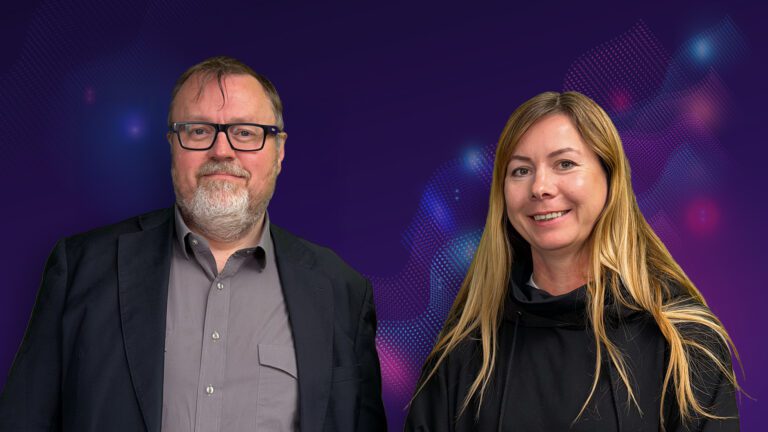
Hear from host Paul Spain and Alyona Medelyan (Thematic) as they discuss highlights from Auckland Startup Week, and review tech news from the week including, NZ’s undersea drone push to protect vital cables, Rural internet pressures amid Starlink’s rise, AWS DNS triggers widespread outages, major fraud stories span crypto empires and rigged poker. Plus, Alyona shares insights on leadership, startup culture lessons, and how Thematic helps businesses with customer feedback analytics. 

Special thanks to our show partners: One NZ, 2degrees, Spark NZ, HP, Workday and Gorilla Technology. Episode Transcript (computer-generated)
Paul Spain: Greetings and welcome along to the New Zealand Tech Podcast. I’m your host, Paul Spain. Real privilege to have for the first time Alyona Medelyan in the studio. So thank you for joining us. Alyona Medelyan: Of course. Glad to be here. Thanks for the invite. Paul Spain: Yeah. Look, it’s great to have you here. I heard you speaking last week at the Auckland Startup Week and really enjoyed what you had to say. So excited to have you on the New Zealand Tech Podcast today. Now you’re the chief executive and co founder at Thematic. Maybe you can just tell us a little bit more as an introduction to yourself and to Thematic. Alyona Medelyan: Sure. So I’m originally from Ukraine and have been living in New Zealand for the past 20 years. I did my PhD at Waikato University in machine learning. I claim to famous that I have been in the AI space for for 20 years. The first time I heard about it, I was still in Ukraine studying languages and linguistics. And then I learned that there are these people who learn teach computers how to understand human language and I thought I’d join them. And this led me through a degree first in Germany, then in New Zealand to continue specializing in this field and commercializing the technology. And about 10 years ago, I was consulting in this general space of machine learning, natural language processing for various companies. Alyona Medelyan: And three different businesses reached out to me with exactly the same questions. Can you help us understand what is driving our NPS Net Promoter Score? Yeah, Net Promoter score. Meanwhile, everybody knows what it is, but back then I barely heard about it once. And it’s such a narrow problem that very well defined and ideal space to start a company because you can basically prove it. Can you? Can you very quickly show them what’s driving it? And kind of from there, we grew Thematic to analyzing all sorts of customer feedback. Lots of businesses don’t like NPS, right. They prefer other metrics, but ultimately it’s all about like, what are people saying? Can we pull out from this theme, hence the name Thematic, and can we visualize text in the way people look at numbers? So quantifying people’s complaints and showing businesses how they can improve their products and services. Paul Spain: Yeah, it’s really exciting. I’m looking forward to delving more into Thematic later on the show and around the clients that you have. Sounds like you have some. You’ve had some really incredible wins in terms of those that you’ve brought on board. So congratulations on that and we’ll look forward to diving in. But first up, a big thank you to our show partners to Workday, Spark, 2degrees One NZ, HP and Gorilla Technology. And to get started, we’ll jump into the New Zealand news of the week. First up, we just had Auckland Startup Week, so that’s finished, I think. Paul Spain: You know, for me it was exciting to see and get along to the event. I wasn’t quite sure, you know, you know, how, how it would go. It’s a sort of first, first time, but it seemed like most of the, the events were, were really packed out. You know, if you went online to try and get tickets, they were, they were mostly all, you know, sold out already. And it seemed to be a really sort of good mix. There was a lot of interest there from the investor side as well as the founders side. There were events bringing investors and founders together for kind of speed dating types of things to connect founders with potential investors. And then there were lots of sessions that were, you know, super, you know, super helpful, I think, for, you know, from people, wherever they were within their, you know, startup journeys or, you know, businesses that maybe work with startups in some ways. Paul Spain: And the panel you were on leadership with mov, yeah, that was really packed with some amazing insights. So it was great. Alyona Medelyan: Yeah, yeah, I enjoyed it. There were probably more than 100 people in the audience and most of those people I’ve never seen at other events in the past that I attended. So it looks like the ecosystem has grown and there’s many more people interested in starting new businesses or they’re part of growing businesses in New Zealand, which I think is great in terms of focus on exporting technology rather than things that are not as sustainable. Paul Spain: Yeah, look, I think, you know, super, you know, pleasing to, yeah, to see. I think it was something like 2,000 attendees that, that came over the week. So it was a, you know, a really good, good, strong turnout. And yeah, as you say, I mean, for New Zealand as a, as a country, we need to be growing and developing and our startup ecosystem absolutely key to that. It was great to see the mayor really getting behind it and he turned out at a number of the events there. We’ll try and catch him on a podcast and maybe over the next little while they’ve been in touch. So we’ll see what we can sort of squeeze in scheduling wise there to hear a little bit more from that sort of local government perspective. But ultimately it’s Auckland Council that have funded and put this thing together as well as a range of sort of sponsor partners that they’ve worked with. Paul Spain: So really encouraging to see that investment into supporting the startup ecosystem. And I think it was more than just an Auckland thing because there were people from all around the country. But yeah, certainly, you know, great, great to see, you know, Auckland Council really, really getting, you know, getting behind that and, and, and making it happen. I think it was 32 events, at least 32 events sort of in total, you know, over the, over the week and probably close to, close to 100 different, different speakers. So there was just, you know, lots and lots of good aspects to it, Demo day aspect to sort of, you know, see some of the new things going on. There were a couple of dinners during the week, so they had the launch night event and then there was crossover with the Kiwi Net Awards dinner as well. That was really good. That was the first time I got along to the Kiwi Net Research Commercialization Awards. Paul Spain: And so I found that quite fascinating because usually I’m kind of maybe interacting with startups and entities a little bit further along, but the Research Commercialization Awards, we’re seeing people that maybe haven’t kind of reached that commercial point or they’re at earlier stages in their journey and sometimes I guess we’ve seen a lot of research that happens in universities that never sees the light of day and the commercialisation aspect isn’t really given so much attention. So I thought it was good to. Yeah, that it is getting that extra attention and that we are thinking around how do we, you know, take those amazing ideas and amazing research that goes on in the world of academia and bring those through to, you know, be commercialized and taken out to the world. So that was good to see as well. Alyona Medelyan: Was it Auckland Union or AAT as well? Paul Spain: I think it was right there. It was from right across the country. So there was. Oh, I can’t remember how many people there. It was at Shed 10 and it was. Yeah, it was. That’s a big venue, you know. Yeah. Paul Spain: Stacked out with hundreds, you know, hundreds, hundreds of people was, you know, not. Yeah, not at quite the scale of the high tech awards, which is, you know, usually a thousand plus. But yeah, there were hundreds of people there and good representation from government and key parties and so on as well. So that was really neat. Yeah. All the award winners, details are all available online. I’ll mention the Kiwi Net Commercialization Icon Award sponsored by Sprout Agritech, that was won by Suze Reynolds, who many will know for her work involved in the startup world and with the angel association of New Zealand. But there were a bunch more winners. Paul Spain: So, yeah, really, really, really exciting to see the recognition there across the board. And I thought they just did a good job of the way they put things together in terms of their formats and the videos they did to kind of give people a taste of, you know, each of those that were being sort of represented as finalists and as winners. Alyona Medelyan: So anybody remember what stood out to you? Paul Spain: I think all of them were. Yeah, they were all amazing. I mean, it wasn’t. Yeah, it was good. There was maybe about eight. Eight awards and. Yeah, usually around. Yeah, three. Paul Spain: Three nominees for each and Yes, I think just. Yeah, quite, quite fascinating to see how these things were coming, coming together. One of. One of them was, I guess, you know, more agritech, you know, then. Then the information technology was potato innovation crop 78 was, was one of the winners. And so they’d engineered a better potato which was apparently attracting attention and you know, selling, selling around the world and basically, you know, getting higher yields and they’re able to grow more potatoes within. But is it tasty within a good space and make apparently very, very good French fries. Alyona Medelyan: So. Paul Spain: So if you can do that, you get the attention of McDonald’s and, and lots of others around the world. So. Alyona Medelyan: Oh, wow. Does sound interesting. As a Ukrainian, I love good potatoes. Paul Spain: Oh, okay, there we go. Yep. And yeah, the, the Mulligan Institute, yeah, we give an award for what they’re doing with CAR T therapy, you know, which is. Become pretty exciting in terms of its impact on some cancers. So that was good. But there’s a good bunch in there. So. Yeah, exciting to see. Paul Spain: And no doubt we’ll keep seeing more of those companies that are featured at the Kiwi Net Awards, sort of coming through the broader sort of startup ecosystem and there being opportunities for those who wish to get behind them invest and no doubt opportunities to work for many of these entities in the future. So, yeah, really exciting now also on a New Zealand news front, we heard that SIOS Aerospace, who were the big winners at the NZ High Tech Awards this year in Wellington, have acquired basically Bay Dynamics and Bay Dynamics also, you know, based there in the Tauranga region. And they have been developing undersea drones, which was an area that SIOs didn’t have. So, you know, SIOs have been doing, you know, typical sort of flying drones, drone boats, and so the. This is now a new capability that adds to their offerings, which they’ve done very well selling particularly to the UK from a defence perspective. And I think some of that more than likely tied into what’s been going on to help Ukraine over the last couple of years. So, yeah, really just really interesting to see, you know, how fast that size aerospace have been, have been growing and developing and, you know, they look like the sort of company that’s, you know, that’s able to do some, some good and in the war there at the moment. So that’s really good to hear. Alyona Medelyan: Yeah. Ukrainians became experts on drone technology. Paul Spain: Yeah, well, out of, out of necessity. Right. Alyona Medelyan: Yeah. And I guess in a testing ground for all those things. And it’s great to see that New Zealand is specializing more and more in this kind of technology. This Starboard Marine Intelligence is also a company that. Paul Spain: That’s right. Alyona Medelyan: That’s similar focus with, with that focus on monitoring the health of cables. Who do you think would be paying for this? The. The government or the cable owners? Paul Spain: Yeah. This is interesting. So, yeah, so what, you know, what we, what we heard is that, yeah, Bay Dynamics, you know, undersea drones are able to help protect those. Those, you know, the fiber optic cables and other cables sort of running on the sea floor. Yeah. In terms of the. How that works from a, you know, a commercial perspective, I would, I would not have had any. Yeah, I don’t think I’ve heard anyone talk about, you know, how that side actually happens. Paul Spain: Yeah. When we’ve heard of things like undersea pipelines and cables, we definitely know that there has been, you know, sabotage in varying forms in the past or it seems very highly likely, shall we say. It seems, seems, you know, seems pretty clear. I’m not sure. Yeah. How proactive they’re able to be. But these, I guess with these, you know, unmanned underwater vehicles, they can at least go down and sort of see what’s going on in a way that’s probably a lot easier than it was traditionally, so. Alyona Medelyan: Oh, yeah, it makes a lot of sense. Paul Spain: Seems pretty helpful. I have been aboard a couple of the ships that go and lay those undersea fibre optic cables and yeah, they do usually have a capability to, you know, to be able to go down and, you know, I think they usually carry some form of sort of submarine that can go down to the bottom of the ocean. They can then pick up the sort of broken pieces of a cable and bring them back up so that they can then, you know, do the reconnections and rejoin them. So, yeah, it’ll be interesting to find out more as time goes on of exactly the role of these submarines. So, yeah, quite a fascinating area. But it’s, you know, I think it’s amazing the extent to which technology development is happening in New Zealand areas that we might, you know, might not expect an aerospace. New Zealand has, has become you know, very strong over the last 10 or 20 years, and that seems to continue to grow. Alyona Medelyan: We need to change their name, right, Cyrus? We need to change from aerospace to just space, I guess. Paul Spain: Yeah, yeah. Alyona Medelyan: What do you call it? Paul Spain: Underwater? Is that. That’s. Yeah. Probably not so common for. For aerospace. Yeah, yeah, yeah. Alyona Medelyan: These are very hard problems. Right. Whenever you have hardware and software operating together, this is where you can’t experiment as fast and iterate and test things. The cycles are longer. You’re. You depend on your supply chain. And my head up to people who are starting these kinds of companies, and it’s very much your, you know, your Kiwi number eight wire. You know, we can do anything, and we can do it here, and it’s great to see. Paul Spain: Yeah, I think that that mindset there is, you know, you really hit on something because that. That is one of the keys, I think. And I’m keen to delve more into SIOs, but they’ve moved very, very quickly in terms of what they’ve developed. And when they have a. My understanding is when they have a customer with a particular need, they will work at incredible pace to deliver something that a customer might not get from the existing sort of suppliers that are out there. And I guess we’ve seen that fast pace with, I guess, a whole lot of New Zealand companies, but Rocket Lab is another one that comes to mind that have moved probably a lot faster than some of their competition around the world, as well as delivering results at the end of the day that have been very satisfactory to their customers, really succeeding where a lot of others have failed. So, yeah, it’s gonna be very interesting to see how SYOS develops. So, yeah, maybe, as you say, they’ll change from SYOS aerospace to something like SYOS, you know, Sea, Land and Sky or something. Paul Spain: We’ll see. One of the other topics that came up on a local front was the growth in Starlink. And we’ve seen one of the rural Internet providers, Evolution Networks, unfortunately go. Go into liquidation. And this is part of the continuing challenge for businesses as we see disruptive technologies coming through into the market. And really, Starlink has carved out. I think the stats I saw were over $100 million now in revenue in the local market. And that cuts right across where some of our traditional rural broadband providers or wireless Internet service providers have been, which is really sad to see some of our amazing, talented Kiwi businesses end up shut down. Paul Spain: But it is that challenge with disruptive technologies. And look, we’re gonna see, you know, we’ll see other Players coming in and competing with Starlink in the years ahead. But you know, it does seem like, yeah, we will probably see satellite over the next few years. Take a, you know, take a bit more, take a bit more market share and I don’t quite know exactly how that, you know, how that picture plays out and what the exact mix will be between fiber delivered Internet, which is, you know, has been kind of the, the gold standard. Then what is becoming really impressive, the 5G and 4G capabilities of our local telcos and then the role of satellite. And I think because they’re all actually quite close in terms of capabilities and pricing, it’s going to come down to, yeah, innovation and often pricing I think will be part of that picture. And Starlink have dropped their prices to be able to compete and win quite a bit of market share there. Alyona Medelyan: And Amazon is coming next year, right? Paul Spain: And then Amazon Kuiper is coming. So yeah, and that might just eat some of the, some of Starlink’s might take some of Starlink’s customers. I think we’re seeing at the moment it’s something like a stat. Interesting thread on Geekzone about this and yeah it was mentioned around 2% of that telecommunications market is going to satellite at the moment. So I imagine that will probably lift a little bit further over the next few years. But it’s unlikely to ever take a really big slice because it’s not the. Well, there’s only so much communications that can happen through satellite in terms of the available bandwidth and so on. Alyona Medelyan: I’m wondering if it’s new businesses or new homes that when you go rural and then you’re faced with the decision how should I get the Internet? And this is when you choose something you have the choice. But it’s like with the bank, once you’re with them you’re kind of. Well, it works, it works. I don’t want to waste my time switching the providers. Paul Spain: Yeah, the thing with Internet is our usage patterns and needs have kept changing and we’ve seen that with the data through from our telcos and the likes of course and so on talking about those increasing demands. So we’ve, I think all got used to the, the faster and the better speeds and so you get used to, you know, 4G, you get used to 5G and it becomes, you know, hard. Alyona Medelyan: To go back the new norm. Paul Spain: Yeah, yeah, I was, yeah I was traveling over the, over the last few days and few times I got, I got 3G connectivity and yeah, you realize what used to be amazing a few years ago is Sort of next to useless today. So. Alyona Medelyan: But then also part of what makes rural New Zealand special is zero signal. When you have the excuse of not being able to be reached and just can have a break. And I hope this will remain, remain into the future. Paul Spain: I think that has changed. And if you like that, you’ve got to put your devices in flight mode or go and hide your devices. Alyona Medelyan: Yeah, very much. Paul Spain: Moving to a world where satellite mobile coverage will reach all of us. Well, you can always go into a cave. I think you’ll probably, if you go deep enough underground, then you’ll be able to get away from the signals. So. Yeah. Alyona Medelyan: On a boat. Paul Spain: Yeah. Well, no, even the boats are getting started, you know, starting to get. Alyona Medelyan: Yeah, if you have a Starlink, you know, better. Yes. Paul Spain: Better and better coverage and it’ll depend on how far out you. You get. Certainly that’s what we, you know, we’re seeing, you know, as, as things evolve with, you know, the, the satellite to mobile services. So, yeah, we’ve got an interesting time ahead with those transitions. Alyona Medelyan: Nowhere to escape from work in the future. Paul Spain: Yeah. On the international front, a couple of news items jumped out last week, of course, aws, Amazon had had some, you know, some pretty significant issues with their, with their outages. I think I ended up doing, I think about four different interviews across TV and radio on. On Tuesday. Lots and lots of people around the world were impacted. We saw indications that the cost of this outage for AWS’s customers could reach into the hundreds of billions of dollars. I guess likely AWS have largely contracted themselves out of being directly liable, but yeah, created quite a mess. And there is now sort of details on what happened there with what I sort of described as a DNS race condition in Dynamodb, which then led to a whole lot of cascading failures, took things down, sort of, sort of came back up and then. Paul Spain: Yeah, but really took over 12 hours to get from the initial. In fact, probably in the direction of 24 hours to get from the initial issues to when things were really running smooth again. Was that something your firm was impacted by? Alyona Medelyan: Yes, we were impacted, but luckily only in a minor way, which we could very quickly solve. But my understanding is that when you use AWS infrastructure, there are certain AWS product that are very much interconnected. Paul Spain: Yes. Alyona Medelyan: And then if one of them fails and the rest of them are affected. And luckily, when we were starting out eight years ago, I think we made some decisions to be a bit independent of even the provider in case we needed to switch to. I don’t know, Google or Azure, we ended up being one of the parts of our system was affected, but we were able to restart that server and the rest wasn’t. And thankfully no issues for our clients. But I would say it’s luck was a big element of that. Paul Spain: Yeah, yeah, yeah, well, that was, that was, that was good to hear. The other two sort of big international things were around. Chen Zhi, who is the mysterious figure accused of moving masterminding a $14 billion crypto scam who’s been charged in the US with running a cyber fraud empire out of Cambodia. Yeah. Apparently they have managed to seize cryptocurrency to the value of 14 billion. And then, you know, behind that a range of crimes, sort of money laundering and human trafficking and online scams that exploited enslaved workers. So, yeah, always, I think, interesting to see where the threads of technology run. What are the new things that technology enables that are good and bad and then, you know, how society do we get around sort of some of those, some of those negative things and yeah, unfortunately that is one of the aspects that crypto gets used for is some pretty serious things on a criminal front. Alyona Medelyan: Yeah. So many stories around crypto, horror stories. It’s not as secure yet as we all hope. Paul Spain: Yeah, I think, yeah, it’s, it’s, it’s that, yeah, reality that, you know, people will use technology that maybe is designed for good things but not, you know, not everyone’s going to use them in good ways. Alyona Medelyan: Yeah. Paul Spain: And that’s, that can be easier, you know, said than done to, you know, to block those cases. But I do find it interesting that quite a lot of these, these cases that authorities do seem to be, you know, successful at retrieving, you know, large, large amounts of, of, of crypto. And yeah, you could, you can imagine that, you know, that a criminal might not be willing to give up the keys, but yeah, if authorities put a lot of pressure on, then that might well convince a criminal to not try and hide those funds entirely. So. Yeah, and the other one, which was sort of a crime and tech story was, and this was sort of covered internationally was this big poker fraud where they were using X ray tables, high tech glasses, and utilizing some, you know, sports stars and celebrities to, you know, to set up some elaborate, you know, poker gambling frauds, which was, oh, that was quite a, quite a surprise. But millions and millions of dollars, you know, taken from, you know, from folks who got scammed. Alyona Medelyan: Yeah, I saw one person lost more than a million in one game and the technology that they created is actually quite impressive. Paul Spain: Yeah, yeah, yeah. Alyona Medelyan: Like the table where you can see underneath the table and the glasses. And why would NBA stars be involved in something like this? You know, I’m sure they’re doing pretty well, those hall of Fame NBA players. And I don’t know if it’s like an element of game there as well. Paul Spain: Yeah, yeah, you would, would have thought that they wouldn’t need to get involved in crime, but I guess, yeah, sometimes the temptation is too much or there could have been other, other aspects that we’re not, we’re not privy to. Alyona Medelyan: So I foresee a very entertaining movie. Paul Spain: Yes, yes, yes. That would be perfect for a movie. Well, onto thematic, you know, really, really keen for you to tell us, you know, tell us little bit more of how you got started and you shared a little bit around the study that you had been doing in AI and then how that kind of led to you getting three potential opportunities that were very closely aligned. So, yeah, how did you get things started? Because it’s a pretty big deal launching, you know, launching a business like this and, you know, building a team and raising funds. Yeah. Alyona Medelyan: What can you share around that time? Paul Spain: So this is what we’re about 10 years ago. Alyona Medelyan: Yeah, about 10 years ago, people in my field were experimenting with the very first language models that were kind of the children and grandchildren of the current large language models. And a few years before that, when I was doing my PhD, those models didn’t exist. There were different kinds of model, not language model, but the machine learning models, when those first language model that actually analysed text and tried to capture relationships between words and phrases were essential for mining and summarizing customer feedback. So without that technology, I wouldn’t have been able to create a prototype that actually worked and was and was needed. But the interesting finding for me back then that still remains true up until today is this trust in AI, because this task analysing customer feedback has been done by market researchers for many, many years in a manual way. So there are people who are called coders, not programmers, coders. But they code text according to a code frame. And I was around the time when I heard the need for understanding what’s driving Net Promoter score. Alyona Medelyan: I started talking to those people and saying, well, it’s tedious work. What if AI did this for you? And what I’ve heard over and over from them and said, they said, we don’t want a black box. We want to be able to verify and build that trust and see how it made the decisions and definitely want to be able to change things because I’m the expert and I know my business and I know how to analyse this data, and our AI algorithm doesn’t. And so how can I actually work with the AI? And now, more and more, this human in the loop became the phrase that people use, right? Paul Spain: Yeah. Alyona Medelyan: So do not just let AI do its own thing, but make sure that the human is involved. And that early insight actually became a part of our success because the first thing I did was, well, first I wrote the script in Python, then put the results into a PowerPoint, and when those businesses became customers, I found somebody on upwork to build a tool where a human would be interacting with the AI and kind of tailoring. And it’s still part of our product now, obviously in many iterations later and completely new code. But the idea that somebody would need to review it still remains. So how Thematic works is basically we find different ways of how people talk about a certain issue, something that they’re not happy with. And to give you an example, in one of our demos, we use this data set where people complain about price increases. There were 500 ways of how people could say it, and fees are going up or the charges are increasing. There’s all these synonyms that make it right. Paul Spain: You have to be able to put those together and realize they’re in the same basket. Alyona Medelyan: Exactly. Because you want to know, you want to count them. How many people have this issue versus this issue? What should we be prioritizing? And this complexity of human language is what makes it hard. Then, of course, ambiguity as well. Service in terms of 3G or 5G versus customer service, where the networking service, all of this needs to be unraveled, separated. And when we started Thematic, the prevalent technology was creating manual rules. If you see the word friendly, then tag it with customer service is friendly. But if it has the word user in it, then it’s user experience, user friendly. Alyona Medelyan: So people have been trying to solve this by basically teaching the system by giving it the rules, but given how much variation there is in our language, it’s literally impossible. Paul Spain: Yeah. That would put extreme limits on what you’re actually able to analyze, I’m sure. Alyona Medelyan: Yeah. And you won’t learn anything new because you have to tell the system what to find. Whereas with Thematic, we actually discover things for you and tell you, hey, suddenly there’s this new competitor or people are struggling with AWS outage. Yeah, yeah. Paul Spain: And so in terms of building that and getting those initial. Initial customers onboarded, how long did it take you to get, you know, that started and to get some initial you know, traction with those first customers. Alyona Medelyan: They signed up straight away before we had the product. Paul Spain: Oh, brilliant. Alyona Medelyan: Yeah. And they ended up collaborating with us and co creating a solution which is the best. Like this is what you should be looking out for because that means that it is a real pain and if people are willing to spend their time money better on you. And I guess we’re very, very grateful. And some of our most popular features were co designed co develop with Insights professionals. Paul Spain: Yeah. And then you know, how quickly did you move into scaling the business and how big are you today? Alyona Medelyan: So from those initial customers in New Zealand, we straight away started writing about what we do on our blog. And it doesn’t matter where you are, if people read your blog, they will reach out to you. And we ended up getting our first UK customer and then our first US customer and started focusing on the US market primarily. So here in New Zealand we work with companies like Woolworths and Mitre 10 Watercare, but then in the US we have really big multinationals like Doordash and Electronic Art and Albertson Supermarkets. So there is kind of focus on tech, retail. Any kind of large B2C business, 1,000 employees or more is kind of our sweet spot. Paul Spain: Right. But it does mostly tend to be those selling to consumers. Alyona Medelyan: Mostly we have some B2B as well. Paul Spain: Yeah, okay. Alyona Medelyan: Yeah, but it’s with consumers or especially when you have some sort of a marketplace, this is where it becomes even harder to. And where you have a combination of physical experience and digital experience. Because if you have, let’s say an app, you can use a lot of analytics of what people are actually doing in the app. But the moment you have delivery guy or you have some shipping logistics, this is where you start having need to measure people performance or parts of your operations that are not fully automated and are harder to kind of. And improve. Harder to improve. Paul Spain: Yeah. So yeah. Can you share an example? Say a retailer, it’s a supermarket or say, you know, DoorDash, which is doing deliveries. What would you know, what might be some of the, you know, the standout sort of insights that they would be getting that they might not have been aware of, you know, prior to. Alyona Medelyan: Yeah, a lot of the Insights are very much growth focused. So for DoorDash, they’ve been a customer of ours for many, many years. And you know, this company started as a startup in San Francisco and then as they started moving to let’s say, Chicago, they realized that the city is different, the needs of the people are different, the layout. So they needed to understand what are the needs and how to adjust their operations to this new location? And the traditional way would be to do a focus group. And it takes weeks and it costs a lot of money and you only talk to a small group of people. But if you need the insights quickly and at scale, this is where you need something like thematic. Usually it’s the data you already collect. A lot of it is sitting in your support where they had an ongoing survey, NPS survey. Alyona Medelyan: One interesting insight was this is now years ago, but they expanded into Canada, but they weren’t growing there fast enough. And they realized something must be wrong. They sent a group of people and they couldn’t find anything wrong. So they looked in thematic and basically compared. Okay, how does feedback differ US vs Canada? Canada. And credit card issue popped up at the top in thematic. Paul Spain: Wow. Alyona Medelyan: So it turns out Canadian credit cards are slightly different from US credit card. And they used Stripe or similar provider to onboard people and they just couldn’t get past the screen. Paul Spain: Oh, no. Alyona Medelyan: And it’s like a silly, silly thing. And once you know exactly, you, you then unblock it, right. And suddenly you’re, you’re growing much faster. So there are a lot of the times, these kind of. What’s different? Yeah, or if you have two supermarkets, one will be, you know, there are certain things you can change like location or the size of the car park, but then if one has better checkout staff and the other one has, you know, better cleanliness, you can then facilitate some sort of discussion and. And yeah, so different insights. That what I love about it, that it’s a win, win, win. Right. Alyona Medelyan: The customers get better service, they’re being heard, the businesses are growing faster because they’re listening and being customer focused. And we went by working with them and exporting all of the stack out of New Zealand. Paul Spain: Yeah, that’s really exciting. And it’s always so good to see that innovation coming out of New Zealand that’s the best in the world. And so, you know, the biggest international companies are using, you know, New Zealand tech. So. Yeah, that’s really neat. Now, last week when you, when you were speaking at the MOVAC event for Startup Week, that was very much focused on leadership and the leadership journey. I think you are very authentic with sharing around some of your challenges and learnings. And I know some of them, you were saying, I can share this because it’s just us in the room. Paul Spain: So I’m wondering what you’re willing to share with us today from that period and how you’ve developed your leadership. You Know, to help, you know, build out, you know, thematic into a really successful firm. Alyona Medelyan: Yeah. So happy to share. And personally, I find it much easier to just tell it how it is, trying to create a story that isn’t true. But for one of the first learnings that I shared was really around. When you start a company, starting it with the right culture is really important and everybody says it. Right. But until you experience what it’s like when you don’t do it, you basically don’t know how important it is. So the reason why I shared is just so that other people maybe don’t make the same mistake as we did. Alyona Medelyan: So initially I would hire people because they would reach out to me. I thought, oh, they’re passionate. And as a startup it’s probably difficult to attract talent and I should have interviewed more people and instead I kind of just, you want to be here? You know, let’s hire you. Paul Spain: Yeah, yeah. Alyona Medelyan: And. And then eventually one of the people we hired who we really liked left and said, oh, I don’t like the company culture. And so we started to look at it like, oh, we need to do something about this. So we did this values workshop and everybody who was there with the company contributed and these values emerged, but they weren’t mine. My co founder’s values. Paul Spain: That could be a problem. Alyona Medelyan: Yeah. So actually what I didn’t mention, did I mention that my husband is my co founder. And when this idea came out, when we signed this initial customer, we needed to actually build the product. So who can help me the most? My husband. He’s a very good engineer and software architect. And so I sold him on the idea that we would travel the world and build this together, which we did. But anyway, we looked at the values and we thought, not surprising. People we like are leaving and people we don’t like are staying. Alyona Medelyan: We should have hired from, you know, with those values in mind from the very beginning. And so we started putting a lot of emphasis into figuring out what they are and making sure that we talk about them. We reward people for when they show behaviors. When somebody is not doing something that not productive, it doesn’t align with the values. We use it as a way of making it clear it’s been really effective to gradually have a group of people who really have, you know, the ambition, ownership, transparency and collaboration. These are our four values. And this was one of the learnings. Another learning was to kind of dial down my Ukrainian directness. Alyona Medelyan: And I think you like that example about the shit sandwich where so often we’re told you Know, command, recommend command. Even if you’re doing something like Toastmasters, like, hide the criticism within the compliments. Right. And when we went through Y Combinator, people there were very, very direct and. And they would even tell us, like, why do you need. Why do you need the bread? Why bother with the bread if you’re still gonna be eating your shit sandwich anyway? So what, we ended up hamburger. Paul Spain: Sometimes it gets cold, doesn’t it? Alyona Medelyan: Yeah, that’s true. True. The hamburger. And then we realized that what works for founders doesn’t necessarily work for employees. Paul Spain: Yeah. Alyona Medelyan: And really criticism and constant poking holes at things. While it comes. In my culture, it comes from the fact that you want to get to the point quicker and make things better. And you don’t necessarily acknowledge everything that’s good, but in reality, it’s really demotivating. So personally, one of my best leaders who I worked with did not do it. And he kept saying excellent all the time. So I keep trying to force myself to change, you know, to change and be more positive. I have a sticker on my screen, computer screen, that says, be nice, but you just have to do it as a leader. Alyona Medelyan: You have to change yourself to try to get the best out of people, you know, the. So that they can live up to their best potential. Paul Spain: Yeah. And it’s often a journey, isn’t it, in leadership? There are very few people that step into leadership and they really got every aspect of it down and that they balance things right in terms of encouragement versus being direct and cheering, you know, the appropriate sort of feedback that is, that is needed. And so how have you gone about, you know, learning and developing your leadership? Who have you leaned in on or, you know, what have you. What have you drawn on in terms of help and guidance? Alyona Medelyan: Definitely learning from mistakes and seeing, you know, seeing the results when you’re not doing things in the best way. But I ended up doing a leadership course through the Morgo community for CEOs, and there was a group of, I think eight of us. And it was really incredible for me and gave me a lot of confidence. You can actually learn what it’s like to be a CEO and the skills you need. And there is. There are frameworks that people developed, and as long as you follow them, you will do great. Paul Spain: Yeah, that’s good. Yeah, I hear good things about Morgo, so. Oh, that’s great to hear. And in terms of selling, because ultimately you have the best technology in the world, but if you’re not getting out and selling it and reaching the right customers, so anything you can share around how you’ve built up your international, especially your US customer base. Alyona Medelyan: Well, selling for many people who have tech background, it seems like magic, but again, there’s frameworks that you can learn. And I ended up doing a course with Miles Valentine here in New Zealand. Was a weekend, but completely changed my view of what sales is. I love selling in the US because there’s a lot of focus on innovation and trying to find something that will give you an edge because there’s so much competition. Right. And everybody’s looking for way of like the new tool or a new technology to make them stand out. And unfortunately in New Zealand and Australia, people are more conservative when it comes to buying from smaller companies. Often in Australia we would talk to people and there’s literally three providers and they switch between those three and that’s it. Paul Spain: Wow. Alyona Medelyan: So the benefit of selling in the US is they tell you how it is. If they like it, they buy it. Paul Spain: Yeah, yeah. Alyona Medelyan: So the difficult part is you need to hire in the U.S. Americans. Right. And you need to be there on the ground. And every time I go to US people say, oh, you came here all the way from New Zealand. Wow, you’re crazy. Think. No, it’s a short overnight flight. Alyona Medelyan: So I’m fortunate that I have a really good team in the US but it took a while to find them because in Americans they interview so well and so you have to. Paul Spain: It seems like all of them are good, huh? Alyona Medelyan: They’re all so great. Yeah, yeah. Paul Spain: And so how, how did you learn how to pick those that were going to be a, you know, a really great fit for thematic and that they weren’t maybe overselling themselves? Alyona Medelyan: Well, the, the good news in the US is that if somebody isn’t. Isn’t working out, it’s much easier to part ways than it is, let’s say, in New Zealand. Right. Where the process is harder. So I think performance management and looking at it actively is important. And once you find the right people, you know. Right. Because they are performing and then you can use them to actually cross interview and cross reference and do it as a team. Alyona Medelyan: And then it becomes easier because you don’t, you don’t have this cultural barrier anymore. You have local people helping interview. Paul Spain: Yeah. So you’ve got really good trusted talent who are then helping you hire more great, trustworthy talent. Alyona Medelyan: Yeah. We were very lucky. One of our early customers joined us as our VP of customer operations. He said, your software is so great, I want to work with you. Paul Spain: Wow, that’s fantastic. Yeah, yeah, that’s good. So where to next? What does the future look like for Thematic? How are you evolving your offering? Are you going to be targeting different types of customers, or what does that picture look like? Alyona Medelyan: Our mission is to make sure that every voice can reach every decision maker in a company. And we learned that our ideal customer profile are these really large businesses where there’s a lot of complexity and where there are analysts who really can appreciate the strength of our product and what it brings to the table. For me, the AI has completely changed what is possible and how we are perceived. So in the beginning, 10 years ago, I had to prove to people that AI can do it as good as a person. Nobody asks this question anymore. Now the challenges are very different. Is your AI better than my AI? And I honestly, I don’t envy buyers because marketing is just bombarding everybody with hype. So from that perspective, it’s more challenging to kind of stand out. Alyona Medelyan: So our focus is really on building our brand and doubling down on things that we’re already good at and in terms. But another thing that’s possible now is in the past there were limitations of what you could build with AI, and now basically anything is possible. Now. It’s like, how can we build the right product? Right. Anything you can think about, you can create. And so now is what does the best product looks like? Maybe there’s a different version that could reach buyers from, let’s say, marketing versus product versus operations, rather than one product that everybody’s using through an insights team. So we’re kind of thinking about how can we stay true to our mission while integrating more and more AI technology in a smart way. Paul Spain: Oh, that’s exciting. It’s going to be really interesting to watch your future development. For those who are interested in maybe keeping up to date with your progress, what’s the best way to get in touch? Is it LinkedIn, your website? What do you usually recommend? Alyona Medelyan: Yeah, website. Feel free to request a demo of Thematic, see what it does on your customer feedback. But I personally post a lot on LinkedIn and happy to connect with anybody who would be interested in chat or just following my journey. And yeah. Paul Spain: Oh, that’s good. Well, we’ll, we’ll link through to both of those from the show notes. So for anyone that’s listening in, we’ll make that easy for you through your podcast app and through the post at nztechpodcast.com so that’s great. It’s really great to have had you on the show. Thank you, Eliana. And of course, a big thank you to our show partners as well to Gorilla Technology, HP, Workday One NZ, 2degrees and Spark. So that’s us for this episode. Thanks, everybody, for listening in. Paul Spain: Of course. We’ll be back again next week. Make sure you’re following us on the socials for the video streaming and YouTube. Thank you, everyone. We’ll catch you on the next episode. See ya. Alyona Medelyan: Thank you.