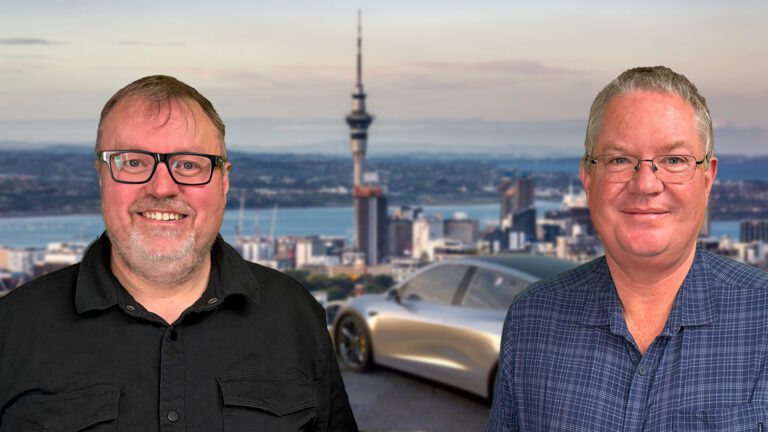
Hear from host Paul Spain and Mike Jones, General Manager at Earthcare Environmental. Mike shares his first-hand experiences with Tesla’s new Full Self-Driving (FSD) Supervised technology, diving into what sets FSD apart from other automation systems, how it’s performing on local streets, and what the future looks like for autonomous driving. Plus, tech news from the week including, Facial recognition in retail, Age restrictions on social media, young inventors LCD glasses for epilepsy and light sensitivity. Advancements in on-device AI, plus comparing inflight satellite Wi-Fi and more. Discover what’s driving New Zealand’s technology landscape forward.

Apple Podcasts Spotify RSS Feed

Special thanks to our show partners: One NZ, 2degrees, Spark NZ, HP, Workday and Gorilla Technology.

Episode Transcript (computer-generated)

Paul Spain:
Well, greetings and welcome along to the New Zealand Tech Podcast. I’m your host, Paul Spain. And real privilege to have Mike Jones joining us for this episode. How are you, Mike?

Mike Jones:
Good, thanks, Paul. Thanks for inviting me.

Paul Spain:
Yeah. Oh, look, it’s great to catch up your first time on the show. Maybe you can fill listeners where you fit into the big wide world of business and tech in New Zealand.

Mike Jones:
Yeah, well, I’m the general manager of Earthcare Environmental, been in the business for a long time doing waste and recycling. Before that I did a nearly 20 year stint at Microsoft. So fairly familiar with technology.

Paul Spain:
Yep. And you’re also a Tesla driver and one of the very, very first to have access to fsd, full self drive supervised, which has launched in New Zealand in what, the last couple of weeks while I’ve been overseas, you’ve been being driven about new zeal.

Mike Jones:
Yeah. I was one of the first buyers of the new Model 3 Performance. Not the current one, the previous one. And I bought full self driving and I was super disappointed that never ever eventuated, so I sold that. And more recently I just bought the first of the launch edition of the Model Y junipers with hardware 4. And I was a bit sceptical about full self driving coming to New Zealand, so I didn’t pay for that. And then as soon as I heard it getting announced, I’m like, hmm. And then the day it got announced, I sucked it up and bought it.

Mike Jones:
And I’m really enjoying it. It’s amazing. And my son keeps reminding me, dad, you said it would never work. And I’m like, yeah, they’ve upgraded it, it works quite well.

Paul Spain:
Yeah, yeah, great. Well, really looking forward to delving in and chatting about that. And yeah, I just spent some time in San Francisco, so I’ve been trying, trying out how it’s working, sort of stateside versus versus here. So I had a cybertruck for three days in San Francisco, so kick the tyres, as it were, over there. And then we’ve been out in your Model Y this morning, so I can sort of see.

Mike Jones:
Oh, I felt quite safe with you driving. Cause the car did all the work.

Paul Spain:
Yeah, it was the bits where I took over that. You looked like you were sweating a bit there, Mike. All right, well, let’s jump in. Of course. Big thank you to our show partners. One NZ, 2degrees, Spark, Workday, HP and Gorilla Technology. First up, delving into some of the local news. Interesting to see the use of facial recognition in retail stores.

Paul Spain:
Seems to be continuing to grow in New Zealand where we’re Seeing Aura’s software, which has been sort of quite widely used between retailers and with I guess police access and so on. Yeah, it’s interesting to sort of follow the work that’s going on there. Their system creates these temporary biometric templates which they’re able to match against a retail store’s sort of watch list. But of course this creates some privacy concerns and we saw some of that in the media where there was one of the former Green Party MPs who there was a bit of information leaked following her having run into some problems with shoplifting. And then I think based on the footage and the story that got shared, some of that sort of activity then maybe continued into the land of supermarkets but probably shouldn’t have been shared and made public. So yeah, interesting to see that the government is keeping something of an eye on this and considering policy changes and also the privacy, you know, Commissioner is keeping a watch on these things as well. How do you feel about all of this, Mike?

Mike Jones:
Yeah, well, I think it’s a two edged sword and the first thing everyone wants to maintain privacy but on the other hand, you know, it’s good to have people that are, you know, you see some of these videos of people outside supermarkets where they’re quite aggressive and you know, create physical risk for staff and other shoppers and so it’s good for them to be identified early so they can, you know, have police or security support to prevent difficult situations. So you know, while I’m cautious about, you know, wider use of the technology, I actually think there is a place for it in maintaining a safe environment for all New Zealanders.

Paul Spain:
Yeah, look, I remember when foodstuffs were doing their trials and what stood out to me around foodstuffs approach was that, well, there were a number of things but the key one for the general consumer was they were holding your data for, I think, you know, literally seconds. They would do some work to see if you matched up with a prior offender and if you didn’t, then that data was disappeared. And I think with that type of approach where you’re not holding on to data and then creating an ongoing privacy issue, you’re in a much better state. Now there are still other challenges where, oh, Mike or Paul, we walk into a store and it’s like, ah, you look very similar to somebody else, Mike, or whatnot and you get those false positives. So there are still some challenges and we probably can chat about some of these sorts of similar risks when we move into autonomous driving and so on, where technology makes one decision and Then as humans do we trust it too much? Because actually, look, it got it right the last 10,000 times. Why should I question what the computer says? Right. And so, you know, we’ve had those types of scenarios where the computer gets it wrong and human looks at it goes, no, the computer must be right and maybe it wasn’t. So there’s probably still a bit of a road ahead on these things.

Paul Spain:
We’ve heard around Meta bringing in restrictions in New Zealand on Facebook for younger users. Now you can understand with legislation starting to come into place in other markets and there being a push in New Zealand to block all social media access for under 16s, that a firm like Meta who want people to be using their platform of all ages and would, would make some efforts to try and put restrictions on teenager, teenage users, those sort of, you know, under 16 and, and to try and sort of differentiate at different, different age points. Guess the problem with this sort of thing is it’s really hard to know what somebody’s age is to, is to start with, there probably are a range of mechanisms where, you know, based on what somebody does on a platform, you can guess, you can ask people their age. Of course, I guess there is that positive aspect that they’re doing something rather than nothing.

Mike Jones:
Yeah, Unless you get some sort of government ID, you know, if you’re over 18, you’ve probably got an 18 plus card or a New Zealand driver’s licence or a passport and upload that and have that, you know, digitally scanned and checked. It is very, very hard. I mean, you know, I see Australia’s restricted social media to under 16s, but in a lot of ways parents should be able to monitor their kids and it would be better for Google to provide tools for kids to use the technology and have parental support as opposed to be fully independent. And at the moment I’ve got a 7 year old and I’ve got a couple of rental 16 and 17 year old girls. You know, they’re just living with us for a few months so, you know, understand the problems.

Paul Spain:
Yeah, yeah. And look, it’s different at different ages and you know, part of this idea of, hey, let’s block it all for under 16s, you know, you’re drawing. It’s a very interesting line to draw. Right. Do you go from then no access to complete, unfettered access to everything at that sort of age. And yeah, I think different kids will mature in different ways. Certain kids should have access to technologies that might well be quite appropriate for them. And then what do you decide on what you should and shouldn’t block because you block something, but actually then something else might become more harmful over time and there are new things coming through as well as lots of ways to kind of bypass.

Paul Spain:
So it’s not a simple topic, but we probably need to do an episode or two where we really delve into it deep.

Mike Jones:
Yeah, it’s about that question about drinking. You know, interestingly, one of the girls that’s living with us is German, and for her, the drinking age in Germany for beer is 16. In New Zealand, it’s older than she is now. She’s only 17. And so it’s unusual for her not to be able to go out and have a beer. And early access to technology or alcohol under limited conditions with parental guidance isn’t a bad thing. Not advocating to reduce the drinking age in New Zealand, but it’s like the graduated driver licenses. You don’t get full and free access to a car.

Mike Jones:
You have to go through a gradual process to level up.

Paul Spain:
Yeah, yeah. Which I think has been helpful for New Zealand. Yeah. A. The age did go up a little bit, but then you’ve got the graduated levels. One store I saw this came through while I was away. A New Zealand teen inventor has come up with some smart LCD glasses. And there, the chap, Mark Campbell, I think he’s 19 years old.

Paul Spain:
Glasses that dim, flashing lights for those with light sensitivity and epilepsy. So apparently they’re going through a clinical validation and already won a. A James Dyson Award. And, yeah. Is being supported by startup Aotearoa and the tech mentor, Dr. Diane Jones. So I thought that’s a good use of technology right there.

Mike Jones:
Yeah. So with all of the things that are being developed, putting them together in innovative ways is awesome. A friend of mine invented a, you know, kind of an insulin pump thing that was also good. But putting together different technologies in innovative ways to improve people’s medical outcomes is a fantastic use of technology.

Paul Spain:
And ultimately most of these things come down to whether they can be commercialized. Well, so good that Mark is already, as the inventor, already plugged into a whole range of things, from going through the James Dyson Award process to getting some mentorship and so on locally. Because also, from an NZ Inc perspective, we want these great innovations to win globally and to be successful commercially. So, yeah, that’ll be an interesting one to follow.

Mike Jones:
It’s a good way for young people to move forward. You know, you come up with this great idea and it’s not easy to commercialise something in a way that’s producible and marketable and it’s important to, you know, the clinical validation will make or break that technology.

Paul Spain:
Also picked up news that we’ve got new chips coming through from Qualcomm. The Snapdragon X2 Elite Extreme processors. Now for anyone that has been interested in Windows Laptop that gets more Mac like battery life and performance, you know, you may well have tried one of these devices already. I’ve got a Microsoft Surface that uses the Snapdragon I think X Elite processor. It doesn’t give you as long a battery life as the, the max with the say the M4 chip, but you know, reasonably well down that track. This new refresh of trip chips is boosts the performance so they’ve got more cores. I think some of these chips are going from 12 to 16 cores so actually going to get more performance. The battery life looks to continue on being really competitive and expected to increase in certain use cases and a bit more grunt in terms of the NPU or the neural processing unit for on device AI type work.

Paul Spain:
So no doubt we’re going to see these coming through in new laptops and the like probably mostly next year before we see those landing in the market. I think we’ve still got the challenge that because Microsoft have had a level of compatibility with these types of chips, with the ARM chips now for over a decade in varying forms, is that there still are use cases where folks can’t run all their software on arm, but there are plenty of scenarios where actually they’re just fine. So we’re kind of seeing that very, it feels very slow move away from intel and AMD chips for Windows. But it is happening, it is real.

Mike Jones:
Yeah, I remember I was working at Microsoft and they brought out Windows NT and they brought it out on three processor platforms, you know, the PowerPC and the various versions of RISC chips and those have gradually died away. But it’s awesome to see these new processes coming through because like the previous story, you know, the increased performance delivers new capabilities that can be delivered. So you know, I’ve just got my new Apple iPhone plus my AirPods and they can now do on chip translation, language translation. It’s actually pretty good. You know, I was quite impressed testing it out and you know, as you bring that technology to PCs and other devices, it, you know, expands what’s possible.

Paul Spain:
Yeah, and I think there’s that promise of being able to do on device AI, which is very private, that you’re not feeding somebody’s model somewhere. Maybe, you know, you’re wanting to use an open source model on your device. And so the more capable chips that have got the extra grunt and capability able to do that is part of that picture. It does still seem for most of us, most of the AI we tend to get carried out is being done in the cloud, but that also has a cost with it. And I don’t think those costs have really been squarely addressed. There’s so much free usage of tools like ChatGPT and Grok and Claude and so on. And at some point somebody’s gotta start paying for that processing and the cost of doing that. And if we’ve got more and more powerful kind of devices that we’re either holding in our hand in our pocket or using for our day to day computing that might start helping to balance up the cost structures when ultimately the AI companies want to get fully paid.

Mike Jones:
Yeah, and also you’re starting to see some of the bigger companies like Salesforce, you know, one of the things that they’re making as a sales promise now is they don’t use your data to train their models. And that’s becoming increasingly a thing. And there’s two ways of doing that. One is extract a guarantee from your vendor and the other one is to process locally.

Paul Spain:
Now a couple of other bits to delve into. There was a big story, New York Times, we’re covering it. I saw it hit the New Zealand media as well with stuff co nz. I mean, I think we all know how it works with these big stories. Somebody writes a story that’s, you know, a well known media outlet usually and then, you know, it goes around the world very, very quickly. So the headline stuff published was Secret Service Dismantles Telecom Threat around UN Capable of Crippling Cell Service in nyc. And you know, they were highlighting, look, you know, we’ve got about 150 world leaders preparing to descend on, on Manhattan for the UN General assembly. And then goes into how the US Secret Service has dismantled this massive hidden telecom network across the New York area that could have crippled cell towers, jammed 911 calls, flooded networks with chaos at the very moment the city was most vulnerable.

Paul Spain:
So that this was a pretty dramatic intro to their story. Right. And I started reading it and it just didn’t feel right. Did you read this one when it came through in the media?

Mike Jones:
Yeah, I had a read of it and I note that quite often you get these scare stories, you know, America’s under attack, blah blah, blah. And it tends to happen when they’re wanting to change the attention of the public onto something else or they’re wanting to, they have an election and they’re trying to influence certain segments of the population. So, you know, you’d expect that if someone was trying to cause mass scale disruption they wouldn’t be using cell phones, they’d be having some specialised technology. You know, what can a few hundred cell phones do that? You know, you could buy a device that can multiplex, you know, much more channels of attack than that.

Paul Spain:
Yeah. And the equipment that was concerned, they said were clustered within, I think it was 35 mile radius broadly of the United Nations HQ. They said it was made up of around 300 SIM servers packed with over a hundred thousand SIM cards. So it is, you know, it’s definitely of some scale. How, how. And they were saying it was a broader investigation that, that led to this, you know, discovery. I think, you know, maybe somebody sending some messages that, yeah, they wanted to track down who’s sending this, you know, malicious message or, you know, something in an anonymous way. The thing was that we quite quickly heard from other sources saying this story is completely bogus.

Paul Spain:
And look, you know, these, these sim farms are, are, are a thing. And yes, they do get, get used by, you know, criminal enterprises where they have, they do have these, these things set up and they used to, you know, send spam maybe, you know, forward international calls using, using local numbers, you know, for a whole range of reasons being, you know, a scammer who’s sitting in, you know, pick a country where there are a lot of people that are sitting around and able to make phone calls at a much lower rate than say New Zealand. And they’re calling but they want the call to be, yeah, looking like it’s local or something or they want to do a mobile call and you know, there might be a cost benefit. There’s all sorts of reasons on why these sorts of things get used. And then there are the mechanisms where a false mobile network is sort of stood up that can, you know, bypass charges and actually, you know, send messages and the like. So yeah, apparently they, yeah, they, the Secret Service, yeah, did some, you know, network triangulation to find the phones. But you know, what they found was SIM farms which have been around for quite some time. And this is gear that you can buy off the shelf, you know, maybe, maybe not at your local JB hi Fi store.

Paul Spain:
But you know, this stuff has been, you know, commercial products reasonably available for, you know, for a long time. And yeah, quite interesting when we read these stories in terms of trying to get your head around on, you know, why a story like this would come through why? Yeah, the New York Times would publish it, the folks quoted and so on. So if you’re interested in delving into this more, if you’re kind of, you know, curious to maybe understand the picture, there will be multiple stories online. The first one I shared I came across was Robert Graham’s substack, which is cybersect. So cybersect.substack.com if you want to go and have a look and delve in a little bit deeper if you’re curious to know more. And look, I think it is important for us to recognise that nobody gets it right all the time. Mike and I might have a quiet conversation. Before we came on the podcast.

Paul Spain:
We walk in with the things that we’ve heard and we’ve learned and we were discussing, you know, FSD or whatever it was. Not all the, you know, the bits and pieces we’ve heard, they might not be 100% correct. And it’s very much the same with the media. Although, you know, I think we, we should expect, especially for, you know, well funded media, we should expect that they’ve done really good research and, and are bringing really solid, solid facts to the table and you know, no doubt there’ll be a bit more online floating around this one, but it certainly, from what I’ve seen so far, looks like, yeah, the initial reporting on that was probably somewhat weak, but it also. These are the sorts of things that lead to distrust in governments when you’ve got a government entity that’s actually, you know, put out this information and then shared it with major media when it doesn’t stack up too well. Because I think we’ve grown up in a world where we largely expected our media to be trustworthy and straight up and our governments to be trustworthy and straight up. And I think that it’s a challenge when these things don’t align quite with those expectations.

Mike Jones:
It seems to be a challenge in America at the moment where the government publishes things that are not always seemingly factually correct. So it creates distrust and that lasts multiple generations.

Paul Spain:
Yeah, yeah. And we’re seeing that there’s sort of a drop off in trust in governments and a drop off in trust in media as well. So it’s not an ideal position to be in. And look on that basis, if anyone does hear anything on the podcast that you think that we’ve actually, we’ve got it factually wrong. You know, let’s hear from you. Anyway, onto other topics. Having just been travelling and you’ve been travelling very recently as well, Mike probably had some experiences with in flight satellite WI fi.

Mike Jones:
Yeah, I mean, I’ve been using satellite WI fi on aircraft for probably over 20 years. You know, it’s definitely got faster and better, you know. And, you know, within New Zealand at the moment, we find that things, you have really good connections for a while and then you go through a quiet patch when you run out of satellite signal. And the same in the US I was traveling around both on Icelandia between Europe and the States and then on United within the States. You know, they all have patches where they’re really good and patches where they fail. And I think increasingly we’re seeing that most airlines are announcing that they’re moving to Starlink from Elon Musk. So whether you like them or don’t like them, you’d have to say that technology’s fantastic. I’ve got a Starlink dish at home.

Mike Jones:
I get great performance. And the aircraft I’ve been on that have the test Starlink systems, they tend to have less patchy Internet coverage.

Paul Spain:
Yeah. And what I noticed was that you go from quite limited capability like, you know, you know, through the night. I was on a flight from, from Houston and there were times I’d try to do something. I’m like, have we got a connection or not? Because it’s. I’m not really able to, you know, do much. I might have just been in the air New Zealand app trying to. Yeah. Change a.

Paul Spain:
Change a future flight or something. Yes. It shouldn’t have been needing to move much data and it’d get really stuck. Or you’ve sent a message, text or a messenger, something like that, a messaging platform message, and you’re thinking, boy, this doesn’t use much data. But it’s not getting through, let alone things where you’re moving around a bit more multimedia. But I noticed, I’m pretty sure on United they do a couple of interesting things. One, their content catalog is such that you don’t have to use the screens on the plane, which is actually useful if you’re, say, on a domestic flight that doesn’t have a screen on the seat back. You can get access to their content catalog through your phone or your tablet.

Paul Spain:
So their entertainment is available over their WI fi. So it’s got some sort of local server on the plane that’s able to stream out the TV programs and movies and the like. So I thought, huh, I wonder if and when Air New Zealand might be doing that. The other thing was pretty sure on one of the flights they were streaming YouTube. So I think that must have been a plane that already was connected to Starlink, because you just don’t have enough bandwidth for that sort of thing on the older satellite connections.

Mike Jones:
Yeah. I think the Starlight’s just starting to roll out in New Zealand. I know a friend of mine who’s a pilot there was getting pretty excited. I think at the moment, Starlink have got about eight and a half thousand active satellites and they’ve recently got planning permission from the States to launch up to 30,000 satellites. So when you consider a lot of the current systems, you know, six or seven satellites for some of the other competitors, and then they’re. They’ve got 8,000, 8,500 jumping to 30,000 over time, you know, the coverage is only going to get better and make the world closer together, so.

Paul Spain:
But it’s growing fast, isn’t it? It’s pretty.

Mike Jones:
I mean, currently they’ve got planning approval for seven and a half thousand of the Gen 2s, and then they’ve just increased that to just under 30,000 Gen 2s with their latest application.

Paul Spain:
Yep. So, yeah, so it is all changing fast. One of the aspects is whether they bill for the service or not, so that seems variable. Also, I was curious about Qantas. I don’t fly Qantas very often these days, but I just did a little bit of a look online around theirs and it seems like their satellite coverage is mostly when you’re flying over Australia and further afield, they don’t seem to have the same level of coverage as, say, Air New Zealand have. And also, yeah, variance between, you know, I did on this last trip, Singapore Airlines, United and Air New Zealand. Air New Zealand was definitely at the easiest end of things, I think. Singapore Airlines, you had to have your flight linked back to your Singapore Airlines number and then you could get access to some service for free.

Paul Spain:
But if you’re flying Air New Zealand, even if you’ve got a Singapore number, then your airpoints number might well be connected to your booking. So then you don’t get it. United seem to be doing sort of some similar things, so there’s quite a few, Quite a few complexities that I think that they could take away. One or two are making it simpler than Air New Zealand. With Air New Zealand, you connect to the WI fi, but then you’ve got to go in and say that you accept all the terms and conditions and so on. I wonder if there would be a less obtrusive way than having a captive point portal. That’s kind of, you know, that takes me back to what Hotel WiFi used to always do 20, you know, 20 odd years ago and has certainly become less common in more recent times.

Mike Jones:
Yeah, well I did notice this time that my device would suspend and resume and previously you’d have to go in and reconnect and this time it seemed to auto reconnect. So they might have engineered a little bit of the complexity out. But you. Yeah, it’s real painful if you’re trying to go in and relink yourself every time you pick up your device.

Paul Spain:
Yeah, yeah. And a few disconnects were when they’re telling you on the entertainment system screen that hey, wifi is all ready to go and then for the next 15 minutes you’re trying to connect cause you had a message that didn’t quite send before you took off and it keeps saying nope, it’s not ready, it’s not ready, it’s not ready. So it seemed to take a long time. I don’t know whether it was 15 minutes or half an hour, but it seemed like quite a while after that they made some sort of announcement either on screen or over the, you know, the speaker system to mention that. So yeah, still some improvements ahead on that front. Yeah. The other bit I did a little quick experimentation was is just I tend to like to get a feel for what’s possible with roaming on your own network versus esims and things like that. There seem to be more and more options opening up.

Paul Spain:
Even Apple now are promoting, hey, there’s apps on our phone that will let you install an esim. I think for a lot of people, you know, especially, you know, they’re tech heads, they’ll probably want to go down the track of I’m going to install an ESIM and then I’ll, you know, route my number for text messages and calling via the data on the esim so I don’t have to pay for roaming. I’ve done some experimentation with that. In a lot of cases it’s just easier pay for your roaming, it all just works. There do seem to be some oddities with trying to route your calls and your texts sometimes via other networks. I think that might be a multi hour delay, sometimes getting messages or it might be you’ve ticked the wrong box and actually your data’s going the wrong way and now you’re paying for both. But there’s certainly circumstances where I think that, that, you know, either situation can suit. It’s going to depend on the person.

Paul Spain:
I would say in most business type situations you just want what is easiest which is going to be, you know, pay for your roaming. It’s not that expensive these days. Although on the flip side we have had our cost of roaming kind of, you know, moving up. You could arguably say it’s probably maybe in line with inflation over the, you know, over the last few years.

Mike Jones:
But yeah, yeah, we analyzed or I analysed ESIMS before I went overseas, you know, for data roaming and it was in the vicinity of two to three dollars a day. So for a six week trip, you know, $40, 120 bucks. The hassle factor just, I just gave up. And used our own one NZ sims and Spark sims to do the trip.

Paul Spain:
Yeah, yeah. This interesting story spoke to somebody on the plane who had been off and virtually the other side of the planet. They, a company involved in pest control. They get called into some, some in this case it was a very nice private, private island in the Caribbean. Caribbean to do some pest control. But they do it all over New Zealand as well. And they were saying how Starlink and also the satellite texting had been a real game changer for them. Cause they can be out and kind of wilderness type areas for, you know, for long periods of time.

Paul Spain:
And in the past, you know, they just, they just didn’t have the level of communication and they just said that that’s really flipped for them recently in.

Mike Jones:
The past we’ve had to issue staff with, you know, satellite type emergency devices when they work remotely.

Paul Spain:
Right. EPIRB type things and so on.

Mike Jones:
But now that you’ve got texting on your satellite, on your phone via the satellites, it’s a game changer and just, you know, get an emergency message, you can drive to where there’s coverage. Just makes it a lot better.

Paul Spain:
Yeah, yeah. All right. So keen to hear a bit a about your experiences with fsd. Now that Tesla FSD supervised or full self drive supervised is available in New Zealand. Some listeners will know I’ve been waiting for this a long time. Having paid for it about six years ago on Model 3, we’re now in this scenario. You know, over the last last week or so while I’ve been away where this has opened up and it’s, and it’s available locally and you’ve, you’ve done a fair bit of driving on it now Mike. There’s multiple options when it comes to ways we can get assistance from our vehicles.

Paul Spain:
Right. And over the years that’s improved somewhat from emergency braking systems where the car thinks you’re too close to another and it will stop to autopilot, which will I guess Give you some assistance on the road, which is a step further ahead from other older sort of systems. And we’ve got a range of automakers that are sort of dabbling in these, these varying technologies. But Tesla’s FSD supervised version is a lot further. But can you maybe sort of break down what the differentiator is between the different options?

Mike Jones:
Yeah, so when you buy a Tesla and you don’t pay any extra, you get Autopilot, which is standard on all Teslas. So that’s basically adaptive cruise control. So it measures how far the car is in front of you and does lane centering. And the driver’s got a supervise and the hands on the wheel. There’s no alternative to that. You can then pay about $5,700 I think. And that’s enhanced Autopilot. And that gives you navigate on autopilot for basically highway on ramp to highway off ramp.

Mike Jones:
So just much, much safer. When you’re on the motorway, does auto lane changes, auto park, you can summon the car. I’ve never managed to successfully do that, haven’t actually tried. Cause the car’s just right outside my house anyway. And then the highest level, which is you can upgrade from enhanced autopilot to FSD full self driving for another 5,700 or for 11,400 you can jump straight to FSD. And that includes traffic stop light and start sign recognition, city street navigation, turn handling, and that’s what we’re using today. And I use that to drive 95% of the time in my Tesla since I’ve got it and it’s been very, very good. Still gotta you, it doesn’t require to give you the steering wheel nag.

Mike Jones:
What it does, it looks at your face and makes sure you’re paying attention to the road. If it thinks you’re not paying attention to the road and you don’t correct that instantly, it’ll give you a strike, five strikes. And it disables full self driving.

Paul Spain:
You do get a bit of a warning right before.

Mike Jones:
Yeah, you get a very brief warning and it’s. But it’s. But you’ve gotta react pretty quickly to recover it. But after three and a half days, I believe that resets. I’ve never been locked out, so that’s good. But it still requires you to either put your hands on the wheel or your eyes on the road. And once it pops up on the screen with a nag, you’ve gotta give the little steering wheel a little tug. And it’s happened when I’ve been looking at Something still able to see clearly out the front window.

Mike Jones:
And so I think it’s a bit tough but I think it’s a good balanced way of making sure people are paying attention.

Paul Spain:
Yeah, those settings might be a little bit more conservative at the moment in New Zealand market as it’s just launched. I seem to my impression was it was a little bit more generous in the us, but yeah, I could be wrong. Maybe it’s exactly the same.

Mike Jones:
Also, I think there’s one time as I come back from down Bucklands Beach Road, I’ve got a choice of going straight ahead or turning left into Langs Road. If I’m driving the Tesla navigation will automatically direct me straight ahead but sometimes it’s too far and too far to the left and it’ll either accidentally turn left. Still safe, but shouldn’t have gone left, it should have gone straight ahead because that’s what it told me it was going to do. Or it’ll quickly correct and pull into the right lane. You know, sometimes without signalling. Now it doesn’t tend to do that if there’s another car behind me, but just one of those things that they’ll improve in the future. So as I say, it’s not a dangerous thing, it’s not something that’s caused me alarm, but something that I go, hmm, that’s not what I would have expected. And I want it to be predictable so that it does what I think it’s going to do, not something that it thinks it’s gonna do and hasn’t signalled to me.

Paul Spain:
Gotcha. What I noticed with my US experience of the exactly the same version of FSD supervised as you’re able to use here in New Zealand compared to what I was using a year ago. So I think last year in the US I was on FSD 12, whatever. They moved earlier this year to the 13 version 13 of that issues. I was getting at driving up wrong way streets, going through red lights. There were, you know, there was, you know, quite a number of issues. Much, much better this year. It was a really, really good experience.

Paul Spain:
And in fact, and we’ll get into this from, you know, a New Zealand perspective, but my experience, when I sort of look back at the times where I maybe, you know, took over from the AI and driving and thought, oh no, it’s not doing that right, we need to, you know, do something different, was actually, in hindsight afterwards, it probably actually knew the road and had better data than I did and you know, actually I should have left it be. So anyway, that was my US experience. But what’s it been like for you, Mike? And had you driven FSD anywhere else in the world previously or was this your first experience beyond what’s been available in the New Zealand market over recent years?

Mike Jones:
Well, in 2023 I bought a Model 3 Performance that was new out and I was all excited about FSD but was a fizzer because it was hardware three. And soon after the hardware four came out and I had a Roadster and a Cybertrack on order and I’m like, well I want to get the same version of the hardware hardware 4 and all of them, so they all operate predictably. And so I sold my Model 3 and then ended up buying the Model Y Juniper. I think I got the first one in New Zealand that went to a non staff member. I was booked a week later after the release and then they rang me and said, do you want to pick it up tomorrow? And I’m like, oh that’d be great. And then when I turned up they’re like, oh, you’re our first customer because we got the Maui Curly’s. That was awesome.

Paul Spain:
Cool.

Mike Jones:
So you know, when I first bought it, I didn’t buy it with FSD. I was so pissed off with having spent $11,500 last time and not getting any value out of it that I decided not to buy it. And as my 7 year old son likes to remind me, daddy, you said full self driving was never going to work in your lifetime. And that was the week before they released it and I shook my head and then sucked it up and spent my 11,500 again and bought full self driving. And surprisingly it’s really good. So it’s not autonomous, you know, you can’t just hop in it and tell it to drive, you’ve got to supervise. Does make a few mistakes, but not many. I’d classify it as an advanced learner.

Mike Jones:
So if you. I’ve taught quite a few kids to drive and for me an advanced learner is someone who I don’t really have to pay a lot of attention to. But you know, sometimes they get confused or make silly mistakes but not something that puts them or anyone else in danger. And so, you know, we’ve done a couple of trips, you know, into town during peak hour, out of town and peak hour we live in Bucklands beach, so we fight the snail trail of peak hour traffic south. On Friday night we drove it in the rain and the dark down to Tairoa. Now what I noticed was it drove about 10k slower on the open road and then on 25a, which is quite windy and rurally, it crept down to about another 20k’s below what I normally would have driven.

Paul Spain:
Would that you normally drive around the speed limit or are those kind of open road type speeds which are higher than what you might need to travel?

Mike Jones:
So the speed limit on that road is 80. When I grew up it was 100, but normally I try and stick to about 80, but it was kind of, you know, 65, 70 on a lot of the road, sometimes slower. Some of it was justified. You see the yellow sign? It gives you a 55k corner. I’d probably go a little bit fast around there, but it was going like, you know, 45, 50, you know, a bit slower than it really needed to because those yellow guidelines are designed for a fully laden truck. But overall it was safe. I didn’t, I didn’t take over to get my trip faster because I wanted to see if it could make it. It made it very, very safely.

Mike Jones:
And then on the way back it was daylight, it was dry and, you know, it was a little slow, but not, you know, only 5 to 10k slow. And what I found is, with a little bit of encouragement on the accelerator, it doesn’t turn off the fsd. It just helps it to know to go a little bit faster. So it does seem to learn and when you’ve done the same route a couple of times, it does seem to be a little bit faster. So maybe it’s capturing some extra data as it goes.

Paul Spain:
Yep. And there are some settings to allow it to go above listed speed limits in certain scenarios as well. Right. Which is interesting. In the US I saw that was set to go up to 40% over the set speed limit was the recommended setting.

Mike Jones:
Well, I rented just a petrol car and when I rented it in Chicago, I asked them, what’s the speed tolerance? What speed should you drive? And he said, well, he said if you’re doing under 80, you know, you’re probably going to get people, you know, honking at you and getting annoyed at you. So the speed limit’s a bit lower than that, but you know, it’s your risk but, you know, keep your speed up.

Paul Spain:
Yeah, yeah.

Mike Jones:
But in general terms, you know, I don’t, I don’t find that there’s an overage and the default in New Zealand is 10%, but at 110k you’re going to get a ticket and I tend to find mine drives more 95, 98, which on the speedo comes out to 96, 98 you know, probably if I was driving, I’d be driving at 104 on the speedo, which would be 100, 102, you know, just to keep up with the traffic. And that would be nice for it to be a bit faster. But I think they’re promising that in release 14, which is still a little ways away yet.

Paul Spain:
Yeah, there’s a staff and whatnot that are testing that next version. Right.

Mike Jones:
But you know, the interesting thing is, you know, there’s not many cars you can jump in and it can navigate and steer you all the way. Now sometimes I go, gee, I wish it drove along the waterfront because it’s a nicer view. But the route it takes is efficient and effective. I find that the full self driving is good at looking for other traffic. It’s a bit more hesitant, as I say, it’s more like an advanced learner, a little bit more cautious than I would be. But with me supervising it and at driving, you’ve got two sets of eyes doing the work. So it’s actually quite a safe scenario. So when you hear that’s a lot safer, I was like sceptical, but now I can see that that is the case.

Paul Spain:
Yeah, with the routing, I took a different route actually, from San Francisco up to. I can’t remember where I was going exactly. Maybe San Bruno or something a few days ago. And yeah, you know, with some of the scenarios you’re able to, you know, it might give you sort of three different options or you can kind of put in a waypoint. So there are ways to kind of nudge it to go a particular way. But it’s maybe not as easy as, you know, I guess in my mind when I was kind of picturing how these things might play out, it’s like you’d have a conversation with it and say, hey, can you go this way? I don’t quite like your route. I guess there will be some changes. The other bit that I saw for us, which this has been known for a while, but I got to have a little bit of an experience of it was having AI built in to the vehicle with the.

Paul Spain:
It’s using the cloud, but with grok. So when I jumped in the cybertruck, there was Grok and it gives you an immediate access. I didn’t have a GROK account kind of linked up, although all my other things with the vehicle were all my own preferences, my own Spotify account, YouTube, music, everything. And that’s because you’re able to. Your profile moves with you as you go around different vehicles. And yeah, I’ve found that is actually a really nice feature that Tesla have and down to a level of how the seats are positioned and the mirrors and the like as well. And so yeah, that was actually a really nice experience in the cybertruck to have it. Yeah, basically all pre personalised for me.

Paul Spain:
Just. Yeah. A couple of comments on what you asked me earlier, like, you know, what are the options for renting a vehicle with full self drive in the us? So they have Turo, which is a bit like Airbnb but for cars. So that was what I used and I deliberately looked for a vehicle and there wasn’t anything in there. Kind of their raw data that allowed you to filter by this. So it was a little bit of work. I picked a vehicle that was gonna have the newest hardware and have fsd. This vehicle had three strikes out of the five, so I was still able to drive it.

Paul Spain:
I’ve heard of people renting them and then finding they couldn’t use the FSD because previous drivers had had too many strikes. So there was that aspect to it.

Mike Jones:
They’ve just talked about cutting the number of strikes down to three and a half days. So you know, five strikes in three and a half days so it resets more aggressively, which is good. I also spoke a little bit about it being like an advanced lunar driver and a good example is lane selection. Coming up to the LS Pamur roundabout, there were three cars in front of me. There’s a queue of cars on the roundabout to get onto the motorway. So. And it decides it’s going to signal left, pull into the left lane to overtake and cut back in. It’s not really looking far enough ahead.

Mike Jones:
You come up on, you’re driving down the Allerzi Pamua highway. I see a vehicle signalling right two cars ahead. It doesn’t recognise that and so you end up getting stuck in the lane and then it’s trying to pull out into a fast moving lane. It doesn’t pull out because of the traffic but you know, it will get better over time. But it’s definitely a lot of good things about it. But. But again there’s nothing that’s made me feel unsafe. As we were heading off to Tairoa on Friday night, we were just getting up to just before we turn onto the main road.

Mike Jones:
I felt the steering wheel start to turn and it wasn’t a turn and I went to grab the steering wheel to take it out of full self drive but it corrected itself and it didn’t give me a scare. But the fact that I thought it was going to was like, oh, quickly wake up. And I wasn’t sleeping, but pay a lot more attention than I was. But it’s been very, very safe overall and I’d recommend that people start to consider it. And I wouldn’t have that until I’d actually tested it and driven it. I would have been like, ah, wait until it’s been out and it’s proven.

Paul Spain:
Yeah. And you’ve done hundreds of kilometres, thousands.

Mike Jones:
Of kilometers now, probably 5,000 kilometres.

Paul Spain:
Wow. Wow. So you’ve been on the road a lot?

Mike Jones:
Yeah, we drive quite a bit.

Paul Spain:
Yeah. And look, Auckland is a place. Yeah. I’ll sometimes talk to people from other parts of the country. Oh, I don’t like driving in Auckland. But I mean, it’s been getting you around all over Auckland, right?

Mike Jones:
It’s been. Get it. Yeah. Everywhere I go I just program it in. The first two times my wife was in there, she was a bit like, you know, I don’t like this, I don’t like this. And I’m like, so explain to me what you don’t like. Is it doing something dangerous? Does it make you nervous? Well, I don’t like the idea of a car driving itself. And I’m like, well, okay, well, if you had a safety concern, I’d be happily turn it off.

Mike Jones:
But if you’re just like, you don’t like the concept, well, you know, just, just relax and you’ll get used to it. And you know, a week later, she’s. She’s pretty happy with it now.

Paul Spain:
Yeah, yeah.

Mike Jones:
Don’t think she’s used it.

Paul Spain:
Well, yeah, then that’s probably something that for some folks, they will wait a while before they want to jump in and try it. And look, when you and I went for a drive earlier, I took it to a place where I know there’s some quite complicated roadworks.

Mike Jones:
Nasty roadworks to be fair.

Paul Spain:
Nasty roadworks that are sort of linked up to the Karangahapi road. Kind of part of the new train station. Yeah, the new train station in the underground city rail link where Guerrilla’s office used to be, where Future Verse are now located. And so we navigated down to the air. And I mean, it did an absolutely flawless job. And I was wondering, is it gonna be able to figure out now I knew kind of how the road went because I’ve driven it lots of times and it’s not too hard, but to see how an AI would navigate. That did really well. Trying to navigate out was a really tight turn and it sort of started moving into it and Mike, you were a little bit concerned that it might be.

Paul Spain:
Might do some damage to the.

Mike Jones:
I was worried we might damage the rims.

Paul Spain:
Yep. Yeah. And actually it started nudging out and then it figured out maybe this is not quite right and it backed itself up and then took a bit of a wider turn, didn’t it? It’s incredible.

Mike Jones:
I think the rear looking camera on the front fender looked back, saw the tyre was going to hit the kerb, so it reversed back, cut wider and it did it safely. And the same, we went through a very, very narrow lane gap where it was maybe 2.6 metres wide to be able to navigate between a big heavy jutter bar and a concrete wall. And it just slowed down and it just went through perfectly. It was really, really impressive.

Paul Spain:
Yeah. And it seems to be slowing down for the sort of Jadabahs, crosswalk type situations we came up off. I think it’s. Is it. I’m trying to remember the streets now. Is it East Street? Possibly, if I’m remembering the names correctly. It’s a while since we were based there to Karangahape Road and I was wondering why it was sort of slowing right down and it had picked up a pedestrian. I hadn’t seen who were.

Paul Spain:
They were just sort of deciding whether to cross and so it was just like, hey, you go first sort of thing. It was being very, very cautious, very generous to the pedestrian and therefore very safe, which is, I think, the level and the direction that we want from any sort of system that’s gonna drive on our behalf, for it to be at the safer end, not the, you know, the aggressive end. Yeah, yeah.

Mike Jones:
It’s always. It’ easier to speed something up if it’s safe. It’s not always easier to make it safe if it’s fast. And so I think they’ve made the right choice in getting the balance right. You know, you could quite happily get places in a FSD today and look forward to the next iteration, which will make it faster and smoother. It looks like it’s learning interactively based on driver input and previous experience on the road. And so it looks like it’s only going to get better as we move forward. And one of the things that I like most about my Tesla is it’s almost exclusively solar powered.

Mike Jones:
We call it Solar express. We’ve got 30 kilowatts of solar at home and, you know, it’s programmed to charge only on solar power. And so I only have to pay for electricity when I’M away from home, out of Auckland, so it’s great.

Paul Spain:
Yeah, that’s super cool. And yeah, it gives you that benefit from a cost perspective, an environmental perspective and I guess a level of kind of independence there as well, particularly from price rises in electricity which seem to be going up.

Mike Jones:
Petrol and electricity are both going up. I wasn’t so excited about the new road users, although I do think it is fair. But, you know, just being isolated from the public, charger pricing, you know, if you’re out and about paying your high prices, quite viable. But, you know, being able to generate everything at home, you know, we haven’t, we haven’t had to run out and charge off the grid yet.

Paul Spain:
Yep, yep, it’s really neat. And look, our listeners would have been some of the first that knew this was very imminent. We didn’t know exactly how imminent, but I think, you know, we probably covered it maybe, you know, six weeks ago on an episode that one of the Tesla staff had had kind of let loose, saying that, hey, there were no regulatory issues and that they were going to be launching this very soon. And yeah, I did an interview with Herald now, kind of talking about it. And now, now here we are just a few weeks, a few weeks later. So it was one of those ones. I was a little bit dubious because we didn’t have formal, clear timing from Tesla, but it was one of their key stuff that was saying, yep, this is coming, they’ve been demonstrating it on the road and so on. So, yeah, really, really exciting to see it here.

Paul Spain:
We talked about in the US where I took over and invariably, actually the vehicle had it. Right. Now, this happened when you and I went out for a drive and I took over. Cause I was thinking, hold on, it’s in the bus lane here, it shouldn’t be in the bus lane. And I grabbed to sort of steer it out of the bus lane and then I looked more closely at the sign and it was like, no, no, it’s not actually a bus lane at this time of day. So it actually had that. Right. But a little further in the drive, we came around corner from Newton Road into Simon street, which the left lane is a bus lane.

Paul Spain:
And there I did take over and kind of move it out of the bus lane because actually we were within the, whatever it is, 6am or 7am to 10am window. So that’s a reminder that it is very early. Look, this is, you know, other than the, you know, we know that there were tests that were going on, I think, you know, last year with this Technology being tested on the road in New Zealand. But in terms of public access, look, it’s just been a small number of days and you get that option to feedback, right Mike? So if you break it out of full self drive and take over, what’s the option?

Mike Jones:
Yeah, so you can break it out in one of two ways. One is by giving the steering wheel a little tweak and the other one is just hitting the right steering wheel button. And what it does is it comes up and allows you to press the right hand microphone button and record an 8 second explanation about why you took it out of full self driving and that gets fed back into the model to improve it. So I make sure I’m doing a lot of that. So it improves quicker for us in New Zealand. And the other thing is, you know, while you rightly, you know, quickly grabbed it and steered it into the other lane, if you’d signalled right, it would have moved into the right lane, hopefully quickly enough so that we didn’t get a ticket for driving in the bus lane.

Paul Spain:
I guess I could have done that signal. Cause it was your car and you would have got the ticket, Mike.

Mike Jones:
Absolutely. So, so depending on the circumstances, there are different ways of sending feedback to Tesla and it does get updated through the system, not in real time, but as more and more people give the same feedback for the same situation, it’ll increase the weighting. Version 14’s due to come out. There’s 10 times more parameters that it’s gonna be monitoring and it’s also going to a much faster camera resolution for reading the images. So I think they’re saying it’s going to be more buttery smooth and a bit faster over time. So looking forward to that. But still very, very happy with V13. 2.9, I think, is the current release in New Zealand.

Paul Spain:
Yep, yep. Fantastic. Mike, been a real privilege. Really good to catch up with you again after all these years. We worked together in the building just across the way at Microsoft, but sheesh. Doing my maths here a long time ago, shall we say.

Mike Jones:
I think it was before the millennium, wasn’t it? Last millennium, yeah, yeah.

Paul Spain:
So yeah, going back away, but yeah, really, really nice, really nice to catch up and yeah, appreciate your insights and was hoping to sort of delve a little bit into how you’re using AI in your business. Would you have a moment or two just to sort of share your experiences?

Mike Jones:
So we’re just in the early days, we’re just going into semi production testing at the moment. But one of the challenges for any business is having enough staff time to deal with customers inquiries in a timely fashion. And there’s very few ways that you can reduce the amount of staff effort. But one of them is in automating the phone calls. And so we’re working on two things. One is outbound calling where we have an AI call. The call the customer, if they get through to a real person, they instantly transfer it. So the customer’s experience is they’re talking to a real person, but we save 50 to 80% of our time managing the dialing and the call list and things like that.

Mike Jones:
And the other thing we’re looking at is inbound calls where generally on a call it can take up to two minutes to positively identify a customer and locate their account. So using AI to, to answer the call as a operator and then to ask them a couple of questions about address or account number and then to route the call to a live agent and the AI says look, I’m just going to transfer you to an agent and they’ll assist you with your inquiry. And both of those are proving to be very, very successful in the early testing we’ve done so far.

Paul Spain:
That’s great. Yeah, because I guess that takes a little bit of load off your, your team and probably from the customer perspective it’s not really taking any more time. From the customer perspective, it’s not taking.

Mike Jones:
Anything away from the customer because the call queues are shorter. So their overall experience is more positive. There are a couple of things you ought to think about when working with AI guardrails or boundaries. When we did some of the early testing, you know, would answer the customer’s question and then if there wasn’t an instant agent available, it would say well, how can I help you? Or what are you calling us about? But we’d call them. And so it was quite easy to fix that. And that was part of our development criteria to go live was to make sure that we had guardrails in place to make sure that it got to a real person to deal with the queries. In the future we’ll probably expand that to provide some core information that a lot of customers want when they call. But in general terms it’s mainly to reduce the non value added call time.

Paul Spain:
Yeah, that’s great. Oh, excellent. Yeah, I think it’s always helpful to be learning from others examples and the use cases that other organisations are using because sometimes those things are relevant in our own organisation. So yeah, good stuff. Well, thanks very much for joining us and coming in today, Mike. It’s been really good.

Mike Jones:
Thanks for the invite and of course.

Paul Spain:
A big thank you to our show partners to Workday, Gorrilla Technology, HP, Spark, 2Degrees and One NZ really appreciate their support of the show. It’s, you know, really, really helped keep us, keep us rolling over the last few years. For those that missed it, there was a really interesting episode last week that came from our unreleased archives and that was a chat with Steve Sasson, who was the inventor of the digital camera for Kodak. And that was a chat that I had at his home in Rochester, New York some time back. But it was really neat to be able to release that interview. So if you’re curious about a bit of tech history, then, yeah, you might well enjoy listening through that one. And of course we kind of all know how that ended up. Although Kodak invented the digital camera, their business didn’t go quite so well.

Paul Spain:
They didn’t make the right moves to establish their long term future. So very much a story of innovation and business models and disruption not coming together in the favour of Kodak in that case.

Mike Jones:
Yeah, I think they spent too much time trying to protect their legacy business and they didn’t realise quite how fast things had moved. They should have move to early commercialisation and, you know, get it out there. But realized that their key customers would still use film for a long time, but they were too busy trying to predict the film market.

Paul Spain:
Yeah, yep. And, and look, you can, yeah you can, you can understand, you know, I guess, you know, a lot of businesses go through these sorts of challenges and we have a lot of now great lessons from hindsight from being able to look back on these ones and you hopefully take those lessons forward for our own organisations. Well, thanks again Mike and thanks everyone for listening in. If you have been listening to the audio of New Zealand tech podcast, make sure you are following us across the varying video platforms we’re on, such as YouTube. You can often also see a live stream on my LinkedIn profile. So you’re welcome to follow me. Paul Spain and we may well have a little bit of video to share from this episode of that Tesla driving experience. So yeah, stay tuned to those platforms.

Paul Spain:
All right, thanks everyone. Catch you next time.