Inside SYOS Aerospace: Rapid Development, Engineering Culture, and Global Impact
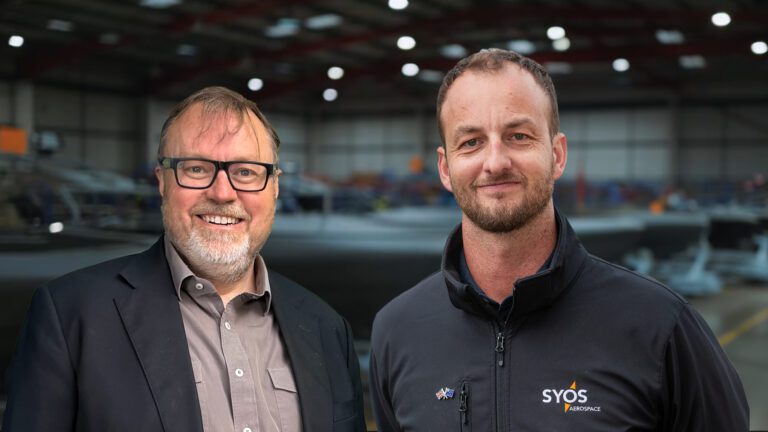
Join host Paul Spain as he sits down with Sam Vye of Syos Aerospace, a trailblazing New Zealand tech company shaking up the unmanned vehicle industry. Hear how Syos rapidly prototypes cutting-edge drones, outpaces global defence giants, and scales from Kiwi innovation to international contracts. Discover their unique engineering culture, rapid product development, and what it takes to compete with the world’s biggest aerospace companies.
Read the full transcript
Transcript is computer-generated and may contain errors.
Paul Spain:
Greetings and welcome to the New Zealand Tech Podcast. I’m your host Paul Spain. I was recently in Mount Maunganui visiting the New Zealand headquarters of Syos Aerospace and I recorded two podcast episodes with Sam Vye, Syos Co Founder and chief executive. Syos were grand award winners at the 2025 New Zealand High Tech Awards, taking away the coveted P PwC Company of the Year award. It’s a privilege that this is the very first podcast for Sam Vye and Syos Aerospace, much as New Zealand Tech Podcast was also the first podcast to feature Peter Beck starting back in 2014 at the unveiling of the electron rocket. Now Syos was founded in 2021 with operations in New Zealand, United Kingdom and Ukraine, helping them build and deliver advanced unmanned systems which operate in the air, on land, on water and with their most recent acquisition underwater too. Previous reports indicate Science has won more than 65 million in UK defence contracts. Sam grew up in the United Kingdom and studied geophysics, which launched his early career in exploration technology across South Africa, Australia, Indonesia and the UK.
Paul Spain:
He’s been experimenting with drones now for more than 12 years. After moving to New Zealand, he managed Yamaha’s unmanned helicopter division for the Australia and New Zealand region. Next he co founded Envico Technologies, building custom unmanned aerial vehicles or UAVs for conservation projects including in the Galapagos. Syos emerged from this work at Inveco with a focus on defense and commercial contracts. Their flagship SA200 unmanned helicopter, which carries a 200 kilogram payload, works in concert with SIOs Unified Autonomy and Mission System, representing a unique middle ground between small electric drones and full scale crewed helicopters. Syos blazing fast agile development model, heavy use of commercially aVyelable off the shelf components and multi domain architecture have allowed them to rapidly prototype and deploy groundbreaking new systems. Sios utilized the Taw Whaki National Aerospace center in Canterbury to test UAVs, a facility that is also used by past NZ Tech podcast guests Care Aerospace and Dawn Aerospace. In this episode, Sam will share how Syos unexpectedly beat major global defence prime contractors to win their first significant contract, how they’re building manufacturing capability in both hemispheres and the engineering culture, enabling their incredible pace and ambition to to scale to what Sam describes as rocket lab levels within the next few years.
Paul Spain:
Now we also have a video version of this episode on YouTube which includes footage of Syos autonomous technologies. So feel free to jump across to NZ Tech Podcast’s YouTube channel to subscribe and watch the episode and to see exactly what we’re talking about before we jump in. A big thank you to our show partners, One NZ, Spark, 2degrees Workday and Gorilla Technology for their support. Now let’s jump in. Well, great to have you on the podcast, Sam. Like to start at the beginning, tell us a little bit about where you were born and what your upbringing was like.
Sam Vye:
So, look, I was born in the uk. My upbringing was pretty standard. I mean, as a maniac. Used to break everything, think they could fix things. Did a lot of sports and I was always up for challenges and yeah, kind of doing a little bit mad things. I definitely didn’t come up through life going, I want to start a business and I want to be Jeff Bezos. So yeah, I didn’t start life like that. I just, I see things I want to build or I want to do and I just get into it.
Sam Vye:
I’d grown up in not, not quite farm, just sort of cottage with, with fields. Definitely you, you end up being able to do stuff at a younger age and you’re a little bit, kind of understand a bit more around being a bit more manual with things. Grew up in the uk, university in the uk, traveled around the world, did all sorts of maniac jobs and lived in Australia for a while, lived in London for a while and then I’ve been in New Zealand since 2018.
Paul Spain:
Yeah, so what did you study?
Sam Vye:
So I went to Leicester University, actually studied geophysics, not engineering and I, I studied geophysics. Why? Because I loved physics and maths and I wanted to travel as much as possible and I loved being outside and working outside and the thought of just sitting at a computer doing design work, you know, bored me, to be honest. So I, that’s what I did. I was quite terrible at academia. In fact, the grades, trying to get into university was a challenge in the first place. My grades in the UK, you might be aware you get two years of A levels when you’re 17 and 18. The end of my first year, my grades, you get the standard A, B, C, D, E, F. My grades spelled dude pretty bad.
Sam Vye:
Two Ds, A, U and an E. And a U is unmarked. It’s because it’s so bad. So yeah, very, very poor grades. And then I managed, I had to reset two years of exams in one year, managed to get through, got into Leicester University, which is a good university. And as soon as I graduated I was then off to South Africa for work and then I went to Australia for work, Indonesia for work. And so, yeah, traveled around a lot.
Paul Spain:
So tell us about these roles that you took after you finished studying.
Sam Vye:
Yes, all in the, realistically actually all in the sort of exploration area. And that’s where we were using sort of physics, electrical conductivity, gravitational forces, magnetics, to basically identify potential natural resources. And my role was either being a physicist on the, on the projects or well, less so when they realized I was really bad at it, I, I ended up working some pretty fantastic locations and I went through from you know, basically being a physicist on some of these exploration jobs through to then because I had quite good commercial awareness and I could quite good problem solving. And so I ended up moving into more like a project development kind of role where I’d look at problems and try and work out ways of solving them. And that’s actually where I started understanding around the use of drones, you know, 12 years ago because I started looking at the actual applied use of using drones for very, very large projects, whether it was sort of offshore exploration, onshore exploration, what. So probably a little bit different to a lot of the other robotics company startups where guys had come through from university and mechatronics or done a PhD or whatever. So I definitely came from it, from the scientific application route after doing that and understanding the use of drones. I had a startup in London which that ultimately failed and I got recruited by Yamaha to run Yamaha’s unmanned helicopters division and that brought me to New Zealand I guess.
Sam Vye:
So what Yamaha liked was the fact that I had understanding around how drones work ultimately at least you know, at that time, general principles. But I had vast knowledge around the application of drones, uas, uav. So that brought me into Yamaha. I had a stint at Yamaha and decided to co found with my then business partner, Invico Technologies, which was a conservation technology related company. So you know, building drones and then providing services into conservation and then that’s ultimately, I think we’re on our first ever job in the Galapagos, talking with a customer and they said, you know, the really big problem is how do you do projects in remote locations where it costs a lot to bring in a helicopter to do a job that’s bigger than what you can do with a small electric drone like that only lifts 10 or 20 kilos. So they told me that problem statement literally, I think on our first ever job in the Galapagos. And from that day, I then went back that evening and I started doing research and I realized actually this problem can be solved with unmanned helicopters that take the endurance and the payload, sort of the payload capacity of a traditional helicopter, like a Robinson’s R44 kind of thing. But combine that with the benefit of drones, which is, you know, first off, your safety.
Sam Vye:
No one’s in it automation. So you get sensors, AI algorithms, as well as combination of. Actually, because it’s a. Because it’s an unmanned helicopter, it can be designed correctly to be cheap and be transported easily. So, you know, the idea around doing unmanned helicopters, or SA200 formed then in just after our first job in the Galapagos. And that’s really why Syos was formed in January 2021, to solve that problem. Right. Fill the gap between electric drones and large traditional helicopters.
Sam Vye:
So SA200 was the first product and that was going to be the product that was going to be the size. But in 2023, we obviously expanded that because we realized that our capabilities could be applied in different areas as well as do it for different vehicles.
Paul Spain:
Fantastic. So in New Zealand you worked with Yamaha, then on to Invico. And So that was 2019 that you. That you co founded NVCO. And then there must have been quite a crossover between what you were doing there and really what things, you know, became with size because you were, you know, building drones and so on at that stage.
Sam Vye:
Yeah, I mean, so that, yeah, definitely the, the knowledge it all sort of helps build up, right, how to build drone systems, how to operate drone systems, what is practical, what’s not practical, what works, what the supply chain is. So, I mean, at Invico’s mission. So I founded it with a guy called Cameron Baker. Invico’s mission was how can we help conservation and environmental protection and forestry with the use of drone technology. So we. Our first ever project was the Scalapagos Project, where we featured in the New Zealand Herald Kiwi drones dealing death from above, which I found quite a funny headline. So we became known for basically dispersing. We built a couple of drones, then we provided a service to conservation of using these hoppers, dispersing basically rat bait to kill rats in forestry areas and trying to eradicate them, you know, obviously such an important thing in New Zealand, and we were trying to eradicate them on, on islands and ultimately save native species.
Sam Vye:
So we started doing that and that’s really when I started learning. You know, obviously the idea of helicopters came around and I started learning around, well, you know, electric drones have a limited endurance, they might have a limited payload. And that sort of, sort of real, that product development knowledge started coming about through linking both engineering and operation and application all at the same time. So that was, yeah, that was really useful actually. I think we built the drones in like four days. I remember New Year’s Eve, my wife came out to my father in law’s garage or shed up in North Auckland, Warkworth, where we were building these drones. She came out on New Year’s Eve and toasted me at midnight whilst I was heading the drone. So quick cheers, you know, have a glass of Prosecco, you know, enjoy a glass of Prosecco.
Sam Vye:
And then went back to building. So you know, I think we were building until like 3am every night for four nights and just about test flew the drones, went straight to Auckland airport, jumped on a flight, flew to the Galapagos, jumped onto a boat because these guys needed to use this boat to get to this island. And we’re like oh God, this is scary. We’ve literally never done this before. I think we’ve flown these drones for collectively about seven minutes. Let’s just try and make it work. And so we worked. You know, it was a difficult mission but such a fantastic opportunity.
Sam Vye:
And just for the technical aspect of it we did with these two drones, we each one carrying about 10, 11 kilos of bait. We did 143 flights in a day and a half flying off the back of the boat. Cameron did the piloting and I did all the battery changes and the bait hauling and I had to load the bait on each, on each drone. I was wearing a full suit because of the pesticide requirements along with a proper ventilator system in the Galapagos heat. And so I was rapidly losing fluids and having to work super hard to get this done. But you know, this was, this was a world first in doing that. Firstly that many flights that, that quickly and it was all automated across the island and all doing it off the back of a boat. And it’s quite funny even now we see other companies, you know, even that ones that sell into the military going oh, we flew off the back of a boat in a trial with one little drone and you’re like dude, we did it in an operation in the civil sector for 1% of the budget and we did 143 flights.
Sam Vye:
And we did a successful operation as well. So completely different.
Paul Spain:
So tell us about founding Syos and moving on from Invico.
Sam Vye:
Yeah, so obviously Invico is focused on ultimately their environmental and sustainability and conservation. And when the idea of. I saw a huge opportunity with the SA200, the unmanned helicopters or uncrewed helicopters, I realized that, well, you’re not actually going to get the return on investment just doing conservation. It’d be very difficult. You’d either end up broke or with a really crappy product because you didn’t invest enough in it. So we decided to split out SIAs as a subsidiary, to which we then later actually had to go. Well, it’s not a subsidiary. It actually has to be a total standalone business because Syos is a dual use company.
Sam Vye:
It sells both to, you know, defense as well as the civil sector. So it was, it would have been difficult, you know, dealing with Invico, that is a conservation tech company and another company that was selling drones to, you know, New Zealand Defense Force. There was a UK tender which went out looking for specialist uncrewed vehicle integrators. Guys that, you know, not build in small drones, but guys building, like big vehicles. And we thought, well, we do helicopters, we do pretty big vehicles. They put out this tender going, hey, look, we’re looking for specialist integrators. We need rapid prototyping of uncrewed boats. We’ll give you some boats.
Sam Vye:
You need to make them fully autonomous, unmanned, fully autonomous. And I remember seeing the tender come through and I was like, boats now we don’t do boats, we do helicopters. And we sat on it and then I remember seeing a little post that, sorry, an email that pinged through going, last, you know, three days to submit for this tender. And I looked at it, I was like, had a quick chat with the team. I said, what do you think? They’re like, yeah, we can definitely do it. And I’m like, yeah, all right, we’ll just. So I quickly chucked in a. Chucked in a, you know, a two page response because they’re super short responses.
Sam Vye:
Chucked in a response on like a Sunday afternoon. Two days later you get the email going, thank you for your response. You’re invited to the Dragon’s Den interview next Tuesday in London. Oh, shit. Okay. So we turned up and you saw the list of all the companies that are invited for the interview. And there’s all the big primes, all the specialists, USV companies and the like. And we looked at it and we’re like, oh, no way, we’re not going to win.
Sam Vye:
And I was like, oh, I can barely afford the flights to London, but go on, let’s give it a go. So I jumped on a flight, did the presentation on the flight, landed super tired, Jet lag. Daz. Anyone who does 27 hours of flights around the world, you know what, you know what I mean, it’s bloody challenging. Cruised into the interview along with my colleague Matt and we just presented, I mean I, I don’t even know what I said because I was so tired, but we presented and we’re like, no, no way are we going through, you know, they’re picking like four companies out of ten. I’m surprised we even got got to this far. Anyway, we’re driving back to the airport at the gate, get out my phone, looking through the emails and it’s like, congratulations to these four companies. And Syos Aerospace was, I think we were either second or second or third ranked.
Sam Vye:
I was like, holy hell, how do we do that? And alongside three other companies, well known companies. So in a way we turn, you know, we get the development contract. Okay, so this is the, this is a key point, you know, it’s like, right, you do the development and then at the end of two months or 10 weeks, whatever it was, there’s going to be a trial and then there’s a follow on large contract for whoever wins that trial and we’re like, no, no way, we won’t. I’m just glad to get the development, you know, a million pound development contract.
Paul Spain:
Great.
Sam Vye:
What happens? We turn up to the trial and we came joint first at the trial and so it means then we get a full on contract.
Paul Spain:
Now the technology that you had to, you know, pull together to be able to, you know, first of all, you know, come up with the SA200 and then, you know, go into boats. How do you pull that together? Because all of this has happened, you know, very, very quickly in the scheme of it. It’s always the thing when, you know, when I first came across Syos, I was trying to join up the dots of how does this happen and how does this happen, you know, at such pace.
Sam Vye:
Yeah.
Paul Spain:
Is this something that wouldn’t have been possible if we were to roll back say 10 years or 15 or, you know, there must be some elements of the technology that you can get your hands on that you can integrate and pull together at a pace that wouldn’t have been possible in years gone by. And maybe, you know, obviously combination of, you know, the people, talent, the technology and you end up creating something that’s, that’s quite disruptive to say, a player that’s been out there and doing this stuff for, you know, for a long time and is used to doing it other ways.
Sam Vye:
Yeah. So we are really. Our product development strategy is very, very aggressive and it’s very focused on minimum viable capabilities. So where there is cots, component, commercial, off the shelf. If it’s suitable, we’ll grab it. If it’s not suitable, that is too costly, you can’t flex it, it doesn’t fit. If, you know, the supply chain doesn’t meet the supply chain needs, then we’ll drop it and do it ourselves. So for size, you know, realistically, how we are able to really quickly develop ultimately any, any uncrewed vehicle now is because we have this central, central autonomy system we call aims AUTONOMY and Augmented Intelligence Mission System, which is a bit of a MAD mouthpiece.
Sam Vye:
So AMES aa that powers all the vehicles. Obviously not all modules will be applicable. You know, a small air drone will have, you know, won’t have all the same modules as a, as an autonomous boat, a usb. We will look at how quickly can we develop that hardware for the vehicle and then what parts of the, of the software do we apply to it? And so because we, we, we, we have that all in house, we, we can make tweaks really quickly and we can also either modify existing vehicles or we can develop new vehicles very, very rapidly. We’re not looking to reinvent physics at all, but what we are looking to do is be really, really smart with how, with what problems there are in the world and how can we rapidly develop the minimum viable capability product that fits those needs and do it really quickly, but ensure it’s robust, it completes the mission, it’s survivable, but at the lowest possible price point.
Paul Spain:
How did you end up ultimately, you know, doing, doing that? You know, with this particular contract, you had what, two months to put together your prototype?
Sam Vye:
Yeah, yeah. So did you sleep? Oh, so those are a couple of stressful. I definitely have PTSD from trials. Right. Engines stopping, you know, rotor blades stopping. That’s a disaster. If you see an air vehicle, rotor blade stopping. But look, this, this particular one, you know, this, this sort of, one of these first contracts that we had, this development of, conversion, I should call it conversion of boats into unmanned boats.
Sam Vye:
Yeah, we did absolutely everything we, we could to try and pull this project off. Getting the facility was done, got the team there, but we’re trying to build the team as well at the same time. So we had constantly adverts going out to try. We had, you know, the team would spend 12 hours in the, in the, in the, in the shop looking at like, modifying the boat, adding on various bits of hardware, writing the software, trying to tap into. We hacked into the Suzuki control so that we could control their outboards. You know, we’re doing all these things. But they would spend 12 hours a day doing that and then another two hours a day doing interviews to help keep building the team. And, you know, we were very new.
Sam Vye:
People would turn up and I’d just say, look, get here as soon as you can. They would walk in and I’d be like, here’s the bank card, go down to PC World, go buy a laptop. And they’re like, what? You know, so go buy the laptop. They come back and they go, right, this is your job. You, you are now doing, you know, we obviously trying to get a bunch of software guys employed in the uk. It was a very difficult and very, very stressful couple of months and we really had to think outside of the box on how to pull it off. But to be honest, we’ve done this a few times now. We’ve been.
Sam Vye:
And one of the reasons why our customers have come back to us is because they know that we think outside the box. If they have a problem they need to solve and they’ve got eight weeks to do it for, say, a totally brand new vehicle, we can give it a very, very good go to try and pull it off. And usually we’ve definitely had a lot of success. We’ve had some failures, but we’ve definitely had a lot of good success. And it’s how we’ve worked with our customers to try and complete it that I think the customers like.
Paul Spain:
Yeah. And obviously a lot of technical challenges doing this type of work. How have you managed to solve those sort of problems? Have you found the right sort of people and created a culture that is willing to, you know, get in there and, and figure it out? When you’re operating in a manner that’s, you know, not, maybe not quite the, the norm, right, you’re operating at a much faster pace and you’re achieving, you know, things that if it was a company that, you know, might take them.
Sam Vye:
A lot, lot longer or they might.
Paul Spain:
Not be able to achieve the same results.
Sam Vye:
So, yeah, culture is completely the, the, the, the, the, the nucleus to how we can operate. So, yeah, tempo is everything, right? So we’ve got to have the culture, we’ve got to set the culture right so that people Focus on deliverables, milestones and not what time they work, but very quickly. New Zealand has not that much experience in the aerospace sector. There’s obviously some really good high quality, but the quantity isn’t there. So what we found is we do import a lot into New Zealand. We also, you know, we recruit from the States, from Europe into New Zealand. And what we’re seeing is we bring the experience in, but then work with the local universities to get youngsters who’ve done a master’s or even better a PhD, which is fantastic. Bring those guys in straight away and then you get sort of real smart, innovative thinking.
Sam Vye:
But you also get like the experience that we’ve imported as well. So we see that a lot, you know, but even with the uk, with our UK team that we have a lot of hybrid work and we have UK team moving to New Zealand, New Zealand team moving to the uk, that’s really beneficial because, you know, the experience in the UK is huge. You know, in aerospace, in maritime, the experience is really big. And we can combine the like the Kiwi culture of engineering or the mentality of innovation of that number eight wire thinking that gets overused all the time. But we can combine that with experienced people to really try and think outside the box. So we typically stay away from the sort of quadcopter market. We focus on the attritable vehicles, a lot of the bigger stuff or more complex stuff. And that’s really our sweet spot, to be honest, where we really focus on that sort of minimum viable capability.
Sam Vye:
We can do a, a half a ton uncrewed helicopter. We can do a six wheeler UGV, we can do USVs that can go thousands of nautical miles or we can do a really cost effective USV. For example, our SM300 USV, uncrewed surface vessel. This is a six meter boat that can travel, I think we’re doing over 800 nautical miles of range with that. It has level three, level four autonomy and it’s got a bunch of. We can, we run it on Satcom. It’s satellite communications with a Starlink or other as well as Mannett radios. You know, it’s got a heap of stuff on it and we’re producing, you know, we can produce, we can produce about 50 of those a month if, if, if required from a single site with about, you know, we’re talking about 40 staff and that’s right now.
Paul Spain:
So obviously that’ll be scaling up as, as the demand, you know, based on demand. Right. And I guess that’s what you deliver what is needed at a given time.
Sam Vye:
Yeah, correct. Surge demand. Yeah, absolutely right. So, you know, if a customer suddenly needs 200 of those, we can knock out 200. And what I do know is, and I’m proud to say it, you know, whether it’s our helicopter, whether it’s our boat, whether it’s our ugv, we deliver. The capabilities that those deliver are at an order of magnitude more cost effective than the traditional prime. And we are still more competitive than even, like the specialist SMEs that are just focused on that point of domain. Kind of one of the people do say to us, oh, you.
Sam Vye:
Across all the domains, that’s how does that work out? And, you know, yeah, they’re totally right. It’s a challenge to work out. But what we realized is actually it’s not. It’s not like the traditional way where it’s like, oh, that’s the army or that’s the Navy. And it’s. It’s actually completely joint now. Right. Your autonomy software.
Paul Spain:
Yeah.
Sam Vye:
Controls unmanned vehicles, uncrewed vehicles, robotics, you know, it doesn’t matter if it’s in the sky, on the ground, on the water, underneath the water, doesn’t really matter. So how we’ve sort of managed it internally. Well, actually, really the benefit that we’re seeing now is we have air drones taken off from our boats, from our uncrewed boats, and we have ROVs or UUVs, subsurface vehicles going off of our boats as well, and they’re all being controlled through the boat, being rebroadcasted back through the satellite communications back to our gcs, our ground control station. So a lot of the, you know, we’re seeing so many benefits from this strategy of being domain agnostic. So, you know, I think it’s coming through really strongly in terms of our product development strategy.
Paul Spain:
Yeah, that’s great. And I guess, you know, when you look at sort of competing in the market, the fact that you are across those multiple domains, how beneficial is that, you know, in the contracts and so on that you’re going for at this stage, or in most cases, you find the opportunities are on one domain or another.
Sam Vye:
Yeah. So there’s definitely opportunities across all domains. There’s different maturities. You know, the market is different, has different maturities. Certainly, I think air domain is the most mature. Everyone knows of DJI drones. You can buy them at the bloody, you know, the supermarket almost. Right.
Sam Vye:
Whereas you can’t on uncrewed boats. And you can’t, you know, you can’t definitely not on, on subsurface vehicles either. So there’s different maturities. Certainly. What, what we definitely did do when we jumped into the other domains was we took a lot of the knowledge and the systems engineering which is mature from the air domain, applied it into the other domains as well and that gave us a really good head start over some of the other companies that might have just been maritime specific because they only have maritime knowledge and didn’t have the knowledge of potentially some of the commercial off the shelf hardware that’s applicable for air domain that can be repurposed into maritime domain as long as it’s adequately controlled for IP ratings down here. It’s most of our mechanic, a lot of our mechanical electrical team for the air domain. So this, this sort of whole area is air vehicle focused.
Paul Spain:
Yeah.
Sam Vye:
Because obviously we’re doing uncrewed vehicles across air, land and sea. So whether it’s uncrewed helicopters, interceptor drones, whatever. I’ll take you through this one. So in here, this, it’s set up into, into program areas and in those program areas you’ve obviously got small batch production development, you know, production interceptor drones, helicopters, boats, whatever, and, and, but with aVyelable space really to progress into a serial production of systems, you know, we, we’ve obviously got other facilities here in, in the mounts. We’ve got big production facilities also in the UK and an operation also in Ukraine. So we do a range of like quadcopters, but these are, these are diamond dozen. These are super simple. We don’t really actually care too much about these.
Sam Vye:
These are really just for our testing. You know, we test various machine learning algorithms, various sort of control systems on here. The ability for drones to fly without GNSS or gps. Yeah, a lot of those.
Paul Spain:
Definitely fascinated to delve into.
Sam Vye:
Yeah, so it’s obviously really important and some of the areas that you operate, right? Yeah, yeah, yeah. There’s two things. One is data link, the other one is position estimation. Where, where is the drone? And you need one or the other at least to, to successfully conduct any mission. Yeah, so yeah, we do a lot with a lot of consideration of those two factors depending on what the customer requirements are, what the market needs are and then also because it depends on the cost as well, helicopter drying is substantially different price into a small drone. And so with it you can put different subsystems on as well. You know, whether, whether a small, a small cheap drone, you don’t want to put an expensive camera on which the camera can give you position estimation. So you don’t need gps.
Sam Vye:
But with A, you know, it might not be cost effective to do that. So there’s a whole heap of factors to consider when, when you’re doing the sort of development and understanding in what is the minimum viable capability requirement. So a lot of our product development, you know, we’ve got multiple programs underway but they’re all focused off of the idea of what is the minimum viable capability to complete this mission. And then you can, then you can realistically develop something that is an order of magnitude more cost effective than the existing traditional competitors.
Paul Spain:
And that’s obviously one of the key things as like doors for you is your pace and that you’re, you know, competitive on, on that front and obviously that what you’re producing really, you know, really stands out.
Sam Vye:
Yeah, I, yeah, yeah, definitely. A lot of our sort of contracts have come from the sort of word of mouth, if you like, or single source because we’ve, you know, both off of the quality and the operational evidence and the survivability of our systems, the robustness of our systems, but also the fact that we can basically co design with end users where required and. Or we do really rapid feedback. Sorry, really rapid development, spiral development based on end user feedback. We try to have a real tight feedback loop for that. We’re one of the world’s largest USB manufacturers. USB unmanned surface vessel or uncrewed surface vessel, typically on the sort of. We do like 6 meter of vessels up to kind of much larger.
Sam Vye:
We’re working on a 9 meter and a 12 meter right now and we’ve got concepts underway for a uncrewed offshore patrol vessel right now. So all based off the same architecture. But this is our development boat. This is a Frankenstein because our software team that are headquartered here do all of their testing on this poor boat. And so any new upgrades, it’s just any new hardware slapped onto this and tested by the software team. But in the uk, the UK is where our maritime engineering team are and the main USB production sites we have, which realistically is regional. So our UK site looks after European production. Our team here in New Zealand look after ultimately the APAC region as well as it’s the company headquarters.
Sam Vye:
And is that something you do with.
Paul Spain:
Partners in the UK or do you, is that your own facility?
Sam Vye:
Yeah, so that’s all us. This hull we didn’t, we don’t produce. We just bought this hull to use for testing.
Paul Spain:
No point you putting your time into.
Sam Vye:
Yeah, but in the uk we, for the hull, we actually contract manufacture out the hull. But in New Zealand rather than what shipping that over here we just grabbed one that’s similar specs. Yeah. So with this vessel, it is, has multiple communication links. It’s capable of going ultimately fully autonomous, operating under coal rigs, which is collision avoidance at sea with both radar collision avoidance or object identification, vessel identification along with the pantil zoom camera. So that’s both day and night. So it’s an RGB and IR sensors as well. It’s got an array of other communications you can see.
Sam Vye:
And these. Actually we’ve just chucked these on just quickly because we’re doing some testing where USBs operate. They, they, this USB is going to be launching air drones, UAVs from it and we’ll have a communication link. So you know, I could be in my office controlling this boat that could be, you know, could be 500 miles offshore and launching air drones out of it. And I’m communicating with the, through the boat through satellite communications and then it feeds, then there’s a rebroadcast between the boat and the air drone using basically Manet radios, mesh data links that set up a mesh. Fantastic. Our boats in, in the uk which look very similar to this, you know they’re, they, they, they go pretty rapid. I think we’re like 55 knots kind of, kind of speed.
Sam Vye:
So what’s 55 knots? Like over 100ks an hour. So this, all this will go faster. The New Zealand speed limits. Yes. Yeah, yeah. There’s equal interest Amongst, between our USVs and our advanced air drone systems. And now obviously we’ve penetrated into the subsurface domain with the recent M and A in the last year multi domain vehicle applications. So like our 9 meter boat can go out and deploy air systems and subsurface systems all at the same time, all operating on the same mission system by one person.
Sam Vye:
Yeah. So that’s a real shift to where what’s like common operations are at the minute. So yeah, so that’s, that’s really us a little bit different to the competition. The company is worth the capabilities. Yeah, yeah. Not the products. Yeah, our products is like short term revenue and how quickly robotics is moving. You want the capability to continuously develop, not just have a cash cow because that cash cow, this is not agriculture, this is not, you know, just pharmaceuticals.
Sam Vye:
Yeah, you need to consider, continuously develop. So actually having the company with the team of the engineering. Yeah. That gives you the capability to do that rapid development. So the subsurface ultimately they are experts in vehicle design. This for example, this controls a lot of our drones. This has all the electrical systems on Board. This is the system that gets deployed into pipes.
Sam Vye:
It just gets fed in. It’s got massive grabbers on the. On the front. And so what. What this does is. This does is it can go along through the. Through the pipe and then just grabs onto. Onto big bits of cement.
Sam Vye:
Yeah. And then literally just moves itself back out of the tunnel. So it can go kilometers into tunnels, small, tiny ones where, you know, Hydra Power stations can ultimately utilize systems like that to clear really cost effectively and quickly clear cooling pipes and from Horse. Horse. So that’s. That. That was previously done by Bay Dynamics and it was just an example of some of the work that that TEA is capable of.
Paul Spain:
Yeah.
Sam Vye:
So I guess you’ll put it to different use over.
Paul Spain:
Over time as opportunities arise.
Sam Vye:
Yeah, so not. Yeah, yeah, correct. So. So maybe not just the vehicles, but it’s more about the capability, so that we’ve got that capability. So at the minute, we’re working up a couple of very interesting programs which, yeah, put us, like, in significant positions to do things that, you know, just haven’t been done before. So, you know, we’re. We’re in a pretty good. Pretty good spot.
Paul Spain:
Yeah. If you were to, you know, kind of look 10, 10 years out, what would you imagine size would look like at that point?
Sam Vye:
Hopefully, let’s say competitive streak is coming through. Let’s rocket lab size.
Paul Spain:
It’s pretty exciting.
Sam Vye:
Absolutely. By the way, not 10 years. We want to do it in three years. And there’s a running joke where we’ll be in a meeting and say, one of the. On the engineers or project managers or whatever, production managers will say to me, oh, you know, we’ve got this for. This is the work activities we’ve got planned over the next phase. And I say, great, when are we going to deliver it? They say, March. And I say, sounds like February to me.
Sam Vye:
And so there’s an ongoing running joke. I always move everything left. And so I kind of feel that everyone move before they tell me they move it. Right. So we come up with this quite nice equilibrium. At Syos, we absolutely want people to send expressions of interest if they want to join sas, because we are doing amazing things, we’re delivering really quickly and the stuff that an engineer learns here in a month will be equal to a year at a prime. All right. Because they get exposed to so much so quickly.
Sam Vye:
But saying that it’s also not an easy place to work because we go hard and fast and people will be tested.
Paul Spain:
Do you get much sleep?
Sam Vye:
Oh, this week? No. No, I think I’VE done a few 3am ends and then my wife was waking me up 7am going, you gotta get to work. I was like, shit, yeah, look. Yeah, no, not a lot. But sleep and time outside of work is really, really, really, really important, you know, So I love it when guys actually turn up late here for work because they went for a surf. I’m like, awesome. Or a run up the mount or whatever it is. Right, Absolutely fantastic.
Sam Vye:
Because it’s really important that people, you know, if they’ve got enough, let the hair down and relax now. Obviously, if we’ve got loads of milestones during, at 9am and they went for a surf and they were late, then I’ll be like, dude, there is a balance. Yeah, work life, balance is super important. And do, do I get enough sleep right now? Probably not. Will I shortly? Hopefully, yes. Because we are building out our team, you know, our exec layers becoming. It’s being filled out right now, actually. It’s kind of a lot stronger.
Sam Vye:
We’ve got a great structure that we’ve, that we’re deploying globally as well. And you know, the size is right now we’re basically a Neo prime or set up the structure to grow into ultimately a corporate prime. Okay. So that’s really our goal.
Paul Spain:
Amazing. Anything else you’d like to add, Sam?
Sam Vye:
Anything else? This has been a fantastic podcast, so thank you very much for having me on. I’ve heard all the other podcasts that you’ve done. We’re actually having a joke about that earlier. I have heard a lot of them. So yeah, it’s brilliant to be on this. So thank you. And, and look, all I would say is, you know, we will make mistakes right as we’re going, but we have a lot of things that we do right and the things that we do right outweigh the things that we do wrong. And what I’ve seen is it’s better to make a decision really quickly and fail than ponder for a long time because otherwise you’re not going to get the successes.
Sam Vye:
And obviously it’s, it’s a pretty hot market in the drone robotics sector right now and we are very, very well positioned with our setup, culture, staff and to really maximize on that and ultimately be a global leader. But I wouldn’t say judge us based on all the crap I’ve just been saying, but judge us on the actual evidence of what we’ve delivered, of what we’ve put into production and ultimately what you actually, the core, what you see in both the hardware and the software. So that really is the evidence as Syos is shifting gears and is moving places.
Paul Spain:
Thank you very much Sam Vye. Really appreciate your time and excited to follow the Syos story forwards.
Sam Vye:
Thank you mate.
Paul Spain:
Well, I hope you enjoyed hearing from Sam Vye about the groundbreaking work SIOs are doing from Bay of Plenty, New Zealand as well as in the UK and Ukraine. In breaking news as we release this episode, it has been confirmed that PsyFs have been shortlisted for a UK Ministry of Defence contract for development of futuristic helicopter drones that would operate alongside manned helicopters. This contract is potentially worth £100 million or more than 200 million New Zealand dollars. If you’d like to hear more about the science story, please ensure you’re subscribed and following the New Zealand Business podcast where we will be featuring our second podcast with Sam Vye shortly. As mentioned, SIOs were winners of the PWC High Tech Company of the Year at last year’s NZ High Tech Awards. These awards acknowledge and celebrate the amazing individuals and and companies doing amazing work here in New Zealand. Entries are now open for this year’s awards and their launch events are kicking off around the country too. Find out more@hightech.org nz and before we go, a big thank you to our show partners, Gorilla Technology, Workday, 2degrees Spark and One NZ for their support and thank you for listening in.
Paul Spain:
This is Paul Spain signing out. I’ll catch you on the next one. The New Zealand Tech Podcast brought to you by Guerrilla Technology Proactive and Strategic.