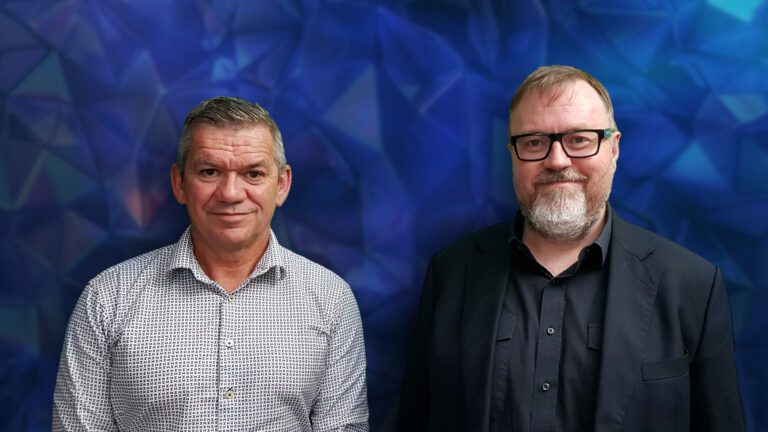
Join host Paul Spain and Grant Straker, CEO of Straker.AI, as Grant shares insights into Straker’s journey from building early websites to a leading provider of AI-driven content automation, verification, and translation services. With operations spanning ten countries and more than 150 staff, Straker’s innovative approach leverages both human and machine collaboration to navigate the complexities of AI. Join us as we discuss Straker’s commitment to innovation and how they are pioneering technologies that are shaping the future of translation and AI verification.

Apple Podcasts Spotify RSS Feed

Special thanks to our show partners: One NZ, 2degrees, Spark NZ, HP, and Gorilla Technology.


Episode Transcript (computer-generated)

Paul Spain:
Greetings and welcome along to the New Zealand Tech Podcast. I’m your host, Paul Spain and my great privilege to have Grant Straker joining us today. Welcome along Grant, how are you?

Grant Straker:
I’m good Paul, and it’s great to be here.

Paul Spain:
Of course, a big thank you to our show partners to One NZ 2 degrees Spark, HP and Gorilla Technology. Before we sort of delve into the nuts and bolts and, you know, hear some of your story, maybe you can just give us a short overview on what Straker is your company.

Grant Straker:
Right. So we’re a New Zealand based technology company and our main business traditionally has been around translation and localization using machines and humans. And now we are very much an AI verification company that’s at the heart of this new evolution of AI in the world.

Paul Spain:
Exciting. And just to give listeners a feel for your scale.

Grant Straker:
Yep. So we’re 170 staff in 10 countries, sort of, yeah, mid-40s million in terms of revenue. So a reasonably sized New Zealand technology company.

Paul Spain:
Yeah, that’s great. It’s always, always good to start at the beginning. So tell us a little bit about where, where you grew up.

Grant Straker:
So I grew up in a few places. I was actually born in Fielding because my parents were in the Air Force down at Ohakia. Dad got transferred up to Whenua PI and then lived out in West Auckland. But then I moved to the UK when I was sort of 14. Parents went there for work, left the Air Force and went to UK to work and so grew up, went to, finished my schooling years there. I really didn’t get on well at school. Like I moved to the UK and I just, I think I spent my last couple of years at school. I probably, I left before I was 16 actually.

Grant Straker:
Like I wasn’t a dumb kid. I was a pretty bright kid at certainly science and engineering and stuff, but I certainly struggle with English. And so, you know, my wife would say I’m dyslexic with adhd. That’s how she would describe me. I think that’s how she often describes it. So being kind of, you know, struggling with English and spelling and stuff like that in the early 80s at school was not a great place to be, but I was very good at sort of maths and science and actually I got a, I got an aircraft engineering apprenticeship because dad was working for the airline and they said well there’s some apprenticeships but you have to pass these things. And he just bought me these big aeronautical books, you know, like, and said you need to study these. And so I Was sort of left scored and I studied them and it was a super tight job market.

Grant Straker:
Like it was a massive recession in the early, you know, early mid-80s in the UK, like the whole coal miners and all that stuff. And so a lot of people are going for jobs. And so I was kind of competing with people that had done university degrees and aeronauticals stuff or inaugural engineering and I actually passed it. So I just taught myself that I could teach myself anything I wanted to learn myself without having to go to a university or without having to go to anything if I just wanted to apply myself.

Paul Spain:
It’s a great realization, isn’t it?

Grant Straker:
Yeah. And I just went right, if I can do this and beat people who have gone to university then, you know, and which did suit me in good stead when I taught myself how to program computers 20 years later and just did that. So. Yeah, yeah, yeah. So that was my introduction to sort of working life. And then, you know, then I eventually decided I wanted to join the army. I came out of a military family and in comparison to the youth of today, I guess if you’re a teenager or something, you know, the ability to travel the world and do cool things in the early 80s or mid-80s, unless you’re in the military was very limited. You know, airfares were super expensive.

Grant Straker:
Travel was hard. Everything was just, you know, super hard nowadays.

Paul Spain:
Oh, it was my, I mean, my parents sold their house so that we could go to the uk, Right. It was, you know, three. A three month trip. It was like, okay, sell it, sell everything up. We came back with nothing.

Grant Straker:
Yeah, absolutely. And that’s exactly right. And so these days people are flying around the world for, you know, 800 bucks or something.

Paul Spain:
Yeah.

Grant Straker:
And I really, I guess I just had that, that I wanted to travel and I wanted to do cool stuff and I got to do all of that in the army. When you go back to that time, particularly that whole era after Lakers and then going into the army was just how much sort of a, you know, a deep recession really affects a lot of people. You know, like you join the army and there would be guys there that, you know, I don’t know, hadn’t done certain things, you know, hadn’t had a certain type of meal or hadn’t done so because there’s just no money. They’d come out of the coal mines where they thought they were going to go, and then they’re suddenly chucked in the army. And also how many super bright people that end up on that career at that particular time. So a Lot of friends from that era ended up being very successful because there wasn’t anywhere else for. If you couldn’t afford to go to a university, your family couldn’t afford to. What did you do? You just tried to look for some adventure.

Grant Straker:
So you got a lot of really clever people, I think, in the military back then.

Paul Spain:
And so why did you decide to, you know, what was sort of the trigger to exit the Army? Life?

Grant Straker:
You’ve got a couple of choices. I think once you get into your sort of late 20s, especially with the military, you either recommit and you kind of. Then your pension becomes big enough that you’re in for life because then you don’t want to leave. And so, you know, like, if you do that, you’re in for 20 years or 22 years, or you decide that you want to do some other stuff in life. And initially I. I wanted to leave and then just be a pilot. And I thought, okay, well, I’ll leave and I might just do a. Do my cpl and do that.

Grant Straker:
And that was my initial plans. Then I was actually. I was hit by a truck, actually, in a quite severe car crash where there’s. It’s like sending out a terminator or like a truck jackknifed. A massive articulated lorry jackknifed in front of me on a country lane and smashed into me and crushed my leg. And. And that kind of affected me because I couldn’t, you know, I was in sort of rehabs and stuff for a long time, just getting all that sorted out and that sort of derailed that plan. And then I didn’t really know what I wanted to do.

Grant Straker:
But like, all things, eventually you go, right, I better do something sensible. I’m gonna need to do something. A lot of my family then, we were all spread out all around the world, like my parents, my brothers. So there’s four of us, we were all living in different parts of the world, and we all sort of came back to New Zealand at roughly the same time.

Paul Spain:
Yeah. What. What did you. What did you land on?

Grant Straker:
Well, what I did then is I sort of got a job with an engineering firm just in sort of engineering sales. And. And that was good. Like, it suited me. I was, you know, I enjoyed that. And again, kind of got me into a corporate work environment I’d never really been in before, the global company. And so while I was doing that, the. I kind of.

Grant Straker:
We were doing gas pipelines and having to work out sort of articulation of gas and all this sort of stuff. And I was trying to do these calculations. And then I tried, like, I’d never really turned on a computer and this is sort of mid-90s by now. And then I turned one on and then tried to use a spreadsheet to figure it out. And then I could see that it couldn’t quite do what I wanted. And then I was reading again, reading the manual that you got these manuals this big and these sort of Toshiba laptops or whatever they were back then, that, you know, you could actually look inside a spreadsheet and use VB basic. So then I taught myself VB BASIC to write this program. So then I did this program and wrote this advanced sort of.

Grant Straker:
Well, so advanced. Wouldn’t be advanced now, but it was pretty advanced back then. And then everybody, like, wanted this program because it works. And people around the world in this company were coming to me going, can you change this? Sort of, you know, like, can you change this and get this to work? And then that led me to go, it’s not really what I do, but I did quite enjoy doing it and teaching myself that. That sort of skill. And then I. I was like, okay, well maybe I should go on a course and sort of actually learn how to do this properly, because I’m just teaching myself. So I went on a course and it was sort of early Java back then, and, you know, languages.

Grant Straker:
And so then I just sort of went on the course that that company, we then said, right, you know, actually more than our instructor, so could you come and consult for us because we need some people to build some projects. And then I went, okay, well, it’s not really what I do for a living. I do something else at the same time. I met my wife roughly then. So this is late 90s now. 98, 99. And then. Or my wife to be.

Grant Straker:
And so we both gave up our jobs and then. And then started that. And that’s sort of how it started when we first started, we called it, like, first ever set it up. I just called it Straker Interactive because I was the only employee, so. And everybody back then that had a tech company put interactive on the end. So there was a whole bunch of companies called something Interactive, you know, like, it was just that.

Paul Spain:
I recall a few of them.

Grant Straker:
Yeah, yeah, now it’s all something AI. But like, I guess the lesson was that I did enjoy it. Like when I was coding and stuff, like, I did really enjoy it. I enjoyed building things and getting them to go. And so I, you know, try and give my own teenagers that Advice is, you know, if you actually find something that you really enjoy, then you should keep doing it, especially if you. Because you’ll teach yourself, you’ll learn, you’ll just. It won’t be a chore and, you know, it can lead to cool stuff. So that’s definitely.

Paul Spain:
Yeah, yeah, that’s. That’s good. So what, what did that, what did that initial work look like?

Grant Straker:
Yeah, so my wife. So we set up a company just in my flat in Ponsonby at the time and sort of got some contracts on the early websites in the late 90s, sort of early 2000s. And look. And that led on to around about 2000, 2001, Tourism New Zealand needed a refreshed website that was multilingual, strange enough, which is what led to this sort of where we are today. And so we had to design a system that could allow NewZealand.com to be in multiple languages. And we built that and then we ended up, you know, we built content management systems in multiple languages and allowed people to, you know, build these websites that could be done. We didn’t do the translations, but we, we had the platform to allow that to happen very early on. And, and, and we also found that, you know, we got distribution because we’re on the Adobe platform, so we’re Adobe partner.

Grant Straker:
So again, just another lesson, and it’s one thing to have innovation, but you also have to have distribution. So that distribution through that channel enabled us to be very targeted on what conferences we went to, the ecosystem we played in, and that allowed us to have a good sort of, you know, a good business. Very hard back then to raise capital. Totally different world to the sort of world that entrepreneurs today, tech entrepreneurs would live in.

Paul Spain:
Yeah, I remember in that era I’d never heard the term startup. Right. Yeah, I don’t know when I first did, but it was a bit of a revelation. So the technology you were building on in terms of content management and so on, you talked about being able to work with Adobe, so you were sort of sitting on top of some of their technology. How did that sort of help you in terms of your thinking? Because it sounds like that has been sort of a hallmark over the years for you to take advantage of partnerships with other bigger companies to get distribution and get out there with what you have to offer.

Grant Straker:
Yeah, look, that’s certainly where we’ve ended up today, and we’ve had periods where that’s been more difficult as you’ve started to transition your technology. So just to sort of close the loop from that Period into the current period. I guess around about 2010, 11, we could see that it was the first time that really AI translation had come into the mix. So Google Translate, if you like, you know, machine translation, had. And so we could see an opportunity where we could then start to build a platform that used machines and humans together integrated inside of our existing platform.

Paul Spain:
Great.

Grant Straker:
Right. And because we looked at that industry and back then it might have been a $30 billion industry, but only a billion of it was the technology component. So we also knew selling technology in there, which was initial thought, isn’t really going to get you the critical mass, but building innovation and then using it to sell the service made a lot of sense. So we started that journey about 2011, and it was a very painful transformation. Again, another key point is, transformation’s hard, doesn’t matter. And in the world right now, there’s a lot of people needing to transform their business models, and it is not easy. So, you know, I do know what that is like, and it was, it was painful. But I knew as soon as we got to the stage where we built a platform where we had machines and humans and the quality outcome was comparable to what we would have got with just humans, we knew we were in the game and we got a lot of pushback, like in the industry then.

Grant Straker:
We were the first people to really do it on scale. And we just used to get abused at like, industry conferences where people would go, you know, machines will never replace me. They’ll never be able to do this. They can’t do that. We were going, well, I think you might be taking the wrong, you know, the wrong, the wrong fork on the crossroad here. That was, you know, a lesson that we went very early into that process. It was very hard, but that, that sort of underpinned next sort of 10 years really of the business.

Paul Spain:
Now, let’s talk a little bit around the technology. What are the offerings that you have in the market now? What are, you know, what are your products?

Grant Straker:
Yeah, what are our products? So ultimately, we, we have two sides to our business. We have our legacy business, what I’d call legacy, and then we have our AI side of innovation. And so in 2023, certainly with the advent of chat, GPT and large language models, you know, sort of change the, the whole dynamic of the world overnight. Right. Particularly if you’re in our space.

Paul Spain:
Yes.

Grant Straker:
And things happen. So, so just what happened then was the, the underlying machine translation technology that you see in all of the AI engines already existed to pretty much the quality standard that you’re getting now, but you would pay more for it. So, so there were dedicated providers that had this type of tech and you would pay more for it. But obviously when the large language model version came along and the open source stuff, it dropped the cost of that. Which works for us because we were a consumer of some of that technology. And so what we do with our customers is we do. On the legacy side, we have legacy translation services. So people where we’re just providing translation services.

Grant Straker:
I’ll talk a little bit about that in a second. With people, with, with machines and people. So you know, the AI and the human, but in a kind of, you get, you do a, you do a machine translation and then it gets tidied up. Or we have customers where we’re doing certified translations because we, we have these big contracts in the US to certify all doctors and medical professionals, for example. And so there’s a whole bunch of stuff we do there. And then we have traditional technology play. So we have a translation management system which integrates into companies and people like Nike, which routes all of the content and manages all of the translations internally. And then what we have is on the other side now we have the AI side is our transition.

Grant Straker:
So then you’ve got AI translation, which is our Verify AI product, which I’ll talk about in a sec. And then we have our AI technology platform plays. So the whole world’s changing in terms of the way that they are routing content and doing automation and AI agents and these sorts of things are changing all of that. So that’s the future. And ultimately our future technology has to kind of disrupt our legacy technology. So we don’t get to control when customers might switch or when they change the process because they have a whole bunch of other stuff going on. But we make sure that we have that offering for them. And yeah, and so that’s what the technology does in terms of where we’ve ended up at the moment.

Grant Straker:
And I guess I would put AI because it’s so critical to this whole process in sort of three phases. You know, the first phase of AI was the infrastructure and the chips. So that obviously with your Nvidias that go from the world’s 10,000th most valuable company to the world’s most valuable company in a very short period of time. And that’s because that chip enabled the models that we had been running for machine translation to basically run like on steroids. Yeah. And so suddenly it’s super useful. And then you’ve had the model era. So Then suddenly you could build these models that could run on these chips.

Grant Straker:
And so that then propelled the chatgpts and all the rest into stratospheric valuation territory as these models sit on top of these chips. And now we’re in the application layer of AI where people start to build useful stuff that actually can solve really useful problems using the models and the, and the infrastructure. And it’s this area now that we find ourselves in at a base level with AI. The way that we, we approached this was well, how will you know what would be the biggest problem with AI? And the first early problem was it’s, it was fact, you know, it was, it would, it would hallucinate, it wouldn’t tell you exactly what was right, it would make things up, it would be inaccurate. So solving that accuracy problem was critical. And there’s two ways you can do your pre training on making models more accurate and you can also do verification afterwards. And we were naturally set up for this. We already had 100,000 human experts and we have a platform that pays them, a workbench that they work and tools that they communicate.

Paul Spain:
It’s pretty incredible. Grant, I mean I’m going to stop you there. 100,000 people that you’ve got connected with into your platform that are available to carry out translation work.

Grant Straker:
Yeah. And you don’t use all of those, you use a very small portion. But what happens now with AI in terms of verification is that we can suddenly find, okay, so we need some doctors to pre train something cool. We need some engineering subject people. But we actually have it all set up to do this. And that is becoming, I think if you look at some of the sort of information that’s been out lately, one of the, a key growth industry around AI is verification. So we saw verification as being important and then we approached it that if people aren’t going to translate like they used to, like you do an AI, you know, machine translation followed by a human that tidies up that translation. It’s little bit more complex than that, but that’s at a simplistic level.

Grant Straker:
How would it work? And so what you learn with AI is that you build models that can do quality estimation or quality evaluation. So the first thing we did was look at building AI models that could estimate the quality of a given segment translation and score it. And so if you have enough data you can get really, really accurate scores. And so when you can do that, you can then decide post that quality evaluation whether that content is right for the use case that the customer is looking For So if it’s just a general, I just need to get the gist. And we might come back and say, look, that’s 85% accurate. You know, if you just want to understand it, that’s all good. If it’s, you know, it’s the manual for your, your surgeon to do a heart operation, some machine, you might want it 100% right. So you go, right, in this case, we’re going to go do a, you have a couple of choices.

Grant Straker:
And so we built a couple of products off the back of this to integrate into our verifier and one’s called Orchestrate, one’s called Collaborate. A lot of people talk about orchestration in AI and so we, and what that allows you to do is then to kind of configure, well, I could keep pushing content into my AI until it gets the right answers, but how many iterations of that AI, how many tokens do I burn doing that? So if you think about AI tokens as a currency now and just, you know, as an aside to that, for us to build this platform, the first thing we had to do was build an AI token billing engine which took us about a year to get right to build. This is a building blocks that get you to where you need to be and then you can go, well, it might cost you this much to keep going through these iterations or you can send to a human who will then verify that for you and they have a different cost. And so that’s how we see the future of the whole industry is going to be verification and quality estimation verification. And I think that’s true for any AI driven tool. So you’ve now got tools that write code and build apps very accurately. So is it developer going to be an app builder or are they going to be a verifier of code that’s been written by a machine and they just verify that it all works and tweak it or do they put it through more iterations until it gets right? So I think this is going to be the sort of natural way in which AI will evolve.

Paul Spain:
It’s really fascinating and it makes so much sense. When, when did it become clear to you that this was the right approach to take?

Grant Straker:
Yeah, so it was interesting cause the first thing we built was a fact checker. We just went out and said, let’s just see if we can validate facts and verify things. And so this approach that we went on led us and I remember in sort of 2022, just going out to the team and saying in 2023, going, right, we need to go to some conferences around the world, AI conferences. We just need to exhibit. And we just had some really base products back then and get feedback and it was interesting how much came back. That sort of, that gap analysis and that verification was what everybody wanted. So we were like, okay, we think we’re onto something here. And then it took us a while to build the product and like all things iterate through it to a point where it’s making sense.

Paul Spain:
Yes.

Grant Straker:
That we have when. And so now we’re in the commercialize it all phase, which is, which is a super exciting phase.

Paul Spain:
Yeah. Oh, that’s, that’s exciting. So some folks will be interested in the, the underlying, you know, technologies. You know, have you put all of this, this together in terms of the technology partnerships that you’ve, you’ve needed?

Grant Straker:
Yep. So we’ve always had a strong partnership with IBM, so I think that’s been really good for us. They’re a big customer of ours, but we also deploy on Watson, we work with Watson X and in a whole range of areas. And I think that they’ve been very, very focused in their approach to how AI will work with their customers and the way that they deploy on in with their customers. And they’re also got a very large ecosystem. So that was one part of it, the infrastructure, access to the latest technology and being deep in a large ecosystem. But actually what we did as well was about 18 months ago we set up a dedicated AI team. So we have some super clever developers who are the real sort of PhD AI guys.

Grant Straker:
And so there’s about five of them led by Indy Nagpol as our CTO. And Fantastic said, guys, we need to build a dedicated AI team and we need to know about every model, about which model’s the best model, which, how do you tweak a model to make it more effective? Which one’s best in this language pair, which is best in the subject to make. So the guy spent a year just, and I’m on a Slack channel just watching this every day where they’re just running tests on every sort of model and tweaking everything and loading it with different data and trying to tweak stuff. And so that’s what they did. Now as they did that, what we also started to do, which is this is probably one of our biggest surprises was we started to build our own model to do comparisons. What happens if we build our own model? And then before Christmas, actually this is quite recent, we, we started to see that Building our own model and tweaking and training it on a small language model that we could tweak and train, started to produce better results, super accurate results. And so that then gave us a whole new. I actually, my view was these guys are going to just run all these tests and they’re going to tell us we should use this model for this language pair, this model for the subject domain, this model for that.

Grant Straker:
Not actually we can build a better model than all of them because we have 15 years of data that we can train it on and we have all this expertise. And so when that started to happen, we went, right, we need to encapsulate this as a templated model. Our first deployment of that model is in the Japanese financial sector. So a project we have called swiftbridge, which is to do with the Tokyo Stock Exchange. So as of 31st March, it’s mandated that all the companies on the Tokyo Stock Exchange have to do their market releases in both Japanese and English. This is. The Japanese are trying to get international investors into the, into their companies, and they have some amazing companies up there. So a year ago when they mandated that, we went, right, that sounds like a great business opportunity.

Grant Straker:
We have an office in Japan, we have customers, we have a team. So we started to build this product and that’s just been released. And we’ve just, you know, we’ve formed a partnership with a company up there called Iguazu, which we got through IBM. So again, just comes down to ecosystems. We never would have got Iguazu as a partnership without them because they’re a large tech integrator that does a lot of the reselling of IBM tech. So they have 60 salespeople in Japan that are out selling to exactly the customers, the all the listed companies, technology. And so we’ve built this, this product. And so what it allows these companies to do is to do an instant summary of their Japanese release into English.

Grant Straker:
So they get an instant sort of summary and then within the week they get a fully verified translation of the whole thing. But, but, and there’s a lot involved in that because just from a security viewpoint, they’ve got to give you early market information. So you’ve got to give them a, you know, a platform to do that.

Paul Spain:
You’ve got to be really secure, right?

Grant Straker:
It’s got to be super secure, but it’s also got to nail things like Japanese numbers. So if you just chucked a document with Japanese numbers in a financial report and asked your average large language model to come back with the right Stuff you would probably be doubting whether it got some of the characters right. And so our model is taking care of all of that and obviously we have a human verification side to it as well. But we’ve built this model specifically trained on listed companies on their domain. Yeah. And so it’s a. And the same for a quality evaluation engine targeted just for Japanese fintech. And so that project’s launching and that’s starting to go quite well at the moment.

Grant Straker:
We’re starting to get some traction and getting some customers and stuff. So, yeah, so that’s how we sort of see the whole evolution of things playing out. And obviously now we could take that model and we could put into healthcare, or we can put it into healthcare and Chinese, or we could put it into French and aeronautical engineering or military or whatever we want to do. Now we have a base to operate from. And that was not something I thought that we would actually end up doing. So. Yeah.

Paul Spain:
Wow. So. So I guess if you look at what we often get out of generative AI platforms, be it ChatGPT or Microsoft Copilot and so on, I think there’s a degree to which they’re really useful, but there’s also those quality issues. So when you’re sort of working through this with the, with the different models, what are the conclusions that you’ve come to? And is that human element, do you think, always going to be pretty key or is the technology that you’ve been able to build to get a feel for the quality, does that really change the whole game?

Grant Straker:
Yeah, so I think there’s a couple of points here. So one is that models, everybody can do benchmarking on models in our industry in particular, there’s all these benchmarks you can test against for quality, always has been. And look, you can believe them or not believe them. And the most important thing is that you’re in the sort of upper quartile of that cohort. Right. Like that your model is up there doesn’t have to be the most accurate because you don’t really know what’s the most accurate till you deploy it. And it doesn’t really say who’s going to be a winner, but you know, the winner is going to come out of that upper quartile kind of area. So you know that your technology is comparable the way that you test it against the industry standard, ultimately the customers arbitrary.

Grant Straker:
And I talked about a couple of products that we bought, you know, we built, orchestrate and collaborate on. So collaborate allows a company to take that AI translation and to Push it out to say, some of their partners to review as well so they can get real life feedback on whether it’s, it’s right. But there’s a lot more complexity inside these products because we’re taking care of industry jargon, we’re taking care of trade names and product names and all these other things.

Paul Spain:
It’s hard enough to get your head around that stuff when you’re face to face with people in a meeting, let alone translating it at times.

Grant Straker:
Yeah, so that’s right. I just think that it’s, it’s certainly an interesting dynamic around, you know, quality and trust. And you know, I’ve always had the view that we can build large technology companies out of New Zealand. We just, you’ve just got to hang on long enough to wait for the, you know, the world to change and align with what you’re doing. Yeah, so I think, I think at the moment we’re, we’re in a, you know, in a good place. We, we’re using our sort of legacy side of our business which generates cash to invest and we invest about 7 million a year in R&D to invest in LD to take us to the next place place.

Paul Spain:
That’s pretty substantial investment. What more can you share about your, your approach to innovation and research and development? Yeah, I think this, this is something that, that companies of, of all scales always work to work to tackle and you know, it varies how, you know, how successful they are. What have you learned along the way?

Grant Straker:
Well, I guess in my view is you got to go early. Like if there’s a technology change that’s material, you have to jump into it early. Cause you might not get it right early but you’ll learn the lessons. So we did it on the fact checking, we did it straight away and that led to our Verify product. So you have to just sort of jump in very early on it and play with it and understand where it’s going in terms of the rest of our innovation. I think it’s having a team of people that are thinking the right way around, looking forward about how things are going to play out. And we do have a good team for that. So you’ve got some really good technology people who are also very sharp kind of business minds.

Grant Straker:
So they’re looking at where’s content flowing, where do you think we should be plugging in? Like should we be plugging into automation platforms? Because that’s where all the content’s going to end up. So you need a first principles kind of view of where does everything end up. That you work with and then you’ve got to kind of work back and, and then try and pick the timing which is the one thing you can’t pick.

Paul Spain:
Yeah, yeah, well it’s, that’s, that’s a challenging one. And I, I guess you, you have to make as an informed guesses as you can.

Grant Straker:
Yeah, you do, yeah. Because you just go, when is everybody, when’s it all going to change? You know, when are people going to start to really switch to this stuff? But it, you know, we have some amazing team members I think that, that are really clued on and they’re using all of these teams. So, you know, so we have an AI native approach. So what I do with the team now is I say, well, we have to think like an AI native because there are companies out there right now that only are AI native.

Paul Spain:
Yes.

Grant Straker:
They don’t have all these other people, you know, they don’t have a marketing team of X. They just have all these tools that they use a one person, three of orchestrating the whole thing. So you have to think that way because that’s the way your competitors are, you know, your new range of competitors are thinking. So when you take that approach it really starts to make you understand what’s really important, who’s really important, how you need to build systems that, that, that are in this and, and some of it hasn’t been mature enough as yet. But as I was saying sort of before this, it’s just starting to reach a point now where some of those tools are getting very clever. I mean we use a, like a sales outreach automation tool, AI1, which has been very good. And so everybody, yeah, sure, everybody might end up using tools like that. But the sooner you jump in, the sooner you get the feedback, soon you get the data, then, then you’ve just got that little bit of an advantage.

Paul Spain:
Oh, that’s, yeah, that’s, that’s good. Yeah. I like, I like the, the AI native kind of mindset. That makes a lot of sense. Yeah, yeah. And look, you’ve, you’ve judged for the EY World Entrepreneur of the Year awards. What’s that experience like?

Grant Straker:
It’s the third year I’ve done it. I think this year. Absolutely. It’s very inspiring. Like it was super inspiring. You just see some quite amazing, amazing companies. And that’s the thing, I think it just drives you to love the entrepreneurial spirit from New Zealand people just building amazing companies. I think one thing you notice about New Zealand entrepreneurship is you can’t really categorize it like you can’t say, right, it’s this sort of tech or it’s that sort of tech.

Grant Straker:
There’s so many ideas which are amazing. Yeah. You know, some of the winners are just, you know, Johnny Hendrickson, who’s an amazing story, he won it last year or this year. You know, he, he was in Japan and one of the first Kiwis to ever list a company on the Tokyo stock exchange in the early two 2000s, late 90s. And then he’s gone on to build another company. So, you know, serial entrepreneur building an amazing tech company. But the whole story of, you know, building that company up and then I think they sold it to Yahoo and did all sorts of stuff in that, in that period of time. So there are some amazing, amazing New Zealand technology stories that probably don’t get told or heard or people appreciate.

Grant Straker:
And the awards certainly give you a look at some pretty cool companies.

Paul Spain:
For those that are involved in the, in the tech world, where, where do you see AI going over the years ahead? What should people be looking out for and considering in terms of how you feel it’s going to evolve?

Grant Straker:
Yeah. So obviously it’s moving very, very quickly and I think you’ve got to go back to that sort of three phases of infrastructure, models and applications. And so there’s been a lot of debate about infrastructure, cost of infrastructure and Nvidia chips and how many you need and how much power you need to the models. And the only people that can build models are going to be the Mag 7 sort of Microsoft Amazons and chat GPTs and stuff. Or, and, and I think that that’s, you know, your deep seek has changed that a bit. World’s changing a little bit and maybe you get cheaper chips and you’ll get cheap, easier access to models. So that side’s going to be really interesting because then that opens up the world of applications. Because in the other world, the only people that would be able to build the applications or make the most money out of applications would be these guys that have the models and the infrastructure and then they would charge application companies a fortune to host on it.

Grant Straker:
Right. It’d be like the iPhone and Apple. You know, if you want my application, you’re running through one of these guys and that’s your option. So I think that’s starting to change. And so that frees up the world to build a whole world of applications. And I think what we’ve seen is that we’ve got a vertically integrated model and we can see the value and we can clearly see the results like clearly see that it’s better if you go vertically integrated, small model with other add ons fixed in. So I think there’ll be thousands, tens of thousands of vertically integrated models. And we actually see it as a business model for us now because we’ve built a vertically integrated model and we’re going, right, how do we just replicate that? Because the one thing that we can do that other people can’t do is we can validate the output of our model because we have 100,000 humans that we can get into our platform to validate the outcome.

Grant Straker:
So it doesn’t matter what we pick or how we do it. And I think that this is a part of the ecosystem actually on there. That’s the all in podcast, one of the world’s biggest sort of tech podcasts. But the other day he was talking about how he could see this being a whole new massive business model. And I was sitting there going, we’ve already built that, you know, like we’ve got it right now and we, you know, and it does exactly that. So I think you’re going to see people needing to make decisions. One thing that I do know is if you don’t own the data and the model and the way that you train it and the way that you vertically integrate it, you’re going to be at risk of somebody else. If you’re just using a generic model of somebody else coming in and taking out that business, you’re not going to build strength in there.

Grant Straker:
So I do think that that is part of it. You need to be, people need to be really focused on building their own unique side of it. And on top of that you’re just going to see an acceleration of, of some of the AI tools start to really get to a level that is mind boggling. I think at the moment you, again, you could, I don’t know if you, if you got something that said make me a PDF on some, you know, it’s kind of nice and it’s good enough, but that’s going to move into next level, I think in the next 12 months with some of the technology that we’re seeing. But yeah, I’m sure there will be vertically integrated solutions for just about anything you can think of. That will add a lot to productivity for a whole bunch of organizations. And then you add agents and robotics into the mix on that. You can see the difference.

Grant Straker:
We’re deploying agents now internally and they are starting to do the task of humans incredibly well. In some ways, customer service agents are things like that are better than humans because they’re 24, seven, they have access to all the information at their fingertips. They can respond like a human. And I say this from, you know, we’ve tried to build these things. Look at the last 25 years. We’ve always tried to build a question and answer, you know, like simple sort of algorithm type response. But now what you’ve got is you’ve got effectively, you know, kind of a human intelligence engine sitting in the interface now, which you could never do with, which is starting to solve some of these problems. So I think you’ll go through a phase where these vertically integrated applications will start to displace jobs and then new industries will be created that will start to create whole new ecosystems and industries that we didn’t imagine.

Paul Spain:
And to finish up, where do you see things going for Straker? What’s your vision for the years ahead?

Grant Straker:
Yeah, so again, I think we’re at this inflection point where we’ve built some tech and we are in the, we’ve got a transition. And as I say, transition’s hard. And we’re not alone. Everybody’s trying to transition to something because you ultimately have to eat. You kind of, you have to use your innovation to eat your legacy revenue and things like that, which is never easy in a public market. But I think as we start to show people that our AI side is winning, you know, as, as an, as an executive, for example, we, you know, we’re, we’re, we’re, we’re incentivized and motivated by getting AI revenue because that’s the future, you know, and, and so that aligns us with the value for all shareholders. So I think that’s, that’s where we see it going. And then we’ll be continuing to build, you know, on these sort of models that we’ve got and the ecosystems that we have look, and we think we can build a really substantial AI focused company out of New Zealand.

Grant Straker:
I think New Zealand has to have technology like that, otherwise we’re just a consumer. So, you know, we have to be a generator of this stuff that can, that can build and export this sort of stuff around the world. So, yeah, so, no, it’s exciting.

Paul Spain:
Fantastic. Well, congratulations on your incredible success to date. And yeah, we look forward, Grant, to following what, what’s next. So, thanks, everyone, for joining us today on the New Zealand Tech podcast. Thank you again, Grant Straker, for joining us. And of course, a big thank you to our show partners to One NZ two Degrees Spark, HP and Gorilla technology. Cheers.

Grant Straker:
Thanks.