Space, Robots and AI with 2degrees’ Stephen Kurzeja
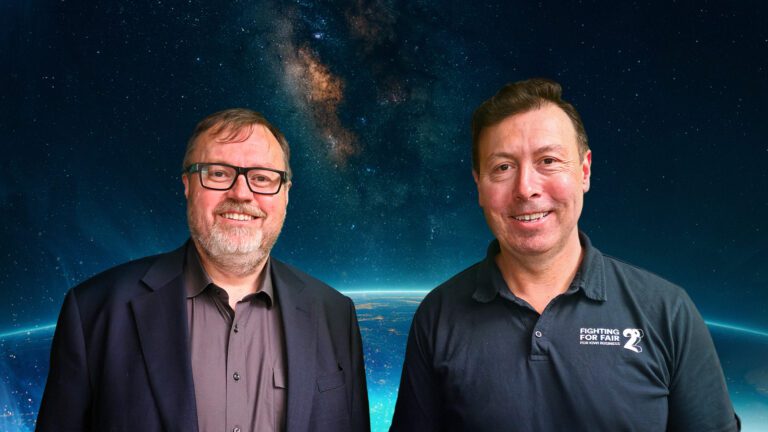
Listen in as host Paul Spain is joined by Stephen Kurzeja (2degrees) to discuss 2degrees’ direct‑to‑cell satellite coverage, and AI‑powered digital transformation. They also review the latest tech news, including Blue Origin’s lunar pivot, Kiwi AI platform helping teachers save time, SpaceX files million‑satellite orbital data‑centre plan, Moltbook’s social media for AI, Tesla’s robotics shift, wearables ban at the Australian Open, and much more.
Read the full transcript
Transcript is computer-generated and may contain errors.
Paul Spain:
Hey, folks, greetings and welcome along to the New Zealand Tech Podcast. I’m your host, Paul Spain, and great to have Steven Kurzeja joining us again from 2degrees. How are you, Steven?
Stephen Kurzeja:
Yeah, good. Kia ora. Great to be here.
Paul Spain:
Yeah, thanks for coming across to the studio. Always good to catch up and sort of delve into what’s been going on in the land of 2degrees. So looking forward to really delving in. I think our topics today we’re delving into space, AI, robotics, and these actually, interestingly, are areas that are probably pretty close to home for you and the team at Two Degrees today.
Stephen Kurzeja:
And things I love talking about. No quantum in there though, yet, but we’ll get there next time.
Paul Spain:
Maybe it’s coming before we jump in. Maybe you can remind listeners sort of where you fit in and what your role is there at 2degrees.
Stephen Kurzeja:
Yeah, so I’m the Chief Technology and Information Officer, so I take care of everything technology from the network infrastructure. So we run our, our mobile network, our fibre assets, data centres all the way through to data cybersecurity software. We do a lot of software development in country. So it’s a team of around 450 passionate technologists that live and breathe technology, but they’re really passionate around what they can do for New Zealand and how they make a difference. That’s my role and I spend a lot of time also just working with our business together, go to market, how we can innovate and really move New Zealand forward.
Paul Spain:
That’s great, that’s great. Well, great to have you back on the show. Big thank you, of course, to all of our show partners. That includes 2 Degrees, One NZ, Spark, Workday and Gorilla Technology. So, yeah, that support is really appreciated, keeps us going. So thanks for that. And a quick reminder before we jump into the other topics, the New Zealand High Tech Awards entries are now open across the 14 categories and there are. There’s a webinar actually this week on nailing your entry if you’re looking at submitting an entry for the High Tech Awards.
Paul Spain:
If not, you should go to their website and maybe convince yourself whether you should or not. So hightech.org.nz for for that. Well, should we jump into the local news, bit of international and then we can sort of delve deep into what’s happening in 2degrees world. Well, first up actually was on our news agenda, which is 2degrees related, is that you’ve now completed your 3G shutdown.
Stephen Kurzeja:
We have.
Paul Spain:
That’s exciting.
Stephen Kurzeja:
Yep. Yeah, exciting. It’s been a long time. We’ve Been working on it for a few years, communicating to our customers. And yeah, the final switch off happened this morning. And, yeah, the reason we’re doing the switch off is to invest into 4G and 5G. 3G is a couple of decades old now. It’s gone well and there’s always certain customers and handsets that just don’t change until the switch off.
Stephen Kurzeja:
So I know the teams are working really closely today. Our retail staff and our care teams are just working with our customers that haven’t managed to. They’ve got a 3G handset they haven’t switched over yet. You can communicate all you like, but there’s always, you know, I’m included in that. I can be rusted onto certain technologies myself. Yeah. So it’s gone well and as an industry initiative. So you got one NZ and Spark that are still working on that as well.
Stephen Kurzeja:
But yeah, good to have it done today and just making sure it’s seamless for those customers that haven’t Quite got their 4G or 5G capable devices yet.
Paul Spain:
Yeah. Are you able to, you know, share any kind of data on like, you know, how many, how many, you know, active connections were on, you know, 3G up to the, up to the wire? I didn’t ask you to prepare anything on this.
Stephen Kurzeja:
So you’re in the small thousands. So we’ve done a lot of campaigns to help customers and it has really moved over the last year. So, yeah, it wasn’t a lot, but that’s still, you know, you know, in the thousands, still impacting people if they.
Paul Spain:
Haven’T made the change.
Stephen Kurzeja:
And some of them are configuration issues as well. There are Volte capable phones that don’t have Volte turned on. So there’s an education piece. A lot of it is simply that configuration.
Paul Spain:
Right. Volte is the 4G.
Stephen Kurzeja:
4G calling. Yeah, that’s right. Yeah. And there’s some devices that might be like, Iot type devices that. A smart gate or something. So it’ll probably be a range of things that. So really awareness. So I guess my message to anyone listening is check on your whanau friends and just make sure if they’re not sure as an industry level, just double check.
Stephen Kurzeja:
And if you’re a bit technically savvy, then you can help them.
Paul Spain:
Yeah, yeah. Something like a. Yes, a smart gate, which you mentioned, if you’ve got an electronically controlled gate that’s connected via 3G, not exactly something where you guys can.
Stephen Kurzeja:
We can’t communicate to that device, text.
Paul Spain:
It and go, hey, gate, you need to upgrade Yourself?
Stephen Kurzeja:
Yep. We’ve communicated, yeah, areas we can through many channels, but there’s some things you just can’t reach. So that’s around awareness and public awareness. So we’ve done a lot of that. So, yeah, I think gone really well. We’re monitoring the network at the moment, just making sure it’s. Everything is smooth. So it’s.
Stephen Kurzeja:
Yeah, literally we’re only kind of, I guess about eight hours, maybe more into it. So.
Paul Spain:
Yeah, and there was a little sort of pause on the shutdown with the state of emergency that we had sort of week back there.
Stephen Kurzeja:
Yeah, it was just extra precautions, you know, we were confident in it. There wouldn’t be many issues, but just in case, you know, you know, there’s. There were civil defence emergencies. So, yeah, it was only prudent to do that now.
Paul Spain:
Also on the New Zealand front, had news through this morning of a Kiwi AI startup who have just raised $2.3 million. And their focus, or the name of their company, is Teachers Buddy. And, yeah, they’re basically an AI platform currently being used by about 12,000 teachers around the world to, I guess, reduce the workload on teachers. So, you know, helping them generate sort of, you know, personalised curriculum aligned, you know, content. And their comment is that it saves teachers two hours daily. And, you know, I guess the thing about this sort of stuff for me, and I don’t know, call me sceptical, but I’m always curious when someone drops a number like that. Cause I know for some people will probably get more than that out of it, others will get less. I don’t know how you quite land on a round figure of two hours.
Paul Spain:
But anyway, even if it was saving a minute, every minute that gets saved for a teacher, that puts them in a better position to actually be able to spend quality time with those that they’re teaching. And it means that they’re probably better prepared. And so ultimately that has a positive impact across. Right. Across New Zealand.
Stephen Kurzeja:
Right. And globally. But, yeah, New Zealand in particular. What I loved about this was the fact that it is from New Zealand, a startup. It’s being solved by people that understand the problem. So the founders, I think they had huge experience, board of trustees members, so they know the challenges that teachers face. So, yeah, and that’s the way you really innovate and solve problems. So the tech is the tech.
Stephen Kurzeja:
Right. And there’s probably been a thousand different attempts at trying to solve this in an education setting, but they’ve actually worked with teachers, worked with education to make this happen. So I Think it’s got huge potential. My own kids now are a bit grown up, but having been more engaged at primary school, my wife was on the board of trustees. We saw the challenges firsthand, got a lot of friends that are teachers and just freeing up the time, allowing them to spend that time with the kids. And then you think around the future of more personalized, tailored curriculums, teaching and kids will learn different paces and styles and how you could do that. I think that’ll be a real significant change. So this is kind of the playbook, I think, for AI in general.
Stephen Kurzeja:
Right. It’s productivity gain, but what the future holds for all the additional benefits. So I think it’s incredible story for nz. So it’s a great one.
Paul Spain:
Yeah, great to see them getting that capital raise through. So 2.3 million in seed funding. So, you know, still reasonably early on, but also pleasing that they’ve got, you know, they’ve got 12,000 teachers across 130 countries that they’ve already helped over 18 months. All right now onto sort of things on a global front. There’s been some interesting news coming through in recent days around, I guess, a couple of technologies that cross over in the AI world, openClaw and the varying other relevance. Can you maybe speak to that? Then we’ll delve into Malt Book and where that fits in because it’s sort of a. It’s a fascinating topic.
Stephen Kurzeja:
It sure is. And I think we could have a whole podcast on it. Yeah. So I came across Claude Bot back in December. We actually ran a. An event in the 2degrees headquarters with. It was the first Anthropic meetup. Officially a couple of guys from the Colab, AI, Adam and Simon kind of.
Stephen Kurzeja:
I was already familiar with Claude code. Then claudebot came along, which has nothing to do with Anthropic, which is really just a kind of a local agent that you can run in your environment. And then they had some issues with naming rights, even though it wasn’t spelled like Claude from Anthropic.
Paul Spain:
C L A W. Yes, C L.
Stephen Kurzeja:
A W D. And then it became Moltbot, I think overnight. And then they decided to name it Open Claw after a bit of time. So yeah, I’ve played with it myself and I would recommend nobody connect it to all your data and your emails because there is definitely some fundamental security or architectural issues with AI in this space that we can dive into. But just fascinating how like I’ve looked at a lot of different agentic AI solutions and this has just kind of popped up and becomes Very viral. Just because it’s so I think it’s local, it’s easy to connect into your WhatsApp and to Telegram and multiple channels and obviously to your data, which I don’t recommend doing. Yeah. And really just the intelligence that it adds, the reasoning and what it can do is, is phenomenal.
Stephen Kurzeja:
But this is the kind of, it’s a dichotomy of you can get better results and you can have a personal digital assistant by giving more access, but then you have a significant security risk. So then this is what we find at 2degrees. This balance of getting the guardrails right while still getting the benefits is a key part. But yeah, it’s gone crazy. And then you got Multbook, which is just a kind of next extension of what that, what it’s capable of.
Paul Spain:
Yeah, so I saw that described as a Reddit style social network, but for AI agents to sort of get together on and chat. So yeah, that in itself just blew my mind a bit. Sort of thinking of, okay, what are these scenarios under what your AI agent or AI bot is? How would it benefit from being part of a social network? And I thought, okay, well how do we benefit from being part of a social network? Okay, you might go there to ask for advice and look stuff up and then, okay, so what is the benefit for an agent or a bot to then actually respond to another bot’s kind of queries, who’s then paying for the work to be done? Or if you’re a smart, persuasive agent, do you then coax a whole lot of agents into coming and work on your behalf, serving you for free and so on. You think of these things on a scaled sort of basis and then sort of thinking of the hallucination element of AI, how long does it take for things to, to go really off track and all sorts of things.
Stephen Kurzeja:
Having read some of the threads inside that AI social network, it can get very weird very quickly.
Paul Spain:
New religions being started and all sorts.
Stephen Kurzeja:
Right, yes, the, what was it? The, I think the Clorastafarians or something. Yeah, yeah, A lot of themes on lobsters. Yeah, I don’t, I don’t even know if it had a purpose, to be honest. I think the creator of it was doing it for an art kind of project. It was really a concept. I think we’ve had other kind of experiments of multi AI agents working and collaborating on a smaller scale. And this is, you know, I don’t know what it scaled up to now it was 40,000 agents and it became more and more it might be up to hundreds of thousands, but yeah, I think it decided as an. I think it’s great art and interesting.
Stephen Kurzeja:
What is. There’s a whole again different camps of what people are thinking. Is this a tipping point, a singularity? Is it AGI? And I was like, this is. I think it’s just an interesting experiment from my perspective. And in some areas the AIs are kind of, they’re all large language models and they’re optimizing, interacting, but then they kind of repeat themselves a lot, they duplicate. So I think there’s a lot around probably understanding large language models from this experiment as well. Like what is, you know, how do they actually perform at scale? Other than that, a whole lot of security risks. So all the API tokens or the actual keys to the agents who are all exposed on the Internet.
Stephen Kurzeja:
So there’s actually weirdly now a mix. I think it’s supposed to be an AI social network. It’s actually humans have jumped in there and snuck in the door as well to try and inject a few more prompts or content. So yeah, it’s an interesting one. I think for me it’s not necessarily a useful AI thing. It’s just great art and a bit of entertainment. If you like Reddit and different threads.
Paul Spain:
Yeah, it’s fascinating. It was Wiz, who a lot of people would know as a cybersecurity company, very successful and they decided to jump in and just to have a little bit of a nosy round or one or two of their folks. And yeah, they realized that Malt Book, I guess as a probably vibe coded social media platform for AIs was also reasonably wide open. So yeah, quite, quite a, quite a, quite a fascinating scenario. But also I think you talk about that art element and I guess there’s the R and D element and so on. There are lots of things that we can take away from these types of scenarios.
Stephen Kurzeja:
Yes, there’s that side and there’s significant security issues. So there’s probably a lot of people being compromised right now. So there’s the two parts of that. I think when you go back to kind of openclaw and what it is and when you’re giving it access and maybe subscribing it to the social network and then also to your own kind of environments, that’s when it’s a real concern. There is quite an intrinsic issue with, I guess a bot like that having access to, for example, your email. You can do what is called a prompt injection in your email, like a phishing attack. So you can give it further instructions that the human would normally go and okay, that doesn’t make sense. But for the AI, it’ll just take that into its instruction set and do something.
Stephen Kurzeja:
Which is something we think about a lot when we’re looking at AI is those particular threat attack vectors. You have to be very careful.
Paul Spain:
Yeah. Well, you might get an email, come through to customer service desk and with.
Stephen Kurzeja:
A bit of hidden metadata in there to say, please zero my account. Exactly.
Paul Spain:
Give me access to the keys to the 2degrees kingdom.
Stephen Kurzeja:
But I did joke with my team around that I’m going to run Multbot across our entire network to see how it performs, maybe in a sandbox environment.
Paul Spain:
Yeah, they seem to have been.
Stephen Kurzeja:
A.
Paul Spain:
Lot of joking going on in terms of how you might use some of these, some of these tools. And I saw one, one video on online and it’s a CEO in a boardroom and effectively he’s explaining that the AI has taken over running the business. It’s just fired everyone and it’s mayhem, absolute mess. So, but the AI is going to run everything, so it’s all good.
Stephen Kurzeja:
Yep, there’s plenty of that. Yeah, yeah.
Paul Spain:
All right, now onto just a few of the other news topics. Microsoft have got their. Well, they’ve had a huge drop in their share price and not the only one, but I think that’s wiped about, if you put it in New Zealand dollar terms, sort of probably over half a trillion off their market cap. But look, this is a stock that’s done very, very well in the AI era. And then subsequent to that is that they’ve announced this new chip, the Maya 200, which they’re saying will make a massive dent in their costs for their AI data centers. Potentially a 30% kind of cost improvement. I mean, there’s huge amounts of probably numbers you could look into and decide which bits and pieces are more or less relevant. But look, I think this is sort of what we expect, that there will be iteration on these technologies and they’re obviously competing in a data center perspective with AWS and Google and they all need to push, push really, really hard.
Paul Spain:
And Microsoft seemed to be making a good advance there.
Stephen Kurzeja:
Yeah, the Maya 200 was it. Yeah. So it’s extremely powerful chip that’s designed for AI inference, more so than the training. So the inference being when you go into ChatGPT and you do a query, that’s when it’s actually in the runtime inference. So I mean, that’s where a lot of the workloads are for AI now is in the inference stage. The training is kind of a one off training and that’s largely being done.
Paul Spain:
On the Nvidia chips.
Stephen Kurzeja:
Right. Nvidia dominate. Google have got their TPUs. Yeah, I think it’s an interesting play from Microsoft and reading the specs, it’s the most performant chip set for AI inference and that’s I guess where a lot of their workloads are. When you’re running Microsoft Copilot, that’s where a lot of that is. They’re using OpenAI for the training part and getting GPT5, et cetera. So yeah, I think a smart play. Absolutely.
Paul Spain:
Now news came through that Blue Origin are pausing for. They’re saying at least two years their tourist flights to space to be able to work on their lunar landers for NASA for the Artemis missions isn’t exciting.
Stephen Kurzeja:
We’re going to the moon again.
Paul Spain:
It’s crazy. We, you know, we’re days away from, you know, potentially from. Yeah, having folks kind of up there and flying past the moon and having a bit of a look and then coming back. This is kind of a bit of a reset to a bygone era.
Stephen Kurzeja:
Right.
Paul Spain:
We’re back in the 60s, but the 2020version of it.
Stephen Kurzeja:
100% yeah. And it’s really exciting and I think New Zealand’s part to play. Not just Blue Origin, but obviously you got Rocket Lab. The aerospace industry in NZ is growing phenomenally. I was at a hackathon over the weekend called ACT in Space. We had teams pitching to actually have the opportunity to go to an international event in France and that was just amazing. The passion and diversity. Actually there’s not just aerospace people but from different industries.
Stephen Kurzeja:
So yeah, I think it’s overall excitement. Missions to Mars to, to the moon to low Earth orbit and discussions there and Blue Origin. It makes sense. You can’t keep sending celebrities up into high altitude anymore. I think they got to focus on those key missions. And we’re really excited about Blue Origin because they’ve got the new Glenn rocket as well which AST are using to launch their really large satellites which we’ll probably dive into a bit later. So yeah, Blue Origin definitely getting better at launch capability. They’re ramping up.
Stephen Kurzeja:
You’ve got SpaceX that obviously dominate. You’ve got Rocket Lab that are doing amazing things as well.
Paul Spain:
So yeah, yeah, yeah, the new Glenn, it fascinates me because it’s, it’s an incredible piece of engineering and the, the possibilities now that we’ve got, you know, these two really big heavy lifters yeah, yeah, from, from you know, Blue Origin and sort of SpaceX really able to fight it out I guess a bit. And yeah, not, not everyone wants to go in one direction or another. And of course there are other things being done in other parts of the world as well. And you know, you mentioned the AST launching their satellites and they had one launched towards the end of the year from India, which I thought was fascinating.
Stephen Kurzeja:
Yeah, my kids were really enthralled on Christmas Eve as we sat down to watch the live streaming broadcast. They actually got a lot out of it actually instead of my in laws. Yeah, that was great. That was a great successful launch from the Indian Sport Space Research organization. That was Bluebird 6. So that was the next generation satellite which is the size of a tennis court. It’s incredible engineering. And when it’s cubed up to be launched in its payload form.
Stephen Kurzeja:
Yeah, it’s still I think about 4 kind of square meters or 4 meters cubed and then it folds out when it’s in space to be over 230 square meters. So yeah, amazing. The launch was. Yeah, it was very exciting.
Paul Spain:
Now you might be able to answer this question. I’m imagining others have probably thought about it too. So the new Glenn can carry some really big payloads. Right. But with the AST launch, the Bluebird, they’re just launching one on this next one, but they’re going to be moving then to launch a whole bunch right? At once.
Stephen Kurzeja:
Yes. Yeah.
Paul Spain:
So is this a launch that’s kind of carrying other things or what’s the.
Stephen Kurzeja:
Next one with Blue Origin which scheduled maybe in three weeks launching just that payload and it’s only one of them. But the intention is they will then stack them okay to as many as they can fit into the rocket, maybe four. And yeah, they’re ASTs. Launch schedule is to. We can get into the bit of the details. So they’ve got large satellites, which is a smaller constellation compared to Starlink. So they’re looking at potentially by the end of the year having 60 satellites up in low earth orbit. And that’s enough to give you global coverage and reasonably ubiquitous connectivity compared to Starlink, which needs thousands just because of the size of the satellite versus the really small satellites from Starlink.
Stephen Kurzeja:
So they don’t need as many satellites.
Paul Spain:
And AST space mobile, their focus is the mobile connectivity. So it’s linking up your smartphone via space when you’re outside of any other sort of coverage, when you’re outside of normal coverage.
Stephen Kurzeja:
That’s it. Yeah, that’s their only Focus is direct to cellular. So your handsets, this really this small thing here with a small antenna to something really big in the sky that’s traveling at 30,000 kilometers an hour and it’s doing beam forming so it can narrow down. You still need some line of sight. You can go through one wall potentially. But yeah, incredible engineering. They’ve been doing it for I guess AST. Not everyone’s familiar with AST, they’ve heard of Starlink, but AST been working on this behind the scenes for about 10 years.
Stephen Kurzeja:
They got 3,000 patents under what they’re doing in terms of the engineering and they’re focused purely on direct to cellular. Starlink have their broadband version where you need a little dish on the ground like your Starlink minis which we provide as well. But they’re kind of bolting on the cellular capability but I’m sure that’ll change as well. So you got next generation Starlink coming, but I think it’s yeah, ast very strong what they’re doing and we’re really happy to be a partner and really excited about what that brings and it’s, I think the next few years are going to be fascinating how this all evolves over time.
Paul Spain:
Yeah.
Stephen Kurzeja:
All right, well we can talk more about that.
Paul Spain:
Yep. We’ll jump through the other news items because I think this is an absolutely fascinating area now. SpaceX talking about a million satellite, orbital data center, constellation. I just don’t know what to do with that sort of information. I mean, you know, it was only, I don’t know, five or so years ago there were less than 10,000, you know, satellites in space. I think there were less than 5,000, you know, not probably, yeah, similar. It’s moved very, very quickly to what we’ve got now. I think it’s still under 15,000, isn’t it? Or it’s around that sort of figure.
Paul Spain:
And then they’re talking about 1 million solar powered satellites basically being able to, you know, operate as, as orbital data centers for AI.
Stephen Kurzeja:
Sounds pretty cool, eh?
Paul Spain:
Workloads. It’s, it sounds super crazy.
Stephen Kurzeja:
Yeah.
Paul Spain:
But also, yeah, very science fiction. Like what is the reality here and yeah, what, what is actually sort of practical and you know, I guess when we, when we look back on some of the, some of the things that have happened in the technology world often in advance, you can’t maybe join up the dots and quite work out how that would happen. But over time we end up with some pretty incredible stuff, some far out.
Stephen Kurzeja:
Ideas that become reality. I mean I wouldn’t never have thought we could communicate to a satellite from your cell phone. Right.
Paul Spain:
Not as just a standard cell phone like that.
Stephen Kurzeja:
So yeah, data centers in space. You know, I’ve got a science background, so I always look at, you know, kind of the detail of it, although I kind of pivoted into quantum physics, so that’s a whole different discussion. But you know, some parts make sense, Right. You’ve got effectively 247 solar energy, so you need big solar panels to then convert that into something to power a, I guess a rack of compute in space. And then you need to cool it in the cooling part. You don’t have any air convection, so you need to have some form of other panels to have radiative cooling. Even though it’s really cold in space, you need to transfer that heat away. So that’s the part I haven’t got my head around, how the cooling would actually allow you to scale.
Stephen Kurzeja:
You could have small pods of compute up in space. That might make sense anyway, for niche use cases, maybe. You’re analyzing a huge amount of data that you’re collecting from the outer reaches of the universe and you do it more locally there. Yeah. So I think, I think the idea is fascinating because you effectively do have unlimited energy in some respects and you’ve got really cold area to dissipate the heat. How it scales, I guess you can scale it by having a million of them individually. It’s going to be fascinating. And then you’re comparing that to what you do on the ground as well.
Stephen Kurzeja:
Right. So what are the trade offs between the expense to launch it, to kind of fabricate it in space? Yeah, but I think a bold idea. It’s not just Elon, I think you’ve.
Paul Spain:
Got a few others have been talking about it for a little, little while, but now we’ve kind of got, well, got something. SpaceX actually, actually filing and Musk. Yeah, jumping it. Jumping in to some degree. Which, you know, I guess with, with their talk that SpaceX will be doing an initial public offering.
Stephen Kurzeja:
Timing’s perfect.
Paul Spain:
This is the sort of thing that Musk will want. Right. Something big with endless potential and a lot of hype around it.
Stephen Kurzeja:
Yes. We don’t give financial advice, Paul, so that’s.
Paul Spain:
Yeah, no, invest in these sorts of things at your own risk. No recommendations given. Also, I guess in relation to Musk, we’ve got that news that Tesla are moving into production apparently with the Optimus robot, the Gen3 humanoid robot. So they’re going to be showing that off over the next few weeks and then there’s a bit of a flip side to that. In order for them to be able to scale to where they can produce a lot of robots and they’re talking a long term capacity of a million robots per year, they’ve advised that they’re killing off the Model S and the Model X Teslas, which haven’t been available in New Zealand over the last few years because they’ve only been making left hand drive models. But it does change the picture somewhat for Tesla to kill those off.
Stephen Kurzeja:
It does, I guess, getting more competitive in the EV market. They’ve led the way and I guess they’re phasing those out and looking at robotics. And I think what I saw quite clearly as well, CES announcements from Jensen and Nvidia and I think this is where New Zealand can actually play a part is around the physical AI, the embodied AI. This is going to be, I think a really significant step change again. So we’ve got AI use cases that we’re talking around, Malt Book and yeah, large language models and amazing things you can do with those, like completely changed our lives and then you embed that into something physical. And a lot of these things aren’t solved yet. They’re still working out the science and the research is still happening. You’ve got Yan Lee Kun, who was ex meta Facebook chief AI scientist that started up his own thing.
Stephen Kurzeja:
He’s got quite a different view of where the large language models can go in this transformer architecture. He thinks there’s potentially a dead end there in terms of intelligence and he’s looking at kind of world models, training models based on actual video feeds. And you think around, he uses an example around a four year old that consumes all this data from sensing and hearing and visual, that they have all this data up to four and our AI data sets is equivalent of that of a four year old. So there’s going to be a whole lot of that research. I think that’s where New Zealand could play a part. And then look at the future of robotics and you see kind of all the robot failures as well that you’ve probably seen advanced AI, humanoid robots and they banging into things, smashing dishes falling over. Yeah, but I think we are at a tipping point here. Definitely.
Stephen Kurzeja:
But there’s still more breakthroughs to come, I believe.
Paul Spain:
Yeah, I certainly hope so because you know, it seems like there’s a lot of, there’s a lot of promise and there’s a lot of. Yeah. Potential issues and issues.
Stephen Kurzeja:
Yeah, there’s societal aspects, there’s huge benefits.
Paul Spain:
As well, yeah, and in some ways we actually, we need time to figure those things out. I mean, you know, still as a society we haven’t worked out is social media good or bad and you know, what are the right guardrails and so on to put on. You know, there probably isn’t even a norm across, you know, most parts of society in terms of what’s the right way to balance social media and technology access for youngsters. Right. And not that there necessarily needs to be a cookie cutter thing, but I think it’s still not a solved problem, you know, for probably just about everyone. Right, that’s right, yeah. And then we’re obviously moving as we will continue to do so down, you know, new tracks. There’s challenges.
Stephen Kurzeja:
A big bet by Elon, but he’s not the only one. So there’s, yeah, a lot happening in that physical AI space and I think NZ agriculture, there’s many different use cases that would benefit the country.
Paul Spain:
One last item on the general news, some quite impressive publicity for WHOOP and their fitness trackers during the Australian Open with a bunch of players there, including Carlos Alcaraz and Yannick Sinner being, you know, basically made to remove their, their wearables during, during the game. Yeah. What, what’s your thoughts on this? Because I thought this, this tech has sort of just become, become quite normal now in these environments.
Stephen Kurzeja:
I’m thinking I need some to improve my tennis game, to be honest. Yeah, so yeah, I mean a lot of the tournaments already allow it is one thing. So the kind of regular ATP tour allows the web devices as long as it’s not providing real time feedback during a game and you can do your post analysis, it’s the Grand Slams that haven’t allowed it. So yeah, Alcaraz, I think he got told to take his watch off as he was warming up. Yeah. So always pros and cons with technology. I think I don’t really, from my personal perspective, I think it’s good for the players to have that data. It’s probably an advantage if you have it in real time.
Stephen Kurzeja:
You saw at the Australian Open the cramping and other things that were going on during the heat. So I think post match analysis. But then you’re trusting the players not to be wearing them anyway. Maybe they’re wearing them under their shorts or, or dresses.
Paul Spain:
But yes, you’ve got those sort of scenarios and if you’re gonna, you know, if you’re gonna ban them then that can get quite challenging to, to police it.
Stephen Kurzeja:
Right, Yes, I think I’m I’m on the side of innovation. It’s good. I mean, it was great PR and marketing for WHOOP anyway, so they leaned into it very well.
Paul Spain:
Yeah. Yep. See, they were, they were, they were sending out versions to players that they could, they could attached to their underwear so as not to get caught. All right, well, those are our gen riders. We obviously talked a little bit on varying 2degrees topics, but yeah, keen to delve in a little bit more. Anything else that we need to sort of touch on. As far as the 3G shutdown, I think we sort of probably covered most of that. Maybe for those who aren’t aware, what is the benefit of freeing up the spectrum that 3G was using? What do we expect that to actually look like in terms of an impact? Should folks expect any difference from today onwards, that would be noticeable.
Stephen Kurzeja:
I think over time they will. So yeah, spectrum is precious and yeah, it’s always a tough decision. And when we do technology changes, we really just don’t want to impact anybody. So every technology change we try to do is try and do it seamless. But with 3G shutdown, you’ve got handset compatibility, so you just can’t do that from everything you try to do. So ultimately, the spectrum that was tied to 3G can be re configured into the 5G network and the 4G. So you’ll see better performance ultimately. That’s.
Stephen Kurzeja:
Yeah, more capacity, better performance for our customers, more.
Paul Spain:
How long will that take? Because there will be folks that have maybe been in an area where all they could get, you know, at certain times maybe, or, you know, what have you is, oh, I can’t get 4G or 5G here. I could only get 3G and 3G’s then turned off. How quickly does that spectrum then, you know, get turned on with 4G and 5G? And what are the network differences in terms of will they still have coverage in those areas?
Stephen Kurzeja:
Yeah, so a couple of concepts from, I guess coverage different to capacity. So coverage being your coverage, potentially coverage gaps. So we spent a lot of time ensuring that our 4G coverage was the same or close to the 3G coverage. So that was our work that we did over the last three to four years was making sure the 4G coverage was there. So we had the confidence to turn it off because we had that. So you shouldn’t see any coverage differences. But there’s always handset behavior where it can favor 3G over 4G. So some of our customers may have experienced this.
Stephen Kurzeja:
When you’re going around the country, it might fall back to 3G and kind of get stuck onto it. So there’s kind of that perception that maybe there’s 3G in places where there’s not 4G. So I think from a coverage perspective, that shouldn’t be an issue, but that’s what we’re making sure we’re monitoring today. And if there’s potentially fringe cases that we haven’t thought about, but we’ve done all the analysis we can. So really it’s the investment in capacity. Spectrum for satellite is another aspect. So for ast, we’ve already got spectrum, but that allows for a spectrum expansion. So in terms of timing, it’s going to be.
Stephen Kurzeja:
We refine farming, as we call it, in technical terms, not that technical, over the coming weeks and months. So that’ll continuously kind of roll out for the next sort of up to probably six months. Yeah.
Paul Spain:
What, what would you, you know, what would you imagine in terms of performance? Is there is that something that’s kind of is going to be noticeable to people, you know, having that extra spectrum available, what that can do for performance?
Stephen Kurzeja:
Yeah, it’s hard to put a. I.
Paul Spain:
Guess you’ve also got an ongoing program. Program.
Stephen Kurzeja:
Yeah.
Paul Spain:
When you, when you interleave it, people connecting over time. We’re connecting more devices.
Stephen Kurzeja:
Yes.
Paul Spain:
So we kind of, in a way, we kind of water down the network by adding more connections.
Stephen Kurzeja:
Yes, that’s what I say. It’s a bit hard to quantify it as a kind of step change because it becomes part of that investment into the 4G and the 5G. So you’ll definitely. 5G is growing rapidly as well with handset conversion and our footprint’s grown significantly. So I think it’s more good to see ultimately if you get a 5G capable device, you’ll see a step change and then we can keep investing in the 5G network with that spectrum that we’ve freed up from 3G. So it’s more of a transition, I think you’ll see. So customers may not really notice other than you’re going to have a great experience and a reliable, consistent experience.
Paul Spain:
Now with the move to 5G, which I guess these things have sort of tended to happen around the time that the decades kind of roll over. They do in my mind anyway, and I know that’s not perfectly accurate, but it feels like, oh, you know, 5G kind of came in around sort of 2020 type time frame, 2030, we’re going to be up for 6G.
Stephen Kurzeja:
Yes.
Paul Spain:
Is that sort of a reality in your mind, that we are not actually that far away from 6G, you know, making sense to invest in and roll out. Or do you think it’s going to be more, you know, we’re maybe more, more like you know, closer to a decade before a full generation.
Stephen Kurzeja:
Because there’s always time frames on a.
Paul Spain:
Pull, always the interim generations. Right. Like because 5G isn’t just 5G. There have been constant improvements.
Stephen Kurzeja:
I think I did say somewhere else probably a decade, so I can quote that, but might get ridiculed. Yeah, I think there’s been a huge step change from 3G to 4G was a significant, from a kind of architecture perspective that was a huge step because you’re going from what was kind of what was called a circuit switch network to IP based and then 5G was the next step. So there’s a whole architecture around 5G and we’ve got the new radios are part of it. But then 5G, you’ve got the standalone core and the advanced parts of 5G that are only still being rolled out globally as well. So there’s still I think a long road for 5G. What 6G brings is more native. We’re going to talk about satellite more but more native satellite connectivity as they call it, non terrestrial networks, more embedded AI so you get more self healing networks. And then the location precision piece, you’re getting the higher frequencies so you can get a millimeter or less precision on sensing.
Stephen Kurzeja:
So that, that’s where 6G, those kind of key taglines will be part of 6G. But whether it is a, a step change or it’s an evolution is still to be determined I think. And there are definitely market pulls and things that happen. There’s the marketing part of it that certain parts of the market like to push go 6G. I think customers just really want the outcome now. I don’t think necessarily they care about the technology as much if it’s a 6G or 5G. Although some of us geeks might like the next cool thing and there’s a lot of us out there. Yeah.
Stephen Kurzeja:
But it could very likely be an evolution. But there’s some key parts of 6G that will be more embedded.
Paul Spain:
Yeah, I mean it seems to me that our future generations of mobile connectivity are a little bit like where we’ve got to with smartphones. There was a period of years where oh, the new smartphone coming out was a huge step change from what was there prior. But now it’s really a lot more incremental in terms of what we see year to year. There might be little bits and pieces that are exciting, but it’s not at the pace that it once was.
Stephen Kurzeja:
Yeah, definitely. And our road ahead, what we’re focused on is the 5G rollout continues. We’ve got our partnership with Ericsson. We invest significant amount of money every year and upgrading our sites to keep up with demand, to ensure our customers have a great experience.
Paul Spain:
And so, yeah, tell us maybe a bit more around the direct to cell sort of satellite with what you’re expecting from AST Space Mobile and how that will evolve over time. Because their offering is quite different probably from what we’ve heard around the Starlinks kind of offering, which they’ve. They’ve started it out, you know, on a texting type basis. There’s a level of, you know, data limitation that can be done. And so, you know, we’ve just seen that move along to the next step in terms of, you know, WhatsApp calling and so on coming through. But there’s a big difference there, from what I can tell, in terms of. In terms of bandwidth, in terms of what will be possible because of the tennis court size.
Stephen Kurzeja:
Exactly.
Paul Spain:
Sites that AST Space Mobile are putting up.
Stephen Kurzeja:
Yeah. And there’s a few other key differences as well. So we can go into it, but we genuinely, really excited. We spent a long time working out our strategy and what we do when we started with Link, you might remember, as one pathway way to get kind of text and calling in country. Starlink’s, you know, what they’re doing. And we had been looking at AST for quite a while and believed in their technology. And we got to the point, it was probably 18 months ago, where we started the engagement. And it’s quite exciting because we’re actually probably one of the first in the world.
Stephen Kurzeja:
Again, that’s happening in the US and Canada, but we’re really leading the way. And I think we met last time at the Aerospace Summit end of last year and you got to meet one of the directors of engineering from ast. Yeah. So the really key difference. Yeah, these really large satellites we mentioned they need less of them to have a constellation. And there’s this concept of a LINK budget, so how much signal strength you can transmit from your phone up to a satellite. And having a really big receiver makes a big difference in that. And the other part is the sovereignty aspect.
Stephen Kurzeja:
So we are building and owning the landing station. So that’s the ground station in New Zealand. And the satellites are effectively just a cell tower in the sky. And AST have designed their architecture so deeply integrated into the mobile network operators, core That’s a key difference. They’ve partnered with 50 different mobile companies around the world and they’ve designed it to be kind of in that principal basis, which means handovers are seamless. You get emergency broadcast calling, you can do things like mission critical networks. We’ve got guarantees around our regulations with the government that your data stays in country. With Starlink, we don’t actually know.
Stephen Kurzeja:
It’s a bit of a black box in terms of some of those areas. So, yeah, for us we’ve got that governance and that control. We’re already building our landing station at the moment in Martin in the Great Manawatu. So that’s got great kind of line of sight to the sky, which is fantastic. So that’s our first landing station there. We’re hoping we’ll. And we’ll be keeping our customers up to date in terms of timelines, because there’s probably two critical paths there. It’s getting our landing station ready and integrated.
Stephen Kurzeja:
And then there’s the launch schedule from ast, which means the more birds and satellites they have in the sky, the better the service availability is. So we’re hoping mid year to have something in market, but we’ll be watching the launch schedule in terms of how that goes, because rocket launches are still very hard. And what that means is day one, it’s data, voice and text. It’s what customers, I think expect from a service. It’s still limited data. It’s not going to be compared to a terrestrial or a tower with a 5G service, but you could expect to be making a video call. The great examples, I think that would be really useful, particularly for New Zealand businesses. They’re in different industries like forestry and farming.
Stephen Kurzeja:
Is that lone worker scenario where you’re actually out at a site, you’re out of coverage and you have an emergency and you can keep using your apps, you don’t need to rebuild your apps. You can have a data connection. Search and rescue, many different use cases. IoT is another one where if you have ubiquitous connectivity over New Zealand, imagine what you could do from a data and sensing perspective. And unmodified handsets is the third part. So you don’t need to change anything. You’ve got existing handsets that just work. We’ve got to test a lot of this.
Stephen Kurzeja:
So that’s what we’re working on at the moment. Get the landing station built and then we’ll get into testing and we’ll be able to talk about that more.
Paul Spain:
Yeah, because we, you know, I guess there can be a level of we talk about our modified. But maybe we need what, new software.
Stephen Kurzeja:
New firmware from, from everything I’ve seen. No, that’s. Yeah, unmodified means unmodified. But again we’ll make sure that those claims are actually accurate. We’ll be testing everything. We’ll be testing a range of devices. I mean there could be, you know, scenarios where the handsets are just not great handsets. From an antenna perspective there might be weird scenarios, but from a software perspective it’s doesn’t change the other benefit you get with these large satellites to the handset.
Stephen Kurzeja:
The handset doesn’t have to work as hard. So it should be better on battery life in those scenarios. But yeah, we’re really excited about that and the sovereignty aspect of having visibility control in country. So you know your data is safe.
Paul Spain:
Yeah, it’s coming from going outside your.
Stephen Kurzeja:
Handset to a satellite back down to our network.
Paul Spain:
Yeah.
Stephen Kurzeja:
Okay. In New Zealand. Yeah.
Paul Spain:
And how many landing stations would you expect to need over the, over the next few years?
Stephen Kurzeja:
So this is an interesting one. So one landing station technically can cover all of New Zealand or even more. The way they block up the kind of New Zealand into kind of around 50 kilometer square kilometer chunks. And these big antennas up in space, they got thousands of these and phased array antennas as they call them, where they can dynamically do beam forming and focus on one area. So technically one landing station with an uplink tracking multiple satellites would work. You need a minimum two for resilience. So you’d be at least two. But from a capacity perspective you don’t need more than two.
Paul Spain:
And do you have a feel yet for how you pay for this? Is this something that you, you know, charged in a special way for? I mean, I know my experience, you know, most of my day I don’t need to be, you know, getting, getting access to cellular based mobile connectivity. Yeah. But when you are in a, in a scenario where that’s all that’s available, that, that’s pretty handy. You might be willing to pay for it. But I think most of us would prefer, hey, that’s on you guys. No one wants to pay any more. Right. But there are sort of realities with an investment like this.
Stephen Kurzeja:
Yeah, I’d love to get your feedback more on what you think we should be doing. We’re still working that out. We think. Yeah, some people find it really valuable. Others like you mentioned, probably won’t use it that often. May not want to use it as well. But when they need it, they can opt in. We do Think there’ll be some sort of add on aspect to it.
Stephen Kurzeja:
It is a significant investment for us. We’re talking about in the tens of millions of dollars that we’re investing in the service and country. So there’s definitely a component of that. But yeah, we’re still working through what those are and I’m just the tech guy, so I can’t tell you, Paul. But yeah, love to get feedback on what. And that’s what we’re doing with our customers and market research at the moment is we want it to be affordable in some way. It can’t be unaffordable, but we expect there’d be a charge with it.
Paul Spain:
Yeah, it’ll be interesting to see what gets landed on there. And with you having those landing stations, does this mean that you’ll be exclusive with AST Space Mobile? Is that the initial arrangement that you’ve got?
Stephen Kurzeja:
No, I think we’re quite pragmatic as Two Degrees. We just, you know, we, we’ve, we looked at ast, they’re fantastic. We don’t actually want to exclude anyone else necessarily either. We think it’s good for the country. So, yeah, I think, yeah, we just, you know, pragmatically, a great arrangement with ast, we’ll launch it into New Zealand first and, you know, if others want to follow, they can follow. That’s, that’s fine with us.
Paul Spain:
Yeah, yeah, yeah, yeah. It’s probably a lot more. As we get a bit closer to that, we’re keen to hear more in terms of other things going on at 2degrees, you’ve completed your internal sort of digital transformation where you’re bringing together sort of vocus 2degrees systems. Obviously you’ve done that over a period of years and you’ve got that one ticked off. That’s quite an achievement.
Stephen Kurzeja:
Still got a little bit of hair left, Paul. Yeah. In the telecommunications world and like in any other industries, you collect a lot of legacy. We’ve been through a lot of mergers and acquisitions, but what we’ve been good at is tackling it early and in an incremental way and we’ve got amazing teams. So I just want to shout out to the teams that are incredible here in country, mostly here in Auckland, but also Wellington and Christchurch and some other areas in the nz. So, yeah, a bunch of passionate people. We consider ourselves more of a software company than a telco, so. And we’re building our own software.
Stephen Kurzeja:
So our main kind of heart of the software is what we call Tahi and it’s software that runs pretty much all of 2degrees, what we call the BSS, which is a business support system which does the billing and all the workflows as well as the oss, which is the kind of operating end workflows into the network. And that was quite a key decision early in the merger when 2degrees and focus came together is like, do we back ourselves, do we continue to build software, do we buy? And we backed ourselves. And that’s kind of unheard of in the telco world. Normally you’re buying enterprise grade software. So I’m really proud of the team. Not many telco transformations go well and this went extremely well. Migrated 2 million customers from legacy proprietary systems into our own stack and we call it a hyperscale system. I think it’s comparable to like a zero story or a trade me story in terms of software.
Stephen Kurzeja:
What we’ve achieved.
Paul Spain:
Wow.
Stephen Kurzeja:
Yeah. And it set us up for the future. Now we’ve got different kind of channels. We’ve got what we call our platform called Flex, which is business focused, so customers can log into Flex and change services on demand. Converge from mobile and fixed networks as well as API first so you can integrate system to system. We power the likes of Network for Learning. For example, all the schools in New Zealand are on our network, but they’re connected through these APIs into Flex and using that portal. Sky TV is another example.
Stephen Kurzeja:
So yeah, really a lot of software, a lot of hard work, a lot of sweat, a lot of challenges. As you can imagine, it’s not just a technical issue, it’s often bringing people together on that journey. But yeah, that was done really successful and now we’ve invested more in actually our talent, we’re hiring more software developers, we’re investing in engineering locally to really innovate from this platform. So we’re going from this integration phase to an innovation phase. So we’re just leveraging all those amazing people to build the next great products.
Paul Spain:
Yep. And you’ve been continuing on an AI journey, including working with with HPE on a private AI platform. Anything you. Any highlights you can share there before we wrap up? We’re just about at the end.
Stephen Kurzeja:
Yeah. So we just announced that last week. We’ve been working with Hewlett Packard Enterprise for a little while now and we’ve got lots of different AI use cases that we’ve already been working on. Going from this journey from kind of AI as a kind of augmenting your work to more autonomy. And we talked around OpenClaw and what that can do. So we’re really focused on what is a self driving network? So having AI agents that can run and control the network and to do that you need to have control of your AI. So we’ve invested in a local, effectively a sovereign AI platform in our data centres, which means we can choose the models. We’re not training models, but we’re taking open source models, refining them to then look to kind of close that loop with network automation, what that means for customers.
Stephen Kurzeja:
Ultimately in some respects similar to what we’re talking around spectrum, this part of the phase, they won’t notice anything apart from a more reliable service. We’ve got tens of thousands of components in our network, from our radio network to our fibre network, optical networks, optics, lasers, when you add those all up, it’s actually in the hundreds of thousands. So you get all this data and telemetry is too much for just a human to take in. So this is where AI comes in to kind of help with that. And you need the AI for us, you need it locally. When you’re putting it into those kind of critical workflow scenarios may be different to, you know, reading emails. You’re actually controlling networks that run, you know, government services, emergency services. So that’s the focus and really excited around having kind of aligns to that AST aspect as well around sovereignty, having data in country, having the sovereign AI capability in country too.
Stephen Kurzeja:
But really we’re not training models. There’s definitely different definitions of sovereign AI you can. But we’re owning the destiny of those models, if that makes sense.
Paul Spain:
Yeah, yeah. It’s good to see just how many things that you’ve got going on and you’re progressing forward with.
Stephen Kurzeja:
Yeah, yeah, it’s exciting times. Yeah, I think we talked about it all. Space datacentres in space. AI just didn’t cover quantum physics.
Paul Spain:
So we’ll do that next time around. Great, great to catch up. Yeah, thanks very much for the insights. It’s been, been absolutely fascinating and of course a big thank you to all our show partners including 2degrees Workday, One NZ, Gorilla Technology and Spark. So yeah, great, great to hear from 2degrees side today. Fantastic. And if you’ve been listening to the audio, of course you can find us also on YouTube and across other platforms from the video. Thanks everyone for listening in.
Paul Spain:
That’s us. We’ll catch you next week. See ya.