Satellites, Space, and Spark: Reshaping Global Connectivity
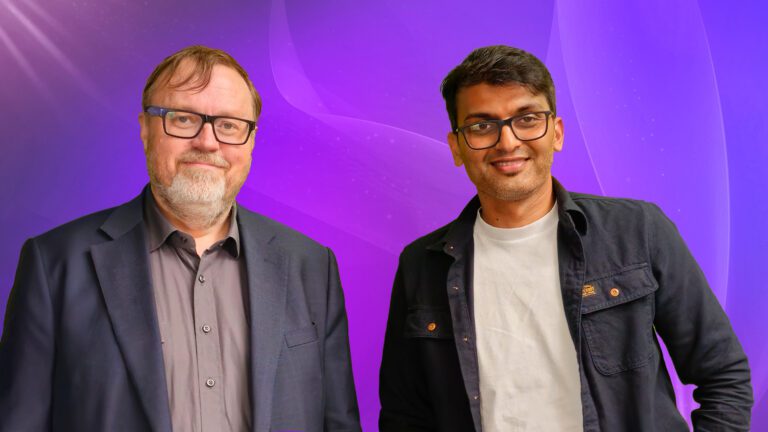
Join host Paul Spain and Nilay Rathod (Spark) as Nilay discusses how Spark’s collaboration with Starlink is revolutionising connectivity, the impacts of shutting down 3G, the role of AI in business transformation and cybersecurity and what’s next for Spark. Plus they explore this week’s tech news.
Topics include:
Read the full transcript
Transcript is computer-generated and may contain errors.
Paul Spain:
Hey folks, greetings and welcome along to the New Zealand Tech Podcast. I’m your host, Paul Spain and today we have the great privilege of having Nilay Rathod who’s joining us from Spark. How are you, Nilay?
Nilay Rathod:
Very good and thank you for having me, Paul.
Paul Spain:
Yeah, real pleasure. Maybe you can fill listeners in on where you fit within Spark and the broader big wide world of tech in New Zealand.
Nilay Rathod:
Oh, for sure. I look after what we call group architecture in it. So I’ve got larger engineering team working across business building some innovative stuff and I’ve got architecture team where I spend most of my time helping business build the roadmap and enable them building the services for Spark.
Paul Spain:
Fantastic. Oh, that’s got to keep you on your toes. It’s always changing and yeah, I’m sure that there must be a lot of fun.
Nilay Rathod:
Never a dull moment.
Paul Spain:
Yeah, good stuff. Well, thanks for joining us. Great to have you on the show for the first time and of course a big thank you to our show part partners which includes Spark New Zealand, 2degrees, One NZ, Workday, Fortinet and Gorilla Technology. Really appreciative of all that support that keeps New Zealand Tech Podcast going now. Lots going on in the tech world. So we’ll dive into some of the local New Zealand news, some of the international news and very keen to hear more of the things that you’ve been involved in and really the exciting things that Spark is up to. First up, Sentient Bio, who we spoke to, I think it was probably around May last year. They are I guess targeting the $8 billion beverage quality market with their AI and insect powered digital nose.
Paul Spain:
And yeah, it’s just been, been interesting to, to see that they’ve, they’ve been out raising money and $7 million that they’ve, they’ve, they’ve raised to be able to really crack things forward I guess going from their earlier ideas into early commercialization of their technology. So yeah, just, it’s so fascinating the, the different innovations that we see coming, coming across New Zealand.
Nilay Rathod:
I think definitely New Zealand has got that innovation gene and it’s good to see us making the global mark with innovative solution like that, especially AI. I mean AI is supposed to solve for Humankind. So it’s good to see some of those use cases going live in the global market.
Paul Spain:
Yeah, you know, they’re talking around their digital nodes being able to enable other things like pest detection, disease diagnosis, explosive sensing and air quality monitoring. So yeah, lots of possibilities in there. I think it’s going to be a really, really good one to follow. Now also on a New Zealand front, in New Zealand working to expand their sort of digital ID trials to. So they have for a time been doing a trial in Hong Kong and this is their sort of Auckland Hong Kong pilot that’s been going on. So they want to extend that now to cover Australia flights. And I guess the idea is by basically verifying a passport and having then biometric verification that they can reduce the number of kind of bottlenecks and stops in that kind of getting on board the flight and so on. I think quite similar to probably what I remember experiencing in the US on a recent trip, right where you go through the initial checks and you know, they, I guess collect some sort of, you know, biometric facial ID sort of thing when, you know, when you’re going through the initial security checkpoint and then when it comes to jumping on board, you don’t have that repeated sort of stop of check the passport.
Paul Spain:
You know, you’re just able to sort of, you know, flow right through. And I know this can be a bit controversial because there are, you know, there are concerns around, you know, how we balance things when it comes to things like biometrics. How do we, how do we get that right in terms of making life easier for people. But you know, are you creating some other, other problems in the, in the back end? But certainly my, my experience with it in the US was, you know, was, was pretty seamless and you know, something similar. I haven’t been to Hong Kong in recent times. What are your thoughts on where we’re heading with these things and what Air New Zealand are up to?
Nilay Rathod:
I think they are, first of all they’re a great partner of ours and I think I like the ambition of being a digital first organization. Obviously with all the digital feature that we’re launching there is we just need to make sure that it with the right security guardrails. So I’m sure that they’re doing the right thing at the end of it. Funny you mentioned of the US experience I think I can’t remember was it my recent travel to Canada or US I can’t remember showing my passport. I think they had the camera on and I just went to security and I Was just wondering that do I need to show my ID or am I done? So I think biometrics is becoming a key way to verify your identity. And there’s a lot of innovation that I’m not across in terms of making sure that’s more accurate. But I can see like for example in Spark app now you can use the face id. I think that’s going to get across more of those digital apps as we go in future.
Nilay Rathod:
And I think from traveller’s perspective, it’s gonna make your journey end to end journey more smoother. So, yeah, it’s pretty exciting move, I would say.
Paul Spain:
Yeah, yeah. I went through Singapore Airport recently, which is sort of similar, somewhat similar to New Zealand. And the camera’s there. You’ve got the digital gates that you go through. They do a fingerprint scan as well, which is similar to us. So, you know, they’re getting a photo and fingerprint. So I guess the sort of, you know, double biometrics. And yeah, we are seeing, I think, the sort of start of those scenarios where, you know, you don’t necessarily even need the physical passport.
Nilay Rathod:
100%. I think at the back of it, there’s also your percentage of match. So while it’s automated, I’m sure that there is human in the loop. So if the match wasn’t 100% accurate, you still got an ability to interrogate or intervene.
Paul Spain:
Yeah, and I’ve had that too. Certainly going through gates where you get declined or something. And usually it’s not so much the biometrics. From what I can tell there’s some other problem. They’re like, oh, no, step back, try again or what have you and usually lets you through. But I think it is really important that as we digitize, I guess everything, you could say things are getting more and more digital over time, that we do keep the empathy elements that we think about, making it an experience that hasn’t lost the humanity. And yeah, that’s a balancing act. Right.
Paul Spain:
But I think we’ve all experienced the annoyances of calling up call centres or doing different things that are so digital. And that can be a bit painful, especially when the technology’s not working and that we keep thinking around how we keep people’s data private. And that’s probably, I guess my main, you know, concern around biometric data is, you know, if an organization, whoever it is, is going to, you know, store biometric data, then yeah, we want to make sure that that has been incredibly well thought out and that it’s as close to zero chance as possible. Of that ever, you know, ending up in the wrong hands. Much like you talked about face ID on your phone. You know what I like about that is it’s stored, you know, locally in a secure element in your phone that’s encrypted and it’. Yeah, as far as we can tell, unlikely to ever go anywhere from there, which is great. I came across some info on a New Zealand company who were playing a role in the Artemis 2 mission that I hadn’t heard about previously.
Nilay Rathod:
That’s pretty exciting.
Paul Spain:
And this is an Auckland company that is involved with Wool. Now this may seem like a sort of odd connection between Wool and the Artemis mission, but what I read was one of the things that they have to be prepared for with these moon missions is, well, what happens if there is a fire on board? And, and of course, if we look all the way back to the early moon missions, one of those first ones didn’t end up very well when there was an explosion on board. And so one of the things that they’ve prepared for is, well, look, if there were to be a fire on board, if how can they put it out? How can they put it out quickly? And then what does that mean for, you know, for the air on board and so on? So they’re looking at a filtration, you know, capability to help the astronauts breathe well, but also to take, you know, any toxins from a fire out of the air. And it turned out that the ecostatic wall technology from Lanaco, which is the New Zealand company that they’ve developed, is absolutely the best choice on the planet for, you know, giving that clean air and massively outperforming synthetic filters, I think sort of nine to one in terms of the length of time that that filter would be able to operate effectively. And of course, you know, wool is very sort of flame retardant and so on, so really good properties. But yeah, that hadn’t, hadn’t got, hadn’t really got a whole lot of attention.
Nilay Rathod:
Yeah, I had no idea. So thank you for bringing that to notice, but I’m definitely going to read more about it. But it’s exciting that New Zealand is making Mark in the big stage and it’s not surprising enough because funny enough, we were the first one to invent air force in the world, you know, so with the first country.
Paul Spain:
Yeah, yeah, lots of good things coming out of New Zealand. Now on a quick one, also on that aerospace side, rocket lab, you know, it was announced maybe a year or so back that they were working to acquire a German company Minarek that does space communications using laser. And so, you know, this is really important between, you know, I know Starlink use this between their Starlink satellites, they use laser comms to get, you know, the best performance and lowest latency. So, you know, this is important technology that’s getting well used. But Space Rocket Lab, we’re working on this acquisition, German company that’s now, now been approved in Germany and it’s been revealed that Rocket Lab, I guess in preparation for this acquisition, have got legal entities registered now for Netherlands and Germany. So Rocket Lab goes from sort of being a New Zealand US entity or a US New Zealand entity to US New Zealand and European entity. So, yeah, really exciting to see that continued growth for Rocket Lab too.
Nilay Rathod:
Yeah, pretty exciting, yeah.
Paul Spain:
On the international front, Anthropic, they just seem to be with Claude sort of constantly in the news in recent times. Their models are really, you know, standing out. It’s, you know, fascinating to see, you know, especially noting that sort of, you know, Anthropic was formed, you know, largely out of OpenAI, you know, folks leaving OpenAI setting up anthropic and yeah, some, some really good press. One of the, one of the things there’s new model Mythos. There’s been a bit of coverage around, around this new model potentially being a huge cybersecurity risk because if it got into hands of bad actors, they could do some shocking stuff. So what Anthropic have done, have launched what they’re calling Project Glasswing. And I mean, this is fascinating. They’ve partnered up with Amazon, Apple, Google, Microsoft and so on, on a project that is basically looking at, I think, you know, predominantly open source code that’s, that’s out there and looking for vulnerabilities in these systems so that it can be addressed before they release this model to the general public and find that the hackers, the bad actors are using it to find vulnerabilities and to destroy digital systems around the world.
Paul Spain:
So this is a fascinating approach. What do you think?
Nilay Rathod:
Yeah, so I think I’ve been reading a lot about that as well. I’m a user of Claude myself. We use some of their model for coding as well, like Opus 4.6, which actually is quite a frontier model already. It has got huge accuracy in software development. So I was surprised, but not really surprised that the New Frontier model mitosis is even more powerful. I mean, you expect the AI to get better every day. But I’m quite pleased by the move from Claude or Anthropic that they’ve taken this decision to make it available to those organization to harden the security before it’s making it available to wider public because you can definitely exploit it and use it to find the vulnerabilities. I was actually reading further down that in the testing it found vulnerabilities in like a 23 year old Linux system which is maintained by human for such a long time and they tried to make it as hardened as possible in terms of security but AI could exploit it easily.
Nilay Rathod:
So I’m quite pleased of the move. So it’ll be really exciting to see what comes out of the group of the organization they have made it available to. But on the same side I’m a little bit worried that while Anthropic is doing that, any other organization could go out into a beta model out in the public which could be quite scary. There’s a lot of LLM providers apart from Anthropic and Anthropic has been really solid in their movement with all the security aspect of how they launch the new capabilities. Yeah. So a little bit worried.
Paul Spain:
Yeah. That’s an interesting point, isn’t it? Well, I think if project Glasswing goes well then you know, hopefully, and it’s hopefully, you know, ahead of the other models then you know, we get to see, yeah, a lot of these issues addressed before other models get there and before you know, the new model is, you know, made available by Anthropic to broader audiences because you know, ultimately you can’t hold up the release of your model, you know, forever. And so that’ll be an interesting sort of balancing act because they’ll want to stay competitive. But you know, I think what is interesting about Anthropic is that, you know, very much a leaning towards doing good and you know, being an ethical organization. And of course, you know, there are differing views on what that looks like. I’m sure there would be some that would say that AI in itself is not ethical. But look, I think we’ve got AI and we want to see it be maximized for the good and minimized for the bad stuff. Right.
Nilay Rathod:
Someone great said that with the great power comes the great responsibility.
Paul Spain:
That’s it.
Nilay Rathod:
And I think Anthropic is living up for that.
Paul Spain:
Yeah.
Nilay Rathod:
So I’m really pleased that that’s happening and I’m really keen to hear for like we work with some of the partners that they made it available to and I’m sure that there’s going to be more stories available as they go through testing and hardening. So I’m going To look forward to hearing more on what’s next.
Paul Spain:
Another story on the side of cybersecurity. There seems to be a lot going on in this area. Hackers claiming, or yeah, claiming to be called Flaming China, allegedly breached a Chinese national supercomputer centre, stealing somewhere around nine petabytes of sensitive data, including military research. We understand a bunch of evidence sort of shared online suggests that, yep, this is, you know, this is credible and, and look, you know, highlights the challenges of keeping, you know, key infrastructure secure. And look, you know, certainly this is, this is not unique to China to see this type of breach, but it is a reminder, you know, when we talk about, you know, things like biometrics and other information, that information can get caught up in data breaches in ways that, you know, maybe shouldn’t. Well, yeah, shouldn’t be happening and so on, but they do. So, you know, it’s a reminder that we all have to continually up our game when it comes to cyber security.
Nilay Rathod:
I agree. And I think the investment required to make sure that the data that you store is secure is increasing as well because hackers are coming with really innovative ways to get access to the systems. Right. And I think when I was reading about that, what stood out was the hackers had access to the system for six months. So obviously it’s a huge amount of data that’s probably more than the combined total of data it’s been ever hacked probably. So I think they had access to the system for six months and nobody realized that they were streaming the data outside. But there’s also positive aspect of it in terms of a lot of new security features that’s coming out like you can probably. There’s a lot of partners that we work with in this area.
Nilay Rathod:
They have identified solution like you can monitor instead of monitoring your traditional KPIs, you can identify anomalies. So if you, there was a, I’m not an expert, but if there was a way we can identify and a very strange patterns that alarms that, you know, there’s something strange happening in this group from someone’s access and leverage had to stop some of those incidents happening in future.
Paul Spain:
Yeah, and I think that that’s part of the promise of AI, isn’t it? Is there’s, there’s a level to which when a new, when a new hack happens and a new approach happens, then there’s learning that comes from that and everyone goes and updates their technology offerings. But by incorporating AI in as part of the cyber security protection mechanisms and monitoring mechanisms and so on, rather than Just, you know, people who easily, you know, grow pretty wary of seeing huge amounts of data and information sort of flying past on their screens. You know, you can, you know, be picking up things that people might not have picked up. So you know, there are a lot of positives there. But yeah, there are certainly going to be new risks and new issues coming through over time, you know, courtesy of the AI as well.
Nilay Rathod:
Exactly.
Paul Spain:
Yeah, yeah. Now like to jump across to Amazon Leo. Now this is the competitor to Starlink from a, you know, broadband connectivity perspective and they’ve certainly been, Amazon have been running, you know, behind in terms of getting their satellites launched but their CEO Andy Jassy says that Amazon LEO satellite broadband service will be launching mid this year. So I think that’s pretty exciting. It’s always good to have some healthy competition in the market. And yeah, seeing Amazon there competing with Starlink I think will be, you know, super pleasing to people for, for all sorts of reasons. And yeah, there, there are suggestions or indications from Jassy that they will be, they will be competitive both from a performance, you know, download, upload, you know, type of perspective. So you know, they’re talking about six to eight times better on, on, on the uplink or upload and you know, 2x on the, the download side.
Paul Spain:
So that’s pretty good to start with. And then suggesting that their, you know, their top of their, their top performance will come in at a lower cost than the alternative. So yeah, I’m kind of curious to see how this plays out. Of course Starlink have been doing varying incentives to get dishes into people’s hands and get them started at now multi kind of tier price points. But this has got to be good, doesn’t it?
Nilay Rathod:
Absolutely. I think to your point, competition is good, especially for us where we partner with Satellink and I think it’s been, we’ve done some amazing work over the last few months to launch satellite to mobile but it’s good to have more than one because competition would also mean that there’s going to be more innovation like to what LEO guys are talking about on the bandwidth it’s going to offer. That would probably mean that for us like our connectivity provider, we can leverage those platforms and provide a better experience for our customers.
Paul Spain:
And knowing that there are multiple vendors that can be used in scenarios like providing connectivity when there’s been a fiber break or something like that, you know, having more choices there just means more resiliency as well. Right. And there’ll be folks at the moment who their only choice for Broadband in a particular location has been Starlink. And yeah, I don’t think, you know, generally you don’t want to be in that position where you’ve only got the single choice.
Nilay Rathod:
I think telco’s ultimate goal is going to be, and this is where I think the telco industry is moving as well, is to provide the ubiquitous connectivity. So whether you are at home, connected through your fibre broadband connection, you are on the move in your car, going to urban zone, connecting to 5G, or if you’re in rural, out in, having a nice hike on a long weekend, we want to make sure that, you know, users get connected, stays connected wherever they are. Right. So I think innovation in satellite connectivity is probably a good move.
Paul Spain:
100%. Well, that’s probably enough on the sort of general news front. I’m keen to delve a little bit more into, you know, what’s happening in the Spark world. There’s, you know, things such as the Spark recent turning on of connectivity with Starlink for the mobile network so that you can do mob a satellite for texting and, you know, certain forms of data and so on. But maybe we can start by hearing a little bit more about, you know, your role and, you know, how you, you know, how your sort of careers played out in New Zealand. Because you, you came here, what, about a decade ago?
Nilay Rathod:
Yeah, about. So, so I came first time in New Zealand, it was supposed to be a very short visit. In 2011 I used to work for a partner of Peknin Telecom, New Zealand partner called Tech Mahindra or do we still work with them as well? And my job was to come here for a month and support some data migration activities. I was an engineer coming here for visiting a beautiful country. I’m like, oh, we can’t avoid that. You know, it’s in my list. I should go and, you know, was in New Zealand and that one month became two months to six months. And it’s been 15 years since then.
Nilay Rathod:
So I did work for Tech Mahindra, for Spark back then about three years. And then I joined Spark. I did a long tenure being an architect working across multiple transformations. So back then our focus was moving from legacy mainframe system to best of breeding. We built the first Spark app. No, first mobile app. We built a new CRM system, billing system, provisioning stack and also we can provide the digital experience to our customer. So that was five years working across massive transformation programs.
Nilay Rathod:
And I was young, I was ruthless, I always wanted to learn more. So I think it was a perfect platform me to Learn more and grow my career into Spark. And then after that when Spark flipped to Agile, our good mentor, Claire Barber, she’s the CEO of matter. I remember conversations, he’s like, the next move for you is to go into leadership role. And then I started leading out middleware team and we were doing some transformation to open source architecture which was a great tenure. And a few years later I was in network. So coming from IT into network, it was like for me it was really good opportunity to learn network because in my mind network and still is network is one of the most distributed, complex system that we manage to provide services. So learned a lot on network, started the journey on AI automation, did some really great trials on 5G, which was early in the days.
Nilay Rathod:
Did some really good trials on Edge Compute. We did a trial with Waste management to identify I know, hazardous object in this site using AWS Edge Compute and some really good network solution. And then for last one year I’m in this role GM of group Architecture and it. And I think it’s perfect timing because technology is moving so fast, so it’s not time to settle, it’s time to go hard. So leveraging all the new tools that’s available, how do we create some really innovative solutions, support business. Right. So yeah, it’s been really exciting journey and I think in my mind New Zealand, because we are big telco in a small country, it’s perfect platform and Spark was in my mind the perfect organization to grow my career.
Paul Spain:
Fantastic. Well, that’s great. I think there’ll be folks listening in who will be inspired by that. It’s really exciting to be able to have those opportunities, to be able to grow and develop within an organization. It looks like you’ve really done that inside. That’s brilliant. That’s brilliant. So maybe tell us a little bit.
Paul Spain:
Yeah. More around this launch with Starlink and that partnership. What sort of excites you most around that? Obviously this is an area that we’ve known has been sort of coming and now we’re very quickly getting to this point where it will just be, you know, the norm as part of our mobile networks that you can be relaxed at being, you know, maybe being out on a boat or, you know, some other, you know, part of the country which hasn’t traditionally had cell sites serving it.
Nilay Rathod:
I think the Spark team has done across the board has done an amazing job doubling down not just on the text, but the data as well through so those limited apps that we’re going to make it available through satellite connectivity. And I think Like I was saying that it’s, you know, our job is to make sure that our subscribers stays connected. And I think the perfect example was when Northland was hit hard by cyclone over the weekend. Cyclone, why? I know. So I think I was just catching with the team. We made sure that about 20,000 customers were connected in the impacted area. So where the sell side went down because of the cyclone and the power outages, we made those. There’s about 20,000 people who made connectivity through the satellite connectivity.
Nilay Rathod:
We also made sure that in the region, the additional 3,000 customers were not eligible. We made it available to them and they could connect to their friends and family during the impacted time as well.
Paul Spain:
Wow, that’s pretty cool. So how do you do that in practice? So I guess what you’re detecting that their devices are seeing the cell site, but by default they wouldn’t be given access. So you can see that a particular device or connection and then you can pick up that locality and sort of whitelist them in a way for a period. It’s something like that.
Nilay Rathod:
Yeah, that’s right. So we can regionally make the satellite connectivity, connectivity available. So we knew that there’s certain areas in Northland impacted and we made those subscribers available. So just like if you can imagine, we have got broadband assist, so your broadband is impacted because of a fibre outage. We make immobile data available. The same way if your mobile connectivity is impacted, we made satellite connectivity available to those subscribers.
Paul Spain:
Yeah, I mean, that would be super helpful, particularly if you were in a difficult situation somewhere that’s outside of coverage, whether that’s because a cell site’s been taken out because of the storm or power or what have you, or you’re just in an area that wouldn’t normally have coverage.
Nilay Rathod:
Yeah. And it’s not only for the special event, just making sure that you’re connected, whether you are in a rural area or hiking somewhere out in the nature, or if you are a fisherman, out in the offshore where there’s no mobile connectivity. So I think that’s the whole purpose of connectivity provider.
Paul Spain:
Yeah. Now, I remember when I first tried to test sort of Starlink connectivity, going back, I don’t know, maybe a year and a half ago or so when it was happening with. With one nz, and I found actually, you know, within an hour’s drive of Auckland, there’s not. There’s not that many places where there’s not connectivity. And so, yeah, I was trying to test this thing. One thing I stumbled upon, and I won’t tell you whether I was in a, in a, in a private plane or, or on a, a domestic flight because of course you’re not allowed to have a cell phone, you know, connectivity when you’re on a normal domestic flight. So I don’t want to incriminate anybody there. But I did find out that if you are at a reasonable altitude and you fire up cell phone, you can pick up the Starlink connectivity.
Paul Spain:
So that’s one way I’ve been able to test it.
Nilay Rathod:
I haven’t managed to test it myself. I was just trying a demo on my phone. I was like, okay, go outside of your home and try and, you know, change your location of the phone this way. So. But yeah, I’ve got some other friends who, I’m not sure if they were traveling through a private jet or domestic flight, but they did, yeah, they did test the satellite connectivity in the plane as well.
Paul Spain:
Yeah, yeah, it’s, I mean, it is, yeah, it’s amazing times when you, you know, when, when you look back over, you know, over, over, over a longer period, you know, how much advancement we’ve had from a technology and a telecommunication front in a reasonably sort of short number of years. So really, really exciting to see Spark head in that direction. Now, some people will be wondering, we’ve obviously got two degrees also who have signed a partnership with AST Space Mobile. You know, is there any more future? Do you have met and maybe you’ve got to kind of talk from a. Yeah. I’m not sure what you would be allowed to share or not, but I can imagine there might be a point in time when, you know, the economics and so on are such that a telco could have connectivity with multiple satellite vendors. Would you imagine that could be a possibility in the longer term?
Nilay Rathod:
So I think there is going to be a lot more innovation in the connectivity or satellite connectivity. Right. Our job is to make sure that we make those features available to our subscribers. So I’m really excited what’s happening in the space. There’s a lot more to go in terms of our partnership with satellite providers like sadlink as well. But for sure, I think there’s a portion. Then I’m sure that we’ll look at supporting a better customer experience.
Paul Spain:
Oh, well, it’s exciting to see. Now also, Spark have turned off the 3G network very recently. How important do you think that is?
Nilay Rathod:
I think three GS been around for a long time. I don’t know, is it 2009 or when was it first implemented?
Paul Spain:
Yeah, it would probably be that sort of time. Frame.
Nilay Rathod:
Yeah. And it served pretty well. But I think from it’s good to shut it down and reuse some of the spectrum for 4G and 5G to provide better 4G and 5G connectivity to our customers. So I think it was long due. We announced it I think a year or so ago that we’re going to shut down 3G. While it seems easy enough, I think there’s a lot of work that has happened across the business on shutting down 3G and making sure that we do not interrupt customer experience and make sure that most possible customers stay connected while we’re doing that. So I think it was a big job and I’m really excited that now we can focus on the more future technologies.
Paul Spain:
Yeah, I think it’s good that we’ve been able to get through that and that it’s turned off. So yeah, we’re, we’re very much focused on leveraging 4G and 5G now. Talking about your work and things you’ve been involved in from a transformation and sort of consolidation of technologies within Spark. What are the things that stand out you think listeners might find interesting?
Nilay Rathod:
Just trying to tie it back to our business strategy. So I think technology is there to solve the business problem. Ambition part of us as PK30 is to provide the better customer experience. Experience. And if I was just to lift the game from business perspective, we announced a partnership. So we’ve got wholesale business. We announced a partnership with a Compex Digital which is, which provides oss, BSS or Telco in a box solution. So we can work with our partners, MVNO partners and provide them better experience, a connectivity experience.
Nilay Rathod:
Right, so.
Paul Spain:
Right. So this is for the virtual mobile network operators. Are you expecting there to be, you know, for that market to grow? It does seem as though, you know, looking around the world, you know, New Zealand’s probably on the lighter front when it comes to, you know, virtual network operators.
Nilay Rathod:
I hope so. We are going hard on investing into a business and we are going hard on implementing the system which is going to allow the virtual network operator to come in and onboard. So there is a bunch of roadmap on that. But I’m really excited about our partnership with Duna. So I think the growing business is also on the network API. So at the back of our announcement on 5GSA, we could now have more of the network function exposed to our wholesale provider. And there’s one of the really good security use case forming up where you can use some of the network data for securing your customers. For example, if you are doing an ATM transaction, then making sure that it’s you with your mobile phone doing the transaction at the same location.
Nilay Rathod:
Then actually your card is stolen and someone’s trying to do a transaction at a shop or atm. So we are trying to work on building those security features and exposing that through API. And that’s what our partnership with Aduna looks like. Which in my mind is a growing business because we haven’t leveraged network and its capability for the security use cases so far. But then move on to our enterprise business. The customer experience there would mean that our enterprise customer wants things automated digital first. So we are looking at how we can. We’re leveraging our partnership with Salesforce and think about how we can provide that end to end customer experience to our enterprise customer on consumer, which is a massive business.
Nilay Rathod:
Again, it’s a digital first business. As a consumer you want to stay connected so you want better network experience, but you also want to make sure that you get things available on your fingertip. So we announced recently that we’re going to launch a new app. So I’m really excited and my team’s working on that part of the program. Yeah. So I think that’s how we are trying to tie back what we are doing in technology to enable our business. Now consolidation is at the back of any technology strategy. The simplification, consolidation.
Nilay Rathod:
We’ve done that.
Paul Spain:
And when you talked about the new app, like how far, what’s the timeline for that? What are you thinking? This is the consumer facing app that they’ll get their general interactions with Spark through, whether it’s changing plans or downloading invoices and all the other sorts of things that are.
Nilay Rathod:
I think the timeline that we announced in the market was Q1 next financial year.
Paul Spain:
So what’s that in the sort of July to September timeframe?
Nilay Rathod:
Yeah, correct. So that’s moving fast. I think the CX is a massive enablement through AI as well. Now you can leverage AI or codecs that we get out of some of the partnership to go harder building this new CX for a customer. So we’re moving at a pace there as well.
Paul Spain:
That’s exciting. And how much consolidation of technology of your tech stack is there? Because any large organization tends to end up with a lot of technology in all sorts of different areas. It can be pretty challenging to simplify and consolidate these things. Is that a pretty big part of what you are involved in?
Nilay Rathod:
100% so simplification so that we can support our business to move faster now, be it supporting our customer Operation be it supporting our internal product team on making sure that we can launch some of the products to market pretty quickly. So there’s a huge focus on that. There is two folds to it. There is automation so you can automate the process. But the back of it, your foundation of the technology has to be simple so that it can support the automation on the top. So we are doing things like in the last transformation, if I remember, we implemented Bizto billing system. Quite organized, does billing well. We have a CRM system that has got the customer relationship management function.
Nilay Rathod:
We’ve got digital stack which is focused on providing customer experience. Now we are looking at holistic where the technology is and what systems are fit for purpose. And do we need three of those or do we need one of those? Now that technology has evolved over the last 10 years, so there’s a lot of thinking there that is happening there. I think one that I can speak about is a huge focus on product management system. So offer that we display to market, offer that we provision at the back of our provisioning stack and how we can think about simplifying that so we can have one system that is telling the truth and having five systems that you to manage to launching a new iPhone device to market. Yeah. So simplification is definitely at the heart of the technology transformation.
Paul Spain:
Yeah. And, and how hard is that? You know, how hard is that sort of work? Because I mean we, we come across projects sometimes they’ve been going for five years or 10 years and you know, sometimes, you know, these, these sorts of initiatives are not, are not as easy as they look from the outset. Right. You get into them and you find some, some complexities. Right.
Nilay Rathod:
So I think, and I’m just trying to relate that to what’s available with likes of Claude releasing Opus 4.6 or MITOS in future. Right.
Paul Spain:
Yeah.
Nilay Rathod:
I think building new capabilities is getting much more easier. But the complexity generally lies in the black box systems that we maintain because our job is to maintain that customer experience before and after. We want to make sure that all the complexity or complex rules, business rules as defined in the legacy systems are intact or organized well in your new architecture architecture after the migration. And I think that’s where this hard yard making sure that you can understand the complexity in the current system, reduce some of that by working with business, but also make sure that your system features or the product features are supported in the new architecture as well.
Paul Spain:
Yeah. Are you yet finding, are you finding that AI has matured enough to be able to really leverage it from that standpoint, because I guess when I sort of look forward to more to the future probably than today, I imagine that sort of complex software projects, which can be long and very challenging in theory, would be able to be simplified by the sort of super artificial intellect, at least of AI systems to be able to do things that humans sort of would struggle with in terms of getting all the specs, getting the requirements, looking through every aspect of a code base and every aspect of how a piece of software gets used. Is that something that is still a way out?
Nilay Rathod:
So AI no doubt is getting powerful day by day, but I think AI is as powerful as how you use it. And I think the driver of that AI or the person using AI needs to understand how to train the agent in a better word, like a better word, so that it understands the context. Because if you tell AI that, by the way, you know, here’s my core, just give me a new system. It’s probably not going to be right first time. It’s going to hallucinate. It has no context. So we’re building that skill in the people and the team that we’ve got to make sure they understand how to leverage AI and the capabilities to do it better. But back to the original conversation about it’s getting better, it’s getting better, but there is still some complex areas of work where we need to rely on not doing things without AI.
Nilay Rathod:
I’d say so. And I think it’s a complexity with the enterprise scale of IT implementation. I don’t think that there would be any doubt about AI building a website. Okay, well, AI could build a website in no time. I’m not sure if you’ve tried it, but there’s things like lovable.
Paul Spain:
Yeah, yeah. There’s a whole range of different ways of being able to build a website now.
Nilay Rathod:
Building an app, building website. Yeah. So use prompt. But the complexity comes in building that customer experience inside it by integrating into your complex backend system. Yeah. So there is, I would say still probably opportunity for people to learn, for AI to mature. And there’s some areas where we could see that there’s definitely productivity gains.
Paul Spain:
Yeah. I think the complexity of some of the sorts of transformations that you’ve been involved in, there’s probably not an immediate sort of shortcut to handing it all over to AI. And we’ve probably got a long way to go on that front. And I know we’ve seen stocks for sort of software companies heavily hit because of the concern that AI is going to displace the software as a service market and so on. But I think a lot of these things probably a bit more complex than we maybe think. And yeah, we’re not going to see all the existing software like Xero sort of disappear tomorrow, right?
Nilay Rathod:
Yeah. And I think some of those SaaS providers that we work very closely with, like Salesforce ServiceNow, they invest a huge amount of money into R&D and building the capabilities. So I think some of those capabilities will be available through the platforms that we use as well. Yes. So there’s often a conversation around buy versus build is like a favorite topic of mine being in architecture. Right. Where would you invest in building some of the capabilities versus where you leverage a partner? And there’s no doubt that we’re going to build everything. We work with some of those partners in leveraging those capabilities as well.
Nilay Rathod:
But on the flip side, we’ve done some work where there is opportunity to help business grow faster. Like we announced recently a use case called yb, which is a test automation agent. So a lot of the time when we launch a new release into our website or an app, we need to do front end testing. Now that’s a time consuming job and often you get to hear that, you know, your front end is changing every two days. You know, how can you automate that? Because your normal UI testing doesn’t really work and all of your elements of UI is changing. So we implemented this I know agentic solution using Playwright and Microsoft GitHub Copilot that allows our engineers to build test automation stream on the fly. So you provided the context of a website or a page and it can make it easier for you to write the automation test automation code in no time. So that helps our business go faster.
Nilay Rathod:
By leveraging this test automation suite where we used to spend months building those test automation, now we could do it in no time.
Paul Spain:
Yeah, that’s good. And you ultimately end up with a better experience for everyone because you’re able to test it even better than before.
Nilay Rathod:
And the customer experience. Right. We want to make sure that the release that we launch on a regular basis has got no issues before it goes to customer.
Paul Spain:
Yeah, good stuff. Well, it’s been great to have you on the podcast, Nilay, anything else that you wanted to add before we finish up?
Nilay Rathod:
No, I think we had some good conversation, but I think if you want to get say up to date on what Spark is doing our website, you can look at it. If you want to know more about AI, I think there’s some good podcasts to follow, including New Zealand Tech Podcast.
Paul Spain:
Yeah, good stuff. Well, thank you very much for joining the show. Of course. A big thank you to everyone for listening in and to our show partners, Fortinet, Workday One NZ, 2 degrees, Spark and Gorilla Technology. So, yeah, thanks everyone and thank you, Nilay. Great to have you on the show and thank you for sparc’s ongoing support.
Nilay Rathod:
Thanks for having me. Thank you very much.
Paul Spain:
Cheers.