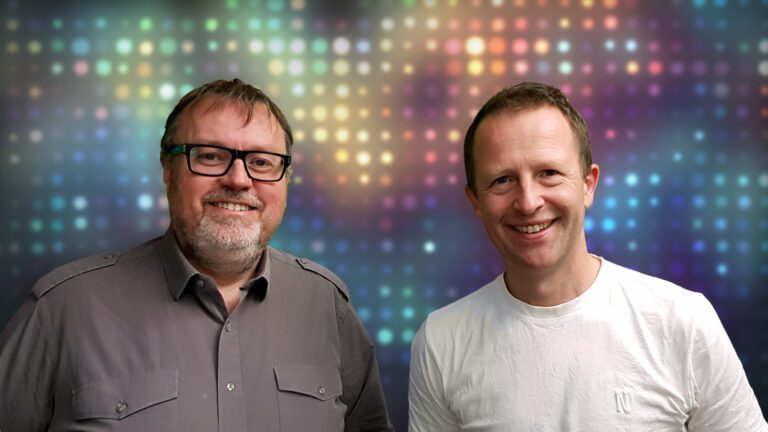
Join host Paul Spain and Jonathan Good (Scentian Bio) as they explore Scentian Bio’s innovative technology, poised to transform real-time chemical sensing in food, health, and environmental monitoring. Jonathan explains its origins and potential uses, such as detecting food contamination and wearable health diagnostics.

Plus, Tech news from the week including

  • Governmental email protocol challenges
  • Health NZ’s proposed IT workforce cutbacks
  • Spotify’s flexible payment options
  • AI’s energy demands
  • The potential hazards of orbital overcrowding and more.


Apple Podcasts Spotify RSS Feed

Special thanks to our show partners: One NZ, 2degrees, Spark NZ, HP, and Gorilla Technology.


Episode Transcript (computer-generated)

Paul Spain:
Hey folks, greetings and welcome along to the New Zealand Tech Podcast. I’m your host, Paul Spain and fantastic to have Jonathan Good joining us from Scentian Bio. How are you, Jonathan?

Jonathan Good:
Great, thank you. Thanks so much for having me today.

Paul Spain:
Yeah. Oh, look, it’s a real privilege to have you joining the show. You’re the chief executive at Sentian Bio. Maybe you can fill our listeners in since this is your first time on the show, where you fit into this big wide world of tech and startups and entrepreneurship and business in New Zealand.

Jonathan Good:
Yeah, it’s a great place to start. I’ve had a pretty varied career in tech so far, to be honest. I built a successful tech business in the US when I was living there called 1000memories, then came back to New Zealand and have worked in senior leadership technology roles, predominantly in the food industry here. Then for the last five and a half years I’ve been involved with Scentian Bios where creating a digital sense of smell and taste, making a Intersect nose on a chip, for want of a better phrase.

Paul Spain:
Yeah, it sounds really cool. I’m really looking forward to delving into that. So we’ll come and delve in later on in the show before we get started though, of course, a big thank you to our show partners to One NZ 2 Degrees Spark, HP and Guerrilla Technology. Really appreciate their support not only of the New Zealand Tech podcast, but of the, the broader tech and innovation ecosystems in New Zealand. Well, let’s start out with some of the tech news things going on in New Zealand. Then we’ll go out more global and then we’ll drill in on hearing more around Sentia bio now a bit of a, I guess an interesting one that I’m told was headlining one News last night was a bit of, what would you put it, not following the rules from a government perspective. So. Well, it’s come out that sort of multiple members of the National Party, sort of cabinet members who have been using their private email for some, some parliamentary, you know, governmental sort of issues.

Paul Spain:
And look, this is not a new thing to happen if we look on an international basis. Politicians have done these sorts of things before. Big news in the US around signal being used for arranging an attack on sort of Houthi rebels in the Middle east, which ultimately seems to have to have led to a firing there in the US from Trump. But yeah, in this case what we were told was that Erica Stanford was using her personal email and forwarding confidential government emails into her personal email. And look, it looks like the sort of the scope and level of the. This appears to be reasonably small. However, I think getting that slot at sort of the top of the 6:00 news and getting some attention across sort of most of the mainstream media outlets does send something of a message and hopefully this is sort of the last time we have to hear this, certainly from a government perspective of why it’s really, you know, well, that it is really important to separate confidential government data from personal systems which the government has zero control over. And this certainly crosses into business as well.

Paul Spain:
And every organisation will have challenges because our lives aren’t simple. Oh, this is our work life and this is our personal life. These things cross over to varying degrees. Right. So, yeah, I think look largely positive that it’s got some attention in the new. It seems as though the different bits and pieces that have sort of come from Labor Party suggest they’ve got their house in order and if they haven’t, I’m sure they’re scrambling behind the scenes to make sure they really, really have. But it sounds like they’ve been very quick to call out national party over these ones and. Yeah, something that hopefully sends a message.

Paul Spain:
What are your thoughts on this, Jonathan?

Jonathan Good:
Yeah, I suspect it won’t be the last time we see a story like this, unfortunately. I think at the deepest level, it’s that challenge between the technology controls that we like to think we can put in place and the human factors of how we want to work. I think it’s actually really hard. We’ve probably all been in that circumstance where we wanted to access or share something and we couldn’t quite do it. And, yeah, it’s really important that we’ve got the education and training systems to remind people why we have protections and then also the accessibility, I guess, of delivering ways that people can work. So, yeah, I think it’s sort of a. It’s easy to sort of point to someone doing something wrong. I mean, obviously Hillary Clinton suffered through this and 2016 as well, but yeah.

Paul Spain:
That was sort of the, the big initial one, wasn’t it? Yeah, yeah.

Jonathan Good:
And, yeah, I think the, the sort of deeper question is what were the. You know, was it. Was it purposeful or was it. Because actually there was a lack of, of training and support and, and how could those be remedied?

Paul Spain:
Yeah, and look, it is. You know, I was. I was asked by media outlets today, well, how secure are government systems? Are they, you know, are they sort of, you know, bulletproof and perfect? You know, is that why we can’t trust sort of personal systems? But we know the Reality there is, you know, nothing is entirely secure. And in fact, I was just looking up when was the breach or when did we hear about the breach of the parliamentary network? And it was, it was March last year and this was, this was. Yeah, shared. Shared by the government, by Judah Collins and it was a condemnation coming from New Zealand, standing with the United Kingdom around what was referred to as the People’s Republic of China, a state backed malicious cyber activity attack that impacted Electoral Commission and targeting members of the UK government in this particular one. But then it also went on to talk about that the GCSB had also established links between a state sponsored actor linked to China and malicious cyber activity targeting parliamentary entities in New Zealand. So, yeah, there’s some realities there where even you keep your data where it’s supposed to be.

Paul Spain:
It’s not guaranteed. And this is one of the reasons I think we have a lot of caution around, hey, who should have what data? And the more data that a government asks for or a business entity asks for, the more chance that that data is going to end up where you don’t want it. So. But you create even more problems if you’re then relaxed around allowing data that should be kept within those bounds to then float out to private and personal systems, which government or an organisation usually has zero control over.

Jonathan Good:
Ideally, I guess you’d have a couple of different levels in your protections though, I guess not only the, the user and the email protections, but how are you managing privileged data and the data objects themselves? What monitoring tools? I mean, it’d be interesting. I mean, I’m interested in how this was discovered. Was it discovered through a positive tool or was it through more political activity?

Paul Spain:
Yeah. Well, you know, when we look at the sort of data breaches that have happened over the year from a government perspective. Remember one of the ones I heard about. Yeah. Quite some years ago, I was thinking, oh, they should be able to, you know, they shouldn’t be getting caught with this. It might have been trying to remember which, which government entity it was, whether it was in that revenue or not quite sure. But yeah, when I had a look at it, you thought, well, with, with the right sort of data classification, you know, applied and you know, systems operating.

Jonathan Good:
The anomaly detection, spotting that you suddenly.

Paul Spain:
You should be able to pick it up and either stop it from going or at least, yeah, get an alert that it’s happening. And so, yeah, maybe there’s just too much that sort of floats around between sort of, you know, government and other entities that they, I don’t know, it Would be interesting to know more, put it that way. I don’t want to make any judgment calls cause we don’t know the full story. But I think there’s some positivity that this is attracting attention and it’s in the news. Ryan.

Jonathan Good:
Absolutely. I think drawing some attention to protecting data and the things that can go wrong, even from something as simple as sharing it with yourself, is good education for the wider world.

Paul Spain:
Yeah, and I guess this crosses a little bit into. One of the topics that we delved into last week was data leaks that potentially can happen through screenshots of systems. And the main topic that we delved into was Microsoft launching their recall capability, which largely on business systems is gonna be disabled and not operate. And even on personal systems it won’t screen capture. If you’re running the built in sort of remote, what do you call it, the Microsoft Terminal Services client software. It’s been around for many years if you’re using that to say access a company desktop, a virtual desktop in Microsoft’s Azure systems. So there’s areas where it’s blocked, but it doesn’t seem to kind of COVID all of the bases. And we had some discussion on that.

Paul Spain:
And I did make the comment, hey, if anyone from Microsoft is listening, it’d be interesting to hear thoughts now, the response that came back was basically a link back to their blog post, which I don’t think really answers these questions, but it’s great that they’re paying attention. I think they’re in a lot of ways are trying to do the right thing. I’m just not sure if they go far enough. The other thing that I touched on very briefly was that there was an organisation that has software for screen capturing a desktop for remote workers so that, so that their manager can check in and see whether they’re really working and so on. Which I, I guess, yeah, some organisations use that. It’s not the sort of technology I, I’m, I’m keen on at all. And this is probably one of the many, many reasons employee monitoring software they call it. But I did look that up afterwards.

Paul Spain:
And so for those that are curious around the risks of that particular software, you can jump online and you’ll see some of the news stories. And it was around this employee monitoring software breach, privacy breach for Work Composer and apparently their app, used by over 200,000 people and over 21 million screenshots, were effectively exposed online. So which is, you know, I guess an example that a lot of companies and a lot of organisations don’t get this Stuff. Right. You would think if your job was taking screenshots of confidential information, that your number one thing would be making sure you really had that locked down. But guess it doesn’t always play out like that, does it?

Jonathan Good:
No, I think it’s really important when you’re engaging with a software vendor to think about what security practices they’ve got in place. I have to say I still struggle to see why managers want to look at this and maybe it’s a failure of my imagination, but if you want to track productivity, watching someone’s screen doesn’t seem that interesting to me.

Paul Spain:
No, no.

Jonathan Good:
You mentioned the manager wants to see if the employee is really working. I mean, is the manager really working if they’re just looking at these screenshots all day?

Paul Spain:
Yeah, yeah, I can imagine it must be for a sort of exceptional, you know, exceptional cases would be my guess. But, you know, the problem is, as soon as you put that type of tool in place, what does that say to your people and the erosion of trust and so on?

Jonathan Good:
And you’re just expanding your attack surface area with all of this new information in a new place.

Paul Spain:
Exactly, yeah. So lessons to be learned for all of us now, news across the media. But RNZ had, I guess, a reasonable piece talking about Health NZ confirming that, well, what their headline says, a third of all IT roles to be cut. Now, it’s a little bit more nuanced than that, isn’t it? You made the comment when we were chatting before that it’s not exactly a third of all roles because they’ve got a lot of roles that actually aren’t filled. So it’s not that they’re going to stop advertising, you know, some of the roles. So they’re talking around 18, 15 roles had been disestablished. But that, yeah, that was not actually a full reflection of the number of people who would, you know, who would be exited and losing their jobs. But still, you know, we’re talking about a significant impact on those that are working in Te Wharaora in Health nz.

Paul Spain:
And I guess usually if you were looking for work and you had taken a role within government, you would expect that to be a reasonably safe place to be. So, yeah, quite a, quite a shock. Although I think this is, you know, there’s been an awareness that a level of downsizing was gonna happen here, but still pretty difficult circumstance for all of those folks and probably raises a few questions around, well, what does this mean if we’re making such deep cuts when I think most in the technology sector would look at Technology as being something that uplifts, improves productivity, brings better outcomes. If you were gonna spend a dollar anywhere, well, spending it on the technological front is a place to get a really, really good result. What are your thoughts on this one?

Jonathan Good:
It’s certainly a slightly confusing thing to get your head around, as you mentioned, with the numbers. I mean, the, you know, the overall numbers are sort of astounding at the 1850 rolls in the. In the headline. And I mean, I just sort of wanted to do a bit of a reality check on this. Roughly, it’s the same order of magnitude as the number of senior doctors, which is sort of surprising to me from the outside.

Paul Spain:
But, yes, in terms of the sheer number of people. Yeah.

Jonathan Good:
I guess when you think of the.

Paul Spain:
Hospital system involved, that you’ve got a lot more people in it than you do in terms of doctors. Yeah.

Jonathan Good:
I mean, my wife’s a doctor in the hospital, so I should confess that from the outset.

Paul Spain:
Yeah. Yep. So you’ve got a bit of an insight. I’ve got a bit of an. Into the realities, some anecdotes.

Jonathan Good:
But I think, as you say, I mean, we, obviously, the health system is in drastic need of transformation and also has this amazing opportunity. I mean, some of the things that are going on in health tech, and there’s some amazing Kiwi companies leading in that space as well, are incredible. And how we serve all of the needs of a aging population efficiently is a pretty hard challenge. So, you know, I guess that I don’t quite know how to sort of square the circle or connecting that to the. To the numbers. But you certainly want a dynamic organisation that is sort of constantly evolving. I think in this context, and I was really struck that 750 of the roles were vacant, sort of a, you know, a quarter of the overall roles and didn’t seem to be filled. And that suggests maybe like, a bit more focus on organisation design and evolution would probably really help.

Jonathan Good:
Yeah, you know, it’s very diverse set of requirements within the hospital system and lots of legacy and lots of new opportunities. And so I think, you know, really good technology design can make a pretty big difference there, both from the economic outcomes and the health and prosperity outcomes we’re looking for as well.

Paul Spain:
Yeah, look, I think there are considerable complexities for organisations that have been around for some time because you end up with a lot of legacy sort of systems. And we’ve looked at some past issues and challenges in the health sector. You know, when we saw, you know, what happened to the Waikato DHB with, you know, having Their systems compromised. One of the things you come back to is all these old legacy systems that need a level of maintenance and I think that’s actually an area we maybe don’t delve into enough. And so we end up. And look, I don’t know how you get. How you would get this right across, you know, the entire health system, public health system in New Zealand. Right.

Paul Spain:
Because yeah, you will, you know, ultimately have, you know, thousands of different bits and pieces of technology that are all connected together and some of those will have been made as probably quite strategic decisions 20 years ago or something. Right. And then, you know, other things that have not been made and you know, with probably the same sort of rigor and you need to be able to keep all those systems running and ideally secure and all talking to each other. And yeah, the older those. And it’s not just about age but, you know, I guess when you look at the number and the age and so on. Yeah, some pretty significant challenges. And how do you get out of that? Well, there’s a degree to which you have to invest and put more people in to, you know, to modernise these things before you can get to maybe a bit more efficiency in terms of the number of people involved. Yeah.

Jonathan Good:
And I think hopefully it’s not a case of not being able to do anything new in the meantime. Sort of the act of transformation, I guess. I mean something that I’m quite struck by in my wife’s work. She predominantly works for Health New Zealand as a doctor, but she also works for a private provider and in private she’s supported by. She’s a radiologist, she has a AI that jewel reads. Yes. And in the hospital system they have humans that are transcribing their dictated notes and that just sort of strikes me as a little example, I guess, of how you can spend quite a lot of resources on doing things in quite a legacy way versus being able to bring in some of the new tools. And I think we all really want the BIS 20, 25 health outcomes we can get and technology is making incredible new things possible and we’ve got to be turning those on as well as actively making some trade offs in the background to afford that.

Paul Spain:
Yeah, it’s a great point and it’d be a really interesting one to delve into a little bit more because we’ve probably also talked on New Zealand tech podcast around how poor some of the transcription things can be with particular health things. So, you know, there’s a significant upside opportunity, but there is a kind of picking the right Timing, picking, the right technology and so on. But I think we have seen that area move along, you know, pretty quickly with some quite specialised tools that have probably covered the vocabulary, you know, pretty well. But some of the sort of. I guess some of the tools that have been used in the medical world have, have led to some, what can be quite comical results if you read them. But of course, if that’s somebody’s health at stake, you want to have a high degree of confidence, right? Yeah.

Jonathan Good:
And I mean, it also comes back to the work design of how are you changing? You’re actually enabling people to do their job differently by supporting them with AI and then you may be asking them to review the outputs rather than it’s just left behind for someone else to clean up.

Paul Spain:
Yeah, definitely. I mean, there are answers to these things and I’m sure we’ll see some advancement. I think it’s encouraging that the government does seem to be mostly upbeat around using AI within government. Of course, there are steps of how you get from that sort of mindset to actually utilizing this technology across the board. I think one of the advantages that probably some of the private entities have is being smaller, that they can be a bit more agile. And so hopefully what, you know, what your wife is sort of, you know, seeing in one environment will translate, you know, across out on a more national basis or, you know, into the public systems, you know, in an appropriate sort of timing, which I think a lot of us would, would, would suggest, well, maybe appropriate is now.

Jonathan Good:
No, I think that’s, that’s where the. Beyond the numbers and the organisation design, it’s about how the, how the approach is changing and didn’t seem to be much detail available on that. Yet.

Paul Spain:
Another story that’s, that’s come up on a local basis is around the big unknown as far as artificial intelligence and its impact on electricity demand. And so, yeah, I think this is, you know, we’ve probably talked a little bit about this in the past in terms of electric vehicles. You know, how does all this fit together for New Zealand? But one of the data points I saw was for Vector, you know, being our largest electricity lines company for their 25 to 35 plan, they’re forecasting a 60% rise in data center demand over the next decade, which potentially could add up to 700 megawatts to Auckland’s current 1800 megawatt daily usage. So that’s a, that’s a pretty significant jump. But I think there’s. Yeah, it’s worth noting that the likes of Amazon, Microsoft, they seem to be really heavily focused on supporting their data centers at least. And it’s not just them obviously that are here. Spark are investing very, very heavily and understand they’re out looking for additional co investment to go into some of their data centers.

Paul Spain:
But what we’re seeing, especially from those bigger players is a commitment to renewable energy and often it’s an investment into some sort of new renewable energy generation. So that kind of means that there is investment kind of coming in to build it up. And of course any data center that operates in New Zealand is taking advantage of. Yeah, the huge amount of renewables that we, you know, we’ve been generating in New Zealand as it is. But you know, maybe, I don’t know if we’ve still got the coal going on that was, that was a big story a couple of, couple of years ago or not. Hopefully not so much on the, on the coal front. I have to look up those stats. Yeah.

Paul Spain:
What, what do you think around, you know, this, this increase? Because I mean I’ve talked just generally around the data centers but there’s sort of the unknown and when we look at AI that tends to need to use a fair bit more power than just traditional data center loads, do you think New Zealand’s going to have some really hefty requirements on that front? Because we’re just going to keep using AI more and more, aren’t we?

Jonathan Good:
Absolutely. I think we’re just at the start of the, yeah, the sort of new AI transformation of how we live and work and yeah, the data needs of that and the power needs of that are going to be phenomenal. So I mean, I was pretty excited about this potential, to be honest. I think that it would be great for New Zealand to have continued investment here and great for the world that data centers are being built in a place that not only has a, a strong sort of current setup in terms of renewables, but is endowed with lots of potential renewables with sun and wind and water. I think the hard part is for forecasting what’s required and being able to look out far enough and make decisions in time to support this infrastructure. But I think the potential for New Zealand of having more, more data centers here and enabling the local economy and people to be able to leverage those resources here in New Zealand is really exciting.

Paul Spain:
Yeah, I think so. And largely we prefer to have the data centers here in New Zealand than elsewhere. I did just try and pull a little bit of data on, on our coal usage and I’m looking at some charts here. Just quickly, interestingly, what the AI gave me. So, you know, when you, when you use Google, you get your Gemini response. And it was telling me that in April 2025, coal accounted for a significant portion of New Zealand’s power generation and then went on to say it was 20.6 of total generation. Now I think. Please throw that figure out because I think it is a complete load of.

Jonathan Good:
I guess that doesn’t sound right.

Paul Spain:
A complete load of rubbish. Based on my existing knowledge in this space and from the graph that I’ve. That I’ve pulled up. That doesn’t. Doesn’t even. Yeah. Isn’t even mentioning coal. So this is.

Paul Spain:
Yeah, I’ve got some graphs that are sort of total generation and you’re between 40 and 50% for hydro, geothermal between 20 and 25, wind between 6 and 11% and then thermal at 17 to 20. So there’s not much room left for there to be coal and coal’s not specifically listed. So there’s a little bit of. Just a reminder in there. I thought I’d throw that in.

Jonathan Good:
I think the coal’s probably in the thermal, though.

Paul Spain:
Oh yeah, yeah. Okay.

Jonathan Good:
It’s probably sand, coal put together.

Paul Spain:
Yeah. Okay, so both of those together. That’s. Yep, that’s. It’s probably. But yeah, we’re still. Probably not.

Jonathan Good:
That was before all the rain.

Paul Spain:
Yeah. I wonder how much that would split out then between coal and gas. But those numbers, the. Between 17 and. What do we got, 20.8 for one week in March. Yeah. It would be interesting to see the actual exact kind of break breakdown of that, but it seems way higher than. Than what I was.

Paul Spain:
I was thinking. So. Yeah. But anyway, beware of what the AI gives you and, and get the breakdowns and. And do your own. Do some, do some further research. Yeah.

Jonathan Good:
It’s also an interesting comparison.

Paul Spain:
Right. Yeah.

Jonathan Good:
I guess against warehouse people are running workloads though. I mean we’ve been running our GPUs in the US because it’s more available.

Paul Spain:
Yes.

Jonathan Good:
And yeah, I’m pretty sure that the renewable stats over there are going to be less favourable.

Paul Spain:
Oh yeah. I mean even. Yeah, you look at that and yeah, the large majority of it is renewable. So. Yes. Right. So onto just a couple of the sort of international topics. Apple haven’t done so well in court recently and so this means we.

Paul Spain:
We’ve got a. What looks to be a very fast developing landscape of, I guess. Yeah. Apps that, you know, previously. So Spotify I think was one of the first kind of cabs off the rank as it were who now are changing how you can subscribe and pay for Spotify and the price of that. So this comes back to the ongoing, I guess, court wranglings for Apple, who had basically said, look, you’ve gotta pay your pound of flesh to Apple through your iPhone, iPad, apps.

Jonathan Good:
Yeah. All the way back to when there.

Paul Spain:
Were sort of subscriptions and so on. Right. And it was because of the Fortnite sort of brought the case against Apple and said, hey, this isn’t right and it doesn’t make sense. And they’ve kind of dug their toes into a point of, you know, taking Fortnite out of App Store and so on. Well, yeah, the Court have really, you know, come back and said, well, yeah, Apple shouldn’t be able to do exactly what they’re doing now. There’s already some differences in Europe, where in the EU you can have other app stores on your phone rather than going through Apple. But Apple was really insisting that if you were selling a subscription through your app, and Spotify was an example, then Apple would get there, they would get their cut of that. And now you can have that outgoing link and completely bypass any cut going to Apple.

Paul Spain:
So, you know, we’ll see some. Hopefully some of these sort of subscription prices will. It’ll be easier to get a lower subscription price by, you know, using the app and going through and buying and not having to kind of know the tricks or for the prices to have been, you know, at that higher end. So Apple are really pushing back on this, so it’ll be interesting to see, you know, what results they get through the courts. But these things seem to go on for years and years. So, yeah, pretty interesting time. What’s your feeling, Jonathan? Does it make sense that Apple, you know, should have been getting the level of cut that they’re getting for a digital marketplace?

Jonathan Good:
Yeah, well, I think it’s not just that. It’s also stopping people being able to purchase somewhere else without taking their own cut. The sort of 27% off platform fee that. Yeah, I mean, I think most people, when they look at it, would say that seems pretty unfair. And obviously the courts have found that and now Apple’s responded. But, yeah, it seems to me a great boon for consumers that there might be a little bit of relief on subscription prices as hopefully some of this value is returned to consumers. I mean, the. The App Store is bigger than Hollywood, right.

Jonathan Good:
It’s $100 billion a year and revenue. So it’s pretty material numbers we’re talking about here. And even for Apple, it’s You know, I think 10% of their overall revenue is from the App Store.

Paul Spain:
Yeah, yeah, there’s definitely going to be an impact if this, you know, becomes permanent and who knows what other flow on there could be from it. Now, you mentioned Hollywood. Trump is apparently indicating 100% tariffs on movies produced in foreign lands. So, you know, here in New Zealand we create a lot of content. You know, I guess it fits under tech podcasts, cause a lot of it’s distributed digitally and so on. And I guess, you know, these days, sort of, you know, similar cinemas generally tend to have a form of digital streaming. But yeah, if they go ahead with this, that could have a massive impact on New Zealand, where we’ve been generally trying to grow the level of film and television production here. But that could be in a difficult position if this goes ahead.

Paul Spain:
So this is all part of the unknowns with what’s going on under Trump at the moment, isn’t it part of.

Jonathan Good:
The hour by hour confusion?

Paul Spain:
Yes. Yeah. So, yeah, I guess I’d like to hope that that doesn’t happen, but, you know, this is something that I guess we have to sort of sit out and see how it plays out. Just a couple of other things. On the international front, looks like Microsoft are really gearing up more and more. So for Azure to be the platform that companies would use for anything AI, there are indications that they’re likely to start hosting Elon Musk’s GROK AI or XAI model that, yeah, currently is accessible through X or Twitter as well as through grok.com and it’s, it’s actually, you know, a very, very capable AI when you line these, you know, the different ones up and for Microsoft to effectively create a marketplace where, you know, any company can tap in to whatever AI model is appropriate for their particular requirements or to mix and match and use a bunch and get the best results. That makes a lot of sense for Microsoft and yeah, seems to be a pretty smart play.

Jonathan Good:
It sure does. I mean, yeah, I think they’ve really set themselves up as being the place where you can find the best AI tools. And yeah, I mean, I’d love to be a fly on the wall at OpenAI though, and see how this is continuing to change the dynamic.

Paul Spain:
Yes, yeah, yeah, I think it’s going to be interesting to follow. But at the moment, is it your impression that Microsoft are. If we put sort of aws, Amazon Web Services next to Microsoft? AWS have been very much the leader when it comes to cloud services generally. But if I’m kind of Reading right. What I’m seeing, it looks as though Microsoft are kind of flipping that when it comes to AI and AI is kind of a pretty key place to be and then if your AI workloads are sitting in Azure then that’s going to encourage an organisation probably to do more with Microsoft, isn’t it?

Jonathan Good:
Yeah and I think that, I mean, I guess Microsoft are also bringing their strength from enterprise and the sort of Office suite that obviously has helped with the sort of first wave of their cloud services. But I think they obviously pretty early on recognize the potential in AI and their investments in OpenAI I guess sort of pioneered that. But yeah, I think they are setting themselves up in a leadership position in this space and keep looking for, you know, to see where Amazon’s gonna really respond to this.

Paul Spain:
So I mean is this, do you tap into their services and your business is it.

Jonathan Good:
Yeah, yeah we’ve been a. Yeah we’ve been on Microsoft startup so far.

Paul Spain:
And that’s working out well for you?

Jonathan Good:
Yeah, we’ve had good support. We’ve been able to. It’s nice to have the sort of end to end stack all in one place and has been really helpful. But yeah, I mean, I guess we’re also using quite a lot of AI so it’s worth thinking about where the right place is for that in the long run. And so we’re constantly reevaluating.

Paul Spain:
Yeah, yeah, 100% now one more thing wanted to tap into that’s I guess been getting increasing attention and probably something we’ve touched on a little bit in the past is the challenges with overcrowding in space and now we’ve got Amazon’s Project Kuiper which is, I guess they’re starting to gain some traction and they’ve actually got, I can’t remember was it 19 or 26 satellites that they’ve, that they’ve now launched. So they’re at the very beginning they’re wanting to have something like 3,000 satellites out there. There’s, there are other, other players as well in this space. There was one web out of the UK who have merged with Eutel Sat a couple of years ago. We certainly expect to see China doing a lot in this area as well. And we’ve gone from sort of sub 5000 satellites in space entirely. Going back trying to think maybe sort of three or four years ago I think there was maybe around 5,000 satellites. Now we’re, I think what are we at? We’re certainly, you know, well past double that I believe and you know, the numbers are just set to keep climbing SpaceX with Starlink, I think they’re aiming to get to 30,000 on their own.

Paul Spain:
And when you see collisions in space, it usually creates pretty major drama because if one thing hits another, it’s not just that they bounce off, it’s that they break up into all, you know, lots of, you know, very small bits and pieces. And these things are traveling around, you know, at insane speeds. So, you know, you just need something that doesn’t have to be the, you know, of any great size. If that goes flying into the space station, that could rip right, right through it. Yeah. Let alone all the other things that are up in space that we kind of want to be able to trust and rely on. Do you think we’re gonna just keep seeing this ongoing acceleration or do you think we’re gonna get to a point where it’s like all bets are off? No one can put stuff in space. It’s just, it’s too dangerous up there.

Paul Spain:
Cause there are suggestions that could be a possibility, right?

Jonathan Good:
Yeah. I think it’s hard to know who’s setting the rules, though. I mean, I don’t think there is anyone to say no, for better or worse. So I guess the question is, how do we use a finite resource effectively for humanity? And yeah, I think we are going to see more and more satellites. A bit of a space nerd. I love looking at the, at the night sky with my, my daughters and, you know, there’s more and more satellites up there to, to look at. Used to look out at the stars and now we, now we look at our communications infrastructure. You know, I think there are some proactive efforts on this.

Jonathan Good:
I mean, the Europeans and the, and the FCC from the US have been trying to, I guess, coordinate their own areas. And ultimately, you’d expect from a sort of game theory perspective, some sort of conventions to emerge about how collisions are avoided. I mean, there’s the sort of design demise that’s already required by the Americans. So after five years, the satellite has to be intentionally scuttled.

Paul Spain:
Yeah, yeah. But we still see sort of, I guess, older things that are coming back to Earth that have been up for a long time.

Jonathan Good:
And the pinball effect that you’re describing, where one thing creates a cascade, everyone’s nightmare.

Paul Spain:
So I think this will be an interesting one to see how, I guess, you know, it is as people, we have to solve it. And it’s something we’ve got to work together on a global basis. And there are other things that are similar, but nothing exactly like this where we have to put our heads together and hopefully end up with some reasonable sort of consensus and then you’ve got some of these satellites that can go and kind of tidy things up and yeah, you kind of hope that that side of it gets worked out well, but you know, once you start getting into wars and whatnot and we’re in the middle of these sort of things right now, then all bets can be off on how some of these things play out. So it’s really, you know, quite hard to pick, you know, where we end up exactly in the future. Yeah, but I imagine there’s an aspect that’s a little bit like some of the treaties and things on nuclear proliferation where, you know, if this isn’t, if it isn’t solved, then everybody ends up losing. Right. So you kind of, you have to have some, some level of consensus and in some of these areas and yeah, hopefully we don’t end up with, with, with too much kind of evil, bad things going on and low earth orbit and beyond.

Jonathan Good:
So no one wants it to be their satellites that are knocked out. So everyone has a, has just enough incentive to try and cooperate.

Paul Spain:
That’s it. Yeah, yeah, some pretty strong vested interests. All right, well, let’s delve into sentient bio. You know, you’ve been on the radar, I think, you know, a little while. We’ve been hearing bits and pieces about you. Finalist for two of the New Zealand Hi-Tech awards this year. You won a big international award recently. Maybe you can tell us a little bit about that.

Paul Spain:
And, and yeah, really keen to understand, you know, what it is that you’re, you’re doing exactly. What’s this idea of these sort of, you know, digital, you know, the digital nose. What’s out there in terms of current, current technology and you know, what are you doing that is disrupting that, that area. So a few, few areas maybe tell us about this, this most recent, this global award that you won in the.

Jonathan Good:
U.S. yeah, so that was. So we won the startup award at the IFT first, which is the International Food Technologists Conference in Chicago. It’s the world’s largest food science and innovation show. And so we were the grand winner of over 100 global startups that were there and that really recognized the potential of what we’re doing to transform the, the food industry. And you might think what is an insect nose got to do with the food industry? And that’s, I guess at its core what we’re providing is real time chemical sensing. And so, you know, as humans we think of the World through our eyes, you know, that’s visual information about the world around us. Close our eyes, we think of the world through our ears, acoustic information.

Jonathan Good:
So we’ve got cameras and microphones, but we have largely forgotten the sort of third version of the world, which is the chemical information. And we experience that through smell and taste and they’re actually really important to our existence. But even though we often don’t acknowledge that smell is our fastest sense and they’re providing us with this information about what to eat, what’s safe, what’s healthy, there’s all this rich metabolic information. And so we’re harnessing that to provide a digital chemical sensor that can measure things in real time. And so in the food industry, what they’re interested in is their ingredients, making sure that there aren’t taints and contaminants and off notes and making sure that the sort of key bioactives and compounds of interest are there. And the customers and consumers want more and better information. And the current ways of doing that are incredibly painful.

Paul Spain:
So what does it look like currently to, you know, to do that?

Jonathan Good:
Yeah, there’s basically, basically there’s two approaches.

Paul Spain:
You can have a human taste tester, can’t you, on foods and the like.

Jonathan Good:
Exactly. So there is often the human check. And you know, it’s actually really hard to objectively and repeatedly smell and taste things. And so that’s the sort of predominant method. But if you want to spot, attain to a residue, it’s really, really hard. And so then the other way to do it is through GCMS or mass spectrometry. And so these are big machines that go in a lab. It’s the sort of mainframe approach to chemical sensing.

Paul Spain:
So that’s really big and really expensive.

Jonathan Good:
Yeah, I mean, a good mass spec machine will cost 300,000, US$500,000 and it needs to be in a lab and you need probably a PhD to be able to run and interpret the results. So it’s a long way from the camera we all carry around in our pockets. That’s what’s so disruptive about what, what we’re doing is we’re making a, you know, a handheld sensor that can be used anywhere by anyone.

Paul Spain:
And so handheld sensor, what are the scenarios? And you know, walk us through, you know, how it works effectively.

Jonathan Good:
Yeah. So we’re. So this is, I guess the origin story for Scentian Bio were a spin out from plant and food research. And so the team led By Andrew Spent 18 years at plant and food research understanding how insects smell and through that, had these, this incredible couple of breakthroughs. Firstly, using synthetic biology, the ability to be able to produce these incredible receptors that help insects smell so well. And as humans, we tend to think, you know, dogs are really good at smell. Insects are sort of the next level. They’ve evolved an even better way to be able to smell that uses fewer receptors, that’s incredibly sensitive and very amenable for biosensing.

Jonathan Good:
And so then the second key breakthrough was being able to connect that to a transducer so we can track an electrical signal and then we can interface from the physical world into the, into the digital world. And so what we’ve developed is a flow cell, so it’s a liquid sensor. We produce these incredible proteins. We insert them into artificial membranes to resemble the cell. And then when you add a sample, we see the individual binding interactions of the compounds from the sample with these receptors. And so we’re, we’re tracking the current 4,000 times per second at 2048 different artificial membranes. And from all of that data, we can measure quantitatively the compounds, which is really mimicking what’s happening in a fly’s brain.

Paul Spain:
Right.

Jonathan Good:
It’s using these proteins, they’re generating signals, and then it’s using its neuronal network to interpret and decipher that. We’re using AI to do the same thing.

Paul Spain:
Wow, that’s super impressive. Now, how do you. Or where are you down? Sort of a commercialisation track. And what are the next steps to taking what you’ve invented out to the world?

Jonathan Good:
Yeah, so we have pilots underway with five global food companies at various different stages along, along that. Where we’re working on these sort of known taints and contaminants in their ingredient supply chain. And that’s, it’s a great place for us to start. That’s where, you know, you can imagine at these big facilities, trucks are coming in in real time, and they need to make a quick decision on whether or not that load is, is tainted or whether to incorporate it. And it’s, you know, there’s no ability at the moment to get that information and fast enough. And so the, the trucks are all going into production, and then you got to figure out what to do afterwards when you work out that it actually there was a taint or a residue as part of that. And so those, those are the, the sort of first customer pilots that we’re working on. So we’ve been working with, yes, samples with five of our global pilot customers.

Jonathan Good:
And we’re aiming to have, yeah, sort of open Release commercial sales at the end of the year.

Paul Spain:
That’s pretty exciting. So you know, what do you see the journey for Scentian Bio sort of looking like over the next few years? And you know, how widespread would you, you know, imagine the use of your sensors, your technology and AI? I guess you’re providing a kind of an end to end solution, hardware, software and so on. So it’s all wrapped up. Is it something that you would do as a, you know, outright purchase? I imagine there’s kind of some sort of recurring revenue element in here, isn’t there? Yes.

Jonathan Good:
So we’re selling this as a, as a solution. So we’re selling the test results because there’s the consumable portion and then there’s also the software that’s interpreting the results and providing the outcome. And so customers are buying a set number of tests per month. It looks more like a sort of SaaS model, which is quite different from buying a half a million dollar machine and employing someone. And I think that’s also what’s pretty exciting in the food industry about being able to scale with demand and actually start using something and as you really love it, use more and more. So in terms of where that’s leading us, we’re ultimately building a platform here as we think about it. We aspire for chemical sensing to be just as ubiquitous as cameras are today. We’re using them for biomedical imaging, security, TikTok, you know, all manner of things.

Jonathan Good:
And I think, you know, our imagination of what we could do with chemical information is quite broad as well.

Paul Spain:
What would be some, some examples if we look out a little bit more broadly around, you know, we could imagine the use cases being.

Jonathan Good:
Yes, we’re fortunate to have a grant from the Gates foundation in health. So we’re working on a, on a prototype diagnostic for tuberculosis and malaria. And that might seem strange to listeners, but actually what I guess you’re expressing in your saliva or your urine or your breath is all of this outcomes of your metabolic processes. And so that’s full of information about your health. And if you have, yeah, if you have an infectious disease or a chronic condition, there are those signatures there. And it’s where every now and then you see an article about a person who can smell Parkinson’s or prostate cancer or a dog can recognize the disease and Covid, CA use dogs. And so we’re working on this TB diagnostic. But our ambition there is ultimately we’d love to be part of, you know, wearable that’s helping everyone track their health in real time.

Jonathan Good:
Like it could give really early indications of health and wellness, help people live their, their best life and, and get, yeah, get early treatment or help or augmentation for things that, that might be, be spotted early. I guess in environmental sensing and security, the ability to know what’s in the surrounding environment is quite high. There’s been studies on flies being able to spot explosives and there’s lots of other, I guess, sort of environmental variables that might be of interest. And yeah, I think, you know, it could turn up in all manner of different things. And that’s where you mentioned the sort of wearer sort of developing the overall solution. I mean we would say we’re doing that in the food industry.

Paul Spain:
Yes.

Jonathan Good:
And then really we want to enable people to be able to build, you know, things that we haven’t even thought of yet that can unlock chemical sensing into other applications and other verticals.

Paul Spain:
Right, gotcha. Just walk us through how it works to use your chemical sensor. What are the, you know, what would be the steps if we were to, you know, we were, you know, in a food distribution location. We’ve got, you know, I don’t know, what are the, what are the sorts of foods that you could, you could test with it for instance, and then what would that look like to actually, you know, utilize it and to, and to reutilize it over time?

Jonathan Good:
Yes. So the, so for food or food ingredients testing, it’s literally as simple as you build your liquid samples. So I mean lots of food ingredients are already liquid. Others you might need a quick process to solubilize it. And then where, you know, you syringe that into the, into the flow cell and push go on software, it runs and you can, I guess in real time it’s collecting the data from those electrical signals. And so depending on the level of detection you want and the confidence level, you know, it might be a, you know, a few minutes of data collection and then we’d provide a result in terms of the outcome. That’s what we’re providing at the moment. And so that, you know, that’s something that can be done, you know, out in a truck dock, you know, to take a little sample from, from a batch coming off a truck and be able to provide a clearance that that’s within spec.

Jonathan Good:
So that’s, that’s the current. And I mean one of the really exciting things we’ve just developed is around gas sensing as well and the ability to be able to sense from the surrounding environment and not just from a liquid sample, which obviously could make that even easier and more accessible.

Paul Spain:
Yeah, yeah. So your flow cell at the moment, is that something you can just reuse over and over what sort of lifespan would you imagine for something like that?

Jonathan Good:
Yeah, at the moment we’re using them five times and. And then we have a recycling program to be able to take back and reuse those. But ultimately we foresee this being much more reusable. Obviously we all use our noses quite a lot and so we just need to work on some of the conditions there to make sure that we’re confident in the continuing data collection to be able to do that. But if you want to run a second sample, you literally just run a wash through to remove any of the first sample and then you syringe in a second sample.

Paul Spain:
Right. So that’s just. You can wash it out with water sort of thing and then you’re back into it.

Jonathan Good:
Yeah.

Paul Spain:
And so how would that work in a gas situation? Because that seems like a.

Jonathan Good:
It’s a slightly different product for us for slightly different uses. Yeah, I mean the gas sensor as we’ve developed it is more like a sort of IoT device. I guess that’s always the sort of. Always available and able to poll. But yeah, it needs to be sort of related to use cases I guess to figure out what you would want to do. Yeah, I mean I think that’s where to this sort of cameras analogy and the platform idea. I mean there’s a lot of different ways these, these proteins and the. Yeah.

Jonathan Good:
And the biosensor can be used and ultimately the product family is going to need to meet quite a few different use cases to be able to realize that potential.

Paul Spain:
Yeah, well, it sounds, sounds really exciting, Jonathan. Yeah, quite fascinated just to see how things evolve. Really exciting that. Yeah. You’re heading into commercialisation and. Yeah.NZ Hi-Tech awards. Best of best of luck for those as well.

Jonathan Good:
Thank you.

Paul Spain:
I’m sure there’ll be lots of good things ahead. Anything else you wanted to share before we finish up?

Jonathan Good:
No, just. I mean thank you for having me today and yeah, it’s been a real pleasure.

Paul Spain:
Yeah, it has been. Thanks very much for joining us on the show and of course, big thank you to everyone for listening in and to our show partners, guerrilla technology, HP, Spark 2 degrees and One NZ. If you’ve been watching this through video or live stream, do make sure that you’re following us or subscribed through your favourite podcast app. And of course if you’ve been listening through your audio podcast app, which seems to be most of our audience. Yeah, do make sure you’re following us through on those video applications for the live streams, which we have probably most weeks. More often than not. You can find those by following myself, Paul Spain on LinkedIn. You can also find us across on YouTube X and Facebook under NZ Tech Podcast.

Paul Spain:
So thanks everyone. We’ll catch you again on the next episode. See ya.