
Private 5G Networks, Online Scam Codes, and Mars Bioimaging’s CT Solutions
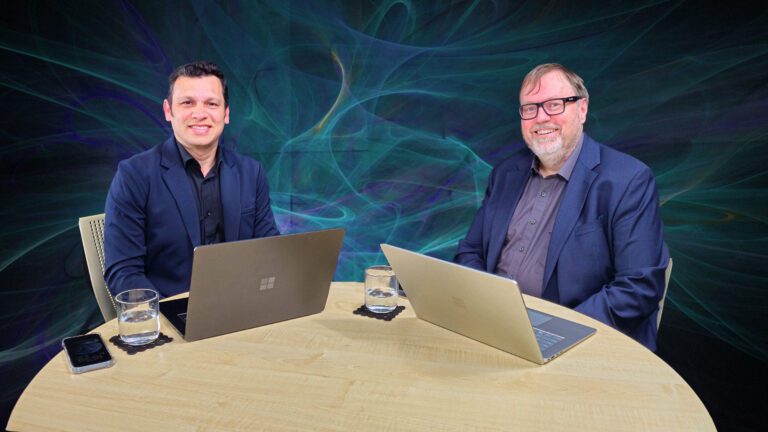
Join Paul Spain as he sits down with Dr Ojas Mahapatra, CEO of Mars Bioimaging Ltd, to explore cutting edge advances in portable CT scanning and the future of medTech innovation from Christchurch.
Plus a look at tech news from the week including:
Read the full transcript
Transcript is computer-generated and may contain errors.
Paul Spain:
Hey folks, greetings and welcome along to the New Zealand Tech Podcast. I’m your host, Paul Spain. Great to be here with oJAS Mahapatra from Mars Bioimaging. Welcome along. How are you?
Ojas Mahapatra:
I’m great. Thank you so much for the lovely weather you have put out here.
Paul Spain:
Well, good, good to have you in studio. Maybe you can fill listeners in on where you fit into this big wide world of tech.
Ojas Mahapatra:
I’m the newly appointed chief exec at Mars Bioimaging. Been in the role for about 6 months. Just a quick word about my background. I’m a capital M&A and investments guy. I’ve been in New Zealand for about 15, 16 years, originally from India, and I’ve spent most of my time scaling deep tech businesses. I do have a PhD in physics from University of Canterbury. That helps me understand the tech behind the companies I work with.
Paul Spain:
I bet it does. Yeah.
Ojas Mahapatra:
And I spent a bit of time at London Business School getting trained in M&A. Yeah, that’s me.
Paul Spain:
Fantastic. Oh, it’s a real privilege to have you on the show. And yeah, I was fortunate enough to see some of the Mars bioimaging technology previously on a visit to Christchurch. And so, you know, was keen to, you know, keen to hear a little bit more. So it was convenient when we heard from someone around having you on the show. So it’s great.
Ojas Mahapatra:
Thanks for having me here. Yeah, it’s great.
Paul Spain:
Great. Well, lots to delve into this week. There’s a bunch of pretty interesting things going on locally. In New Zealand, we’ve got a new online scam code that has been developed. So we’ll delve into that. It’s a bit of a partnership across, yeah, private sector and government involvement there as well. Two Degrees and Ericsson have delivered a private 5G network for Lyttleton Port Company that we’ll delve into. And we have a new cybersecurity strategy for New Zealand for 2026 through 2030.
Paul Spain:
And then into the international news and, and then delving into the Mars bioimaging story. So yeah, really, really exciting. Of course, a big thank you to our incredible show partners for keeping New Zealand Tech Podcast happening. One New Zealand, 2degrees, Spark, Workday, Fortinet, and Gorilla Technologies. So a huge thank you to each of them for their contributions to the show and to the broader innovation and tech ecosystems in New Zealand. Well, yeah, first up, we have this new online scam code designed to help keep Kiwis safe online. And this has been a bit of a joint development. So this was launched yesterday at Parliament.
Paul Spain:
But it’s been put together by Tech New Zealand. And then they have worked with the big social media, the biggest of the social media players to make that happen. So those that are wanting to sort of delve in and maybe get their head around, you know, what does this online scam code look like? And you want to know the nuts and bolts of it, then we’ll have a link through to the PDF on that. I found it quite fascinating to see this sort of endeavor come together as a bit of a code of practice for, I guess, they refer to it as the digital industry, for the digital industry to follow. I think these sorts of things are fairly hard, but any steps in the right direction are good, and this looks like a, a positive step. I imagine there will be more opportunities to develop it in the future.
Ojas Mahapatra:
And as everything goes onto the cloud, AI models are being built, safety becomes paramount. Yeah. So it’s great.
Paul Spain:
It’s a great move. Well, the more things that we do digitally, the more I guess we see things transition to an online context. The more risks that we see from various scams and so on. So we see ongoing challenges. Now, I guess part of the challenge with something like this is how well the social media companies sort of follow the guidance, ’cause it’s not like this has been legislated. So it is more a guideline for them to follow. And often these sorts of things will come as an alternative to there needing to be legislation. So if it’s good enough and they step up enough, then that might avoid legislation needing to be enforced.
Paul Spain:
But I’m not sure that there’s a whole lot there in terms of reporting and detail. So great to see it. I’d probably like to see it continue with really regular updates. And maybe some visibility and reporting on how the different social media companies are doing. Obviously, when you move into formalized legislation, then that puts more layers on, but it’s not always the right way to go. So yeah, I think a positive step and well done to TechNZ for making that happen. Getting it done and also getting the government’s support and buy-in on that. 2degrees and Ericsson have delivered a private 5G network for Lyttleton Port Company.
Paul Spain:
Now this is fascinating because this was always one of the big things around 5G when 5G was being touted before we actually had 5G was the idea of private 5G networks. Networks. And yeah, we haven’t, haven’t had a lot of this type of activity in New Zealand. I think there might be another one tied in or at Auckland Airport trying to remember the details there, but I think Spark have done something on this front as well. But you know, what it creates is a network that can communicate more effectively than a Wi-Fi network. So you get that, that real resiliency and reliability, but it’s, it’s, you know, in that dedicated space for, for a particular organisation. I guess ports are pretty complicated in terms of if you were trying to get Wi-Fi signals around the place with all the containers and ships and, and so on. And, you know, a 5G network delivers a better outcome overall.
Paul Spain:
So they’re saying that this network, you know, will really enhance their coverage across, you know, across the sort of challenging aspects of the ports environments, supporting asset tracking, remote machinery control, video streaming, and, you know, whatever they’ve got coming next in terms of, you know, future initiatives from an automation perspective and so on. So yeah, seems like a good move.
Ojas Mahapatra:
Lytton Port has been doing some incredible stuff in the the past few months. I’ve been tracking them purely because I’m in Christchurch. I mean, having them around in the city is important to us, whether it is tourists, whether it is packages, containers, and shipments. So it’s good, it’s good that they’ve got a resilient infrastructure being built around them. It’s great to see.
Paul Spain:
Yeah, I haven’t been across to Lyttelton for a little while. I got very close with a Christchurch visit actually, where I saw some of your technology with them, with Argus. I think their manufacturing is quite close to the tunnel, isn’t it? Yeah. Through to Lyttelton. But yeah, there’s good things going on there. And then of course, as I mentioned, we now have New Zealand’s cybersecurity strategy for 2026 to 2030. I mean, these things are really interesting. I think it’s, it’s It’s a really positive move for us as a country to have a refreshed cyber strategy.
Paul Spain:
It is leaning very, very strongly towards essential infrastructure. And I think that’s really important, right? We need to make sure that we keep our essential infrastructure operating as a country. That’s absolutely foundational, so great for it to have that coverage. I think, as there always is with these things, there are more opportunities in which that can probably evolve in the years ahead. Actually, I saw a Herald article that kind of lined up with probably a lot of people’s views, to be fair. We’re getting that feedback from the National Cyber Security Centre, the GCSB, the Government Communications Security Bureau, that we’re not really doing as well as we should be from a cybersecurity perspective. And there is this big difference between Australia where the government is investing really, really heavily and New Zealand, we’re a lot lighter. And it seems like there’s a big difference.
Paul Spain:
If we even look at say the Five Eyes partners, It seems like all of the other partners are heavily invested in cybersecurity. New Zealand is a lot, lot lighter on that front. And so that really, really concerns me. And obviously we just continue to see varying breaches and some of those breaches, obviously ManageMyHealth and so on, can have some quite disastrous consequences for people. So the work needs to be done there. So when an organization does get breached in some way, that the surface area of that is a very small impact rather than a larger impact. And that we just keep reducing down those opportunities.
Ojas Mahapatra:
I think warfare has changed substantially, hasn’t it, Paul, in the last decade? Yeah, it’s no more guns and missiles. It’s mostly cyber now.
Paul Spain:
There’s so much going on on the cyber front.
Ojas Mahapatra:
Absolutely. You take out the health grid, you take out the electricity grid, and that’s what cripples a city, cripples a government essentially. I mean, cybersecurity is on top of our agenda even at a company level because, you know, we— and I’m not saying Mars Biomedicine only. I mean, even the other companies that I worked with, cybersecurity has been on top because you think New Zealand, us being slightly tucked away in the corner of the world, we won’t be looked at. But then, you know, you have seen all these breaches come up in the last, last few months. And that’s purely because, you know, a lot of New Zealand companies work with the rest of the world. So sometimes New Zealand could be viewed as an easy point to get into other companies around the world. Yeah, yeah.
Ojas Mahapatra:
Like if a New Zealand company is working with a defence company in the US, why would you go and attack, attack a US site when you can attack a New Zealand site?
Paul Spain:
It’s a different world. Yes, that’s pretty concerning really, isn’t it? It is. And we’re seeing that broad range of attack from nation states through to those that are just doing it to extract money. And of course, that hits our economy and it hits it hard. And that’s increasingly significant. Last week, Cordia released their annual cybersecurity report for 2026. So you can find that on Cordia’s website. But there’s some pretty interesting insights in there.
Paul Spain:
They’ve revealed quite a, you know, quite a lot in these reports. And it’s always interesting to see what comes out from sort of local surveying. And in Cordia’s case, they surveyed, I think, around 250 New Zealand organizations with 50 or more people. And so, you know, you’ve got that very specific to, you know, to New Zealand audience. They said 1 in 5 were impacted by a cyber incident that involved some form of extortion or ransomware. It’s pretty high. It is. And that, yeah, what we’re seeing is that the majority of organizations are being impacted in varying ways from a cybersecurity perspective.
Paul Spain:
And, you know, it just varies in terms of, you know, what that looks like. I think the number was 44% of large businesses were subjected to a cyberattack or incident in the past, you know, 12 months they know about. So, you know, this stuff is not, It’s not going away. And they also had in there details on the percentage of those who were hit with an extortion or ransomware type situation. It was getting close to half of them that were actually paying out in those incidences. So, you know, I think this is a reality. Of course, it’s not usually not usually gets much attention media-wise because when there is an incident, we think of, say, Manage My Health and so on. Usually that’s not publicly disclosed, but it’s these sorts of surveys that go behind the scenes and share insights that are really helpful.
Paul Spain:
There was also growing concern around the role of AI from a cyber perspective, and they said almost 1/6 of incidents exploited AI misuse in their business. Now, I think that will probably fascinate people. So that’s another area to delve into that, you know, this isn’t just a fear around AI misuse being a problem. It’s actually, you know, it’s being reported by a reasonably high percentage of organizations at the moment. So that’s on the local front. Globally, lots going on as always. Apple had their big announcements last week. And probably the one that really stood out to me was the launch of the MacBook Neo.
Paul Spain:
Now some people have sort of poo-pooed this as, look, it’s a very, this new MacBook is a very low-end, device. It uses an iPhone chip in it rather than the M series chip. It’s limited to 8 gigs of RAM. But I actually think this is, this is potentially quite significant for, for Apple. It comes in at 47% less than their M5 MacBook Air. So you’re getting close to half the price of the next, the next MacBook. Up and you’re, you’re at that, that price. So it’s $1,150 as a retail price in New Zealand, or for those buying for education, you know, there’s varying people that would fit into that, that category— educational institutions, university students.
Paul Spain:
I think school students can fall into this, this category. They can get it for $975, which is a much more accessible price point than what, what we’re used to., you know, from Apple and, you know, also coming in at a rate that’s that, you know, those sort of numbers we’re talking, you know, lower than, than a current generation iPhone as well to get a MacBook. So yes, there’s some, there’s some limitations on the device. But yeah, I think it’s pretty fascinating and I’m curious what that means for market share. Both of us are using Microsoft Surface laptops. I’m allowed to say that today, but yeah, I am very curious when you’ve got a device and the MacBook Neo looks as slick and well-built as we expect from a typical MacBook and yet coming in at that sort of price point. The other thing I should mention, and I mentioned this on Ryan Bridges’ show this morning, was if Microsoft were to, you know, they’ve moved all their, as Apple did, moved all their laptops up to sort of 16GB of RAM minimum. If Microsoft were today to be launching a new Surface with 8GB of RAM, you know, from a performance perspective, you’d be laughing.
Paul Spain:
It’s, you know, not really something that you could you could do so much on, right? But the flip side is that Apple’s operating system with macOS just seems to be much more efficient than Windows. Windows seems to be bloated today, so a MacBook with 8 gigs of RAM, you know, actually can operate just fine.
Ojas Mahapatra:
You’ve got to give credit to Apple. I mean, these guys do not stop scouring the market at all, right? I mean, we’ve always known Apple for their innovative products and they continuously introduce new products and try, you know, the last one was Vision. I was so keen to go get one of those Vision Pros, but that actually never took off in the market. I haven’t seen a lot of Vision Pros being sold. And then here is another strategy where they’re looking at the lower portion of the market and going, hold on, there’s a big cohort of school students and college goers, as you say, They’re not gonna buy a, you know, Big Mac. So it’s awesome. They’re almost looking at both ends of the market, you know, coming up with some cutting-edge stuff and continuously increasing their market share on the bottom.
Paul Spain:
Yeah, yeah. I mean, there’s still a premium ’cause you’ll see those lower-cost Chromebooks that can be sub-$600, even under $400 in some cases. That’s, you know, not very solid equipment. It’s, they tend to have something at that price point, 4 gigs of RAM, you know, their processing power is a fraction of what this will be. So in terms of actually bang for buck, if it was sort of a choice between, you know, having to buy a lower-end Windows or Chromebook at that sort of $1,000 price point, versus the MacBook, I would say there’ll be a significant number of people that will be buying the MacBook. And so it’s gonna be fascinating to see, you know, is this something that we’ll track in terms of Apple’s Mac market share rising over the next 12 to 24 months? Now, flip side is you never quite know exactly how Apple will follow through and whether we’re gonna get consistent new models every year or whether this is a model that they end up sort of sitting in the market for a couple of years before updating it. I would like to think that they will consistently update it, maybe next year’s model will have a little bit more RAM without going to say the 16 but for now it seems like a pretty compelling offering for those whose computing requirements aren’t so hefty.
Ojas Mahapatra:
I don’t know about RAM, Paul. I don’t know if you’ve been tracking the price of RAM.
Paul Spain:
It’s going up.
Ojas Mahapatra:
It’s going absolutely up and up and up.
Paul Spain:
I don’t think it’s going to come down. Ram-ageddon, they’re calling it. Yeah, well, this is, this is the pressure that, you know, all the AI data centers has put on and the, you know, the manufacturing capacity is being utilized. To, you know, to support putting systems into the data centers. Now, also, I guess from a US company, Google’s 30% Android App Store fee. This is, this is changing. So they’re lowering this fee. It’ll depend on the circumstances, be 25% in some cases, but there’ll be other, other circumstances where it’s a little bit lower.
Paul Spain:
There’s a fair bit of nuance to how that works and to them opening up to other app stores. So in the US, it’s been mandated upon them that inside the Google Play Store, they will need to expose other alternative app stores. Outside of the US, that’s not the case. But this is all tied back to their settlement with Epic. That was a really bold move of Epic Games going against Google, going against Apple in recent years. And yeah, this is, this is, I guess, seeing, seeing some of the results of that. What’s your feeling? Is this the 30% cut that, that they’ve been taking on their, their Play Store a bit cheeky? This is a bit fairer for those that are, that are selling through their platforms and for consumers.
Ojas Mahapatra:
I think it’s a market share game, isn’t it? Yeah. I mean, I mean, all the big companies right now in the middle of uncertainty, it’s all about maintaining their revenue streams. So I think it’s a smart move. I have nothing against it. If I was running Google, I would do the same.
Paul Spain:
Well, they’ve largely had it pushed on them and mandated, but they’re moving ahead of when they needed to actually take action. So that, I think, yeah, it makes them look good. Makes them look, look like platform of choice.
Ojas Mahapatra:
Yeah.
Paul Spain:
Yeah. So good stuff. Now, this next one is, is a cybersecurity story, but it does touch on the war that’s going on right now and it relates to the Internet of Things, IoT devices and to traffic cameras. So if we delve into some of the latest news, There’s been a lot of coverage in the last week saying that Israel was able to compromise nearly all of the traffic cameras in Tehran, and that is what sort of gave them, you know, the visibility and gave them the ability to take out Iran’s leadership. So Yeah, I thought that was fascinating, but I also saw, and it’s quite hard to find now I go looking for it because there’s so much news on the Israelis hacking into the Iranians’ traffic cameras, but I also had previously seen a little bit of coverage indicating that in the past the Iranians had compromised traffic cameras in Israel. So I’m not quite sure, you know, what the lesson to take away is there, but it suggests suggests to me that these countries are investing more in their cybersecurity offensive attacks than maybe what they are to actually protect their own infrastructure. And yeah, this is, I mean, it’s a concern. We look at, say, New Zealand where we’re a long way from this unrest.
Paul Spain:
But we have a lot of cameras that are spread around all our cities and streets, and they’re coming over time. We’re seeing more and more of them come to sort of smaller, smaller areas. And when, you know, Israel and Iran can’t secure their cameras, I think it would be naive to think that the cameras that we have scattered around New Zealand are not at significant risk.
Ojas Mahapatra:
It is a worrying sign. And as I said, war is changing, isn’t it? I mean, cyber warfare is the flavour of the day. I mean, even if we ignore all the political commentary, I can’t think of any aspect of my life which is not online or is not available to anyone who wants to hack into And I’m sure US DARPA, if they want to hack into some guy called Ojas’s life, they can in 5 minutes. Yeah. Yeah. And that is scary. Yeah. Can we protect against it? Eventually, I guess.
Ojas Mahapatra:
Hopefully. Hopefully. But then there’s a saying called all is fair in love and war, right? So if there’s an asset available for you to hack into, why would you not? Yeah. Yeah. I think it’s an evolving world. Let’s, let’s, let’s put it, put it at rest there.
Paul Spain:
Yeah. Yeah, yeah. Well, I’m keen to sort of move on and delve into the Mars Bioimaging story. So are you able to, you know, maybe, maybe start, give us an overview of, you know, the problem that Mars Bioimaging solves and, you know, what, what the background story is.
Ojas Mahapatra:
Great. Mars is a Christchurch story. The company was founded by two founders, Phil and Anthony, father and son duo. The company has been around for about 15, about close to 20 years at the moment. Very high level. If you ask me to explain it briefly, we are CT scanner manufacturers. I’m sure you have seen enough CT scanners.
Paul Spain:
CT scanners, the big machines in the hospitals that usually put a person’s whole body goes into the, into the machine, right? Yep. Yep. Yeah. This is different.
Ojas Mahapatra:
This is slightly different. We make portable CT scanners. So our systems are on wheels. They are designed to be in orthopedic surgeons’ offices, GPs’ offices. I can give you an example. If you remember the big Kodak machines where we used to go and get our photographs. Yes. You know, you would turn up to a shop and you will give them money and they will give you some photographs after, you know, half an hour wait..
Ojas Mahapatra:
And now we have printers sitting in the corner of our offices where we can just print stuff. Yes, it’s very much like that. You know, you’ve got this large, big, big CT scanners in hospital buildings to which you do not have regular access to. What we are doing is the printer-friendly version of that CT scanner that improves access to a patient. You don’t have to wait days or weeks or months to get a CT scan. The whole point is to free up the clogs that you have got in the large diagnostic centers or the hospital.
Paul Spain:
Yeah, that’s the main value prop. And you’re scanning, is it arms that the machine is focused on being able to scan?
Ojas Mahapatra:
Yeah, before we go into the product, I should also add the special feature of Mars is spectral photon counting. In layman terms, it’s coloured X-rays. Colour. Which is fascinating, right? And this is a technology that has come out of CERN in Geneva. And you would know CERN, C-E-R-N, which is the Large Hadron Collider, which is where we found the Higgs boson. Yes, yes. Which is pretty equivalent to a pyramid, right? It’s our civilization’s answer to what Egyptians built back in the days. So the technology has come out of that sophisticated infrastructure.
Ojas Mahapatra:
And it’s nice to have exclusive access to it for medical imaging in New Zealand. Right.
Paul Spain:
Right. Yeah. So you’ve signed an exclusive arrangement?
Ojas Mahapatra:
Yes, of course. Of course we did. The benefit of having coloured X-rays, you know, I’m sure you’ve seen conventional X-rays, Paul, and it’s black and white. Yeah. Those are two energy bands where you have a black and a white. In our technology, we have about 7 to 8 extra energy bands or 7 to 8 energy bands, which gives you 7 to 8 different materials to look at. So what that means is you are able to differentiate between bone, soft tissue, vessels, fats, lipids, and a lot of other things in one image. So it gives you unprecedented resolution, which very much increases clinical diagnosis and accuracy.
Ojas Mahapatra:
So that’s, that’s the main feature of MAS. We are providing extremely high quality images and we are providing that in the community and we are making it accessible in a faster manner.
Paul Spain:
Fantastic. Now, the equipment, this is usually sort of sold. It’s not something where you offer it as a service. You selling it to, I guess, research environments and into, but predominantly, I guess, medical practitioners’ locations?
Ojas Mahapatra:
Correct. So the technology has been around for a while. The product has been around for some time. We have been selling product in non-clinical marketplace. So we have sold machines to universities, physics labs, bioengineering companies, and so on, where they use it primarily for research. Purposes. Where we want to go into next is the clinical marketplace where we are going to install or sell machines to orthopaedic surgeons, risk clinics, hospital outpatients. And that’s where we can deliver the maximum impact of the machine.
Ojas Mahapatra:
Also, from a commercial point of view, the clinical market is a lot more scalable opportunity for us. What that means in terms of our story, we were able to put machines out there in a non— or in a more forgiving environment to start with where we were able to iron out a lot of kinks in the device’s performance. Gotcha. And I think we are at a point where the machine is ready to be used in a clinical setting where the customer is not really forgiving. I mean, The machine has to do what it is supposed to do.
Paul Spain:
And you’ve got to jump through some regulatory hoops to make that happen as well, right?
Ojas Mahapatra:
Absolutely. And to do that, we need FDA clearance. So in terms of markets that we are going after, geographical markets that we are going after, we are primarily focused on ANZ and US. And to get into the US, you need something called an FDA clearance. And we have filed that application. It’s, it’s an exhaustive process. The application was about 12,000 pages. Wow.
Ojas Mahapatra:
And they came back with about 10 questions to us, which we have now answered. So now we are waiting for the clearance to come through. Once that’s done, that’s a big milestone for us in terms of getting into, into the US ecosystem.
Paul Spain:
Fantastic. Now that, that can often be sort of a 9-month or so process. How, how far along are you? Is that something where you are, you know, towards the end of that 9 months if they don’t come back with more questions? So it might not be too far off?
Ojas Mahapatra:
Yeah, it’s not too far off. We are towards the end of the process. We have done our final submission. We did encounter some delays because of the whole government shutdown process during the last few months, but it hasn’t affected too much. So yeah, now we are waiting for it to come through.
Paul Spain:
That’s exciting. That’s exciting. And yeah, in terms of the things that you’re able to focus on, hands and wrists and arms, is that the sort of scale of your current machines? Is that what they’re best used for?
Ojas Mahapatra:
Yep. As I said, we are focused on portable point of care. That’s our marketplace. The first market we’re going after is the hand and wrist, which is the most common injury form when it comes to insurance data. And also, interestingly, the hand joint is the most sophisticated joint in the human body. So when we started on the Mars journey, we thought, let’s tackle the most sophisticated joint and the rest of the body becomes easier. Having said that, as, as a company, it’s important for us to focus our attention and push the product in the hand and wrist market first. Get some momentum going, build our revenues, and eventually we would look at other parts of the body.
Paul Spain:
That’s the plan. And in terms of the price point for the technology, it’s usually pretty expensive as a CT scanner. I guess because of the technology that you’re employing, because of it being portable, you’re able to bring the cost down compared to the sort of traditional large scanners where you need the, you know, very big dedicated space and so on to operate them?
Ojas Mahapatra:
I think it’s a layered question, Paul. The big scanners obviously need a million-dollar lead-coated room to start with, and then there’s the cost of the machine, and then you need sophisticated image analysis software. You have radiographers operating the machine. You need a team of radiologists to interpret the answers. So we have taken away all of that in our case. So our equipment, as I said, does not need a lead-coated room. It can be kept in a GP’s office, for example. It’s on wheels, so you can literally push it around, get it to the patient, scan them.
Ojas Mahapatra:
You can sip coffee right next to it while it is scanning. Wow. No one has to walk out of the room. Yeah. So you do not need a radiographer as such. We are able to train medical receptionists. We are able to train nurses. We are able to train new graduates, believe it or not, and they would be able to run this machine within a couple of hours of training.
Ojas Mahapatra:
Now, in terms of price point, obviously it comes down to the value that we are, we are delivering. Into the marketplace. I cannot explicitly tell you the dollar figures on what the sale price is, but we are placed somewhere between a full body scanner and an X-ray, for example. We fit in that middle tier. Yeah. And we are also delivering extremely high, unprecedented resolution images. And let’s not forget about that. Also, you know, some data points to think of One, obviously, we are increasingly improving patient care.
Ojas Mahapatra:
That’s always a given. That’s our prime focus. But when you look at health economics, I’ll give you an example. ACC receives about 20,000 hand and wrist claims in a year, can go up to about 40,000. And whenever someone suffers a hand or wrist injury, let’s say a scaphoid fracture, they go out of work for about 86 days. Wow.
Paul Spain:
So someone is paying— That’s the common, the average, is it?
Ojas Mahapatra:
Yeah. So if you are able to improve access, do faster diagnosis, get to a conclusion faster, you know, give them a splint, send them home. Yeah. Or say, you know, you are fit and fine, go back and resume work after 15 days. You remove a number of days from that 86 to let’s say drop it down to, I don’t know, 70. And you straightaway see the great economic impact that we have.
Paul Spain:
As well as the impact on those individuals who can get back to a more normal life sooner.
Ojas Mahapatra:
Absolutely. And New Zealand is a smaller market. I’m talking about 20,000, 40,000 claims per annum. When you go to the US, you’re talking about 3 to 4 million claims being presented per annum. So there’s a massive health economic impact here.
Paul Spain:
Yeah, yeah. And so looking back over recent activities, there’s been a reasonable amount of funds sort of raised to support this next stage for the business. What can you share around that on the capital investment front?
Ojas Mahapatra:
So we have recently closed a $15 mil NZD series A capital round. We announced that in mid-January. It was great to see support come from New Zealand-based investors. Pacific Channel led the round. We had support from Rangatira, QoQeds, Snowball, and quite a few more local investors. So that was very nice to see. We also had a sophisticated Singapore-based family office which has pharma links join the business. So we have got some very heavyweights who have recently come onto our shareholding table.
Ojas Mahapatra:
And that just shows that we have matured in our journey. I mean, investors would not invest in anything, right? We all know that. So they have obviously seen the tech mature. They have seen the commercial plan and the money was primarily raised for getting us FDA clearance and get our first few units in the marketplace.
Paul Spain:
That’s what we’re doing right now. Yeah, I imagine it’s a fairly capital-intensive business in terms of actually building the machines, but also taking on the US market and working through those FDA approvals and then building out that sales channel into the US market is not something that happens quickly.
Ojas Mahapatra:
And it’s not something that’s low cost to do. No, MedTech companies take much longer and it’s much more capital intensive as compared to other deep tech businesses, generally speaking. And even it’s not as simple as just making a scanner and going and selling it. Once you have made the scanner, the regulatory pathways are daunting. They cost money, they take time, but it’s also a moat. For us as a business. So it has to be done. Apart from regulatory implications, we have regulatory hurdles.
Ojas Mahapatra:
We have clinical evidence that needs to be proven. So when you apply for something like an FDA, we have to show that we are as good enough as other CT scanners in the marketplace and the images that we are delivering are of sufficient clinical quality. Yeah. So to prove that, We had to do clinical trials in the US as well. We did our clinical trials at Hospital for Special Surgery in New York, which is the number one orthopaedic hospital in the world. And they are also a shareholder in the business, which is amazing to see. Yeah. So it’s not a straightforward pathway.
Paul Spain:
Yeah. Yeah. What is selling this sort of gear look like? Some of our listeners might have watched the amazing story of Chris Gardner, the movie featuring Will Smith, The Pursuit of Happiness, where he carries around some medical machines and sells them. I imagine that wasn’t probably quite accurate on what the sales journey kind of looks like and what it would look like for Mars bioimaging, if anyone recalls The Pursuit of Happiness.
Ojas Mahapatra:
I sincerely hope our sales team does not have to go through the same experience our friend Chris had to go through. It is still a capital equipment sale, Paul. So end of the day, we have done all the hard yards in terms of proving that our equipment delivers the clinical accuracy it needs to, but still it has to deliver ROI for our customer. So those commercial models are being built right now. And, you know, once you install these systems at a hospital outpatient, there’s a group of clinicians who are worried about their patients, but there’s also a group of management professionals in the hospital who are worried about, all right, we have purchased this equipment, how are we making money out of this? Yes. Yeah. So there are two aspects that we have to work with when we go out and sell this. Selling for us is twofold.
Ojas Mahapatra:
We sell it to the clinicians first. And then the clinicians form a lobby and ask for capital purchase budget to their management. And then we have to convince the management that there is ROI.
Paul Spain:
That’s how it works in our world. Yeah, I guess that’s reasonably normal, but it’s nice to have that broken down. And these are the challenges in health environments. And of course there are budgetary constraints and so on. Yeah, I can see why it makes sense for you to definitely be focusing on the US market where there’s many, many more patients to leverage the technology on.
Ojas Mahapatra:
It’s also the reimbursement aspect that makes it attractive. We are going after geographies where the insurance reimbursement infrastructure is sophisticated because we can demonstrate a payback on the equipment fairly easily.
Paul Spain:
Yeah, I guess it would depend how busy the environment was. But what would you imagine would be a sort of a typical payback environment in some of these situations?
Ojas Mahapatra:
They usually look for a couple of years or less. Again, it comes down to the traffic that the equipment is subjected to. The more patients you scan through it, the faster the payback period. It also depends on how much dollars you’re getting reimbursed from the insurance agency.
Paul Spain:
Of course. Yeah. And how robust would you expect the equipment to be once it’s out there in these sorts of scenarios? Are organizations going to get a decade out of this sort of equipment or what does that look like?
Ojas Mahapatra:
Yeah, that’s, that’s, that’s a good number. So about 7 to 10 years is usually a lifespan of an equipment like this. Support and service is of very high importance, especially in clinical outfits. You cannot afford a system to go down and then wait for a week for a technician to turn up. So for us as a business, yes, product is important, but equally the support and service part of the business becomes increasingly more important as you have more installed base out there in the marketplace.
Paul Spain:
Great, fantastic. Anything else that you can share in terms of, you know, what’s next, what’s coming up, or if folks are interested that might be curious around future capital rounds?
Ojas Mahapatra:
So next for us obviously is the FDA clearance. Once that comes through, for us it’s all about revenues and sales, sales and sales. That’s the clear direction the company is going into. We can sit here and talk about how awesome the tech is all day, all night, but the reality is, does it sell in the market? And that’s what we want out there. We want the equipment out there delivering high-quality patient care. That’s what it is designed for. And a true metric of measuring that success is fortunately or unfortunately revenues. And for us, we are a business.
Ojas Mahapatra:
Our job is to deliver tangible societal benefit and also to generate shareholder value.
Paul Spain:
No doubt folks can get in touch via the likes of LinkedIn or your website.
Ojas Mahapatra:
Yeah, no, we are very active on LinkedIn. LinkedIn is probably the best place for us to get in touch with.
Paul Spain:
Oh, good stuff. Well, that’s a real privilege to have you on the show. And of course, a big thank you to our show partners, Fortinet, Workday, One New Zealand, 2degrees, Spark and Gorilla Technology. Now for those that have been listening to the audio, do make sure you follow us on your favourite sort of video platform. So yeah, we’re increasingly on LinkedIn, often be livestreaming on LinkedIn through my profile as well but we will be working through a few changes in the show over the months ahead.. You may see some changes on that front. And of course, if you’ve been watching the video, then you want to follow us on your favourite audio or podcasting platform, the likes of Apple Podcasts, Google Podcasts, and Spotify or any other platform. So thanks everyone for listening in.
Paul Spain:
And yeah, thanks again, Ojas.
Ojas Mahapatra:
Great to have you on the show.
Paul Spain:
Thank you so much.
Ojas Mahapatra:
Cheers.
Paul Spain:
Good to be here. The New Zealand Tech Podcast brought to you by Guerrilla Technologies. Proactive and strategic IT.