NZ’s telco shakeup + AI Ethics, Law and Power
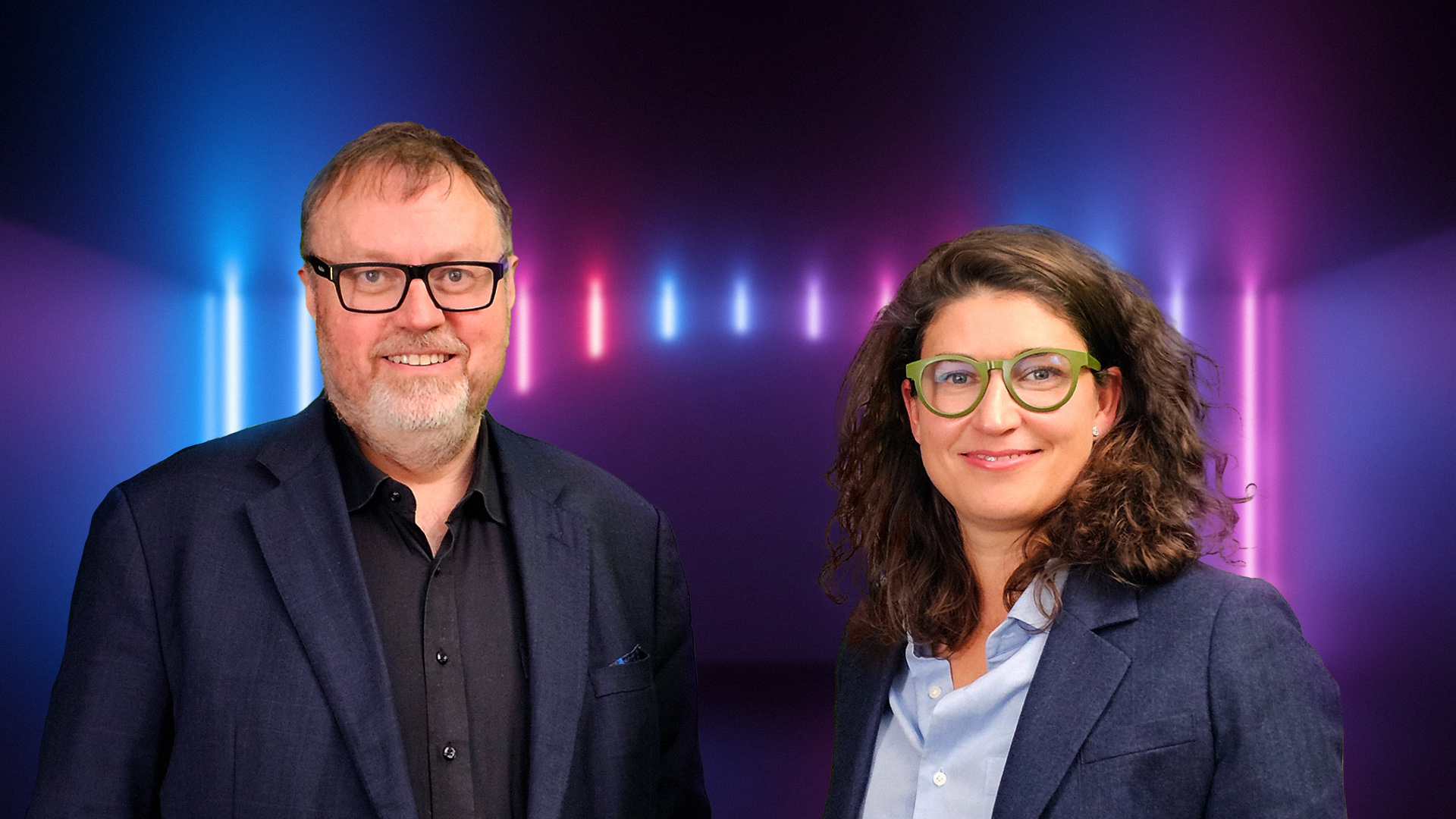
Professor Alexandra Andhov joins Paul Spain to explore the biggest questions facing AI today. From copyright lawsuits and social media harms to privacy, digital sovereignty and New Zealand's AI future, Alexandra explains why smarter regulation could fuel innovation while protecting people, businesses and society.
Plus the latest tech news including:
- 2degrees completes AST SpaceMobile satellite connectivity trial
- One NZ and 2degrees seek infrastructure sharing deal
- New Zealand speeds up rocket launch approvals
- Meta settlement highlights global child safety shift online
Read the Full Transcription
Transcript is computer-generated and may contain errors.
Paul Spain:
Greetings and welcome along to the New Zealand Tech Podcast. I'm your host, Paul Spain. Joining us today is Professor Alexandra Andov, Chair in Law and Technology at the University of Auckland and Director of ALTeR, the Centre for Advancing Law and Technology Responsibly. Alexandra's work sits at the crossroads of law, AI, and innovation, exploring how we can harness new technologies while ensuring they're developed and governed responsibly. Welcome along to the show. How are you?
Alexandra Andhov:
Thank you both very much for having me.
Paul Spain:
Great, great to have you on the show. Now, before we jump in, a big thank you to our show partners, to Spark, One NZ, Two Degrees, SAP, Workday, PwC, and Gorilla Technology. We're going to delve through some of the local tech happenings, the global ones, and, and yeah, really looking forward to hearing your insights on these topics around that crossover between the law and technology and how we get the best that we can.
Alexandra Andhov:
The best of technology and hopefully also of people.
Paul Spain:
Yeah, yeah. So thanks so much for joining. First up in the news locally, we've had 2 degrees Open in partnership with AST SpaceMobile, their ground station in Martin for satellite connectivity, which will apply to their mobile network. And so far they've successfully completed voice, video, and data tests over the AST satellites using standard smartphones. Now, I guess where this is interesting, because we've had Starlink available, that's obviously on One New Zealand and on Spark's network to provide a level of connectivity to mobiles from satellite over the last period. However, there's significant differences between that technology. So what we see with Starlink is thousands of satellites up there, a subset of those can deliver a cellular capability, but quite limited in terms of the available bandwidth, which is why, you know, the capabilities, the functionality, you know, is fairly limited at the moment. You know, text messages, iMessage, you know, WhatsApp, and including WhatsApp calling now.
Paul Spain:
So it's not just complete free-for-all on the data. AST, in conjunction with 2Degrees, are really looking to disrupt that by delivering, you know, a level of broadband data, you know, directly to mobile so that you won't have a— in theory, won't have a limited list of apps and capabilities that you can use whatever you like. So, and they achieve that through their tennis court-sized satellites, which are huge. On the flip side, they have a lot less of them than what Starlink does. So this is, I think, is going to be fascinating to see. to see how it plays out. Is this something that you're looking forward to, or do you prefer to kind of get off-grid and get away from connectivity from time to time?
Alexandra Andhov:
What I prefer? I definitely prefer sometimes being completely off-grid. I think that there is currently this movement that— and I wonder what obviously you think and what the listeners think in a way— to try to get away from all of the technology. and just have a little bit of time for your own thinking and just get on with a book and just good company as is. So, you know, as someone who works a lot with obviously technology and how do we regulate it and how do we govern it and all of these kind of things, there is a moment where the best governance is actually just to turn it off.
Paul Spain:
Yes, interesting. Yeah, so from the Kiwi perspective, yeah, we have AST that have been, you know, working here in New Zealand to established that, US company. But also we have got Rocket Lab who are working on this acquisition of Iridium, which, you know, which is also in that, in that realm. Although Iridium being the, you know, the original sort of satellite phone network is very sort of bandwidth limited and it's not available on standard mobile. So you need those sort of sat phones with, you know, the chunky aerials and so on that have been around for, you know, a fair time. But, you know, who knows? What Peter Beck has up his sleeve in terms of what he might do with that acquisition if it goes ahead. And I think I have, you know, there has been some commentary that there might be a little bit of pushback from SpaceX around what Rocket Lab want to do. And I guess this is par for the course with these sort of, you know, big deals, is there will be legal challenges.
Paul Spain:
Now, just after that opening, which happened on Wednesday, and it was absolutely fascinating to be down there in Martin for the opening and to have a wander around their onsite data centre to see their 6 satellite dishes that they've got and that basically follow the satellites as they fly over. And I think they've got spots there for 2 more of these satellite dishes. And the reason that they need so many is because you need to have multiple satellites crossing New Zealand to deliver that coverage.
Alexandra Andhov:
Mm.
Paul Spain:
And each one is going to need to actually track a particular satellite. And so having the, what ultimately will be half a dozen in that location, will allow them to have a fair level of continuity, which you kind of need if you want to do phone calls and rely on a consistent internet connection. But that's a little way off. So the other piece of news is that we have One NZ and 2Degrees proposing to bring together parts of their mobile networks. networks. And so what this could do, I'm, you know, I'm really fascinated to sort of follow how this actually, you know, plays out. Of course, we have Spark at the moment who are strongly in the lead in terms of market share when it comes to, you know, mobile connections in New Zealand. That's followed by One NZ and then, you know, at the back end, Two Degrees.
Paul Spain:
Now what we have seen in recent years is You know, 2Degrees used to have a, you know, they had to build a network from scratch without, you know, without having one. And of course, every network initially went through that. But it was probably easier for the other networks when, you know, we really had the two of them competing for them to build out that infrastructure. Now, of course, there's, you know, hundreds and hundreds of millions that goes into building these networks and to operating them. And I think what we're seeing from 2 Degrees and One NZ is this would be a significant benefit for them if they can actually combine some of their mobile networks and how that plays out for the companies that bought their mobile towers. These are all sort of fascinating aspects to delve into, but very much the nature of business. The other bit that I've seen sort of sitting out to the side on this front is the satellite connectivity sort of deals that are going on internationally. So in the US, for instance, we've got 2 of the carriers there who have partnered up to sign up with AST SpaceMobile for their connectivity.
Paul Spain:
I think that's AT&T and Verizon. And then you've got T-Mobile who have, you know, they've signed the initial deal to partner with Starlink. So there you've, you've got an example of not 2 companies independently necessarily signing deals with AST, but actually carriers coming together, launching a joint venture, and then doing the deal with the satellite provider. And yeah, I'm kind of a little bit curious how this particular matchup has happened between, you know, 2Degrees and One NZ, but it's, you know, it's not unique. And in a country like New Zealand where we've got a a smaller population, I can see why this might well make sense. I think in the background, there'd probably be some concerns for how this plays out from a competition perspective would probably be the main one. We're probably all happy if it lowers our costs. But if it reduces competition in any way, that would be the concern.
Alexandra Andhov:
Yeah, so I do still believe that this is right subject to regulatory approval. So the Commerce Commission, which I think generally has been lenient to the telco consolidation because of the improved network efficiency and hopefully also resilience and future technology. Because we see that obviously something that used to be very national and local, such as telco providers, it's getting more and more globalized. So they are getting— we are seeing more concentration happening on the market. And as you mentioned, this kind of collaboration between the historic, so to speak, the '80s and '90s telco companies together with satellite providers and so on. And though I do think that in New Zealand we are fairly well situated precisely because of other kind of innovation ecosystems that we have, and specifically with the satellite. So I think that hopefully we can achieve, obviously with some help, but you can't do it completely independently. But a lot of work locally.
Paul Spain:
Yeah, look, I think, yeah, this one will be fascinating to see what the process is, how long it takes. They've also, they've had a, you know, one of the arguments they've raised is that when it comes to the next generation of mobile technology, that, you know, having One NZ and Two Degrees working together, they would be able to obviously, you know, combining resources, they might be able to accelerate into that quicker. Probably not something Spark would be too happy about because it leaves them standing on their own having to, you know, do their own investments entirely. Now, on the space front, New Zealand has reduced the rocket payload approval times. That's been cut roughly in half from 11 weeks down to, you know, a bit over 5 weeks. And that's something of a competitive move to help New Zealand be able to compete better on the global stage. So to me, I don't understand all of the ins and outs of what are all the things that actually need to happen within that window of time. I can understand the benefit from a competition perspective of we wanna be fast and agile and compete globally.
Alexandra Andhov:
Mm.
Paul Spain:
But of course you wanna make sure that all the right checks and balances are going on in the background. And we heard in the US, I think that was probably a military situation where Rocket Lab did the fastest turnaround ever of, you know, from a request to launch within, I have to check the number of hours, but it was, you know, less than 24 hours from being told, hey, let's get this payload up and being able to—
Alexandra Andhov:
Wow.
Paul Spain:
you know, get that launched. So, you know, these speed things really do matter.
Alexandra Andhov:
Yes. And I think that another thing is that we see it's not just the obvious trying to cut the approvals from those 11 weeks to 5 weeks, but I think it's another element to this is to recognise that space is becoming potentially the next market, right? And it's not just obviously the Rocket Lab or the US, but there are a number of other countries across the world that are investing heavily into getting this competency. Right? So I think that— so that's a great thing that we have a head start. But another good thing that, you know, and space is not my field, so, you know, don't quote me on space law. That is not something I do. But obviously, it's very fascinating. But to me, you know, comparing to other tech ecosystems, what this shows me is that there is sometimes capability, and there is sometimes willingness to adjust things in order for us to move fast. So hopefully we can see similar kind of modus operandi in a sense of how we can work in order to achieve goal also in some other areas of law.
Paul Spain:
Yeah, that's a great point, isn't it? Because we often talk about legislation being miles behind the technology and not being able to keep up. Here, this is being pushed from a financial reason. But there can be a whole range of reasons that we need to, you know, reevaluate, establish new legislation, and so on. And often we just don't. So yeah, that's great. Moving more into the global front, music industry publishers Sony Music Publishing and Warner Chappell have sued Anthropic, alleging it illegally copied and used tens of thousands of copyrighted songs and lyrics. to train Claude AI models without permission. Anthropic, as you expect, denies the claims and says AI training constitutes fair use.
Paul Spain:
Now, the lawsuit isn't just going after Anthropic. It's actually going after CEO Dario Amodei and co-founder Benjamin Mann as defendants directly themselves. And they're highlighting that Anthropic obtained copyrighted content through torrenting, scraping lyrics websites, and downloading content from pirate archives. Mm. I find this, you know, just fascinating. But, you know, you can also understand they're trying to move at a crazy pace. And the thought of going and acquiring the music legally must have somehow slipped their mind. from a consequences perspective, or maybe they decided the fines might be worth it.
Paul Spain:
We're talking about fines that could, you know, potentially land in the billions. Anthropic has recently agreed to pay US$1.5 billion in relation to book-related copyright concerns. So yeah, this is a fascinating, you know, challenge. for, you know, I think probably any industry that creates content and for the AI sector in terms of how to move forwards in a way that is good for everyone. And, you know, I think, you know, we can look at the positives of AI and, you know, recognize that, you know, part of AI moving forward quickly is the pace at which they've been able to, you know, train up their models. But we have, in a lot of cases, I think largely ignored whether AI is always doing the right thing when it comes to particularly creative content. And I understand that Anthropic have put in place mechanisms to block if you're asking for it to come up with copyright lyrics, it won't necessarily just give you— a cut and paste of those lyrics. But one example I threw at it this morning was just to ask it to come up with a new iteration of OMC's chart-topping hit, How Bizarre.
Paul Spain:
And, you know, I think the first topic I said, create one about fish and chips. And, you know, and it did the job and it did it well. But it's taking, you know, somebody else's creativity and then, you know, sort of—
Alexandra Andhov:
Stealing it.
Paul Spain:
stealing and modifying that. So whether they should be able to do that and get away with it is probably all part of that sort of bigger question on what is appropriate, what is legal, what should be legal. I mean, how do you think about these topics?
Alexandra Andhov:
Well, this is one of the things that I think about a fair amount of time, not necessarily from copyrighted material. We have, you know, a group of excellent IP lawyers at the University of Auckland. So, you know, today, and it's pretty amazing to still see these kind of cases coming up because I think on one hand we kind of accepted that because we want AI, we are willing to give away copyright or any other types of IP protections. And I think that we need a little bit of this constant reminder on one hand, because AI is a child of, you know, potentially the largest heist in human history when it comes to protected material, right? So, and I'm sure that people wouldn't be happy if suddenly a company, any type of company, would come into your house and take, you know, your watch or your sofa or whatever. Somehow because it's abstract, we don't necessarily think about it as something that we own, but as someone who has written books and apparently Meta has stolen my book. I haven't seen any of the money of the settlement, I can tell you that. We kind of forget about this, and I think we, we need to bring this up constantly because for New Zealand it's important because of our creative industry, and that is going to, to be hurt and is already being hurt at the stage, right? So that's one kind of discussion that whether we like it or not, AI is the child of stolen, predominantly stolen work, right?
Paul Spain:
Which they would call fair use.
Alexandra Andhov:
Which they would call fair use. And there are some decisions. We are still waiting for a big decision that New York Times initiated against OpenAI and Microsoft. So, you know, my, I, I'm still hopeful that we will see something. Now, the second part, as you mentioned, the Alt case, right? So $1.5 billion, and it seems substantial, right? And yet it isn't, right? For a company like Anthropic, it's just the cost of doing business. And it's obvious that this is something that they accepted because they have the case with the books. And yet they're doing it again when it comes to music. They're doing it again with physical books, right? The case, I think early in August or maybe July, where they are physically buying books from pre-2022 and da da da da da.
Alexandra Andhov:
So, and yet, so the same behavior is there. The penalty didn't change anything. And I do think, you know, and obviously this is a little bit of a speculation. I just opened the lawsuit a few moments ago, but they're trying to get $3 billion. So the amount that the Sony Music and the other music companies are suing Anthropic is for that. amount. But the main thing why I think they're bringing in Amodei personally is because it needs to be personal. It is personal for every author out there.
Paul Spain:
Yes.
Alexandra Andhov:
For anyone who creates something creative, who gives the, you know, the time and sweat and time again and success or not so much of success. And I think that this is something, again, that we need to bring into the discussion. And on the other side also, the third part is really, and this is maybe the bigger picture in a sense of the real cost of the AI that, you know, the long-term costs that will translate because, you know, all these penalties, by the way, will obviously translate to the price that we as consumers pay for using AI.
Paul Spain:
Sure.
Alexandra Andhov:
Right? So that's one thing. But another is long-term, what does this mean for our creative industry? What does it mean for human being creatives? And of course, I acknowledge that there is a lot of space that can be used by those people who can have access to AI and that can also stimulate a new field that we haven't seen before. You know, there are many parallels that maybe we could draw between photography and the traditional kind of painting arts that suddenly, you know, at the very beginning when the machine kind of came in, no one saw this as a form of art. And yet today it is art. And maybe there will be something, and there already is something like AI art. I just think that, you know, and then now we are in this period where a lot is unknown, but obviously the frontier models and frontier companies are trying to get as much of the market as they can. And for them, this is just the cost of doing business.
Paul Spain:
Yeah, and I think if we look back, for instance, at, you know, YouTube, You know, these days you can put all sorts of content onto YouTube, onto social media. You know, I was looking at something yesterday and it was like, I actually haven't looked into how LinkedIn handles when you put some commercial music under your post, which might effectively be an advertisement.
Alexandra Andhov:
Yes.
Paul Spain:
And, you know, not always having my head completely around all of those aspects. Certainly we look at YouTube and they've worked through this, they've done those licensing deals. So you know that there is money going back to the artist. Now then you get into the debate of, is it actually fair? How many streams on YouTube or YouTube Music or Spotify does it take to feed a struggling artist? Often I imagine that there's not enough consumption to, you know, to end up with there being a reasonable income for artists that, you know, maybe in years gone by with other methods of music distribution would have been better off. So yeah, it's challenging, but I imagine we are going to land on some results. But whether those results are entirely fair, I'm not sure I would— I would be completely positive about those outcomes.
Alexandra Andhov:
I think that's the point. Who should they be fair to, right? And who are we trying to protect? And I think this is the thing, because I feel that often, because we see that AI is being more and more capable, we are willing to forget about certain parts of our society. And this will come back and bite us at some shape or another. And I think that this is the reason, you know, going back to what I do and what we do in our center is to think about how do we approach all of these new technologies and try to obviously create space for them, but still recognizing the value that other people and other businesses and other stakeholders still bring to the table.
Paul Spain:
Mm-hmm.
Alexandra Andhov:
In order for everyone to flourish, because one of my concerns, and we see it more and more is that we have these global entities that have the control over the majority of the market. And that ultimately impacts how innovative can we be here in New Zealand and how independent can we be? And/or do we all depend on whether our video is streamed on, you know, on YouTube or Netflix or any other social media?
Paul Spain:
Now moving on, Meta have reached an $18 billion settlement over child safety claims, and this is going to force apparently significant changes for teenage users of Facebook and Instagram, including usage limits, overnight curfews, and enhanced parental controls. Now, of course, you know, most of these things going on happening, you know, outside of, outside of New Zealand, probably predominantly in the US. So, you know, in terms of how these things actually end up playing out for New Zealand youngsters, where we've got our own, you know, debates going on about social media bans for under 16, which, you know, seems to be fairly controversial because it's not a, you know, it's not a perfect solution, but it is something. So yeah, just, you know, really interesting to see this taking place. $18 billion, that is actually a reasonably sort of sizable, you know, amount in most people's language, but it's certainly not the sort of thing that's going to, you know, gonna put a stop to the way that, you know, companies like Meta, you know, operate and, you know, their business will go on, put it that way. But it will be, you know, I think interesting to see what is the flow-on effect to lawmakers in New Zealand, Australia, you know, UK, United, or the European Union and other parts of the world. It does seem in New Zealand, you know, generally the legislation that we have related to tech things is pretty weak and we don't, you know, we don't have much control. So we, you know, we're generally sitting there looking at the rest of the world.
Alexandra Andhov:
Yes, I think your framing is, is accurate. It's pretty soft and weak, and we can definitely talk about it. Um, so a few maybe comments to, to the, to, to the settlement of Meta. Um, I think, you know, we obviously get the amount, which is potentially somewhere between $12 to $17 billion, which depends also whether other cases with Meta's competitors such as TikTok and YouTube, which is Google and so on, will be settled. But I think some commentators— so I really like this. There was this one piece, one opinion piece in New York Times that ultimately spoke about the fact that death— that this is an example of death by a thousand cuts.
Paul Spain:
Okay.
Alexandra Andhov:
And the main kind of argument there has been that we failed. To regulate social media 20 years ago. Now, finally, we accept after, you know, a lot of money spent into the research, and the research has been there, you know, since I think maybe 2010, '11, '12, that was showing the negative impact of social media on the youth and children. But finally, we got to the point that we are willing to address it. And now all of these lawsuits, and this is a huge lawsuit because it was actually brought by the government, so by the independent states in the United States, and that is also the reason why it got, I think, to some extent settled. But there are still thousands of other ongoing cases brought by either individuals or by like semi-class actions or by schools and so on. So it's not kind of a done deal yet. I think what Meta is trying to do is try to obviously control the narrative.
Alexandra Andhov:
That's the reason why they agreed that we will do this kind of limitations and no access during the school hours and no access after midnight and da, da, da. But they actually did not address the main issues, which is actually that they're continuing to harvest and use the children's data. Right. And there is nothing about advertisement to the children and all these kind of things. I mean, great that they are changing all the beauty filters and all that nonsense, but like some of the core elements of ultimately the underlying business model is not being changed. And this is one of the issues that I still have and so on. And the second element to this is also there is a comparison of this case versus the tobacco case, you know, in the late '90s, ultimately. Because there was misleading information, right? Whereas the CEOs and the management of the tobacco companies knew very well that there was a harm connected with smoking cigarettes.
Alexandra Andhov:
Zuckerberg, and that's the reason why they settled, because there was damning evidence ultimately that Zuckerberg and all the C-suite knew that there is substantial harm. And it's not just any harm, but it's like 51% of the children experienced some form of bullying, some form of extortion, and so on. So, and they did nothing. So if you say, you know, because you said that at the beginning, that it's a substantial amount. Yes, it is substantial amount, but it's pennies vis-à-vis what tobacco companies paid. Tobacco companies back then paid more than $200 billion, and this is 25 years ago.
Paul Spain:
Wow.
Alexandra Andhov:
So I would hope that still some of the cases are ongoing. And also, the last thing that I'll mention here, that yes, they agreed to make all of these little changes, but the 1/3 of the amount, the penalty they are to pay, is subject to their competitors doing the same. Now, think of this in a way, how many users Meta or Facebook today has? None of the new generation is using it. It is our tool. Right? It's our generation tool. Even I'm not anymore on Facebook for the last, I don't know, 7, 8 years. But the youth, of course, they're using Instagram, but many more are on TikTok, many on Snapchat. So they are trying also to bring down a little bit their competition, which again, from, from business perspective is smart.
Alexandra Andhov:
But I really still am concerned that, okay, we see some concessions being made, but we are not really addressing the main issue. And that is that children are still being harmed.
Paul Spain:
Yes. And if you put it in, you know, percentage terms, Meta has a market cap today of $1.46 trillion. So, you know, we're talking, you know, maybe, you know, one side or the other of, you know, 1% of that.
Alexandra Andhov:
Exactly.
Paul Spain:
It's not the sort of thing that in the broader scheme, you know, brings down a company, you know, necessarily. causes any big rethink around what they're doing if this is the biggest impact. And I think it was something like 2/3 of the US states were involved in this, right?
Alexandra Andhov:
Yes, in certain points or another. And then some of them jumped out and some of them— and also an important thing is to still remember, because I think that there are a couple of still people in New Zealand who think, oh, you know, our courts could address this. Yes, they could. I'm not seeing yet anyone bringing these kind of lawsuits, but this lawsuit took 4 years. In the US. So that's another, let's say, 4 or 5 years if we decide to launch such an action against Meta or similar companies here in New Zealand, which is problematic by itself. But going back to your point in a sense of their market capitalisation, if you look, and I did today morning before I was coming here, I looked at the development of their stock price. The stock price didn't budge even by 1%.
Paul Spain:
Yeah. Yeah.
Alexandra Andhov:
Right. So actually, actually the stock price went up a little bit once they settled. Right. So that tells you how insane— I, you know, I can't find another, maybe better word, but how insane this is and how we should not really— of course, we should be content that there is something is being done. But in a real world, you know, the true impact is minimal.
Paul Spain:
Now I'm keen to delve a little bit into your world and your story, Aleksandra. So maybe you could share a little bit about your background and what brought you out of sort of corporate and financial law into emerging technologies like AI and blockchain.
Alexandra Andhov:
So I moved to New Zealand 2 years ago, and before that, for more than 10 years, I was at the University of Copenhagen. And there, so I did, I practiced as a lawyer and I did also my doctoral degree within the field of capital market law. And this was right after the financial crisis. So a lot of things and a lot of regulations emerging because we saw that innovation might not be as great as many were trying to sell that to us. And at that point, actually, my thesis back then was about empowering investors and what legal tools they have to protect their investments and their assets and so on. And then while in Copenhagen back in 2016, both the city of Copenhagen but also generally the industry was recognizing that we need an ecosystem that will be innovation-friendly and that we could create a lot of startups. And now, obviously, European Union has on the EU level and the union level a lot of regulation, which obviously binds the member states and the businesses and the individuals. But I think at this point, we and many others saw regulation as a form of a brief that within this framework, we should try to create a lot, try to create some new innovation.
Alexandra Andhov:
And what happened was that kind of a whole new fintech ecosystem, so to speak, emanated from this, which has been truly successful, like truly in a sense. Denmark is a similar-sized country as New Zealand, 5.5 million. And I think within the first 5 years, they created more than 60,000 jobs just within fintech. So, and that's how I got into more and more technology because I started to work with startups. And over the years, I understood that in order to be efficient advisor, even as a lawyer, I need to understand technology. I need to understand, obviously not in such a nitty-gritty detail as, let's say, a computer scientist. I don't need to necessarily code in Python, but I need to have this basic command. And because I also have a background in mathematics, it kind of came kind of, you know, simple for me to understand that.
Alexandra Andhov:
And I work with a lot of startups and that meant ultimately within the fintech ecosystem that I worked more and more with blockchain and more and more with AI.
Paul Spain:
When you think about, you know, blockchain, say, in New Zealand context, how well placed are we from a legislative perspective? Because there hasn't really been much going on there, right?
Alexandra Andhov:
Yeah. So, you know, this is a great question and we didn't prep for this. There are 2 things to this, right? And one is the larger thing. I think that we still in New Zealand hear often that there is this dichotomy between regulation and innovation, the narrative that ultimately regulation stifles innovation. And blockchain, interestingly enough, is a great case study because you have, for the last 2 years, I've been working alongside Blockchain NZ, which is an organisation trying to support blockchain industry and companies in New Zealand. And imagine the fact that it's actually them who's been lobbying to get regulation passed.
Paul Spain:
Yeah, yeah.
Alexandra Andhov:
Right. So the businesses themselves are asking the government, please create law for us. Right. So that tells you that probably it's not really this kind of fight between regulation and innovation. And there is, there are, there are some, there is some movement currently happening. I can't really disclose yet how much and so on, but there should be something coming out relatively soon. But I do think that this is, again, a space where we have competent industry. We have several interesting entities.
Alexandra Andhov:
And they are stifled by the inaction. They are stifled by the fact that we do not regulate. And, you know, it's a great thing to some extent that you can say, oh, you know, we have tested this and we have all these products. But then the moment you want to grow outside of New Zealand and you want to go to Australia or to the EU or even to the US, there is substantive regulation going on. And if you come in and say, oh, we have this blockchain product, the first question is, what is your license? And if you say, well, I don't need a license in New Zealand, then that doesn't mean that you don't need a license there, right?
Paul Spain:
Yeah.
Alexandra Andhov:
So all of this kind of has been happening. And I think that, again, New Zealand could be a great place for a number of reasons. A, also because we have a lot of talent here. But I think we just need to change a little bit, not much. You know, someone is saying, oh, you are— you want to bring all the EU regulation. I don't. So anyone who is listening, do not believe them. I do not want to bring EU regulation.
Alexandra Andhov:
I do think we should kind of get a little bit of inspirations from EU, from Singapore, from really innovation and entrepreneurship-driven places.
Paul Spain:
Right.
Alexandra Andhov:
But create really a framework where we have legal certainty. That the companies, that the entities, that businesses know what is expected, know what are the rules of the game. And within that ecosystem, they can grow much faster and much better.
Paul Spain:
How have you observed AI changing the legal world? What's going on there?
Alexandra Andhov:
A lot, right? And some like to say that that there are substantial— when a new technology is coming in, some believe that we will be technology neutral and everything else will kind of apply in the same shape and form. And to some extent it does. But the moment you have really a life-altering technology as AI, usually this is insufficient. The same way how we needed to regulate railways or, I don't know, other kind of tech spaces, we will need to regulate AI one way or another. And here, you know, some people are like, again, you are a lawyer, you want to regulate everything. So here I offer again another piece a few days ago published by Bill Gates, right? The former CEO of Microsoft who himself said that, you know, self-regulation, self-governance by the AI companies is not working. Why? Because they're, again, still trying to take as much of the market part or space as they can. And this technology is getting really, really powerful, right? We see different kinds of cyberattacks, the potential and the negative, you know, like biohacking, bioterrorism, all these negative impacts just because, you know, we want to write email faster.
Alexandra Andhov:
I think again, it goes back to what we discussed before. In a sense, there needs to be, what are we valuing in our society? And I think this needs to be addressed.
Paul Spain:
So what do you think are the biggest risks that, you know, facing New Zealand from an AI perspective?
Alexandra Andhov:
The biggest risks that face New Zealand. One is not doing anything, right? So leaving the regulation unattached, maybe leaving it for the courts to decide, again, this will not help New Zealand innovation ecosystem. So regulatory clarity, I think, is extremely important. Then I'm really concerned about our privacy. I think that the Privacy Act with the maximum of $10,000 Penalty.
Paul Spain:
It still makes me laugh. It's just, it's crazy.
Alexandra Andhov:
Needs to be— this needs to be addressed.
Paul Spain:
And this is somewhat new regulation, you know.
Alexandra Andhov:
Yeah, it's 2020, right?
Paul Spain:
Legislation.
Alexandra Andhov:
But, you know, to give benefit of the doubt, this was before GPT, at least publicly announced and released. So privacy being behind, not because of the industry, but again, industry is afraid because there is no regulation. Or at least some governance. And the third, I would be concerned about, obviously what many people speak these days is our digital sovereignty. The continuous reliance on third parties coming from other jurisdictions where we have no control whatsoever about whether or not they will provide the access or not. And we see again in this particular sphere that there are countries that are addressing these issues, because given the state of affairs of the current global politics, this becomes problematic.
Paul Spain:
So how do you look at that sovereignty picture? I mean, let's just imagine tomorrow the government says, look, we've got $5 billion here, we're going to come up with our own sovereign, you know, New Zealand AI model that everyone can run and that becomes one of, you know, hundreds of AI model choices that we can choose, but it's not the best. So ultimately next to nobody uses it. If that were to happen.
Alexandra Andhov:
Yeah.
Paul Spain:
Like that's, you know, that's one possible scenario. How do you, how do you look at, how do you look at that and how would that potentially work? Because I think a lot of us are really curious as to, yeah, how do we get this right? But as with a lot of these challenges, there's not necessarily a simple answer. And of course, we all have to pay for whatever is put in place or whatever's not put in place, right?
Alexandra Andhov:
Yeah.
Paul Spain:
There can be costs in any which direction.
Alexandra Andhov:
100%. So I think, you know, let's leave the numbers on the side because I think that currently, you know, what we can build in New Zealand can be relatively cheap in comparison to what government pays yearly to Microsoft for using Microsoft and Copilot. And so, you know, but to address your kind of concern that we built it and no one is going to use it, I think that you would be surprised. I think Today I was again reading some of the perspectives in Australia. And again, I know that, you know, we are not identical to what people in Australia are thinking, but there is increased concern about where their data goes, what is the privacy aspect, who is owning what, and so on. And I think that this will come to New Zealand even more so. So if New Zealand is to create, and this is not some completely unreasonable approach because there are jurisdictions across the world that are doing it, Switzerland, there is Denmark, there's Estonia, and there are other countries in the world who are recognizing that they need their own kind of AI models. So this is technically feasible.
Alexandra Andhov:
It is not extremely expensive, so it won't cost the taxpayers in New Zealand hundreds of billions of dollars. It might couple, but what it also will provide is something that you cannot foresee yet. And what do I mean by that? Sometimes I'm trying to think, and of course I am, as you can, by now you probably get this feeling that I'm fairly critical of some of the aspects of the AI, but not because of the technology. I'm more concerned about Those who own it and control it rather than the technology itself. But if we design an AI system that has been built by an accountable kind of a body, by someone who respects privacy, who respects data, who wants to bring in certain values that are relevant for general population, that might create a new kind of injection to the industry, to the ecosystem that will decide, okay, actually we can use this. We can create our own, so to speak, Anthropic. And that can again then trickle down to other companies using that, you know, and the telco. Why is it that we don't have Vodafone all over the world? Because we created systems, and by the way, by the regulation, that needed to be locally owned.
Alexandra Andhov:
And another layer to, or another perspective you have to look at this is seeing AI as infrastructure, seeing AI as gold, seeing AI as telco. We want to own some, we want to have control over some. We want to make sure that we are not dependent on whether whoever crazy somewhere in blue house will decide this and what would the impact for the businesses are. And I think that once you create this again, certainty, or to some extent certainty and ecosystem, a lot of magic can happen.
Paul Spain:
What would you see as the critical pieces? Because we could go out and leverage some of the open weight models and host those in New Zealand, have regulation around what happens with the data and so on. I guess you could have a level of regulation on bigger players. So for instance, if you, you know, many organisations will be using Microsoft Copilot within a business context. That means their data, you know, is unable to be used to, you know, train the model. So you could have some, you know, some sort of variation on that. Like, like, you know, a variation on what happens with the likes of Copilot, you know, today for New Zealand customers where they own that data. Yeah, rather than have it getting used in other ways. But of course, that's not something that's legislated at all.
Paul Spain:
And of course, you know, Microsoft could choose to turn things off or any, you know, outside vendor could. So how would you see that landing in a way that, you know, is is workable from a mix of aspects where, yeah, it would actually work out beneficial for New Zealand and not a huge sink, like we're trying to launch in direct competition to the likes of Anthropic?
Alexandra Andhov:
So I think there are a couple of approaches, right? And obviously I think, as you mentioned at the very beginning, it's not an easy answer. It's all about what are we trying to achieve.
Paul Spain:
Come on, I want the easy answers.
Alexandra Andhov:
What are we trying to achieve? Are we trying to achieve a kind of a new injection into the tech industry? And if so, then we need to think as really trying to support the innovation. And then again, there are different kinds of policy perspectives and policy actions that you can take place. So that's one. And that could be, yes, government putting aside some money saying, Listen, there is this open competition. We will create the infrastructure, but we want actually Kiwi companies to come in and help us create the new NZ AI. Okay? That could be one. The other one is how do we regulate in a sense? And I think again, you need to think about how does the supply chain look? The supply chain is really dependent on data. So privacy.
Paul Spain:
So privacy.
Alexandra Andhov:
that we need to address, obviously. Then we need to think about all of the data centres. And we see more and more that there are substantial costs, not just the electricity, but also water consumption, all of these kind of things. So, we obviously need to have some data centres, probably also in New Zealand, but we need to address then how and when.
Paul Spain:
That's going to upset one or two people who feel that we shouldn't have any more in New Zealand.
Alexandra Andhov:
Yes. Or maybe reuse the ones that we have. I'm not saying, you know, but we need to have something locally, again, not to rely on third parties or on third-party vendors. That's another. So we need to think about the infrastructure. And this is where the government comes in. How do we create the infrastructure? How do you protect the individual's rights, meaning the data? How do we protect our own sovereignty at the same time? And how do we make this in— And this is where I'm kind of trying to think a lot. How do we do this in a way that is agile? Because we do not have the time, and we haven't started, you know, 5 years ago as EU started with the EU AI Act that just came into, into place and is enforceable since, I think, 2nd of August this, this year.
Alexandra Andhov:
Um, so could we think a little bit like a sandbox? Could we think outside the box precisely because we're small? We can afford that. Can we create, similarly actually to Australia, some form of an AI agency body that is responsible for certain industry standards? And those standards will be obviously then applicable not just for New Zealand, but anyone who comes to New Zealand. And with that then comes an enforcement power. So we need to forget about $10,000. We need to adopt And there needs to be a legislature, but I would still probably create the legislature that is agile and more to comply with the New Zealand tradition to certain aspects, have more principles, and then have an agency that is filled out with people who understand this, who have been in the industry, who understand the policy, who understand the business, who understand the technology. Because guess what? We actually don't understand the technology and very few engineers understand how actually AI works. And you hear more and more CEOs of companies saying, well, we did not expect AI to do this, right? Which is also a problem by itself. And create something of this kind to help being agile for our own ecosystem.
Paul Spain:
Do you think those people exist in New Zealand?
Alexandra Andhov:
Oh, 100%.
Paul Spain:
Have we got the right skill set?
Alexandra Andhov:
Yes.
Paul Spain:
And we've got enough of them?
Alexandra Andhov:
Yes. And you would be surprised, I think there are, and if they are not necessarily in New Zealand, there are Kiwis and they would be more than happy to come back.
Paul Spain:
And do they want to work in a government entity?
Alexandra Andhov:
Well, listen, create an entity that has governmental kind of backing, has certain powers, but can be also industry-led. Again, we don't need to recreate old things, right? This is a new, tool. And for a new tool, we need a new toolbox, maybe.
Paul Spain:
Okay. And what sort of regulations should we be putting on the big, you know, global AI companies? They're going to operate in New Zealand, or obviously they already are.
Alexandra Andhov:
Yeah.
Paul Spain:
What rules should be in place so that we get the right balance of being able to, you know, leverage the innovative AI Whilst minimising those downsides?
Alexandra Andhov:
So there are 2 aspects. One is obviously when and if the government procures and uses AI. And I think that's by itself. So I think that the government needs to have specific rules because again, government is a large entity, different bodies across the whole of Aotearoa. How do they buy? Who do they buy? What are the necessary contractual provisions, because this doesn't necessarily need to be regulated as a statute, because oftentimes this can be regulated through a contract, right? So you buy something from someone, there is a contract. So what does that contract need to include? And this needs to be defined by procurement standards. And again, number of countries across the world have very specific procurement standards when it comes to government-procured AI tools that use very, very, very sensitive data about New Zealanders. And this is really the obligation and responsibility of the government to protect those.
Alexandra Andhov:
And this needs to be very, very clearly defined. So that's one side. And the other side, if we think of, oh, do we need to regulate AI companies when it comes to private sector here? I don't necessarily believe that we need a specific AI regulation per se. I think that the industry standardisation might be a good starting point, maybe at some point. But because how quickly this is developing, we already see now that some of the EU's AI Act regulation might not be compatible where the industry is today. So we could think similarly, and we would only borrow one thing from the EU AI Act, is the risk assessment. How risky the specific AI is, right? The high risk, medium risk, low risk. And by the way, this also is deployed by the US NIST, which is the standardisation body in the United States.
Alexandra Andhov:
So whether the AI is risky for surveillance, so when AI is being used by surveillance, by the police or by private entities, or whether the AI is being used to determine cancerous cells, whether medical, or whether the AI is going to be used in immigration cases. So I think we as this needs to be regulated. This is one part.
Paul Spain:
The regulation though, it's easier said than done, right? Because, you know, with AI systems, they can put a level of guardrails in, but, you know, actually you can usually kind of break, you know, jailbreak out of those sorts of mechanisms. So you might put into a platform that says, well, you can't create, you know, deepfake dodgy images of naked people. But you might not actually be able to achieve that or whatever other, you know, guardrails that you actually want to put in place because AI isn't as, I guess, simple as a lot of other technologies.
Alexandra Andhov:
100%. But I think that's not maybe 100% question of regulation. I think that here comes in and there is a great colleague at the University of Melbourne who looks into The liabilities, right? As you say, AI is a complex system, but it's still a product. So if you as Anthropic or OpenAI are deploying a tool, a product, and promising certain features, limitations, capabilities, you should be responsible and liable that the system has them. And we haven't seen that many cases yet. So obviously there are several in the US. There's a very interesting case that will be coming up in Florida, I want to say. Yes, Florida, where again, the attorney general is bringing the case against OpenAI.
Alexandra Andhov:
And I think that this is the lens where, you know, I will say maybe we don't need necessarily completely new regulation there because we have consumer protection, we have product liabilities, et cetera, et cetera. And this should be applied. And our courts hopefully are capable of deciding these cases in a short period of time.
Paul Spain:
Aleksandra, there's a lot more we probably could delve into. We haven't really touched too much on sort of the, you know, gone too deeply on privacy and surveillance, which, you know, I know is something that, you know, there's a fair bit of concern about. Anything else you'd like to add before we wrap up?
Alexandra Andhov:
Yes, one thing I would really love to hear and see more discussion about the AI and how do we address AI in the current and ongoing election.
Paul Spain:
What concerns you there or excites you?
Alexandra Andhov:
I'm concerned that there is not enough discussion. I don't see any specific proposals. Obviously, there has been a little bit about the data centres out there, but no kind of comprehensive plans in regards to AI. And yet the government and all of the, you know, the whole political spectrum acknowledges that AI is, you know, we are at the beginning or in the middle, I don't know, of the 4th or 5th Industrial Revolution, right? So I'm a little bit concerned that such a technology that where or with which New Zealand is facing a lot of challenges, and opportunities is not getting enough or any truly space within the policy discussion currently.
Paul Spain:
So if there was to be one aspect within that policy discussion that related to AI, what would you want it to be about?
Alexandra Andhov:
Now you put me in a harsh spot. There is not just one. No, I think, you know, if there is only one, then just please rewrite the Privacy Act. That would be mine. Like, really, because this is the source of AI, right? The data. So unless we have— and of course I'm aware that Privacy Commissioner and his, the whole team is doing everything they can, but that's— there is this expression around the Privacy Act, which is it's a toothless tiger. And I would want the tiger to have a little bit more teeth in order to protect our data.
Paul Spain:
So top of your list is give teeth to the tiger.
Alexandra Andhov:
Give teeth to the tiger.
Paul Spain:
To the AI tiger.
Alexandra Andhov:
Yeah.
Paul Spain:
Fascinating. Fascinating. Well, looking forward to having some more discussion in the future. I hope you'll be happy to come back again.
Alexandra Andhov:
Anytime.
Paul Spain:
This has been absolutely fantastic. Thank you very much. Alexandra Antoff. And yeah, thank you for taking the time out to join us on the New Zealand Tech Podcast today.
Alexandra Andhov:
Thank you for having me.
Paul Spain:
Well, thanks everyone for listening in too. And of course, a big thank you to our incredible show partners, Gorilla Technology, PwC, SAP, Workday, One New Zealand, 2Degrees, and Spark. That's us for this episode. Of course, if you've been watching the video, make sure you're following us on your favorite audio or podcast platform. And if you've been listening, make sure you're following us on the likes of YouTube and LinkedIn and so on too. All right, take care. We'll catch you next time. Thank you.
Paul Spain:
The New Zealand Tech Podcast, brought to you by Gorilla Technology, proactive and strategic IT.