- 2025 NZ Hi-Tech Award winners Inside the Tauranga drone company 1News
- Litmaps’ funding success
- One NZ’s AI Trust report – one-nz-ai-trust-report.pdf
- West Auckland’s Datacentre
- OpenAI’s strategic acquisition of Jony Ive’s hardware startup
- Discover highlights from Google I/O 2025 Come to Life with Veo | What If?
- Insights on Microsoft’s AI plans.
Congratulations to all the NZ Hi-Tech Award winners:
PwC Hi-Tech Company of the Year
Winner: SYOS Aerospace
Xero Hi-Tech Young Achiever
Winner: Luke Campbell (Co-Founder & CEO of VXT)
Spark Best Hi-Tech Solution for the Public Good
Winner: Optimation
Consult Recruitment Best Contribution to the NZ Tech Sector
Winner: Talent RISE
Datacom Hi-Tech Inspiring Individual
Winner: Lee Timutimu
Aware – an HSO Company Most Innovative Deep Tech Solution
Winner: Kitea Health Dr. Simon Malpas – Entrepreneur and CEO at Kitea Health – NZ Business Podcast
Poutama Trust Hi-Tech Kamupene Māori o te Tau – Māori Company of the Year
Winner: Deep Dive Division
Tait Communications Flying Kiwi
Recipient: Sir Peter Beck Peter Beck: Rocket Lab Founder/CEO – NZ Business Podcast 38 – NZ Business Podcast
NZX Most Innovative Hi-Tech Creative Technology Solution
Winner: The Village Goldsmith
Duncan Cotterill Most Innovative Hi-Tech Software Solution
Winner: Toku Eyes AI Innovation in Healthcare with Toku Eyes – NZ Tech Podcast
Highly Commended: Carepatron
Braemac Most Innovative Hi-Tech Manufacturer of the Year
Winner: The Village Goldsmith
Kiwibank Most Innovative Hi-Tech Solution for a More Sustainable Future
Winner: Cleanery
NZTE Most Innovative Hi-Tech Agritech Solution
Winner: Mindhive Global
Punakaiki Hi-Tech Start-up Company of the Year
Winner: Mindhive Global
ASX Hi-Tech Emerging Company of the Year
Winner: Projectworks
Highly Commended: Calocurb
Special thanks to our show partners: One NZ, 2degrees, Spark NZ, HP, Workday and Gorilla Technology.
Episode Transcript (computer-generated)
Paul Spain:
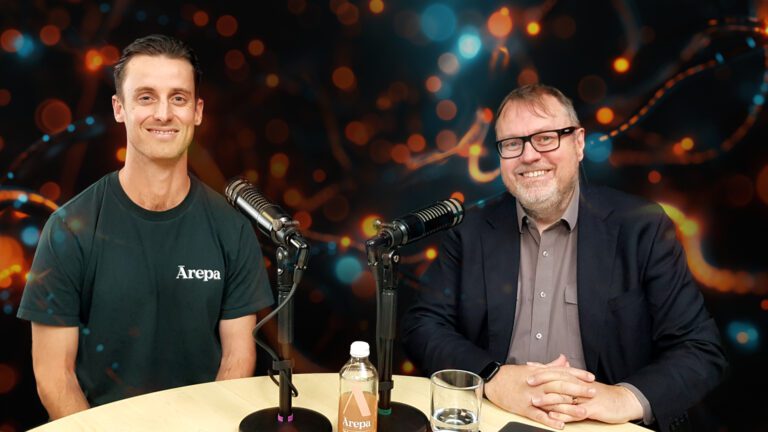
Hey folks, greetings and welcome along to the New Zealand Tech Podcast. I’m your host, Paul Spain and fantastic to have Angus Brown joining us for the first time. How are you, Angus?
Angus Brown:
I’m good, thanks Paul.
Paul Spain:
Great. Maybe we could start you a little intro of where you fit into this big wide world of tech, food, tech, innovation.
Angus Brown:
Yeah, Arepa. We for probably the past 10 years have been researching at the intersection of nutrition, primarily out of New Zealand and with plants, neuroscience and food tech and probably more recently the application of AI across those three core pillars or domains. Within that is spitting out an agritech play and a biotech play and a nutraceutical play. And so I’m one of the co founders and my role within the business is to manage the innovation and the pipeline between now and what we’re doing in three to five years time.
Paul Spain:
Exciting. Well, great to have you joining us. Big thank you of course also to our show partners to One NZ 2 Degree Spark, HP Workday and Guerrilla Technology. We really appreciate their support, the New Zealand Tech podcast and all the support that they give across the tech and innovation ecosystems here in New Zealand. Well, let’s get started sort of delving into some of the New Zealand news and happenings, some global and then really looking forward to getting, getting some insights from you around Ārepa and the Ārepa story. But yeah, first up Friday was the High Tech Awards in Wellington. Always really inspiring to, you know, to have a gathering and especially the scale that the High Tech Awards have gone to. This year was the 30th anniversary, I think the first, the first year they’ve managed to pull together about 100 people and that was, you know, I was chatting to someone, yeah involved or hearing about someone involved with kind of getting it kicked off and you know, trying to find people to come and so on.
Paul Spain:
Now it seems to be always a, you know, a sellout event and they keep getting, keep getting bigger. I think half the, half the people flying on Friday from Auckland to Wellington were probably going to High tech awards where was, was at the, I’m trying to remember the name of the venue. Don’t know my Wellington venues very, very well.
Angus Brown:
Waterfront or.
Paul Spain:
Yeah, on the, on the Waterfront. Sheesh.
Angus Brown:
How many people?
Paul Spain:
About 1400.
Angus Brown:
Okay.
Paul Spain:
Yeah, so the, the venue name will, will come back to me. But yeah, it was interesting because yeah, there was, there was a bunch of people that I saw even you know, just, just in the, in the lounge and then you know, on the flight and, and so on. Nicola Willis was on the same flight down and Then she was, you know, she spoke there and, and then she was on the same flight back the next day. But yeah, there were all sorts, there was representation, you know, across sort of the political sphere a little bit. A very brief hello with the leader of the Opposition and stuff. So yeah, there were lots of interesting people there. But you know, overall I think, you know, the big takeaway is just how inspiring it is to hear what’s going on across the country. You know, what’s going on in the, in the broader kind of tech ecosystems that we don’t necessarily hear about every day.
Paul Spain:
Even if you’re listening into the New Zealand tech podcast, we don’t get everything that’s going on. There are just so, so many things happening. And so, yeah, really, really exciting, encouraging. There were definitely some comments to call out the politicians in the room probably a little bit more so pointed at the, at the current government, which I guess is, you know, that’s the nature of these things. They show up and they will get a little bit of shade thrown at them for some of their things. And you know, of course that’s going to be quite relevant when you know, we’ve just had a budget come out and there have been some areas where there’s not the same amount of funds or, you know, things are being done differently to how they’ve been been done previously. So that was interesting. A couple of sort of standouts.
Paul Spain:
Sir Peter Beck was awarded as the Flying Kiwi, which is kind of a very high honour for anyone within the New Zealand tech world. So there was a sort of recorded video from him and then the winning company, SYOS, really, really fascinating. So only around about four years yet their revenue seems to be cranking up. My impression and I’m trying to remember there were different data points I took from official announcements and commentary sort of suggested that this four year old business is generating hundreds of millions of dollars at this point and their focus seems to be on kind of autonomous vehicles of, of varying kinds for military use, defense use. And the British army seems to be their, you know, their, their kind of linchpin customer at the moment. So they’re doing manufacturing out of, out of the, the uk. But one of the things that really stood out to me is, you know, the fact that they’re up against these defence contractors that have been around for a long, long time, yet they’re only four years old and they’re getting the trust to get this sort of engagement. And there was certainly some commentary there around the number eight wire, I guess, approach in New Zealand and our ability to be able to muck in, take ownership and get things done and delivered.
Paul Spain:
And a time window of six weeks was mentioned on at least one occasion. So if someone goes to SYOS and says, hey, I need this in six weeks, they’re saying, in six weeks we will get it sorted for you and so fabricate what, you know. Yeah, a real commitment to, impressive, to action and delivery and, you know, just being able to innovate and, and figure out how to, how to deliver. So they actually had some coverage on, on tvnz, on News, I think, in the last roughly four weeks. And we’ll, we’ll see if we can put that up in the show notes, if you’re interested in seeing that, that video interview. And there you can kind of see that they’re involved in, you know, autonomous boats as well as, you know, flying drones. They, I know, you know, they’ve got vehicles that can fly for hours and hours, which we’re not used to with drones because actually that’s what’s, that’s what’s needed in the use case. So they move from, you know, electric powered to, you know, battery, diesel or petrol or what, you know, whatever, you know, is needed there, but to a normal engine there rather than electric motor.
Paul Spain:
And yeah, they must be able to really, really deliver to be picking up this sort of business and growing at this pace and to have won that top award. Now, of course, there’s going to be some debate around the fact that they’re in the world of defence and that, you know, their stuff’s being used from a military perspective. And, you know, we hear some of this with pushback around Rocket Lab, for instance, but I guess you look at the, I guess at any army you could sort of debate whether everything that they do is right and ethical and it depends where you sit and what your connection is. But, you know, I would have thought that most Kiwis would, you know, probably feel that the things that the British army gets involved in, by and large are very much defensive rather than out there trying to do nasty things to, you know, to people on an, on an offensive basis. But I think every military has also made mistakes in their time. So I can understand these sort of.
Angus Brown:
Topics if they’re saying they’re not putting weapons on it and, you know, they’re designing it without it and it’s, you know, to a government like the British army, you’d think integrity would be reasonably high. And I think we need to innovate and understand what’s at the bleeding edge of that anyway, just from a New Zealand defence perspective.
Paul Spain:
Well, yeah, there’s a win there, right. If New Zealand actually has, you know, defensive technology that’s homegrown, that could well up our.
Angus Brown:
We don’t have the American budget or the Australian budget.
Paul Spain:
Our opportunities to defend ourselves should we need to and we don’t have much budget at all in the scheme of it.
Angus Brown:
Probably the most exciting startup from a, probably just pure mass views perspective generated online would be Andrew out of the States, I reckon about four years old. The guy started Oculus Rift and then sold it to Facebook. He started now a weapons tech company and he’s getting all these massive contracts and he’s creating drones and intelligence systems and probably a whole bunch of other stuff. Yeah, it’s a pretty dynamic time at the moment.
Paul Spain:
Yeah, I think there’s a flip side as we move to more innovative technology in defense because. Okay, can it fly autonomously? Yes, well, you know, can it kill autonomously? I guess becomes the, you know, potentially the, the next part of the, the puzzle. And I, you know, I think probably most of us would, would or a lot of us would be have some discomfort with, with that. So yeah, we could probably delve in a lot deeper on that one. But we’ve got a few other things today so we’ll, we’ll keep moving. News through and, and this has been previously reported on of a data center opening in Fu airbase in, in West Auckland. Now we, you know, we, we’ve heard a lot around, you know, Microsoft AWS and, and so on, these commercial data centers opening in New Zealand and how good that is for New Zealand. We haven’t really heard a lot around, you know, what’s happening from a government perspective.
Paul Spain:
So this data center is being developed by the gcsb, which is our government spooks I suppose, and the Defence Force in collaboration. And it’s a $300 million high security data data center. It’s been in the planning for best part of a decade in construction since 2022 and now seems like we’re reasonably close to, you know, to that actually opening if there is, if you can say that around, you know, what was considered a secret spy agency kind of data center because I don’t think we’re going to be, we’re going to be choosing to put our data there, but I’m sure the government will be putting some data about some of us data PR in there. No, it’ll be interesting to see what, what comes through and how that plays out, how much they, they’re able to share publicly. Yeah. A little bit of further reading of, you know, curious, what’s the redundancy and and so on. You don’t want, you know, all your critical national data all in one place. Does seem as though all of these sorts of things have been, have been well thought about.
Paul Spain:
And I don’t know the, the answers to all of the questions, but yeah, looks like that’s happening. How important do you think it is, Angus, that we take that responsibility and have this sort of data within our nation rather than it sitting offshore? We don’t have control.
Angus Brown:
Yeah, well, certainly no expert, but you know, my hunch would be if the data centres are owned and housed in New Zealand and owned by New Zealand, then surely, you know, our data sovereignty and our protection would be improved. And then yes, certainly when in my world, I recently caught up with Mark Piper who’s the CEO at Planet Food and he was talking about, you know, data and the fact that these new crown research organizations are going to come through to this kind of ultimate bioeconomy, are going to pull together huge amounts of huge, huge data sets on the bioactives and plants and New Zealand’s native flora and fauna and agri commercial worlds and also native worlds. We want to house that stuff in New Zealand ideally as well. And then we don’t want. What Mark talked about is we don’t actually want to bring in offshore AI tools to work that data. We need to actually build our own AI agents. Sounds like that’s the term to wield this data ourselves. And I just think it’s really fascinating and in the next 10 years it’s going to be completely different to where we are have been the last couple of years.
Paul Spain:
Yeah, yep. Look, yeah, I think this is, you know, this is a positive thing. It’s a large investment, but in the scheme of it, very helpful, I would think. That said, we can’t be thinking that we can’t also use this sort of multinational, US internationally owned data centers either. Those are obviously going to be really important for New Zealand and it’s really important for, you know, for, for business that we get it right in terms of how we secure our data, because there are numerous bad actors who would like to pick up New Zealand’s intellectual property and run away with it, as has happened in the past. Now, on the AI front, I just had an email through earlier today. One NZ have launched their AI Trust report and this is interesting. I haven’t been through all of it yet.
Paul Spain:
I’ll explore it in more depth. They’ve Been exploring the opinions and attitudes are towards artificial intelligence within a New Zealand context. And one of the highlights is that there’s widespread use of AI. I think probably we all know that their report came up with 77% figure. Now I’m not quite sure how you break that out but, but that those that whether they’re using it or not using it, there is this sort of broad feeling around concerns about trust and you know, I guess you can break that down, you know, other categories, you know, whether we have trust and data privacy, whether it’s being used in fair and appropriate manners, whether we trust what might happen in the job market. So I think there’s a large belief that there are significant benefits in AI, but those concerns around the negatives. So I’ll delve into that a little bit more and yeah, if there’s any kind of big things that are jumping out, we may pick that up on a future episode. What I will do if we’ve got.
Paul Spain:
Yeah, if we’ve got a link we will put that in the show notes as well. So for folks that are wanting to see that or the SYOS video, duck across to nztechpodcast.com and you’ll see those links there in the post. I might have to double check on the. Yeah, the availability of that report but I’m pretty sure we’ll be able to link, we’ll be able to link back to that. I guess. You know, AI is kind of a pretty important, you know, tool for any organization today. What would you say is the sort of, you know, the thing that stands out the most to you as the founder or chief executive at arepa? That stands out to you in terms of its importance for your business?
Angus Brown:
Yeah, I would say we use AI. We get the most out of AI with digesting vast amounts of PDFs which are the free text versions of published research.
Paul Spain:
Right. So huge amounts of research. You gotta.
Angus Brown:
Yeah. So we’re doing like constant systematic reviews of all the published evidence towards a whole array of things within our business. So it might be nutritional systematic reviews from a health effect with new ingredients or synergies with other ingredients, but it could be from a food tech perspective. We were looking at best ways to extract or riches sources of this particular compound or thermal stability of this component under acidic conditions which are in beverages. So it’s been really, really useful. It doesn’t give us the expert opinion that we’re deeply seeking, but we have the human intelligence checkpoint within our business of whoever the domain expert is. They review the literature, check the Reference links, do their own manual one and then come back and make a call. And at the moment it’s like sometimes it’s bang on, some other times it’s quite off.
Angus Brown:
And it actually comes down to the art of how you do the, the prompt and how you instruct the AI tool that you’re using to get the best type of result. So for example, what we’ve learned lately is that if you tell the AI it’s an expert in a particular domain, so you are the expert in neuroscience, nutrition and say psychiatry, give me a systematic review of all the medications and depression out there and tell it and then look at our molecule and do a comparison. And by honing in the AI’s bandwidth and energy that it’s got to apportion to your particular prompt out of the billion other prompts that’s working, it just cuts out a lot of crap for it to not access and you get a richer, deeper response. But you can just do that, anything. You’re an expert in finance, you’re an expert in sustainability.
Paul Spain:
Yeah, yeah.
Angus Brown:
So that’s how we primarily use it.
Paul Spain:
That’s good, that’s good. Now also on a, on a New Zealand front, Wellington based litmaps startup, they have secured million dollars in funding to expand their research mapping tool. Their platform helps scientists visualize and track academic literature with the, you know, the idea of sort of streamlining discovery and collaboration in global research communities. And they’ve been going since, since 2016 and they’re now serving over 2 million researchers globally across well known institutions, the likes of Harvard, Stanford, University of Cambridge amongst others and you know, operating with a goal to accelerate impactful science by helping them figure out the gaps in knowledge and minimise that sort of unnecessary work. This must cross into your world. Right?
Angus Brown:
Yeah. I’d never heard of them until you send me the link. I’m incredibly fascinated and I’d love to see speak with them if we can visualize the interactions and the trends within the nutrition and neuroscience paradigms. We’re keen as to chat now on.
Paul Spain:
The sort of global news front. We’ve had some reasonably significant events in the last few days so OpenAI acquiring IO Products, which is the hardware startup co founded by Johnny I’ve and a lot of, a lot of our listeners, maybe most of our listeners would, would know that name. Johnny. I’ve having worked closely with, with Steve Jobs over a long period within Apple, I think, you know, they probably started off the top of my head if I’m getting it correct with, with in terms of Their collaboration after Jobs sort of rejoined Apple on the colorful imacs and things like that through to, you know, through to the current, you know, devices that or more recent sort of devices, iPhones and so on. Now Jony, I’ve sort of, you know, had stepped out of Apple in recent years to do his own things. But a pretty significant move I think on OpenAI’s front. And this is a multi billion dollar investment, I think if you put it in New Zealand dollar terms, north of 10 billion New Zealand dollars. So really, really significant.
Paul Spain:
And the talk is very much about inventing or collaborating on, you know, this what’s next type device that’s, you know, been bounced around for years that won’t be a phone and you know, won’t be this and that. It’s going to be a completely different form factor, completely different device. I don’t know whether that thing’s a unicorn that we will, we will never find. You know, I’m kind of curious, probably.
Angus Brown:
A phone for now and then they’ll eventually get there, but they’ll probably just do a nice phone.
Paul Spain:
Yeah. So that seems like a reasonably big deal. So there’s that happening. We had Google I O last week which is their annual kind of big event and unveiling of all their newest things AI mode within Google Search which is now US wide and yeah, all sorts of bits and pieces in there with supporting more complex sort of queries, virtual try ons. I think those that watch some of the stream being able to try these different kind of clothes on visually with sort of AI enablement. They showed off something of Project Astra Live camera screen sharing kind of capabilities being built into Gemini Live, which I guess we’ve seen sort of prior demos of that sort of stuff. Google Beam, it’s a little bit hard to describe having not actually seen it in person, but what it looks like is an immersive video experience that makes it feel as though the person you’re interacting with is actually right there in the room with you with the way that it operates and how it looks. It’s got multiple cameras at different angles and I guess you can move your head around and you kind of get a different view as you move and so on.
Paul Spain:
So a kind of a 3D immersive kind of video call experience. And then I think the one that’s probably had the most attention on social is this VO3 which is their AI video generation. And we maybe we’ll put one of those examples or a link up in the show notes there as well. We’ve seen some of these things in the past, but Google bringing this sort of tech through, it’s looking pretty impressive. I think. You look at the demos, often the demos do look really, really good. And then when push comes to shove and you try and get it to generate a video that suits what you might need for it’s because the prompt, it’s the prompt. The next ripper, you know, commercial there, Angus, or you know, what, what have you, you want the, the giant, a ripper bottle that’s bigger than, I don’t know, Burj Khalifa or something.
Paul Spain:
And I don’t know, there’s, you know, there’s, there’s so many sort of possibilities for these, these tools. But you know, Even with the VO3, which some of the output does look amazing, I’m reading that these things are still challenging to kind of get the right results and you still get some weird oddities. We’re not so much seeing the seven fingers on one hand and so on. But yeah, I think there’s still a journey to go. But as, as I guess Google get into these things and build them into their subscriptions and the same with other players. These tools get more and more mainstream and just become a part of the workflow for more people. Right.
Angus Brown:
And I think Eric Schmidt said that AI is now under hyped, which means maybe we’re actually not taking it seriously enough. And the rate at which its exponential learning capabilities, it’s not like it’s 10 years away before we get the best one. It could be like next year at the rate of knots that some of these guys are going.
Paul Spain:
Yeah, it’s really interesting. When I heard that, my immediate sort of response was, no, surely not. But I guess there are varying degrees. We kind of get the high levels of hype, but then there’s, I guess the reality checks where we haven’t necessarily sort of seen the impact. And I think there are some levels of impact that probably will surprise us, partly because with new technology and innovations, you kind of see them coming, but you don’t necessarily have or see the impact. But then you get to a point, you look back and it’s like, oh, this is.
Angus Brown:
I can’t imagine without it.
Paul Spain:
Yeah, how could we operate, right? It’s like, you know, idiots, you know, GPS driven, you know, mapping, like Google Maps, right? Or Ubers and things like this. You know, it’s just part of our life. But if you look back to, you know, when a lot of us were growing up, it was brick phones, you know, none of these technologies were around, you know, when I was at school, there was no, you know, no such thing as a youngster with a mobile phone. I think technically they’d probably been released in the, you know, in the us. Can’t quite remember now what year, you know, we got our first mobiles in New Zealand. But, you know, they’re kind of car phones or, you know, attached to the car or carried around in a suitcase. So, yeah, there’s, I guess, a bit of a reality check sometimes that we, yeah, we see these things sort of normalize, but we maybe aren’t joining up all the dots to what the future holds, you know, with these pieces of technology and how much change they actually will bring in one form or another reasonably quickly.
Angus Brown:
Yeah, I think there’s like the novelty effect and you go, oh, oh, that’s funny. Like it did that, like really quickly and then you kind of dismiss it. But hey, maybe you do need to accept that that is the true kind of take on the data and make your next decision.
Paul Spain:
Yeah. And as well as those announcements, Microsoft, they were unveiling some things at Build AI agents that can control, I guess, your Windows apps on your behalf using the model Context protocol, that these agents will be able to automate a whole range of things that you might do in front of or with your desktop or laptop apps or what have you, managing files and, you know, all sorts of things.
Angus Brown:
So is it the paperclip going rogue?
Paul Spain:
Yeah, yeah, yeah. Clippy, Clippy. Clippy’s gone gone nuts. Yeah, maybe, maybe. Yep. Drunk too much of the AI Kool Aid and. Yeah, okay, now, now onto a ripper maybe. Yeah, tell us a little bit more.
Paul Spain:
I think, you know, listeners will be curious to. To know how are kind of came about. I think a lot of listeners will have had a taste of Arepa, the brain drink, but there’ll be others who maybe don’t have so much knowledge about what you’ve been doing, where you’re working to sort of fit into the market and especially around your future, because your future isn’t just around, you know, the drink as we know it. And also, you know, you’ve got your newer flavour, the sparkling ginger peach, which is probably a little bit of a shock for some because we thought Arepa only did the blackcurrant. Right.
Angus Brown:
Yeah. For those that don’t know too much about us, apart from maybe seeing us in a supermarket or a gas station, we’re a brain food technology company I used to sell in.
Paul Spain:
What does that mean, brain food technology?
Angus Brown:
Well, you know, if you so Slowly the brain. We exist to make brains work better. That’s our core purpose. And food technology is the job that I had before I started this business which was working for the New Zealand government at the Food bowl, which is like a $30 million modular food factory. And so we apply that towards the brain, which in the context of nutrition is like neuroscience.
Paul Spain:
Yeah.
Angus Brown:
And so that’s been like the purpose from day dot. And that was when I was selling V for Frucor and my co founder Zach was on the other side of the world in the UK designing a drone that could pick up a shipping container for the Russian version of Elon Musk in the uk. He started the company Arrival and it was huge. And then it kind of dropped off when shit hit the fan. And so him and I partnered with one of the world’s top neuroscientists in terms of published research cited, Professor Andrew Scoley. And he for the last 20 years kind of broke the back of nutritional neuroscience interventions. And he headed up the center for Human Psychopharmacology at Swinburne University. He’s now gone back to head up neuroscience and a similar field at Northumbria in the uk, which is where he’s from originally.
Angus Brown:
But he was a gun for hire for the likes of Nestle and GSK and Unilever and you name it. He was in Nature for some of his research, Nature magazine and found the health, the healthy polyphenols that are in chocolate and what makes dark chocolate healthy. He did that with Mars like 20 years ago.
Paul Spain:
I always want to hear more about what makes chocolate healthy.
Angus Brown:
Yeah, yeah. So don’t we all. And so we briefed him and said hey, we. And at this time over the course of six years left working selling V, which just I couldn’t, I didn’t want to sell caffeine and sugar into mass New Zealand. I actually wanted to make a difference. Cause I had lost a friend to suicide and grandparents to brain related illness. And I thought why can’t we actually make something that’s good for you, backed by science, like clinically researched in humans, has got a felt effect and doesn’t really need caffeine. And so we briefed this neuroscientist, he said look, it’s going to cost like 40 grand.
Angus Brown:
And we were like, holy smokes. Zach’s dad chipped in the angel investment for that. And then we got this like six months later, this thick couple of centimeter thick, a dossier of evidence towards these primarily three key ingredients which was black currant And a particular variety that we called neuroberrying, which is a plant variety. Right. Investones cones with plant and food research and pine bark extract and L theanine. And so we kind of bottled that up.
Paul Spain:
Yeah.
Angus Brown:
For the last six years, seven years we’ve been undertaking placebo controlled human clinical research on this formula that you can pick up at your local supermarket, primarily at University of Auckland for the first four published papers. And then our fifth and sixth and seventh and eighth will come out of plant and food research. And it’s just been a like just happened to be that way. Based on the timings of some of these studies, we’ve got a couple studies away in Australia at the moment. So what made us different is that we out of any other drink you could pick up on the supermarket shelves, we’re actually applying a lot of human clinical research into the finished product to see whether we could actually show that it did something. And yeah, those studies, people can look them up. And we found statistically significant improvements to aspects of mood and mental performance and are showing more recently molecule in our neuroberry blackcurrant prevents the breakdown of your naturally occurring dopamine and other neurotransmitters like serotonin and norepinephrine in your brain. And this mechanism kind of mirrors, you know, a mechanism used in pharmaceuticals for depression and anxiety.
Angus Brown:
And so we have stumbled upon this from our deep research and not only in human work, but like finding small molecules with Callahan innovation looking, doing guided fractionation and extraction work to find this thing. Because there was a signal in blackcurrant and that’s why I’ve been sticking with blackcurrant for so long because it’s the.
Paul Spain:
Only.
Angus Brown:
Plant food ingredient in the world that’s been proven to have this mechanism. There’s no other berry that does this kind of mechanism on your dopamine.
Paul Spain:
Interesting.
Angus Brown:
So that’s like kind of our, where our core IP sits. So it’s like we’ve found the next caffeine without the side effects and we’ve got the utility patent for its use. And so we’re looking at how can we breed like next generation blackcurrants. We’re looking at extraction methods to be able to put into a capsule because that’s the like highest format need state. Otherwise they’ll have to drink, you know, one full bottle of our performance drink, our full flavoured blackcurrant drink to kind of get that mechanism happening. It’s a lot of black current and.
Paul Spain:
Not everyone probably likes black currant, not Even. Right.
Angus Brown:
And that’s what we’ve realised and that’s why we launched this next one. We’re like, actually, you know, to stay relevant and beverage, we actually need to innovate a lot faster than what we have done in the past. And that’s because we’ve just applied so much science and IP towards this. And that’s got us, you know, a step on the international stage with large multinationals. But this economy is tough, beverage is hyper competitive and the innovation is fast moving. So we thought, okay, what should we do that’s outside of blackcurrant that can give people a bit of an uplift in the afternoon. Our professor had almost written the book on ginseng in terms of the totality of its evidence out there for supporting things like fatigue and wrote kind of a big document on it. And we looked at that and we found a good supply of it at the right level of bioactivity and thought, yeah, it’s quite cool.
Angus Brown:
And it paired well with this ginger beer flavor we were working on and we figured people kind of like ginger and can we make it low sugar? And so that’s this product uplift that we’ve table here and that’s now available in most new worlds and supermarkets across the country, Woolworths and online. So yeah, we. And for the last probably a couple of years, we’ve been the number one functional beverage in terms of revenue per sku generated in most of the main accounts. We’ve grown to exporting into Australia, Singapore, Hong Kong. We’ve been accepted into a global accelerator in San Fran called Mr. Which is backed by big corporates like Danone and Givaudan. And with this molecule finding, we’re kind of looking at this beverage business in Australasia that generates, you know, a decent amount of revenue for us, helps to pay for our science. But entering into new markets, beverage might not be the format.
Angus Brown:
Because our problem, which we’ve found here in New Zealand, is that we actually can’t talk about the clinical research that we’ve done in our product under the ANZ food code.
Paul Spain:
And so that’s where you kind of came unstuck with the commerce commission.
Angus Brown:
No, it wasn’t Commerce commission, it wasn’t commerce commission, it was mpi, who’s the regulator of the food code. Yeah, that was why we got in trouble because we were kind of bullish on our published research and we wanted to share it, but you have to. And we’re actually happy with this food code and we’ve learned our mistakes and the only difference to the consumer on the packaging, which is what the main issue was our packaging. There’s just a tiny plus on the front of our packaging. It’s still the same product.
Paul Spain:
You’ve got to have some detail on the back.
Angus Brown:
Yeah, you just like. So we’ve done human clinical research testing different subjects. We’ve done 38 healthy females, we’ve done people over the age of 55, we’ve done elite athletes, we’ve done sub elite athletes and we’ve kind of found all these really interesting effects. But to do a health claim in New Zealand you have to do two studies with the same cohort with the same primary effect studied. And so we’ve just got this like, you know, mosaic of really interesting evidence that doesn’t quite fit the framework for which New Zealand food code allows us to. But we’re still, yeah. The only beverage you can pick up that’s got evidence out there in human clinical research. Yeah, that’s kind of where we’ve been spending time but.
Angus Brown:
And so we found that, okay, it’s harder to market our science and beverage, but our supplement business which kind of ticks along online and does really well offshore in markets like South Korea and we think the US we’re regulated as a dietary supplement and we can actually talk about our science there. So we’re now converting and kind of using step change technology to create kind of our next generation version of a brain powder and a brain capsule, leveraging this new molecule discovery that we around how we affect your dopamine to create our export LED format for the world. We’ll still have a beverage business, but the beverage format might be a phase two or three in that export market. Once we gathered that. Cause you need like 20 million to keep fueling a beverage play and it’s hyper competitive, whereas you might only need 2 million to launch a supplement play in a market like the US for example. So that’s really our take and we’re just super excited and grateful and yeah, like looking forward to releasing some of these new beverage products that we think Kiwis are ready for and then later on in the year launch these new supplements that the world will be ready for.
Paul Spain:
Great. What’s been sort of the, you know, the biggest surprise in this kind of startup journey for you over the last few years? Cause it’s not a, an easy sort of straight path where it’s all mapped out at the beginning and everything works exactly as you expect.
Angus Brown:
Well, we thought we had the supply chain of blackcurrant sorted from A scalability perspective. And at one point we were buying the kind of lion’s share of New Zealand’s blackcurrants, more than Ribena. But then over the course of COVID vitamin C rich foods immunity, black currants have that. And then just poor couple of poor seasons. From a weather perspective the northern and southern hemisphere supply chains of blackcurrant doubled. The commodity price doubled for us basically. And although we had an investor, we had like we needed to buy more and we needed to let him sell at his peak price and we internally had planned for half that. And so we couldn’t sell a $14 beverage, we’re just selling a $7 beverage and the market can’t afford it.
Angus Brown:
And the science that we think is. And the cost of our full favour blackcurrant that’s on the market now, the performance one, we think that should be like literally priced at 9 based on the R&D investment, the IP, the genuine effect, if we can say that. And we’ve got a health claim submitted now so hopefully that’ll roll out in the next two months. Yeah, so that was the pricing and our cogs were probably the biggest surprise. The second one was scaling and then losing focus on what was the priority and then just you know, the whole economy tanking after that and having to take a check and do a restructure to stay alive. That was probably the biggest surprise. And shock is doing that for the first time which was pretty gut wrenching. Cause you love everyone who joins a team.
Angus Brown:
Cause you put a high bar to be able to join and then suddenly you gotta let them go and it’s like choosing one of your kids. Yeah, so that was pretty. Yeah surprising and challenging. Outside of that from a positive surprise perspective, we along with a handful of other future Food Tech Aotearoa members which are kind of an independent group of all of the leading food tech startups and companies in New Zealand, flew over to San Fran to present at this kind of three day duo conference. One was led by Mr. Which is all the big corporates like Givaudan and Danone. And the next day was Future Food Tech San Fran. And it was really awesome to see us Kiwis kind of hold our own on the global stage as interesting innovations that the world’s large corporates see as amazing interesting case studies.
Angus Brown:
And a lot of us got featured on some of the bigger keynote talks and a lot of us now are still in now post NDA discussion with a lot of the top say 10 food and beverage companies or food and beverage ingredient suppliers on the planet. And you know there is zero funding for NZ food tech in New Zealand in general terms. And probably what’s the biggest surprise also would be that food tech funding globally is at a 10 year low. So you know the last time was yeah, 2014, 15. And the just the funding that’s been pumped into all these protein plays, you know, old protein, dairy, meat plays and then have them tank has just eroded all of the cash that there’s probably about, you know there’s 100 companies in New Zealand that could do with a spare million or three to just keep achieving what they’re trying to achieve. And some of them have got some really awesome innovations and it’s just, you know, but hoping that might change with some instead of headwinds, what’s the other one? Does it tailwind? I’ve never had that before.
Paul Spain:
Yeah, well all the best on that front. Some listeners will be curious to know what have you raised so far in terms of capital?
Angus Brown:
Well we’ve raised I think about seven million and we’ve done nine and a half million dollar years and we’re now really trying to focus on bringing profitability into the business and it’s been working in the trading business but you know we spend 600k on pure R and D a year as well so we’re pretty heavy on that front and patents and filing patents globally start to go up. But what we think we’ve got is something really exciting and worth investing in and I think that’s kept us alive the longest in the startup beverage functional space. There’s been lots in our 10 years that have come and go because it’s bloody tough because these big monsters like Coke and Frucor just have the budgets and the supply chain and the marketing to convince mass New Zealand that their stuff is good whereas it’s internationally owned crap that causes spike to your glycemic index. Half of it.
Paul Spain:
So you’re suggesting there’s quite a difference between say a product like Ribena and Arepa.
Angus Brown:
Yeah, but there’s also a lot of good New Zealand owned companies that are creating better for you products out there that you know, more availablely found say Farro’s. And I think yeah, there’s this ecosystem that we just need to kind of go and think more about supporting local versus you know, big corporate.
Paul Spain:
Yeah, and look, I think there is that move towards healthier, you know, healthier food, healthy healthier, you know, drinks which, you know, you’re on the right side of that from what I can tell.
Angus Brown:
So trying.
Paul Spain:
So, yeah, that’s really encouraging. Well, really, really, you know, appreciate having you on the show. It’s great to delve in and get a little bit of a picture, I guess. You know, part of what we’re doing with the New Zealand Tech Podcast is to look a bit broader than the usual kind of digital tech top type things that we have in the past. And so, yeah, great to, great to have you on and contributing to that discussion. And yeah, we’ll be able to, you know, catch up again in the future and delve in a little bit deeper. But yeah, all the best for what’s next. Big thank you, of course, to our show partners as usual, new partner.
Paul Spain:
Great to have Workday joining One NZ, 2degrees, Spark, HP, and Gorilla Technology. So thanks everyone for, for joining us. Catch you on the next episode. If you’re listening to the audio, then track us down on LinkedIn. You can follow myself on LinkedIn for that across YouTube X and and Facebook. Thanks again for listening and we’ll catch you again next week. All right, see ya.