
Navigating AI Trust and Transformation: Insights from One NZ’s Neeharika Chowdhary
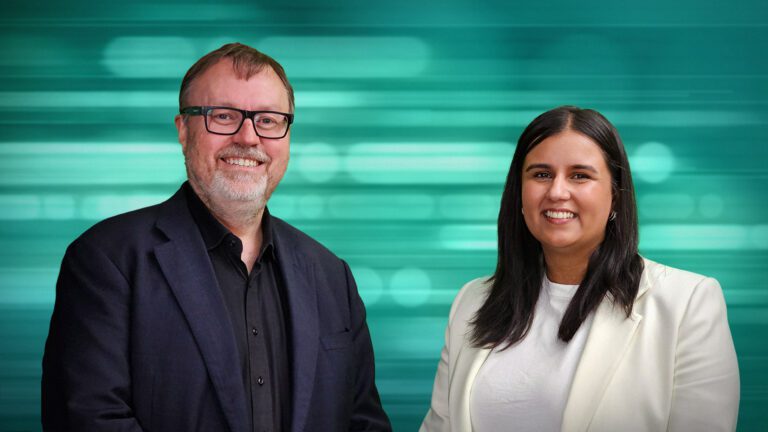
Join host Paul Spain and Neeharika Chowdhary, General Manager of AI and Data Products at One New Zealand. Neeharika shares insights from the recently released 2026 AI Trust Report and discusses how AI is being deployed at scale to enhance customer experiences, streamline operations, and accelerate innovation.
Discover how One NZ is approaching AI adoption, building trust, and unlocking new opportunities for customers, employees, and businesses across New Zealand.
Plus, the latest tech news including:
Special thanks to our show partners: Fortinet, Workday, Spark New Zealand, One New Zealand, 2degrees, PwC New Zealand, and Gorilla Technology.
Read the full transcript
Transcript is computer-generated and may contain errors.
Paul Spain:
Greetings and welcome along to the New Zealand Tech Podcast. I’m your host, Paul Spain. Today our guest is Neeharika Chowdhary, General Manager of AI and Data products at One New Zealand. Over the past decade she has worked across some of New Zealand’s leading organizations including One New Zealand, currently also Spark and Air New Zealand, building up expertise in data, digital products, customer experience and a range of emerging technologies. Today, Neeharika is shaping how AI is applied at scale to create better experiences for Kiwis, for Kiwi consumers and businesses. Welcome to the show. How are you, Neeharika?
Neeharika Chowdhary:
Thank you for having me. I’m great. It’s great to be here.
Paul Spain:
Yeah. Well, thank you for coming in. Really excited to delve in and hear more from you about the role of AI within One New Zealand. Also the report that we have touched on previously, the AI Trust report for 2026 that you’re involved in producing for one New Zealand. And many of our listeners will have already had a look at that or heard some of the highlights of the report, so looking forward to delving into that. But first up of course a big thank you to our incredible show partners including One New Zealand, also Spark, 2degrees, Workday, Fortinet, PwC and Gorilla Technology. Super appreciative of their support for making the New Zealand Tech Podcast possible and also their ongoing support right across the tech and innovation ecosystems here in New Zealand. So thanks for being part of that.
Paul Spain:
But let’s jump into our news discussion. Firstly, on the New Zealand front, we’ve heard that TradeMe has become the first New Zealand based digital platform to sign Tech NZ’s online scams code, joining some of the big international players, Google Meta and TikTok. The code is a voluntary initiative that commits participants to about 38 actions aimed at detecting, preventing and responding to online scams that target New Zealanders. Now look, I think this is pretty encouraging to see that we’ve got this broad sign up, that we’ve got a code that all the entities can commit themselves to and it brings some alignment between efforts going on in Australia and it’s going to help address the huge, huge financial losses that we understand from Ministry of Business, Innovation and Employment that online financial scams are costing New Zealand as a country $265 million a year. So this is really critical to address. How do you feel about this?
Neeharika Chowdhary:
I agree. I think it’s great to see more and more New Zealand businesses stepping in to really help New Zealanders every day. So much of our digital life conducted via that Life remote and anything that we can do to really unlock the potential of it, but really safeguard people, you know, when things go wrong, it’s really hard to unwind those. And so the more proactive that every business can be, the better. So, hats off to Trade Me. We’ve been on a journey with scam and fraud prevention as well and are rolling out more and more capabilities. But I think having common industry frameworks and common standards to achieve goes a really long way in simplifying and creating digital safety for New Zealanders. And it comes back to that theme of trust again and ensuring that everything that we do can be as trusted as possible.
Neeharika Chowdhary:
I think particularly in there’s lots of upside with AI, but there’s also a shadow to AI, and one of those is the scams and threats that AI can create. So the more proactive we all are, the better it is for us.
Paul Spain:
Yeah, look, I think this is quite encouraging. I’ve actually got on Trade Me Again recently and I haven’t done a lot of buying and selling of secondhand goods in recent years. However, I had some speakers sitting at home that I was looking at and realised, I don’t need to still have those speakers. Let’s try out Trade Me Again. Let’s try. What’s the experience like in 2026? And actually, with the recent changes they’ve made, if you’re an individual trying to sell things, they used to have quite big, Quite big fees that would take a really large bite out of anything you sold. And that fee structure, if you’re not what they call in trade or someone doing a lot of trading with Trade Me, actually, those things are pretty light and the experience surprised me in terms of just. It worked well and you didn’t feel like you were giving lots of money away to Trade Me.
Paul Spain:
So, yeah, encouraging to see that they’ve signed up here with Tech NZ’s online scam code. One of my concerns is that it is a voluntary code and that effectively means that those that are involved can really pick their level of commitment and in terms of the changes that they’re going to make, I haven’t seen a whole lot of communications coming through saying, hey, these entities have signed up. Here are the 10 benefits that we now get because they’ve signed up. And I still see, for instance, in the social media world especially, I get a lot of reports and feedback from people that have been really burnt by one platform or another. Probably Meta especially would get the most attention. I had someone from a TV camera crew here in the studio fairly recently Recent months, who was asking a common question of do you have any tips? How do I get my account back? I’m thinking this could be a big news or this could be a news story because it seems to keep going on and these things have been going on for a very long time. So to a degree I’m pleased. To a degree, I think we need to be pushing further on this front.
Paul Spain:
So let’s see how it plays out. Also on the New Zealand front, the New Zealand government is now backing away from the nationwide ban on cryptocurrency ATMs that was announced last year. They say they’re opting instead for targeted regulation and that the new approach balances innovation with crime prevention to allow transaction limits and other controls to go into play rather than completely prohibiting the technology outright. Now this is interesting because I remember being interviewed about this when the news came through on Ryan Bridges show Herald now. And one of the comments that I made was, well, if you’re going to, you know, ban something, it’d be like if we ban, in one small aspect, if we were to ban all the ATMs in the country for cash, then you’ve got a whole lot of businesses that have invested in putting ATM machines around the place. And so you’re going to effectively have to pay those entities back who have invested in that unless you do it in a, you know, in a very slow time frame or otherwise, you know, you, you risk, you know, companies fearing investing into, into New Zealand if we just make these, you know, sudden regulatory changes. So yeah, it was interesting to see that they’ve actually, you know, backed down on that somewhat and softened their approach. And you know, of course this is about, you know, crime prevention, anti money laundering and counter terrorism concerns.
Paul Spain:
And so it’s not something that was a non issue and didn’t need to be addressed. But it seems to me that, you know, taking a different approach this way, maybe we end up getting the results that they were initially looking for anyway.
Neeharika Chowdhary:
Yeah, yeah. Stepping ahead faster than trying to tighten it all down.
Paul Spain:
Yeah, yeah. And of course there is always that risk when it comes to the crypto world that if regulations tighten up kind of all over the world, and we’ve seen it happen in China for instance, where crypto isn’t such a thing as it used to be and that that creates a position where those that are then holding crypto, they then end up holding something that maybe doesn’t have any value anymore if you can’t actually use it in most common scenarios. So it will be interesting to follow and see how this evolves. We’re in a situation now where Bitcoin and other cryptocurrencies are much lower than their peak. But we’ve been through that before and then they go off to new heights. So it is a curious one to watch. And I’m curious what their requirements will be when it comes to enforcing some, maybe some anti money laundering sort of rules at that ATM type level. How will that work? And I guess we’ll wait and see how it plays out.
Neeharika Chowdhary:
Agree. It’s always tricky in operations at scale
Paul Spain:
and this is the ongoing challenge we have with technology, which we’re just about to delve into when it comes to some of the international news stories, is how do you ensure that the legislation, regulation fits appropriately with technologies as they, as they come into play. So New York has just become the first US state to ban smart glasses from all the court buildings. They’re citing privacy and security concerns, arguing that increasingly discreet wearable cameras make it rather difficult to prevent unauthorised recording in sensitive legal environments. So effectively, yeah, putting that full blanket ban in place, do you think that’s the right sort of approach to take?
Neeharika Chowdhary:
I think consent is always paramount. I don’t know if you’ve had a chance to try some of those wearable glasses. They are incredibly powerful. You can see so many scenarios where it’s helpful in life, but where you have high sensitive scenarios, having the right safeguards in place is important. Where it isn’t easy to confirm whether consent has actually been granted or not. So yeah, I think it’s tricky in terms of setting red lines, especially when there’s emerging technology. But in that scenario where you want to ensure that the parties involved have the right safeguards for the right process to be carried out, I can see the rationale behind not permitting the use of that technology in that scenario.
Paul Spain:
Yeah, look, yeah, I think smart glasses have a range of concerns and most of them are to do with those concerns of privacy and of recording people, both in a setting like in court environment, but also just generally in public environments. So I think it’s a positive thing to see some regulation coming into play. New Zealand might well sit right back for a while on these sorts of topics, but no doubt we will be watching and looking and learning and I hope we’ll take the best of what’s learned in other markets and apply to New Zealand in good time. Now, another area where legislation is coming through or being proposed is in relation to 3D printed guns. So this being proposed in New York and California, where the suggestion is that they require the 3D printers themselves to detect and block firearm blueprints from actually being printed. And advocates argue that the measures could curb untraceable ghost guns, which is what they tend to call these guns, because authorities have no idea that they, they exist because they’ve been generated on the spot. However, critics warn of privacy, surveillance, and of course, technical feasibility concerns. Right.
Paul Spain:
Can you, can you actually get a printer to decide what it will and won’t print, you know, based on some sort of algorithm? And yeah, that side certainly fascinates me. And I even saw, I guess, a parallel comparison, you know, suggesting, well, if we do this, do we get all printers to do that? And they’ll have a look at what you’re printing out and decide whether that, you know, aligns with, with what the state wants you to print or not in future. So it’s like, oh, that’s a fascinating thought. I guess if printers got good enough and people were trying to print their own money. Well, I guess that’s already been done. Yeah. So it’s like, yeah, how do you balance these things and actually make them work? Well,
Neeharika Chowdhary:
when I saw that, I actually couldn’t believe that that was a use case that was being imagined for 3D printing of all of the potential with that technology. I was chatting with someone else a couple of weeks ago about it would be great to have 3D printed shoes. So that’s about as far as we got.
Paul Spain:
But then you can get the perfect fit.
Neeharika Chowdhary:
Exactly. But yeah, DIY firearms is not something that excites me particularly. I think the more safeguards the better. But you’re right. How do you, what is the, what’s the right line where we have licensed issuance of firearms? I think it makes sense that that’s followed.
Paul Spain:
Yeah, they, they were citing the case of a 3D printed silencer at least, or maybe it was a weapon and the silencer in the high profile assassination of the UnitedHealthcare CEO Brian Thompson in New York, which that was late 2024. And so we are seeing, you know, this technology being used and being able to facilitate and, you know, in this case, a murder. So it’s not just about, you know, a hypothetical, a hypothetical use, however. Yeah, how you, how you balance these things when it comes to regulation and what happens when a tube that you’re printing out, you know, for help, you with some plumbing or something at home, and the printer says, oh, that could be the barrel of a gun? Because these things tend to get printed in pieces and parts that may not be really as easy to land. And of course, as we’ve seen with many other things where regulation goes in place, often it’s able to be ignored or bypassed in one way or another.
Neeharika Chowdhary:
But important problems worth solving?
Paul Spain:
Well, certainly. Yeah. Well, I’m not sure that we can solve all of humanity’s problems, as probably that’s the flip side. I think we have to put the effort in. But, yeah, can you solve everything?
Neeharika Chowdhary:
No. Yeah.
Paul Spain:
So, yeah, but this is the balance that we always delve into with technology of how do we maximize those uplifts from the technology, how do we minimize those downsides, but in a lot of cases without being able to completely eliminate them. Now, lastly, Apple has filed a lawsuit against OpenAI and former Apple employees, alleging coordinated effort to obtain confidential information relating to future products, designs and manufacturing processes. And OpenAI have come out completely denied wrongdoing as there are rising tensions over their growing ambitions to produce hardware. You can understand from OpenAI’s perspective, they’re heavily constrained on, for instance, an Apple device. And if they were wanting to be super, super deeply integrated into every aspect of a, of a device, you would imagine Apple might be looking for some form of payment, as they tend to do with app stores and so on. However, yeah, on the flip side, if you’ve got staff leaving Apple and taking intellectual property with them, which is really, I think what they’re pointing to with former Apple executive Tang Tan, who is now the OpenAI hardware chief. And, you know, they’re certainly alleging that as they’ve been interviewing other potential hires, that they’ve been asking Apple employees to disclose information about future products with code names on them and to potentially even see future hardware. So I can see how that would be quite problematic for Apple.
Neeharika Chowdhary:
Yeah. And IP is ip. It’s billions of investment going into future innovation. So respecting IP is paramount.
Paul Spain:
Yes. So I think this one is fascinating and we’ve seen it across so many of the biggest tech companies where they have got into these sorts of fights and lawsuits. And it does seem, especially around Silicon Valley, to be reasonably common that folks are wandering off with incredibly valuable ip as you talk about. Right. It could be worth billions of dollars. That said, it’s not unique to the tech sector and we’ve probably all come across and heard of data being transferred between one organization and another within New Zealand in varying contexts over the years. So often we’re just seeing kind of the new version of what’s happened for probably forever. Right now onto One nz really, really keen to get an update on what’s happening in the One NZ world? We have also in the last few days had the big news that Nick Judd is stepping into the Chief Executive role, previously Chief Financial Officer and Jason Paris is exiting the business.
Paul Spain:
So tell us about that. What do you see that sort of changing from a perspective of the team at One NZ and for customers and the market?
Neeharika Chowdhary:
Yeah, really big news. Jason is an icon of the industry.
Paul Spain:
He really is.
Neeharika Chowdhary:
He shared his news with the entire organization a couple of weeks ago at our national Sales and Service conference and really the seamless transition was announced by our board chair, Philippa Harford, who announced that Nick Judd will be the incoming CEO. So from one icon to another icon in the making in terms of what it means for our organisation. Nick has been at the helm of shaping strategy for the organisation and he’s been in there shaping the future with jp. So I think we’ll see a lot of the great stuff that you see today for customers, but also for the organisation’s priorities. So continuing to be creating a better connected New Zealand, continuing to fuel the possibilities with AI, but dialing up those aspects that he will naturally find most important to dial up as he takes the reins. He’s got phenomenal breath across One New Zealand, but also from prior roles too. So we’re really excited and, and bittersweet. Jason’s amazing.
Neeharika Chowdhary:
Nick is also amazing. So we’re really fortunate to have such strong leaders at the, at the helm.
Paul Spain:
Yeah. Oh, it’s going to be, yeah, an exciting time ahead I think, you know, for the, the telco world, especially as we see AI probably fitting into your world maybe faster than some other segments. But keen to hear what does this change mean for one NZ’s ambitions of being the most AI enabled telco on the planet.
Neeharika Chowdhary:
Anything changing there, if anything, we’ll keep fueling those ambitions. So the technology just continues to get better and better every month and the opportunity across our business and our industry I think continues to grow. So that ambition continues to be our focus area. If I think about how we really unlock it, to date we’ve really focused on ensuring that everyone across the organization gets access to AI capability safely, that they understand the full potential. We will continue to put that, put that on gas. And then in parallel, we’ve been building out business and technical foundations to scale AI across our customer experiences, agent experiences and employee experiences. So we’ll continue to double down on that. And probably the biggest thing that we’ll dial up even more is ensuring that the value that’s created, it’s really Captured for both customers and the organization.
Neeharika Chowdhary:
So really starting to dial up a lot of the value realization. But the pillars that we’ve had in place, those will continue over the next couple of years for sure.
Paul Spain:
Yep. Now the world of AI is something that impacts everybody and I think for our listeners it’s something everyone’s at a slightly different place in terms of how they’re able to leverage and utilize AI, depending on their environment, their role and so on. What would you say excites you most around what’s been achieved to date? Because this is not completely new now. It keeps changing. So there’s always new overwhelming things to take on board. But in terms of, yeah, those things that you can look on and say, oh, we’ve got this thing knocked off or we’ve got it at a level where it’s being super helpful, it’s hard to pick one.
Neeharika Chowdhary:
But I think when I look across the business, the ability for AI to turbocharge product innovation, engineering end to end and get better innovation in the hands of our customers is, is massively thrilling. So to take an idea and get it into the hands of customers in the past might have taken quarters and we can now get that down to weeks and it’s getting sharper and sharper. And so the more we can crack the backbone of those processes, the more customer centric we can be. And we’re really seeing that turn up across teams. What that also means is we’re seeing a lot more cross skilling across teams that we’ve never seen before. So you have amazing engineers that are leaning into understanding the world of design, understanding what it means for finops and how you can really make the right commercial choices and vice versa. Seeing designers better understand the world of an engineer so that you have these teams that actually can crack problems faster than ever before. So I think really doubling down on AI for product and engineering is a huge opportunity space at the moment and we think it’ll be even bigger.
Neeharika Chowdhary:
I’m also really excited. This isn’t easy for lots of different reasons, but really excited about the potential for AI and customer experience and what that means for ensuring our customers get the help that they need on their time, not just on our time. 24,7 personalized a lot of foundational building blocks to bring that to life. But yeah, really seeing AI for customer experience is a big unlock and then again not easy to pick. But when we look at the future of networks and autonomous networks, we have been creating networks and experiences that have largely been designed for people, talking to people and so this new world of machine to machine or AI to AI networks is a, is a really interesting ball game. And making sure that we’re ready for that machine to machine speed so that we can create better connectivity experiences that, you know, unlock more resilience, unlock more trust is really exciting. That’s probably a bit of a flavor.
Paul Spain:
Yeah, yeah, yeah. There’s a few things that come through and come to mind in what you’re saying and what I’m seeing, you know, elsewhere, which is that these things take time. It’s not a five minute job to, you know, AI enable an organization. And some things are quite foundational. So changes need to be made to the way that things are architected within an organization to be able to really get the most from AI. There’s also the reality that probably most things won’t be the big one and done type project. We did this huge thing, we’ve completely changed the entire business. A lot of it will be small elements in different places, but when you add all of those up, you end up with a significant change.
Paul Spain:
Would that be. That’d be fair to say yes.
Neeharika Chowdhary:
And taking both that bottom up approach, but actually looking at those core journeys or processes end to end, and I think you need both. When we first kicked into it, we wanted to ensure that the business could see the possibilities. And so that required putting it in the hands of as many people across the business as possible. And so you get, like you say, those pockets of upside. But now we’re architecting for value chains across the board. So that requires ensuring the right applications are in place. We’ve got an amazing API layer, we have high data quality, we’ve got all of those building blocks around AI, including orchestration, and that is a journey. So just picking the right places to double down on it.
Paul Spain:
Great. One of the other things I find is probably a little bit of a challenge for folks to get their heads around is in a world where we have access, where every individual has access to a super powerful new set of tools and capabilities, when we look at what an individual person will do, whether it’s now or, you know, a year or two out, compared to what they were doing maybe a year or two before. It used to be, you know, you’d look at somebody’s role, maybe it’s a software developer, it’s like, oh, your role is kind of this shape, you know, these are the things that you do. Here’s what you’re capable of. Oh, you need some testing? Well, yeah, we’ve got the QA tester That will do all of that stuff. Yes, of course, you, you’ve got to deal with all these other people to do certain sorts of things. And now there’s this degree in which folks are able to take on some areas that might not have been particularly interesting to them, might not have been an area of strength or focus, but actually with some AI enablement they might decide, well, actually, let’s create a really amazing project plan for this thing that I’m dreaming of. And AI will really help them to visualize and to understand that project from a broader perspective from what they would have been looking at as their piece in the past.
Paul Spain:
And of course this goes off in all sorts of different areas. And yeah, you talked about looking at design and so on. One of the things that I’ve been involved in with my team is taking some of the elements that have come through from a reasonably recent branding project that has happened within our business over the last couple of years and looking at, well, how do you leverage AI? So you get that sort of consistency in all of the, you know, communications and, you know, the content that gets put together rather than, you know, what can quite easily become a little bit of a mishmash when folks are, you know, quickly throwing things together and they end off and yeah, all sorts of results, shall we say. So, yeah, it’s quite fascinating, but I haven’t kind of worked out, really got my head around, well, what will that actually look like when we’re a few years in from now? And how does that actually change the overall picture from a work perspective? Can we generally keep the same number of people and achieve a lot more and do more business? Well, I think that’s gonna vary from field to field, isn’t it? What that whole shape looks like? Do you spend much time thinking about that side of things and have you jumped to any conclusions yet?
Neeharika Chowdhary:
Definitely. So when AI can 10x different tasks, different skills, there are real choices about the skill sets that matter most right now versus in five or 10 years. And I definitely can’t look that far out, but we’ve got enough signals now to go, there are new skills that matter most. There are skills that are existing, like critical thinking, being able to really deeply problem solve your specialist domain IP that you would have and say networks or other domains, those will always really matter. But when you have knowledge, work that really can be democratized and supercharged in ways that aren’t possible before, we really are asking, how do we ensure that across our organization people are able to step into those future pathways and to really unpack. When we say being AI, first human, where it matters, we’re really clear on creating those journeys for our people. I can’t remember who said it, but they shared back In, I think 1950, they were looking at the types and shape of roles that existed back then, comparing it to now, and about 65% of the roles that exist today didn’t exist back then. And so I think the potential of this technology is massive and it’s going to unlock new opportunities, but it is also going to change existing roles for sure.
Paul Spain:
Yeah. And I think it’s that disruption that creates some concerns for folks. Right. As well. What does this mean? What am I going to be doing in 10 years? However, my general feeling is that as a country, as organizations, as individuals, we should be able to navigate this in a way where we lean into doing things that are good for people, that we should be able to navigate it pretty well. But that doesn’t mean that there’s no risks and there’s no pain and discomfort because I think change can be painful and uncomfortable along the journey. It was interesting chatting with Alan Rickard, who’s the founder and chief executive at Atomic Tessellator on, on the podcast and you know, one of the, one of the comments that he made as, as a startup doing some, some, you know, super innovative things, he, he was on the, on the show a couple of, couple of weeks ago that they’re, they’re able to move faster and do more than other companies that are much, much bigger because they’ve launched and they’ve got established during this era of AI and they’re really able to use that and they don’t have to be this huge company with billions of dollars worth of funding or even hundreds of millions of dollars worth of funding to be able to achieve amazing things. So it really is a different world, isn’t it?
Neeharika Chowdhary:
It really is. And that’s why looking at these processes end to end is so important because when you can unblock one part of that process, how do you then ensure the rest of the organization can move at that same machine speed and really unleash our people across the organization? It’s. Yeah.
Paul Spain:
Now we should delve into the AI Trust report from One NZ that you’re involved in, in writing. I’m, yeah, I’m kind of keen to hear how surprised you were with the, you know, the different findings and the data points, you know, come coming in and you know, how, how that’s really impacted. You’re thinking maybe you can sort of summarize for Listeners what, what the key findings were in the report.
Neeharika Chowdhary:
Yeah.
Paul Spain:
Cause there’s some quite. Yeah, it’s quite shocking to it, you know, to a degree. Some won’t be surprised with it. But you know, folks aren’t all on board and excited about AI, you know, whether that’s, that’ll be, you know, that’ll be across, you know, some of our listeners too. Right. So there’s gonna be a mix of perspectives but the overall is not necessarily all sunshine and rainbows completely.
Neeharika Chowdhary:
And that’s why trust is so important, because there will be ups and downs as this technology evolves. But the four big headlines. So the first is 77% of New Zealanders in the last year have acknowledged they’ve had some form of interaction with an AI experience. And that’s great to see. I think when we ran it before it was much lower. And the perception that AI is new is true, but it’s also not quite true. Every time you use Google Maps, every time you’re using Spotify and getting a personalized recognition recommendation, that’s AI behind the scenes. And so I think it’s great that New Zealanders are seeing the role that AI is playing in supporting their lives because the more we can understand it and the role that it’s playing, the more we can harness it but also understand its limitations.
Neeharika Chowdhary:
So I think great to see that, that broad adoption. And then secondly, over 60% of New Zealanders would consider switching away from a company if they believe that the AI wasn’t to trying trustworthy or they didn’t have trustworthy experiences. And that’s probably the biggest shift from last year where last year a lot of New Zealanders were trying to understand what was possible to now having very clear perspectives on the level of trust that they expect from organisations. So trust has really shifted to being a significant differentiator. It is a must have. But to be on the forefront of trust is integral to ensuring that you’ve got that customer loyalty and you really are thinking about the right steps for the organization. And third, this definitely wasn’t surprising to me but you know, data protection is paramount for New Zealanders and ensuring that in all of these experiences we’re really looking after customer data first and foremost was highlighted. Again, there were also some interesting insights around the AI adopters really at the leading edge in New Zealand and it’s great to see that growing because the more we can really unlock this technology the better.
Neeharika Chowdhary:
But also that significant parts of New Zealand do need more help with unlocking this technology.
Paul Spain:
Yeah, now I was pleased to see one NZ coming out with this report last year and this year. And to me it was an indicator that there was recognition early on within the organization that trust is the big challenge. And if organizations are going to make significant leverage and adoption of AI, that we actually really have to get our heads around how to deliver trustworthy results and get those, those really good outcomes. Because if I guess all of us have seen things go wrong with AI, right, We’ve all seen things go wrong with technology in general and we could probably all imagine kind of varying bad cases or worst case sort of scenarios when it comes to comes to the technology. We’ve seen things maybe mishandled in the future that isn’t necessarily even directly technology where something’s new and organizations have decided, oh, let’s outsource that to another part of the world without having necessarily worked out how to make that actually really good for the customers. It might be more cost effective, but it hasn’t been worked through. Now I think most organisations that have a mix of people inside and outside the country now have probably figured most of those challenges out. So we get much smoother experiences and certain things you’ll get folks that really, really know your area and can help you, whether that’s local folks or international folks.
Paul Spain:
But there’s probably all these sort of things that are stuck in people’s minds about hallucinations, about poor customer experiences around data privacy issues that they’ve come across in the media. So it’s yeah, how do we actually address and ensure that we don’t have those issues and that we get that really best, best future? And this is a lot of what you’re having to think about, I guess
Neeharika Chowdhary:
at one nz, day in, day out. And so the approach that we’re taking, first of all, any application of AI has to be responsible. So the privacy and responsible AI team have created a trust trail. So all of our solutions are run through this trust trail which immediately at first pass identifies is this actually an appropriate use of AI or what are those edge scenarios or risks that we have to be really concerted about managing. And then in addition to that, the lens that we continually take when we’re creating any AI experience, whether it’s for customer use or operational internal use, is looking at the desirability, viability and feasibility. So just because it’s AI doesn’t mean it’s always the right solution. Sometimes great automation or application upgrades can go a really, really long way. But being able to really clearly articulate why is this desirable for a User, what is it that the customer or user is experiencing and is a true pain point that AI is going to resolve, whether that’s time back, whether that’s reliability, whether that’s certainty of getting a response, being really clear on the desirability of the solution and it has to pass muster on that.
Neeharika Chowdhary:
Then secondly, and this is probably where AI does differ from technology in the past, every time you’re interacting with a cloud based AI solution, the meter’s running and so being really clear on how will it create the right value for the business. So what are the ins and outs and is it worth it and material enough to really focus on? Because otherwise we don’t want shiny tech for the sake of shiny tech. And then finally, in terms of feasibility and the operations of it, is there a path to scale it? Is there an easy way to understand when things are going wrong and why are they going wrong? So that observability and the ability to inspect in near real time, those are all really important capabilities that we weave into the design of these solutions. There are also, we had quite a few conversations right at the outset when AI went from being a set of tools and technologies harnessed by a small group of individuals in the organization to everyone in the organization. And those conversations included, well, what are the green zones versus what are the. Actually that requires authorization. And so being really clear on those zones up front meant we’re never going to impact your network continuity. That is just not an outcome.
Neeharika Chowdhary:
That is, that’s not an outcome that is tenable from a customer experience perspective. Again, the goal is to ensure the customer has a great experience. So if you’re in a conversation and you’re having multiple turns and you’re not getting that resolution, that customer is left worse off, not better off. And so ensure in the design of it that you really are considering those handoffs and minimizing it. So those are some of the examples. But the, the frame that we’re using is, is it responsible and trustworthy, is it desirable, viable, feasible? And we’re definitely going to adapt it as we go. We’re thinking a lot about when we say AI, first human, where it matters, what does that look like across the organization? And yeah, really unpacking that as much as possible.
Paul Spain:
Now, what does that ultimately look like? You talked about everybody having access to the tools. Tell us a little bit about the technologies and so on, that you operate within one nz and what’s the sort of level of capability that your people get access to?
Neeharika Chowdhary:
Yeah, so across the organization, everyone has access to either ChatGPT or Microsoft Copilot for your day to day tasks. And then we have different platforms for different use cases across the organization. So in our networks domain there is a heavy partnership with our network vendors. So in particular with Nokia and Ericsson with really unlocking the possibilities in those platforms. We have AWS Agent Core for use cases that require orchestration across several different business domains. And We’ve got Salesforce Agent 4s for our customer engagement use cases as well as Amazon Connect and a lot of the generative capabilities within Amazon Connect. We’ve then got other platforms that have native AI capabilities within them. So we’re really looking at Agentic analytics within Snowflake and across our different applications.
Neeharika Chowdhary:
These features within ServiceNow that we’re toggling on to really understand how can we make complex resolution simpler. And I guess that’s the, that’s the other really exciting thing is even from a year ago, almost every platform is now making it easier to unlock AI capabilities where the work is done. And so we’re trying to unlock as much of that in the right way possible.
Paul Spain:
Are you seeing data come through in particular areas like problematic customer requests or tickets? Are you seeing, oh, we’ve actually made a significant difference in an area in terms of bringing down the time that it takes to solve those or are there particular examples where you can think of that are like, wow, this is where we’ve made a difference and we’re putting smiles on customers faces a little bit quicker and so on?
Neeharika Chowdhary:
Yeah, a few key areas jumped to mind. So the first is we’ve had unfortunately several severe weather events across New Zealand in the last year or so, more so than I think any of us would hope. And what would happen in the past is our network engineers would need to understand what’s happening across several systems to really understand which cell sites are most impacted. What are all of the alarms that are the most important versus less important. And in the past that could take 30 minutes to an hour, that’s come right down to a couple of minutes and being able to run root cause analysis across most of the network in a handful of minutes so that our networks teams can really prioritise which areas need the most support and ensure that they get those generators to the right sites. So that’s been really helpful to see, like not great that we’ve had to use it so much, but in those moments that really matter for, for customers, when your connectivity needs to be up, empowering our network engineers and seeing that time to resolution improve has been great. We’re also seeing across customer service over 60% of resolution within our app from the use of agentic AI. So being able to ask questions about what’s going on with my service, how can I get more help? There’s more work to do and extending that to be able to take the full set of actions.
Neeharika Chowdhary:
But that’s available to over a million users. And in the past we’ve had to rely on really fixed, brittle, rule based chatbots. And to have far more flexible personalized capability is great from a customer experience perspective.
Paul Spain:
So how does that actually play out from. Yeah, the traditional kind of earlier bots were a lot more, I guess, deterministic. Right. You might get go in and you’ve got a few choices and even when you call up and you’re trying to explain your problem, it’s trying to put them into a very small list of buckets. And that doesn’t always work with these systems. And now we’re in a more deterministic world where it’s not necessarily so clear whether it’s left or right. Cause it could actually be one of a hundred different directions. How complicated has that been to put together? And what are the challenges that you’ve managed to solve along the way? And maybe some challenges you haven’t managed to solve yet.
Neeharika Chowdhary:
Yeah, it’s been fascinating over the last 18 months or so. In the past, you would need to be really prescriptive in a prompt or a set of instructions to get that level of repeatability in a result where that consistency matters. So what is the customer’s bill? What are the things that they’re eligible for? And we’ve seen a lot of the architectures change in the last 18 months or so. So to have agents that can then access the right tools that are completely standardised, so you’re not having to nudge it left, right and centre because you know it will just call the right thing at the right time. That’s become far easier. It’s not a click of a button. And it’ll happen tomorrow because you still need to have all the right tools and the right toolkit for it to be able to act on. But the architecture has certainly evolved where we’re getting the best of those generative capabilities, where if you’re having an interaction and in order to resolve that interaction, you need to unpack what’s going on.
Neeharika Chowdhary:
So the reasoning and planning capabilities of agentic AI come to the fore. But then in order to complete the interaction with an action or a task, it can then call on those deterministic actions with tools that can be set up in lots of ways. So it’s great to see, I guess, tried and tested methods like having APIs that you can then call on with MCP, but then also blended with these amazing probabilistic tools. Yeah, it’s definitely not smooth sailing because every platform is different and the amount of change that can happen in experience is significant. So just from releasing new content or having your knowledge change or you’re upgrading a model, but actually when you upgrade the model, it behaves completely differently. So we’re spending a lot more time in testing. So testing right at the end, as
Paul Spain:
one AI model comes through, that can cause significant disruption to a workflow.
Neeharika Chowdhary:
Yeah, completely. They just. They behave differently and so the functions that you or the reasoning process that one model would take versus another can be quite different. And so, yeah, just investing a lot more in automated testing is.
Paul Spain:
Are you able to share an example of something where we, you know, the new model came through and you looked at the, you know, how it was kind of playing out, that wasn’t what you were hoping for?
Neeharika Chowdhary:
Yeah, so we went with a less powerful model. When we were first initially building our AI concierge, it was performing well, but we wanted to really uplift the resolution rate, so we upgraded it. In the upgrade we were testing, like really reteaming it to figure out where it’s going to break. And we tested it in one particular language and it went a bit haywire. So the cheaper model was fine in that language, but you upgrade it and it just. Yeah, it wasn’t too smart, got too. Yeah, got too sassy and it just. We really had to relook at the instructions that were put around it.
Neeharika Chowdhary:
We wanted the performance uplift, but the original guardrails needed to be upgraded as the model changed. So, yeah, that was surprising. And I think with AI solutions, it’s just that continuous testing is so important.
Paul Spain:
Yeah, really is. Now, I’m picking that you would be monitoring your customer satisfaction scores pretty closely. How have you seen those things sort of evolve as you’ve been rolling out more capability where people can interact with an AI as well as being able to reach a person? These things kind of can vary according to what somebody needs help with. But how’s that been tracking? Have you got anything you can share?
Neeharika Chowdhary:
Yeah. So over the past couple of years, there were a lot of foundations that were put in place in our customer experience, customer experience channels. And so the foundations with Amazon and Connect in particular, that made it easy for our contact centre reps. To resolve those interactions. First time, right. We saw a significant improvement in first call resolution and that has continued to grow as we’ve augmented those experiences. And then from a digital channels perspective, we’ve seen better resolution rates, better nps, when customers have more flexibility in that experience.
Paul Spain:
This is a net promoter score scores.
Neeharika Chowdhary:
And when we also then looked at some of the harder measures around customer engagement. So we ran a migration where we were trying to make it easier for our customers to upgrade to new plans. So you were able to understand the new plans that were on offer for you, ask questions about what would happen to your service and would there be any connectivity issues or not? What would happen to your existing balances. And we saw four times greater engagement through that, through the agentic journey than traditional digital journeys. So higher conversion rates, happier customers and just a lot more personalization. So that’s given us a lot of conviction that where we can create these flexible experiences that are adaptive, it’s just better for the customer.
Paul Spain:
Yeah. And so when you’re, you know, when you’re talking to other businesses about the sort of things to look out for, where it goes wrong, where are the main areas that you’re, you know, raising the flag and, you know, advising extra effort, caution and so on.
Neeharika Chowdhary:
Yeah, definitely. Anything that is customer facing is paramount. That customer trust is so important. And so being really clear on what are the guardrails, how do you observe, how do you switch off, what are the BCP measures that are in place when you’ve got these agentic experiences in the hands of customers?
Paul Spain:
Yeah, I guess if you’re reliant on a particular model, you can get into a business continuity problem if that model suddenly gets pulled, as we’ve seen in recent weeks. Right. There’s all sorts of things that can go wrong there.
Neeharika Chowdhary:
So designing for swapability through different model libraries. Pick your platform, but most platforms now enable you to switch them in and out. But really doubling down on making sure you have continuous testing and you’re feeding and watering these. It’s not a set and forget experience.
Paul Spain:
No, no.
Neeharika Chowdhary:
And then definitely being really clear about what experiences or what transactions require total reliability and repeatability. In those scenarios, if it’s working really well today, don’t need to identify it. But if it’s not, there’s probably a combination of agentic AI and traditional automation that could work really well. But yeah, I think being really clear on what are the parts of your organization that are the most important and setting those guardrails
Paul Spain:
now, any particular sort of tools and technologies that you get excited. We were chatting before and you were mentioning around ChatGPT work, which I guess is sort of competes with Claude cowork, other things. What have been your most interesting experiences recently?
Neeharika Chowdhary:
Yeah, I think and gosh, the innovation across platforms is massive. So whether it’s ChatGPT work or Claude co work, these platforms that make it easy for anyone to bring the ideas to life, it’s amazing. I think I mentioned I was trying to switch off over this last long weekend and I just couldn’t because once you jump in and you really start pushing what’s possible, it’s difficult to stop your imagination. And when you look at ChatGPT or Claude or any of the genitive platforms that are in the hands of New Zealanders today, that’s in all of our pockets and it’s a couple of sentences away from being unlocked to bring those ideas to life. My mum’s a teacher and she often tells me about lesson planning and how it’d be great to have lesson planning simplified and standardised and so she can spend more time with her students one on one. So what were we doing in the weekend? We were just building away at a little lesson planning app. There’s just so many rich ideas across everyone’s lives that I think these platforms can bring to life at least, you know, probably needs more help to get to production. But to actually say this is what I wish I had, that’s.
Neeharika Chowdhary:
Yeah, that’s exciting.
Paul Spain:
And I mean it’s, it’s interesting here what you say around losing your long weekend without giving up away too much about my weekend, but we were going to go away, we didn’t go away. So in the end I went down and spent, you know, probably more time than I, than I should have
Neeharika Chowdhary:
on
Paul Spain:
Friday and Saturday at least, which is fun as you say. You can really get creative and achieve some things very quickly. But part of that can create a bit of a challenge within an organization when everybody can be creating things left, right and center. You can’t necessarily put every idea into production and you want to ensure quality, consistency and so on across an organization. And so something I built last week was like, oh look, I’ve achieved this particular thing, which was looking at quite a time consuming human process that requires a lot of data and bringing it together from a range of sources and then sort of analyzing and coming up with a recommendation. Now that was quite quick to build a proof of concept that you could present in a browser, but actually to incorporate that as something that’s locked in a standard part of the organization that can be used by anyone that needs that functionality or possibly even exposed to customers to have some sort of access to, that’s a whole different ball game, isn’t it?
Neeharika Chowdhary:
Yes, it definitely is. And so having common platforms that people across the organisation can use for their personal productivity, so pick your flavour of whichever platform, then you know, at least from a personal productivity point of view, people can be unleashed. And then having, just like we do with all, all other technology, really clear paths to production for all other use cases that require action or PII or. Yeah, any of the workloads that are really important from a security perspective. So, yeah, having, I wouldn’t say two speed processes, because all of our processes are getting faster and faster, but having lanes where people can really push their tasks and their skills to the max and safe, secure environments, and then having the right sandboxes, the right full paths to production for those wider workloads is important.
Paul Spain:
Now, something that I think listeners are, or all of us are kind of curious about is. How much of a productivity increase that AI brings. Now, it’s going to vary across every single different role, but one area that sort of comes up in lots of conversations is the software development world. And no doubt you’ve got a fair amount of software development that goes on. I’ve got my own experience inside my organization, but, you know, I hear some people come up with just, you know, insane rates. Others are like, well, look, we, we don’t, you know, we don’t want to lean too much on AI for software development because of security issues. We need to understand every line of code that’s written and so on. Have you got any experiences you can share from, from that perspective?
Neeharika Chowdhary:
Yeah, I can’t share numbers, but in terms of the potential, whatever is, I guess in any of our heads, we could probably double or triple it. And that’s the direction that we’re traveling. I think with the technology now, being able to create really specialised skills that mean that the standards you have, whether that’s in engineering or testing or in product, really codifying those into skills that are used across these processes mean we can offset any of a lot of the downside that people might be worried about with this technology. So AI agents for testing, AI agents for development, AI agents for design is. It’s massive, just massive.
Paul Spain:
Yeah. And these things are really starting to come into play, aren’t they, that you can have your team of agents. I’ve kind of landed in a place where I’m probably a little bit uncomfortable with some of the discussions We’ve had on the podcast around ideas like having agents in your org chart. To me that’s a little bit going a bit too far down the sort of humanizing the technology but I guess in a virtual sense this idea of a team of agents, it’s totally here now, isn’t it?
Neeharika Chowdhary:
Yeah. And you can imagine going to sleep, waking up and there’s been a factory operating overnight and you pop in. These are control plane, here’s what’s been created, here are the anomalies, off you go. And so a lot of the heavy lifting that used to take a lot of time is done by these factories. And so then our people can spend their time with customers or each other on what’s the next innovation. I don’t think we’re years and years and years away from that
Paul Spain:
now. One other area that this came up I think at Microsoft’s event and there was a question from an audience member at the end of a, a talk and they were asking, I think it might, it might have been somebody in the, in the telco world, you know, how do you manage budgets for tokens? If you’ve got software developers right. What’s, what’s the right way of being able to balance and make tokens available? Because as you, as you mentioned before, leveraging AI, you are looking for a return on the investment at not something that’s all just fun and games. If you’re going to spend tokens, you want a result back. Have you landed on a particular approach that seems to work well in terms of how you make tokens available?
Neeharika Chowdhary:
Yeah. So there’s a lot of work that our finance team in partnership with our CIO have been carrying out. So finops and tokenomics being at the heart of a lot of engineering practices. So a couple of key things. The first is visibility. So really making it easy for not just engineering leads but the engineers themselves to understand what is happening with the usage of AI. Creating common workbenches that optimize performance as well as cost. So being really clear on those workbenches that everyone should use and tracking that value to token cost equation.
Neeharika Chowdhary:
So I think now more than ever really understanding quality, really understanding what are you manufacturing and sort of the throughput of that manufacturing whatever it might be because if it’s high quality and it’s higher throughput, you might have incremental cost here but actually it’s unlocked so much more value for the organization. So having a lot of those measures in place at the outse, we’re still figuring out a lot of different questions along the way, but that trade off of value and token is really important. Yeah.
Paul Spain:
Yeah. Well, there’s a lot more I’m sure we could dive into. We’re kind of out of time. Neeharika. So I wonder if there’s anything else that you would like to mention before we finish up.
Neeharika Chowdhary:
Thank you for having me. It’s so great to see you. The excitement for and focus on trust, I think that’s going to continue to be more and more paramount. The only other thing I’d share is I know sometimes AI often it cannot feel perfect. And so even if it’s not perfect on day one, just everyone giving it a go in a month’s time, in a couple of months again, because whatever we see right now is only the worst it will ever be. And so that energy to make the most of this technology I think would be great to see as much of. Across. Yeah.
Neeharika Chowdhary:
Across New Zealand.
Paul Spain:
Yeah. Now, if folks are wanting to find the AI Trust report, that’s up on the One NZ website, isn’t it? So that’s very easy to Google for or to find. And the other thing from One NZ is you’ve got a section on AI transparency within the business, haven’t you? Could you just touch on that brief? Because I think folks will be interested to have a look at that too.
Neeharika Chowdhary:
Yes. So when you jump online to look for the Trust report, it’s part of our Trust hub, so it has the links to the reports, but it also outlines how we’re using AI across the organization, both internally, but also for customers. And so it provides an overview of how we’re using it and the benefits from it.
Paul Spain:
Yeah, I think that’s fantastic. And it really sets a great example for New Zealand organizations to think about how we can engender trust. And being transparent is a really key part of that. So well done. That’s great.
Neeharika Chowdhary:
Thanks.
Paul Spain:
Awesome. Well, thank you so much for joining the show and of course, a big thank you to everyone for listening in and to our Incredible show partners, PwC, Fortinet, Workday, One NZ, 2degrees, Spark and Gorilla Technology. That’s us for this weekend, for this episode, and we will be back again with another episode next week.