Mike Casey: Electric Tech Enabled World First Farm
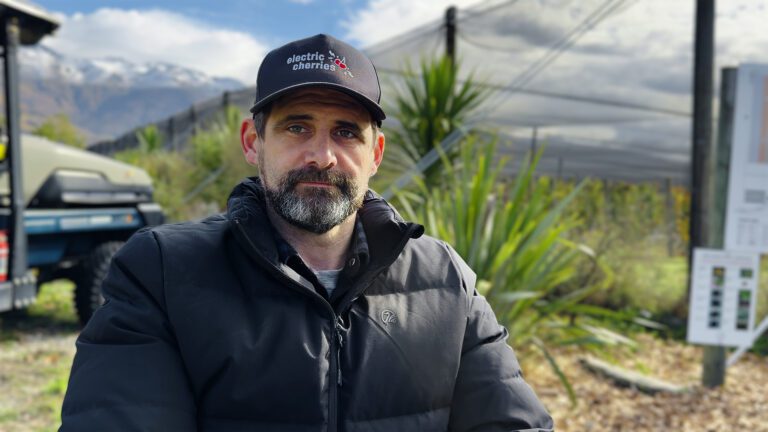
Host Paul Spain visits Mike Casey at Electric Cherries in Central Otago for an inspiring dive into tech-driven sustainable farming. Discover how Mike went from tech startup success in Sydney to building New Zealand’s first fully electric cherry orchard, where self-generated solar power slashes costs and future-proofs the business. Explore practical insights on electrification, energy economics, and why making smarter tech choices at every level can transform New Zealand’s prosperity and sustainability.
Special thanks to our show partners: 2degrees, Fortinet, One New Zealand, Spark New Zealand, Workday, and Gorilla Technology.
Read the full transcript
Transcript is computer-generated and may contain errors.
Paul Spain:
Paul Spain:
I’m your host, Paul Spain. And recently I was fortunate enough to travel to Forest Lodge near Cromwell in Central Otago to visit Electric Cherries, the world’s first fully electrified zero fossil fuel farm. There I met with co founder Mike Casey, a tech entrepreneur turned farmer and chief executive of non profit rewiring Aotearoa. There I explored how innovation, technology and solar coupled with electric machinery are transforming agriculture, driving economic gains and paving the way for a more sustainable, energy independent future at this Otago orchard. Before we begin, a big thanks to our show partners. Thank you One New Zealand, 2degrees, Spark, Fortinet, Workday and Gorilla Technology for all the support. Well, let’s jump in.
Paul Spain:
Well, greetings and welcome along to the podcast. Great to have you on the show, Mike.
Mike Casey:
Oh, kia ora, Paul. What’s even better is having you down at Electric Cherries here in Central Otago. Thanks for making the trip down. Means a lot.
Paul Spain:
Absolute, absolute privilege. Well, really exciting to be with you, Mike Casey and to be able to delve into some of your story, some of what’s been happening with the Electric Cherries and this part of the world and of course, you know, your own generated power. So lots to delve into.
Paul Spain:
Well, yeah, I always like to hear
Paul Spain:
about, you know, someone’s upbringing and the background. So, you know, tell us a little bit about where you were born and where you grew up.
Mike Casey:
Well, so I was born in Wellington and I grew up there. I went to Wellington College and then Victoria University and very soon after getting a degree in computer science, my now wife but at the girlfriend and I went over to Sydney. I spent 12 years there building a technology startup. Nothing particularly fancy. It was a website for university students looking for their first job that got incredibly popular, that got acquired by Seek in 2019 and yeah, gave my wife and I a chance to move back to New Zealand. But sorry to those from Wellington, didn’t really want to move back to Wellington. It wasn’t, wasn’t great weather. There’s a lot of things going on Wellington that maybe, maybe we don’t like at the moment and so decided to get as far away as we possibly could and end up here in Central Otago.
Mike Casey:
Very long story short, we were looking for homes in Wanaka and Queenstown and Arrowtown and that kind of space and found a farm in Cromwell with 9 hectares of land and a great house for the same price. So bought a farm, took the sheep off, planted 9,300 cherry trees. I’ve always been as a boy fascinated with the idea of growing, growing food off the land. So that was a, you know, sort of a boyhood dream come true and probably a giant over compensation for being a tech startup in Sydney and living the busy lifestyle for way too long. Got healthy, started growing cherries. And then the big thing for me always being a technology nut through and through was how can we do things better? And for me that was buying 21 electric machines and running off electricity that we can create ourselves rather than energy sourced from the other side of the world. Yeah. So kind of did that because I thought it would be a good idea and then have now really illustrated that it’s an absolute economic slam dunk.
Mike Casey:
And I’m on a quest now to try and show that to as much New Zealand as possible and hopefully electrify the whole country.
Paul Spain:
Fantastic. Talk a little bit maybe around what you did tech wise. Cause I’m sure our tech podcast listeners will be interested to know a little bit about what that looked like and how you were able to pull that together. What was the, you mean in terms
Mike Casey:
of my startup in Sydney? Yeah. So my dad’s always been an entrepreneur, tech startup founder in Wellington. And I really, I think inherit a lot of my thinking from him. I think ultimately one of the reasons that I’m an entrepreneur and he’s an entrepreneur and probably a lot of us are entrepreneurs, is a blatant disrespect for authority and just not wanting to be told what to do by someone else. Wanting to go out and carve your own path. And so from a very, very early age of just observing him and his different startups that he was involved in, you know, decided that that’s what I wanted to do at the time. You know, we’re talking early 2000s, leaving high school, going to university, I realized really quickly that, you know, businesses can have acquire a lot of capital. And being a student, I didn’t have a lot of capital and realized quite a bit, quite early on that computer science was the pathway that I wanted to go down because you could build actually quite good businesses with very little capital.
Mike Casey:
Decided that’s what I was going to study. Started a few different startups while at university and what sort of things did you dabble? One that we did, which was really cool, which was we, we, we faked being a bricks and mortar bookstore and ordered a lot of textbooks from different publishers and sold them to university students far cheaper than what they could buy them from the bookstore. And that was quite funny and didn’t last particularly long. Got served trespass notices on campus and all sorts of things for that little
Paul Spain:
project, no doubt it helped fund a
Paul Spain:
little bit of your studies.
Mike Casey:
Well, it made us enough money to basically pay for our university degree, you know, so that was quite cool. In the early 2000s, you know, a lot of other little startups that, you know, we tried along the way that, you know, weren’t particularly successful. And then it just so happened I got a job after finishing university on the WESTPAC graduate program, met my co founders there, realized, you know, Sydney was a really good place to do what we wanted to do. So we all sort of migrated over there for a bit, built a technology startup and again, I mean I wrote the first two, three, four versions of the website, started to get really popular, realized, and I think a lot of people started to realize that I could talk a lot better than I could code. And so it wasn’t long before we had an IT team, you know, that were running the website and I was out there selling the products along with my co founders. And yeah, it just got to the point like by 2019 when it sold, four out of five university students in Australia used it to find their first job. So it was super, super marketplace.
Paul Spain:
So what was that called?
Mike Casey:
It was called Grad Connection. And so yeah, started in, God, we would have started that in 2008, sold it in 2019. So, you know, one of those 12 year overnight successes. And for us, like it was never, you know, it wasn’t the hundred million dollar exit, but it was a good enough exit for me to be able to, and my wife and our two young kids to be able to move back to New Zealand, to be able to buy a farm, to be able to plant 9,300 cherries and electrify it, cherry trees and electrify the whole operation. And it’s just set me up for what I want to do now, which is, you know, to have impact on the country that I truly love. So yeah, it’s been, been a good journey so far.
Paul Spain:
That’s fantastic. Well, let’s delve into the orchard and electric cherries. What do you think it was that, you know, made cherries the thing that you, you wanted to do?
Mike Casey:
Sort of down I’ll be like, really honest with you. I am so glad I did a startup and I never want to do another startup again. You know, like it’s, it’s stressful, there’s a lot going on. There’s so much that you need to balance. Mental health’s an issue. I’m 10 kilos lighter than what I was by the time I sold that business. Right. And I think, you know, we have to acknowledge that there’s a lot that goes on in building a startup.
Mike Casey:
So buying a farm was how I could still be a businessman, an entrepreneur, but really just avoid, you know, the whole unknowns of starting another startup and having to go through that stressful kind of lifestyle again.
Paul Spain:
You were able to map it out quite well and make it a bit more of a predictable enterprise because there are a lot more factors that aren’t just completely unknown. I mean, there’ll be lots that you don’t know, but there must have been enough things you could look and predict, well, this is what you’re going to sell things for.
Mike Casey:
You’re not going to experience hockey stick style growth in a farm, right? But you are going to. There is a much clearer pathway. There’s shoulders of giants that you can stand on. There is enough information out there that someone like me with my ADHD can just hyper focus on something new and exciting. Why cherries? Like you can grow cherries here in Central Otago or you can grow wine here in Central Otago. When I sold my business in Sydney, I was drinking way too much. I was unhealthy. The last thing I thought that would be a good idea would be to get into the wine scene because I’d be very tempted to continue to drink my own product, especially if I was proud of it.
Mike Casey:
So cherries was the natural choice. Good export market, great fruit. I don’t know. As far as fresh produce is concerned, nothing makes more smiles than a fresh cherry. And so, yeah, so that’s kind of why we chose cherries and just, just this idea of this love of farming that I had and we put that all together and then, you know, I don’t know when you, when you start a farm for the first time, you have to buy a lot of machines. And I think we were just at that point in, in history where the electric machine was probably cheaper over its lifetime compared to the fossil fuel machine provided, you know, even though the cost of the electric machine, the sticker price front on day one might be considerably higher. Took a few punts here and there and now I’ve realised On the other side, it’s resulted in tens of thousands of dollars of operational savings per year and we’ve probably got one of the most profitable chariots in the country. So can’t complain.
Paul Spain:
Yeah, that’s absolutely fantastic position to get to. Now, how early did you start figuring out that you could electrify the orchard and do this in a much more sort of tech enabled way than the traditional, you know, orchard it operates on?
Mike Casey:
Well, so this is the thing, like I wasn’t, I didn’t grow up in a farming family. I grew up in Karori and then Johnsonville and Wellington, you know, to give you, to give you an idea. So when we started farming, I just, I don’t know, there was a lot of things that I didn’t have to unlearn, I think, but a lot of stuff that I had to learn. And so the great thing about farming in New Zealand is that you have so many really good people around you that, you know, when they realize that you’re a decent human, they’re really keen to help you learn and grow. And so, you know, we grow really good cherries because people in Central Otago grow really good cherries. And they’ve been so generous with their knowledge and their expertise and advice and all of that kind of stuff. And what I saw, what I focused on really early was, okay, I want to bring new technology and I’m a tech, I’m a techno nut through and through. I want to see how to do things more efficiently.
Mike Casey:
And maybe that’s the thing that I can give back to the, you know, to the farming community here in Central Otago. And so, yeah, when you buy a farm, you have no machines. You need machines in order to run a farm. So that’s where it all began. But it started as simple things like the irrigation system. Like most irrigation systems on farms in New Zealand are already electric. So we got rid of the diesel pump, put an electric one in. Of course the energy bill goes down, but then the electricity bill goes well up when you’re using more electricity.
Mike Casey:
So then it was like, well, surely we should run some solar, you know. So we started going down that path. We put some solar on the shed roof and it was like, wow, the, the savings are phenomenal, right? And then when you look at the amortized cost of everything, it was like, I don’t know, back in the, back in the day was probably 11 cents a kilowatt hour. Now it’s 7 cents a kilowatt hour, you know, so it sort of shows you. But when you Compare that to buying it at 25 cents a kilowatt hour from the grid. It just makes 100 sense. So every time we were. Once you had solar on the farm, then you were like, well, why would I, you know, buy a machine that runs on the energy given to me by some, you know, Middle Eastern conglomerate oil manufacturer when I can make it off the Central Otago sun? So then every car moving forward was electric, the tractor became electric, the frost fighting fans that we saw were electric.
Mike Casey:
And it’s just electric, electric, electric. And then finally it was this tractor behind us that was the last piece of the puzzle. And that evolved. Flying to San Francisco and convincing the board of a billion dollar tech startup to send us one of their prototype tractors, which thankfully we did. And that’s what made us a electric farm. Hasn’t all been smooth sailing though. That thing hasn’t been easy. And now that company doesn’t exist anymore.
Mike Casey:
So now we’ve got an electric tractor with no support. But that’s part of the fun of living on the bleeding of the edge and being an entrepreneur.
Paul Spain:
Yeah. And you know, you had that opportunity I guess for, you know, a clean sheet approach to getting things electrified because yeah, it was all, all new anyway, so. Whereas that would be a more challenging journey for those that already have an established.
Mike Casey:
Oh yeah. And what I say to farmers or business owners or even households is it’s not necessarily about trying to electrify everything immediately because that’s going to have a capital cost and a payback period. That might not be economic, but the next time you need to buy a machine, have a look to see if the electric option is available. And if it is, it’s probably going to have a cheaper lifetime cost of ownership than the, than the diesel machine or the gas machine or whatever it might be. There’s lots of machines where the technology doesn’t exist yet, like 300 horsepower tractors, but there’s now more machines on the market, like 55 horsepower tractors that do exist. And then of course there’s things like electric vehicles, electric utes, all that kind of stuff. Just one machine at a time. You know, next time just make a better decision, make a good decision.
Mike Casey:
Run off New Zealand made energy. Run off energy you can create yourself. And it will be an economic slam dunk. And you know, at the end of the day, what I get really excited about, the future of New Zealand, the future of climate, is that it’s an economic slam dunk for us to do this, which means, you know, we reduce our emissions and we increase our Prosperity, which is super exciting.
Paul Spain:
Great. Well, maybe we could walk through the technologies that you’ve got here on the farm.
Mike Casey:
Yep.
Paul Spain:
Walk us through the. The solar equation.
Mike Casey:
Yeah.
Paul Spain:
I mean, interesting.
Mike Casey:
The simple thing here is, you know, the first thing that we installed was the irrigation pump, which is right behind us, just over there. That required electricity start. The electricity bill went high. We put some solar on the shed roof there. We really kind of halved that electricity bill. And I think I learned really quickly that I don’t know if you’ve ever built a shed before, you immediately regret not building a bigger shed. Exact same thing applies to solar. Right.
Mike Casey:
So I just. My advice to everyone now is go larger than you think you need, because you’re probably going to need it at some point as more electric vehicles come onto the market.
Paul Spain:
Yeah. And what sort of dollars are we talking about for your irrigation pump?
Mike Casey:
Oh, to be honest, I can’t remember. Off, like the irrigation, not that much more expensive. What actually made it more expensive was the grid connection costs and upgrades, the switchboard upgrades. And so that’s the other part of this. Right. Once we then did electric irrigation, you’d spent like a couple of hundred thousand dollars on grid connection and a switchboard. So you were more incentivized at that point to utilize it as much as you could. Right.
Mike Casey:
When you have business assets, you want to utilize them to get a return. And so then it became the Frost Fighting Friends. And those Frost Fighting fans are absolutely brilliant. They’re electric. They come all the way from South Africa. Yes. A higher sticker price because of more cabling and more complex installation and all that kind of stuff. But on the other side of it cost $9 an hour to run rather than hundreds of dollars now to run.
Mike Casey:
So there’s massive benefit from that as well, you know, and then it’s, it’s becomes, you know, the first farm vehicles we got for the road were electric vehicles because we were running off our own energies. We didn’t have a ute yet. It made things a little bit complex. But I tell you what, I’d rather have an electric vehicle that I don’t have to pay someone else for the energy for than a ute. And so we may do. And then we got more electric vehicles, then we got the electric tractor. And now all my employees are buying electric vehicles because they can charge really well for free here on farm because it’s, It’s. We generate so much energy that, you know, it’s either.
Mike Casey:
It’s either going into their vehicles or going back out to the grid. So it’s a really good employment perk as well. And now, you know, you just look at this now on the other side and it’s like this is before the Iranian war. If we were to run this whole auction off, say a diesel gen set, you’d be spending $50,000 a year on diesel. Right. By going fully electric and running off New Zealand’s national grid, it’s probably $20,000 a year in electricity. So more than half the price. First solar installation that we did halved it again, you know, brought it down to about 11,000 bucks of energy costs a year.
Mike Casey:
Next solar installation that we did, now it’s $25,000 of profit a year of revenue a year. And that’s so exciting because it shows you where as customers now we’re completely flipping the energy story on its head. And I just think it’s the ticket to prosperity for our households, our businesses, our farms. And I’m really excited to share that.
Paul Spain:
Fantastic. Now talk to us about selling power back into the market because I often hear from those who have got, say, solar on their roofs and, and batteries and the like, and what you sell back to tends to be a lot
Mike Casey:
less than what you buy, a lot,
Paul Spain:
lot less than what you’re usually buying for. So what were the complexities for you to get that up and running? And have you managed to land, you know, at a. It sounds like you’ve managed to land at a level where, you know, it feels like that makes sense.
Mike Casey:
Yeah. So again, adhd, hyper focus computer scientist who has a blatant disrespect for authority. And I was looking at the wholesale market of electricity in New Zealand, right, which is what all the big gen tailors and certain people can buy and sell at. And there was this huge level of variance between the costs of, you know, at peak pricing versus non peak pricing. But then when you look at it as what the customers of New Zealand get access to, the variance of cost isn’t really there at all. It’s kind of. They smooth it out and the pricing signal kind of disappears. So I wanted to go on a wholesale contract because I was like, well, I’m generating so much energy.
Mike Casey:
If the price of power goes high and stays high for a long period of time, well, I’m generating all that energy, so that’s a good outcome. And if I put batteries on my farm, then if there is a high, if there are spikes during the day of spot price, well, that’s a good opportunity because I can buy low and sell high and so, but it was a huge amount of effort and a huge. A lot of people were telling me I was an idiot for going on a wholesale contract. I’d send myself bankrupt and all these kinds of things. And I was sitting there going, I just don’t think that’s true. Right.
Paul Spain:
And as a technologist, you could make the decisions about when you buy and.
Mike Casey:
Exactly.
Paul Spain:
And when you sell. Right.
Mike Casey:
Because you can put that technology in place. Super complex. I’m like, I wrote a program that allows me to buy powers cheap and sell it expensive. It’s 50 lines of Python code. It’s bloody nothing. It runs on a little nuc, you know, plugged into the side of the, you know, the solar controller in the shed there. And so I just got really excited about this fact. And now it’s something that I’m trying to share with more and more New Zealanders is actually the stuff is accessible.
Mike Casey:
The problem is the incumbent system doesn’t necessarily make it accessible. And so I had to fight tooth and nail. I had to, you know, argue with retailers until someone actually gave me a whole cell contract they needed. I needed to sign away and waive the waivers around the risk associated when, how it was going to send my business bankrupt. And at the end of it, that’s the risk that entrepreneurs take. And now I’m in a position where, you know, like my little $120,000 worth of solar out there in the field is making $35,000 worth of electricity every year, selling back into the wholesale market like it is an economic slam dunk. Within five years, six years, I would have paid off that solar system and it’s going to last for 30, you know, so then that’s free energy for my business from that point on. And not only is it free energy for my business, it’s creating revenue because when I don’t use that energy, I throw it back to rest of New Zealand who is paying through the nose for the cost of electricity at the moment.
Mike Casey:
So you sort of see how this works. And now I’m just so excited about the fact that farmers across New Zealand in particular are leading the charge on this. I was just last week down in Southland caught up with six different farmers, all the solar and batteries on their farms now. Fantastic doing this stuff, you know, it’s really super powerful what we’re seeing happen. And I think this energy transition that we talk about, a lot of people think about how we’re moving from hydrocarbons to electrons or from, you know, foreign source fuels to New Zealand made energy but it’s also a shift in power now from the traditional energy landlords to the energy renters of New Zealand, you know, we’re all of a sudden able to buy and generate and store our own power. And I think for entrepreneurs in New Zealand, that is just so exciting. There’s so much opportunity out there in the electricity space at the moment.
Paul Spain:
Yeah, that’s exciting because we’ve certainly seen the price of electricity, you know, just continue to move up. And when the price of generating your own electricity, the, you know, the capital costs that costs to get that in place means that, I guess those, you know, you’ve highlighted like, you know, your per kilowatt cost to generate it is so much different. And that gap’s gonna.
Mike Casey:
But also the transporter, from the solar panels out in my field to the plug in the shed to charge the tractor, it’s not far to go. It’s not far to go. And, you know, and I’m a big believer in free markets, you know, like, I like to see markets function well. And in a free market, the most efficient thing should win. And the most efficient thing now is not hundreds of thousands of kilometers of poles and wires. It’s actually the most efficient thing is the one cable between the inverter and, you know, and your machines on your own property. And so again, that is super exciting. And so, yes, the power price has gone up.
Mike Casey:
And, you know, like, one of the things that I always have to deal with is I’m trying to encourage more and more New Zealanders to electrify at a time where the electricity system, I think, is failing them, you know, quite massively at the moment. I mean, it’s still a quarter of the price of fossil fuels. So let’s start with that. But then also, you know, a quarter, maybe even a fifth of the price again to generate your own electricity, you know, and so that is the efficiency that New Zealand businesses need to thrive. And when I look at New Zealand’s economy or just, you know, throughout history, what has made societies prosperous is the access to cheap energy to do stuff, you know, to power stuff. And I’m looking at this now going, oh, my God, we are on the cusp of something amazing here and I can’t wait. Not only are we going to smash emissions out of the park and solve the existential crisis that we’re currently going through, but the lifestyle improvements, the business improvements, the efficiency gains are all there for the taking. And that’s just so exciting how much
Paul Spain:
of the equation comes down to where you are in the country from, you know, from a, I guess, sunny days perspective and so on. I mean, here, you know, it’s cold, we’re heading. We’re heading into winter, there’s snow on the mountains, but we’ve got a beautiful blue sky day, you know, that’s obviously generating, you know, electricity right now. But it does vary where you are in the country. You know, in Auckland, we. We get probably, you know, a bit too much rain and.
Mike Casey:
Yeah, and the light.
Paul Spain:
But then other. Other times we get, you know, sun for weeks or months on end.
Mike Casey:
See, the thing that happened, and I think this is largely the fault of the incumbent energy providers, is they kind of made us all feel really bad about New Zealand sunlight. Like it wasn’t really a thing. And when I started doing this, people were telling me, oh, solar is uneconomic on rooftops. And I was like, look at my spreadsheet. It’s clearly bloody well not. You know, like, this is real data and here’s your spreadsheet over here. In some theoretical land, you know, you’re modeling something and it’s just. I can tell you for a fact that this isn’t true.
Mike Casey:
Right. But they were just, you know, people in Wellington, decision makers, policy makers, even politicians, were just captured by this idea that solar won’t play a role in New Zealand because it’s not sunny. It’s really ironic because farming is essentially converting sunlight into food, right? So the fact that we can farm stuff probably means our solar yield’s great. The fact that we have some of the highest melanoma rates in the world probably means our solar yield is kind of okay. And what I really noticed across the country when we started to do the unit economics on this, and I only know this at the household level, but, you know, if you finance solar on Your mortgage at 5.5%, the average cost per kilowatt hour to generate that is 11 cents, which is about a quarter of the cost of what you’re paying from the grid, maybe just under. If you go to some of the sunniest spots in New Zealand, Tauranga, Taranaki, Hawke’s Bay, you’re probably paying 9,8 cents a kilowatt hour down in some of the more depressing places of New Zealand, sorry, Southland, I do love you guys, you’re probably looking at more like 13, 14 cents a kilowatt hour to generate. Right, on a rooftop. Right.
Mike Casey:
We’re still. The narrative doesn’t change. You know, the economics is slightly less good, but it’s still way better than not doing it, you know, And I think that’s the thing that we need to sort of express there. Like, Central Otago has really good daylight hours. The one great thing about how we pair this with farming is all the energy consumption for farming happens in summer when we’re growing cherries or milking cows, you know, like. And that’s. Solar plays a massive role in winter on farms. We don’t use a lot of energy.
Mike Casey:
Now, that’s the flip in the house, you know, and the house, we use a lot of energy to heat our homes in winter. And so people always talk about, oh, you know, how solar can’t cover your energy needs and winter because the heat pump’s always on when the sun isn’t shining and so forth. It’s like, yep, 100% the point. But you know what will cover it? The credit that you make in summer. And so when you look at it overall, yes, some months you might have a bit of a bill, other months you have no bill or you have big credits. We’re seeing houses in New Zealand now with no energy bills, right, because they don’t actually pay for energy more because the credits in the summer offset the bills in the winter. And how exciting is that? And you can do this for a lot of businesses in New Zealand as well. The other thing to keep in mind is even if you can’t fully run, you know, I run about 90% of my farm off energy I can create myself.
Mike Casey:
Even if it’s only 50% or 40% or 20%, you’re still bringing down your average unit cost of energy remarkably, which means you are improving your business, you’re improving your bottom line, you’re becoming more efficient, you’re lowering your input costs and you’re becoming more profitable.
Paul Spain:
And I think if, you know, we look at the general direction New Zealand is going, it’s that we’re going to use more electricity, right? Whether it’s hyperscale data centers, data centers for AI, more electric and transport and so on. I mean, our usage certainly isn’t going down. And at the moment the costs keep going up. So the more that we can distribute
Mike Casey:
that generation, the more market participation we have, the more people that are generating when the regulators of New Zealand actually do something to support customers in doing this, there’s so much culture that has to change in the electricity system because I 100% agree with you. I think it has been failing New Zealanders. The price has been creeping up. We haven’t been building generation fast enough or look out, guys, there’s someone new on the horizon. And it’s the everyday New Zealander who can now take the power into their own hands and do this themselves. And that is so exciting. So one of the big things I’m on here is how do we make sure every New Zealander can actually do this? You know, rather than those that can just afford the $20,000 outlay to put solar on their home or the hundred thousand dollar outlay to put solar on their farm. You know, how do we make sure everyone is in a position to be able to do this and benefit from it? Because the more we electrify, the better off our economy is going to be.
Mike Casey:
And just to give you some ideas, you know, at the pump before the Iranian war we were spending $55 million a day on fossil fuels. That’s like you and me. And all of that is imported from overseas, right? So yes, the government gets a little bit of tax, there’s probably some GST in there. And then all of a sudden the rest of it just floats, flows out of our economy and heads overseas. It’s like the bloodletting of New Zealand’s economy when you think about it is buying energy from overseas. So this idea of being able to generate energy in New Zealand and buying energy from with other, other New Zealanders or making it yourself is just. The opportunity is huge. Right.
Mike Casey:
And I didn’t actually even realize this and a lot of people do know this, but I didn’t realize this. But at one point in history New Zealand was the richest country per capita in the world.
Paul Spain:
Oh, I haven’t heard that.
Mike Casey:
That was the. Basically we were a farming nation, refrigeration got invented and all of a sudden we were selling our produce to the rest of the world.
Paul Spain:
Right? We didn’t have, we didn’t have many people. We still don’t have many people in the scheme of it compared to now
Mike Casey:
we run our economy. I think 73% of the energy that we run is, is basically fossil fuels. About 50% of the energy in our economy that we use for all the machines is 50 foreign sourced energy. And we have such a rich electrical history. You know, like I was, I was running through this with, with you before but the first electric home in the world was in Tauranga. The second ever electric public street lights in the world was in Reefton in the south island. Beaten by Paris by like one week. Which is why we now call Reefton the Paris of New Zealand.
Mike Casey:
Right? The world’s first ever wet steam geothermal power plant, the second ever transmission line in the world was built by gold miners about an hour south of us in right here right now. Huge electrical history. We’ve always been fantastic at creating electricity and we’ve always been pretty shit at oil and gas. And so this is a really exciting time to see now that the technology is on the horizon where the electric technology is often better than the fossil fuel technology in many cases. And the fact that we can create the electricity here. God, I just like, I want to see what New Zealand looks like in 2050, but we are going to, hopefully we might not be the richest country per capita again, but I really think we can climb the ranks and that’s super cool.
Paul Spain:
Now you know, one of the, one of the challenges that we, we have in, you know, for lots of different things is, you know, red tape legislation, just the existing systems and entities and, and so on that exist. We, I guess we have a country that hasn’t, you know, been heavily focused on electrifying everything. Whereas I guess with rewiring Aotearoa, which is your non profit, you know, you’re really encouraging as a country that we’re, you know, generating our, our own, our own energy and we move in that direction. But looking at all those existing things in place, how hard is it going to be for us to as a country to kind of, you know, make, make that turn and are there are a lot of things to get out of the way. You know, we know with, with electric vehicles. One of the approaches that’s been used here in New Zealand in the past and other countries is hey, we’ll, we’ll give some, we’ll give an incentive to those who are buying electric vehicles. That does encourage the electrification. But then you’re all, you know, we also, it was like, well, you’re taxing some farmers over here, you know, you know, or, or varying other people who needed a different vehicle for a different purpose and then they were, they were subsidizing other people.
Paul Spain:
Now look, I’ll put my hand up. When there was an option of a subsidy, yes, that encouraged me to get another electric, you know, another electric vehicle. And I, and I, you know, and I took the subsidy. However, you know, if I sort of see, step back, bigger picture probably I’m
Paul Spain:
not 100% sure whether that’s the right
Paul Spain:
thing to do, the right approach to do it. I think we want to keep things as much of a level playing field and if things are gonna pay for themselves, that’s a much easier way to do it. But still sometimes you’ve got barriers to knock down to make it work. And one of the ones I’ve often heard about from those, you know, putting solar up on the, on their rooftops as look, I generate the electricity, but you know, who, who can, who can buy it back? And you know, they’re limited options. Some of the retailers I think won’t even buy it back at all and they’re not interested. Other ones will, but you know, the, the rates seem, seem a little bit odd and, and, and so on. So how, how do you see these things moving forward in a way that’s kind of fair and reasonable for.
Mike Casey:
So I think the first thing is, is that what I want everyone in New Zealand to do is help set this North Star, right? The North Star is we need to run our economy off New Zealand made energy. And I think you would find a New Zealander that doesn’t agree with that statement, right? It’s so much cheaper, it’s so much efficient, it’s so much cleaner, all of the things. And that’s beyond politics, right? That is just a focus or a purpose for our country and where we need to go. I think regardless if you’re a lefty or a righty or an upper, you’re a downie. Like, you just want New Zealand to be more prosperous, right?
Paul Spain:
You want it unless you’re a mechanic on traditional vehicles or you own a gas station or something.
Mike Casey:
My anecdote there is my stepfather, love him to bits, has been a swearing mechanic his entire life, now has a BYD Dolphin because he’s just realized that this is the future, right?
Paul Spain:
And one of my mechanic mates, he was working on trucks at a time and he encouraged them to, to move to working out how to service electric trucks for when they came through. And then he was telling me, oh, you know, I’ve been offered a role at Tesla and yeah, it’s going back a few years when they were just getting started in New Zealand. And I was like, drop whatever you’re doing and take that role. Cause this is the future, right?
Mike Casey:
That’s it.
Paul Spain:
And he’s made that transition and you know, it’s worked out really well. They’ve been really, really good to him.
Mike Casey:
And change is difficult and with every type of change, it’s going to be more difficult for some people than other people, depending on what they’ve trained up in, depending on their profession, depending on their wealth and all of those kinds of things, right? But if the purpose is that the change needs to happen for all the good macroeconomic reasons and climate reasons, then this is beyond politics. And then at the Political layer. Well, now we’re seeing which, which politician comes up with the best policy based on what we agree on. Now, when you’re talking about things like subsidies, like, you know, solar is an economic slam dunk. Now the problem is it costs $20,000 to put it on your rooftop. Who can afford that? Not a lot of New Zealanders. So we finance it. Who can afford the finance for people who have mortgages, so therefore they can go and get the finance.
Mike Casey:
The 1% loan from the bank or whatever only works for about 20% of the households of New Zealand. So how do we help the other 80% of houses that probably benefit more from the savings than, say, those that have, you know, mortgages? So that’s a super important part of the policy, the policy framework that we need to establish. But you’re right as well, like another thing, like the incumbent system, barriers that exist that stop people from doing these things is huge. Right. And so being paying people fairly for the contribution they can make to the New Zealand energy system is something I am incredibly passionate about. And I can tell you right now, we’re not paid fairly for the contributions that we can and we will be making in the future as customers. Customers. So then it becomes, well, what do you do? Do you change the system or do you subsidize to compensate the customer for the lack of recognition they’re getting at the moment? And so you can see what happens in Australia at the moment.
Mike Casey:
They’ve had the solar subsidy. They started the solar subsidy when solar was 100% not economic. And now they have 40% rooftop solar penetration and we have 3%. So that means 40% of the households in Australia are now benefiting from the cheapest energy they’re ever going to get get. And only 3% of our households are. Was the subsidy worth it? Again, we can argue politically yes or no. But what we can say for certain on both sides of the argument is that the subsidy accelerated adoption. Right now what we’re seeing with in Australia with their battery subsidy is hundreds of thousands of batteries being installed, which makes them the most resilient energy system in the world, when you think about it.
Mike Casey:
Because every time there’s a power car, people can keep their hot water warm and their freezer frozen. You know, so when these weather events come, they’re in a lot more resilient position. Again, you could do it through pricing and an efficient system that rewards batteries, or sometimes it might just be easier to throw a subsidy at it to make it happen. I mean, when it comes to the Electric vehicle, clean car subsidy. I think I 100% agree with you. You don’t penalize people who can’t get access to the technology. You, you know, farmers and tradies that needed electric utes and electric vans to then subsidize people on the other side. I kind of like the clean car, the clean card discount.
Mike Casey:
I hated the utex.
Paul Spain:
Yeah.
Mike Casey:
So why do we need to couple them both together under this kind of weird thing that it needed to be a revenue neutral policy because you really were whacking some people with a stick that had no choice to benefit those that did have a choice and to me seemed like a quite absurd policy. Right. But it did accelerate electric vehicle adoption and the shows you how fickle consumers actually can be because now electric vehicles are half the price and we still, until the Iranian war, we’re not getting anywhere near the sales that we were getting when Jacinda was giving someone $7,000 on an $80,000 vehicle. Right. It’s almost like this fear of missing out, this irrationality of the consumer is what subsidies are really, really good at doing. Now, unfortunately, on the other side, we’re seeing electric vehicle adoption skyrocket again because people are getting punished because wars are being created by tyrants overseas and the energy that we power our vehicles with comes from overseas. Right. So now the argument for New Zealand made energy becomes really strong and that means electric vehicles are what’s required because we’re really good at making electricity.
Mike Casey:
We don’t even make oil.
Paul Spain:
Yeah.
Mike Casey:
So it sort of shows you where it is. And I think, like, it doesn’t, like, I don’t want the subsidies arguments to get in the way of the argument around whether we should electrify or not. Some people will be for subsidies, some people will be against subsidies. You’ll have your lefties and your righties arguing about that until the cows come home, don’t care as long as the cars are electric. Moving forward, if you’re not going to have subsidies, what are your policies? Because at the moment we’ve got the problem where first of all, we reduce the clean car standard, which means shitty vehicles coming into New Zealand for cheaper prices. And under the argument, oh, they’ll be cheaper, cheaper to buy, way more expensive to run. Now we’re talking about getting rid of the clean car standard. And I think the biggest problem that we have with this, I have with this government, is not that they got rid of the clean car discount, is that they didn’t replace it with anything.
Mike Casey:
Right. And so the narrative and the Direction and the purpose around running on New Zealand made energy kind of has been put on hold for the last three years and I’m like, okay, well what is your policy? Well, here’s some ideas for you. 60% of the new vehicles that come into New Zealand, brand new vehicles go into businesses. So where’s your FBT exemptions, Where’s your accelerated depreciation on electric vehicles so that you can see the secondhand market and within a few short years there’ll be plenty of second hand electric vehicles in the market for the rest of New Zealand to be able to afford.
Paul Spain:
Well, there’s quite a differential between the cost of maintaining, you know, a traditional combustion engine vehicle versus the electric vehicle. So yeah, for those that can, can afford to go ev.
Mike Casey:
Yep.
Paul Spain:
I think, you know, in the, in the longer term, certainly for, you know, a typical buyer of a new vehicle, I would say the, the electric vehicle is, is, you know, pretty good from that total cost of ownership perspective. We see a few imported, you know, EVs, but you know, few and far between. That’s, that’s, that’s not a, you know, not a huge percentage of the market by, by my take, although that’s probably changing at the moment. I think just about every secondhand electric vehicle in the country seems to be appreciating in value. Yeah, a good position in terms of values.
Mike Casey:
So I think there’s two key parts to this. Right. And I think you highlight the equity point really well. We need the right policy in place to ensure that every New Zealander can electrify and every New Zealander can afford to save and we can go through some of those policy concepts. Concepts at some point if you like. The other part of this is that there are plenty of New Zealanders that can afford to do this, but for various reasons are not doing it. And so that is the efficiency play. One of the biggest problems that we have at the moment, why people are not buying electric vehicles that could afford to do so and would save a lot of money in the process is that one annual family road trip that they take every year and the charging infrastructure makes it really a pain in the butt.
Mike Casey:
Right.
Paul Spain:
I’m not sure that it actually does. I mean I’ve driven most of the
Mike Casey:
country, so you and I will tell our friends and our neighbours and our parents that actually not a big deal at all, but it’s perceived to be a really big deal. So part of this is probably more infrastructure, faster infrastructure, but it’s also making people realize that about 90% of the kilometers will be driven with energy that they charge from home. Right. And that we already have. How many, how many 10.10amp wall sockets are there in New Zealand? Millions, you know, millions upon millions upon millions. So we’ve already got so many charging points in New Zealand that will service your electricity electric vehicle just fine. And you know, it’s making people understand that if you plug it into your electric car at night time into a, like a normal household wall socket, it’ll probably put about 100 km worth of range in the car while you sleep.
Paul Spain:
That’s it.
Mike Casey:
So if that, if you’re doing that, you know, do you drive more than 100km a day? You know, you don’t, you probably don’t need anything else.
Paul Spain:
And, and it doesn’t matter even if even, you know.
Mike Casey:
Yeah.
Paul Spain:
If, if you do on the odd day because your batteries, you’re keeping it topped up anyway.
Mike Casey:
Right. You drive more than that, you know, like rural New Zealand in particular. You probably need to invest 1000 bucks in a wall charger that will give you 7kW that will charge the battery from empty to full every night while you sleep. Yeah, brilliant. Convenient. Works f full tank every morning when you wake up ready to go. Right.
Paul Spain:
And, and I get that on the, the, you know, the power plan I’m on, you know, you don’t even pay, you don’t even pay for that. So I got a three hour window away, might be on 60%, you know, power in that, in that window.
Mike Casey:
It gets filled to 100. Right, exactly. And that’s so cool. And then of course when you’re traveling and so it becomes just a bit more of a hassle if you’re going into city with your traveling. So that’s where the infrastructure really needs to come into play. Right. But it’s just things like this. It’s making sure New Zealanders understand that for 90% of the time they’re going to be saving money and maybe 10% of the time they have to learn how to do something a little bit differently.
Mike Casey:
Right. Same with solar panels upfront capital costs. But man, when you understand the economics of this, you’re like, why didn’t I do this five years ago? You know, it’s the same with getting gas out of the home or gas, you know, out of your business. It’s like gas is umpteen times more expensive than electricity. So why, you know, it’s making sure people understand the unit economics. It’s also making sure people understand that, you know, for a long time I think there’s been a narrative around climate action in particular that there needs to be a lot of sacrifice. You know, have slightly, slightly shorter showers. Showers and will be slightly less screwed.
Mike Casey:
Right. You know, it’s a good tongue, tongue twister for you. But now electric technology is better. Try cooking on an induction cooktop compared to a gas cooktop. It’s a million times better experience. And it’s way easier to clean and it’s cheaper to run. You know, electric vehicles, God, they accelerate way faster. You can do better burnouts, you can do better donuts.
Mike Casey:
All of these kinds of things can be done in an electric vehicle. Quieter, they’re smoother, they’re more efficient, they’re all of the things. Getting gas out of the home is, you know, like getting like gas hot water heating is so ridiculous. Like, we’re at a point now where even if you installed a gas hot water system yesterday in your home, you’re better ripping it out today. And financing a new hot water heat pump and paying for electricity, it is going to be cheaper outgoings than continuing to buy gas. Like that is like incredible when you think about it. And that’s at the residential level. Where do we use a lot of our energy in our businesses.
Mike Casey:
And so when you start to look at the business savings opportunities on farms or on warehouses and manufacturing, I mean, even, you know, like when you look at small businesses that might rent their properties, negotiating with the landlord to put solar on the roof is actually probably a really smart idea when you look at the amount of, you know, money that can be saved for your business by doing so. And if you are a landlord realizing that the future value and desirability of the property that you lease to a business or, you know, a rental property, very much the same scenario is going to exist now. It’s cheaper to live in, is cheaper to operate in. Like it’s a more desirable property if it’s a fully electric property with solar on the roof.
Paul Spain:
Yeah. And look, I think, look, if I were renting business premises or a home and you know, the equation was, look, here’s your cost plus, you know, you’re going to get a hundred dollars worth of electricity a month or a thousand dollars or whatever it is, which we’re going to, we’re going to bill you for at that rate, which is lower than the other, you know, you work out some way of how that happens. Just sort of separate it up so people can get their head around it rather than just, oh, your lease or your rental’s kind of higher, or at least you Present that information, then I think anyone that has that put in front of them is going to say, yes, let’s do it right, and then that’s a win win. It gets paid off and you know, yeah, it works out well. So there’s probably a bit of work we have to do on that front now. We’re probably about out of time, but I’m just kind of keen to hear what’s your sort of main pitch to. To government? We’ve got an election this year. You know, what, what do you think that political parties need to be doing and you know, as a country that we need to be thinking about so that we are in the right direction to, you know, really get the wins
Mike Casey:
easy win the electric election. This is an energy election. We New Zealanders are bleeding through the nose because we run on foreign energy. Let’s put policy in place to get us off foreign energy as best as we can. Now you might be on the right side of politics. There is so much red tape to cut the markets. The free markets that we all love are not free. We need to make sure people can participate as much as possible.
Mike Casey:
We need the right pricing signals to allow this to happen. These pricing signals could be done without subsidies. As long as there is the ability to buy electricity low and sell it high, there is a big opportunity there for good return on investment. Smart business decisions, smart economic decisions. Right. If you’re on the left side of politics, let’s really address the equity problem, right, which is I think we need an expansion to warmer Kiwi homes. That expansion to Wolver Kiwi homes should cover solar panels and batteries and switchboard upgrades and getting gas out of the home to help those people become more electric. It needs to be expanded to rental properties and potentially needs to be expanded beyond the decile system that is currently, you know, currently in place.
Mike Casey:
We need better access to finance. The one thing I would love to have land is a thing called the Ratepayers Assistance Scheme, which is long term, low interest, flexible finance that is not a subsidy dished out through our councils, totally achievable, needs to be signed off and implemented for the good of the New Zealand people to make that happen. Swapping out fuels for finance is absolutely critical and key and then at the big centre things we have to get this generation build, moving, moving fast. Maybe you can co invest more. Maybe there’s a really big stick that you could throw at the energy companies when they don’t build energy as fast as they can. We have to bring the price of electricity down that’s what’s good for our economy and good for our people. It is way too high at the moment. It’s way too high due to the poles and wires costs.
Mike Casey:
It’s way too high due to the generation costs in the wholesale market and people making money off the, you know, the backs of New Zealanders. Whether it’s a full on reform like what New Zealand first wants to do, maybe it’s a partial reform, maybe it’s not reforming and subsidizing to compensate the customer. All of these options are on the table, impossible. And so the number one thing is we have 10 million fossil fuel machines in New Zealand. Eight and a half a million of them could be electrified with today’s technology and be economically viable to electrify. So whatever the policy you come up
Paul Spain:
with, flipping the fleet from traditional, flipping
Mike Casey:
the chainsaws, flipping the lawnmowers, flipping the barbecues, whatever it might be, like flip it all to electric, that builds the, you know, the investment case for more renewable generation. So focus on that. There’s about a million machines in New Zealand that are almost ready to electrify. A lot of that is industrial gas use probably requires a subsidy to make it economical, probably in New Zealand’s best interest. Because I don’t want to be paying my share of a billion dollar LNG gas terminal. I’m sure you don’t want to either. Right? So how do we get those guys off gas as fast as we can? Maybe a little bit of taxpayer assistance is worthwhile there. Maybe the fact that we’re running on diesel at the moment, it’s really expensive.
Mike Casey:
That’s how we get all our freight around New Zealand. Maybe some, you know, really aggressive subsidies to electrify the trucking fleet is a really good idea. The technology exists. It’s just going to take a bit of encouragement to get it there. Then we’ve got all our machines in New Zealand like our jumbo jets and our 64 hot air balloons. They cannot be electrified yet. Okay, fine. We will continue to run those because they’re fun and they’re cool and we like to do that kind of stuff.
Mike Casey:
But let’s electrify everything that we can come up with. The policy that enables New Zealanders to electrify as many New Zealanders and as many machines as we can. And let’s do it fast. By 2040, we do that, just the households of New Zealand will save $10 billion a year, $29 million a day. Isn’t that such a remarkable amount of money? I don’t know what that is? Like 30 Dunedin hospitals worth of freaking savings to the households of New Zealand by 2040, which is just huge. It’s about 100 billion bucks cumulatively.
Paul Spain:
Yep. Yeah, sounds really good. The technology is obviously, you know, streets ahead of where we were, you know, even 10, 15 years ago. You know, that’s, that’s what makes this sort of thing, you know, viable. If we were to wait another five, 10 years, the technology no doubt will be better, cheaper, you know, et cetera. Why do you think it’s. It’s important to get that done now, if to do it, that we have
Mike Casey:
to put eight and a half million machines is economical now. Right. So the opportunity cost is spending more money not doing it. Right? Yes. The technology is going to continue to get cheaper. There’s a million machines that might not be economical now. They will become economical as economic efficiencies kick in. Right.
Mike Casey:
So that’s probably where. Shall we subsidize it now or shall we wait is a much stronger argument for the majority of machines in New Zealand. Our light vehicles, our chainsaws, our tractors in some cases, you know, that kind of thing, they are ready to go now. And so what I want every New Zealander to do, and I say this at the household level, but it also requires to businesses is, you know, when I talk about to homeowners or to households, I say I want you to buy. I want you to make six good decisions in the next 10 years. That’s the way that you heat your water, the way that you cook your food, the way that you heat your home, the way that you get around this beautiful country of ours. Solar on the rooftop, batteries in the garage. You make six good decisions over the next 10 years and we are set.
Mike Casey:
Then once you’ve electrified everything, I want you to electrify every one. Now, at the business level, that probably means, in my case, on a cherry orchard, 21 good decisions in the next 10 years. Every time a machine comes up for renewal, to be replaced, whatever reason, every time that you’re looking at buying a new machine, check if the electric option exists, do the lifetime ownership cost calculations and work out is it cheaper, even though the sticker price might be a little bit more expensive?
Paul Spain:
Yeah. Fantastic.
Mike Casey:
And when you do that, you’ll nail it and you’ll have a way more profitable business.
Paul Spain:
In terms of the resources to calculate this out, where do people go to actually do those total cost of ownership, you know, calculations that are local, relevant to the areas. From a New Zealand perspective, is that something where you have the resources.
Mike Casey:
Yeah. So that’s one thing we’ve been working on.
Paul Spain:
Yeah.
Mike Casey:
With my charity, is to do this exact thing. So Rewiring NZ has got a number of calculators mainly focused on the household level, which is a really good place to start, because the other thing I’d say is if you do it at your household level, your whnau saves money, but then you can take it onto your business level because you’ll be so much more knowledgeable about what’s going, you know, going on, so you can do that sort of thing. But the other thing is we now have 40 community groups around the country that are full of business owners that are dedicated to doing this sort of stuff as well. And then more and more case studies are coming out. We’ve got, like, electric coffee in Queenstown. We’ve even got an electric crematorium up in Christchurch. You know, we’ve got electric mushroom growers, we’ve got electric chicken farmers, electric cherry farmer. Obviously, more and more people are doing this and so I wouldn’t be surprised.
Mike Casey:
You might find someone that’s fully there, or if they’re not fully there, they’re on their journey and they can help you out. We don’t have fully electric milk yet, but it doesn’t take long to find the farmers in Southland, the dairy farmers in Southland that are electrifying like crazy right now. And it’s just, again, it’s super exciting. So, you know, and that’s the part that we need to be, you know, as New Zealanders. I love New Zealanders because we, we will give you the shirt off our backs if we need to, to help each other out. Right. So once you learn something, teach someone else. And that’s how it works.
Mike Casey:
Yeah, yeah. And.
Paul Spain:
And how much of the, you know, the, the story here with, with electric cherries is available in terms of, you know, the numbers and, and bits and pieces like that. Is that something people can. Can look up?
Mike Casey:
Oh, yeah.
Paul Spain:
And get a. Get a viewpoint.
Mike Casey:
I wrote everything. I wrote everything in an electric farms report, which is available on Rewiring nz.
Paul Spain:
Great.
Mike Casey:
But I mean, the whole thing here is I have to be super transparent with my numbers. Right. I can’t be a rich guy that came back from Australia with a, you know, a tech bro that started farming and just bought a whole bunch of electric toys, which is what. And if I hadn’t done shared my numbers, what a lot of people would have thought.
Paul Spain:
Yeah.
Mike Casey:
What I need to show them is actually, this is. This is amazing. Right. And the Only what, what gave me the advantage is I didn’t have to go and ask anyone’s permission to do this. I had the money to go ahead and do it. Other people are not in that position. They have to go to a bank and justify it. Right? So this is why sharing my numbers is so important, so other people can go to the bank and extend the mortgage to buy an electric side by side or whatever it might be.
Mike Casey:
You know, so super important that I share that. But there’s so many case studies on our website now of other businesses and of families that are saving thousands of dollars a year by doing this. And that’s including the cost of finance, you know, like this. We’re at the point now it’s quite remarkable that if you install solar on your rooftop in New Zealand, it will save you enough money to pay back the capital, the interest repayments on your mortgage and still give you a thousand bucks a year. Isn’t that remarkable?
Paul Spain:
That’s great.
Paul Spain:
I trust you enjoyed hearing from Mike Casey. And if you’d like to hear more about Mike Electric Cherries and his startup story, keep an eye out because we have a New Zealand Business Podcast feature coming soon and also a special video episode of our Walk around the Farm as part of our new upcoming show which I’ll be sharing more about in the coming weeks. Across these episodes we will cover Mike’s earlier journey in the tech startup world and an on farm walk around which will give you some really great insights into how everything works. Well, thanks again to. Well, thanks again to our amazing show partners for their support and everything they do for New Zealand’s tech and innovation ecosystems. That’s Fortinet, Workday, Spark, 2degrees One NZ and Gorilla Technology. This is Paul Spain signing out. I will catch you on the next episode.
Paul Spain:
See you then.