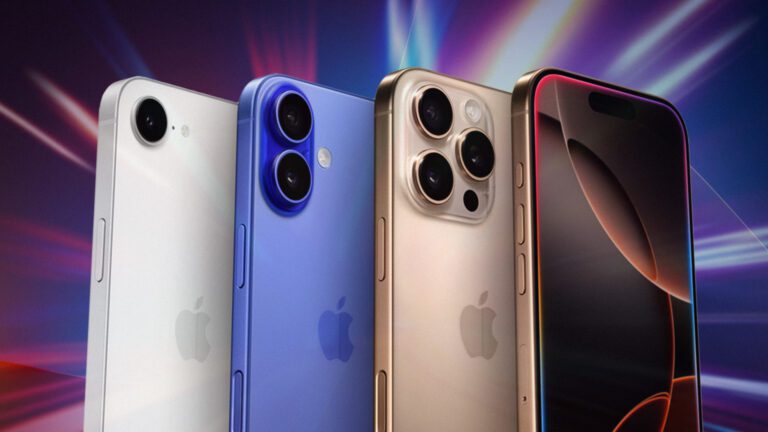
In this special episode, host Paul Spain dives into the latest developments in the iPhone ecosystem, following the recent launch of the iPhone 16e. Paul provides insights into the pricing strategies and feature differences across the new iPhone models, including the iPhone 16, 16e, 16 Pro, and their larger variants. For those in the market for a new phone, Paul offers a detailed comparison of the various models and their unique features, helping listeners make informed decisions. Tune in to get a comprehensive overview of the iPhone 16 series.
| Feature | iPhone 16e | iPhone 16 | iPhone 16 Plus | iPhone 16 Pro | iPhone 16 Pro Max |
| Price (NZD) | 128 GB: NZ$1,199
256 GB: NZ$1,399 (+NZ$200) 512 GB: NZ$1,799 (+NZ$600) |
128 GB: NZ$1,599
256 GB: NZ$1,799 (+NZ$200) 512 GB: NZ$2,199 (+NZ$600) |
128 GB: NZ$1,799 (+NZ$200 from iPhone 16)
256 GB: NZ$1,999 (+NZ$200) 512 GB: NZ$2,399 (+NZ$600) |
128 GB: NZ$1,999
256 GB: NZ$2,199 (+NZ$200) 512 GB: NZ$2,599 (+NZ$600) 1 TB: NZ$2,999 (+NZ$1,000) |
256 GB: NZ$2,399 (+NZ$200 from Pro 256 GB)
512 GB: NZ$2,799 (+NZ$400) 1 TB: NZ$3,199 (+NZ$800) |
| Display | 6.1-inch OLED | 6.1-inch OLED, Dynamic Island | 6.7-inch OLED, Dynamic Island | 6.3-inch OLED, Dynamic Island | 6.9-inch OLED, Dynamic Island |
| Processor | A18 (4-core GPU) | A18 (5-core GPU) | A18 (5-core GPU) | A18 Pro | A18 Pro |
| Cameras | 48 MP (rear) | 48 MP + 12 MP (rear) | 48 MP + 12 MP (rear) | 48 MP + 12 MP + 5x telephoto | 48 MP + 12 MP + 5x telephoto |
| Battery | 3961 mAh | 3561 mAh | 4674 mAh | 3582 mAh | 4685 mAh |
Special thanks to our show partners: One NZ, 2degrees, Spark NZ, HP, and Gorilla Technology.
Episode Transcript (computer-generated)
Paul Spain:
Hey folks, greetings and welcome along to the New Zealand tech Podcast. I’m your host, Paul Spain. Today we’re doing a special episode to dive into the iPhone ecosystem. This really follows the launch of the iPhone 16e in recent weeks. And so I’ve spent some time looking at what are the differences, what does this mean for Apple, for those of us who like to use iPhones, whether it’s in our family environments, within our organizations. And yeah, really what we’ve seen is a change in the landscape. So if we look back even a couple of months ago, there was the lower cost iPhone available, the iPhone SE, third generation. So this was your approximately $900 iPhone model, but that has gone from the market largely and so we have a bit of a change in landscape now.
Paul Spain:
Before we start, of course, a big thank you to our show partners, to One NZ, 2degrees, Spark, HP and Gorilla Technology. We really appreciate their support of the New Zealand Tech Podcast. So let’s start off with a little bit of an overview of what we’ve got in the market. So no longer that More budget iPhone SE, and you could say in its place, but I think Apple have been working hard to send the message that this new iPhone 16e, whilst it is at a lower price point than the other iPhone 16s, is certainly not a direct replacement for the iPhone SE. It’s coming in at a higher price point and it has, you know, very, very many of the features of the iPhone 16. We’ll delve into some of the things that are missing. You’ve got now the, the iPhone 16, the standard kind of option as well, and then the iPhone pro. And in the 16 and the Pro you’ve got the larger variants, the, the plus and the, the max.
Paul Spain:
So you know, what does this mean for, for all of us who buy iPhones? Well, I think here there is a degree to which Apple phasing out the lowest cost iPhones from the market, you could argue this leaves them open to more people maybe being tempted by Android offerings. And if we look at what Samsung for instance have in the market, yeah, they’ve got a number of handsets at any given time that are less than half the price of the iPhone 16e. So, you know, sub the 16er, the $600 price points and we see smartphones, you know, coming down to even below $200. So this does set quite a clear delineation between Apple’s offerings and what else is in the market, certainly in terms of their mainstream offerings. But worth noting that Apple do tend to often also make Older models still available in the market. So you can still buy the iPhone 15 through Apple and its variants and through varying sources. iPhone 14s and some cases iPhone 13 model. And if you look at those older models, they can come in at times pretty close in terms of prices to what the old iPhone SE was.
Paul Spain:
The difference being when the iPhone SE launched, it had the same chip as what a standard iPhone was, but then it wouldn’t get updated for a number of years. So how do I feel about this new iPhone 16e? Well, spent a bit of time with it and you know, in many ways it feels very, very similar to the iPhone 16, but you’re coming in $400 less. So this is just under $1200 compared to the iPhone 16 coming in at around 1600. So there’s a reasonable discount there, I guess, you know, 25% lower in terms of its pricing. And when you compare and you look at, well, what’s missing. Let’s run through the things that really stood out to me. And it has some wireless charging, but it doesn’t have the MagSafe, which is the magnetic charging accessories that we’ve kind of got used to over the last few years. You know, to me that’s not a big killer.
Paul Spain:
So, you know, it makes it, you know, it’s still compatible with wireless charging. The main place I use wireless charging is in the car. And so, yes, with, with another iPhone, it’s going to charge faster. But you know, that’s, that’s not a big. A big issue. Doesn’t have what Apple call their dynamic island. You’ve got, you’ve instead got the notch at the top of the display. Again, I don’t think that’s a, that’s, that’s a major.
Paul Spain:
I see that their screen brightness is lower. Again, for most people that’s not gonna be a big drama. One thing they are missing is their ultra wideband chip. And this is kind of curious because again, most people probably won’t notice, but one of the things with Apple’s find My capabilities is if you’ve got an airtag on something, you’ve got AirPods and so on. The ultra wideband chip that’s in all the other iPhone 16 variants will point you in the direction of where that thing is that you’re looking for that has the airtag on it, how many metres away you are and so on. So you get this sort of precision guidance and might point you to your sofa or wherever you’ve lost something. And that’s pretty slick. But of course with the find find my capabilities, whether it’s with an ear tag or whatnot.
Paul Spain:
In a lot of cases those things can also emit a beeping sound. So you know, you can audibly go and find them as well. A little bit of a variant on the WI fi Wi fi six versus six E or seven and you’re down to a, a single camera. And so yeah, there are some limitations there. But otherwise the iPhone 16e looks very, very similar to the standard iPhone. So yeah, I can see this one, you know, really sort of filling in a bit of a gap there for people that actually want to be able to get the latest phone, but have been, you know, concerned in terms of budget wise for organizations who have maybe iPhone SE in the past as maybe something of a fleet phone for staff. Yeah, this is gonna push up their costs a little bit. But you are buying a better phone, particularly if the 16e gets refreshed on an annual basis with a 17e.
Paul Spain:
Or maybe we have to wait a couple of years and it’s an 18E variant, we’ll see how that actually plays out. But I can imagine this being something that Apple actually refreshes on an annual basis. Probably the most noticeable difference other than those things I’ve mentioned between the iPhone 16e and the 16 and also there’s the plus which gives the slightly larger screen going up from a 6.1 to a 6.7-inch screen. It comes down to the cameras because you’ve got dual, dual camera capability there, which is helpful in terms of giving you some better zoom options. Now for me really the big step up on iPhone is the 16 Pro or the Pro Max. Now they start at a $2,000 price point and you add another $200 if you want the, the Pro Max, the larger screen. But look, for me, I really enjoy that the Pro and the Pro Max have this extra camera which has got a 5 times optical zoom. And so the amount of things that you can capture in really good quality compared to somebody that doesn’t have a phone at this level, compared to the single camera or single lens in the iPhone 16 either.
Paul Spain:
And we know obviously there’s others in the market that have got this sort of level of zoom as well from the likes of Samsung and Oppo and so on on the Android front. But for me that’s a really key feature. And in recent weeks when my son’s been playing sport, some of the videos that I’ve got and shared with other parents have been amazing because of that five times zoom. And then I look at ones that are sort of taken on another phone that doesn’t have that sort of optical zoom and they’re pretty rubbish in comparison. And the ability also shoot at 120 frames per second. So cricket match and looking at somebody getting bowled out, being able to capture that and then sort of slow it down with slo mo is really a big step up. So yeah, across the range that’s really the things that stick out for me. And yeah, I’m very much in that camp of wanting to have the best cameras possible.
Paul Spain:
And yeah, look, if you’re looking at the iPhones, to me that’s kind of your key differentiator. So if you’re not needing to have the most flexibility with zoom for your video, your 4K video or for your photos, then you can bring the price points down quite significantly. So anyone that’s up for a refresh on the iPhone, we will put up on the NZ tech podcast website a bit of a comparison table between the different models, the local New Zealand pricings and so on. Probably the other bit that I should mention around the iPhone 16 Pro Max is that one. And also the iPhone 16 plus those have bigger batteries which in part relates to the larger screens and that uses more power. There is a performance difference. So the lowest cost and iPhone in terms of the 16e doesn’t have quite the same performance of the other ones but. But in my experience of just using sort of general day to day apps that wasn’t noticeable.
Paul Spain:
But yeah, technically if you look across the range that lowest cost iPhone has a four core processor there versus those kind of basically step up to five and six core as you go into the higher models. So yeah, quite pleasing in some ways that Apple have introduced this less pricey variant that still has face ID and most of the other features of the 16. But I’m sure there will be some that are a little bit disappointed that it’s not an iPhone. A new iPhone SE coming in at that sort of sub thousand dollar price point. But if that’s kind of where the budget lies and I know this is certainly a challenge and I know in my own family my son wanted an iPhone specifically and so you know how you work through getting these pretty expensive gadgets for family members. I guess there’s some different approaches to that. Interestingly looking online there are, there are even refurbished iPhones available in the market and so on as well. But I would largely recommend get the newest iPhone.
Paul Spain:
You can, if you’re buying an iPhone so you get a good lifespan for it and typically we’ve seen iPhones running for over five or six years in terms of updates. If you buy the latest model which comes with the latest chip, if you’re buying an older model or secondhand, then you might not get too many years out of it before it’s no longer able to take updates. And that can become a security issue as well as a functionality challenge. A couple of other things worth mentioning. I’ve been largely on the 16 Pro Max. I’ve got the terabyte model and I’ve got roughly half filled up with a lot of videos and photos and other content. To migrate that from one iPhone to another, that was around a two hour process to do it sort of phone to phone. You can also do it via the cloud and those process of migrating from one phone to another have got a lot better over the years.
Paul Spain:
So pretty consistent. I remember a few years ago trying to do that and I had a phone that, you know, two weeks later said it was still migrating. There was something it must have got stuck on but it wasn’t clear what the, what the issue was. I think ended up having to, having to wipe it just to kind of get, get rid of that and start again. But also the move from Android to iPhone and iPhone to Android, the tools there have improved and yeah, Samsung do a pretty good job on the front. For those that are moving away from the iPhone world, it’s no longer, you know, maybe as difficult as it, as it once was. So because I’ve often sort of run multiple phones and so on, I have been through those sort of processes of trying to move SMS messages and whatnot from, you know, one ecosystem to another. It’s not, not always absolutely perfect but yeah, it’s certainly not, not, not impossible in most cases to kind of get most things from one ecosystem to another.
Paul Spain:
But of course there are lots of things that you will tend to build into how you work, whether that’s the sort of Google ecosystem on Android or whether that’s sort of the varying parts of the Apple ecosystem with their podcasts and their music and Apple TV and so on. And I guess both the Android and the Apple ecosystems work pretty well these days. But I guess if you’re weighing up sort of what to do next for most people once you’re in an ecosystem, you’re probably largely gonna stay there. And I think this is probably part of the reason why Apple have dropped this kind of budget iPhone and the iPhone search and that for not a massive step up in terms of cost. Folks are able to stay with iPhone and probably less likely to move away would be my guess. But really interested in hearing from listeners that have maybe moved from one ecosystem to the other. Love to hear your stories and understand why you’ve made a move in one direction or another. I think there’s often compelling reasons, but yeah, certainly.
Paul Spain:
I guess if we look at what I’ve been mostly using lately, it’s been more leaning in the iPhone direction than the Android or the Samsung direction. Of course we do have other brands other than Samsung and the Android ecosystem in New Zealand, but but it tends to be Samsung who have got the broadest range and the best support in terms of security and updates there. Well, that’s my overview, that’s my update after time across all the current iPhones. And yeah, hope you find that helpful in your decision making. If you’re wondering where to go next, what to do on the phone front, you know, be it planning a fleet of phones within your organization or for personal usage, key thing to always think about with these things is how you’re gonna keep these devices and the data that’s in them safe and secure. And if you’re disposing of a device, make sure you’re wiping that before you give it away and hand it on to a family member. Yeah, really important to think through those sort of data privacy and cybersecurity considerations as well. If you duck across to the nztechpodcast.com website, you will see a bit more information in terms of all the New Zealand prices on the current models and some of the technical information for those that are interested.
Paul Spain:
All right, well thanks everyone. Thanks for joining us on this review on the latest iPhones and of course a big thank you to our show partners to Gorilla Technology, HP, Spark, 2degrees and One NZ. Cheers.