
Hornet Trackers, Siri upgrades + Grok’s deepfake fiasco
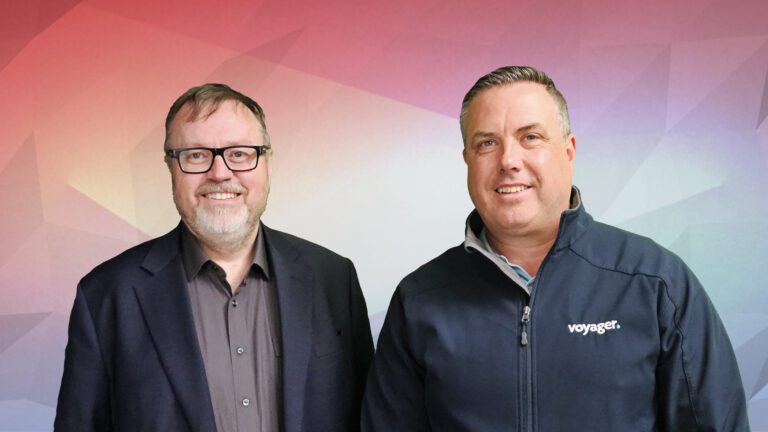
Hear from host Paul Spain and Seeby Woodhouse (Voyager Internet) as they unpack this week’s tech news including, One NZ kicking off its 3G shutdown in Dunedin, Radio Trackers boost Auckland’s hornet hunt, EB Games’ nationwide exit and the government’s new AI advisory pilot for SMEs. They explore Apple’s choice to use Gemini AI for Siri and Grok’s deepfake controversy. Plus, Seeby shares candid reflections on leadership, work-life balance, and why coming back to hands-on management has been both energizing and inspiring.
Read the full transcript
Transcript is computer-generated and may contain errors.
Paul Spain:
Hey folks, greetings and welcome along to the New Zealand Tech Podcast. I’m your host, Paul Spain. And today great to have CB Wodehouse back in the studio. How are you cb?
Seeby Woodhouse:
Yeah, good, thanks Paul. Great to be back again. I don’t know how many times this is now.
Paul Spain:
Always good, always good to catch up and hear some of your insights and opinions. A good chunk to delve into today on the New Zealand and the international front. And keen to hear an update on what’s happening in your world with, with Voyager and First Domains. Maybe just a quick intro from yourself on where you fit into this big wide world of technology in New Zealand.
Seeby Woodhouse:
Sure. Well, being the New Zealand Tech podcast, I assume there’s a bunch of tech people out there, so this may be redundant for a number of people, but yeah, I was one of the first people to start an Internet company in New Zealand at sort of 1819. My first company was called Orkon, which at one stage was New Zealand’s fourth largest isp. It’s now basically been absorbed into pretty much the fixed line business of 2degrees, which is New Zealand’s third largest telco. I retired at sort of 2829 when I sold Orkon and had a five year sabbatical. And then 15 years ago I started Voyager Internet which I run now. Voyager then acquired a number of companies, about 10 different companies. The largest acquired company was First Domains.
Seeby Woodhouse:
First Domains is the largest New Zealand owned domain name registrar. So if you think of like McDonald’s NZ, there’s a 20% chance that sits on our service. So First Domains, which is a subsidiary of Voyager, yeah, sort of runs 20% of the domain name infrastructure in New Zealand and that leads to a whole bunch of stuff. Voyager is an ISP and a parent company provides about 1 to 2% of all the Internet in New Zealand. So not huge numbers, but we still turn over approximately $40 million, employ 120 people. The New Zealand telco market’s sort of a $10 billion market, so even 1% market share is decent. And yeah, I basically have not been the CEO for 10 years of the Voyager group of companies. And about six months ago my CEO got headhunted and got a, a dream job with Amazon Global.
Seeby Woodhouse:
I couldn’t compete with the salary she was offered, so let her go. And then I was thinking about whether to hire a new CEO and then I just decided to step back into the role and keep the CEO money for myself, put it in my back pocket. So yeah, I basically haven’t run 120 staff organizations since I was in my 20s, which was 20 years ago. And so yeah, it’s, it’s basically been a bit of a shock being back to working 40, 50 hours a week and doing all the CEO stuff, but I’m really enjoying it. And yeah, the more you work, kind of the more ideas come. So I’ve started to have all these ideas and got a whole lot of things going on and it’s an exciting time. So, yeah, keen to rev up whatever it is that we’re doing on the New Zealand Internet and hosting in cloud space and everything. Yeah.
Paul Spain:
Oh, congratulations, that’s exciting move. And yeah, before we jump in, also a big thank you to our show partners, One New Zealand, Spark, 2degrees, Workday and Gorrilla Technology. Really appreciate the support, their support keeping us on air over the years. I think we’re. I should look up the exact date that our first episode came out, but we’re within weeks of being 15 years old as a podcast. So yeah, it’s quite nice to be able to look back and go, well, started this in early 20, 2011.
Seeby Woodhouse:
So here we are almost kind of. Yeah, pretty much. Yeah, I think so.
Paul Spain:
Yeah.
Seeby Woodhouse:
You would have been pretty much on the podcast thing when podcasts were invented, right?
Paul Spain:
No, we’re a few years behind maybe. Yeah, there’d been certainly been other podcasts, New Zealand and beyond. But I think it was our third, third episode we hit number one on the iTunes charts in New Zealand across, you know, all the categories and I guess, yeah, that was interesting to sort of see in other podcasts we launched like the New Zealand business podcast also, you know, we’re able to chart very quickly but there was a lot less local content and that was something that, yeah, we were really keen to encourage and push. And yeah, I guess most broadcasters now have been, you know, got pretty heavily involved in podcasting in one form or another. Although there hasn’t been, you know, a huge amount in the tech space. Interesting. When we launched there were maybe two or, yeah, least a couple of other tech. New Zealand based tech podcasts around.
Seeby Woodhouse:
You burnt them off pretty quickly, I imagine.
Paul Spain:
Yeah, I’m not quite sure what happened, but.
Seeby Woodhouse:
I can’t imagine there’s much room for multiple New Zealand tech podcasts. So if you’re in there, you’re probably dominating. Right.
Paul Spain:
So. Well, let’s jump in on the New Zealand front. The first bit of news. One New Zealand have started shutting down their 3G network. They’ve got some 2G there as well. That’s part of that shutdown. We Talked about this late last year as 2 degrees got in with. We’re turning theirs off.
Paul Spain:
So we’re seeing that happen across, you know, all the mobile networks. And this is, this is really about freeing up the radio spectrum so it can be dedicated to 4G and 5G services. So yeah, Dunedin are the first cab off the rank there. And you know, there’s, there’s a bit more detail online there on the One New Zealand website if you want to find out a little bit more around that, that 2G, 3G shutdown and you know, timelines. So. So yeah, Dunedin’s underway now. There’ll be a range of rural sites through their, their RCG or Rural Connectivity Group partnership coming up. 28th of November, early Feb, Southland and Otago, 10th of February, Canterbury, West Coast, Tasman, Marlborough and really the rest of the south island except for Christchurch, 17th of February, Northland, etc.
Paul Spain:
Etc. And then what do we got? Waikato, 24th of February and then a week apart we’ve got 3rd of March, Christchurch, week later, Auckland, week later Wellington and then by the end of March the 2G calling network gets turned off. So, yeah, quite a transition.
Seeby Woodhouse:
Yeah, I think that from the experience I’ve had, Voyager doesn’t have a mobile network, but we do do some resold, fixed wireless and I want to get into mobile at some point soon. But I have a work phone and a personal phone and network comparison and I need to be online and sometimes I use one for hotspot and then my mum is with a different provider. So between me and my mum we have all networks covered and I know my mum’s with one and she kept on getting these messages saying, oh, you know, the network’s shutting down and you know, you need to do this. And then I’ve been getting the Same thing on 2 degrees. Haven’t got any messaging with Spark. But you know, I was stressing my mum out cause she thought the way the message was written that she had to get a different phone and it looked like there was some problem. And then I sort of read it again, no, your phone’s on 5G, there’s no problem. But it was kind of ambiguous and then you couldn’t stop it.
Seeby Woodhouse:
So she just keeps on getting these messages. There’s a 2G shutdown and worrying about it. So it’s my personal impression is that the migrations by maybe 2 degrees in 1 have been done a little bit sloppily, whereas I would have thought they could look up your IMEI or something and say, oh, you’ve got a 5G phone. We’re not going to send you the text messages. And I know a few people that have been stressed out by the whole network shut down. Oh, what does it mean? Am I going to like, lose my cell phone and do I have to buy an iPhone 17? And I’ve had people ask because I’m in telecommunications, so it seems a bit messy to me. But I’m sure it’s not easy to tell 1.5 million customers or whatever that some of these big guys have what’s happening and make sure they know and then they don’t get left without, you know, a critical service or something. So it’s a balance.
Seeby Woodhouse:
Right, but it seems like a bit messy.
Paul Spain:
Yeah, look, I think it’s challenging to do these sorts of things on a large scale. What folks can DO is text 3G to 5-50- FROM their phone and understand that you’ll get a text back and that will advise whether your phone is directly impacted. There may be some 4G or 5G handsets that are maybe parallel imported or there’s some other oddity with them that they won’t support what’s called Volte. VOICEOVER OVER LTE So those should really be the only people that would be getting, you know, if you’ve. That should be getting stressed if you’ve got a dodgy phone in that form and that it’s not able to actually do the calling. But yeah, by texting 3G-550, I think you should be able to get back an answer on that scenario. I don’t recall having got a whole lot of texts on this. Maybe it’s.
Paul Spain:
When I saw it, it was like, yeah, I know about this. So I’ve just sort of forgotten about it. But I keep active on all three networks and when I’m traveling, fair bit of comparison. So, yeah, it’s always interesting kind of looking at how the networks work. And yeah, it does seem to depend where you are. One network can be a little bit better than the others, but I think they’ve got a lot closer over the last few years than, than where they used to be. And yeah, but you’ll get, you know, exceptions. I was at Mount Maunganui over the, over the weekend and the particular spot, the batch that I was staying at, that friend’s batch, I was looking at the bars on my phone, on my main phone, which has a SIM in it for.
Paul Spain:
Or the SIM was turned on for one NZ and for Spark. And in that case the better coverage was Spark Network. So, you know, you do get those sort of scenarios while one network’s just, oh, that’s quite a bit better than another. But I’ve also sort of seen, you know, the inverse. But yeah, not usually a big difference is my impression these days and lots of places around the country and I guess what we will see, you know, as we move into a world of satellite comms being part of our mobile networks as that’ll, you know, bring things even closer together.
Seeby Woodhouse:
Yeah, yeah.
Paul Spain:
Onto, onto other topics. We’ve got this issue with these hornets in Auckland that, you know, the yellow legged hornets which are, you know, potentially a major issue if they’re not able to be eradicated. And yeah, I was quite curious to read around the tracking technology that they’re putting in place. I think I tracked down the company, just trying to see if I’ve got it here. A Dutch company seems to be behind these Trackers and they’re 0.16 of a gram. So they’re able to be attached to, you know, to one of these, it’s the yellow legged hornet. But they’re able to attach these trackers to, to that or to any of these other varying wasps. And yeah, they’ve been using those to basically be able to track these yellow legged hornets when they fly back to, I guess, you know, back to the hive where the, where the queen is so they can go and eradicate them.
Seeby Woodhouse:
I’m guessing they don’t have like a, you know, 4G or a GSM chip or anything like high power. It’s probably nice. It’s probably like ultra low Internet of things, Bluetooth something and then a triangulation antenna array or something. Right.
Paul Spain:
So they’re probably, yeah, they might be putting up their own aerials in order to do it. I’m not sure if it’s using, you know, something, you know, existing in terms of IoT networks and, and the like. Obviously you’re pretty limited when you’ve got something that’s a, you know, six, you know, what’s that? 16% of a gram.
Seeby Woodhouse:
Yeah.
Paul Spain:
And you’ve got to, you’ve got to attach that to the wasp.
Seeby Woodhouse:
Yeah. Years and years ago the government made a change, I don’t know whether you remember this to. They introduced some additional low power fm.
Paul Spain:
Yes.
Seeby Woodhouse:
Bands where normally you kind of had to be licensed. And then I, I thought at the time, this was back in 2005, I think I thought at the time, oh, you know, well, if I jump on a frequency then I can start a radio station and then I don’t have to Pay the things and I’ll be the most profitable radio station. So actually on K Road there was a radio station, Seeby FM that I set up with a friend for a while. Yeah, And I jumped on the frequency and just had Winamp like circular circulating all my favorite songs. Yeah, with some recordings and I thought if I jump on the frequency I kind of own it. But me and my friend purchased like a little radio transmitter, FM radio transmitter from the UK and it was literally the size of a matchbox and you could power it on a 9 volt battery. And then when I had it going on St. Kevin’s Arcade with like an aerial, we had an aerial that went up on the roof.
Seeby Woodhouse:
You could literally hear it all the way out to Muriwai and you know, you’d play it in your car. And so CBFM was 107.6 I think for a while. But then what happened is as more people cottoned on to the low power FM there was nothing stopping them. And then there was a guy, obviously if you end up with two lower power FM stations, you know, one at the north of Albany or something and one in the south Auckland, you could kind of have 50% each. But there was some guy that jumped on my frequency and he was literally, you know, a few hundred meters away in town. And so we had this huge overlap thing where basically we kind of canceled each other out and he sort of took me offline and you could only the coverage went from like Piha all the way back into like, you know, the central city. And it was completely pointless in no time. But I always remember thinking, man, you know, it’s incredible that you know, radio technology, you could power something on like a tiny transmitter on like a 9 volt battery and pick it up crystal clear, sending music all over Auckland when there wasn’t interference.
Seeby Woodhouse:
So anyway, a bit of a diversion there but I guess they probably, you know, can have quite a small amount of power going out and find them.
Paul Spain:
Oh totally. I mean if you think of, and I’m talking about a different spelling here but the old CB radios, right. The letter CB is how I recall it anyway. And you know, little handheld one of those and you could chat to people, you know, all, all over the place. So yeah, quite fascinating. And on, on the topic of low power radio, I was once a, I think it was a 9 or 10% shareholder in a, in a radio station that started out low power and, and you know, ended up with a full, full, full frequency. I think NZME or somebody ended up buying the, the Frequency ended up becoming the valuable, the most valuable asset.
Seeby Woodhouse:
Right.
Paul Spain:
Yeah, and, and that in that business. But yeah, interesting how the technology has evolved and now so much we do is able to be done online, but we still have these older mechanisms and they have their value. Right. So I guess, yeah, in this case that transmitting is quite possibly not over the Internet at all, but they’ve got, you know, that ability to, to track. Yeah, these Hornets. So hopefully they manage to get the, get the eradication done that they’re, that they’re trying to do. But yeah, great to see technology being, being used for, you know, for a really good, good cause. And you know, I think that will be lifting their chances that they manage to eradicate these things and the biosecurity nz, you know, team get, get a great outcome.
Seeby Woodhouse:
So yeah, those Hornets are like four normal wasp. So I don’t pity the person that has to hold them down and like glue it to its back, put a little backpack on it. The backpack installation guy probably has a few wounds to show for it. Apparently they’re like extremely, extremely painful stings. Yeah.
Paul Spain:
Yeah, well, that’d probably be pretty dangerous if you got yourself too close to a nest and ended up getting multiple stings. Last week or so we’ve had the news of EB Games closing. Thought that this is interesting because there used to be, I guess, a broader range of retailers in varying aspects of tech. And there were lots of places you could buy computer games, but a huge percentage of that is all online these days. So the EB Games kind of passing of EB Games in New Zealand, if you want to call it that. An end of an era, really. You know, that said, you can still buy, you know, there’s a few places like JB hi Fi and, and the like, where you can buy, you know, computer games on, on, on disk and so on, but not on, on, you know, dvd, but you know, not, not too many.
Seeby Woodhouse:
Yeah, I mean the. I’m amazed that EB Games has lasted as long as they had. There’s a, there’s one in Glenfield Mall and I always, you know, for years it’s like my local mall and I kind of go past and I’m like, are they still around? Because I just thought it would have happened sooner. It’s kind of like the Blockbuster, right? But yeah, the sad part is we’re kind of, you know, in the final throes of this. You have to rent everything economy. Like there’s almost nothing you can own anymore. And I have a credit card just for like Internet charges. And every month there’s like pages of things.
Seeby Woodhouse:
You know, my Google account, I have my icloud account. And people used to not want to pay $5 for anything on the Internet. And now all of a sudden it’s like, hang on just to like have anything, you know, Google extra storage and this and that, and every app is $5. And, you know, I notice Apple’s just starting to transition to like a subscription for Creator Studio, which includes Final Cut Pro. And the reason I always love Final Cut Pro is it wasn’t Adobe because I’m a sort of hobbyist, but I like to have Adobe products, but I don’t want to pay $500 a year just so I can use Photoshop and, you know, some of the stuff. So it’s like annoying that you can’t. You know, I used to own Adobe and then it was, when I want Photoshop, I just open it up. I don’t feel guilty.
Seeby Woodhouse:
But now I’m like, I don’t want to pay $30 a month for, you know, some Adobe products when I’m not. It’s not my job. So it’s sort of pushing people into like, you know, a dead end where, you know, games and everything, it’s. You don’t own your game. It’s all subscription.
Paul Spain:
So, yeah, yeah, it’s definitely the world. World has changed. And yeah, it was fascinating news to see Apple launching their creative. Trying to somewhat take on, you know, Adobe Creative Cloud. And, you know, we, we definitely are in a, I guess a, yeah, a time of transition. But I think it’s, you know, it’s great to see there being a level of competition against Creative Cloud because you never want just sort of one vendor that’s too, you know, too dominant. You know, it was maybe the same with Netflix, but that’s a bit more complicated because you end up needing to have multiple subscriptions to watch content now. Yeah, that’s the world we’re in.
Paul Spain:
On the Apple side, you can still buy their individual apps as an outright purchase, but it seems like with the Creator Studio, you’re getting access to some extras, maybe in terms of AI type capabilities and so on. That may sit outside of what you get when you’re on the ongoing subscription. So they’re not completely kneecapping those who don’t want to go down that track, which is, yeah, I guess an interesting approach so as not to upset people too much, shall we say.
Seeby Woodhouse:
I suspect there’ll be a window of opportunity where you can own, buy and own, because that’s the way Apple’s always done, it’s. And then at some point that’ll be removed. So I’ve made sure that I kind of own everything in Creator Studio. I already owned Apple Motion and a few of the things like pixelmator. I’d already purchased them, but I’m hoping that if I purchase them, they’ll continue to upgrade them because I’m an owner. And then when they withdraw it and say, oh, you can only rent this now, going forward, the old owners will still get the software on. Fingers crossed. Probably not, but it’d be nice.
Paul Spain:
Yeah. The other one that sort of fits into that camp who’s competing with Adobe is Canva. And they made an interesting acquisition probably nearly two years ago, product called Affinity who their software suite competes with Adobe Photoshop, Adobe Illustrator, and you could argue Adobe InDesign and some designers would out of the Creative Cloud. Those would be the two or three products that they mainly use and what Canva have done, if they’ve made those products available for free. So you were able to do an outright purchase of those products and they were a lot cheaper than the Adobe suite. And some people, you know, swear by them and really like them. If you put all of that together with what Apple have, you’d probably actually have a really strong compete with the Adobe Creative Cloud because it’s, you know, broader in terms of audio, video and design. But, you know, those two suites on their own aren’t, you know, probably perfect competition to Adobe.
Seeby Woodhouse:
Yeah, I love playing with tech as you do. And, you know, I kept on hearing about Canva, but it was one of those things where I kind of hadn’t really checked it out because I was like, I don’t have a need. And then I have a friend of mine who literally runs their entire life on it. And then they sent me a presentation and it was awesome. And then, you know, obviously one of the things you can do with Canva is have the online presentation. So there’s no. It’s basically it kind of builds almost a website, you know, for the presentation and the presentation has a link and then it just loads up. So it’s almost.
Seeby Woodhouse:
You can save your building website. So then I thought, oh, I better do it. And I’m a, you know, I’m not a programmer, but I’m a definitely a tech guy. But then it’s now so overwhelmingly complicated. I went to Canberra and I was. I did not realize all this stuff was here. So one weekend I thought, I’m going to upskill myself and I’ll do Canva tutorials and I’m still lost. I’m like, that’s just, it’s like you know, coming into Word 2099 and then you know, you know from going from word one that’s like a bit much of a jump.
Seeby Woodhouse:
But anyway, maybe I’m just, maybe I’m just a bit slow. But yeah, becoming a bit more proficient with Canvas on my to do list. Cause it really does seem like it does so much stuff now.
Paul Spain:
Yeah, well their acquisition of affinity, those are a whole different set of products. Although they fit in the Canva camp. And of course Canva started out as sort of super simple, easy to use and of course their ecosystem has grown with those free affinity products you, you get kind of the base product but without the varying AI add ons. So they’re saying it’s free. But ultimately I imagine most people are going to need to pay a subscription because they’ll want some of those best features that come with the subscription. Also just quickly on the New Zealand front, the government have launched this AI advisory pilot. You might have seen something in the media around that to help apparently to help small businesses adopt AI safely and effectively. It’s a little bit perplexing in that it’s up to $15,000.
Paul Spain:
It’s sort of a co funded program that they’re doing but their initial or the allocation they’ve committed to so far is only 765,000. So you know, we’re talking, what’s that, 50 odd businesses that can actually sign up for it.
Seeby Woodhouse:
So I think it was Ronald Reagan that said the most terrifying words in the English language is hello, I’m here from the government, I’m here for help. So the idea of the government providing AI system distance is a bit scary but it is a wild west and obviously everyone’s trying to you know, make do of it but there’s, there’s so much stuff coming out and then you find out, oh this is actually just a, this is just a front end to chat GPT that someone’s built and then you know, this is a thing and then people say it’s a product and then it’s turns out it’s just a wrapper and then like we’re trying to do some stuff and then you have things with security holes and it’s, it’s such a wild west. But yeah, it’s really obviously fascinating where things are going to go.
Paul Spain:
Yeah, definitely. I mean in this case, this one is kind of, it’s offering funding towards projects for these small businesses but through A very particular channel through the regional business partner network. So basically over 99% of businesses that probably would say, oh yeah, we’re in that sort of small to medium business category are unlikely to be able to get access to it. So on sort of international front, a couple of interesting topics wanted to tap in on. Apple have said that their partnering with Google, so Gemini is going to power Siri. So this is an interesting move, I think, because a lot of people have been throwing shade at Apple for announcing AI capabilities, I guess, across the Apple ecosystem, and they haven’t maybe delivered anywhere near at the sort of level that people might expect to date. And this many thought, I guess, was an opportunity for OpenAI that there was likely to be a partnership with AIR. But OpenAI have lost that opportunity and Apple are partnering with Google, which I think for some will be quite a sort of surprise, especially, you know, noting that your Android phones and your Samsung phones and so on are obviously going to be leveraging Google and Gemini.
Paul Spain:
So this is going to make that Apple vs Google competition that much closer.
Seeby Woodhouse:
Yeah, well, obviously the various AI companies are to a certain extent allied with tech companies. So for example, OpenAI has got big investments from Microsoft and then as a result, by default they use Bing. And obviously most of the time Bing is not that great. But yeah, because the information sources are different. Like, I don’t know whether it’s OpenAI. I think it’s OpenAI. They take a huge amount of their training data from Reddit and have an agreement and, you know, Wikipedia. But then Google has emails from half of the world with Gmail.
Seeby Woodhouse:
And so the training data that has been used has kind of come from the allied sources. And so you do see Gemini versus, you know, Gemini being Google versus OpenAI aligned with Microsoft. You do see some quite different results. And you know, that obviously has interesting perspectives. I think that obviously Siri was kind of a leader and it was really terrible in the early days. You’d get frustrated, yelling at your phone, know, do one simple thing, tell me the time, and it would misunderstand you. And now we’re so far beyond that that it’s so sophisticated or voice. Voice recognition is sophisticated.
Seeby Woodhouse:
Siri’s not sophisticated, but voice recognition is sophisticated. But you know, I, I sort of, I, I came to the conclusion a while ago that, oh, you know, Apple’s. This never would have happened under Steve Jobs. And Apple is so far behind, you know, the Tech guys, Google, OpenAI, Microsoft, they’re leading this AI stuff and Apple’s so far behind, they have to go tail in hand to Google and beg for some, give us some AI stuff, please. Mr. But I started to change my, I started to, well, it’s probably a little bit, I mean, they still pay for Google Maps and things, right? But I started to change my opinion that it actually could be a brilliant strategy because, you know, if you look at meta basically, you know, wasting $200 billion on, you know, Zuckerberg’s, you know, kind of Metaverse ideas and there’s risk being head of the pack because you don’t know where things are going to go. And while it looks like AI is going to be the next big thing, there are a lot of struggles to make money and there are, you know, trillion dollar, literally investments in data centers. And so by holding back a little bit and waiting to see what happens, Apple may have actually played the smartest game where they’ve let everyone else get out in front that burn huge amounts of cash.
Seeby Woodhouse:
And there was an analyst that a lot of your readers probably would have seen that basically said that the whole AI market is essentially a big circle jerk where Nvidia is getting huge chip orders from OpenAI and then OpenAI is paying Nvidia and then Oracle is saying that they’re going to have AI services running on cloud and then it all goes around in a circle and then it’s like everyone is paying everyone else and all these share prices are going through the roof, all the share prices are going through the roof, but they’re basically just giving away ChatGPT to everyone. And what is the end game? So I think it’s possible that Apple may have played the really smart game and certainly open source models like Deep Seq and things the technology. When OpenAI when ChatGPT came out it was like, oh my God, this is incredible. But actually the technology of how to do it is understood. The training models are understood. So by holding back, Apple can probably take commodity hardware in the future and then just run models on it. So they may have saved a huge amount of CapEx. And I believe that Apple is still sitting on something like a trillion dollars of cash, some huge unbelievable amount that no other company in history has ever sat on.
Seeby Woodhouse:
So when they want to make a move, maybe they just kind of gobble up the companies that start to struggle or I don’t know. But another thing that I think is interesting is two weeks ago I was reading an article and there was a mathematician made a discovery that after large language models are trained with, you know, a trillion point data set, once the training data has kind of been locked in, which is essentially the weights of, you know, how the kind of neurons, artificial silicon neurons, think you can actually go through and delete 90% of the neurons. And the model still performs 99.99% accuracy. So essentially only after the training is done you can take 90% of the brain of the large language model away and it still essentially functions the same. And that’s a brand new discovery. So what it means is that essentially large language models right now can run on 10 times less power. So the existing infrastructure that OpenAI is running on can be re architected to essentially service 10 times as many customers. And so already the investment has started to scale down.
Seeby Woodhouse:
So again, things like that coming out may mean that Apple has made a really clever decision and that it looks like you needed a trillion dollar investment to do AI and then it turns out it’s a tenth of that and actually, you know, you can do whatever. So I think Apple may be way behind and have made a huge boo boo or they are the smartest team with sitting on a pile of cash that’ll ultimately win and it’s too early to call but very interesting.
Paul Spain:
Yeah. On the cash on hand, I do remember seeing sort of figures of 162 billion and whatnot. You know, US dollars for Apple. I think the last figures I’m seeing here bandied around maybe a third of that. So they’ve maybe burnt through some of their cash but they’ve certainly always or for a long time have set on some big.
Seeby Woodhouse:
Yeah, I may have figured 1.5 trillion might be the US deficit or something I was thinking of. So I could have been out by an order of magnitude. Yeah, but it’s certainly a lot more than you and I have. Anyway.
Paul Spain:
It’s, and these are insane, you know, amounts of money and yeah, we’ll be interesting to see what the reality is that sort of comes to play on these predictions on. Yeah. How much more efficient that you know, AI can be. Yeah, can be operated. Look, if you can, you can run it with 90% less, you know, compute and electricity and everything else. That, that completely changes the, the picture. Right. You know that, that said, We’ve got OpenAI going into using ad revenue as their way to, to try and pay for all the people using their platform.
Paul Spain:
So it’s interesting to sort of see them kind of fall back to an age old mechanism to try and generate revenue without losing all their users by making it sort of pay to play.
Seeby Woodhouse:
Yeah, I think that there will be a magnificent kind of advertising opportunity for a brief period of time. And I only realised this in retrospect, but when Facebook and that kind of thing were blowing up, there was obviously just a huge opportunity for businesses to build on it. And it looked like that would continue forever. But basically what happened is a third of the planet came on Facebook and businesses were kind of behind. And then you had a billion people on Facebook with no advertisers. So the advertisers that came out early and started spending got this incredible return and then all of a sudden it’s like, oh, okay, everyone has to do this. So then you’re competing against everything, the dollars per click and everything went to the moon. Now, you know, OpenAI was the fastest adopted technology in history.
Seeby Woodhouse:
I think they went to like 800 million users in like a month or something. You know, look it up. But no technology’s ever been adopted faster. So they’ve got basically a billion users and no advertisers. So when they launch advertising, it’ll be, you know, quite quiet and you’ve got a billion eyeballs out there. So I want to launch, you know, as an advertiser and try and get some good bang for buck and then I think it’ll go downhill rapidly where, you know, you pay a dollar for a lead or something and then all of a sudden it’s $10 for a lead and then it’s like $100 for lead and then it’s just the same as everything else. Yeah, but, yeah, if there’s any, if there’s any people that are keen to be first, that’s kind of what I see, but could be wrong. But yep, yep, that’s what happened with social media anyway.
Paul Spain:
Yeah, I still, I still remember buying, buying advertising with Google and they flipped one day from what was you were paying cost per, I think, you know, thousand eyeballs. And then they moved to a, you know, this particular date they moved to the option of paying per click and you were able to initially buy a click, which, you know, would generally mean a visitor to your website for $0.01 US. So that’s going back quite a way, over 20 years. But yeah, the way these things sort of evolve, you know, based on demand.
Seeby Woodhouse:
Now it’s like 15 many services.
Paul Spain:
And yeah, what you’re able to do at different times in history can be very, very different in terms of the costs and the structures. And yeah, I remember we were building social network at the time and we were able to attract 300,000 members on the smell of a Nortley rag. Whereas if you wanted to attract 300,000 visitors to a website these days, it would, it would cost you a small fortune, let alone to get those people convert to signing up. So, yeah, interesting times. Oh, one, one, one news story we didn’t touch on that was in the agenda. I just realized we, we were going to come back to. Grok has been a bit in the, in the news over the last couple of weeks for, you know, not, not particularly nice reasons. And I guess this is X and, and Grok in relation to the, the AI image generation being able to take photos uploaded of women.
Paul Spain:
And I think maybe the reporting’s changed a little bit, but initially it was, you know, also mentioning children. So, you know, maybe the issues have, have evolved a little bit and you know, really highlighting the app being able to use to, in a, I guess, in an AI sense, sort of undress people and you know, putting them in, you know, somewhat revealing levels of, of dress from, you know, full clothes down to bikinis and other, other variations. A little bit hard to, you know, fully understand because of course it’s not the sort of thing where you want to be going and delving in and testing these limits out. Certainly from my perspectives like, and, you know, I’ve been asked to do an interview or two on, you know, on this topic and in the news. But yeah, it’s just a challenge that we now have with, you know, all new technologies is these kind of good sides to the technologies and then there’s bad sides. And with AI, I think there’s a level to which, you know, whether it’s an open AI, whether it’s, you know, Grok, whether it’s Gemini, they can try and put in place limits, but that’s actually pretty hard for them to do and to get consistently. Right. And wherever there are limits, of course, yeah, people will find kind of ways to, you know, to mess with them and get around those things.
Paul Spain:
And yeah, the other aspect is if one tool sort of blocks it, there are going to be a whole range of other tools that either already exist or pop up. Which was an interesting aspect of the reporting is there was this big focus on X and Grok. But you know, when I, when I research this, it looks like, well, actually there’s been a whole bunch of tools that can do this for, you know.
Seeby Woodhouse:
For, Yeah, I mean, quite a number of things. Essentially just an extension of the deep fake thing.
Paul Spain:
Right.
Seeby Woodhouse:
And so when deep faking started, that’s it. You know, with Grok, you can basically just say, okay, here’s a photo publicly of Taylor Swift and then you can copy Grok in, you know, in Twitter and you can name Grok and say, oh, you know, I actually saw someone do this. There’s a Taylor Swift posted and then someone in the chat was like, grok, can you put her in like a swastika bikini or something? And like, you know, blah. And it’s like, yeah, it’s a wild west. But before Grok could do that, you could do that with, you know, a high spec PC and a neural net. So there’s people producing, you know, CP and you know, all that kind of stuff on private machines. The technology of how to do it as well, understood. So it’s all going to be out there.
Seeby Woodhouse:
I think that the difficulty is that if we allow governments to completely regulate what we see, then we don’t have free speech and free speech is important. So it’s getting into the argument of how much should a government or some regulator be able to show you what you can and can’t see? Because if they have that power, they can use that for political purposes and all kinds of other things rather than just censoring, you know, people fooling around and being, you know, stupid. And as I say, people can produce deep fake stuff like, you know, porn on, on private machines with, you know, training data. I think the more important thing is that we’re kind of entering the post truth world and that, you know, obviously you can have unbelievably hyper realistic images of what looks like someone. You can have real pictures that get on the Internet that you can deny and then you can have fake pictures that get be created. The general theme is that we’re just living in a post truth world. So, you know, I mean, it’s already happening where you’re seeing, you know, hyper realistic, very believable pictures of politicians saying things they didn’t say. There’s been, you know, propaganda from the Gaza war that I’ve seen on both sides making things worse, making things better.
Seeby Woodhouse:
It’s just, I mean it’s very hard to see where it’s all going to go and it’s pretty scary because you have your screen in your hand and you’re looking at kind of news and you don’t know whether it is news. Where is the world gonna go?
Paul Spain:
You know, pretty crazy, it’s pretty complicated and working out how do we sort of maximise the sort of positives of these and minimise, you know, the downsides? You know, we’ve seen this kind of under 16 block for social media which Australia have put in place. We’ve Seen countries that have. And maybe blocking grok because of, you know, what’s happening here specifically. But if you take that sort of approach of, say, well, we’re going to block just grok, but then not block the other tools is, you know, does that make a whole lot of sense? So, you know, then you look at, well, should deep fakes in certain circumstances or, you know, in all circumstances sort of be. Be. Be blocked? And yeah, each of these scenarios has kind of got some, you know, some benefits, but usually some downsides as well. And, you know, it seems to me that, you know, often legislators are kind of just throwing something at a wall and trying it out to see what happens, you know, whether those, Whether those plans, you know, actually ultimately end up being. Being good for, you know, for.
Paul Spain:
For everyone or not. Yeah, that. That’s not necessarily clear either.
Seeby Woodhouse:
Yeah, I mean, we probably, a bunch of us saw the, The. The video of Will Speak, Will Smith eating spaghetti from, you know, a couple of years ago. And it’s obviously this like, you know, kind of messy, horrendous thing. And then, you know, someone built a tool to detect, you know, AI video and, you know, just looking for artifacts and, you know, edge clarity in some mathematical model. But I saw that, you know, with the new VO3 model, they, you know, someone produced video, ran it through the testing tool, which has been authoritative, and it completely said, no, this is 100% real. Because VO3 is now so good at generating absolutely video that’s absolutely indistinguishable from reality. You know, so a lot of people haven’t yet seen that, but if you go searching for it, you can see stuff where you’re like, I cannot tell this is real or not. Yeah, we’re gonna just.
Seeby Woodhouse:
It’s just gonna be a mess. I don’t know the answer to how to solve it, but. So it’s definitely interesting times.
Paul Spain:
Yeah. Yeah. Look, I think, you know, these things are quite challenging. And yeah, you know, watching things like this, you know, under 16 social media ban in Australia, which I think is.
Seeby Woodhouse:
A mistake and horrendous.
Paul Spain:
But yeah, I think that, you know, the concept of wanting to protect youngsters, you know, I’m there. We want to, you know, we want to protect our youngsters, but it’s. How do you go about doing that? And a kind of an arbitrary age limit. That’s one I’ve not been.
Seeby Woodhouse:
I think it was a convenient excuse and a big lie for. We want everyone to have to enter their passport into the Internet so that we can see exactly what everyone is saying, and if you look at things like Australia enacting, you know, super, super rigorous, you know, hate speech laws where now, you know, if you speak out against essentially what they, what they consider to be right wing content, you can go to jail for five years. That’s relatively new. You know, if you can’t speak out about the government because they throw you in jail and everyone has to off in order to get on the Internet. So you can’t search anonymously. We’re sort of heading to some pretty scary places. But yeah, I think the whole, the whole age 16 age verification was either a willful misdirection and you know, making it say, sound nice, we want to protect children and actually being, oh, we can monitor everyone or it was just an unfortunate side effect, but I don’t think it’s good.
Paul Spain:
Yeah, well, we’ll certainly see how that plays out. I imagine. Look, there’ll be some positives that come out of it, but as you highlight, there’s some real fish hooks.
Seeby Woodhouse:
I mean, things like the fact that now when you go to the U.S. they search your phone, take your DNA, ask who all of your family is.
Paul Spain:
DNA.
Seeby Woodhouse:
Yeah. So the new, the new, the new rules for visiting the US is you have to provide a DNA swab, you have to provide full palm prints and you have to give five years of social media history and you have to hand over your phone of us and they plug it into like a CAA computer that will go through your entire phone. And a lot of people don’t know this, but when you like delete a photo or you delete a message, it’s not deleted, it’s just marked as deleted. It still sits in your phone or icloud or whatever. Yeah, I mean every single thing you do on your phone is, you know, fully available in signal intelligence. And that’s just the way it is, you know.
Paul Spain:
So, yeah, some interesting things you tap in on there and I think different people have a different view on, you know, just how far these things do it do and don’t go. But yeah, I think there definitely are some, you know, things that we, we need to, you know, keep a little bit of a watch on. We want to, you know, encourage our governments to be heading in a, in a positive, you know, direction. I think, you know, privacy of people’s data and their communications is important. And you know, at the moment in New Zealand they’re looking at sort of expanding. You know, I think what the current sort of situation in terms of what the government kind of legally can, can enforce when it comes to communications and being able to access them. So that’s one of those things that they’re looking at expanding that out to all the international, you know, messaging platforms and so on. So, you know, no doubt some things go on behind the scenes that we don’t know about, but I would certainly hope that our governments are largely, you know, committed to following the law.
Seeby Woodhouse:
There is a degree of if you’re not doing anything wrong, then you don’t have to worry about anything. And so if you’ve just got holiday snaps and things on your phone and you’re talking to your friends, it’s fine. But I mean, there’s been enough cases now where, you know, phones have, you know, if we go back to 2019, there was the, you know, the backpacker Grace, you know, who was murdered by the guy in New Zealand. And essentially, you know, they had access, full access to both of their phones, even though the phones weren’t. Weren’t present. All of the messages, you know, they, they brought up in court, you know, this guy searched YouTube for this particular thing, you know, wiped it. They had, you know, they had everything, you know, known to man, and it wasn’t through the phone, it was accessed through the cloud and everything that was back in 2019. So, you know, there was the Grace Mullane documentary and if you read through the lines about the access to the data that they had, they’ve.
Seeby Woodhouse:
They had it, you know, everything, all his Google searches, everything on every computer, you know, so, yeah, it’s there. It’s not exactly a secret, but not everyone knows it, but that’s the case. But, yeah, don’t go murdering people and you don’t have to worry about it, you know, so.
Paul Spain:
Well, yeah, we certainly wouldn’t be recommending doing that. So keen to sort of delve in a little bit for, you know, a bit more of an update on, you know, what’s happening in the Voyager world, in your world. And yeah, you mentioned taking the reins as chief executive, but tell us what you expect that to look like and how you think that will evolve.
Seeby Woodhouse:
Yeah, so as I said, I started Voyager 15 years ago and ran it for five years and got it to about 30 staff. It’s about 120 now. But I haven’t been the CEO for a decade, which has gone by really quickly. And, you know, I lived in LA for five years of that and I was, you know, traveling around the world, did probably 100 countries of travel and I took up photography as a hobby for a decade and took half A million photos and yeah, 100 countries and yeah, lived life and I suppose you can’t run your own stuff and have a lot of free time. So it’s kind of one or the other. And for the last 10 years I was like, well, I want free time. I don’t want to be running my own stuff. But yeah, now that I’m older, I’m sort of more settled in New Zealand.
Seeby Woodhouse:
I’m not traveling. Obviously Covid happened. I just don’t feel like traveling as much as when I was young. I wanted to go and see the world and had my CEO get headhunted, which was, you know, unexpected, but ended up being fine. I did have a moment where I was kind of nervous because as I say, although I was CEO 10 years ago, I haven’t run like 100 person organization since the Orkon days, which was 20 years ago. So in my 20s I was CEO of 100. And there’s a big difference between being CEO of a 30 person company and being CEO of 120 person company. It’s a lot harder and just a different set of skills.
Seeby Woodhouse:
So yeah, I mean, I was kind of nervous. I’m a well known New Zealand tech entrepreneur, but you always get butterflies. And even though it was my own company, I kind of thought, well, I don’t want to come back in and then make an embarrassment to myself or do terribly or not have the trust of the staff. So I was feeling a bit nervous. And also, you know, you organize your life to take up the time that you have. So I felt that I didn’t have a lot of free time. And so I was nervous, you know, am I going to be even able to do this job? Have I got the energy, Had Covid a few times and more than once and ended up getting chronic fatigue some of those times. I’ve struggled for the last few years sometimes with my energy.
Seeby Woodhouse:
If I get Covid again because it’s like a common cold, right, you can keep on catching it. And I seem to have caught it a few times. And then if I have a two month period where I’m exhausted, it’s not fun, you know, having to work 50 hours a week. So there was a bunch of things that I was nervous about. And yeah, I kind of worried, you know, how am I going to feel. But after a month on the job, I was actually really surprised because I found that actually working is really energizing. And one of the things I hadn’t really counted on was that, you know, when you’re not, you might be the owner of a company. But when you’re not the CEO, there’s a certain amount of stress by, you know, the fact that you’re not in control because, you know, if things go badly, it’s kind of out of your hands.
Seeby Woodhouse:
You’re trusting the CEO to do it. But there’s this feeling of helplessness. It’s like being in a pram that’s rolling down the hill and not being able to do anything, or, you know, you have those nightmares where you’re being chased by a monster and you can’t do anything. So there was kind of this feeling of helplessness that I hadn’t actually appreciated where I’m the owner, but I couldn’t. I felt like I couldn’t affect change. And there were things that I wasn’t happy about how they were done. And when you’re the owner of a company and you have a CEO, you know, you can’t have too many cooks in the kitchen. So to a certain extent, you have to step back and let someone run it the way that you want.
Seeby Woodhouse:
So I’ve had multiple CEOs over the years, and they all have their own style. And for me just to step in and say, hey, I own the company. I don’t like the way that the milk’s being ordered, or I think this is excessive or whatever. It’s just not, you know, conducive. So you accept some compromises in terms of things that you just bite your tongue. But that’s stressful as well. And so, yeah, I. I thought when I stepped back into the role, oh, I’m older.
Seeby Woodhouse:
I’m, you know, 20 years since I’ve done this much work, am I going to be able to cope? Do I want to be working this hard? You know, have I still got it, you know, all of these things? But after a month, I suddenly thought, oh, I feel really good that I can actually have things done the way I want them, and it actually feels less stressful. So, you know, one of the things that I think is really interesting is that it’s not actually hard work that causes stress. So, for example, if you asked Jeff Bezos, when he was, you know, forming Amazon and working 100 hours a week, was he stressed? Probably not. He was probably super enthusiastic and, like, jazzed about what he’s doing. So you can be working your ass off and not stressed, but you can also be sitting at home doing nothing and be stressed because you know that you’re procrastinating. So you can be doing nothing and feel stressed out. And you can be working your ass off and feel stressed out. And so it’s not actually the working hard that causes the stress, it’s a feeling of incongruency, like I’m not doing what I was supposed to be doing or, you know, I’m helpless, as you say.
Seeby Woodhouse:
So the surprising thing is I’ve gone from working basically nothing and having a bunch of middle aged person hobbies and, you know, hanging out at my lodge, Woodhouse Lodge in Warkworth, or playing the piano or taking photos or hanging out with friends or going to film festivals or whatever it is that you do when you’ve got free time, but having an undercurrent of stress of like, I’m not running my own stuff. And what I found is that working 50 hours a week, I’m less stressed. Even though I have the business problems to deal with, I feel like I can actually make a difference. And it’s quite exciting making a difference. And, you know, it’s been quite fun. And all of a sudden I’m having all these ideas. So I was not prepared that if it would actually be very good for my mental health. So, yeah, my advice to someone who listening out there is actually work’s really important for mental health.
Seeby Woodhouse:
Don’t retire at 30 and end up doing nothing for a long time. I probably should have come back to work sooner, but, yeah, I’m grateful that it’s kind of worked out in a really positive way and it’s been more positive than I thought, which is. Which is great.
Paul Spain:
Yeah, yeah. Thanks everyone for joining us. We’re out of time for this episode, but good to catch up. Seeby yeah, big thank you for listening in and joining us. And of course, a big thank you to our show partners, 2degrees Spark, Workday One NZ and Gorilla Technology. We’ll be back again and we’ll catch you on the next episode. All right, see ya.