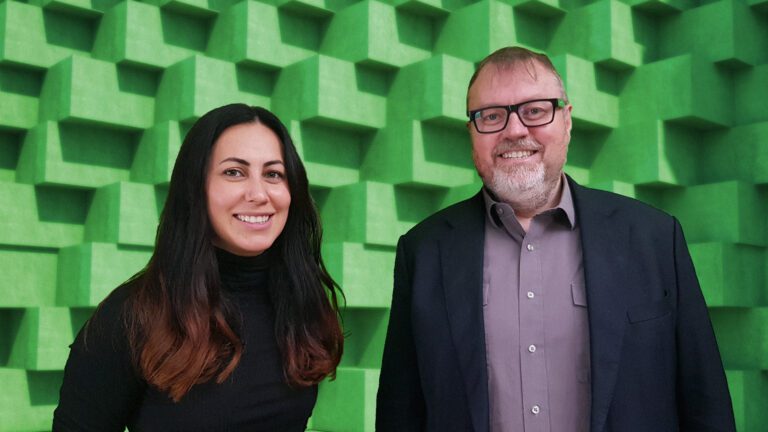
Host Paul Spain is joined by Zarina Alexander, co-founder and CEO of Neocrete, a pioneering deep tech startup based in New Zealand that’s reshaping the global concrete industry. Zarina shares the story behind Neocrete’s mission to reduce the carbon footprint of concrete—one of the world’s most widely used and environmentally impactful materials—by developing innovative, low-carbon cement alternatives. The conversation also explores the latest in tech news, from social media bans for under-16s, the ethics of AI-generated victim impact statements, Fake Cyclone alert phishing and big tech company settlements, to Auckland’s bid to become a tech innovation hub. They also discuss the highs and lows of startup life and raising investment as a deep tech company and more.


Apple Podcasts Spotify RSS Feed

Special thanks to our show partners: One NZ, 2degrees, Spark NZ, HP, and Gorilla Technology.


Episode Transcript (computer-generated)

Paul Spain:
Greetings and welcome along to the New Zealand tech podcast. I’m your host Paul Spain and for this episode we are joined by Zarina Alexander who is the co founder and chief executive of Neocrete. Welcome along. How are you Zarina?

Zarina Alexander:
I’m good, thank you for having me.

Paul Spain:
Well, thanks for joining us. It’s not that often that we do get a chance to sit down with a founder from I guess a deep tech company which is really where Neocrete. So really looking forward to sort of delving into that once we’ve kind of covered off the tech news of the day and the week. But maybe you can give listeners just a little overview of where you fit into this big wide world of tech and innovation.

Zarina Alexander:
Yeah, sure. Well, when we think about deep tech, we don’t normally think about materials technology. It’s usually like the is high tech like all the other devices and where we are, we are developing new materials and new building material and the amazing building material which is concrete that we actually see everywhere and it’s the most used product on the planet after water and we’re just making it better. So we are New Zealand based company that has global aspirations and we are developing low carbon, low cost and high performing cement replacements. And just quickly why we’re doing it and how. So why we’re doing it is because the main ingredient of concrete is cement and is very, very carbon intensive to produce. And we produce around 4 billion tons of cement every year and for each ton of cement produced we release one ton of CO2 roughly. So it’s a huge problem that we’re trying to solve and so that’s why we’re focused on that.

Zarina Alexander:
So we’re replacing cement with low carbon alternatives and how we’re doing it. So to make cement you need to source materials and then you need to highly process them, you need to heat them up and grind them. And there are all sorts of big capital and industrial processes that require fossil fuels usually and energy and as a result you produce a lot of CO2. So what we do, we say we take low process mainly natural materials of usually volcanic nature or some waste materials and we add our technology which is Neocrete activator, it’s 2 to 3% of those materials and we create similar chemical reactions, similar properties to cement, but without the need for this bulky, costly and carbon intensive infrastructure.

Paul Spain:
That’s really cool. Well, looking forward to sort of delving in and hearing more of the story before we get started. Of course, a big thank you to our show partners to One NZ Two Degree Spark, HP and Guerrilla Technology really appreciate their support of the New Zealand tech podcast and of the broader tech and innovation ecosystems in New Zealand. Well, let’s delve into the New Zealand news. To start with, top of the list, the government advising that they’re exploring options on social media on a social media ban for under 16s. And we’ve also sort of seen I guess a lobby group kind of, you know, start up as well locally, including some, you know, some pretty well known folks, including people that have been here in the studio in the past who are really, you know, pushing for this idea of a media ban for under, under 16s. What’s your, what’s your thought on this? Cause social media causes a lot of harm. Right.

Paul Spain:
And you know, probably the most vulnerable tend to be, you know, those that are struggling in some way or those that are younger. So. Yeah. Do you think this makes sense?

Zarina Alexander:
Yes, I’m probably mainly for that idea and for the reason that we need to protect our kids while they are still developing. And I think what it creates is like they can’t separate the reality from social media reality, which is a completely different kind of fake imaginary world. And it’s okay to read fairy tales to a three year old, but then as they grow and they continue living in this imaginary world, I think it’s not healthy. And I’m usually against all sorts of like, you know, blanket bands, but maybe there needs to be some rules and regulations because those social media platforms, they probably won’t do it for themselves because like privately owned companies, you know, like driven by profits and all sorts of different things. So I think that’s where the government can step in and help and protect the society.

Paul Spain:
Yeah, yeah. And look, I think, yeah, there’s some, there’s some wisdom there. And look, we need to protect our youngsters and you know, I agree with that and I agree that when we look at our social media companies, despite what they say, I think it’s fair to say that they’re largely driven by profit. And so if we were to drill into any of the social media companies, you can see a lot of harm that’s been caused. I’ve probably spoken more about meta than any others. You know, we’ve had their staff here in the studio for, you know, private conversations. I’ve put some hard questions to you, to them, you know, around things that are around protecting our youngsters. And you know, interestingly, really all they seemed interested in was promoting their latest sort of things and not, you know, they didn’t come back to me on, on some of the harm questions and so on that I put to them.

Paul Spain:
So I think, yeah, we’ve definitely got a big challenge, I guess, with putting a ban across, you know, on a blanket basis. I think there probably are some challenges and maybe this is hence why the government is saying, look, we’re here to explore the options rather than, hey, we’re immediately following in Australia’s footsteps who have put in legislation for their ban which kicks off later this year or early next year. So that’s coming. There have been American states that have gone down some of these sorts of tracks where they’ve put some particular bans in place that require some form of age verification. Yeah, I guess the things that kind of come to mind for me is how do you enforce that? So if you’re age verifying, that means you’re age verifying everybody. And you either do that in a kind of a weak manner, which then becomes very easy for someone to kind of get around it. So then what’s the point of having it in the first place? Or you have something that’s really, really strong. And yeah, every single person then who’s online, you know, is going to have their, I guess effectively has their full identity linked back to their online profile, which I think in, you know, a lot of cases, probably fine.

Paul Spain:
But I think, you know, sometimes there are some benefits of having some anonymity online as well. So you end up probably with some, you know, some challenges there.

Zarina Alexander:
Yeah, well, I don’t think there’ll be a problem for technology companies to identify who is below legal age for certain websites. They know so much information about us now. They know potentially the areas where we live. You know, there are only three data points that you really need to clearly identify an individual. So I don’t think if they really put their like, minds into it, there wouldn’t be a problem identifying who those people are then. And on the other hand, I think if a teenager finds a technological way to, to go around those bands, so maybe they’re not that underage, maybe they’re like, you know, they’re already ready to enter the world. Because we’re always, you know, finding the ways to an extent, around some bands as teenagers. We’re pushing the boundaries and stuff.

Zarina Alexander:
So of course there will be some exceptions. And maybe, yeah, maybe there shouldn’t be a blanket rule. It should be like there just should be consequences for hurting teenagers, really. And if media, the question should be, if you remove that social media, would that individual be hurt otherwise? And if the answer is no, then. Well, then let’s do something about it.

Paul Spain:
One of the other challenges is how you draw the lines. So what is and isn’t social media? And this was, you know, part of the discussion with the Australian debate when it came up, is YouTube social media? Is this something that’s good and safe and, you know, does it fall into that sort of social media category? And yeah, I think many would say, well, yeah, it does. It’s, you know, especially, you know, these days where, you know, elements of it are a mirror for sort of TikTok and so on. So, yeah, and then, yeah, where do you draw, where do you draw the lines on the different platforms? Cause you could largely argue that most things online, even games, have a social media platform element to them, right? So, you know, a youngster gets on their favourite game, you know, the likes of Roblox and things like this that are, you know, very common out there. And then there’s a chat element, there’s this and there’s that. So, yeah, it would be interesting in terms of how some of those lines could get drawn. But look, I think it is right that we as a country need to look at this, take these topics seriously. I’m not sure that we probably have done brilliantly in the past in terms of pushing back and probably.

Paul Spain:
There’s been probably way too much power in the hands of the likes of Meta and YouTube and other brands or entities. So, yeah, good to start that conversation and let’s see how it plays out. But I guess my perspective is a complete blanket ban. Yeah, there’s probably a bunch of downsides and we’ve touched on a couple of them.

Zarina Alexander:
I would just say, in terms of where do we draw the line, that’s where technology can actually help us. So are you telling me that they can predict if I’m about to buy a house and send me all these adverts to look at this house and everything, so they can use that technology to actually predict if a person is struggling or something is about to hurt the person or mentally unstable or anything, it’s probably not beneficial for them to keep using that. So I think that’s where technology can be very, very useful. And they say, look, if you see these signs, you work with psychologists, you work with all these teachers and parents and stuff, if you see these signs, highly likely there’s correlation that something might happen and that’s where you enforce that ban.

Paul Spain:
Yeah, I like that perspective, actually, to put that responsibility back onto these companies that know so much about us, yet they, they use that information for their own gain and generating increasing revenue. So, yeah, the social dilemma. I’ll mention it again. We’ve mentioned it before. I’m picking. It’s probably still on Netflix as a good watch to understand kind of some of the realities of kind of what does go on inside these companies. And. And, yeah, how, in some ways of how they’re motivated to really take our attention.

Paul Spain:
And, yeah, not always for good. I saw a blog post, I’m trying to remember who published it, but around the power outage that happened in Spain and Portugal recently. And I think it was roughly 24 hours of power outage and how good it was because people were streaming out of their apartments and there was all of this kind of spending time with people because there was no way to get online. And, yeah, that actually encouraged more sort of people interaction. And yeah, I imagine that the sort of deeper we go down the social media rabbit hole and living in a kind of online world, the more disconnected it’s possible to get from others.

Zarina Alexander:
Yeah. Even in our team, I see the younger people that work in the lab during lunchtimes, we usually discuss stuff with my generation. And then you see them all on their phones, on their devices, and I’m like, oh, that’s so much fun. Yeah. I mean, they’re playing like New York Times games and everything. They’re quite. Yeah. And yeah, it’s very interesting.

Zarina Alexander:
It probably shows our age that we kind of judge them now on what we didn’t have access to when we were younger.

Paul Spain:
Well, yeah, I think there’s definitely some learnings and I guess part of this comes back to the parenting side. Right. So how much do we hand over and say, you know, look, the state needs to figure this out and how much do we say, hey, parents need to have some responsibility around where they draw the lines for, you know, for youngsters. And of course, that is going to vary from family to family in terms of, well, hey, we don’t know how to manage some of these things and so on through to. Yeah, it’s just easy when there are blanket rules put in place. And, you know, one of the blanket rules I guess we’ve had in New Zealand over the last period has been the banning of smartphones in schools, predominantly. And so that’s been an interesting one to watch. But that’s a pretty easy environment because of the school structure and so on to do that.

Paul Spain:
So you’re effectively putting in a social media and then some, you know, ban during school hours. But yeah, I don’t think there’s been too Much pushback on that one since it, since it’s come in doesn’t mean it’s absolutely the right thing to do. But I would, you know, I would pick probably. That one’s ended up okay. Now onto other topics.

Zarina Alexander:
We.

Paul Spain:
We’Ve got a scenario where the Mayor of Auckland, Wayne Brown is suggesting supercharging Auckland and he’s really looking to central government for some help to help drive economic growth and amongst other areas, technology is part of that. So, you know, he thinks that there needs to be a focus on immigration, tourism, housing and technology. And he’s really emphasising this, you know, collaboration with central government to make Auckland a hub for innovation. And so, yeah, this is, yeah, interesting to see. I don’t think we have clarity on, you know, exactly where he’s suggesting central government, you know, should be stepping in. But you know, referring to, you know, the role of Auckland and New Zealand’s economy contributing a third of New Zealand’s gross domestic product and that, yeah, we need to lean into these sort of high value sectors like tech, which yeah, to me makes some sense. He’s talked about tech precincts and mentioning of the Wynyard Quarter tech precinct, biotech hub at Victoria Park Market. It’s talking about reduced red tape and regulatory reform and you know, often I guess these sort of government regulations can get in the way and make it a lot harder and slower to do business.

Paul Spain:
I don’t know how you found that, whether that’s been a challenge at all or you’ve been operating in a world where that hasn’t really impacted you a great deal.

Zarina Alexander:
Yeah, it hasn’t really impacted us a great deal. If anything there’s like more around the regulations with continuous carbon emissions and not putting a tax on that. But we understand the current economic situation. Probably not the best timing to impose that like in Europe, but yeah, haven’t been largely affected.

Paul Spain:
Another area mentioned is investment in skills and talent development which, you know, I think probably most of us are keen to see sort of continued investment on that front and the opportunity to also attract, you know, global talent. There was, I saw mention of, yeah, support for infrastructure projects that help with connectivity. I actually think we’re doing pretty well as far as connectivity in Auckland with, you know, with fibre that the government have already funded 5G networks but of course there are limits and there are edges to where, you know, where that current connectivity runs to. And then, yeah, it goes in line.

Zarina Alexander:
With that social media ban. Right. Some areas probably just naturally will happen with no connectivity.

Paul Spain:
That’s true. That’s True. Yeah. Well if you, if you’ve got no electricity, that one can work quite well. But not too many parts in New Zealand that are. Or not so many that are like that these days. Yeah. Also, you know, tax incentives around research and development and financial support.

Paul Spain:
So yeah, we always know that the councils are kind of looking for that help from central government. So it’ll be interesting to see whether this attracts much or any attention from central government. But yeah, I think it’s encouraging to see, I guess, you know, a mayor who wouldn’t have picked as being, you know, a big technologist to be, you know, encouraging the direction of Auckland’s growth in this way. So.

Zarina Alexander:
And it’s great to see when politicians make long term decisions, especially with the short cycles in New Zealand, you know, there’s so much motivation to actually just have some decision for short term benefits. Right. And then investing in deep technology and developing hubs and you know, tax incentives, it’s a long term game, you will see benefits. But probably when he’s not a mayor anymore, you know, but he’s like, okay, I think this is beneficial for New Zealand whether I’m in or not. It’s the right place to focus on. And, and we’re definitely benefiting from rdti, which is R and D, tax incentives and a lot of other resources available for startups and it’s very, very helpful and it definitely speeds up the research and development. It lets us hire more people, it lets us focus more resources on R and D. And yeah, I welcome that initiative but obviously I’m biased.

Paul Spain:
Well, we’ve all got our different leanings but yeah, I largely agree on that front too. And yeah, I think one of the things that we probably, we all see but maybe don’t think about as much as we should is that lack of being strategic often in these investments. And yeah, the nature of the way that whether it be business leaders or politicians, there is often an incentive to focus on the short term rather than the long term. And we often see that with firms that are disrupted where the leadership are being incentivised on what they get the next quarter, not on laying the tracks and laying the foundations and doing things that are going to make a real difference over a long term as well. Also in the news warnings around this was from recent weather events and flooding and bits and pieces which we’ve had, I guess on a smaller scale than what we saw 2013. But these things are often a facilitator of then sort of fake alerts and scams and things like that trying to, you know, harvest information from people or, you know, you know, whatnot, varying phishing scams and so on. So, yeah, just a reminder to keep educating ourselves, educating our families, our colleagues and so on around, you know, these risks that come up. And I guess one of the challenges is those messages that often have a kind of a fake urgency to them.

Paul Spain:
So, interestingly, one of the things that my firm does with clients is as part of the cyber security regime, we do phishing tests. And so we send out whether it’s an email or what have you to see whether you can kind of trick staff into clicking on that. And if you do, then, hey, they might need a little bit more education on these types of scams. And one organisation that we’ve been working with recently, it was quite interesting because we’ve done some education with them. But a comment came back from one of the staff who’s quite new on board because they’re a new organisation that they’d never encountered that in any organisation they worked for before. So, yeah, just a reminder, we need to keep at these things and not assume, because a lot of organisations have been doing these things for some time, that, yeah, everybody’s up to the play and so on.

Zarina Alexander:
And those scams are getting more and more sophisticated. I’ve heard of the one, not in New Zealand, where they send you a fake speeding fine that you have to pay. Like, who would have thought of that? You’re like, I would never even check. So, not that I want to give ideas out there, but, yeah, they’re getting more and more sophisticated.

Paul Spain:
So the next topic we’re seeing license plate recognition being used sort of more and more for parking enforcement. So around Auckland, there are a lot of vehicles that are driving around. I had close look at one of these vehicles the other day that was parked and it kind of looks a little bit like some of the autonomous vehicles from Waymo and the like because of all these cameras around the vehicle. I see that Hutt City Council has recently implemented license plate recognition to improve their sort of parking enforcement. So we’re collecting, I guess, you know, more and more data from all sorts of different cameras and sources. But we don’t, you know, unfortunately, have that guarantee that the data that’s collected ends up sort of getting or staying safe and secure. And I guess you link together a few bits and pieces of data and you could completely fake those speeding fines. If you’ve got data on where people are driving.

Paul Spain:
And if you were able to link that together with some of this data, which I’M not saying is necessarily the case within New Zealand, but yeah, the more and more data that’s out there, we get increased challenges with it as well, don’t we?

Zarina Alexander:
Yeah. And it’s much harder for us to collect information on them because what we used to do, early ages of new cruise, really hard to find free or cheap parking in Parnell, where our labs are in the outset building.

Paul Spain:
Yes.

Zarina Alexander:
And we would like, we’d have a summer intern who’d like, like, analyze the time when we get the fines to know the routine of the parking warden. I’m like, okay, he’s there from this time to this time, so highly likely you’re going to get a fine. But outside of these hours. So we did statistical analysis on them and all of a sudden they changed it. And I’m like, how do I get a fine on my mail when there’s no tickets anymore?

Paul Spain:
Because it’s all computerized.

Zarina Alexander:
Yeah, computerized. I’m like, oh, all this database we’ve built over the last few years is useless now.

Paul Spain:
Yeah. And I think there’s, there’s the two sides, you know, to that. On one side it’s like, well, okay, if, if we’re not supposed to park in a particular area, but there, there are real challenges in some areas and, and, and some buildings and yeah, as, as you say, you know, in your area in Parnell, like, I mean, I always have a challenge parking around, around there. And it’s like, well, yeah, what does that encourage you to do? You know, park for a little bit too long, catch an Uber, catch a bus, ride a bike. Probably those last two, not so much for me. But yeah, it’s a genuine challenge. And then, yeah, if you’re gonna get, if you’re gonna get fined or you can’t park for very long, you know, I don’t know what the, what the perfect solutions are. And then, you know, I guess the council in Auckland aren’t necessarily supporting that because they’ve sold their big parking building, you know, downtown.

Paul Spain:
So I have no idea what that actually looks like for Auckland. You know, once that’s, you know, for Auckland, sort of CBD and waterfront area, once that’s gone, we don’t seem to be getting, getting the perfect balance on these things.

Zarina Alexander:
Yeah, and you think with that technology now, you probably would need to hire less parking wardens, pay less salaries, you know, just you fit out your couple of cars and everything. And you’d think the parking fines would go lower because, you know, the costs go down. But no, they went up a Couple of times they went up already.

Paul Spain:
I haven’t had one for.

Zarina Alexander:
They don’t even need to get out of the car anymore. It’s like still going up.

Paul Spain:
Yeah, I think, I think there can be a pretty emotive topic. It is a genuine challenge how we get these things right. And I do think there are some areas we’ve gone too far in one direction or another. And yeah, when you’ve kind of cut out lanes and you’ve slowed speeds down, that could be a challenge from a productivity perspective and have a flow on. And some would say, well, just work from home. But I think there’s a lot to be said for being face to face. Right, Absolutely, yeah. Onto just a few international topics.

Paul Spain:
It was interesting reading around. You know, it’s a pretty sad situation in the US where a chap was murdered, effectively a road rage victim, and ultimately the killer had been convicted. But you know, the family, I guess, were wondering, you know, what their options were to reflect sort of the impact of this death. And, and what they did was they created an AI video of their family member who had passed away. They were able to kind of share a virtual victim impact statement which is available online. So we might link to that for those who are kind of curious, like, well, what does that look like? Obviously this has been AI created so it’s not gonna be a perfect reflection, but it was, I guess, you know, drawing from what one of the family members felt might be appropriate. Yeah. Quite an unusual situation.

Paul Spain:
But it does, you know, make you wonder what this might look like in the future and if that was allowed to be sort of shown to the judge in this case as a victim impact statement and you know, shown in court. Will we see this type of thing expand where, you know, AI can put together bits and pieces and witnesses that are. Have passed away or what have you chairing in court. I don’t know. Do you think there should be some limits to this?

Zarina Alexander:
Oh yeah, absolutely. And it’s like, it’s again, it’s like how much of it is factual and how much of it is, you know, it’s like from other people’s memories of that person. Because how accurate would that be? If you go to a, like a funeral or memorial, no one ever says anything that is like every. Everyone only says nice things about the deceased. Right. So then.

Paul Spain:
Not always.

Zarina Alexander:
I was at a funeral recently most of the time. I mean, if you are mainly a nice person person, you probably wouldn’t bring. So it’s not an accurate, necessarily an accurate picture of that person. Of the deceased. Right. So then that will impact the way. And if we can’t. If we can start using it, if we start using it as an evidence.

Zarina Alexander:
Oh, that’s a very dangerous.

Paul Spain:
I think that would be. That would seem too far to go. But it’ll be an interesting area to watch just where and how far kind of AI gets into society. Because yeah, there are really good use cases. There are other use cases that are a little bit blurry and other ones I would say. Yeah, definitely, definitely not as a memory.

Zarina Alexander:
And there was this idea where when you pass away someone goes on symmetry and then they scan a QR code to find information about the deceased and that would be cool as a memory. So you’re like, oh, you relive a certain moment of their life and then you just understand what they were like and extend that.

Paul Spain:
So how far should you go in that case? Okay. To have an interaction with them, have a talk with them and you get a video character version of them.

Zarina Alexander:
That sounds like a Black Mirror episode. I don’t know if you watch that on Netflix. Oh, that would be. I don’t know. That would be amazing. I think all of us have some people that we’d love to interact with. But again it becomes an imaginary world like. And yeah, what part is a reality And I’d like to live in a reality however painful it is.

Zarina Alexander:
And yeah, but would be. It’s like videos, right? We watch videos but there’s facts and yeah, it’s a very interesting, very interesting question because you know, you’re not really talking to that person anymore. So I probably wouldn’t want that option but some people would. So it’s good to have. It’s good to have that technology developing it to the next level.

Paul Spain:
Yeah, we certainly have an interesting future future ahead as these sort of things get. As the limits sort of get pushed in differing directions. But yeah, it’s I guess important to recognise that just cause we can do it doesn’t mean that we necessarily should. Now other interesting news is that Google having to pay a fine to Texas to the state, there’s equivalent of around 2.4 billion New Zealand dollars. Now this relates to settling allegations of them unlawfully tracking and collecting users private data. And that’s a significant win against Google. Also in the US I was seeing, well also actually in Tex that Google had a previous settlement I think that came in around half that, so about 1.2 billion in new Zealand currency. And then we’ve got Apple who are making payments to U.S.

Paul Spain:
citizens. So this has sort of been picked up by US media specific to US citizens that can make a claim. There’s a US $95 million settlement which is probably in the direction of 160 million New Zealand dollars. And this is in relation to allegations that Siri recorded users private conversations without consent and people can go, and then, you know, make these claims against Apple. I guess what I see here is these fines that are really stacking up and we look at, you know, some of the fines from EU and other places. In this case, we’re just talking one state we, which accounts for maybe 8 to 9% of the US population. So if you were to sort of extrapolate out that roughly 3.6 billion that Google paying to Texas, and you said, well, what if there were equivalent laws and they had to pay equivalent fines across all the states of the US, then that would go from 3.6 billion to roughly 40 billion. And then if that was extrapolated out to New Zealand and the rest of the world, if our laws, you know, matched up, you know, then you’d be well north of 100 billion.

Paul Spain:
So it does make me wonder a little bit around some of the laws that we have in New Zealand around, you know, data privacy, you know, especially, and around these big, you know, huge companies and the fact that they’re held to account in say, Texas, but in New Zealand, you know, we just kind of get kicked around. They can do whatever they like. We don’t have any laws that really have any significant impact on an organisation of that sort of size. And yeah, I am curious around the approach that say, you know, EU and, you know, the EU takes and other parts of the world where the fines are either just really big, full stop, or they’re set maybe as a percentage of what that company turns over. And yeah, it does make me wonder what could or should we do as New Zealand. And maybe it’s nothing, but maybe this is an area where we could step it up a little bit. And of course there is a flip side because if you make it too hard and too difficult, then these companies will turn off their services in New Zealand, which in some cases might not be a bad thing, but in other cases would leave us out in the cold a bit. Well, what do you think?

Zarina Alexander:
Well, I think with technology and any new developments and innovation, it pushes the boundaries into the unknown territories and then the regulation catches up. And I think that’s what’s happening now. The regulation is catching up on a lot of those things and now they’re thinking about regulations around AI as Well, to catch up and I absolutely think we need to think it through and there needs to be a lot more transparency from those companies. It’s not that they shouldn’t be recording or shouldn’t collecting information, but there needs to be consent and there needs to be transparency of what they’re collecting and who and what organisations they’re sharing our information with and for what purposes. Because maybe naively I believe that it’s still most of the time done legally. You’d want to think that. And most of the time for good reasons. Like programmatic advertising, for example, is like I don’t want to see the advertisements of beer for example, but like a nice reasoning why not? You know, so that’s nice.

Zarina Alexander:
It’s good to have like very good purpose and, or like watching favorite shows, like recommended new shows. So like all those like naive little things are very handy to have with technology. But as long as I know that’s what they are collected for and then as long as it becomes illegal and I think the main thing that you said it was unlawfully collected information. So we definitely need something that would say this, where you draw the line of what you can do with that information. And as you said, New Zealand probably could do way more around that and I definitely support that.

Paul Spain:
Yeah. And look, it’s over a while since they broke the law in New Zealand, but if you know, we slapped them with a wet bus ticket, then you know, yeah, we don’t really send any sort of message. And also, I mean, yeah, a lot of these companies are taking a lot of profit out of New Zealand. There’s not, not actually in many cases any easy ways to tax them. And when we put in place, oh, we’re going to put an X percent tax on something that just goes on to, you know, consumers and businesses locally anyway. So I am curious, is there another variation on this? It’s sort of some sort of tax but that might have a negative impact on innovation as well. So there does need to be.

Zarina Alexander:
So here’s a startup idea for you. How about we get a startup that would collect information on the companies that do that and say hey and make it transparent and release that information and say, look, if you’re on Google, that’s what’s happening and you’re on meta, that’s what’s happening and stuff. So and that’s, I think public will find a lot of value in that and knowing what your information is like gathered for and what it’s like shared with.

Paul Spain:
Yeah.

Zarina Alexander:
And then, yeah, so we can get value from that and I think the public will then eventually regulate itself and saying like I don’t like this, I’m going to be using less of Google and more of this service.

Paul Spain:
Yeah, we probably don’t do enough comparison on those fronts. All right, well enough of sort of the broader international local tech news. Time to drill in super local into Neocreat. Really keen to hear a little bit of the story. How did the company get started and how did you end up doing this?

Zarina Alexander:
Yeah, so we started over six years ago now which tells you it’s quite a slow moving industry to enter. The original idea was from really my dad who is a concrete scientist. He is our head of R and D and he was university professor for many years and when I was a child I would spend a lot of time with him in the lab and that’s when I learned about different materials and what they do and how they then magically turn into concrete, which is I call domesticated rock. Like we can do anything we want with it. Right. So like you can, it’s, it can take any shape and form and then. Yeah, so it really helped civilisation to grow fast and connect land. We couldn’t connect and build vertically versus horizontally and preserve land for farming.

Zarina Alexander:
So amazing. So that’s when I learned to love concrete and developed appreciation for that building material and also learned the complexity of what goes into it to turn it into this amazing building material for us. And so my dad dedicated his life developing an additive that would improve the performance of cement which is the main ingredient of concrete. And then it makes it stronger, more durable, a lot of different properties. And then when I’m ended up in New Zealand through a completely different career through kpmg and I thought on the back of Christchurch earthquake, I thought New Zealand can benefit from more durable building material, more resilient building material. And that was the original idea. And then I met Matt Kennedy Goode who is my co founder and a business partner and when we looked into it he’s like, oh that’s great. But when we looked into it we found out that cement actually is a very carbon intensive product.

Zarina Alexander:
And if we are to solve something, that’s probably a much bigger, challenging and more urgent problem to solve because there are other solutions that could increase performance, improve performance of cement, but there’s not many cement alternatives. And that’s how Neocrete was born six years ago. And then here we developed it together. And now eventually we developed this additive that would convert a whole range of different materials into cement without having to build a Big carbon intensive process and infrastructure.

Paul Spain:
That’s great. Now one thing that I was a little curious about is how long has, you know, concrete been around? And it seems to go back to sort of, you know, hundreds, thousands of years. Yeah, like 600 B.C. i saw referenced and then I think that was, where was it the Roman concrete? Yeah, but there was even something before that in Egypt and then, yeah, and then the Romans sort of came in and they innovated and actually improved the technology. So I guess this is an area where humanity’s been working for a really, really long time. So it’s pretty cool to see now the kind of the next, you know, phase of that innovation happening.

Zarina Alexander:
So if we really simplify and connect our history to development of concrete. So 2000 years ago we had this Roman concrete. So we needed, as humanity, we needed something that would last long and would be very, very strong. So that’s when they developed Roman concrete, which is pozzolanic concrete. So then, and then 200 years ago with industrial revolution and everything, fast space and discovery of fossil fuels, just being strong and durable wasn’t good enough. We needed to build fast. So Roman concrete is very good, but it takes months to set. Right.

Zarina Alexander:
But back then we didn’t care about that. So 200 years ago, like, okay, everything fast phase, we need to build, build, build. So then we’re like, okay, we need to accelerate those chemical reactions that heated up. So then Portland cement, modern cement was invented and then now, so we say Fast forward to 2025. We now understand that, oh look, it’s just being strong, durable and fast is not good enough anymore because we need to look after our planet. And if we keep doing what we’re doing and releasing a lot of waste into the atmosphere or the land or the water, it’s not probably a good thing. And then now humanity is thinking, okay, it’s not just good enough to build a great building material, we also need to build it in a sustainable long term way. And that’s where the new wave of development of concrete is happening at the moment.

Zarina Alexander:
And it’s pretty, it’s amazing to be part of that change in this building material.

Paul Spain:
Now most startups seem to go through pivots, often numerous pivots. What’s that looked like on your journey with Neocrete?

Zarina Alexander:
Yes, we’re no different to any other startup and we had to pivot a lot. So originally we thought we’re going to import something and then develop or like put R and D on top of it and then develop a product for New Zealand. Then with like Covid and then the war happening and everything, we could not import anymore. And we always wanted to innovate out of New Zealand and build something amazing New Zealand product. Especially because New Zealand is rich of those minerals that we’re using and materials that we’re using. So that forced us to actually innovate much faster and build something locally because we thought oh, we just built something and then we gonna use New Zealand materials. So we had to pivot and start developing a product here in New Zealand. And then our very, very first like pre seed investor construction company, they gave us a shipping container in Otahuhu and then that was our first R and D lab.

Zarina Alexander:
So we’re just like yes, scouting all the materials in New Zealand and innovating and. And then so when we developed something and we started seeing good test results, we figured out that not only we can reduce like we thought we can partly replace cement but with our developments we figured out that we can completely, with a lot of, you know, effort into it but like we can completely replace cement with these materials. And that was a big breakthrough moment. So in our toughest times we found us like oh, something that we developed is actually not just New Zealand and Australia based, it’s actually a global product and it doesn’t have equivalent in the world. And yeah, so had to.

Paul Spain:
That’s pretty exciting. So what does that look like for the future of Neocrete in terms of, you know, how do you go global?

Zarina Alexander:
Yeah, that’s a very good question. And that’s the reason why my co founder couldn’t be with us today because in a couple of hours he’s jumping on a plane to London. So what it looks like is that going to expand into Europe. Most of our customers or potential customers are based there. It’s a huge market and there’s a lot of pressure on replacing cement. Regulatory pressure from carbon tax that was introduced recently and that means that the price of cement is going to double in the next five and six or five, six years. That means that the cost of producing cement is going to go up and the cement manufacturers are now looking into alternatives.

Paul Spain:
Right. So this really is going to open a big door for neocreate because you don’t have those same sort of challenges. So in theory your price point will actually drop below the price of traditional concrete.

Zarina Alexander:
Absolutely. Because our way of production is very efficient. We only need to process an active, super active ingredient, our activator. We just couldn’t come up with a better name and so that’s only 2 to 3% of this volume of materials that you highly process well, like you process. And then the rest of it has like really low processing costs and low processing, like energy requirements, for example. And the best thing about our technology is that we can use existing cement infrastructure so we don’t need to rebuild the new infrastructure completely because it’s a global product. If you can’t scale fast, it’s almost not useful, not very useful. And that’s the reason why we’ve been selected by the Global Cement and Concrete association and that challenge, innovation challenge.

Zarina Alexander:
And we are one of four finalists to develop or activate the materials from all over the world that the cement manufacturers already have access to. So here in the lab we’re currently in panel with very high parking costs. We actually do the testing of their materials at the moment and then that will turn into pilots very soon. And the cement manufacturers really like our technology because it’s one of the very few technologies that can scale fast and it will reduce costs because the materials we’re using don’t need processing and they’re lower cost and low carbon.

Paul Spain:
Yeah, that’s really good. And you’ve had quite a bit of recognition in terms of, you know, awards and nominations and so on. You’re up for the NZ High Tech Awards as a finalist and the most innovative high tech solution from a sustainability standpoint. So yeah, lots going on on that front. How hard was it to get investment? Cause that’s always the challenge for startups and especially in the last few years it hasn’t necessarily been easy. But as a deep tech startup, is that maybe harder than for maybe a traditional digital tech type startup?

Zarina Alexander:
It was hard and then it wasn’t. So just to elaborate on that is that, well, obviously we’re quite a different startup to a lot of startups and deep tech startups. Right. And then if you think about concrete industry, you don’t really hear a lot of big breakthroughs in this, you know, in this part of the world specifically. And so there are not many VCs who would exactly understand what we are doing and our vision. And we couldn’t, when we are too early stage, we couldn’t really explain our vision in a succinct way. So it was very hard. It’s like having VR glasses on and you can see the beautiful picture inside but no one else can.

Zarina Alexander:
And then they see it completely different. So at the start it was pretty hard. It took us a while to raise our seed round and that’s actually when the government grants like Callaghan Innovation that is disestablished and like NZTA and Akena foundation, that’s when they are vital for Neocrete because with their funding we could actually get to the minimum viable product. We could protect our ip, you know, we could turn our big fairytale vision into a real company and then we could understand what VCs are looking for. And then when we did raise it was big success because our seed round, we needed to increase the round a couple of times because there are way too many amazing investors who wanted to be part of Neocrete. So once we’ve figured out how to, you know.

Paul Spain:
So you got too much money?

Zarina Alexander:
Oh, it’s never too much.

Paul Spain:
I know, I’m just, I’m just kidding.

Zarina Alexander:
But yeah, I’m pretty happy.

Paul Spain:
Yeah, that’s exciting. And you’re based out of, you know, Parnell there with I think what used to be level two is now Outset Ventures. So there’s been, you know, some pretty well known, you know, startups, Rocket Lab and you know, Halter and Lanza Tech and so on that have I guess, you know, been through a journey with Outset. How, you know, how is working with Outset, you know, helped?

Zarina Alexander:
It’s amazing. We learned a lot from them. We can still ask any question we want, any difficult question, whether run it’s running a business or raising capital. It’s a great environment. They’re very supportive, very helpful and I think once we moved to that building from that shipping container in Otahuhu, I think that’s when we really turn into like this VC startup proper business. And thanks to a lot to Mike and Matt and Angus from Outset who were like babysitting us now and then and actually our very first lab in the building was a Rocket Lab first lab. So, so we’re like okay, we’re on a good path hopefully.

Paul Spain:
Yep, yep. Oh that’s great.

Zarina Alexander:
And the whole community from other startups we learn because some of them are ahead of us in the journey and we’re like, we ask and we share our frustrations with them too.

Paul Spain:
So it’s pretty cool community and so what can you share in terms of the funds that you’ve raised sort of to date?

Zarina Alexander:
So we raised in VCs like seed round was 4 million US it’s public information and, and then maybe another one and a half in non diluted government grants and pre Seed was another maybe 350 US at the very, very start. Yeah, so and we now have a team of 10. We’ve built a pilot plant and we have, we secured our first customer overseas. So we no longer pre revenue took us a while, but yeah, so we sent our first shipping container of the activator to Brunei in Southeast Asia and they managed to reduce their cement by 43% and reduce costs at the same time. So even at the. So that’s a true testament of the effectiveness of our technology that can scale fast. So it took us maybe January to like nine months to build a pilot plant and we also didn’t know what we were doing, so it kind of took us a while.

Paul Spain:
Yeah. So you’ll speed up over time?

Zarina Alexander:
Time, yes. And we could deliver like do the trials, deliver to customer, do pilots, like big commercial scale trials and do our first sales all within one year. And we think for a concrete company it’s actually pretty fast. And also we can save cost to our customers even though they’re importing our activator all the way from New Zealand at a small scale. But their material that they’re using, that we’re using to activate is very cheap. It’s a waste product that they’re trying to get rid of and that’s perfect. So we recycle that material and then we are reducing carbon emissions through not using that much cement.

Paul Spain:
Oh, very exciting. Now for those that are interested in finding out more, they can obviously, you know, look on, look online, website and so on. You don’t sell direct to consumers or even at this stage I don’t think you have a, you know, New Zealand partner. So your product doesn’t, isn’t quite available locally, but you’re not yet. You’re obviously, you know, working towards that. So that’s really exciting. Anything else you’d like to add, Zarina?

Zarina Alexander:
I would just like to thank my team because it’s not just like a CEO and founder success as the whole team and I’m really happy with the team that we built together and under this big umbrella of the brand. I’d just like to thank my team and partner.

Paul Spain:
That’s awesome. Well, thank you so much for joining us on the New Zealand tech podcast. Really interesting to hear the story and yeah, all the best for the NZ High Tech Awards coming up. We must be roughly a couple of weeks out. All the best for that and of course a big thank you to our show partners, guerrilla technology, HP Spark, 2degrees and One NZ. Thanks everyone for listening in and we’ll look forward to catching you on the next episode. See y.