Cybersecurity, AI, and the Future of Data Sovereignty
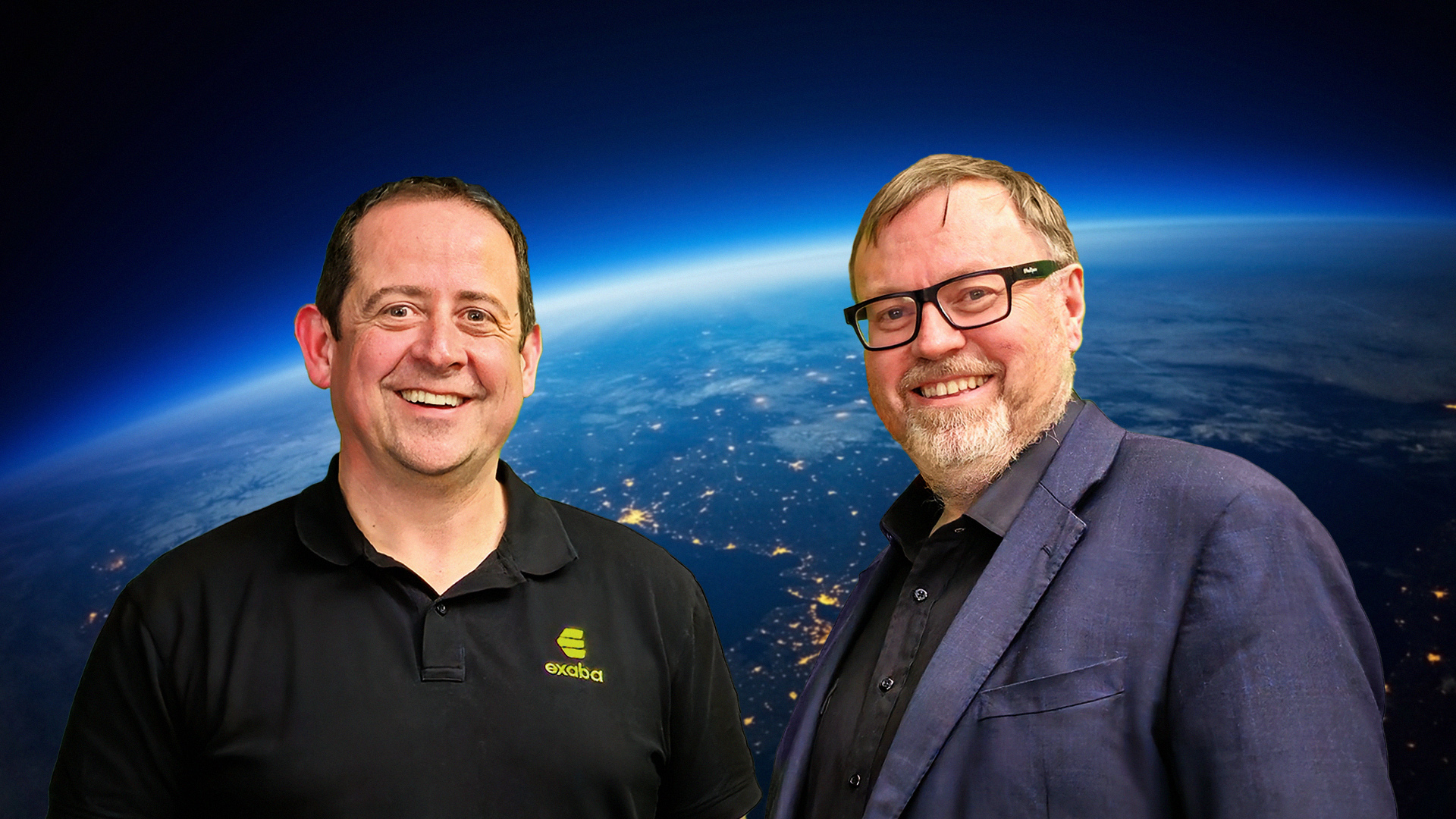
Host Paul Spain sits down with Peter Boyle (Exaba) as they discuss how Exaba is helping managed service providers build their own local clouds using commodity hardware, keeping data under local control while turning infrastructure costs into new revenue opportunities and building a successful deep-tech company from Hamilton.
They also discuss the latest tech news including Labour's AI Regulation Plan, AI leaders calling for slowing the AI race, a cybersecurity alarm after major NZ breaches, a Kiwi start-up aiming to create gravity-free drugs in space, and Apple's foldable iPhone Duo.
Read the Full Transcription
Transcript is computer-generated and may contain errors.
Paul Spain:
Hey folks, greetings and welcome along to the New Zealand Tech Podcast. I'm your host, Paul Spain. Joining us today is Peter Boyle, who's the co-founder and chief executive of Exaba. Based in Hamilton, Exaba is building a New Zealand-led approach to data storage and cloud infrastructure with a focus on data sovereignty, security, and scalability. Peter brings a wealth of experience from companies including Niriad, LIC, and OpenBet, and joins us to discuss the future of data, cloud economics, and building a deep tech startup from here in New Zealand. Welcome along, Peter. Great to have you on the show.
Peter Boyle:
Thanks, Paul. Really great to be here.
Paul Spain:
Look, looking forward to delving into the full Xeba story, of course, but we'll jump through some of the interesting tech news topics of the day locally and internationally first. And of course, a big thank you to our show partners. So thank you to Spark, One NZ, 2Degrees, SAP, Workday, PwC, and Gorilla Technology. Super appreciative of all of their support that allows us to, to bring you the show every week. Well, first up, looking at the New Zealand front, we've had Labour come out with their approach to, to AI regulation, unveiling an AI policy as we head into the election. They're proposing a dedicated AI office, a focus on online safety through a regulator, copyright protections for creators, and some rules for data centers that ensures that, you know, data centers are, you know, investing back in when it comes to, you know, power. and water accordingly. And they're saying that, you know, New Zealand does need locally driven AI governance that really strikes a balance between the innovation and the uplift, you know, but also on the flip side, the risks, privacy, safety, and accountability, and looking at the economic opportunities appropriately.
Paul Spain:
Now, you've had a little bit of a look at some of this. You know, for folks that are interested, they can head across to the Labour Party website, labour.org.nz. I'll read through just quickly there what they're saying their goals are. So their goals for AI: protect what matters, protect people's rights, safety, and privacy, protect creative work, talking the music and so on there. And keep government decisions that affect people's lives accountable to— sorry, yeah, government decisions that affect people's lives accountable to people. Unlock our potential, help New Zealanders and businesses build the skills and capability to use AI productively and share in the benefits. I think, you know, we all want that. Lead on New Zealand's terms, so providing clear government leadership and oversight and protect New Zealand's control over our data and our choices.
Paul Spain:
A new Office of AI within Department of Prime Minister and an online safety regulator. A framework to recognize and pay creators when AI uses their work and rules requiring data centers to pay their own way on energy and water. What are your thoughts on this, Pia?
Peter Boyle:
I think there's a fair chunk of things in there to unpack. I think sort of starting at the top, fundamentally, I think a really good idea for government to develop a capability and deeper understanding of AI. I think in there, there seems to be quite a lot of focus on the regulation side. And I guess I'd love to see equal balance between How do we make the most of where AI is going as a country? You know, we, I think we know that New Zealand has had a productivity challenge for the last few decades, and AI is rewriting a lot of rules right now. And so it probably gives New Zealand a really good chance to step ahead and step change in what we are doing. I think it would be great to see equal measure of thinking about how we do that, along with the regulation. That said, I think the regulation comes with challenges. So realistically, right now, AI is happening in a few large companies around the world.
Peter Boyle:
Most of it is in frontier models. And by frontier models, I mean those that are really at the forefront of AI, whether it's Anthropic or OpenAI, Google, Microsoft, et cetera. And so realistically, New Zealand's ability to regulate those companies that are overseas is limited. That said, I don't think we should not try and learn and adapt. I think, you know, should creators of IP and content be paid for their work? Absolutely, right? I don't think anyone would argue with that. I think right now the ability to do that through regulation is tricky in New Zealand. Which makes me then sort of think, you know, we see maybe in Europe leading the way thinking about sovereign models. How do they have their own AI capability as a country or the EU as a whole? And I think it allows New Zealand, I guess that's why I'm saying think about the growth side as well, to really think what we could do in terms of our own sovereign capability in AI.
Peter Boyle:
so that we can actually regulate what happens locally rather than rely on a small number of companies somewhere else in the world?
Paul Spain:
Yeah, I think the concept of sovereign AI is, you know, is a really fascinating one. I think all of these aspects, it's actually quite challenging to land on, well, what should be our approach as New Zealand? We do have some opportunity to, bring legislation in, in certain areas. But knowing exactly how it actually plays out when the world of AI is moving so quickly, you know, is one of those things we're probably not going to, you know, have full clarity on how these things play out. And even down to, you know, sovereign AI, you know, what would it look like to have our own, you know, local, local AI? What are the other sort of variations on working with hyperscalers who maybe have local infrastructure in New Zealand? How should we evolve our regulation? If you look at, say, Germany, China, where hyperscalers might have data centers in those locations, they actually don't own them, right?
Peter Boyle:
Yeah.
Paul Spain:
So they're So that those data centres are not beholden to US regulations, but more to their local ones. So there's a whole variety of approaches and different outcomes that can come depending on how those approaches land, right? But we also need to make New Zealand not too hard to deal with from a perspective like we're not China, right?
Peter Boyle:
Exactly.
Paul Spain:
So if we put in a rule and said, oh, every data centre has to be New Zealand-owned and completely controlled and so on. Yeah, Microsoft would probably, or AWS or Google, what have you, would say, see you later. We're not going to play your game because of the size of the market. But there'll be some variation on things that works. And obviously there are some scenarios where we don't want to be beholden to international companies. And so holding things locally, having maybe more control than we have now, you know, could be perfect.
Peter Boyle:
Yeah, even if I went back 12 months, I think a lot of people thought it was too hard to get into AI. The frontier models were just, you know, blitzing everyone else. It was almost an impossible task. But I think if you look maybe even in the last sort of 3, 6 months, that's changed a little bit through people starting to do open-source models. And so it's no longer New Zealand having to do it by themselves, competing against Anthropic and OpenAI, which to be honest would be an impossible task, versus a lot of researchers across countries coming together, making their knowledge and advancement available through open source. And that starts to change the game. Are they at the same place as the frontier models? No. But are they catching up? I think, you know, really starting to see some advance there.
Peter Boyle:
And I think that's the opportunity for New Zealand is capitalising on research done around the world.
Paul Spain:
Yeah, and I think there is that growing interest in the open weight, open source, you know, type models. As you say, the capabilities have been moving along, you know, fairly quickly. So definitely some merit to, At a minimum, kind of continuing to watch their progress in terms of how best to leverage those in a New Zealand context. I think it's inevitable that we will have more AI capability that is local, that sits outside of the context of the hyperscalers. And, you know, Ultimately, there will be questions that organizations and individuals will ask around, well, which suits my needs better? How much do I care about having my data—
Peter Boyle:
Exactly.
Paul Spain:
That is under a sort of New Zealand-type control? And I think we have that element where in this country, where data can be considered as taonga, considered as a treasure that we shouldn't just be dumping in varying locations or in, say, US jurisdiction when it comes to how it's controlled?
Peter Boyle:
Yeah, I think it's a really important question. I think people are still learning about that right now. Sovereignty has been bandied about quite a lot in the last year or so. What that really means to businesses, particularly around AI and knowing whether your data is feeding into models. I think people are just sort of starting to have those conversations and consider what they really need to do as a business. I do think Europe's a little bit in front there, and you are seeing large European companies make the choice to move their data to data centres, like you say, owned and operated within their own jurisdiction.
Paul Spain:
Now, this potentially sort of crosses into the current debates that we're getting, especially in the US, but this is really spread across media all around the world, where key leaders within the AI world talking about, is AI dangerous? Are we about to create a kind of Earth-ending sort of incident? Yeah, some kind of existential incident and so on. What have you kind of landed on in terms of that? Because there's a whole lot of perspectives. And I'm personally not sure whether the conclusions that are sometimes being drawn around AI, so that the suggestion to maybe slow down AI, whether that's an appropriate approach to slow down the AI research. whether, you know, some of the guidance of, well, we need, you know, extra regulations around AI development, which, you know, actually could help entrench, you know, the biggest players, right? Rather than actually help facilitate and support the development of open-weight models. So there's some, you know, fascinating things flowing around here.
Peter Boyle:
Absolutely fascinating. Like I say, very, very hard to know. I think some of these companies, they've got IPO share market listings coming up. And they're obviously, they will be trying to control the narrative of what is discussed. It's either really good marketing, just saying how valuable they have become, or like you say, trying to create a regulatory moat. As soon as regulators become involved, it's harder for new entrants. There is a level of funding that you need to be to be able to play in a regulated space. It's really hard to know.
Peter Boyle:
And I think that's probably the key thing is we just don't know right now. And so what I would say is if they're opening the door, which sounds like they are, it doesn't necessarily have to start with regulation. It could start with observing.
Paul Spain:
Mm-hmm.
Peter Boyle:
Understanding, really seeing if that threat is there. And if it is there, then obviously it makes sense to get in there and do something about it. We've heard this whole, you know, everything ending in the next decade. Really hard to know what that is the case. We've only seen, you know, 1 or 2 people sort of leave and make that point. That's, I'm sure, you know, that's not a large number of people leaving those companies and throwing a flag out there. But it's enough that I think it makes sense for people to get in there and understand, see whether it is bluster and about creating, you know, protecting their own businesses. Or is there something there we need to be worried about?
Paul Spain:
Yeah, I mean, it's certainly very quickly caught on with news media, this resignation from Jacob Coxon, who was, you know, a researcher at Anthropic, and, you know, his warning that, hey, you know, AI companies are, you know, racing in a, in a really bad direction. And it's sort of interesting how that really, you know, gained steam, you know, so, so, you know, quickly. And, you know, we had Dario Amodei, you know, CEO of Anthropic, put up a big blog post online. But then, you know, OpenAI's Sam Altman and Musk kind of jumping into the discussion, you know, You know, very quickly. And yeah, look, it's one of those things. We're getting a whole lot of different viewpoints from around the place. We've got politicians jumping in saying, you know, no, this is not an issue. And, you know, they've got access to really good advisors, but you don't know whether, you know, even what they're saying, you know, exactly what the motivations, you know, are from each direction, right?
Peter Boyle:
Yeah.
Paul Spain:
this ongoing thing, especially, you know, I guess in recent years where we see different messaging coming through the media. And it can be really hard to understand what are the motivations for the messaging that we're getting through the media? Is it actually open and honest? Or is it, you know, intended to manipulate a particular outcome?
Peter Boyle:
I mean, what you can guarantee is everything that's hit the media in the last week or so has been done with a lot of PR advisers that are telling them how to shape the narrative, right?
Paul Spain:
Yeah.
Peter Boyle:
So absolutely they are looking to control the narrative right now. I think that's without a question. The facts that lie under it, it is really hard to know. I think, you know, the discussion, what, 12 months ago was, well, someone's going to win. best that we as America are at the front. I think I did see Trump sort of say, whoever wins, wins, in the last 24 hours as well. So clearly, like you say, at a government level, they're still letting them run. Raising the flags themselves, I think it probably is a fair amount of controlling the narrative.
Peter Boyle:
But given the opportunity, I think might as well get in there and understand exactly what is happening. From my own experience, I guess I do see I've used AI a lot over the last 2 years. And 2 years ago it was kind of like, you know, it might help you write an email. It was like, it was pretty rudimentary, right? Versus now in the engineering space building a product, it is like, it is a little bit scary how fast it has improved. And probably that's the main thing. It's the acceleration of improvement that seems to be the scary part. And I guess that's what they're saying is a lot of it is around it improving itself now. And maybe that— it seems to be about, as humans, we're not keeping up with our understanding.
Peter Boyle:
And if that really is the case, I think, you know, let's learn that.
Paul Spain:
Yeah. And there's a— I think there's a broad range of views of how far AI can go also. But you would expect the leaders of Anthropic, OpenAI, and so on to have the most informed view on probably of most of us in terms of what the actual possibilities are.
Peter Boyle:
Absolutely.
Paul Spain:
Moving on, we've got a real alert around cybersecurity issues here in New Zealand. And that comes because we've had a a number of reasonably significant breaches. Xentech here in New Zealand, Thankyou Payroll, Mathspace. These are ones that have just happened very, very recently. And it's a real reminder around the risks to our data, to finances, to personal information, health data, and Yeah, I don't see this slowing down right now. I think Mathspace, more than 1 million users across New Zealand and Australia, you know, potentially impacted there. Of course, this isn't our first issue on the health front, but, you know, what we saw there with Zentech, you know, health and clinical trial, you know, data Being compromised is far from ideal. And it sort of becomes, I believe, one of those things that if we don't get this addressed as a country, you potentially see New Zealand missing out on opportunities on the global stage because, oh, New Zealand can't look after their, can't keep their house in order from a data privacy perspective, from a cybersecurity perspective.
Paul Spain:
let's not entrust things to small New Zealand firms, whereas our small New Zealand firms are often our most innovative. But if we don't step up on that cyber front, that may end up becoming a real chink in our armour.
Peter Boyle:
Yeah, well, look, first of all, I don't think it's only small New Zealand firms at all, right?
Paul Spain:
True, true.
Peter Boyle:
Even the large US multinational firms, they've got the same issues. You just probably don't hear about it as much. I think there's, I mean, there's a lot of lessons in here. One, I totally agree, it is not going to slow down anytime soon. You know, I think, what was it, 6 months ago, maybe slightly longer, Anthropic on the AI front released or had this new model that was really good at finding security holes in software. And that's where we saw Actually, the ability for that model to be used internationally stopped for a brief period. And so the risk could be assessed. But I think what it tells us, you know, I agree, short to medium term, we'll actually see an acceleration, or if more of these occur, the tooling that AI has given hackers makes it a lot easier to find them.
Peter Boyle:
And I think there'll be a lag between that tooling finding the ones that are present there now, and actually developers of these products fixing those holes, using the same tools effectively to find and fix them before they're found by the hackers. So there is gonna be a period where we are more exposed. I think there's some really simple things companies need to think about. One, are they storing more data than they need to, right? Like lower the surface area of exposure of your customers. Do you really need the date of birth? You know, everyone captures it, but why have you got it as a—
Paul Spain:
Too many people are collecting it unnecessarily, I believe.
Peter Boyle:
Exactly, and I think you actually went back a few years with GDPR and everything in Europe, and you had to justify why you were storing data, and it made a lot of people sort of go, actually, we don't know why we're capturing this data. So I think that's number one. Number two, you know, I think as New Zealanders, we like to get the last dollar of value out of things that we've purchased. But actually probably a 10 or a 20-year piece of software, 20-year-old piece of software, it's just gonna have a lot of these issues now. So people really need to keep moving forward, make sure they're running the latest versions of everything. If you're running Windows 95, which probably someone still is, you know, it may not be the best thing to be doing, especially if you're storing customer data. But then I think there's the reality that the chance of it happening is higher, right? So also, if it happens, people just want to see a really good response to it. You know, step forward, own it, and react well.
Peter Boyle:
And so you'll only do that if you have a response plan in place ahead of time. If you're making it up on the fly, and I think we've seen that a little bit in New Zealand recently, Yeah. you're not going to have the, the best result. The ones that you see handled well are ones where people have the plan and they own it from the start.
Paul Spain:
Yeah, yeah, 100%. So much of it does come down to those basics. That's part of what concerns me for New Zealand because we do tend to still lean in too much to this sort of she'll be right type of attitude. And some of the things you're mentioning there, even birthdate, I remember we launched a social network going back 20, however many years ago, and that was one of the things we looked at. Do we collect a birthdate? And even 20 years ago, I remember, you know, we debated it and we agreed we don't need to collect that level of information and it's a risk to collect it. Let's not do it.
Peter Boyle:
Yeah.
Paul Spain:
Yet we see time and time again, you know, birthdate data being collected in, in situations where certainly for me as a, as a user of a site or a technology or a service, when I get asked for that, I think, why, why do you need that? And so often I look at it and I think, you really actually don't need it. It's, it's not appropriate to be asking for that level of information. So yeah, definitely some, some great lessons to be learned there. Now, one of our startups here in New Zealand that's been getting attention because they've recently raised, I think, something like $10 million, is Outlier Space. Now, their focus is on manufacturing pharmaceuticals in microgravity. And this is, you know, I think just an absolutely fascinating one. It's great to see a New Zealand company that's really pushing the envelope in this area. You know, it's part of, you know, what is a really strongly growing aerospace sector for New Zealand.
Paul Spain:
And, you know, to me, this is exactly the sort of company that we want to be getting behind. We want to see them, you know, succeeding on the global stage. So they have Jamie France, founder there, previously worked at Rocket Lab, Team New Zealand. And they're gearing up for test launches, I think, in the sort of 2028 timeframe. So yeah, really exciting to see this happening, right?
Peter Boyle:
Yeah, I mean, I'll be honest, I don't know anything about microgravity and creating pharmaceuticals, right? But when I saw this, I did think a couple of things. First, you know, as you said, New Zealand aerospace, We've got really unique capability here built out of Rocket Lab, right? So I think we're up there like top 4, top 5 in the world in terms of launch capability as a country. And amazing that we have got people making the most of it. So, you know, that part alone, I love that we've got that happening in New Zealand now. The second thing I thought is, is, you know, Peter Beck just won the Business Desk CEO of the Year, right? And when I look at companies that have made noise in New Zealand recently, whether it's Halter or this one or Rocket Lab, isn't it just fantastic that we are starting to get that ecosystem of founders, even just spinning out of Rocket Lab alone?
Paul Spain:
Totally.
Peter Boyle:
So yeah, it's amazing. I think, I mean, when it comes to the growth story of New Zealand and how we lift ourselves internationally, I think these are absolutely the kind of success stories or even just entrepreneurial spirit that's going on in the country now.
Paul Spain:
Yeah. And talking of others, we've also got Partly. We've had Levi Fawcett from Partly, you know, podcast before. They've done a very recent raise now, $50 million, I think US dollars. And this puts them in category of, I think, a half billion dollar US valuation. So that's trucking up towards a billion New Zealand dollars fairly quickly. I think north of $850 million New Zealand. So, you know, just another one, you know, both of these, you know, are folks that have worked under Peter Beck.
Paul Spain:
Yeah, just incredible to see. On that, the manufacturing of pharmaceuticals in microgravity, just as a little touch, in my understanding, and I haven't delved in too far on this either, is there are some types of research that will yield very different results in microgravity, that's my understanding. And then if you maybe get the results in a microgravity situation, then maybe you end up coming back to, and on, doing the actual long-term manufacturing locally. But if you can get those breakthroughs in a microgravity scenario, then you figure out, join up the dots of how to do that kind of en masse. I'm not picking, at this point in time anyway, that we're expecting to see sort of massive pharmaceutical factories In microgravity, but that could also be part of the future if that ends up being the only way to manufacture certain pharmaceuticals.
Peter Boyle:
Yeah, look, I think obviously the microgravity brings some interesting physics and opportunities. And I guess this is why in the space realm we've done a lot of tests from NASA in the early days in microgravity. So absolutely makes sense. I actually, going back to the AI conversation, I think, you know, the pharmaceutical industry and the ability to cure diseases has been really raised as one of the key benefits that we can get out of it as well. So, you know, absolutely. I think it's amazing that we are doing this kind of thing from New Zealand. Yeah. Yeah.
Paul Spain:
Really exciting. Now we probably should touch on a little announcement from, from Apple last week, the iPhone Duo.
Peter Boyle:
Yes.
Paul Spain:
Has landed. Now, some would say this has got way too much attention. Apple are not the first with a folding phone. It's a, you know, would argue, look, this is a me-too product. It's not dramatically different from what Samsung and others have brought into the market. And there's a degree to which I, you know, I agree. It's, you know, it's not like they make completely make their own displays. They're using other manufacturers to achieve the outcome.
Paul Spain:
However, I think even just the story that Apple have held back so many years before bringing a folding iPhone to market does speak to the way that Apple operates in terms of being very cautious at times in terms of bringing a product to market until They have the confidence that the technology is mature enough. I think they've worked pretty hard from what I can see in terms of the software and the ease of use. And they've done as we expect from Apple is they've launched this at a really premium price point, right? So we're talking a $4,200 in New Zealand starting point up to $6,600 if you want the version with the 2 terabyte of storage. Something like that. But, you know, in a bit over a month's time, you will— or around a month's time, you'll be able to put in your preorder. And then about a week after that, you know, these will be— they'll be shipping out to folks. And yeah, I mean, I do think from a perspective of the way that the smartphone market operates, where, you know, Apple holds such a big piece of the market and such a big piece of the profits that we're quite likely to see the iPhone duo, you know, giving Apple a lift and seeing a lot more foldable phones in people's pockets going forwards.
Peter Boyle:
It's really interesting. I mean, I'm a, I guess you'd say an Apple fanboy. I've got the, you know, stack of MacBooks at home of all the generations that I've owned them. the Apple TV, the iPad, everything, right?
Paul Spain:
Yeah.
Peter Boyle:
The Watch. And, but I also, to your point, like Apple haven't really innovated for more than a decade, right? They sort of lost that a little bit with Steve Jobs. I don't think they've ever refound it. And you're right, maybe under the sort of current executive at Apple, they have taken a more cautious approach. And it certainly hasn't hurt them on the money front, right? They, like you say, revenue's still flowing in, super profitable. I do look at this product and struggle a little bit though. I, like, one of the things I tried to find, 'cause I haven't seen it in person, is just what it compares size-wise to an existing iPhone. And it seems to be a little bit shorter, a little bit fatter, and then obviously folds out.
Peter Boyle:
And I guess what I'm unsure at the moment, and I'm sure Apple has done its research, But just who is the person that wants this? I haven't seen lots of people walking around with the Samsung foldable phone. I actually have a friend that works at Samsung in South Korea. And so I saw one of those, you know, early on. It was like, oh, amazing.
Paul Spain:
Yeah.
Peter Boyle:
But I didn't actually leave wanting it, right?
Paul Spain:
Yeah.
Peter Boyle:
And I don't feel like right now I would want to go out and buy the iPhone Duo. Partially the price, and the price undoubtedly will come down with time, or maybe just everything else will go up to meet it. But I really sort of sat there and said, when would I use it? And if I think of my day-to-day, the only time I see people wanting that kind of thing is sitting on an airplane wanting to watch their show while they're flying Auckland to Wellington for 45 minutes.
Paul Spain:
Yeah.
Peter Boyle:
Absolutely, it would be amazing then, right? But maybe that 1 hour, once a month or so. I think the interesting part, and I'm guessing Apple have done this, is maybe it's kids playing games that it really, really, you know, maybe it's actually unseating gaming devices more than it's unseating phones. Fascinating to see what happens in reality. It's just not at the top of my Christmas shopping list right now.
Paul Spain:
Yeah. And when you, you know, you consider the price point so that, you know, the Samsung Galaxy Z Fold 8, that starts at around the $3,000 I think probably the recommended retail in New Zealand about $3,100. So there is obviously a price difference there. When you look at the hardware, it doesn't look dramatically different. I guess we'll see the reality once it hits the market. It is this sort of passport-sized phone. And fascinating that they picked on the Duo name because when Microsoft launched their effectively folding phone, I think we're maybe going back maybe 5 years or so, that was called the Surface Duo. Now there's the screen actually split in the middle.
Paul Spain:
It was 2 screens when you opened it up. It wasn't one that was folding. They were 2 separate sort of working together as though it was one. But yeah, I was fascinated when the announcement came through that that same name had got applied, but by Apple rather than—
Peter Boyle:
Yeah.
Paul Spain:
Rather than by Microsoft, but very similar form factor between the Surface Duo of a number of years ago, the Samsung Galaxy Z Fold 8, and the iPhone Duo. I do like now, which the earlier folding phones didn't have, is you can just use it closed and that can be your default because it's got a big screen on the outside. It works, they work very well. Like that was my experience with the Z Fold 8 when I used it for a time. And then if you want the bigger screen, you can unfold it. So yeah, it's fascinating. I think there's a degree in which the market for smartphones is so big that you can have these smaller niches. that are not— there's not going to be necessarily 100 million buyers of a particular device, but it's still worth the manufacturer's time to give that choice and let individuals decide, you know, do you want one that folds this way, folds that way? Do you want a more standard form factor? You know, do you want a phone that doesn't actually have any smarts at all?
Peter Boyle:
Yeah.
Paul Spain:
There's a, you know, a small market for those, and that they're able to to work and, and kind of compete in the current market.
Peter Boyle:
Yeah, I think from what I've seen, I mean, I think Apple's certainly gone for the size and dimension to give a, a nice aspect when unfolded. So it, you know, it does suit watching a TV show or a movie or whatever. Um, and I mean, the interesting thing, looking at my own usage, you know, I've actually had an iPad for years, but I don't use my iPad anymore. And that's as The phone has got better. I have just done a lot more on my phone. Um, and maybe, so maybe there is a key part there, price aside, that, that actually from a usability perspective, people are just wanting to do more on their mobile device. Making it a bit bigger while still fitting nicely in your pocket works well. Like I say, don't want to unfold it all the time.
Peter Boyle:
They will have done lots of research before launching this. I think probably the main thing that I look at is I'm just not sure it's worth $4,000 to me. Yeah. At a starting point as well, right? The, I mean, the $6,500, $7,000 is just out of this world right now for a phone, right?
Paul Spain:
What I would love to see Apple do, and this is what would entice me to spend $6,600 on an iPhone Duo, would be if you look inside that device, you have similar RAM to running a full-blown operating system. You have a processor that could run, you know, can run macOS.
Peter Boyle:
Yeah.
Paul Spain:
And if you've got the top-of-the-line one, you've got 2 terabytes worth of local storage. There are a whole lot of scenarios under which that would be lovely if I could dock that when I'm traveling or I haven't got a laptop with me. And that actually becomes, you know, flips into a Mac mode where it actually runs your full-blown operating system with any, you know, any Mac application you wanted. But they've chosen not to go down that track.
Peter Boyle:
Yeah, I mean, they haven't done— I mean, people said that with the iPad, even the iPad Pros and everything, right, is put macOS on there so I can use it as a full computer. I mean, I did see some benchmarks of their new CPU inside this phone and supposedly it's absolutely impressive, right? Like it outperforms most laptops on the market today, even the top-spec Intels, etc., right? I think it's faster than the i9. So, so they've clearly got a lot of punch in this. Great idea. But I've heard that from people say that about Apple for like the last sort of 5 years, right? And they haven't done it so far. Who knows?
Paul Spain:
And Samsung have a degree of that type of capability where you can, you can dock you know, some of their smartphones to, you know, docking monitor type of scenario and away you go. It is using the Android apps, but it takes advantage of your bigger, you know, your bigger screen and so on.
Peter Boyle:
Yeah.
Paul Spain:
And I've done that. I've left a laptop at home or, you know, there's been whatever issue and it's like, oh, let's actually try out this experience and you can operate. But what I found on that side is it it wasn't a high sort of productivity type result 'cause you don't have the full operating system and a bunch of constraints there, but still somewhat workable. Whereas Apple, because they own the mobile operating system, the full desktop operating system, and even we know that iOS is a variant of macOS, so they totally could do that. But I won't hold my breath on that one. No, neither will I. I'm not sure that's coming anytime soon. Right, well, I'm keen to delve in and hear about the Exiba story.
Paul Spain:
So maybe you can give us a little bit of your background. You know, we did a previous podcast with Alex St John of Niriad, and I know that as part of launching Exiba, you sort of acquired those assets. So there's a bit there to tell and really keen to—
Peter Boyle:
Yeah.
Paul Spain:
Maybe you can start with an overview of what what Exaba does?
Peter Boyle:
So yeah, for sure. I mean, Exaba is, it's designed to give people a local alternative to the hyperscalers. So right now, a lot of people, just the default option is to put their data in the cloud. And it's, you know, it was the easy option, no cash upfront, all of these reasons that we were given that cloud was the right answer. And the thing is that the cloud has been around for 20 years now, right? So Amazon actually launched with S3, which is the product that Exiba has built, 20 years ago this year, so 2006. And, but I think 20 years later, people have learned where it works well and where it doesn't actually deliver the things that it's promised. And people are also really thinking about things like sovereignty now. So Exaba is about creating that sovereign alternative to defaulting into the cloud.
Peter Boyle:
And we do that by enabling managed service providers, MSPs, or just think of it as your local IT firms that help you do everything in your business to run their own cloud. So we started Exaba and a little bit is the history of Nereid there. So myself and Stuart Ingalls co-founded Exaba. We'd both worked at Nereid, and I'd say Nereid built some amazing technology, but didn't necessarily quite know the market it was going after, right? Didn't really understand the market well enough. And so I don't think it got product-market fit or it needed longer to get that right and a lot of cash to achieve it. And so we really got the chance to start Xaba by At the point they were making a decision on Nyrriad, whether to keep funding or not, Guy Haddleton, who's the main investor, cornerstone investor of Nyrriad, had the opportunity approved by the board of Nyrriad to talk to us. It was actually to see if we could save Nyrriad, right? So actually we did try and buy it or made a couple of offers, but the reality is they could get more by splitting Nyrriad up into its assets and But Guy did say to myself and Stewart, if you've got the right idea, we'll— I'll back you in it, right? And what we'd seen is that the market was shifting to wanting this called S3 or object storage. Really what it is, is it's storage that works across the internet rather than just needing to be local to where you are.
Paul Spain:
Mm.
Peter Boyle:
And we could see that the market was shifting in that direction, but people only had 2 choices. You could either use a cloud provider go to the big names like Dell and buy something that ran inside your business, so on-premise, or you could go to the hyperscaler. But there wasn't a solution to allow managed service providers or IT companies to offer a cloud themselves. There just wasn't a good answer out there. And so that was— that's really what Exabar has created, the ability to have— we've called it local scalers.
Paul Spain:
Yeah.
Peter Boyle:
Rather than the hyperscalers. And what that means is a local cloud owned and run by your local IT company. And then you know where your data is as a business. So it's really, you know, at that point it's truly sovereign.
Paul Spain:
And, you know, how do you, you know, do that from having your initial ideas and the opportunity to taking that out to the market? How much do you focus in New Zealand? I know you're getting your way into the US market increasingly at the moment. So what's been your approach to where your market is and how to really build a successful, longstanding operation?
Peter Boyle:
Yeah, so first of all, we needed the team, right? So I'd say of all the things out of Nouri, the key thing that we got was a really experienced experienced, amazing team.
Paul Spain:
Mm-hmm.
Peter Boyle:
You know, we look at it and we think it's the strongest in the Southern Hemisphere in terms of data storage capability. So we had the team that we knew could build the product. And then it was really about saying, what is the product that we need to build, right? And so we knew fundamentally the storage technology we wanted, but to make it work in the market was really key. So we started Exaba, you know, Stuart and myself were actually probably on board for a month or so first before the team joined us. And, um, we just called 20, 50 MSPs in that first couple of months and really understood what they were doing, where their pain points were. Were they using cloud? Had they thought about running their own cloud? Why they hadn't done it. And so we learned a lot. Like, they didn't want open source because open source usually came with the meaning of needing lots of people to run it, right? Key expertise that's hard to find.
Peter Boyle:
So they wanted a commercial product, but lots of the products out there weren't set up to run a cloud. They were just set up to run one business.
Paul Spain:
Yeah.
Peter Boyle:
And so they were often having to work their way around it. So we, we learned a lot, but then the key thing we did was we chose half a dozen of those companies that represented different market sectors, and asked them to come on board with us, helping us build the product. So we say we've co-developed it with the people that are using it at the coalface, right?
Paul Spain:
That's fantastic.
Peter Boyle:
So tell us everything. You know, one of them was already offering the service but had found pain points. They were struggling to scale with their current solution. So scale was a really important thing. Another one, a super experienced MSP here in Auckland. They knew every product on the market. They sell them all. But then they'd wanted to actually offer their own cloud for 2 years before Exaba came along.
Peter Boyle:
And they already knew all of the economics of every product in the market and that they couldn't offer a competing solution. So we actually started Exaba on a spreadsheet crunching the numbers, right? And rather than building the product, like actually understanding economics for an MSP so that we could make sure it worked. And that was about not needing a team to run it, super simple, you know, all of the things. So we actually monitor the health of the system as part of the product. And so I guess that's what we've learned a lot is build it with the people going to use it. It's maybe one of the learnings out of Nered. And I think we've done that well. And we've, you know, we've chosen data centers, MSPs.
Peter Boyle:
We've got a cloud service provider in the US. So we even started with an overseas operator as well. And you're right. So, so we've already got people in Australia and we have got our first people on the ground in America and expanding there as well.
Paul Spain:
Yeah. And how do you, how do you see things playing out in terms of scaling the business? Are you— how many staff have you got at this point in time? And I don't know if you can share anything on, you know, revenues as well, but because you're— how long have you been operating now?
Peter Boyle:
So, so we've been going just over 2 years, 2 and a half years. A lot of that time building the product. We, you know, we really wanted to have the right product. So we actually had an early version 6 months in. But it was really about saying, hey, when we go to market, we want this to be the right product. So some of our co-development partners have been running, you know, actually versions of this for the last year with us providing feedback. So we've recently just made it publicly available. That was about a month ago.
Peter Boyle:
And we've got 30 people in the business right now, obviously expanding. We're hiring in both Australia and in the US. That's predominantly or entirely around the sales side.
Paul Spain:
Yes.
Peter Boyle:
So we've got people from, I guess, the team that are in both of those locations. That's the cornerstone of setting up in those countries. But then we'll hire there as well. And look, scale for us engineering-wise will be in New Zealand. We've got a really strong team. We've actually developed an intern relationship with the University of Waikato. So, you know, we bring in grads in their second year. They actually do 10 hours a week with us for 2 years so that we can—
Paul Spain:
Right, that's awesome.
Peter Boyle:
Yeah, I mean, I think one, it's our part of giving back a little bit, but two, we really, you know, the students, even though they're doing 10 hours a week with us, Their grades go up. And I think that was even one of Alex and John's learning is, you know, you encourage the team in a real-world job and actually university becomes a little bit easier. So we've created this pipeline of students that are getting in and using our technology really, really early. We're using different programming languages to what they learn right now. You know, we've chosen Rust for the techie people in the audience. That's for security. So it avoids a lot of these security issues we're seeing right now. It's recommended by the American Department of Defense for that reason.
Peter Boyle:
So we're doing a lot of the things around scale from the beginning. So actually, we've already had students with us for 2 years, right?
Paul Spain:
Yeah.
Peter Boyle:
And they're finishing their degree and joining us at the end of it.
Paul Spain:
Now, in terms of what customers are buying from you, what is the actual offering that you're taking to market?
Peter Boyle:
Yeah, so it's a software offering. I think that was another learning for us is that building the hardware is actually a really expensive, capital-intensive process. And so we have targeted commodity hardware, so our software installed on a Dell machine or an HPE machine or even servers that the managed service provider already has. And then we, I guess the smarts of our software is just to take that piece of hardware and turn it into a cloud. So we, you know, lots of servers, we make them act as one and make them highly resilient so things can fail and all of your data is protected. And that's what we do. That's our expertise is making, you know, we know how they build the cloud and we do that side of it. So as a service provider, you know that the data is secure and resilient and all the things it needs to be because that's the smarts of our software.
Paul Spain:
Right. And in terms of what does it mostly get used for? Is it You know, is it storage? Is it, you know, how broad do you go there?
Peter Boyle:
Yeah, so we've started in storage, and I think that's the key part is Amazon, when they launched the cloud, in fact, the first year or so of the cloud was only the product that we are offering. And, you know, part of the reason is that people just want the safe place to store their data initially. So we are starting in backup, and, you know, that gives people the ability to know, I mean, we've just been talking a lot about cyber, to know that their backup data is really safely stored. We do special things so that it's resilient against hackers. You know, you can, you can set your data so that no one can delete it, no one can change it. It's called immutability, but it's all about being resilient with your backup data. So yeah, that's, that's our initial market. But our intention is to, to give MSPs the tool to grow that offering.
Peter Boyle:
Start in backup because it's, well, one, it's the service a lot of them do as a base service for their customers. Often right now it's a cost line on the, on the service provider's balance sheet. We turn that cost line into revenue and margin.
Paul Spain:
Yep.
Peter Boyle:
So at the moment, if you're reselling the cloud, you're probably making under 10 points of margin. And we're saying, hey, you can have your own cloud and turn that into up to 80% margin. So all the money the hyperscalers are making, keep it local and with the businesses here.
Paul Spain:
Yeah, yeah. And in terms of the journey, I mean, what would you expect that to look like from, you know, the sort of startup phase now chunk of investment. What do you expect that to look like through to becoming a profitable software firm?
Peter Boyle:
Yeah, so look, first of all, one of the things Guy says to us is don't aim for profit, aim for growth, right? So it's all about growth. And so we've just done a $12 million raise. So we're in a really good position, right? Our product is built in the market and we've got $12 million or a little bit more than that in the bank. Right. And, and that is all effectively around the next 18 months of us in a growth phase of going to, going to the market. So that is entirely where we're at. And it's all about how do we automate it, how do we make it super simple to install? You know, we want a customer to be able to buy the servers and then we show up and we have it up and running in a few minutes. Right.
Paul Spain:
Fantastic.
Peter Boyle:
So, so that's our goal of growth is really make an engine for growth rather than needing lots of people to do it.
Paul Spain:
Yeah.
Peter Boyle:
And, you know, I mean, the key thing is the product has to do the hard work, right?
Paul Spain:
Of course.
Peter Boyle:
So where the offering to those people is to take their biggest cost and make it their biggest margin, make it their biggest profitable part of their business. So, you know, we sit down with MSPs and it's just great because most of them leave the room going, oh, I really get it. It's definitely a pain point. I, you know, I love the idea.
Paul Spain:
Great.
Peter Boyle:
And I think that's the key part is get people to love the product. I probably learnt that in my time at OpenBet where I saw lots of different people using our software and the ones that did really well focused on the product and delivering real value to their customer. And I think that's what we're doing. With that, you get the customers. And then it's all about scale and scaling the business.
Paul Spain:
Now, do you feel building in this time where AI is sort of part of the picture gives you the sort of pace you need to succeed quickly? Because we've obviously seen the, I guess, the shine come off some software-type businesses, but then on the flip side, those that are new, are able to accelerate and move at a, you know, a far faster pace than what we were seeing a few years ago?
Peter Boyle:
I think there's 2 aspects to that. So one, actually having the right team is still super important. I guess the area that we're in, it's not your average SaaS business, right? It is deep tech, it is really hard problems. I'd considered myself pretty strong technically, but some of the people in our team and blow my mind in terms of what they can do, right? And so certainly we've seen AI can't deal with our most technical part of the product. It's just not there, or you'd need an absolutely massive budget, right? More than it would cost to run a team.
Paul Spain:
Yeah.
Peter Boyle:
Because we point AI at maybe our most technical area and it just consumes all your tokens in 5 minutes, right?
Paul Spain:
It just can't.
Peter Boyle:
It just, it is complicated, right? And it can't, quite do that right now.
Paul Spain:
Yeah.
Peter Boyle:
So I think we have a certain moat there in terms of the depth of technical, but you still need the team with the knowledge to even tell it what to do, right? So, so I think that is super important. Are we using it to accelerate? Absolutely, right? So, so definitely we are going faster, and I think that's probably only in the last 6 months, um, because before that actually AI wasn't capable of really working in the area.
Paul Spain:
Mm-hmm.
Peter Boyle:
As to the value, I think where you've seen a differentiation is between businesses that are maybe simple SaaS process-based kind of products in a business don't necessarily have the same value right now because maybe it is really easy to replace those with AI tools. But infrastructure businesses are still doing very well. So, you know, I mean, one of the things with AI is you need huge quantities of data. What do we do? We store huge quantities of data, right?
Paul Spain:
Yeah.
Peter Boyle:
So, so I think the area of business that we're in, the infrastructure side, it's, you know, the same kind of thing as Nvidia. Um, the areas where AI needs those tools, they are still high value. In fact, I think I looked at the valuations of sort of companies and startups in our area, and it's actually doubled in the last 12 months rather than gone down.
Paul Spain:
That's fantastic. And for those who use your technology, your software, are they sort of tied back to a software as a service element, or is this something they can run entirely, you know, on their own infrastructure?
Peter Boyle:
Entirely on their own infrastructure.
Paul Spain:
So they've got that complete freedom once they've got your your software away they go. The reason I ask was I saw news coming through last night of quite a well-regarded technology provider, Cambium Networks, who unfortunately had— certainly the UK side had gone into administration. You know, they cut a whole lot of staff.
Peter Boyle:
Yeah.
Paul Spain:
And, you know, they're offering networking, you know, hardware, Wi-Fi, and so on. But of course, that creates a bit of a panic for customers who are like, oh, we rely on their, you know, their cloud in order for it to operate. So there's a, I guess, you know, a stage where, you know, that will put some customers in their case under pressure. But with your software, there's none of that sort of pressure.
Peter Boyle:
No, correct. I think the whole point of our software is actually to allow the managed service provider to offer the service, right? So it's their hardware under their control, and all it is is our software installed on it. Obviously, we're the smarts that turn it into the cloud, but it's absolutely all owned by them. And in the end, the hardware can be their large company that they've already got the support from, whether it's Hewlett-Packard or Dell. So, you know, they can keep that running for as long as they need to.
Paul Spain:
Yeah, great. Oh, well, really, really exciting to hear about the story and hear how things are going. Yeah, really wish you all the best for the next phases and, you know, I hope this is something you can really take to the world and, you know, when we tap in again, we'll be hearing of that global growth.
Peter Boyle:
Oh, look, absolutely, that is where we're heading. So thank you very much for having me. having me, Paul. Great to see good things being done from New Zealand.
Paul Spain:
Fantastic. Oh, well, thank you so much, Peter Boyle. And yeah, as I say, we'll look forward to hearing the Exaba story and watching things progress from here. Of course, a big thank you to everyone for listening in. And, you know, of course, also to our show partners, PwC, SAP, Workday, OneNZ, 2Degrees Spark, and Gorilla Technology. Of course, if you've been listening to us on your favourite audio platform, Do make sure you're following us on YouTube, LinkedIn too, we tend to put content up on both of those and if you're watching the video, well follow us on your favourite audio platform. Another thing I will mention, we have a new nztechpodcast.com website online and we are kicking off a new sort of set of email updates that will be coming through. We have decided to kick to the curb anyone that was previously subscribed to our email 'cause we actually haven't put anything out for a while so if you are interested keeping up to date then jump back in at nztechpodcast.com and drop your email address in there to keep up to date with the insights and info that will give you a bit more than you'll just pick up by listening to or watching the show.
Paul Spain:
Well that's us, thanks very much, thank you Peter Boal, great to have you on the show.
Peter Boyle:
Thank you.
Paul Spain:
All right. Cheers.
Peter Boyle:
Cheers.