Concord Visa’s Global Mobility + New Tech from GoPro, Samsung, Motorola and more
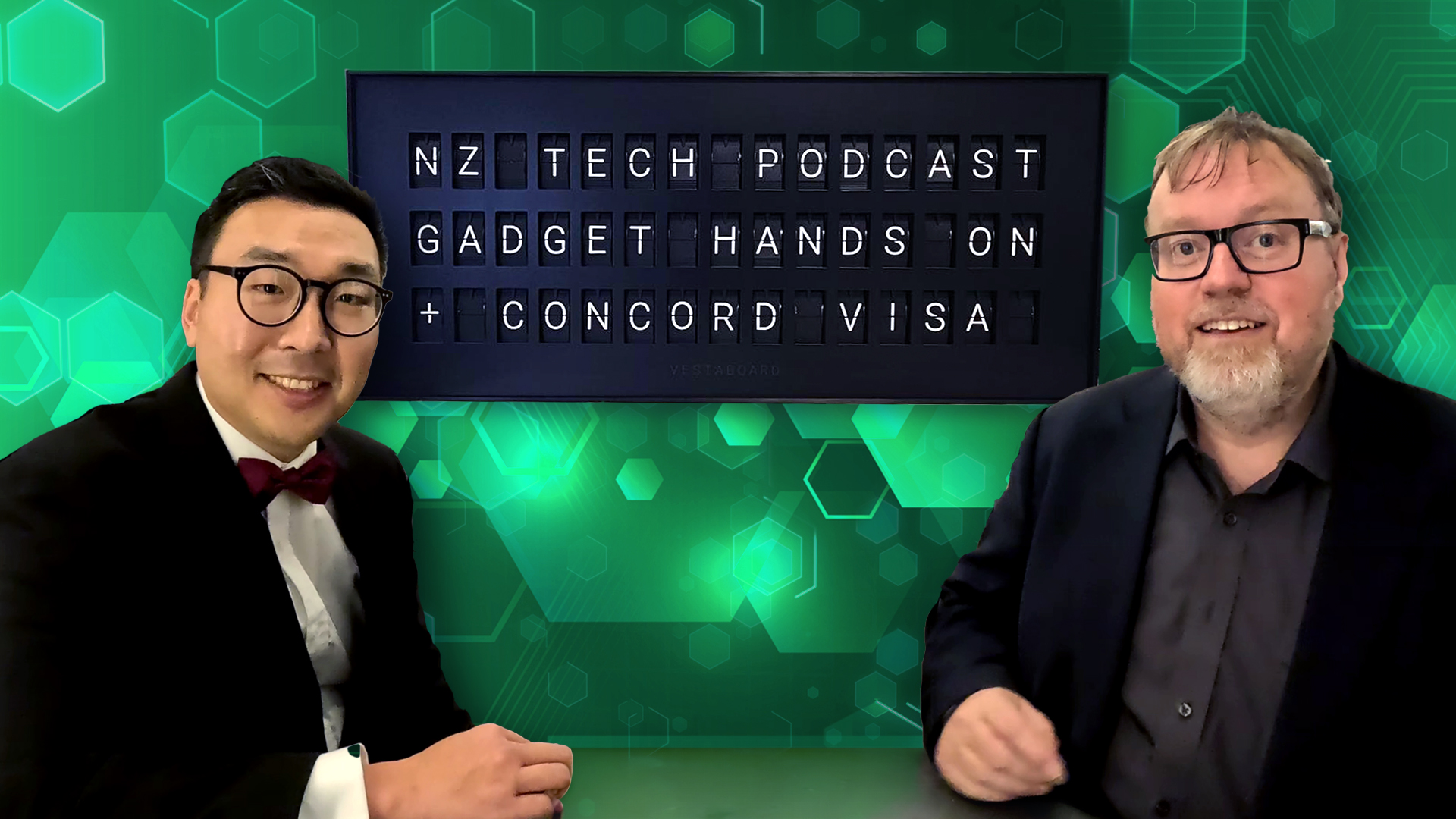
Listen in as Paul Spain sits down with Kevin Park, co-founder and CEO of Concord Visa, to explore how the Kiwi startup is helping fast-growing companies access global talent, expand into new markets, and scale internationally with fewer barriers. Kevin shares lessons from building a truly global business from New Zealand, the importance of hiring the right people, and what it takes to grow at startup speed.
Plus, Paul delivers his hands-on verdict on some of the latest technology to hit the market, including:
- Samsung Galaxy Z Fold 8
- Motorola Signature
- Kindle Scribe Colorsoft
- Vestaboard Note
- GoPro Mission One Pro
Read the full transcript
Transcript is computer-generated and may contain errors.
Paul Spain:
Welcome to this episode of the New Zealand Tech Podcast. We've got a special one this time around. We're delving into a startup story, a mini focus on Concord Visa. fast-growing startup. We're also diving into 5 product reviews, new tech gadgets I've been looking at: the Vestaboard, Motorola Signature, Kindle Scribe Coloursoft, Samsung Galaxy Fold 8, and GoPro's Mission One. Of course, a big thank you to our incredible show partners: Spark, 2Degrees, One New Zealand, Workday, PwC, SAP, and Gorilla Technology. So first up we're talking about the Vestaboard Note.
Paul Spain:
Now this one was new to me, it's a split flap display so very different to the usual sort of screens that we see around the place. This type of display is what was the norm in airports and train stations of yesteryear and it's got that real retro styling to it and The sound is a key part of the experience and you will have noticed that before, we're just changing what's displayed at the moment and you can hear the flaps rolling over. So each character has 64 spinning flaps behind it and on the Vesterbord Note which is the smallest of the Vesterboards, and you can actually join these together as many as as you like, well there's probably some sort of limit but you can join these together and there's also bigger standard size ones as well. In total with the Vestaboard Note, 45 characters, 65 characters in behind there with the flaps so that's 2880 flaps and effectively this is WiFi connected, controlled by app or website, you can really put up any sort of message you like within the characters They're available, there's a bunch of colours so you can get a little bit arty, particularly if you've got one of the bigger Vestaboards and if you pay for their subscription which is around $200 NZD a year, then you can link that up to have scheduled messages, even linking to different data sources so maybe it puts up weather or sports results, other sorts of things that might be of interest to you, but really caught attention. The first day I turned that on in the office, we had somebody from the US in for a podcast, and we just put a welcome note up there for the guest. And, you know, the first comment was, oh, let's get a selfie, let's get a, you know, a photo in front of the Vestaboard. And that was all over social media. you know, had a lot of views.
Paul Spain:
So yeah, very cool. Just something a little bit different. And yeah, it really seems to capture people's attention. So yeah, really enjoying the Vestaboard. The Note comes in at around NZ$2,400 as the current retail price through their local distribution. channel. And yeah, you can use the app for free or sign up for that, that, that subscription, which they've got a 1-year and a lower-cost 3-year subscription for as well. My understanding is these are highly repairable, which is why, you know, this type of technology did last so long throughout airports and train stations all around the world.
Paul Spain:
So, yeah, likely to be a long-term sort of investment. So very, very cool. Alright, what's up next? Now it's the Motorola Signature. Now what really caught my attention around the Signature is as well as it being, you know, their top-of-the-line handset, it stands out because it actually can compete with Samsung not just on some of the hardware and typical sort of software features but on updates. And that's where Motorola have really been left in the dust previously. And they might release a great handset, but then you've got that limitation that it might only get a few years worth of updates. Motorola are telling us that we're looking at 7 years worth of updates, or 7 Android updates coming to the Motorola Signature. So that, that really stands out for me.
Paul Spain:
Great to see somebody competing with Samsung on that front. No, nobody else is really doing that. Really only the Google Pixel devices themselves, you know, compete strongly when it comes to updates. What else stands out about the Motorola Signature? Well, for me, it's that it's a pretty slim, light device. Very nice, you know, great cameras. You've got a telescopic zoom, 3x on the rear. In total, 4 50-megapixel cameras. So really nice from that perspective, although it does fall short of Samsung when it comes to its night photography.
Paul Spain:
So great shots during the day, great overall, but for night shots, Samsung have, you know, definitely got themselves in a strong position there, along with Apple, of course. So a little bit falling short there. Water and dust resistance IP69, so that makes it a bit of a standout. That's a nudge above what we're seeing from Samsung. And also the charging, so this has 90-watt charging, so you can charge the phone from 0 to 50% in about 15 minutes with the appropriate charger. So that's pretty slick. And I guess the other thing is you've got a much closer to a stock Android experience with Motorola. So Google do a bit more customization.
Paul Spain:
I probably like to keep it as close to the stock standard Android as possible. So those were the little bits and pieces from me. There are a few other differences there you can look at online. But I think a really credible option now in the market from Motorola, finally, that, you know, that really can compete well in the market. But of course, Samsung have got a lot more top-end phones that are getting those 7 years worth of updates. So, you know, still Samsung in a very, very strong position when it comes to dominating the market for Android phones, but great to, great to have this option from Motorola now. Now I wanted to tap in on Samsung's Galaxy Z Fold 8. I know we mentioned it in an episode recently.
Paul Spain:
I've spent a bit more time with it now and actually find the form factor quite delightful. Really nice having a passport-sized handset It's got screen on the front, so even when it's not open, it works really well with a virtually edge-to-edge screen. And then once you open it out, you've got a fantastic size display for whether it's consuming and watching content, whether it's splitting up your screen and using a couple of different apps at once. Great form factor. What stood out for me was very reminiscent of Microsoft's Surface Duo. So that was their Surface phone, they did the Surface Duo, the Surface Duo 2, except of course that was 2 separate screens. It was not one, you know, continuous folding screen. So yeah, reminiscent of that.
Paul Spain:
I think it's a great form factor, works really well. As usual from Samsung, you've got great cameras, but the Z Fold 8 fell a little bit short for me because it didn't have the full gamut of cameras that we see on S26 Ultra or the Z Fold 8 Pro. You know, yeah, interestingly, last year's form factor has become the Pro model this year, and the new form factor I guess is the, the standard price option. I wonder whether they should have done, um, you know, done the opposite and made this form factor the Pro with a bigger, uh, and put the, the, the third, uh, camera on the, on the rear. So, um, yeah, you do miss out on having the full camera capability. And someone I was chatting with today said, hey, they like this but they're not going to get it because it doesn't have you know, the top-end cameras from, from Samsung. So yeah, that's, that's maybe, maybe a trick that Samsung's missed, or that may just be, you know, how they've decided to, to play it in terms of their capabilities. You can't put everything in every single phone model, of course.
Paul Spain:
You have to differentiate there. Other things that stand out for me, of course, you've got there 7 years of updates. Absolutely fantastic. Really, Samsung is the ecosystem to look at for folding phones. You've now got, you know, 3 unique options from Samsung and, you know, they're all very good in their own right. But if you want that, that top camera capability, go for the Z Fold 8 Pro. Okay, let's talk about the Kindle Scribe Colorsoft. Now we're so many generations into the Kindle, and of course the Kindle Scribe has been around for a good number of years too.
Paul Spain:
And the Kindle Scribe is all about being able to write, draw, etc. with a stylus on the Kindle. And the Scribe tends to have a much larger screen than the other Kindles, so we're talking about 11 inches here. But it's a super slim device, 5.4mm thick, around 400 grams, so really easy to carry around with you. And for me, it sort of sits in that gap between a paper notebook and other types of technology. But, you know, the beauty of the Kindle and other e-ink types of tablets is it's not one of these big distraction devices where you're getting alerts and pop-ups and things that are interrupting what you do. So you can sit down with your Kindle Scribe, use it as an ebook reader, but also be, you know, annotating PDFs, writing and taking notes and so on. And one of the things with all of the products in this space, including the Kindle Scribe, is that the capabilities have got better over time, albeit slowly.
Paul Spain:
So now we've got some integration with Microsoft OneNote, so there's a way to do a kind of a one-way sync when you're, you know, creating content on the Kindle Scribe, you can get that into OneNote. You can't get it back again if you make, make changes direct. You've got integration with Google Drive and OneDrive in there as well, being able to bring PDFs across and so on. For me, this is, this is a nice product. I do like that addition of color, especially for things like highlighting content if you're working with with colour PDFs, it's nice to be able to see that come through. It is a sort of a muted colour, so, and I guess that's that colour soft terminology, is so you don't get your expectations up thinking you're gonna get a really bright iPad or phone-like screen. It's not at that sort of level. E-ink displays are, you know, very much the brightness is the lights that you've got in the room, or if you're out outdoors, they're not transmitting, you know, brightness at you.
Paul Spain:
A couple of other things wanted to, you know, mention, like if you're really tied to the Kindle ecosystem for, for ebooks and audiobooks, which you can listen to through this with your Bluetooth headphones and so on, you know, then, you know, fantastic. Some people are, some people aren't. So there's a bit of an ecosystem call there. One thing I have got so used to on a phone these days is not having to put a PIN number in to access it, but keeping it secure because of that local, you know, biometric capability— thumbprint, you know, Face ID, what have you— to get into the device. I would love it if one of these E Ink devices such as the Kindle Scribe Colorsoft would have that capability, but nobody does just yet. The other thing that I find is Having the magnetic attachment of the stylus is good. However, depending on where the Kindle Scribe is sitting in a big bag or what have you, sometimes this stylus will get knocked off the side of the device. So I do wonder whether there could be a variation, and it would make the device, you know, thicker to do this, but a variation where, you know, actually there was a physical holder for, for the stylus.
Paul Spain:
Overall though, uh, you know, I'm, I'm pleased with where the Kindle Scribe Colorsoft is, is landing. That ability to, uh, you know, annotate content, uh, easily without distractions and being able to take this away when you're wanting some time to think and ponder on things, to plan. Coming to the pricing for the Kindle Scribe Colorsoft, around $1,300. There is a 32GB and a 64GB model, so, you know, pick your options there. There are also the black and white ones that are a little bit cheaper, including one without a backlight that may be of interest. That's around $900. So this is not a low-cost device, but they do tend to last for a good few years. And, you know, I have had Kindles and Kindle Scribes fail in the past.
Paul Spain:
So be wary of that, they're not particularly serviceable. On the flip side though, Amazon are usually reasonably generous with their discounts if you're buying a new model and you've got a previous one that has failed. So yeah, that's probably the key things that you need to know, it's an interesting segment now, we've got a lot more competition than we did. You know, I've, I've also been using the devices from reMarkable over the last 12 months, and, you know, they, they compete very strongly with what Kindle are offering. You know, all of the products tending to get better with improved software over time and, and the hardware itself, you know, continuing to step forwards. Okay, it's time to talk about the new GoPro Mission One Pro. So 3 models of the GoPro Mission 1, there's the Mission 1 Pro which is the first one out. Retailing, it's landed about $1,200 here in New Zealand, about 10% probably under their full retail price.
Paul Spain:
But what this camera does that we haven't seen from GoPro before is a full 8K and at 60 frames per second so super high resolution which allows for all sorts of options from cropping or taking your footage and making it vertical for social media or horizontal. But yeah, mega resolution and the frame rates are impressive. So 60 frames per second there for 8K, 240 frames per second for 4K video, and shooting in 1080p or full HD, the camera can do up to 960 frames per second. So yeah, pretty, pretty impressive overall. They've got a new 50-megapixel 1-inch sensor and the 3rd generation of GoPro's own internal processor which is part of what allows all this to happen, gives you your SuperSteady image stabilisation and a bunch of other things in terms of battery efficiency and speed improvements. They've also got faster charging. It's impressive how much with the change of processor and the other changes that they've made, you've got much better thermal performance and efficiency there so yeah a lot less chance that your GoPro's going to overheat which is something that would happen because these are such small compact cameras with the sensor, the processor, the battery, everything's sort of packed into a small space. They're actually handling that side of things a whole lot better.
Paul Spain:
So yeah, really interesting release from GoPro. This marks a move on from their previous series of cameras where they were up to GoPro 13. So yeah, very curious how this plays out for GoPro. They are trying to do a degree expand out from just being all about the action camera, although of course the GoPro name is absolutely synonymous with being an action camera, and it is the most well-known brand from that action camera perspective. Now the other GoPro I didn't mention, so yeah, in the 3 we've got the GoPro, the Mission 1 Pro. That's the 8K, the Mission 1, the 4K, and there's another 8K variant which is the Mission 1 Pro ILS, and this actually uses Micro Four Thirds interchangeable lenses, although without an autofocus sort of capability. So yeah, interesting to see, haven't tried that one yet, but it certainly opens up the way this type of camera can be used. A couple of other things stand out with GoPro for me.
Paul Spain:
Their software seems to be very good, regular firmware updates, new capabilities, new features, usually very capable, very reliable, and the extended battery life that they now have, and you can look these up online in terms of how long the camera will run, depends on the environment you're in, if you're in the sort of snow and ice, that can impact and shorten the battery life up. But in some cases we're sort of seeing around twice the battery life of the GoPro 13, the Hero 13 Black. So yeah, some really good steps forward. Some folks will be kind of curious around, well, you know, we've noticed GoPro's share price lagging and some concerns around is GoPro still going to be in business because they've, you know, they have been struggling on that front. I think GoPro have got such a big and well-known brand and they've got a lot of recurring revenue with their subscription model that lets you upload unlimited amount of video and images from your GoPro into their cloud. I saw some figures, I think in the direction of $100 million a year of revenue on that front. So look, I think if they don't manage to sort of survive as a standalone company, then they're the sort of brand that's going to get snapped up pretty quickly by somebody else, and you would imagine that their apps and their subscription service is going to keep coming. That subscription also is really nice if you do end up breaking or damaging a camera, which can happen.
Paul Spain:
I did that with a past GoPro, took it in some water, and it turned out that the the door on it wasn't quite, well it was actually, the door had been removed, wasn't on the camera so water came in. So there's some niceties there in terms of those offerings. So yep, good to see GoPro continuing to innovate, obviously some strong competition there in the market as well. So interesting segment but yeah there's certainly doing what they can to innovate. Reasonably pricey, so, you know, that's the other sort of consideration with these newest cameras, these 8K cameras, is you are coming in at a higher price point. So just something to think about. And yeah, but overall, very, very nice piece of kit from GoPro, and we'll wait and see what happens with their other models, with their 360 camera, But I imagine we'll see some new other options coming into the market too. Okay, now it's time to jump in and hear a little bit about Concord Visa from co-founder and chief executive Kevin Park.
Paul Spain:
He's been on the New Zealand Tech Podcast before, and of course Concord Visa, for those that don't know, is a spin-out from Cribs in Education and still under 100% ownership of Crimson. So let's jump in with Kevin. Kevin Park, Concord Visa, welcome to the podcast. Maybe you can, you can give us the, the sort of 2-sentence overview of what Concord Visa is.
Kevin Park:
Absolutely. So we provide global mobility at the pace of high-growth startups so they can grow as fast as they need to and acquire the talent they need all around the world.
Paul Spain:
So what does that look like in practice?
Kevin Park:
Yeah, so when I was growing Crimson Education into 20 different countries, or Hector into 22 different countries, I always felt that, you know, we had the best plans, had the best ideas, had the best strategies, but at the end of the day, we needed the right people on the ground to execute those strategies. But it took so long to have the right people on the ground pulling that off, and 3 months of delay, there's a lot of discount on the valuation. And, you know, it really sucked to show up to the board and say, hey, we've got a visa issue. And so we can't have that right person launching that market for us. So ultimately, we spun out of Crimson and created a company that helps other high-growth companies that are able to acquire this talent really fast, have the right people in the right place at the right time, and grow their businesses all around the world.
Paul Spain:
That's great. So tell us a little bit about how you're funded and how that looks like now in terms of funding and ownership.
Kevin Park:
Fantastic. So we've spun out of Crimson. Crimson owns us and we are able to use that funding from Crimson to scale internationally. Luckily, Crimson has all the distribution around the world. They have all the infrastructure that helps us focus on things that matter for us, which is the product. and also acquiring the customers, the B2B customers that we have around the world. So we've got some amazing customers now that we're helping in this side of the world, companies like Halter, Traxxu, Ideli, all the high-growth startups, they use us. And so we focus on delivering a really good platform for them to be able to grow really fast and become like a really big success story in New Zealand.
Paul Spain:
Great. And how's your success been to date in terms of growth?
Kevin Park:
Yeah, really good. We've learned, you know, from our experience of launching multiple companies into different markets, the things that really work and how we need to do things differently this time around. So we've taken on those lessons. Now we're serving customers in 16 different countries already. We've got offices in 5 different countries. So that phrase of like being global from day one, we've really understood what that means. And That means going out to bigger markets earlier and not being afraid, having the courage to just say, yeah, we're gonna have to do this at some point. Why not now? Let's just go for it.
Paul Spain:
What would you say the biggest lesson or 2 would be other than getting out and getting global very quickly?
Kevin Park:
Yeah, I think it really comes down to the people that you recruit in the team. They are the thing that makes businesses work. At the end of the day, a startup is just like a Herculean effort of individual brilliance at the early stages. And so having the right people join the team who know what hard work looks like, knows what the future could be and believes in it, it carries you so far to the point where all those things that we don't have compared to a larger competitor, becomes reduced, it earns the right to fight another day, to have the opportunity to become that global player. So boiling it back down, I think it's about hiring the right people, identifying them, selling the right vision, and making sure that they know how they fit into this picture, and then letting them do what they need to do to get that done.
Paul Spain:
Great. And when did you launch and what's the next sort of big date in terms of, you know, if you're kind of looking forward at when you're going to have world domination?
Kevin Park:
Yeah, yeah, good question. So we spun out officially probably around 12 months, 13 months ago in the Concord brand, and now we're already at 13, 14 staff, and I lose count because we're adding people every other week, and we have many open roles. We're already operating in a lot of countries. We already service, you know, visas and talent mobility in a number of countries. So looking forward in the next 12 months, we hope to have covered all the majority countries. We already service, you know, to the US, to New Zealand, to Australia as the main markets. Next steps imminently is the UK, Canada, and then we'll probably add other markets such as Singapore, Uruguay, Argentina, Brazil, and other European markets as well, so that we can truly become that one partner that powers your visa mobility. for any high-growth business around the world.
Paul Spain:
That's exciting. How big do you think the market is? And what are you, you know, what are your, your, uh, where would you say you sit at the moment and what are your aspirations?
Kevin Park:
We're like scratching the absolute surface. So there are incumbents that are doing this the old-fashioned ways from the 1990s using Excel spreadsheets and old software that probably doesn't run on a Mac right now. And they're doing billions in revenue every year. I had to deal with them a lot around the world while growing multiple companies. So, you know, really, it's really up to us to capture that market. And that's just the immigration and the visa world. And every startup knows as they enter into a new market, there's other questions like tax and compliance and operating a business that could be the next verticals for us to enter. So it's a really huge market.
Kevin Park:
We want to win this market really well and distribute our product all around the world first. It could be really big.
Paul Spain:
Well, congratulations on your success to date and all the best for the future. Thank you, Kevin Park.
Kevin Park:
Thanks, Paul. Cheers. Cheers.
Paul Spain:
Hey folks, thanks so much for listening in to the New Zealand Tech Podcast. Of course, a huge thank you to our incredible show partners for making the show available to you. So thank you, Gorilla Technology, SAP, PwC, Workday, 2Degrees, One New Zealand, and Spark. We'll be back again of course next week, and make sure you are following us on YouTube, your favourite platform from a video perspective, as well as on the audio podcasting apps, and you can follow myself and NZ Tech Podcast on LinkedIn as well to keep up to date with what's going on in tech across New Zealand. Alright, haere rā, we'll catch you on the next episode. See ya.