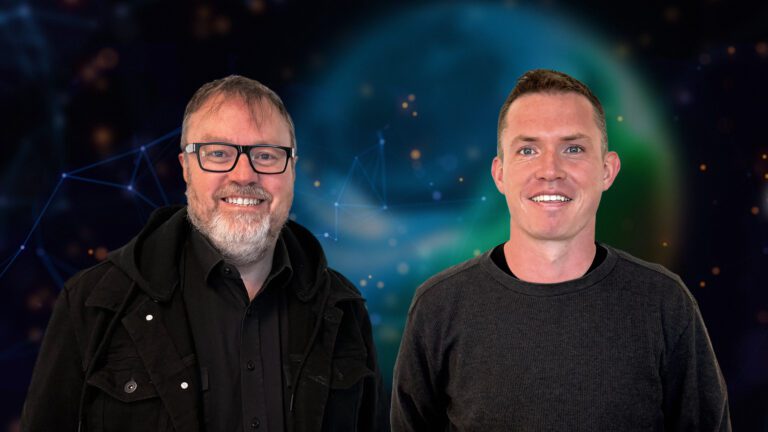
Join host Paul Spain and Eoghan Neligan, co-founder of Gravity. Eoghan discusses Gravity’s role as an applied innovation company, working with big business, impact ventures, and startups. Paul and Eoghan go on to explore the latest tech news including the arrival of Tesla’s Full Self Driving technology in New Zealand, Government invests in new Institute for Advanced Technology, Hawke’s Bay plans for new solar farm, WindSurf’s acquisition dramas, Mexico’s biometric ID mandate, global surveillance trends, and digital privacy concerns. On the cybersecurity front, Microsoft’s defense work and a SharePoint vulnerability are discussed, along with the importance of cyber insurance and audits. They also review Motorola’s moto Razr 50 Ultra, moto g05 and moto g15 phones now available in NZ and Paul gives his honest take on the new HP Elitebook Ultra G1 laptop. Tune in for thoughtful insights on the latest tech developments, and helpful hands-on product reviews.

Apple Podcasts Spotify RSS Feed

Special thanks to our show partners: One NZ, 2degrees, Spark NZ, HP, Workday and Gorilla Technology.


Episode Transcript (computer-generated)

Paul Spain:
Hey folks, greetings and welcome along to the New Zealand Tech podcast, I’m your host, Paul Spain and today we’ve got Eoghan Nelligan, co founder from Gravity, joining us. How are you, Eoghan?

Eoghan Neligan:
Pretty good man, how are you?

Paul Spain:
Good, good. Great to have you on the show. I don’t think we had too many Irish on the show before, so, you know, welcome, welcome.

Eoghan Neligan:
That’s surprising considering that we’ve kind of infiltrated every country in the entire world at this stage. My understanding is that we’ve the second largest diaspora in the world, really. Something like 70 million passports. Yeah. Interesting.

Paul Spain:
That’s good. So maybe especially because it’s your first time on the show, but listeners that don’t know who you are, a little bit of an intro on where you and Gravity fit into this big wide world of tech in New Zealand.

Eoghan Neligan:
Cool. So Gravity, we’re an applied innovation company so we specialize in incubating early stage tech products. We do a lot of work with big business. We also do a lot of work with Impact Ventures and a series of work with startups as well. We actually work with some of your show sponsors, which is cool. Fabulous. We focus on getting kind of version one into market. So version one in our world is different than mvp, so minimum viable product which a lot of startups talk about.

Eoghan Neligan:
But our version one is more the enterprise grade stuff where there’s a whole heap of enterprise patterns. We do also have our own proprietary methodology, so the way that we do it is quite unique. Kind of three broad phases, conceive an idea, clarify what that idea is and then create the end product. It can be quite enjoyable, it can be quite stressful. Moving a lot of kind of unknown into known is kind of where we’re at. And then we end up generating quite a lot of commercial value for our end clients, which is fabulous.

Paul Spain:
Yeah. Oh that’s great. Good, good. We’ll look forward to learning a bit more of that. Well, let’s jump in. Of course a big thank you to our show partners to One NZ 2degree Spark, HP, Workday and Gorilla Technology. Top of the show on the New Zealand front. One thing that regular listeners will know is something dear to my heart is full self driving technology and autonomous driving technology and Tesla actually making some moves in this part of the world.

Eoghan Neligan:
Finally, finally coming.

Paul Spain:
It’s like my goodness, six years of having a Tesla vehicle and having paid for the so called FSD or full self driving features and apparently we’re almost there. Although we could have probably said that every day for the last six years and others, some other guests and people that we know of course that have, that have purchased prior to the Model 3 launching in the market with a Model S or a Model X with FSD and still waiting as well. But what we’ve heard via a LinkedIn post from Head of Tesla on, I guess the vehicle side, Australia, New Zealand, is that regulatory hurdles are cleared and they are gonna kick off, I don’t know, fairly soon for those with Teslas and with the full self drive enabled as long as they’ve got the hardware 4 which basically actually rules out most Tesla owners probably at this point because yeah there’s obviously a lot of the hardware 3 in the market. So yeah, look, I think it’s going to be really interesting to see how cool is it.

Eoghan Neligan:
That’s an exciting time for New Zealand in particular. Interesting. I wonder how it’ll handle the Kiwi Road.

Paul Spain:
Well, I think they’ve done a fair bit of testing in New Zealand and Australia and from the dots I’ve joined up, someone my brother knows was one of these drivers. Cause I remember that did the testing because Tesla advertised for drivers to do this stuff in New Zealand and Australia. Yeah. And he, and he had someone who he said was doing something for Tesla and that was, that was pretty much as far as the information went. So they were obviously clearly under non disclosure agreement and you know, never heard anything but, but this guy was, was, you know, someone quite, quite enjoyed driving and was probably a good person for, for the job. And we’ve seen the video shared online as, as well of some of this testing going. Yeah, let’s see how it happens. I have feedback from one of our team here who was just in west coast of the US in the last few days and so he was driving a Model X Tesla with FSD around.

Paul Spain:
In fact that statement’s probably a lie because he kind of wasn’t because it was driving itself. And yeah, he was saying very, very light on the intervention. So the technology has moved ahead quite considerably from when I was trying that in the U.S. kind of late last year. Of course we’ve got the robo taxis and they’ve had a few issues but I think an improvement and that technology is going to be rolling out in North America to those that have been using the FSD or FSD supervised as they call it. So presumably what we are getting in New Zealand and Australia is going to be a pretty mature version of that technology and as we’ve seen previously is going to align, they tend to align stuff internationally so it’s good that we’ll be flipping from a really old technology stack to a really modern one. But yeah, you’ve got to have the newer vehicle with the FSD4 or AI Fortune.

Eoghan Neligan:
Do you think the political, people’s political views on Tesla will slow down the adoption?

Paul Spain:
Oh, look, I think all of these things have an impact. But yeah, when you’ve got really impressive technology is mind blowing, often it probably doesn’t have maybe as much impact as.

Eoghan Neligan:
Probably especially for the early adopters.

Paul Spain:
Yeah, but yeah, I mean certainly, yeah, Musk and his politics over the last period I think have been pretty polarizing, you know, but I think, you know, you do sort of, you do come to realize that, you know, you know, if you really get to know the people in, you know, most companies, most political parties, whatever, you’re not going to agree with 100% of what they do. Right. And so yeah, that’s, yeah, it’s, it’s, it’s interesting and I don’t know how you get that stuff right. You know, you could say, look, New Zealand shouldn’t be trading with China because of some of the stuff that the Chinese Communist Party does. But you know, you’d be cutting off your toes to spot your face sort of thing because how would New Zealand actually operate and the rest of the world is progressing as a modern economy without access to the technology that’s, you know, coming out of, you know, China and yeah, you know, how do you, how do you differentiate between a product from a country? Totally the political regime, the things that you like, that that regime does, you know, against the things that you don’t.

Eoghan Neligan:
Yeah, totally.

Paul Spain:
Yeah.

Eoghan Neligan:
Well, hopefully they’ll be interesting. There’ll be lots of other followers coming pretty soon as well. So there’s plenty of choice for everyone in the country.

Paul Spain:
Yeah, yeah, yeah. Also on a New Zealand front, government has announced their investment in the New Zealand Institute for Advanced Technology. We based out of Auckland, focusing on AI quantum tech, synthetic biology and really with the aim to be boosting innovation, productivity and our global competitiveness through high tech research and collaboration. So we’ve seen I guess Callahan innovation kind of going away, but now we’ve got this new institute.

Eoghan Neligan:
This is so exciting, honestly, especially off the back of Even just the AI strategy it’s needed in this country. Yeah, like 230 odd million that’ll have an impact. Hopefully it’ll have an impact on jobs as much as everything else and put us at the forefront where we should be.

Paul Spain:
Yeah, well, you know, I think that we especially, you know, listeners to New Zealand tech Podcast recognize that so much of our success is linked to technology. How well we leverage technology, how we address the risks, how we, you know, take our creativity from across the country and then, you know, convert that into products and services. So, you know, having, yeah, having the government, you know, really, you know, get behind with an investment in this area and that focus, I think is something we’ve kind of been curious what they will and won’t do. And there is a level to which I guess it can be debated how much difference can a government make in some of these areas. Ultimately, the key is that we see the right people coming together and we get the right investments and so on. But sometimes government can make a really significant, significant difference in these areas, sometimes in the wrong way when they block things. So that’s one thing that I think I like around government investment in this area. They’ve kind of got skin in the game, as it were, because they’re putting that money down and you don’t put that down unless you’re expecting to get a good return on that investment.

Paul Spain:
And so, yeah, I think that that helps with the alignment and definitely, probably.

Eoghan Neligan:
From my perspective, in the wider innovation ecosystem here in New Zealand, like the lack of funding has been prohibitive. So it’s great to have more and more funding that becomes available because the more and more people kind of become more familiar with innovation and what can be achieved and kind of remove the kind of fear factor that kind of generally exists right now. It can only lead to positive outcomes for the people of the country and the actual country.

Paul Spain:
Yeah.

Eoghan Neligan:
So it’s fantastic. And especially filling the void of kind of the, the gap since Callahan left. It’s great to see. Bit of a shame that probably sounds like it’s almost exclusively in Auckland, but it has to start somewhere. So hopefully we’ll see success there, roll across. It’s. It’s where the people are. So.

Eoghan Neligan:
Yeah, it’s. It’s where the base is.

Paul Spain:
Yeah, I’m. I’m sure it won’t be, you know, it’s not exclusively about Auckland. So. Yeah. And yeah, one of the other ones just, just caught. Caught my attention. You know, we’ve talked, I guess, a fair bit about, yeah, move to, to renewable electricity and, you know, the, the role of that. Also, as we have more and more hyperscale, you know, data center investments going on in New Zealand, moving to EVs, we’ve got this increasing reliance on the electricity grid and supply in New Zealand.

Paul Spain:
So, yeah, it was interesting to hear that there’s a $50 million solar farm that’s coming to Hawke’s Bay, that’s gonna operate there alongside, I think a bunch of sheep still gonna be running around. How exciting is that on the farm and so on. And there’s been a few sort of stops and starts in that particular area with projects that have been previously announced. But look, this looks like a pretty encouraging move forward to hear about this latest news.

Eoghan Neligan:
And it’s great to hear as well, the investment and what that will mean for the area and the jobs and everything else like that. Really cool. They’ve had a tough time.

Paul Spain:
Yep. So, yeah, rolling, rolling forward. And they’re saying that this is a 35 hectare solar farm.

Eoghan Neligan:
How big is a hectare?

Paul Spain:
I don’t, I don’t know. I don’t know how you describe it.

Eoghan Neligan:
From memory, I think. Is it Ace. Ace. 8 acres. So what would that be? That. That’s pretty big.

Paul Spain:
Yeah, yeah, That’s, I think, reasonable space. And they’re saying it’s gonna provide enough power for central Hawke’s Bay districts, which. This is about 9,000 connections, I think, across homes and businesses. Now, I don’t know how that breaks down exactly because there’s a time of day where solar provides and there’s a time of day where it doesn’t. And so what else we’ll sort of see going on in those regards. But you don’t necessarily have a particular need to connect solar direct to batteries and so on. The peak demands tend to be at particular times and solar will definitely help with that. And then there’s obviously lots of other generation around the country.

Paul Spain:
But I think we do need to keep these sort of investments coming and not too hard to deliver them. I, I still wonder. Yeah, around. We get so much benefit out of the dams that we have in the south island, so on Clyde Dam and the like, and whether we’ll ever see any of that sort of style of investment again. But I think there are challenges in terms of what the impact of those.

Eoghan Neligan:
Sort of things is and sustainability is the future. So kind of make the investments otherwise get left behind.

Paul Spain:
Yeah. Now looking on the, the, the international front, few interesting things going on. Maybe we can start with the, with the Windsurf acquisition dramas. This was something you were suggesting. Be good to.

Eoghan Neligan:
Oh my God, what a saga today.

Paul Spain:
Maybe for those who, who aren’t so familiar, you know, a bit of an overview of, of. Of Windsurf as a, as a, as a, as a company. And then from there, what’s been happening.

Eoghan Neligan:
Windsurf, they’ve created an ide so an integrated development environment which is kind of a tool that a lot of developers and engineers use and it’s exclusively AI powered, so it’s using like agentic AI. And what that basically means is that via prompts and indexing of co bases that the speed of which people can create code is a lot faster and generally it’s open to external knowledge. So it’s got up to date documentation. So the quality of the code is quite, is quite good. And it’s one of a number of products in market that do similar ish type things. But it’s just so interesting because of the sheer saga that’s created. So OpenAI, who I’m sure your listeners are familiar with, had a deal in place where they were going to buy Windsurfer, acquire Windsurfer in the region of US$3 billion and then overnight seemingly that deal was cut which left the 250 odd employees in windsurf a bit confused. They didn’t know what was happening.

Paul Spain:
This was apparently because of Microsoft, who obviously big investor in OpenAI. Right. There was. There’s something going on there. Is that the way that you’ve understood it? Because it’s actually hard to work out what, what is true and what’s not. There are some of these things. What’s the reality?

Eoghan Neligan:
Yeah, totally. And depending on what side you’re listening to, it’s hard to know what is true. There’s also some talks about because of how Windsurf was using Anthropic. So kind of one of the competitors to OpenAI. But yes, whose models is kind of ubiquitous in a lot of places. Apparently that had something to do with the deal falling apart, but it kind of feel for the employees because they were going in I think to an all hands or maybe it happened on Thursday night, on a Friday they had an all hands saying that the deal was collapsing. And then seemingly over that weekend Google then made a play and took a lot of the executives for quite a lot of money. So there seems to be this massive thing happening in the US right now where it’s like all the big players, Facebook, everything else are like spending quite a bit of cash, quite a bit of coin on like getting talent.

Paul Spain:
Insane, insane numbers. Right.

Eoghan Neligan:
Like we tens of millions of dollars.

Paul Spain:
Come and join us for tens of millions. I mean has a billion been bandied around? I mean I’ve seen some crazy, crazy numbers, right?

Eoghan Neligan:
Yeah.

Paul Spain:
And like this is something we’ve never seen or heard of in prior years and now it’s just like the sky.

Eoghan Neligan:
Is the limit in the sporting sense, you see like players being in basketball and soccer being traded for like hundreds of millions of dollars. But like it’s interesting that it’s kind of like now happening in the tech space. And don’t get wrong, these people are like insanely talented. But just the sheer amount of money that’s been spent, you’d have to, I guess question, what is the end goal? What is the kind of like a Facebook strategy? What are they actually looking to do? But probably going back to the Windsurf piece, Google over that weekend acquired a number of the key personnel that were in Windsurf, which was a bit of a depend, I guess. Well, I would think it’s a bit of a poor move as you’re one of the leaders of that Windsurf to just up and go and leave basically 250odd people behind. And then a company called Cognition who run a tool called Devlin, which is kind of again AI and enterprise space. It’s a tool to help developers basically then just acquired the rest of it. So took the customer base that Windsurf has, took their IP and took the remaining personnel.

Eoghan Neligan:
So at least everybody was kind of looked after. And then I, I understand that they respect their vesting peers and everything else like that. So in the event of another material event happening that those people will be looked after. But it was just this 100% a Netflix series is going to be created off the back of this because it’s just, it’s so insane. It’s so insane how quickly things turned around and like I imagine negotiations like that would take a reasonable period of time. But it went from like a deal fall through on a Thursday, Friday and then like maybe seven days later all these events happened with, with Google. But then the actual ins deal with Cognition actually happening kind of.

Paul Spain:
I guess everyone’s using AI to write whatever legal agreements, to review the legal agreements. Oh, they must be sort of things usually backwards and forwards between lawyers for you know, days, weeks, months.

Eoghan Neligan:
Yeah, sometimes, but I guess that’s the world that we’re going towards. Yeah, yeah. So they’ve, Cognition have got the ip, the product, the trademark. It is by all accounts a reasonably strong business. Like it does make, it does make sense but it’s just the kind of surrounding events that happened after which make it kind of quite interesting, quite unique. Especially in 2025. Yeah, yeah, yeah, yeah. They’ve got, yeah, something like 82 million ARR, which is quite a lot.

Eoghan Neligan:
And then, yeah, 350 odd enterprise customers must, must be valuable. I wonder why I would just love to find out more information about why the OpenAI deal fell through. Yeah, they seem to be, over the course of the past couple of years, having drama seems to follow them a little bit, but I guess they’re moving at such pace that it’s hard to avoid drama.

Paul Spain:
Yes. Yep, that would be. Yeah, that’s one part of it. And I. And I guess, yeah, a lot of these things come down to sort of size, scale, the approach that the leadership, you know, take, what they’re willing to do or not do and how many rules that they’re willing to. To break, and so on, and the reality that we’re dealing with new things, new business models, new approaches, and things are changing rapidly. There’s not necessarily any perfect playbook to follow on these things.

Eoghan Neligan:
A lot of these playbooks are being forged for the first time on a.

Paul Spain:
Lot of occasions, which, yeah, does keep it quite fascinating to watch from the sidelines.

Eoghan Neligan:
Well, so much is changing across the board. So much is changing in the model space. Not even the, like, the models that people are consuming, not mine, the business models and everything else. Also saw something quite recently which was that cursor, which is an alternative to Windsurf, which was something like $20 a month. I can’t remember the exact details, $20 USD, that they’ve kind of changed how people can use the tool. As in, like, I think their business model was that they were all of these API. I assume your listeners will understand that all of these tools have calls to external models, and all of these calls cost money. And these calls might only be a couple of cents, right, like that.

Eoghan Neligan:
But over the course of a day or the week or a month, just the cumulative nature of calling them over and over again costs a lot of money. So my understanding was the cursor, because they’re VC backed, would have essentially kind of like eaten the difference on the hope that they would make a higher margin. But it turned out that a lot of the users that are using that tool are power users. And it would be the same case for Windsurf as well, which would mean that and all the other kind of AI IDEs that then companies aren’t making as much money as what they think they are. And then a lot of them are changing their terms of use to be like, actually you can only have this number of calls. And then if you call this particular model and you have to pay this amount of money, which makes it actually really hard for the end user, the person who’s using the tool, to know with a degree of certainty how much it’s actually going to cost. And because a lot of these AI tools can end up occasionally going down some rabbit holes that ends up costing people a bit of money.

Paul Spain:
Yeah, well, if you look at the moment, it seems like a lot of the key players are very much focused on how they win market share and out, innovate and not so much on how they actually will pay the bills behind the scenes. Right. So depending on what you’re using at a given, at a given point in time, you may suddenly find that the price is going to go up by two times, five times, 10 times at the drop of a hat if a particular entity wants to be profitable. And yeah, I imagine we will see that kind of shake out over, it’ll probably take some years, but we are starting to see some of that where, oh, for your $20, you only get a tiny little bit of usage compared with maybe what you were previously. And even platforms that are having these free tiers, right, where you can jump in and you can do deep research with, you know, Gemini or Grok or what have you, and anyone can just pile in and do these things and you know that it must be burning through some, you know, reasonably large amounts of cash in the background to deliver these completely free capabilities. And there are, you know, it seems like there’s a pretty high percentage of, you know, of users today who are on these, you know, completely free versions, maybe accessing something without even signing in and walking away without ever spending a dollar.

Eoghan Neligan:
And people are clever, they move between different tools because they know that it works like this. I guess one of the other things that these providers might be betting on, this is a bit speculative on my behalf, is that the cost of intelligence is probably going to come down. So like, the newer models cost a lot of money, but probably in the next 12 months to 18 months and stuff like that, there’s kind of some models which will probably be pretty negligible. We can see that the kind of like level of quote unquote intelligence that these models have is just exponentially growing still. And there’s newer models, I don’t know whether you’ve heard about Kimi K2 and stuff like that, an open source version that is comparable to some of the leading commercial models, which Moore’s Law, I guess will be that in the very short period of time that it’ll be pretty much free, but we’re still probably a little bit away from there. So then these businesses are probably making strategic guesses on, on how they will make their Money.

Paul Spain:
Yeah. Oh look, it’s, it’s, it is such a fascinating area and you know, there’s, there’s always things that are, you know, just a, a few steps away. Right. So yeah, it’s like working out well. You know, where do we put our focus at the moment times leveraging AI and. Yeah. What’s, what’s going to become broadly accessible over the time ahead. I mean you’d look at the, the video side of you know, AI, the AI video generation.

Eoghan Neligan:
Yeah.

Paul Spain:
And you know, it’s, it’s like we’ve got all the demos but it’s actually reasonably, reasonably expensive.

Eoghan Neligan:
I can remember when that content was it. What’s the Google’s One VO is that the One V03 when that came out, literally just burned like $10 credit.

Paul Spain:
Yeah.

Eoghan Neligan:
Just a poor prompt. But it’s, it’s super interesting because I’m also just, I’ve got a five year old, a little girl, but we have this thing where it like it’s unlocked a lot of her creativity as well. So like she can tell me something and I’ll generate an image and then she’ll say, oh, can we have that? And a lot of it’s based on mermaids and stuff like that, but we’ll generate an image based on a mermaid and then create like a 10 second video and like she’s astounded by it. So it’s just, it’s, it’s just mind blowing. Yeah. And she goes to daycare and shows all her friends. Yeah. So how cool is that?

Paul Spain:
Yeah, I mean just. Yeah. What, what is, what is, what is possible, what’s achievable at this stage?

Eoghan Neligan:
Pretty much every, everything is going to be possible.

Paul Spain:
It’s insane.

Eoghan Neligan:
It’s. I guess probably one of the interesting things is how people are using everything in their, in their workflows and probably over the course of time what we’ll see is that people will have a whole heap of different tools that they use in their workflow that’s specific to their workflow and leveraging as much of the incredible advancements that are happening which make it suitable for them.

Paul Spain:
You know, talking of, you know, kids and family and, and, and the sort of AI crossover, Gro has made some, some interesting moves. Of course, you know, Grok Xai X it’s kind of, you know, one, one, one entity now or Twitter. The, the CEO from the Twitter X side, Linda Yak Reno, has recently resigned. But yeah, look, looking at the, the Grok app last week was, was, was rather interesting little banner at the top. Encouraging you to kind of chat with the, the personality, I forget her name, but it was, you know, you’re effectively getting pushed a little kind of, I don’t know, a not safe for work entity to chat with. It was quite a shock. I was with some of my team, we were in a ride share coming back from a meeting and this had sort of, you know, it had come up, oh, the Grok 4 and this new model and how exciting it is. And I opened up Grok and I kind of knew, yeah, Grok 4, you’ve got to pay whatever extra it is to get access to it at the moment.

Paul Spain:
But I thought, oh, maybe they’ve opened it up for a few more users. Where I opened it up and yeah, suddenly we’ve got this chat thing. So, you know, we clicked in on and yeah, we didn’t get too far before. It’s like, I think we need to.

Eoghan Neligan:
Start, we need to close back out here.

Paul Spain:
Yeah. The directions in which this technology is going, you know, I think there’s some work to do on the guardrails, shall we say. And you know, and I think something where, yeah, as society, there’s a lot to kind of think about in terms of. Well, yeah, how appropriate are some of these uses and you know, what is the harm that it, you know, that it, that it could cause? At varying levels we lean into what the technology can do. Doesn’t. Just because it can do it doesn’t necessarily mean that that’s what, you know, how we should be using it.

Eoghan Neligan:
I actually saw this morning as well, I don’t know whether you are, whether your listeners are familiar with a company called replit, which is kind of like a hosting environment, has got some AI stuff.

Paul Spain:
Yeah, yeah, quite interesting because you can fire in there and it’ll build websites and apps and things. Right.

Eoghan Neligan:
They had an interesting thing happen overnight, I think it was, where the AI deleted a production database and it wasn’t just any old job blocks. It was something like 19,000 customers that were kind of deleted and the kind of founder was like quite furious or the founder of the tool that was being created. And then the founder of replit has come out and kind of immediately they’ve changed how deployments and stuff happen. But people I guess are possibly leaning towards being too trusting to what AI say and do.

Paul Spain:
Yeah.

Eoghan Neligan:
So you just kind of always be that. Just be careful more than anything else.

Paul Spain:
Yeah, that one, that one’s. Yeah, that one’s quite a shock, isn’t it?

Eoghan Neligan:
Yeah.

Paul Spain:
Riplet CEO apologizes I have To AI engine says it made a catastrophic error in judgment and destroyed all production data. I mean, you know, over to AIs is something that we, you know, that we’re increasingly doing. Right.

Eoghan Neligan:
And especially with that. I think it was Harvard that came out with the brain rot study. And it’s just because people are getting, I guess, cognitively lazy for this kind of stuff. Just accept and accept and accept, but kind of there’s still risk that exists there. So you got to be careful with what you’re actually doing because it can have a big impact in that case, like a big commercial impact for that individual.

Paul Spain:
Yeah. Yeah. Wow.

Eoghan Neligan:
Yeah. Madness.

Paul Spain:
So next up, read that Mexico are making biometric identification mandatory for all citizens by law. So they’ve got a particular system, curp. CURP system, which includes, I guess, a lot of data already. And they have had, I think, a voluntary option where you can give the state your biometric data and you get varying benefits about making it easier to identify you. And yeah, I guess there’s, there’s the simplicity it brings, right. Of having all these technologies all lined up. And we all are pretty used to that with our smartphones. I don’t need to enter a pin most of the time because of biometrics.

Paul Spain:
The flip side is in that sort of case where you put, say, biometrics into a smartphone and it’s just stored locally is the ability to secure that is very, very good. Right. And for your biometrics not to leak out when you start giving this sort of information to, well, to, well, for it even just, you know, to leave your device and go somewhere centrally, whether it’s government or otherwise. And I guess, you know, we’ve also seen this with, with, with Sam Altman from OpenAI and the World Coin sort of project that he’s been doing that’s, that’s been, you know, doing these retina scans on, on, on. On people primarily in parts of the world where there’s a lot less money to go around and so incentivizing people that way. Yeah. Really curious to see Mexico sort of making this move and making it mandatory. How do you feel about this sort of thing?

Eoghan Neligan:
Conflicted viewpoints, to be honest, because I can see how it would make things more convenient and more secure. But I can see why some folks might be rightly worried about privacy and all the data that’s being collected. But equally, I can see that the world is moving in that direction. So it’s kind of a little bit of an inevitability as long as it’s done safely, securely and robustly and that the people are aware of what is actually happening with their data.

Paul Spain:
But.

Eoghan Neligan:
It’S possibly also going to open Mexico up in the cyber space to be a little bit more vulnerable, a bit more targeted. I’m sure it’s already happening right now, but yeah, we’ll be interesting to see what countries, if any follow and what happens in that space.

Paul Spain:
Yeah, oh, it’s, it’s really interesting. It’s really fascinating to, to me especially the pace at which it’s, it’s being done. So they’re, they’re saying according to, yeah, what’s, what’s been put in, in place. Their digital transformation agency must get, get this unified identity platform, you know, created within 90, 90 days.

Eoghan Neligan:
Far out.

Paul Spain:
Private institutions will be, you know, required to update their systems to recognize this, you know, new id. And they’re also planning to kickstart, you know, nationwide program to collect biometric data from children and adolescents within something like four months, 120 days.

Eoghan Neligan:
What an aggressive timeline.

Paul Spain:
And you know, I mean, as though this probably wasn’t a controversial, you know, controversial enough issue to start with, then you put those sort of pressures on, in terms of timing and yeah, you really increase the chance of, of, of things going, going, going wrong. Right. And I think they’re, they’re, they’re. As you talk about there’s a, there’s a level of inevitability to, to technology and AI kind of increasing in its role in society and because there are lots of benefits from an efficiency perspective and so on. But I think there does seem to be a growing movement looking at some of these things, whether it’s digital health IDs, whether it’s national sort of digital IDs, international. Yeah, things and, and some, you know, some real concerns around how that can play out. And yeah, when you, when you, I guess look at, yeah. Some of the regimes internationally who maybe are less trustworthy and then you know, monitoring that might go on to, you know, onto smartphones in a particular region.

Paul Spain:
So a government has, has a level of control through. I guess there’s a whole range of other sort of possibilities and yeah, how we kind of get these things right and navigate correctly. I’m not sure that what Mexico are jumping in and doing at pace here is probably the perfect example of how to get this stuff right.

Eoghan Neligan:
On the surface it makes sense. There’s gonna be efficiencies, everything else, as long as it’s done correctly. But an aggressive timeline.

Paul Spain:
Yeah. What is correctly?

Eoghan Neligan:
Yeah, totally. Yeah. And again, this is Bias based on kind of like a Western view, I guess. Interesting. I’m really keen to see how it actually plays out.

Paul Spain:
So yeah, I think we’re in a time where technology can I think do more and more that is so good and its potential to lift different economies and so on. But with that comes, I think there being increasing areas of risk as well. And how we get that balance correct is an interesting one. I see the UK who were, who were set to be enforcing inability of access into encrypted systems, the likes of the messenger type apps that we run and so on. I’ve seen news coming through that there’s now been some pretty severe pushback from the US to the UK based on sort of treaties and things that they’ve got in place that what was gonna happen there may well not proceed. So yeah, it is interesting to see, you know, the different pushes and different, you know, directions there around, you know, what is and isn’t the right way that we manage and operate. You know, technology and surveillance and identities and you know, what are the. Yeah.

Paul Spain:
Getting through and really debating I think some of the realities of the sort of the best cases but also of the worst cases and breaking those things down is I think probably pretty important for society to address. Cause I think naturally for me digitally enabling everything is really, really good. It’s like, it’s just, it’s going to make things smoother and, and easier and that’s sort of my, my default go to. But yeah, I, I think the, the, the, the more different people share things with me it’s like okay, yeah, I can see that. And the more you, you, you kind of, yeah, you look at, at the fact that yeah as a society we can get stuff right, you know, a really large percentage of the time but it doesn’t, it doesn’t take too much where these things then can be twisted.

Eoghan Neligan:
And used and if it goes wrong, what is the impact of it going.

Paul Spain:
Wrong in bad ways?

Eoghan Neligan:
Even on that 90 day rollout plan, I wonder how much AI is going to be leveraged there along the way. Yeah, we’ll be watching this with.

Paul Spain:
Yeah, definitely one area to, to watch with interest. And you know, I think we do have to have countries that are going to lead, you know, lead the way.

Eoghan Neligan:
Somebody needs to do.

Paul Spain:
You know, others, others can, can adopt quickly, others can adopt more more, more slowly. Some of these areas I can see will make, you know, will make sense for New Zealand maybe to slow, slow down a bit on. And we don’t always have to be the, the first so, yeah, let’s see. A couple of other quick topics to touch on. Microsoft have, I’d never heard about this before and it seems like a lot of other people hadn’t heard about it before. Have people called digital escorts. And this seems to be going on in, in relation to the work that they do for the U.S. defense Department’s technology systems where Microsoft, I guess, have been outsourced this work to run and maintain varying aspects of these systems.

Paul Spain:
And apparently it was a key part of Microsoft winning access to US Federal government’s cloud computing business going back about a decade. And there’s a real reliance on US citizens running this stuff with appropriate security clearances. But apparently it breaks down into quite an interesting way where, yes, people need to have a certain security clearance in some areas, but then in other areas the people with the clearance are considered digital escorts. And then they’re, they’re escorting or, and that’s a strange terminology, but they’re kind of overseeing the work of others who are not, don’t necessarily have a clearance. Not necessarily, you know, even within, you know, the US and you know, apparently, you know, a chunk of a chunk of those are, are Chinese based. And then, you know, you’ve got a whole lot of concerns there around, well, you know, how, how connected are these people? Yeah, with, with, with, with spy agency type stuff and so on in China. Right. It’s like a really, it’s very unusual.

Eoghan Neligan:
Yeah, yeah, totally.

Paul Spain:
How do you get the scenario where.

Eoghan Neligan:
How do you mean this secure and.

Paul Spain:
Trust trusted kind of data? Yeah, actually, you know, chunks of the work are being done where, you know, you’ve got these, you’ve got these concerns from a geopolitical point speech.

Eoghan Neligan:
Exactly.

Paul Spain:
Seem to have gone out the window.

Eoghan Neligan:
It’s just wild to think that what we know as like the Defense Department and everything around it is that it could be vulnerable to something like this, to a cyber attack through something like this. It’s a bit wild.

Paul Spain:
Yeah, well, there was a statement in an article I read on this that said the office of the Director of National Intelligence has called client China the most active and persistent cyber threat to US Government, private sector and critical information networks. So on one hand you’ve got that, on the other hand, yeah, you’ve got Microsoft that. Yeah. And a whole lot of other things going on. Right. Like, you know, revoking visas for Chinese students and, you know, dramas around, you know, TikTok, Huawei and all sorts of Chinese companies. And then, yeah, you’ve got, you know, this, this outsourcing to China effectively of running their Defence department systems. It’s yeah, very, very interesting and it seemed like curious, it really, you know, I think caught quite a chunk of people off guard within the Department of Defense.

Eoghan Neligan:
So yeah, we’ll see what happens next.

Paul Spain:
Yeah, yeah. Now zero day flaws are, you know, issues are, you know, are reasonably, reasonably common. But I see, yeah, there’s some, some pretty big, big dramas going on with, with Microsoft SharePoint for those who are, who are kind of running it on premise or not running that cloud versions of it. You read through this what kind of jumped out to you around this one because in New Zealand we’ve got the gcsb, the National Cyber Security center, the ncse, you know, having issued an alert around these vulnerabilities that are affecting SharePoint which will be, I’m picking still some of our larger organisations that tend to run this sort of stuff on premises and there are, you know, I guess there’s probably, yeah, businesses of a few scales that will tend to not be 100% cloud when it comes to SharePoint. And look, I mean SharePoint’s run by most organisations I would say.

Eoghan Neligan:
Yeah, I would imagine that’s in like.

Paul Spain:
90 plus percent because of just how much market share Microsoft have and that’s where you know, documents and files tend to get stored.

Eoghan Neligan:
Interesting. And hopefully this will have changed. But it didn’t seem like that there was a permanent fix that was rolled out very quickly. It reminds me very much of the cloud strike a year or two back whenever that was to be like just chaos that intuit. I guess the good thing is that hopefully it’s limited to a subset just of those people on prem and would think the majority of people in this day and age have probably migrated from on prem to cloud. But it would just be interesting to know the percentage of kind of companies that are potentially affected and also how they’re notifying those people and what remediation is in place because yeah, it’s a, it’s a big vulnerability to be honest with you. Yeah.

Paul Spain:
And you know, what do we hear from unit 42 which is part of Palo Alto Networks? Yeah, there was commentary from them saying they’re seeing attempts, you know, to export, exploit, you know, thousands of SharePoint globe, you know, servers globally, you know, before there’s any sort of patch or fix available.

Eoghan Neligan:
So I would love to know what the kind of second order risk exposure is. And by that what I really mean is that if there’s a company like an agency or something else like that, whether they’ve got any data on that SharePoint site regarding kind of another entity and what kind of risk that that other entity might have is due to it. Yeah, interesting.

Paul Spain:
Yeah, Yep, yep. It highlights, I guess this, you know, this is some of the flip side to, you know, being technologically enabled and leveraging technology is as these sort of risks will just, you know, continue in one form.

Eoghan Neligan:
Yeah, totally. And what’s coming very prevalent in 2025 and has been for the past couple of years just the sheer increase in like cyber risk. And I guess kind of from a small business, possibly even big business generally are aware of what those risks are. But from a small to medium, like, it’s hard for Joe blogs on the street to actually know how safe and secure their environment is. Yeah. Which is kind of scary. And just, yeah, the kind of increase on attacks is exponential at this stage. People are all talking about AI, but this is where, this is where a lot is happening as well.

Paul Spain:
Yeah, yeah, it really is. And you know, we’ve got to be important, we’ve got to recognize the, the importance of staying on top of 100 of cyber matters. And yeah, New Zealand probably. Probably. Well, we are a chunk, you know, a chunk behind a lot of other countries in terms of our preparedness for, for a range of reasons.

Eoghan Neligan:
And what I’ve seen a lot has been even when patches are provided, that people don’t jump on the patch and apply the patch in a timely fashion. So then there’s just like this ongoing threat that may, that may exist.

Paul Spain:
Yes. And yeah, I mean, we, yeah, we see a broad range of issues, you know, across, you know, from what my team get access to. You know, of course we’re often out, called in to carry out audits, you know, either dedicated cyber security audits or cyber security as part of a broader, you know, kind of auditing process. And, you know, even those organisations that are, you know, really committed on a cyber security front will have a range of issues and areas to step up on. And then you get the varying kind of extreme cases where organisations have left a whole lot of things wide open that are unintentionally. This is the basics and you’re not doing it because there just isn’t that thought given. So any organisation that isn’t regularly looking at their risk profile from a cyber perspective is going to have a whole range of risks.

Eoghan Neligan:
And more and more, I’m sure insurance mandates will mean that, that, yeah, I.

Paul Spain:
Think there is a positive for those who have cyber insurance or committed to just keeping that coverage going is that the insurance companies are Pushing more and more. I remember the kind of the early sort of questionnaires and so on that would come through insurance wise and yeah, they were pretty loose. But yeah, there’s also a reality that in some of these cases the insurance companies are kind of getting themselves off the hook if you haven’t followed things properly and I think that will just increase its getting, get harder and harder and yeah to reach the levels that they need or you’ll find that you’re not covered. A couple of products just wanted to tap into that we’ve been looking at, I’ve been looking across the Motorola handsets. Now Motorola is a brand that was I guess, you know, for me when I used Motorola was really in the 90s originally one of my early smartphones on I guess the forerunner to Spark’s current network which was telecom NZ network. I had a pretty sure it was on their network a Motorola Micro Attack which was you know, the early kind of flip phone. Right. So you know they’d had their, they’d had their bricks and you know, Motorola were really, were really that, you know, that early dominant name when it came.

Eoghan Neligan:
To hugely popular here in New Zealand.

Paul Spain:
When it came to yeah mobile phones they were, you know, very, very strong. Nokia of course kind of came in. So those were kind of the two brands I remember using, you know myself.

Eoghan Neligan:
During the same and I had the exact same.

Paul Spain:
Yeah and I remember that the Nokia or the Nokia would have been on what is now the one nz but in those earliest days it was Bell south that they launched at in New Zealand and some futuristic sort of advertising and the first GSM network. So the network where you could, you know, you could roam when you traveled around the world and you know, you could take a SIM card in and out and move it from one device to another and, and so on and yeah, I mean good, good, good memories of using that technology and, and you know, and, and it was, you know, it was truly a game changer in terms of, you know, being able to have this communication device, you know, with, with you all the time.

Eoghan Neligan:
It’s madness to think that that was only what, 20, 30 years ago and how much things have changed.

Paul Spain:
It’s, it’s, it’s insane. And I still remember it was actually a pretty dodgy company it turned out at. But I got engaged to do a, a small piece of work in Christchurch and, and I love to visit Christchurch family down there and so on Auckland base. But they wanted me to come down and do this. Yeah this particular piece of work and anyway, I You know, I agreed to, but it was on the basis that they, you know, they paid for the, paid for the work before I left and they were covering all the flights and so on. Yeah, anyway, I’ll come to it at the end, but I found out later that they were a bit dodgy. They just didn’t give me, you know, didn’t give me confidence that we should be opening up any, any sort of credit to these folks. Anyway, so flew down for the day, helped them out with whatever.

Paul Spain:
But I think it was, it was partway through the, through the day. The car that this business owner was driving was a rent a dentist. So I don’t know if anyone’s come across that, but that’s kind of like your bottom of the barrel rental car, right? Rent a dent name probably gives that away. And anyway, partway through the chap opens up the boot or wherever it was and he pulls out this briefcase phone and like, you know, this is, I’m carrying probably something like the Motorola flip phone or something. And this guy pulls this thing out and makes, makes a phone call, I think outside. We were maybe parked outside Ricketton mall in Christchurch, McDonald’s or something rather. Maybe we were stopping for some lunch there. I can’t really remember, but it was like, oh, okay, you know.

Paul Spain:
And anyway, there was somebody that was left impacted by this guy. I went to, was gonna head to the airport and I thought, I just don’t feel comfortable with these guys. So I called up, you know, and they were like, nah, tickets are all booked. It’s all sorted for you. And I called up Air New Zealand. I like, you got, is there a booking? And they’re like, yeah, we got a booking here. It hasn’t been paid for yet. So I stayed on their premises until it had been paid for.

Paul Spain:
So anyway, the moral of the story is if you see somebody, you know, running around with, you know, some, some technology and it’s 20 times bigger and older, you know, ask some questions. Yeah, ask some questions or anything else that’s kind of a little, a little, a little bit off. But anyway, needless to say, they, they paid for the flights and everything. Eventually it all worked out and I was able to fly home again. But I did find out from the person that had put them on to me some, some weeks later that unfortunately the, the technology provider in Christchurch that had provided all the, all the tech that I was helping with didn’t get paid and was left out of pocket for, I think tens of thousands. And these folks, you know, wandered off to Australia without paying their bills. Anyway, so that was, that was the Motorola and Norcare era for me. But I’ve been trying out some of their Android devices from Motorola.

Paul Spain:
They were in touch over the last few months and yeah, so they’ve got a whole range of phones. Spark seem to be their partner in New Zealand. So I was in a Spark store the other day and they’ve kind of got the full, you know, they had a full range of the Moto, you know, devices and, and there are still points where they’ll, they’ll, they’ll like the old Razer phones. They’ll do. Hello, Moto. Oh yes, you know, which is all.

Eoghan Neligan:
Quite, oh my gosh, I’ll have to.

Paul Spain:
Buy it now, you know, Brings back the memories.

Eoghan Neligan:
Yes, it does.

Paul Spain:
So yeah, so it’s kind of fun but they’ve got a really, actually quite a broad selection of devices. So the main one I’ve been trying out is the Razr 50 Ultra and they have now actually launched internationally at least a Razr 60 Ultra. So there’s actually a newer model as these things keep iterating but really enjoyed using that and lots to like about it versus the, the Samsung and probably the same across the other range. You know, there’s a G05 which is, you know, low cost G1 15 or 15 and then they’ve got these, the Edge Edge models, Edge 50 Pro and, and a range of other models at the kind of a more mid tier price point and those are really, really slick. They’ve actually if, if you remember a lot of the flagship S series, I can’t remember exactly which models but they had the kind of curved off edges now with the S25 and so on, they’ve gone away from that. But yeah, Motorola are kind of doing that in the mid tier phones and they feel like a really nice premium handset and pretty capable.

Eoghan Neligan:
What version of Android did you say it’s running?

Paul Spain:
So it does vary according to the device but most of them are running Android 15 now so they’re pretty current. But of course now Android 16 has landed and that’s the perfect question because really the challenge I have with Moto products at this stage is that they’re not on the same page as say Samsung and Google when it comes to updates, which seems to be the story really once you move from Samsung to any of the other Android brands, there’s a variance in terms of how often the updates come out. So in most cases it’s with a Samsung device you’re going to get updates probably on a monthly type of basis and you do get some variance between the flagship products and the lower tier devices but generally you’re getting these monthly type of updates and you’re getting them for basically years and years and years. Right. So we’ve moved from a position where you couldn’t have that much confidence around your Android devices and ah, you might get one or two operating system bumps where Samsung and Google themselves with their own devices are doing four, five or more years. So pretty much you can feel like, okay, I’ll buy this device today, it’s going to have a life even if I pass it on to another family member, if it’s a personal purchase or if it goes into a pool within a business, hey, it’s going to have probably five years of useful life to it if it doesn’t get smashed and so on.

Eoghan Neligan:
And given our conversation regarding security and stuff like that, it’s good to have regular rollouts.

Paul Spain:
The security side is really, really important as well. So this is my, sort of, my only challenge, but I think it’s a pretty important one for Motorola is that they haven’t got up to that sort of same consistency and length of update. So if you are gonna look at these devices and some of them are as I say, really nice, I would say you’ve got to just weigh that up. I was, I did hear that EU are putting in a mandate I believe around Android phones and them needing to be able to get updates I think for, for five years. So that’s starting to come through and I imagine what we will see with the future phones from Motorola is hey, if they’ve got to comply in one part of the world that that’s going to flow on to New Zealand. I haven’t delved into the sort of all the depths of exactly what that means, how quickly we will see those changes. But I know, yeah, Motorola have already got, I think at least one device that’s got this, you know, five year commitment in terms of updates and you know, I think that that’s pretty positive. So yeah, for our listeners who are probably, you know, they want to make sure their devices and so on are secure, that would be the one area I’d be keeping, keeping a look at.

Paul Spain:
And look, I know probably, you know, most people that have got an Android device and you know, they’re really varied in terms of the versions of operating systems and so on that people run, you know, you might well get away and not ever have any sort of a, you know, any sort of a security issue. Or a drama. But you know, I know for me and in my business we want to have that peace of mind and for my family that the devices that we’re running are going to be, you know, kept up to date and you know, we minimize the security issues.

Eoghan Neligan:
Exactly. There’s enough things to be around.

Paul Spain:
What do you tend to use? Are you more of an Apple camp?

Eoghan Neligan:
No, actually I am probably earlier on this year. So I’ve historically been Android and then probably my last couple of phones have been Oppo. But then earlier on this year I migrated to an iPhone 16 just because I use a lot of Mac related stuff. I thought it would be a seamless move. Turns out that I was like, so the muscle memory was so strong that it was actually hard to use. And then I subsequently went back and just got an Oppo 13 I think it is maybe Reno or something like that.

Paul Spain:
Yeah.

Eoghan Neligan:
Because of that, what I’m used to. Yeah, yeah, yeah, yeah. And then also because I’ve got two kids, I found that the 16, I’ve got a boy who’s two and he used to actually pick it up and throw it and I was like, this is too heavy. You’re throwing this at your sister. Please don’t do that. And it’s an expensive phone. A, I don’t want it like broken and B, I don’t want you to be using it as a weapon. Yep, yeah.

Eoghan Neligan:
And then the battery is also a key consideration for me and it looks like all of these bad boys have like a reasonable size battery which is good with fast charging. I guess that’s the, the way it is with majority of phones these days.

Paul Spain:
Yeah, well, well Oppo, you know, have done very well on that. So there, that’s been one of their, one of their kind of differentiators in terms of their, what do they call it? Super Vuc and, and so on. They’re very, you know, they’re very fast, you know, charging. And yeah, I think each, each brand has got their own, you know, their own elements. So yeah, it’s worth having, having a look around. But yeah, I did enjoy looking, looking through at, at, at Spark. Yeah. The varying sort of moto models and, and these ones that I’ve been trying out, which the G05 and the G, you know, 15 are coming in at some, you know, some pretty sharp sort of, you know, price points.

Paul Spain:
I think the G15, $229, you know, for, you know, what’s a reasonably capable phone at that price point. They do do some interesting stuff with memory. They’ve got less ram, but then they kind of do a virtual memory type thing. I haven’t noticed so much of that going on in recent years but. But that’s part of the approach that they’ve taken. But yeah, for the price point, it seems to be good bang for buck. But do check up on that update side of things. Would be my recommendation to consider going completely off track.

Eoghan Neligan:
Have you come across a nothing phone? Yeah, the price point was quite interesting.

Paul Spain:
Yeah, I was looking at the, some, some data sort of comparing, you know, nothing with some of the other brands and yeah, it is, it is. I think there, there, there are some real fans, hardcore fans, some friends, hardcore. This is. I’m all the way on nothing.

Eoghan Neligan:
Nothing or nothing pretty much.

Paul Spain:
And yep, you, you get that. But yeah, I did a comp. I did. I actually got AI to do a bit of computer comparison between nothing phone, kind of Android. What are the other Androids at a similar price point, I think, you know, between Motorola and Samsung and yeah, the particular chart that it came up with, yeah, the nothing phone certainly didn’t win on that one. I think the camera side of things, there’s quite a key element to getting the best out of cameras these days that comes in from the software. And so if you take the best phones from a camera perspective, it’s not just the sensor, it’s how well they’ve developed the software that gives you a good night shot or gives you the best results in a day situation. And that stuff’s not necessarily all just native to Android.

Paul Spain:
It seems to be sort of specific, specific to the different vendor. So that’s kind of, I guess, part of what you have to toss up and weigh up.

Eoghan Neligan:
What are you actually going to use it for and stuff like that. I can remember in my. And this was like cursory research of the ninth one, it seemed from a spec level that it was reasonable for its price point. But the thing that jumped out for me was the IP ratings. I think it’s IP68. Is that the one that’s waterproof? Yeah, waterproof, yeah. I don’t think it was. It was like IP 66 or 67 or something, which was just a step below some of the competitors of a similar price point.

Eoghan Neligan:
And because that was important to me.

Paul Spain:
Yeah, well, I mean it is an area you get issues. So I had a Samsung S20 and over summer I was out with my brother, we were out on a little inflatable that he keeps on his camper van and we ducked out for a number of kind of, you know, trips fishing and there were dolphins and all the rest of it. We went into some caves and it was, you know, sounds awesome. It was an amazing time. But I thought, ah, this is an old, this is an older phone, but it still does awesome video, you know, you know, great, great phone. And so I was like, well, I’ll take that out because look, worst case I, you know, I drop it in the ocean. I haven’t dropped my, you know, my primary device. Right.

Paul Spain:
And that was all going really well and there’s, you know, different stuff under underwater and so I, you know, leant out of the, you know, the side of the. Yeah, it’s really dinghy and you know, put it in the, put it in the water and that, yeah, that, that, that model, the, the back was, you know, basically glued on. The rating was irrelevant at that stage. The back came off, ruined the phone. All the footage I had of the dolphins and all the other sort of sea life and things that we had seen and these caves we’d been in and. Yep, all over. So yeah, so you do have to be a little bit cautious and yeah, sometimes, yeah. As an age of a device increases your confidence in some of those things.

Paul Spain:
Maybe, maybe should drop off now. I don’t think Samsung are kind of gluing the phones together like they were with the S20, but I wasn’t feeling very happy with Samsung as a brand.

Eoghan Neligan:
At that moment in time.

Paul Spain:
Yeah, just one other gadget to mention. Laptops. Always interested in sort of keeping up with the play and what’s gonna be the right thing. For me it’s always that mix of what’s gonna suit sort of from a family perspective, what’s gonna suit business wise. And of course we’ve been working with HP and they fired across the HP Elitebook Ultra G1. Now this is at the higher end of the sort of the business laptops from hp. And I guess the bit that kind of caught me off guard because I don’t have this happen very often these days is people going, oh, what’s that laptop?

Eoghan Neligan:
Yeah, looks pretty sweet.

Paul Spain:
Have a look at that. And it’s just that much kind of stuff. Slimmer.

Eoghan Neligan:
Yeah.

Paul Spain:
And, and, and, and lighter than. Yeah. Than a lot of other laptops that it sort of caught, caught the attention. So it’s running the, the newest, you know, generation of, of chip from Intel. It’s a Core Ultra Ultra 7. You know it, it’s got the, the AI Neural Processing Unit in it comes in I just fraction under 1.2 kilos. So it’s just pretty small and light and so yeah, really, really helpful. The thing is the slimmer the device you get down to, you end up losing some of the ports.

Paul Spain:
So this one I’m quite often on a laptop that’s got, you know, it folds down to reveal an ethernet. This one has got a little sort of fold out port to reveal a USB A. Oh wow. Because it’s that much slimmer that you need to actually fold it out to get access to the USB A and then it’s got three USB C ports. But yeah, really, really, really slick. You know, decent sort of, you know, webcam for conferencing and, and so on and yeah, reasonably decent sort of battery life. Running the newest intel chip higher res screen which we don’t see on too many business laptops these days. So it’s, it’s a sort of 2.8k display rather than usual I guess.

Paul Spain:
Yeah that we get with sort of full HD being pretty much the norm across business devices. So the only gotcha is it’s about 3,700 as the price. So you are paying that sort of premium over your typical ones. But you put that alongside your various MacBook options and so on and your other you know, Windows based laptops and yeah, you’re getting something a little bit different and a little bit more premium for your money. So yeah, well worth a look. I’ve enjoyed using this one. I think they might want it back at some stage though. That’s the.

Eoghan Neligan:
Are you going to give it back?

Paul Spain:
That’s the only downside. So now I have to negotiate with them on whether they really, really need it back. So good on you. So. So we will see. And a little word of warning just on, on another, another gadget usually with in a, in a business environment I always encourage people to make sure they’ve got the three year on site warranty. No one wants to be without a device for a while anyway. When the, the new ARM chips kind of came out with Microsoft Surfaces last year, I thought we better order one of these and get our hands on and get a feel for the technology.

Paul Spain:
And yeah, I was really impressed. Great battery life. It works well. Not every application sort of runs on the ARM device but what really got me was this was a business machine but you know, it didn’t go through our kind of our usual kind of acquisition cause it was kind of like hey, let’s test this out. So it didn’t get the upper upgraded warranties which are a little bit more limited than what you’ll get from HP and Lenovo in New Zealand who will come on site and they’ll swap things out and they’ll get you working again with Microsoft and Apple. They don’t have that kind of on site in the New Zealand market. Well, I was shocked with just how ridiculous Microsoft Surface was on. Microsoft’s warranty service was on their laptop.

Paul Spain:
Basically they said, oh, you gotta send it in. This is a standard business model. Right. So not the consumer model, but a business model. Their standard warranty that, oh, you’ve gotta send it back to us. No, we’re not gonna send you an advanced replacement. You’ve gotta have bought the, you know, the premium warranty for that. Okay, yeah, that’s fair enough.

Paul Spain:
That hadn’t been ordered with it. Right. Anyway, the emails backwards and forwards. They acknowledged receipt of it a week after the courier showed they received it and then they said, oh, well, we don’t have any anyway. So roughly 5% of this laptop’s life was spent at Microsoft before they got round to sending a replacement. So it was over a month without a laptop. I mean, I can’t think of any brand in this world that sells a business laptop where it would be acceptable to have it for. I mean, you know, as I say, usually it’s like get an on site warranty or, you know, the, you know, advanced replacement so you’re not without a device.

Eoghan Neligan:
Yeah, totally.

Paul Spain:
So Microsoft, hang your head in shame. That sort of service, I think is absolutely disgusting and people should be warned. So there you go.

Eoghan Neligan:
Super Busy focusing on SharePoint and other things.

Paul Spain:
Yeah. So, all right, well, that’s us. It’s been really, really cool to have you on the show, Eoghan.

Eoghan Neligan:
Thank you for having me. It’s been awesome.

Paul Spain:
Thanks for taking the time to come in this free tour and yeah, share some insights for folks that are interested in hearing a little bit more about Gravity. Where do they go and hear that?

Eoghan Neligan:
We’ve got a website called Is Gravity Co. And then if you want to connect with me, E O G H A N Tech, it gets me to LinkedIn and I’m a big consumer on Twitter, but not really a great poster, but I’m launch addict on there.

Paul Spain:
Yeah, yeah. Oh, that’s good. And any sort of, you know, final words around, you know, Gravity for those that might be, might be a bit curious of, you know, they’re wondering, oh, is this, is this a company we should be dealing with? Is there an example of project you’ve done recently that might give people with.

Eoghan Neligan:
One of your show sponsors? We’ve done a lot of stuff actually with one New Zealand onewallet is more recent one. So right through from the conception right through to the launch, being pivotal to that from the product and the tech delivery side of stuff. And then you’ll hear more about something called Tika in the very near future. Future, which is a legal tech firm here in New Zealand which is kind of using kind of advanced AI to help enable survivors of sexual harm, kind of seek different types of justice.

Paul Spain:
Yeah, yeah, okay. Oh, thanks for that. Appreciate it.

Eoghan Neligan:
Yeah, now it’ll be siding. You should get the founders on if you haven’t already got them lined up.

Paul Spain:
Yeah, yeah, okay. All right. That’s great. Well, thank you very much and thanks everyone for listening in. And we will catch you on the next episode of the New Zealand Tech podcast. And of course, a big thank you to our show partners to Workday, Gorilla Technology, HP, Spark 2degrees and One NZ. Cheers.