
Artemis 2 Mission, Starlink Competition, and Apple at 50
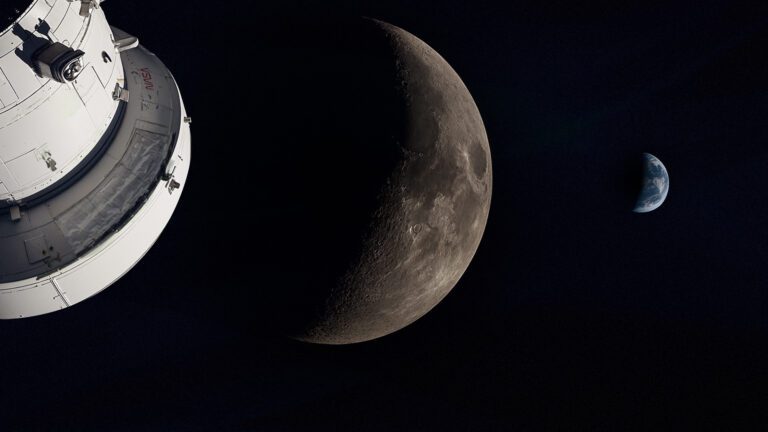
Host Paul Spain is joined by Brett Roberts as they unpack the latest tech news from New Zealand and the wider world. From Peter Beck’s bold leadership, a look back at Apple’s 50‑year legacy of design and disruption, a trip around the moon with Artemis 2 crew and more.
Topics include:
Read the full transcript
Transcript is computer-generated and may contain errors.
Paul Spain:
Greetings and welcome along to the New Zealand Tech Podcast. I’m your host, Paul Spain and real privileged to have Brett Roberts joining us again on the show. How are you, Brett?
Brett Roberts:
I’m very good, thank you. Yeah, it’s good to be back again. We love these conversations.
Paul Spain:
Thank you. I really appreciate you taking the time out. Maybe you can remind listeners where you fit into this big wide world of tech and business.
Brett Roberts:
Oh, you gods. I’m not sure. I’ve been in the tech realm for a few years, since the early 90s, I guess, and spent 13 years at Microsoft, spent a bit of time at Callahan Innovation, spent five years at Datacom. So not exactly a tech guru anymore. It’d be dangerous if I was allowed to touch anything technical, but I’ve got lots of opinions about technology and some of the folks in behind it these days. I do a lot of work around business consulting, particularly helping senior leaders with AI stuff. And I’m doing some work now around customer value, which I’ve discovered is something that no one seems to understand. So go and have a look at my LinkedIn with my latest post.
Brett Roberts:
Paul, Excellent, excellent.
Paul Spain:
That sounds good. A big thank you to our show partners to One New Zealand, 2degrees, Spark, Workday, Fortinet and Gorilla Technology really appreciate their support of the show on an ongoing basis and the broader support that they give to the tech and innovation ecosystems here. Well, jumping into the New Zealand news, some pretty big things going on. First up, Peter Beck, he, he’s decided to work effectively for nothing at Rocket Lab. So he said, look, you can cut my salary back. I think he was on a US $800,000 salary, which is about 1.4 million. With how weak our dollar is at the moment and he’s reducing that down to US$1 a year and forfeiting his stock options and redirecting the compens and development to prioritise long term innovation, shareholder value and confidence in the company’s future growth. I wouldn’t have thought that Peter Beck would need to do that.
Paul Spain:
There seems to be a lot of momentum behind the company, but maybe it’s the current economy, maybe he just wants to make it clear that he’s all in and Fully committed to Rocket Lab and its future.
Brett Roberts:
Yeah, I thought it was an interesting move. I mean I, I admire, I admire it. I think it sends a really good message. I’d love to know what the message is behind the message or what the, what the motivation is behind the message. There’s always. It’s an iceberg. Right. And there’s a lot.
Brett Roberts:
I’m sure Luke’s under the, below the water level, but good on him for doing what he’s done. Rocket Lab, you know, geopolitics aside and all the other things, is an absolutely incredible success story now. A global success story. Have you ever been through the premises of Mount Wellington?
Paul Spain:
No, I haven’t been through the Mount Wellington premises. I interviewed him at their previous premises when we did the New Zealand business podcast interview. And we were sitting there in Mission Control, which was pretty cool. But I do need to go and check out the Mount Wellington premises. Cause I know it’s a lot bigger and pretty awesome.
Brett Roberts:
You, you need to. It’s got the most amazing reception area of any organization I’ve ever set foot into for starters. I won’t spoil the surprise, but it’s pretty amazing. And, and being shown around the, you know, where they’re building all of the rockets etc at the back is just mind boggling. My background is I’m an avionics engineer. I’ve spent some time at Boeing in my dim, dark past. You know, I’m Boeing back in the day was a really amazing engineering company. Less so these days.
Brett Roberts:
But just seeing what they’re doing there, the scale of it and the, I don’t know, you could eat off the floor, you know, which I suppose is what you should be able to do in a, in a rocket lab. But quite incredible. It’s really inspiring. You know, in good old Mount Wellington there’s literally a whole bunch of rocket scientists. I thought that was pretty cool.
Paul Spain:
Yeah. And they’ve also good on him.
Brett Roberts:
I think what he’s done is it sends a great signal.
Paul Spain:
Yeah, yeah, no, I think it’s a, it’s, it’s a very, very good move. And they’ve also got their Walkworth location as well now, which you know, which they had acquired from Sail GP was also. Yeah, that’s right, the Oracle Sailing HQ as well. So that’s where they’re doing some pretty big work when it comes to preparing for Neutron. And so there’s been a few leaks of some of the footage there. But yeah, great to, great to see things continuing to move forward on the Rocket Lab front and yeah, just an incredible story. We’ll tap in on what SpaceX are up to a little bit later on in the show. But also Rocket Lab’s involvement in the Artemis 2 mission which as we record this they’re, they’ve, I guess, you know, come around from behind the moon.
Paul Spain:
So that’s an exciting one.
Brett Roberts:
Yep.
Paul Spain:
Now also New Zealand front Spark have confirmed that they have gone live with Starlink satellite to mobile services. So that enables them to provide to their customers, you know, messaging services, you know, text iMessage, WhatsApp. I believe when, when their customers are outside of, you know, normal mobile coverage and also data services and access will depend basically on, on the plans people are on, where they’ve got immediate access or whether they will have to pay extra. Understand the extra element will be $10. So this is going to be fascinating just to watch how things play out competition wise. Obviously we’ve got one NZ that have really led the way with getting involved in Starlink early on. Starlink’s now more mature offering for that satellite to mobile connectivity now or it’s further along in its track but yeah, different price structures. And then of course We’ve also got 2 degrees coming with their partnership with AST Space Mobile which is a different offering again with their mega sized satellites that are intending to, you know, deliver, you know, high, high speed connectivity that we’re, we’re not, we’re not receiving at this stage from, from Starlink satellite to mobile service.
Paul Spain:
So yeah, it’s going to be an interesting period ahead as, as you know, all the carriers end up with, you know, competing offerings here.
Brett Roberts:
Yeah, I think it’s quite interesting for a couple of reasons. So the first one is it’s still, I still find it mind boggling that, you know, that, that they’ve launched thousands of low earth earth orbit satellites and build out such an incredible network so quickly. Really, I mean, you know, if you and I were having this conversation 10 years ago, we’d have probably chortled at the idea of someone doing this. So you know, I’ve always made my opinions of Elon Musk pretty clear. But man, as a organization, their ability to execute, you know, on a grand vision is, is just second to none. It’s incredible. What I think’s interesting, so the competition here in New Zealand is good, always good to see the telcos competing. One has to wonder how it’s an interesting, it’s a fraught relationship, right, because they’re effectively, you know, in dealing with an organization that can have global connectivity.
Brett Roberts:
The telcos are effectively introducing piranhas into their own paddling pool. Right. From a competition perspective. So, so it’s they, they’re damned if they do and they’re damned if they don’t. They have to do this. It’s, it’s customer expectation but by the same measure each, you know, it’s death by a thousand cuts. I can absolutely see a future not too far down the track where we start to see the likes of Starlink and others bringing their own carrier services into the country. You know, what, where’s the value that the local telcos add? So I think from a competitive standpoint it’s really interesting.
Brett Roberts:
It’ll be interesting to watch the play between, you know, terrestrial telcos and effectively, you know, in orbit connectivity. I, I’m not sure it’s going to end well for all the telcos.
Paul Spain:
Yeah, I mean I’ve had a bunch of discussions around that and, and that is certainly a pretty common concern. I think in terms of the technology at this point the existing services certainly would struggle to get inside most buildings and to be able to deliver connectivity and so on. But yeah, look, I think the telcos and their chief technology officers and there smart folks will have kind of delved into the details but I think the general pushback at this stage is that’s not possible. But you know, who knows what the future holds and how this might evolve over the next decade or two. But I mean certainly even going through any sort of reasonable tunnel in New Zealand where you can still get mobile connectivity, but you only get GPS if the GPS signal is being effectively kind of regenerated inside the tunnel. I’m thinking the Waterview tunnel in Auckland for instance, where they, I believe that they, you know, they generate a GPS type connectivity or type result there. So your phone thinks it’s getting GPS but you know, can’t actually directly get to a GPS satellite. So yeah, I mean we’ll certainly see how sorts of things evolve.
Paul Spain:
But yeah, there’s probably some considerable complexities ahead. But you know, look, we may, you know, we may see that happen, you know, in some countries at some further point in time whether that would make sense, you know, and I guess comes down to a, the technical possibilities. But then, you know, business wise, you know, would it make sense and so on as well? I don’t know.
Brett Roberts:
I think the interesting thing with that is, and because everything you’ve talked about there from a technical standpoint is exactly right. What happens the day that Starlink put an offer on the table to spark or one to buy the Infrastructure, I think, you know, so, so those, those are some of the interesting things I think that are coming down the path at some stage. Elon Musk is, is one of those everything is never enough kind of folks. So I’m sure that there’s plans on the table to do something similar. We watch with bated breath and see what happens.
Paul Spain:
And there’s also the scenario where satellite providers have had effectively free connectivity. So if you look at, if you have a Starlink dish to get Internet at home and it’s not like Starlink have had to go out and spend hundreds of millions of dollars to you know, to buy a particular piece of spectrum as our telcos have, that’s effectively been made available. There’s spectrum available for, you know, for satellite comms. So. That’s right, yeah. Some interesting times ahead for sure. The other piece that caught my attention in terms news is the government is reallocating 122 million of existing science, innovation and technology funding to place stronger emphasis on emerging and advanced technologies. And this is interesting.
Paul Spain:
So rather than kind of increasing their overall spend, they’ve decided to focus on some priority areas. Quantum, quantum robotics and genomics, you know, with, with some focus on opportunities that they think New Zealand, you know, has the potential to realistically develop some world leading capabilities. So I think, you know, this is, this is an interesting one to look at. I guess, you know, this has been part of your world in the past with sort of Callahan getting involved in that side of supporting new investment into innovation.
Brett Roberts:
Yeah, I kind of run hot and cold. Well, not so much hot and cold. I’m a little bit torn. I guess the fact that it’s reallocation rather than a boost in spending. I guess the first thing that popped into my mind was rearranging ditches on the Titanic. That’s not quite the right analogy, but it’s, it’s shuffling cards around, you know, it’s that shell game, you know, moving things around.
Paul Spain:
Hopefully New Zealand’s not the Titanic bread.
Brett Roberts:
Yeah, like I said, it wasn’t the best of analogies. It’s not a good analogy day. So yeah, there was a few things. So I think the first thing is it’s good to see focus. I think that’s a good thing. We can’t do everything and be everything. And so I think choosing to place some more major bets I think is a good call. I’ve been generally on the overall scheme of things, absolutely appalled in the, with the way in which they shut down the previous, I guess, ecosystem and infrastructure and left A big gaping hole which caused, I suspect, a lot of our scientists and researchers and others to consider careers elsewhere.
Brett Roberts:
I think that’s a real shame. I think we have lost some very bright folks and we’re unlikely to get them back. So. So, yeah, look, I think focus is good. I think spending the same as we were going to before, which was never enough, is not good. I think the way in which the transition’s been handled is amateurish, substandard, but at least there appears to be a plan now. Although having said that, my understanding is that also there’s some more legislation that needs to be passed sometime later this year to get some of the other building blocks in place as well. So it’s good to see that we’ve gone through, hopefully through the transition and we’re coming out of that.
Brett Roberts:
So I am optimistic that we’re going to see some progress here, which is a good thing. And again, I think narrowing our focus, we could argue back and forth about what to focus on, but I think having some focus and being able to say no to things so that we can say yes to the right things is a very good thing.
Paul Spain:
Yeah, that’s a good point. Although it’s always tough for those that are impacted where funds are maybe disappearing. But, yeah, we want to make the very best shot we can when it comes to these investments. Now, Robo taxis and autonomous vehicles continue to kind of be in the media. Read recently that Waymo are using remote operators based in the Philippines to assist when their robo taxis in the US hit challenging scenarios such as complex traffic and accidents and the like, which is interesting. Although they did say that the human in the Loop workers provide guidance rather than, you know, taking over a remote steering wheel, you know, as such, which is.
Brett Roberts:
I’ve got a mental image now. Thank you for that.
Paul Spain:
Yeah, for those watching the video, you get a different view than just listening in. And then we’ve most recently heard that, you know, Tesla have admitted that their robo taxis in some cases are being remotely driven by human operators at low speeds during emergency type situations. And it sounds like that’s a little bit different from Waymo, you know, where they are actually, you know, you potentially do have somebody, you know, with hands on the wheel from a remote perspective. So, yeah, just interesting to, you know, to have that out publicly. That’s not, you know, not something that probably many expected, particularly with how, you know, Musk has really sort of, you know, talked up the AI capabilities within Teslas for a very, very long time, shall we say. And then this Comes on top of news from China, where somewhere north of 100 robo taxis from Baidu abruptly stopped in Wuhan. And wherever they happened to be, whether they were on a motorway or just typical sort of road, they stopped in traffic. And I think that created some cause for concern and a number of accidents as well.
Paul Spain:
So, you know, that kind of thing, when a vehicle just abruptly stops where you wouldn’t expect it to. So all is not perfectly well in the world of autonomous or vehicles that look like they’re fully autonomous. And sometimes there are some people that do the smoke and mirrors part.
Brett Roberts:
This whole thing has been such an interesting thing to watch. Right. You know, there’s two people in technology world for whom I don’t believe a single word that comes out of their mouth. 50% of them is Elon Musk and the other half is Sam Altman. Right. And Elon Musk has been talking this up for so long in basically not delivering. So. So when the story broke about the.
Brett Roberts:
The humans in the loop thing, like, that was a completely unsurprising moment. Of course they’re going to be humans in the loop. They’re late to the market, they don’t have the same level of technology that Waymo does. They were always playing catch up and they’ve got a liar at the helm. And so I, honestly, I was completely unsurprised at that. The, the thing in China was interesting and it reminded me of something I saw. There’s a great video on YouTube of delivery robots in Estonia a few years back where they all congregated in one place and were arguing back and forth about right of way. So they were technically trying to move.
Brett Roberts:
They hadn’t stopped moving, but there was. They were just stopped because there’s a whole bunch of them there and they couldn’t work out who. Who got to go first. I have a suspicion that we’re going to see humans in the loop for this sort of thing to some extent, for a long period of time, mainly because of American litigiousness. Right. And. And I’m sure that the day that a, you know, a machine without a human in the loop manages to injure severely injure or, or kill a human, you know, would be quite a show, which has happened, obviously, but be quite a showstopper moment from a lawsuit perspective. So I, I can see that having humans for two reasons.
Brett Roberts:
A, to sort out problems like that and B, to have someone to blame is an important thing and will be for a while. I, I would. I haven’t been in a. In an autonomous taxi yet I would step into a Waymo. I’m not sure about Badu in, in China, But I absolutely 100 would not ever step into a Tesla autonomous taxi. I. No, no, that’d be like, you know, stepping into a home built 747 to circumnavigate the globe. I just, I would not do that.
Paul Spain:
Okay, so we, we know where Brett said on that one. Oh, that’s, that’s.
Brett Roberts:
I’m an ex aircraft engineer. Reliability means something, you know. Yep.
Paul Spain:
No, I, I hear, I’m, I’m, I’m still waiting on a, on a Tesla to have the autonomous capabilities that it was going to get within three months of purchasing it and yeah, a long time.
Brett Roberts:
And then actually the other, the other thing that’s worth remembering too, just for the laughs, is that robot thing that Tesla did a while back where it turned out all of the humanoid robots were controlled by motion capture or something remotely, which I just thought was. There he is.
Paul Spain:
We do see a bit of smoke and mirrors in this area, don’t we? So, yeah, it’s fascinating to see these things go on. You know, I guess having had seen, you know, waymos kind of freeze up, you know, recently when there was, you know, power or comms outage in San Francisco and now to see this one in Wuhan, you know, just, just highlights that there’s, you know, there’s a way to go in some of these, some of these areas to, to get, you know, to a more perfection type situation. But yeah, of course there’s a lot of this stuff, you know, going on and yeah, it’s moving a lot.
Brett Roberts:
Autonomous trains.
Paul Spain:
Yep, yep. But yeah, now onto something a bit also involving San Francisco based companies, US based company Apple have turned, have turned 50 in the, in recent days, which is, is quite a, it’s a bit of a shock to me. But yeah, me too actually. You know, you grow these companies and, and you think, well, how can they be 50? I’m only. Oh, hold on. So as you get older, you don’t always feel like you’re getting older. And yeah, you, you think of these as, as young upstart companies, but yeah, Apple has been around for half a century.
Brett Roberts:
Quite incredible. I mean, really incredible when you think about it and you look at the, the innovation that they’ve delivered to the world and you know, first of a kind innovation. I mean one of the examples I use in some of the briefings that I give is, you know, when they brought out the iPhone in January 2007, I think it was, was the best phone on the planet. They’d never made a phone before. Yeah, I mean, you think about the engineering that went into cramming everything that was in that little device and also the smoke and mirrors that went on to make, making sure it made for a good demo. Yeah, but what an incredible company. And you know, they’ve been innovative ever since. And yeah, I think the, the spirit of Steve Jobs still lives on in that organization and in so many ways I think they’ve got kind of a, a someone to look to or something to look to for the, for the, for the future.
Brett Roberts:
You know, what they’re there to do. Be interesting to see what the next 50 years looks like. I’m fully intending to stay around for it, so we’ll, we’ll see what they managed to, to produce. But I mean, you know, it really is a truly amazing, innovative company. You look at the work that, you know, what they’ve done share price wise over the last 10, 10 years or so is absolutely incredible. So yeah, I’m sure they got a lot of life in the m. Quite an incredible organization. Life changing, literally.
Paul Spain:
Yeah, well, they’ve delivered so many things that have stood out from what others in the market have, have sold. And I guess the other thing that, you know, defines a company is the things that they say no to. And you know, interesting that Apple themselves, I believe, you know, spent billions of dollars on autonomous vehicles, electric vehicles, the work that they did in that front. And then, you know, at some point must have come to the conclusion that, no, this doesn’t make sense, we’re tapping out. And if they’d kept going, probably would have been many, many, many more billions in a direction. And yeah, those that had said that they were gonna deliver autonomous vehicles in 2019 and 2020 and 2021, 2022, et cetera, et cetera. And Apple came to the conclusion and you know, it would be very interesting to know the, you know, the insides on that. But you know, all the, all the suggestions are that they took it very, very seriously until they decided not to.
Paul Spain:
And I guess the more time that goes by on this front, you know, they potentially look, you know, sharper and smarter than your average bear.
Brett Roberts:
Yeah, that’s true. I mean, you think about it. Could you imagine Steve Jobs, you know, some came to say, said to him and said, we’ve got this concept for autonomous vehicles. They almost work. We just need to have a human in the loop. You know, that, that would never pass Steve Jobs test. Right. So, so I agree with you I think one of Apple’s great defining characteristics is they know what to say no to and they’re willing to say no to it.
Brett Roberts:
You know, I, as you know, I spent 13 years at Microsoft and I think that’s one of the things that Microsoft’s challenged with at times. I think they chase a lot of bright, shiny things and their efforts get kind of deprecated to a certain extent or diluted to a certain extent. I tell you, one of the things I do think is going to be interesting to watch is Apple with artificial intelligence. I, I think watching the likes of, you know, Sam Altman and others burn hundreds and hundreds of billions of dollars of shareholder cash, buying GPUs effectively and building out data centers which are currently under huge amounts of threat from Iran. I see. I think Apple’s play or strategy in the space might prove to be a very interesting one. I think there’s going to be a great opportunity for vulture capital to come in after some of these have crashed and burned. And as we know, they’ve got handsets in the hands of billions of people around the world.
Brett Roberts:
And it’s that connection from the hand to the eyes to the head that’s potentially going to be the most valuable connection in this whole thing. So I think watching how they play in this domain, I, you know, I never write those folks off. They’re pretty sharp and they’re strategically, you know, at the top of their game.
Paul Spain:
Yeah, Yep. I was looking, looking back over some of their, sort of their history and things that stood out. You know, the Apple, the Apple II which they launched in 1977, I remember, you know, the schools were full of those. Not the school I was in but you know, it was very, very common for, you know, across New Zealand and lots of parts of the world. And that was I think quite a critical entry point for, you know, for Apple with enthusiasts early on in that education sector where they were able to, they were able to win some market share. 1984, when the Apple Mac launched and their iconic Super super bowl ads was poking, poking fun at, at IBM and, and so on. And then it was, it was only the, you know, about a year after that that, you know, Steve, Steve Jobs actually left, left Apple in 1985. I didn’t realize it was, was so soon until I was looking that up and 12 years later until he returned when Apple acquired his company Next.
Paul Spain:
And that was kind of when things really started heating up for Apple. Microsoft helped Apple there with an investment when they were really, really struggling. But you know, from there on you know, things started moving pretty, you know, pretty swiftly, the IMAC in 1998. But there were also products that got, you know, cancelled and kicked to the curb and so on that, you know, I guess, you know, Jobs recognised were distractions, weren’t the right thing to have said yes to. And then, you know, ipod, itunes, the iPhone that you mentioned, the App Store. In recent years, you know, Apple have done very, very well with their M series chips that have, you know, started out having their own chips for their phones and their iPads and so on. But putting those into the Mac, a real stroke of genius that’s enabled them to be very, very competitive. And even this new Mac Neo that has launched in recent weeks, it stands out for innovation and value and just an impressive product.
Paul Spain:
It’s an example that they can keep doing new things and doing well.
Brett Roberts:
Yeah, like I said, they’re truly inspirational company and I, yeah, I, I’m sure they will continue to bedazzle us with innovation, you know, in the future. It’s deeply woven in their DNA and I think that whole thing about focus and being willing to say no, I think that’s a critical part of it. Have you ever read Walt Mossberg’s biography of Steve Jobs?
Paul Spain:
Yeah, I think it was. Yeah, it was probably a few few years ago now.
Brett Roberts:
It’s a very good book and it really does give you an insight into obviously who he was. Not necessarily the nicest of human beings, but certainly one of the smarter ones and why that company is the way it is. And I think under Tim Cook’s leadership, he’s done a stellar job, you know, launching them into the, the next phase of their, you know, or the current phase of their growth and success. So.
Paul Spain:
Yeah, yeah, yep. And those, those early Macs, I mean, would just. Was just so genius from, you know, not just the graphical user interface and the mouse, but the industrial design and the, you know, that really sort of set a standard in the industry that, you know, it took decades for others to, you know, to start delivering things at that level. And still, I think Apple still, you know, stands out as the leader when it comes to the design. Not just of their hardware, it’s every other element. I had to laugh the other day, and I probably shouldn’t mention this, but I got sent a review device, we’ll say, from another manufacturer, I won’t mention who. And when Apple gives you a device to review, you know, if it’s in person, they’ll unveil it in a similar way to the way Jobs would unveil Something with kind of pulling the, you know, the COVID off it and so on. And if they send you a product, they send you the product exactly.
Paul Spain:
As a purchaser, you know, would get it completely unopened. You get the whole experience of the unboxing and so on. This other device arrived in a kind of a, you know, maybe it had been to one or two people before me and there was, you know, a bit of bubble wrap and a stuffed box and it was, I mean, it was just night and day. Just showed you the difference in the DNA and the thinking and the pride in the product. And that sort of seems to really carry through with Apple. I wouldn’t say Apple that I like everything Apple will do. They’re a business and they’re very successful commercially. And you know, sometimes that leads to things that aren’t always popular.
Paul Spain:
But I think, you know, generally speaking, you know, they’ve been a real positive impact on product design and innovation and I’m very interested how that will continue over the, over the years ahead. I think, you know, to be able to do something on an ongoing basis, I mean, they’ve been around 50 years and, you know, what they’ve achieved over this last 50, 50 years is impressive. I think they’re probably one or two products that some of us would query whether, you know, whether they should have said no to, you know, the Apple Vision Pro, which hasn’t even launched in New Zealand, is, is that a slam dunk? I don’t think so. But you know, generally looking at, you know, at their products, they’re as outstanding as you say. So, yeah, very, very curious how it rolls out from here, that’s for sure.
Brett Roberts:
Let me tell you a quick story because I think it really plays into this quite nicely. So must have been 2008 or thereabouts, while I was still at Microsoft, I was responsible for the company’s outreach to the open source community here in New Zealand. Right. So it’s kind of the bridge between Microsoft, the evil Microsoft and the open source community and made some really good connections in the open source community, had some really good arguments with folks. It was great. It was a really interesting time. I had lunch one day with somebody who’s still in the tech scene here in New Zealand and Auckland, and he’ll know who he is if he happens to see this. A very strong advocate for open source software and hardware and very eloquent and articulate with, with that efficacy kind of thing.
Brett Roberts:
Anyway, we’re at lunch and his phone rings and I realize it’s an iPhone and, and I said to him, hang on a minute, how can you, a strong supporter of openness, open source technologies? How can you, how could you have an iPhone? One of them, you know, it was a closed device, you know, certainly back then, very, very closed ecosystem, et cetera. It, it’s the antithesis of everything that you stand for, everything you advocate for in the open source community. And he picked the phone up with two hands and I remember this vividly over the table. He picked the phone up with two hands, he held it out in front of me, he said every time I use this device it brings me joy. And I remember like literally at that moment thinking nobody else. If you can convince a very staunch open source advocate to use your device, if Apple could convince that nobody else had a chance, Microsoft never had a chance. The others don’t have a chance. Quite incredible.
Brett Roberts:
And, and I, I will always remember that the value in that product for this person overrode all of their concerns around openness or lack thereof or whatever it might be. And I think that speaks absolute volumes for the power of design and understanding your customer and building something that the customer doesn’t just like, but, but loves. That brings them joy.
Paul Spain:
Yeah, I think, yeah, it’ll be interesting because you know, every, every listener will have their, their own, you know, preferences in terms of brands and so on and their own experiences with Apple. And you know, I’m, I’m, I’m sure you know that that varies but yeah, hard to, hard to throw stones at what they’ve achieved and you know, just how much their products have stood out over the, over the years. Now the first crewed flyby of the moon in over 50 years, the Artemis 2 mission. Yeah, it’s been pretty exciting to sort of watch that, watch the launch. And now the footage is, you know, the most recent footage, you know, from going right around the moon is online the furthest humans have ever been away from Earth. You know, pretty historic moment and very pleasing to know that Rocket Lab are responsible for the solar that is keeping the Artemis crew powered up. So yeah, I thought that was nice to hear. I was curious about that because be going back over four years now that they made an acquisition on the front of Solaero holdings who key supplier of space solar products.
Paul Spain:
And you know, I think there may be three kind of key companies in this area and so I was curious and then over the weekend there was a, a tweet from Rocket Lab to, to announce that it was their, their tech keeping the Artemis 2 crew powered up on that incredible Journey quite amazing.
Brett Roberts:
Like I’m a child of the Apollo generation, right. I, I can remember sitting in class listening to was either the launch of Apollo 11 or Neil Armstrong stepping onto the moon, one or the other. So that dates me a bit. So watching the, you know, the rocket take off and, and you know, visit or almost visit, fly by the moon again, it’s quite an incredible experience. It’s lovely, lovely to see that. And I think what’s been interesting in these somewhat troubled economic and political times is that that’s the sort of thing that brings the world together. Right. And I think it’s quite an inspiring image to see, you know, us exploring the outer reaches of space around how a little bit of it.
Brett Roberts:
Again, I tell you, an interesting thing that I popped up the other day was how much secondhand space shuttle gear has gone into the Artemis program. I had no idea. It’s really surprising. Yeah, I think there was quite a
Paul Spain:
bit of debate about whether that was the right approach to take, but it was the approach that they, that they took and yeah, quite, to actually see it, see it in action, yeah, was kind of, yeah, quite, quite, quite a shock really, considering it’s, it’s quite old kit.
Brett Roberts:
Yeah, it’s quite, it’s from the 80s. Right. The, the other thing I think that’s interesting with this too is to see, I mean the Artemis program has taken a long time to grind to the point where, where it is now. And then you look at the likes of SpaceX and Rocket Lab in particular, how comparatively quickly they’ve gone from, you know, starting out to where they are today and it’s, it’s been interesting just to see that you know, effectively a government funded program really doesn’t have the luxury of failure in that sort of domain. Whereas you know, if the SpaceX rocket blows up on the launch pad every once in a while, you know, or a rocket lab one does, it’s eh, we’ll learn from our mistakes and we’ll move on. So just seeing how the private sector can move at pace because the expectations are kind of different. It’s been interesting as well. But yeah, it’ll be interesting to see what happens from here with Artemis.
Brett Roberts:
I’m not sure, but doesn’t ask I have any money at the moment. I’m probably gonna have to run a cake stall or something until Trump goes,
Paul Spain:
but we’ll wait and see. But the idea of having people go to the moon and build a space base and so on in the years ahead I think is probably gonna really reignite a Level of interest in space that we haven’t seen for 50 years. So, yeah, really encouraging. I think that they’ve been successful so far and all the best to the crew that they splash down successfully in the next few days ahead.
Brett Roberts:
And I think just one last thing is you look at what it’s taken to get where, you know, where they are now, all the hard work, and you look at the innovation that SpaceX and Rocket Lab have brought to the equation. 3D printed rocket engines and all that sort of thing. It just highlights again what an incredible achievement the Apollo program was back in the day. Being able to get a couple of guys onto the moon and one circling around it using, you know, the, the equivalent of A, you know, 1960s Ford car is quite amazing.
Paul Spain:
Yeah, yeah. I mean, it is mind blowing when you think of how much technology’s advanced that they just did not have access to. You know, back in the 60s when that program developed and how quickly that they actually, you know, they pulled it off. You know, that in itself, you know, you were talking around, you know, the time to, you know, to get the Artemis missions happening and so on, but I mean, they moved at an insane pace when you think about it, that is hard to get your head around it. And yes, that meant that there were lives lost in the process. It was a much, much riskier endeavour then than it is today. And yeah, certainly the modern kind of tech firms of move fast and break stuff. I think that probably applies a bit more to space than it does to Rocket Lab on the brake stuff front, shall we say.
Paul Spain:
But interesting times again.
Brett Roberts:
Disassembly, I think is the term that’s
Paul Spain:
right for SpaceX, who we’ve been hearing for a while that they’re filing for an ipo, an initial public offering, getting themselves listed on the stock exchange, varying, varying, you know, bits of news media bouncing around that, saying that they’ve confidentially, you know, filed for this IPO. Some reports suggested a $2 trillion valuation, but I see, you know, Musk has jumped online and said that that’s not true. But the suggestions are that they’re looking for investment of around 75 billion, which is a huge amount of cash to be raising. But when we look at the momentum of what SpaceX have achieved to date, you can imagine if anyone can pull off that level of investment, then could well be SpaceX. And, yeah, it’s gonna be fascinating to see what the future holds for them. Of course, they’ve made recent announcements and some of it, partnership with Tesla around insane mega chip building Factory capabilities and data centers in space. Hard to know what of it to believe and when it will come to fruition. And I think for those that have been following aspects like autonomous driving from Tesla, there may be some that are a little bit lacking in confidence, but there are certainly a lot of people that have made a lot of money out of Musk’s investing in Musk’s businesses to date.
Paul Spain:
So I think there’s quite likely a pretty big future ahead on this one.
Brett Roberts:
Yeah, look, I think you’re right. I, you know, when it comes to who to trust, I think easiest thing to do is probably not trust anything Musk says. You know, data centers in space and all the other things. But the team behind them with SpaceX are obviously absolutely incredible from an engineering and delivery perspective, you know, so I have no idea what will happen with the ipo. You know, Musk probably needs an ipo. I suspect I, I can see Tesla and I know their demise has been talked about for a long period of time and not actually happened, but I think Tesla are a little bit behind the eight ball when it comes to car models and things at the moment. A lot of his personal wealth is tied up in it. So a 2.1 trillion dollar IPO would be quite a handy thing for Elon Musk right now.
Brett Roberts:
I suspect from a personal finances perspective, helping balance the books. I have no idea how you value a company like that. I’m sure there’ll be a lot of folks that would be very keen to get on board. Although the current kind of world economic and political climate I think makes things, will make things interesting. And also a lot of the revenue for SpaceX comes out of government contracts in the United States, which I suspect that if a more legitimate regime which will run a fine tooth comb over might not necessarily be viewed the same way that the current rate American regime does. But, you know, all things being considered, I’d be really surprised if they didn’t launch to the. I’d be amazed if it didn’t. If it wasn’t.
Brett Roberts:
The largest IPO was certainly top one, two or three in, in all time. There’s a lot of interest in it. They are the future. They’re doing some really innovative stuff. It’s clearly quite an amazing team. Yeah, we’ll wait and see.
Paul Spain:
Yeah, yeah, no, I’m, I’m, I’m fascinated. And look, you know, in most of these areas, you know, Musk’s companies, you know, get, get there in the end, you know, I, I guess I, I call out the full self Driving as I’m, as I’m impacted by it directly but, but you know, an incredible track record and an incredible, you know, achievements there. Lastly, before we finish up, Anthropic have been doing incredibly well with Claude code. You know, Microsoft have licensed this now
Brett Roberts:
for
Paul Spain:
inclusion in Copilot and through their varying AI platforms but they accidentally leaked something like half a million lines of, of source code for their Claude code AI tool due to some sort of a misconfiguration. Now it doesn’t give, you know, every aspect, you know, a way of, you know, of their model and so on but yeah, still seems like a reasonably large mistake to be making.
Brett Roberts:
Someone’s going to get a bad review. Right? Yeah, I was intrigued. I thought there was, that was, yeah, I mean quite the misstep. I’ve switched over to Claude in the last couple of months or so I guess and given up completely on chat GPT I’d have to say but and I’ve been really, really impressed and I’m not a heavy user. I don’t do any coding in it yet I might do. It would probably be a very dangerous thing. But yeah, I, you know, use it for writing and some other bits and pieces and it does a stunningly good job. And yeah, I’m sure that there’s a lot of, a lot of people doing a bit of soul searching, I mean and reconsidering their career prospects after that.
Brett Roberts:
That was a real screw up. I’d love to know the story behind that but yeah, which I’m sure we never will but yeah, yeah, but yeah, they’re doing, they’re doing well. I thought the Microsoft thing you mentioned too, in passing, I think, I think that’s interesting as well. I, you know, Microsoft kind of hedging their bets and I think that OpenAI Microsoft relationship is a very, very different beast than it was six months or certainly 12 months, 24 months ago. So it’s sort of happening in that space.
Paul Spain:
Yeah, very savvy. Move on Microsoft’s part to partner with the top firms and have access to the best models. I think there’s an aspect where from a usage perspective everyone wants to use whatever is flavour of the month if it delivers the best result. That’s what folks want to be using. But organizations also need to make sure their data governance is in order and that’s usually a whole lot easier to do if you’re using tools from a key vendor like Microsoft rather than tapping in say clawed into your SharePoint and into your email and, and bits and pieces. Certainly that’s probably common thinking.
Brett Roberts:
I think you raised a really good point. Right. And I think Microsoft are doing some really good stuff around the governance side of things for enterprise users. I have no idea what the AI strategy is. It’s all over the place. We spoke earlier about the whole everything’s called Copilot. Honestly, I wouldn’t be surprised if we woke up tomorrow morning. They’d renamed the company Copilot, so I think that’s shambolic.
Brett Roberts:
But their work around governance, etc. For enterprise customers I think is world leading. So it’s quite funny, it’s quite a. What’s the word I’m looking for? Dichotomy. I’m not sure what the hell they’re doing overall product strategy wise, but they are doing some of the best stuff out there when it comes to, you know, protecting customers around all of the governance side of things. So we live in very interesting times in the AI world. It’s just literally every day there’s something that’s both eye opening and, you know,
Paul Spain:
and shocking and news that we didn’t announce on the show last week. I think it was, it kind of came out around the time we were recording that Microsoft New Zealand Managing Director Vanessa Sorensen and is moving on. So that’s, that’s, that’s big news. She’s been a real stable force and you know, and a really key part of the company for.
Brett Roberts:
She’s done an amazing job and she’s a wonderful human being. I worked with her or, you know, met her many, many, many years ago and she is an extremely good human and she’s done an amazing job for Microsoft and I’m sure whatever she turns her hand to next, she’ll do a stunningly good job of that as well. So interesting to see what happens actually. What. Yeah, how they manage all of that.
Paul Spain:
Yep. Well, that’s, that’s us for this episode. Anything else you wanted to add, Brett?
Brett Roberts:
No, not really. Thank you for having me again. It’s always fun if people want to find me. You can find me on Twitter at Brett Roberts. I’m also on Blue sky with the same name. Lots of opinions, some of them informed. Most of them probably not. Or find me on LinkedIn.
Brett Roberts:
I like talking to people a lot. So if you found any of this interesting, please get in touch. Love to have a conversation. And yeah, thanks again, Paul. Really enjoyed this as always.
Paul Spain:
So, the very talented and self deprecating Brett Roberts. Thank you for, for joining us again and of course a big thank you to our show, partners Fortinet Workday, Spark, 2degrees, One NZ and Gorilla Technology. So, hey, thanks everyone for joining us. And we’ll be back again with another episode next week. And you know, feel free to, to get in touch via email or, or social media if you’ve got any, any comments on the episode. Great to have you listening in and thank you again, Brett. Always enjoy your insights and, and opinions and you keep us on our, on our toes with opinions.
Brett Roberts:
Are us some good insights, mate?
Paul Spain:
Yeah, it’s great. Awesome. Thank you. Cheers.
Brett Roberts:
See ya.