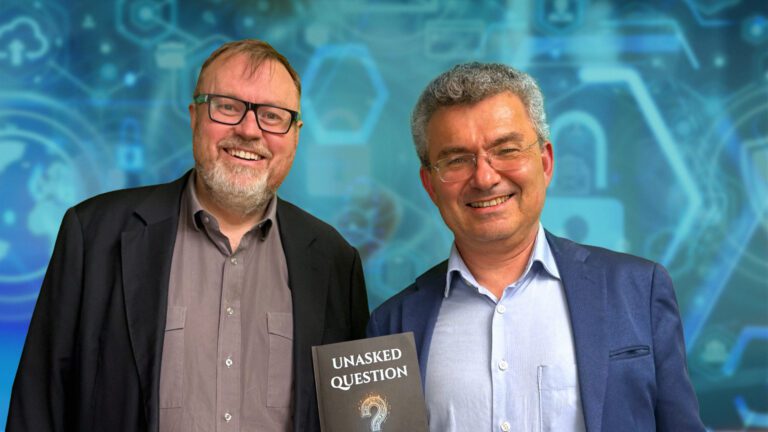
Host Paul Spain is joined by Igor Portugal (Tech Entrepreneur), as they explore the latest tech news in New Zealand and beyond. They discuss the Electric Avenue ticketing debacle, Starboard Maritime’s expansion plans, NZ’s Realtime phone outage service, China’s surveillance network, the future of Starlink, and Apple’s latest product revelations, including the progressive phasing out of SIM cards. Plus, get insights into BlackLock Security’s innovative use of AI for threat detection and their Penetration Testing as a Service (PTaaS).
Special thanks to our show partners: One NZ, 2degrees, Spark NZ, HP, Workday and Gorilla Technology.
Episode Transcript (computer-generated)
Paul Spain:
Hey, folks, greetings and welcome along to the New Zealand Tech Podcast. I’m your host, Paul Spain, and real privileged to have Igor Portugal joining us for the first time on the, on the show. How are you, Igor?
Igor Portugal:
Thank you for having me. Thank you for having me. It’s been a long time coming, Spain and Portugal in the same podcast.
Paul Spain:
Yeah, it’s funny, isn’t it? But yes, it has happened. So, yeah, we’ve known each other many years, but this is the first chance we’ve actually we’ve had. And here we go. Maybe you could just give a quick intro for listeners in terms of where you fit into this big wide world of tech in New Zealand, because you’ve been a key part of the tech community in New Zealand for a long time. But what are you currently doing and what’s your focus these days?
Igor Portugal:
Thank you, Paul. Yes, I’ve been part of the New Zealand tech community for over 30 years now, since I’ve been a software developer. Back good old days of peace software. I’m sure a few listeners or people who watch still remember that. Been an entrepreneur for many, many years. Been running my own startups, built a career in tech sales, and now I operate as a fractional executive across four different companies. Cybersecurity, AI technology. I just love seeing technology help businesses and people with their lives.
Igor Portugal:
I’m a technology for good person. I think technology helps us live much better and more fulfilled lives.
Paul Spain:
Yeah, I think we cross over on that. And also we should mention your book. Unasked question.
Igor Portugal:
Thank you. Thank you.
Paul Spain:
That’s worth a mention because that’s just come out in the last little while, in the last, what is it, six months?
Igor Portugal:
So we’ve got a copy sitting here on the table. Yeah. It’s a way of introducing a lot of technologists to the sales to find way to on their sales skills, improve their sales skills. It’s told as a tale. It’s a story. A story about a fictional CTO becoming an accidental CEO and screwing it all up. Losing his family and his house and about to lose his business. And then he needs to learn sales skills in order to dig himself out of the hole.
Igor Portugal:
A lot of people ask me if it’s autobiographical. It’s not. It’s purely fictional. But of course I draw a lot on my experience and it really was my attempt to help New Zealand, New Zealand’s tech ecosystem to lift our sales game. Because I think we do need to lift our sales game.
Paul Spain:
Yeah, yeah, yeah. Well, it’s really important, right, if, you know, if we’re creating innovative technologies and we can’t sell them, then you know, the whole country misses out and suffers and the better that we can absolutely communicate and so on.
Igor Portugal:
But it’s also one of the big lessons in the book is also about right sizing and creating the right technology. How do you create solutions to real problems? Rather a lot of technologists create a solution in search for a problem that maybe there’s a problem there but they already have a solution. And I advocate more create technology that provides real help to real problems, be it a business problem or just a personal life problem.
Paul Spain:
Oh, that’s good. Well, let’s jump in. We’ve got lots of news to get through and looking forward to getting some time to delve into one of the businesses you’re involved in in the cyber security world, Blacklock Security. So we’ll come to that as well. And of course a big thank you to our show partners to One NZ, 2degrees, Spark Workday, HP and Gorilla Technology. Super appreciative of their support for the show over the years and also of the, you know, the broader support and investment that they put into supporting New Zealand’s tech and innovation ecosystems. First up this week, really pleasing and you know, look, we’ve got this incredible startup sector, tech, startup sector in New Zealand, but Starboard Maritime have very recently raised $23 million to expand their, their business. And they’re still in there, you know, they’re still reasonably fresh.
Paul Spain:
I think we spoke to them probably last year around the time of the New Zealand High Tech Awards, if I’m remembering correctly. Just a little chat with them and we’ll hope to delve in a little bit more. The work they do is, you know, it’s pretty incredible they’ve got their offering. Starboard Maritime Intelligence is about providing I guess a really comprehensive knowledge of the maritime domain, awareness of what’s going on, integrating real time vessel tracking, satellite imagery, risk assessment algorithms to detect activities like illegal unreported and unregulated fishing, dark vessels and other suspicious move. So yeah, doing some really, really innovative work and so yeah, quite pleasing to hear that they’ve raised these funds to be able to help them progress and scale and move forwards.
Igor Portugal:
Yeah, absolutely. Real innovative team. I’ve actually been to their offices in Wellington. I had the privilege to meet one of the co founders. Extremely intelligent guys. A very interesting idea and very good execution. One of the things I really, it doesn’t cease to amaze me is the depth of New Zealand’s startup ecosystem. I think it’s underappreciated and underreported and it’s really good to see raise capital raises like this being reported in the mainstream media.
Igor Portugal:
But we’ve got a lot of gems like Starboard in New Zealand which punching well above their weight and as a country I believe we’re punching well above our weight. Everybody loves to compare us to Australia or Silicon Valley over there but we’re only 5 million person company and for our size we’re doing a lot, a lot better in terms of the innovation that’s coming out of this country.
Paul Spain:
Yeah, and look, yeah, super encouraging. Of course, you know there’s other, other startups have been out raising funds as well. You know, Ice House Ventures had their showcase event recently with Starboard Maritime Intelligence. You know, number of investors there have been listed including Icehouse Ventures, Altered Capital, King River Capital and a number of others there. So yeah, really, really encouraging to see that. I would encourage, you know, folks that are in a position to do so. If you’re in that wholesale investor level then you know, get plugged in with the likes of Puna Kaiki Fund and you know, Icehouse Ventures and look out for opportunities to get involved and invest in some of these firms if you’re not already because a, it gives you some good returns investing in our top startups. But you, you know, the more that we as a country can be focusing on things that are, you know, really good and productive for the country rather than just investing in the likes of property, I think, you know, the better it is.
Paul Spain:
So yeah, really, really encouraging to see that. One other news Spark and One NZ announced that they’ve launched a real time phone outage service. And this is around, I guess having a map particularly focused on serving emergency services. So emergency services can plan ahead and know what’s happening in terms of outages and how that might impact delivering assistance during an emergency and being able to plan ahead. But when we get those extreme weather events, flooding and cyclones and so on, that is a real problem at times. Now a lot of work has been going on to increase the resiliency of our mobile networks. Some of that comes down to, you know, power and generators and so on. But not every cell site is fully, you know, fully redundant and geared up with all the help it needs when there’s an issue, you know, we’ve heard the likes of Starlink becoming, you know, something that that’s now getting, you know, tapped into for backhaul if the say the fiber connectivity to a cell site.
Igor Portugal:
Gets hit and other satellite service, I don’t think it’s just Starlink. There are other satellite services that are coming into that, that play as well.
Paul Spain:
Yeah, I think Starlink has, has, has been the main one. You know, it’s, yeah, it’s just, it’s so easy to tap into and you know, the universal sort of coverage and performance benefits. But yeah, that will, that will keep evolving. But yeah, this was, this was interesting to read about this one in part because it’s Spark and One NZ and doesn’t involved 2 degrees. Now I had a bit of a think about that and I guess this has been part of the project that Spark and 2degrees have been working on, the Public Safety Network, which is the two of them working together and they were highlighting, look, this is the first time that two mobile networks have worked together to be able to provide, you know, this, this sort of information, this sort of dashboard where you’re getting that transparency on what’s happening network wise across two operators. And in fact their statement said that New Zealand is the first country in the world to offer this type of thing. I guess my challenge would be to our telco’s listening, hey, how can this be expanded out to, to all the networks and you know, how can we work together, you know, for the good of New Zealand? But an absolutely fantastic achievement so far and let’s see if that can be pushed further. Now I’m sure there’s some commercial aspects in the background which, you know, we quietly like to put those things aside and look at what’s good for all of us.
Paul Spain:
But I know the networks are also, you know, very interested in the things that are good for New Zealand and customers as a whole, aren’t they?
Igor Portugal:
Yeah, and I’ll second that. I’d like to see 2 degrees in that fold as well. Again, don’t have a lot of background of commercials, but I’d like to acknowledge that actually New Zealanders are reasonably good at collaborating. We’ve had the likes of Twens around for a long time bringing all the telecommunications companies together. We have had cross telco collaboration for many, many years and in fact with the way our regulation works right now, there is quite a lot of meaningful collaboration there that goes on behind the scenes. So from that perspective, I think as a country we’re not doing too badly.
Paul Spain:
Hmm. Just another little local story. We won’t delve too much into this, but I saw RNZ picked up on the Electric Avenue Festival now, you know, really, really big and successful event. They’ve got a capacity, I think for something like, you know, 90,000 attendees. So yeah, this goes on in Christchurch and yeah, a real demand to get tickets, but they’re suggesting that the demand was maybe for, you know, something like twice as many tickets as what they had available. And yeah, in the end, people had all sorts of issues trying to. Trying to get their tickets. So they worked through company things, Moshtix.
Paul Spain:
And yeah, it ended up becoming, you know, I think what some people were describing as a real shambles and lots of other derogatory terms for what happened, which is understandable if someone’s gone to buy a ticket and they’ve missed out because the technology has failed them. But look, there’s always gonna be challenges with tech. There’s the good sides and the bad sides. You know, the good side is you don’t have to, you know, physically go and queue up to buy a ticket like used to be the case. But I’m sure that they’re having a good look at themselves, the Moshtix, you know, crew who run the system and are making sure that they’ve got something maybe a little bit more resilient next time around. Right.
Igor Portugal:
Yeah. And also I think it’s a very good showcase about how much, how dependent we are on technology nowadays and what it means when it fails. I was actually just talking to an ex cio. I’m not gonna name names, but the main conversation we had is around how hard it is for CIOs to get budgets to fix some of the legacy technology that is unreliable and is likely to fail. And a lot of CEOs and boards, unfortunately, do not take that risk of failure seriously. And I think we need to. You know, that’s coming back to my book. And the technologist’s quest to unlock the sales algorithm is helping technologists, including the CIOs and internal IT teams, to be better salespeople and better understand the business.
Igor Portugal:
And the actual business impact of the technology that they deliver will enable them to articulate beta, the value of tick and the impact that it has when it fails. And I think in a situation like this, I’m sure there is a very good business case to build some resiliency and some redundancy. Sometimes you need to build some manual processes redundancy, sometimes it’s just redundancy for technology. But we live in the age where technology can’t just work all the time. Really.
Paul Spain:
Yeah. And look, no one gets it right 100% of the time, but yeah, we need to. When, when there are those sort of fails, we need to encourage an improvement. Put, put it, put it. That way. And, and yeah, it’s, it’s a good point. It can be quite hard to get these things across, across the line. And it’s a, you know, a real challenge for people, probably a lot of our listeners, as to, you know, how we go about addressing these things and, yeah.
Paul Spain:
Getting access to the appropriate budget. So. Yeah, absolutely. Now, another topic and this, look, this is something that we, yeah, we probably all, you know, somewhat aware of, but I saw Associated Press put this article out and effectively the headline is talking about how top tech companies, Silicon Valley tech companies, have enabled brutal mass detention and surveillance. And they’re talking about what’s been going on in China. And so they’ve done this sort of expose, I guess, of sorts, where they’ve delved into how US Technology firms have helped enable what they’re referring to as a surveillance state, enabling predictive policing and mass detection detentions, particularly of the Uyghur people. And then they delve into some of the stories of families that have dealt with, you know, varying forms of monitoring, arrest and intimidations, you know, people that have maybe, you know, protested having land seized and the like. And that even though there are, there are these sort of restrictions in place on American companies in terms of hardware and software and chips that are allowed to be exported into certain areas for certain reasons, effectively underpinning a lot of this state control is American technology.
Paul Spain:
And so I think it is important for us to be aware of the downsides of how technology can be, can be used. And there are times where it is, it is practical and possible to, to reduce and to minimize that in varying ways. Sometimes that’s just, you know, companies thinking, well, what’s the, what’s the ethical approach in a particular situation? You know, sometimes we see governments step in. Curious what your, what your thoughts are on, on this stuff.
Igor Portugal:
I have a, I have a different view on this, I guess. So first of all, these kinds of blase articles rub me the wrong way because somebody is blaming technology for action of people. Let’s just, first of all see what the problem is here. And the problem is, according to the report, Chinese government is oppressing a group of, a group of people within China. Okay. So without getting into Chinese politics because, you know, I’m not here to judge what Chinese do, but let’s say you disagree with that. And I know some Uyghur people and, you know, I sympathize with them, I would disagree with the treatment of their people. But let’s recognize the fact that it’s not the technology that’s doing wrong by those people.
Igor Portugal:
It’s the people, it’s the government that’s doing wrong by the people. So it’s a political problem. To make it a problem of the technologists is a little bit ridiculous. It’s a little bit like, okay, well you’ve got guns, you’ve got knives. So all the people who manufacture technology that goes anywhere in that supply chain will become to blame for whatever, for the way the tool is used. You can’t blame the tool maker for the way the tool is used.
Paul Spain:
And no, just interrupt there. If, if your weapons manufacturer was selling, you know, guns to five year olds, then, you know, or giving away guns and at the school gates, sure, you know. So I think that, you know, there are some nuances here.
Igor Portugal:
There are nuances here, but that is the, the guns at the school gates would be a regulation of a local land with the local government. Let’s, let’s turn it around. Let’s say a government in, I don’t know, Kazakhstan decided to give guns to five year olds and they’ve had enough of them. What can you do? What can you do? Then? Nothing. It’s their politics and it’s the way they run their own country. And we can’t blame tic for actions of foreign governments. But where I see the problem with these kinds of articles and these kinds of news is people who don’t understand technology go, we need to vote for a protectionist government or someone like Trump to start putting walls between countries and walls and blockers in trade. And the challenge we have in technology is that if anything, the open source revolution in it has shown us how fast we can innovate if we all work together.
Igor Portugal:
And if you think about the progress that China has made with their one and a half billion people in the last 20 years in tech, where they were completely cut off from the west by the Chinese firewall. Imagine if we could all work together in that time and would have made all of that progress together, how much further all of us would have been. So that’s one point. Is that the challenge I see with these kinds of articles that they misplace the blame from the political bodies into technologies bodies and that leads to meddling with the way technology is being developed? That’s one. And the second one is that not all technology, the technology uses when they’re regulated and when they’re stopped, that means that people that are being oppressed and that are being surveyed, they don’t have any tools to defend themselves. So equally, the same technology, if there was no oppression in place could have helped these people evade that surveillance. There are AI tools that could potentially help you get out of this. There are tools you can use to keep yourself safe.
Igor Portugal:
And so right now there’s a lot of debate about good and bad of what AI brings to the society. And one of the things is, if everyone’s focusing on the cases where AI went wrong, that going wrong piece was done by one of the giant corporations that owns that AI technology. Every time we bring some restrictions or regulations or stop things, it doesn’t harm those corporations, it harms the open source AI models that everybody can use to defend themselves from these things going wrong. So it’s funny how counterproductive a lot of these ideas are. So the point I’m trying to make is that if you blame the technology, you’re actually harming the very people you want to try and protect from that technology.
Paul Spain:
Interesting, interesting. Yeah. And I’m probably not saying you necessarily blame the technology, but I do think we need to always be looking at how we’re leveraging technology and trying to get as much of the good out and minimise the negatives. But yeah, that’s easier said than done. And as you say, trying to minimise the negatives can actually slow down the good things. So it’s an interesting perspective, I think.
Igor Portugal:
Look, I agree with regulation and I agree with minimizing the harm, but in every regulation I would like to see our politicians focus on the actions of the people and not the technology. Because if you stop the people doing bad things, then the technology will follow.
Paul Spain:
All right, onto another topic. Starlink and their direct to cell work that’s been going on. Seen a few bits and pieces of news floating through from this. SpaceX have shared some news on their website and they’re, you know, the latest, they’re saying that they’ve entered into a purchase agreement with EchoStar for 50 MHz of exclusive S band spectrum in the US as well as global mobile satellite service spectrum licenses. Now, you read these things, you think, well, so what does that actually, what does that actually mean? And what I’m seeing is that they’re saying that this new deal would give them or would give their next generation satellites in the US at least 100 times more capacity for mobile connections and operating 5G mobile connectivity. So, yeah, quite a big deal for Starlink. Meanwhile, in the background, I guess the competitive offering, which is AST Space Mobile, they’ve been working away pretty hard on their own offerings and their approach is quite different to what Starlink are Doing who? You know, putting up thousands, ultimately tens of thousands of smaller satellites. AST Space Mobile around having less satellites but much, much bigger.
Paul Spain:
And so they now have ready their FM1 satellite which is the first of the second generation weighing six and a half tons. So this is going to be an absolutely massive satellite which, which they’re hoping to be able to see that, you know, launched into orbit over the next next month or two that potentially the first one of those goes up. So yeah, really interesting just to see the competitive nature here. Interestingly, AST Space Mobile, they don’t have their own launch capabilities like SpaceX so actually their launch is happening on a SpaceX Falcon 9 at this stage. But yeah, really interesting to see this whole area heating up. And of course last week we were talking around Amazon Kuiper as well. So there’s really a lot of activity in space and I think this is starting to become sort of the hot. Well it already is a sort of hot place to invest.
Paul Spain:
I was looking, you know, I’ve been looking over the last sort of six months watching AST Space Mobile shares and I was thinking, oh, you know, is it worth buying any shares? At the moment I think they’re around US$20. Well today they’re about twice that. So it does pay to sort of pay attention to, you know, to some of these companies, you know, that are doing, you know, good and innovative things. Although I tend to, I tend to feel you want to really understand what you’re investing in. And some of these countries of course can, they can go through the roof but then they can fall back down to earth again. But the aerospace sector is a very exciting area at the moment if nothing else just because of the insane growth within this sector and the expectation that it’s just going to get bigger and bigger and bigger over the next five to 10 years. So yeah, really, really exciting to see.
Igor Portugal:
I’m actually, I see two things in this story. I’m absolutely excited about the opportunities of having mobile connected to satellite because that just removes all the black spots, all the no coverage zones completely. We combine our current cellular technology with the satellite technology and the possibility of mind boggling because some of the. I’ve been part of a mobile development industry since 93, so since 94 I was back in the day developing on Apple. There’s always this issue of connectivity when you develop that’s been diminishing. So we’ve got more and more coverage. The unlimited coverage everywhere, ubiquitous coverage everywhere brings a whole new dimension to the innovation that we can do. With applications, with different devices.
Igor Portugal:
So to me, that’s just amazing and an amazing opportunity. But I also see a big opportunity for New Zealand here because we’ve got Rocket Lab. And actually Rocket Lab is not the only one. I’ve recently learned that there are some new startups coming through in New Zealand that are working on launching space tech from. From New Zealand. Yep.
Paul Spain:
I think We’ve got about 300 companies in the aerospace sector in New Zealand. It’s insane how much activities going on.
Igor Portugal:
Exactly. So one of the challenges for all of these giants is that launching satellites, you’re not going to launch everything from the us. US is really busy. All the airspace, us, Europe, Americas, they’re all really busy. And New Zealand has an opportunity, because of our favorable regulation landscape, to grab the piece of that action. So to be honest, if I was looking at this and thinking, okay, well, I don’t know of these companies, but just go and invest in some Kiwi space tech startups, I think that’s probably a place to look.
Paul Spain:
Yep, yep. We’ve got an episode coming up with Stefan Powell from Dawn Aerospace. So that one’s, that one’s coming up. And also we’ve got, for everyone that’s interested, the New Zealand Aerospace Summit is just a few weeks off, so that takes place in Christchurch each year. So those that are, you know, wanting to stay up to date, then that’s the place to be. I’m expecting to be down there for that one again this year. So, yeah, well worth it. And yeah, from an investment and a growth perspective, I think really exciting for New Zealand.
Paul Spain:
Now, just a little mention. The last couple of weeks we’ve delved in in different ways to talk about Amazon launching their New Zealand data center region. And there’s been some interesting bits and pieces in there. One of the bits of, I guess, pushback with their big announcement and how much money they had said they were investing but then wouldn’t give any confirmation over what period that they were investing that, that money. And then it sort of coming out that, you know, effectively it seems that Amazon don’t actually have any data centers here in New Zealand at this point. And the, the one that, although they hadn’t confirmed it, but the, you know, the land that they had bought and where they were initially going to build and it hadn’t been successful, you know, that was one of the big topics that was raised. Now, I don’t have any sort of confirmed sources on this or anything, but I have been advised that the land where they were gonna build their data center out at Westgate has been sold. So that’s money that’s not being invested by Amazon in New Zealand.
Paul Spain:
That money’s going back in their pocket. I think it’s sub $100 million, but it’s a pretty large figure because of that land. And yeah, one of the big data center companies is acquiring that. I think my. Yeah, guess there, that’s cdc. So yeah, that’ll be interesting just to see how this whole landscape, you know, changes over the, over the next couple of years with the, with the varying data centers and what, what the demands and so on are. So we’ll keep watching that one. You know, this is just, you know, these things you pick up in quiet chats.
Paul Spain:
So no doubt we’ll, we’ll hear a little bit more official from, from the more mainstream news sources over time and we’ll find out a little bit more on that front. But just thought we’d mention that one to fill in the picture that said, aws, Amazon have been in touch and they do seem open to. Maybe we’ll have them on a podcast over the next month or two. So I’ve had a few emails backwards and forwards. So. So let’s see. It’d be very good if they’re willing to sort of front up and maybe tell us things from their perspective in terms of how things are playing out in New Zealand now.
Igor Portugal:
A big one.
Paul Spain:
Before we sort of delve in onto hearing a bit about Blacklock, there were a couple of other things. Last week, of course, we had Apple’s new announcements, as we do around this time every year. IPhone Air, their new slim phone, the iPhone 17. The 17 Pro. You’ve got new Apple watches and AirPods. So quite a lot packed up in there. And I guess we’ll probably share more about those once I’ve had a chance to really get sort of hands on with the technology. I think one of my common complaints around these sort of new announcements from our top tech firms in terms of devices each year has been that and it’s not necessarily the fault of any individual company, but we’re on more an incremental sort of cycle these days rather than huge leaps and innovations.
Paul Spain:
That said, I am very curious to try out the cameras and the new iPhone 17 Pro. They have this new 2 terabyte storage option in the Pro and Pro Max, but that’s a $4,000 investment. But I guess we haven’t necessarily seen our phone prices jumping too much over the years. We’ve got used to a lot of other technology, you know, Stays the same over a long period of time, inflation proof. So that’s, that’s interesting. I, I did read some interesting capabilities in the A19 chips that are included which are designed to make the memory more secure. So dealing with, with, you know, malware and so on, minimizing sort of, you know, some of those risks. And then there’s the whole topic of, you know, Apple have really been pushing, pushing things towards the esim.
Paul Spain:
And so, you know, we seem to be journeying reasonably quickly away from physical SIM cards and, you know, wouldn’t be surprised if it’s, you know, next year or the year after that. Apple may well stop selling iPhones that use SIM cards that they’ve already led the way on that with the iPhone air and also with the iPhone sold in the US market.
Igor Portugal:
Yeah. Well, I’m normally an Apple fan. I love Apple technology. I kind of live in the Apple ecosystem. But I must admit I was a little bit underwhelmed with this year’s announcements. I’m with you about the cameras. I would love to see the iPhone 17 camera system. That does look quite cool.
Igor Portugal:
But it’s not enough for me to go on shell out for 4K for a new phone, to be fair. And my current phone is fast enough for me to do what I need to do in good enough care. But I must admit, I am really impressed with this live translation service they built.
Paul Spain:
That looks pretty cool, doesn’t it?
Igor Portugal:
New operating system. Yeah, I can’t wait to try that. I want to, I want to figure out, see how that works. I’ve got an overseas trip planned later in the year and I’m keen to see if I can speak the local language like a pro.
Paul Spain:
Fantastic. Yeah, yeah, well, it’s, this is all, you know, all part of moving forward with technology. Right. We get access to things and then it’s not too long. And those are just things we take for granted and they’re not special anymore. But, but they certainly are pretty magical to, you know, to start with in a lot of cases. And these are things that we, you know, absolutely will take for granted in the future, but they are things that, you know, changes how we can, how we can operate, how we can travel, how we live.
Igor Portugal:
Absolutely. One thing I want to touch on is, you know, this going ESIM and etc. And Apple building in more of a satellite technology into their phones. Sort of connect back to the other story that we had. I think I’d like to see the disappearance of roaming charges. You know, I think that that’s A bit of a route when, when you go overseas that the amount of money you end up, you end up spending on your communications and that’s one of the things that the satellite technology could potentially provide. It would be a bit unfortunate for local telcos because now you end up seeing those giants like Apple and Starlink becoming telcos themselves in a way. But it’ll be good to see that force the telco industry to talk a bit better about getting this international roaming charges sort of back down to the point.
Paul Spain:
Yeah, yeah, look, I think most of us would prefer not to have to pay for them. That I have noticed though over the years is that, you know, for say we look at any, any of our telcos in New Zealand, there’s a chunk of their revenue that pays for the network that we as Kiwis use. That is from all those, all the people coming and traveling to New Zealand. Right, yeah. So we actually do, we actually do as consumers benefit in terms of, you know, our local networks. But then we, you know, we feel a bit of discomfort when we travel and I guess that’s where you want the convenience of just using the roaming offerings from our existing local networks or whether you want to jump through a hoop and get signed up with an ESIM that gives you some sort of roaming capabilities. So I think the options are actually pretty reasonable now. And yeah, I guess it depends if, you know, if you’re going away for a long period of time, then, you know, that’s, that will, you know that that might push your situation.
Paul Spain:
And I think it does vary too whether it’s sort of personal travel or business travel. You know, most businesses can usually afford and it’s, you know, just simplicity for them to stick with their existing billing and structures to be able to use those roaming services. But I know for a lot of, you know, probably more so on the personal travel side, folks are looking at, hey, can we, can we travel and not incur any, any roaming costs? So yeah, there’s definitely those, those options out there nowadays. Just a very quick touch on news story and that Reuters are reporting on US and UK preparing to sign a multi billion dollar technology agreement. So this has been while President Trump’s been, you know, visiting the UK and the idea is around enhancing, you know, collaboration in a whole range of areas from artificial intelligence, semiconductors, telecommunications and quantum computing and a $700 million investment by BlackRock into UK data centers. So yeah, interesting to see, to see, you know, these, the two countries joining arms to a degree on collaboration. I guess this is the sort of thing that, you know, if it works well, you know, then it helps provide jobs on both sides of the Atlantic and helps, you know, move forward innovation. Sometimes it is a little bit hard to work out how much of this stuff is all public relations spin to make different governments look good and how much of it is going to genuinely help move the needle and have a positive impact.
Igor Portugal:
Yeah, absolutely. I think a lot of it, personally, I think a lot of it is spin. But I like that spin because one of the things that jumped out at me in this story is those two world leaders spending time talking about technology. That’s a good thing about technology. And we need to keep tech front of mind at the global level because I fundamentally believe that that’s what’s going to make our lives and our society better in the long run.
Paul Spain:
All right, now we just mentioned BlackRock investing into the UK, but it’s time not to talk about BlackRock but Black Lock. Black Lock security. So this is absolutely people.
Igor Portugal:
Every time I mention Black Lock security to people in a random conference or when I meet people, they go, oh, blackrock, I wish. But by the time I’m done with this company, they’ll wish they were us.
Paul Spain:
Love it. Love it. So tell us a little bit about what Blacklock does. What’s the problem that you’re sort of solving for businesses?
Igor Portugal:
So Blacklock is a great Kiwi innovation. A Kiwi of Indian descent, Nilesh Kapoor, he’s invented the company and he’s done it to address a big problem we have in our cybersecurity industry. And so to sort of break it down into simple terms, the threats of cybersecurity globally are just enormous. When I started in cybersecurity 25 years ago, it was really hard to explain to people why they should care about cybersecurity, because the worst case that they can get is their server gets wiped out. They lose a bit of data. If they have some backups, they can kind of recover. But it doesn’t happen very often because it used to be the domain of script kiddies, like people playing, playing around and doing stupid things, which people do sometimes. But now it’s completely changed on its head.
Igor Portugal:
So first of all, people have a reliable way to monetize cybercrime so somebody can hack your network and get money out of you. Right? And this didn’t used to be the case. And that’s scary because now they have an incentive, right? And you have an incentive to protect this like you protect your wallet, etc. But then on top of that, we now have malicious state actors that use exploited computers in order to fight wars. So now you’re becoming a tool of war, and you can end up being a part of a, a criminal activity that you don’t know about. So the security threats are ginormous and you need to know them. People ask me, what if I secure everything so no one can’t break through? Well, that’s impossible. It’s a little bit like saying, can you secure your house so nobody can ever break through? Well, somebody can grab a rock and throw it through a window.
Igor Portugal:
That’s your vulnerability. Or drive a bulldozer, or drive a bulldozer through a. And if you want to secure against that, you need to put bulletproof windows. But we don’t. We just know that this is my vulnerability and that’s the threat that I live with. So in the cybersecurity equivalent of that, we have a thing that’s called penetration testing. And what penetration testing does is it finds where vulnerabilities are in your cyber defenses, be it your applications, how well your data protected, or your network, how well your network is protected. So every network, every application, every piece of software has some vulnerable elements because you communicate with the world.
Igor Portugal:
So you have some vulnerable places where a malicious threat actor can get through. How do you know where they are? Well, this is what Blacklock does, is it provides a service to test and find those vulnerabilities. Now, that service is nothing new. There’s lots of companies that do that service. But the challenge is because cybersecurity has always been a domain of black hat hackers who sit in the corner of the room and do their magic. And a lot of the work that they’re doing is fairly manual work. That takes time. They love it, they have fun with it, but they take a lot of time.
Igor Portugal:
And that time in business world means a huge investment that you need to spend. So not only you need to spend all the money securing your networks, now you need to spend a lot of money actually checking how do you know your security works. And what Blacklock has done, which is quite unique, is it automated quite a lot of that manual work? Because Nilesh used to be one of those hackers in the corner, but he was like, I’m doing all this stuff. A lot of it is actually getting quite boring because I’m doing repetitively same thing every day to check security could be automated. So what Blacklock has created is an automation layer that enables businesses to use our services at a much lower price point and also use them much faster, which Means that they can verify, find where their vulnerabilities are, find where their threats are and be able to do something about it to defend themselves better.
Paul Spain:
And you know, the business has been around what about four, 2018.
Igor Portugal:
Since 2018?
Paul Spain:
Yeah. Okay.
Igor Portugal:
The platform, the automation platform’s been around since 2021.
Paul Spain:
Right.
Igor Portugal:
So that’s been around for four years. But the business. So Nilesh started in 2018 with a view of he’s going to be doing what he was doing all along, but he wants to automate. Wanted to automate his job. Yeah. And so he’s been spending, he hired a team of developers and because he’s a talented pen tester, these guys make quite a lot of money. So he’s been plowing all the prophecy was making doing PNTEST manual way into the team of developers, building an automation framework for him. And he launched Blacklock platform in 2021 and it’s been really, really successful.
Paul Spain:
Fantastic. And that’s not just, you know, selling in the New Zealand market, right?
Igor Portugal:
No, we’ve got internationally clients all over the world in more than 10 countries. We’ve just landed a distribution deal for Australia with a company, local distributor called Wavelength. So Wavelink is a technology distributor, which means what they do is they bring innovative technology like Blacklock into Australia and they engage with all the managed service providers, companies like Gorilla Technology in order to deliver that service to the end customer. And that gives us access to the entire Australian market, which is about six times the size of New Zealand market. So it’s really exciting. Yeah, exciting.
Paul Spain:
Oh, that’s great. That’s really good. Well, being great to have you on the show, Igor, anything else you wanted to add before we finish up?
Igor Portugal:
No, it’s been, been a pleasure and I’m glad we had this Spain Portugal conversation. I think, you know, as, as the neighbors in the, in the other side of the world, we should do this more often.
Paul Spain:
Yeah, it’s been really good to have you on the show. Really good to catch up and yeah, thanks everybody for listening in. We’ll look forward to catching you on the next episode. Of course, a big thank you also to our show partners to Workday, One NZ, 2degrees, Spark, HP and Gorilla Technology, of course. If you’re listening to the audio. Yeah. Make sure you’re following us on, on YouTube. You can follow myself, Paul Spain on LinkedIn as well.
Paul Spain:
We tend to put the live streams up on my LinkedIn as well as on, on YouTube. So if you like to catch the, catch the video side, that’s the, that’s the way to do it. Well, thanks, everyone. I will be. I’ll be in Silicon Valley this time next week, but we will have podcast episodes coming to you, you know, during that, that time that I’m traveling, so all the best.