Allbirds AI Pivot, Rocket Lab Innovation + BlinkPay’s Banking Future
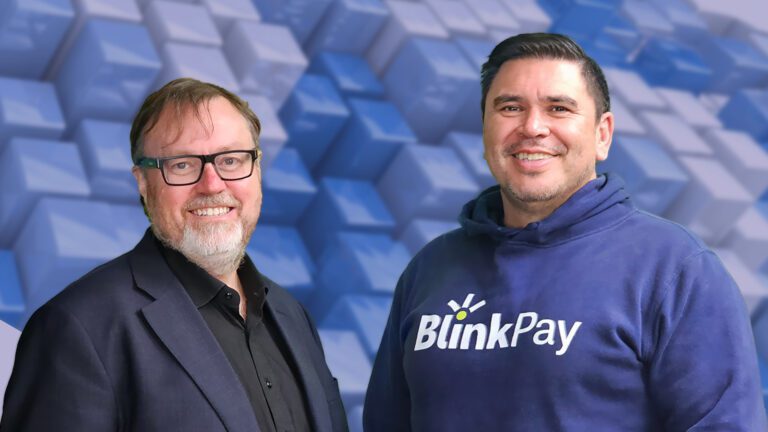
Host Paul Spain and Adrian Smith, founder and CEO of BlinkPay, explore open banking, the impacts of the Consumer Product Data Act, and how BlinkPay is helping reshape payments and data sharing in Aotearoa. Adrian delves into the practical challenges of legacy banking tech and the latest innovations in consumer payments. Together they look at the latest tech news including:
Read the full transcript
Transcript is computer-generated and may contain errors.
Paul Spain:
Greetings and welcome along to New Zealand Tech Podcast. I’m your host, Paul Spain and privileged to have Adrian Smith, the founder and chief executive at BlinkPay joining us again. How are you, Adrian?
Adrian Smith:
I’m very good, Paul. Very happy to be here. Good to see you again.
Paul Spain:
Yeah, great to have you back on the show. Maybe you can give a quick intro of where you fit into this big wide world of tech in New Zealand for listeners who don’t know you.
Adrian Smith:
Yeah, absolutely. So BlinkPay was originally a financial technology company that was founded by Daniel Karehana. It started as bank links in 2015 because he had this idea like there must be an easy way to connect my bills into my banking experience. So some kind of connectivity layer that allows me to better manage my life. And that’s where it began. And then what happened was I joined BlinkPay in September 2021 and myself and a guy called Chris Riddle, he was the cto. We sort of took the company forward when Dan passed away sadly in December 2022. And so what we’ve been doing is we’ve been trying to build our financial technology capability for New Zealanders, which is built and made for New Zealand by New Zealanders.
Adrian Smith:
So that’s what we’ve been trying to do for the past n years. And yes, we work very much in a weird standard. Cause the open banking standard, the name’s kind of irrelevant. What does it do? It’s a network of capabilities that anyone can plug into that. It can be in theory, quite consistent and reusable across all the major banks. So that’s what we’ve been trying to do since I joined the company.
Paul Spain:
Fantastic. Well, looking forward to delving into that. Of course. As usual, we’ve got some pretty fascinating news topics to talk about and let’s start with a big thank you to our show partners. One New Zealand, Spark 2degrees, Workday, Fortinet and Gorilla Technology. Really appreciate their support and a quick mention for the Hi-Tech Awards coming up about four weeks or so four and a half weeks away from that taking place at Spark arena on Friday 22nd of May. So jump in and get your tickets if you haven’t. I’m looking forward to catching up with many of you there.
Paul Spain:
On the New Zealand news front, probably the big one late last week was to hear that, you know All Birds, the super cool funky wool shoes that ended up as a Silicon Valley darling for a little while there, worn by the likes of Obama and you know, all the, all the cool, you know, tech and actors and whatnot in, in the US has gone through something of a pivot. So a couple of weeks ago they sold their shoe business.
Adrian Smith:
Yep.
Paul Spain:
Which I guess is, is what you do when your business has lost sort of over 99% of their it’s value. You find somebody who has a vision for what they could do with that because probably not particularly exciting for them to keep running a business that was very, very different to what they started. So having effectively divested of the Allbirds shoe brand, they’ve decided, well we’ve got this listed company, got some good ideas and the idea is to move into AI infrastructure. And so they’re looking to get shareholder approval to rebrand to be called Newbird AI. And where I understand from what is very scant information, there’s been a single press release. You know, I did try to nudge them for a bit more if you know, if I could have a little bit of a chat and fill in the gaps. But of course they’re a listed company so they can’t say too much other than probably what’s public for something so big at the moment. So this Focus AI infrastructure, the way I read it, is sitting between the big AI companies and the big hyperscale cloud providers today who are at the top end I guess in terms of price wise and so on and the option for organisations to own and run their own infrastructure.
Paul Spain:
So sitting, sitting between that they have attracted $50 million investment to get that kicked off. So quite a fascinating take. Adrian, what’s your thought? Big thoughts? Because I guess you know, BlinkPay very much leveraging AI, that’s a key thing that is part of your picture in the background. Do you think there’s room in the market for this sort of play? And is $50 million enough to kind of kick start buying a ton of GPUs and the like?
Adrian Smith:
Yeah. So I think structurally they’ve identified something. Right. Because there’s companies that are rising up to fill that gap. Although I would say it’s prob. Mid its maturity cycle. So coming in now with 50 million, like I don’t know what the cost of an H100 is, but how many H100 chips can you really get to build up your compute with 50 million? Right. And that’s not even talking around racks and stacks and centers.
Adrian Smith:
So from my perspective, 50 million, that might get your toehold at best. But I think for me, the really ironic part of all this is allbirds started with this whole kind of B corp sustainability argument. And one of the challenges we looked at when we went AI first is my team said, hey chief, how do we feel about the amount of energy consumed by AI? Like 10, 12, 20x more than a Google search if we’re just doing searches via AI. And that was a conversation we had where we looked at each other and sort of said, are we comfortable with consuming that much energy resource in order to make our business more productive and efficient? Or obviously we went down the productivity and efficiency path. But I find it really interesting we go from sustainability to the opposite of sustainability. One might argue, I do think though that there is lots of GPU backed financing in the world like Blackstone and Magnetar as well. But high density data centers, space, that’s hard. I don’t know if you’ve been aware of what’s been happening in America, but there’s been lots of protests around data centers coming in and a lot of arguments that I might say many are irrational and emotional.
Adrian Smith:
Although there is one around local centers who are using that energy, suddenly all their prices are going up from the consumption of the data centers. So there needs to be more work done there to try and balance the needs of local communities where data centers go, as well as what are the energy needs of that data center and how can they do it in a meaningful way that doesn’t make it really expensive for everyone who lives in the area? So I think, you know, like historically. Do you remember Long Island Ice Tea when they went to long blockchain in 2017?
Paul Spain:
That’s right, yeah, yeah. Big pivot.
Adrian Smith:
Big pivot. And they went up by about 380% off the back of that announcement.
Paul Spain:
That’s right.
Adrian Smith:
Do you remember how many years it took before they got delisted?
Paul Spain:
It wasn’t that long. Wasn’t that long. I mean, and that one was, I mean, Eric Watson, you know, was sort of behind that. And you know, folks that don’t know Eric Watson, you can, you can Google his story. But you know, I don’t, you know, I. Yeah, pretty, pretty controversial character. Shall we shall we say that was a, a move that it would be hard to say was kind of, you know, covered in good ethics. I would, I would imagine from, you know, the folks behind Allbirds that, yeah, this is, this is probably something with a bit more subs, a lot more substance to it.
Paul Spain:
But as to how hard it is to pull it off and whether this becomes a good long term play, we need probably a chunk more information than what we’ve got at the moment. They are going to put it to a shareholder vote. I was once a very small shareholder in Allbirds and I got out.
Adrian Smith:
There we go.
Paul Spain:
So I won’t be involved in that. But yeah, I think it’s like at the moment we’re very light on the information. We don’t even know as the Kiwi founder Tim Brown, is he part of this future picture? Is it being handed on to a completely different crew? This is part of that vacuum of information at the moment. I guess we’ll wait and follow this with interest. But I would imagine, and this isn’t any sort of investment advice, but I imagine this would be what my friend Darcy Ungara of the NZ Everyday Investor would call a spicy investment.
Adrian Smith:
I think that vote in May is going to be critical, right? That will, how much success of this is going to be hinged on does the vote get across the line or not? And then when I think about it more broadly, I’m like, well, if you distill it into its components, what are the core competencies and capabilities you built as an organisation building sustainable shoes and how many of those things can translate into GPUs and compute and data sensors and racking and I’m not sure how many crossover neatly.
Paul Spain:
And so, yeah, I mean they’ve divested the, the entire Allbirds brand and I imagine that means, you know, probably, you know, there, there isn’t much left in terms of people or anything else. But yes, interesting times ahead. Now moving on Rocket Lab, they have a new, a new product that they’ve, they’ve announced really, I guess over, over the weekend or end of, end of last week is Gauss Electric Thruster. So this is, you know, this is a new move for them to enter the thruster market and they’re talking about the ability to, or capacity to build about 200 of these thrusters on an annual basis. I saw an interview that Peter Beck did with Madison over the weekend and he talked about, hey, you know, they, they could scale that up to, to much more. But I guess that’s a, that’s a numbers Maybe reflective of what they see. The annual opportunity being the thrusters are I believe with hundreds of thousands each. So yeah, that’s another just string to the bow for Rocket Lab.
Paul Spain:
But it also just starts creating a more and more cohesive picture in terms of what Rocket Lab can do. And of course we’ve just recently seen the moon mission and the Orion capsule was being powered by Rocket Lab solar cells. So they’re just getting into more and more elements there. And then the other bit that we heard last week is componentry they use for their small satellites and how those Kinect were also used on that launch I think to launch some, maybe some small sats just as part of the launch. So yeah, they’re really becoming an end to end space company in any way you can describe it.
Adrian Smith:
Yeah, like I’d be disingenuous to suggest I know much about what Rocket Lab does, but I do know we’re all proud of them, right. What they’ve been doing is super cool. And in my limited understanding of this new technology, what it does is it increases payload efficiency, right? Because what you’ve got is you need a lot less payload in terms of fuel in order to be able to do things with the rockets. And so these electrical systems, as I understand it, allow you to do things. That then means it frees up design of satellites. Suddenly you can do things in different ways in rockets because you don’t need the same capacity for fuel. You have the ability to do things really powerful meaningfully. You can have access to orbits that historically we couldn’t really do because of there was, as I understand it, some of the chemicals in rocket fuel are prohibitive to do certain things at certain levels.
Adrian Smith:
So it just really opens up all of that human endeavour in that space. And what I also have a limited understanding of, it also increases the precision of control when sort of manoeuvring using these engines. So doesn’t matter which way you cut it, right. This is an expansion of Rocket Lab capabilities. And to your point, right, it’s now starting to get into a really full throated, fully serviced. This is how we do rockets and this is how we do it the Kiwi way. Super cool, right?
Paul Spain:
Yeah, yeah, really exciting. Great explanation by the way. Yes, our new in house rocket scientist.
Adrian Smith:
No, no, I’m not a rocket scientist, I’m just a tech guy.
Paul Spain:
Now also in the space era it’s been, it’s been interesting with Blue Origin and their launches that they’ve been doing recently because they’ve got their new Glenn rocket and at the end of the weekend, New Zealand time, we saw Blue Origin launching their third new Glenn rocket. And this is their new humongous reusable rocket and the booster. You could see the footage and see that come into land or the first stage there, land on a platform. Everything was looking really, really good but unfortunately looks like that they, they released the payload which was AST Space Mobile’s Bluebird 7 satellite, earlier than anticipated. So it didn’t actually get to where they were aiming to put it. Now this will be disappointing news for some because 2 degrees customers are looking forward to, to these Bluebird satellites being up in space and there being a sufficient constellation because they will be providing mobile to satellite connectivity for those who are outside of normal coverage around New Zealand and for a pretty big percentage of telcos around the world. So these satellites from AST Space Mobile are really the, the competition for mobile networks and mobile users to Starlink and providing that ubiquitous capability for folks that are away from a normal cell site. But the big claim to fame is that these are absolutely massive satellites.
Paul Spain:
Think sort of tennis court size they fold out to be and they will be able to use a lot less satellites than what Starlink offer because they’re purely focused on mobile connectivity. And because of the size and scale and the other elements of their technology, they are indicating they’ll deliver broadband type speeds from space. So much, much more capacity. So you’ll be able to do your usual things, whether it’s watching videos, uploading, downloading files and so on right from a mobile. Once the Constellation is complete, their CEO and co founder has indicated that AST Space Mobile are still on track to launch around 45 satellites into orbit this year. So it’s probably more of a blip on their journey, one would hope, than completely throwing them off track.
Adrian Smith:
Yes. So forgive me, I don’t understand. How many satellites do they need to be sort of up and running to have the kind of coverage and consistency that they’re looking for?
Paul Spain:
I mean, I think with the 45 they will be in a really, really good position.
Adrian Smith:
Well, that’s materially less in Starling, isn’t it?
Paul Spain:
Oh, massively less absolute fraction and potentially even less because you know, the talk from them and you know, from 2 degrees has been around sort of service coming online, you know, potentially around mid this year. So that’s before they get even, you know, 45 into orbit. So yeah, I guess it’ll depend on, you know, where you are and there’ll be, you know, varying other aspects to what’s practical or you know, whether it’s initially a sort of a partial service, if you’ve got, you know, one that’s flying over, you know, not enough to keep complete contiguous sort of coverage across the board.
Adrian Smith:
Yeah. So if you take a pro Kiwi view, which obviously we do like if you are living in those rural areas where there’s very little coverage, like I live in a paddock into Teko and I live right on the edge of the 4G network which refreshes. I don’t know when it refreshes but all I know is I’ll have signal and then I’ll lose all signal for a period of time until it refreshes, network starts up again. And so when we had the recent cyclone and power is out, I was like, I can’t work, I can’t do anything. So the ability to have some coverage is definitely a step forward. Right. And I can imagine like in those scenarios where you’re out at sea or there’s something going on, like I know when we on the jet skis you’re encouraged to have a mobile phone as well as, you know, the VAF radios, whatever they are. But if you had the ability to have satellite coverage where you could use your phone anywhere, that would materially make things a lot better from a safety and being able to find people perspective.
Paul Spain:
Yeah. And I think that’s one of the big opportunities of this type of offering. And of course we now have both Spark and One NZ in the market with Starlink’s offering which gives connectivity and now even calling via WhatsApp. So that’s already out there for those that are outside of those, those coverage areas at times. But of course great for there to be competition in the market as well.
Adrian Smith:
I think so as well. Now, with the satellite not reaching the required height, does that mean what’s going to happen? Does it have to be de orbited or is it.
Paul Spain:
Yeah, so they’ve got to, they’ve got to de orbit it and I guess that gets probably largely burnt up on re entry, I would imagine. I don’t think they’re built in such a way that they would, they’d be surviving that, Neil.
Adrian Smith:
Cause the alternative, right is we can’t have satellites just floating around in space. Cause obviously you then run the risk of collisions and a cascade effect. Right. If suddenly there’s this whole pinball thing going on.
Paul Spain:
Space debris issues which are already a challenge.
Adrian Smith:
So yeah, I remember hearing on a podcast a few years ago how there was one company looking to do clean up the space junk and then it made me think about. I can’t remember that Kiwi sort of show back in the 80s where the song, the title was Space Junk and they were out there cleaning up space junk. I’m like, oh, that could be a credible business model. Right. Maybe the Kiwis looked into the future back then and realized there’s going to be a problem one day. We should really figure this out.
Paul Spain:
Yeah. I guess the challenge is who pays for it, how do you make that work? But I believe that it has the potential to become a really, really big issue. So, yeah, it certainly had a fair bit of thought and some experimentation going on in terms of ability to capture some of that space debris.
Adrian Smith:
Yeah. I think we can all agree, though, right, if we’ve got more coverage, for more Kiwis to be able to do things and stay connected from a health and safety and all of those good reasons, then I don’t think anyone’s going to disagree. That’s a good thing. Right.
Paul Spain:
Look, I think that we will probably miss some of the old days where you were away from a. You’re away from a phone or away from coverage and you had that peacefulness of. I used to like getting on a plane to San Francisco and it was like, you know, unplug from anything. You. Time to think. Of course, there are other ways to do that now and you don’t have to connect to the WI fi when you’re on board a plane and you don’t have to have your phone on when you’re outside of coverage. So it just becomes a personal choice now.
Adrian Smith:
Right.
Paul Spain:
And that you can still then utilise it should an emergency situation arise.
Adrian Smith:
I do like the idea of a digital detox being imposed on you, though, right, by lack of coverage.
Paul Spain:
Yeah, yeah.
Adrian Smith:
Because some of us need to have it imposed.
Paul Spain:
All right. Yeah. Now onto sort of more the international news. It caught my attention that. And this was published in Tom’s Hardware, but a Dutch journalist demonstrated quite a security flaw that maybe military hadn’t thought about, certainly hadn’t worked out a way to address. And he mailed a Bluetooth tracker to somebody aboard a Dutch Navy warship and, you know, basically was able, once, once it reached the warship, to. To start tracking the ship. So I thought, oh, that’s a.
Paul Spain:
That’s a, you know, a fascinating case. I mean, we’ve heard of. Of things in the past. Compounds being revealed due to, you know, members of the. The armed forces exercising and wearing their Fitbit and then that information appearing on a map because so many people were walking around the perimeter or going for a run around the perimeter of, of a particular complex that suddenly that’s, that’s enough data to, to start appearing on, on the Fitbit maps or on the data that they publish. So, yeah, this is just another one of those sort of unintended consequences that I guess armed forces will have to think about.
Adrian Smith:
Yeah. And I think there’s a lot of stuff like that.
Paul Spain:
Right.
Adrian Smith:
Cause like obviously the Bluetooth tracker, if there’s nothing the Bluetooth can ping off of, then obviously the ability to track is greatly diminished. But in that scenario, clearly was options where. When I think about what are the different unintended consequences or ways to exploit. I don’t know if you’ve seen the latest article from Anthropic, but they’re not going to release the latest version because they said when they put it to work on cybersecurity and the amount of exploits it found in no time at all, they’re like, actually, we’re going to hold this back because we feel like if we release this into the world, we could bring economies, we could bring things to their knees. So these are things where we have to be thoughtful as a technology community, just because you can should. You might be a useful question to ask ourselves because there’s some things where you’re just like, oh, I can do this really cool thing. Like someone. Obviously the Americans can be quite alarmist.
Adrian Smith:
I heard one podcast refer to it as the New Manhattan Project. I’m like, well, hang on, I don’t know if it’s that bad, but admittedly we haven’t seen enough of it to actually be able to make that evaluation.
Paul Spain:
But yeah, yeah, we did talk a little bit about Mythos or Mythos. Yeah. Last week. And also the work that they’re doing to use that to kind of look at existing code bases and help them help companies get that up to scratch and get open source up to scratch and address the vulnerabilities that it’s finding. But yeah, these are new challenges that we have to deal with as a society.
Adrian Smith:
Yes. On that point. Right. So I get the logic around open source, but it depends on how deeply embedded things are. Like, if I was being able to use Mythos and then I was going to try and evaluate all of the fraud and the exploits that it finds in the Internet, you couldn’t fix them overnight. I know that what they suggest, they’re going to go into a workshop and they’re going to do something for n number of months and then find these things and fix them, but I think there’s so many things that are deeply embedded, it’s problematic. And I think probably the easiest corollary for me, since I came from banking, is everyone’s like, oh, y. Yeah, let’s upgrade the mainframe.
Adrian Smith:
It’ll be easy, it’ll be great. The trouble with that is you’ve got so many things that have been built on top of, layered on, and the ability to just rip that out and put a new thing in very, very, very, very hard. And my suspicion is a lot of these exploits that Mythos found is going to discover that it’s core and central to capabilities. Like one of the conversations we have at BlinkPay is off the back of the screen scraping being signaled by the Commerce Commission that it’s going to be. They expect all the major banks to block access to that. We started looking at, well, who does data? And we started looking at folks like Ilian who does the statements. We looked at investnet, Yodle and Akahu and others. What we realized that if you’re in the credit space, the screen scraping solution is so deeply embedded into the process, like, oh, we’re not going to be able to prize those out and say, here’s a different data source that’s supported.
Adrian Smith:
There’s actually quite a bit of effort to unpick that stuff. And that is my suspicion of, even if we have the ability to identify all these exploits, can we really rebuild them in months, as has been suggested by the team at Anthropic? I’m not convinced of that.
Paul Spain:
Yeah, look, I don’t think this is going to be easy. Some of it probably not achievable. And look, you’d be familiar because BlinkPay is owned by a bank now, right? You’re owned by bnz. You would have, I’m sure, over this last period become quite familiar with the challenges in modernizing and securing the technology within large financial organisations. And I think from the things I hear, they’re not always in the perfect state, shall we say. Let’s be. If we’re being honest, we’d probably go a little bit more extreme on. On that these technologies have been built over decades and decades, changing and modernizing and securing every aspect is often a lot easier talked about than actually executed upon.
Paul Spain:
So, yeah, I think you raise an incredibly valid point there, Adrian.
Adrian Smith:
I can tell you from firsthand experience looking at the stuff in British banking and when you look at the spaghetti junction of systems and how they’re sort of being plumbed together, and you’ll say to your Solution architects. So if we pull that out, what will happen? They’re like, oh, don’t pull on that thread, boss. Why? We’re not entirely sure what’ll happen. It was like those old jokes, right? Like, you pull on the handbrake and then suddenly the gear, the glove box, and the ladder opens and the lights on. You’re like, what happened there? In banking? There’s a lot of stuff like that where you don’t really know what it is. And sometimes I did make some decisions. I was like, all right, let’s be brave and just turn off and see who screens. Because we don’t know.
Adrian Smith:
We did that with a few systems, but it’s quite terrifying when you look at it and go, how the heck do we meaningfully transform this core banking capability that’s built on a language COBOL where you have to get people out of retirement to come to the coding? That stuff is slightly disconcerting. And then when I sort of overlay that on what’s going on with sort of mythos and what they’re suggesting in some of the things in the world, like, if you think of the Internet, which grew out of Nothing in the 90s to what it is today, and if you think about all the things that have been layered on top of some of those vulnerabilities and exploits, like, oh, it feels like a house of cards if you really start, if you pull too many threads. Just one person’s opinion.
Paul Spain:
Yes. Yes. Yeah. Well, yeah, Having spent that time in the uk, yeah, you would have seen some interesting things. I did a little bit of work for one of the UK banks for NatWest, just as a little contract when I was traveling to do with Y2K. And anyone under a certain age will have to Google what that is. But a particular computer challenge we were all concerned about with the turn into the new millennium. And, yeah, it was a fascinating experience.
Paul Spain:
You know, put it. Put it that way. And, yeah, I, you know, I turned up some things on this particular project and, yep, it was like, well, somebody had a particular mandate to do a particular thing and, you know, some extra things were raised. They were like, she’ll be. She’ll be right, just do the bit that. That’s on the list. We’ll take that off and we’ll move on. So there you go.
Paul Spain:
Yeah, but, yeah, sometimes. But sometimes you do need to make these hard decisions. We do need to unplug things, turn them off, change them, flip to new technologies. But, yes, you can’t always actually make those moves without causing some damage.
Adrian Smith:
Yeah, exactly. Right. But that’s the heart of strategy, right? Strategy in its very essence is, well, what’s the problem or obstacle or challenge that we need to dedicate a series of actions to then overcome? And we’re going to have to make some hard choices because that’s what strategy is. We’re going to have to choose between what are the things we’re going to do and what’s the logic for that, what are the things we’re not going to do. One of the greatest challenges I observe in strategy in all the various organisations I’ve come across in my lifetime is we have these really strong stakeholder groups saying, well, we want this and we want that, we want this. And so you have this blended, really amorphous, doesn’t offend anybody strategy, which doesn’t really solve any issues. And the really, really sharp strategies, at least in my humble opinion, are the ones who make those really hard calls and do the hard thing because they’re trying to amplify or create some kind of advantage that will then hopefully be a good situation for that organisation or that company in the future. And where strategy is absent and lacking or bad strategies, when we don’t seem to be able to make those hard calls.
Paul Spain:
And you have to be able to make the hard calls. They have to. Well, and they will often have some pain, which is why they don’t get made. Right. But you actually have to be able to face the pain to be able to get out the the other side. Otherwise you face bigger pain because you might not, you might not be around any longer, for instance. Right.
Adrian Smith:
And that’s the trick, right then holding your nerve.
Paul Spain:
Yeah, good stuff. Last on the news front, GoPro have announced a completely new direction in their cameras. So you know, we, we think of, of GoPro as, as action cameras. And of course, yeah, people will put them to a range of other uses but, but now we’re seeing them morph. So they’ve launched a whole new series of cameras they’re calling the Mission 1 series. These are cameras capable of recording up to 8K. And they’re going to have three different models coming into the market this year. Mission 1 Pro.
Paul Spain:
So that’s their, their, I guess their kind of core offering, which is a 4K or 8K cinematic camera. It uses their new silicon, their new processor to be able to actually operate at 8K. It’s got this much bigger sensor, a 1 inch sensor, so it can bring in a lot more light. So that creates situations where it’s useful in a broader range of, of situations, you know, shooting at night and so on. 50 megapixel photographs as well. And then they’ve got a whole raft of different, I guess, frames per second sort of options. So they can do 60 frames per second at 8K, 240 frames per second on 4K video. And then they can do, I think Shorter bursts in 1080p or full HD video at 960 frames per second.
Paul Spain:
So that could be a lot of fun to play with if you’re wanting to capture, I don’t know, bullets in flight or you know, other things that would happen at an incredible pace. So yeah, fascinating to see this new move. Of course this comes as GoPro. I’ve really been struggling because of competition, particularly from DJI, probably especially. And also Insta with their Insta360 cameras. They’re also launching a model with an interchangeable lens. So this will be a more premium offering and it will allow use of micro 4/3 lenses which are common out there and can be used across a whole range of cameras, but still a very small form factor camera. And then they’ll have an entry level version which will be limited to 4k rather than 8k.
Paul Spain:
And they’re launching a wireless mic system as well. So this is a pivot for a company, I guess not quite the sort of pivot we’re talking about with Allbirds. They’re not completely moving into a whole different business, but they are gonna be targeting a different set of customers rather than just those that are jumping out of airplanes and doing action sports and so on. They’re hoping that this will make them a relevant customer for the next decade or two ahead.
Adrian Smith:
Yeah, so when I was reading the article as you were speaking, the thing that jumped out to me is it feels like it’s a bit of an upgrade in terms of luxury and capability. But I couldn’t see pricing. I was only scanning, but I didn’t see pricing. And so I guess my first question is, is it going to be like a really luxury end of market situation or will it be accessible? Like it has the starter option. Like can the average consumer be able to purchase one of those and do that kind of filming and that capability. That’s the part I’m gonna.
Paul Spain:
This will be a more, more premium purchase. So they’re hoping, I think, to expand to a bigger market. There are a lot of people who like to create content or like to get good video. I guess in the same way, you know, if we look across say mobile phones, you know, it’s the Top end mobile phones that get that premium price and in part because of great video and great photography type of capabilities. So this takes them out of being a backwards and forwards kind of competition with the likes of dji, who being a Chinese company, tend to have access to sort of lower cost research and development and so on, potentially repositions them in a way where they get a second chance at having a future. But how that plays out and whether the prices end up being too premium is I guess time will tell. But I guess when you put it in that sort of smartphone type context, a lot of people are spending north of 1000, north of 2000, some cases north of 3000 New Zealand dollars on a smartphone. So, you know, if your dedicated camera that you’re going to attach to your car, to your boat, that you’re going to use for creating content you’re going to use for, you know, this broader range of capabilities is something that you want, then yeah, folks might be willing to spend a bit more, especially when there’s not these other players that are right there either copying their every move or getting ahead of them in some areas and outmaneuvering them and usually at lower price points.
Paul Spain:
And that’s what’s made it so hard for them. When it was just dji, I think they were in a good place. But yeah, when there’s so much competition, that’s become very difficult for them.
Adrian Smith:
Yeah, because when I think about it, I think about content creators and they’re using smartphones by and large. And so I’m not as familiar with the group who are doing all that really crazy stuff, although I’m assuming that I think about a little bit it was like the folks who like doing all the, what is it, the jumping between buildings and roofs and diving through holes and all that sort of stuff. And I just. Is that market large enough to sustain this change in approach from GoPro? Hard to say, because I know in the beginning I worked with a guy called Tim and he was all about the GoPro life. He had him on ski helmets and they were just constantly recording runs. And is there in this modern day and age, is there a small group of folks, a little diaspora, who want to have a separate camera situation and be able to do that sort of thing? And is that sub segment, are they, will they be financial enough to be able to afford these premium capabilities?
Paul Spain:
Well, you know, and potentially it’s the sort of gear that would get used in a studio like ours. Right. So there are a lot of, you know, a lot of scenarios for it or people want that kind of more cinematic kind of view when they’re doing a webinar or you know, all sorts of things. So there are potential places for these things to get used. Or as your webcam, do you want something fancier that sort of, you know, attaches to your computer that gives you that cinematic look without, you know, a big beastly camera. So I’m curious how this plays out. I saw some of the small blackmagic cameras recently. So they’re, you know, one of the other, you know, camera manufacturers and they’ve got these, these really small cameras.
Paul Spain:
Probably not. Well, yeah, probably in the GoPro type size, but that you can attach a, a high end lens to. And so, you know, there are markets for, for different types of cameras. But whether, whether GoPro will be the winner and whether, look, their cameras are too far away from the action cam type capabilities that they end up losing their existing customer base. Because if that happens, then you’re kind of starting, you’re really starting from scratch. Right?
Adrian Smith:
Yeah, that’s the nature of business these days. Right. You’ve got lots of hard competition, lots of stuff that can be easily copied very quickly by a highly motivated, well, state actors. Let’s go with that.
Paul Spain:
Well, time to talk about BlinkPay.
Adrian Smith:
Oh, let’s go.
Paul Spain:
Let’s catch up. So maybe you can tell us a little bit. You know, some folks would have listened in last time you were on the show, I think late, what were we late, 2024. Yeah, type timeframe. But some won’t have. So maybe sort of, you know, paint the picture of, of the background. You gave us a quick intro at the beginning, but really what BlinkPay has been doing in recent years and how the acquisition has played out for you.
Adrian Smith:
Yeah, so I won’t repeat what I said at the start around what Daniel Cut down originally set out to do. He had this notion of can I make it really easy to put your bills into your banking experience and put your bills in the same place you manage your finances. And so he set out to create an infrastructure company that could be a connection or an integration layer between billers and the major banks. That’s where he started. And then along the way funded in December 2019 and then Covid hit March 2020 and suddenly all the memorandums of understanding, letters of intent from the major banks, everyone went oof. Bigger fish to fry, bro. Understandably so. Right during COVID crazy times.
Adrian Smith:
And so at the same time though the team had been evaluating the open banking standard, the industry was trying to build because it was built on application program interfaces or APIs. I’m going to assume the audience of this podcast, not APIs, are. So I went bore people with a redundant sort of example. And so realizing that there was a lot of commonality between the API native platform he was building and what was going on with open banking APIs. Open banking for the avoidance of doubt came from the UK, where out of the Payment Service 2 directive, out of Europe, the European Parliament said, hey, we think there’s a lot of value locked up in banks and data and payments. And so we wanted to make that available and open up banking. And so open banking was a byproduct of all of that legal stuff that was going on in Europe. And so New Zealand was looking at it, looking at UK and Europe, going, hey, there’s some good stuff here we could potentially bring into the country.
Adrian Smith:
And so along the way, BlinkPay said, all right, well, we’ve got one horse that we really like, Blink Bills, but let’s get a second horse in the race. Let’s do this open banking standard, since it’s not a huge leap for us to move into open banking APIs. And then about the time that we chatted, we’d just finished being acquired by the bank of New Zealand in November of 2024. And so for us, from our perspective, it was like we went from startup with short capital runways going, oh my God, oh my God, oh my God, how do we stay and stay in the game? A lot of people use the overused trope of when you do a startup, you dive off a cliff and try and assemble a plane before hitting the ground. We chose to assemble a glider to glide as far as we could while we were building engines. So that’s the analogy we used. And so when a serious bank comes along and says, hey, we believe in you and we think what you’re doing for the country is really, really cool and we’d really like you to be. We’d like to be a part of that journey.
Adrian Smith:
Like, it’s pretty hard to say, yeah, sounds cool. Why not? So that happened in 2024. So suddenly we had capital certainty, which was brilliant. At its heart, though, we’re still a Mori founded New Zealand built company, still trying to build infrastructure that sits at the heart of, and then at the center of how New Zealand pays or shifts data around as quickly as they can. So we’re very much into the efficient transfer of data and payments, and we very much like to be the connecting tissue or the plumbing or whatever Analogy you like that sort of says we’re connecting these guys over here with these folks over here. So that’s us.
Paul Spain:
Great. Now, how does the open banking now being sort of, you know, something formalized that, that everyone has to be a part of, how does that change the picture compared to how BlinkPay was operating before open banking was enforced, as it were?
Adrian Smith:
Yeah, absolutely. So prior to the Customer Product Data act being bought into legislation last year and then being bought into legally enacted in December of last year, the financial services industry of New Zealand was a coalition of the willing of sorts. You had the major banks and a bunch of enthusiastic third parties and a bunch of other stakeholder groups, regulators, whatnot, trying to figure out how do we shepherd the industry towards this open banking standard network. And so prior to the Customer Product Data act which brought it into law, you had a lot of stuff where we negotiated everything on a case by case basis and sometimes the loudest voice won or sometimes the person who was most resistant or the group of most resistant slowed everything down. The moment it became codified in law, where banking and open bank in particular was the first target sect under the Customer Product Data act, suddenly the fancy into town set up and said, oh, this thing you’re doing is legal, it’s government backed. And so suddenly we had a lot of conversations with the fancy end of town, which has been great to be honest. More to what do you mean the
Paul Spain:
fancy end of town?
Adrian Smith:
Those well known logos and brands that people love to put on their logo wall when they’re trying to sell you their services. And so for those, just a quick praise on Customer Product Data Act. It’s a really brilliant piece of legislation around the world. It’s known as the CDR regime or customer data regime. Customer data, right. And what it is, is under the law, your data held by a business is your data. And it goes beyond just your personal identifiable information like Paul Spain live at such and such address. This is your mobile number.
Adrian Smith:
It also goes into the product holdings you have with that particular business as well as the activity you do with that product. Now if you can imagine from a banking perspective, if you look at someone’s transactional accounts and you can see what’s happening transactionally, that’s an awful lot of power. You can start to do things like, well actually with your consent, Paul, I can determine, I can verify when your income comes in. We can see if there’s regular occurring direct credits to your account on what cadence and for how much and we could probably confirm with a degree of Certainty, with your consent. This is when you get paid and this is how much you get paid. We can do that if we’re in a lending institution. Underneath the Customer Product Data act, banking is first really cool. Your data.
Adrian Smith:
You can go to any bank who’s in scope and say, hey, I would really like you to send my banking data over to this accredited requester over here. So an accredited requester underneath the Customer Product Data act is someone who’s gone through the MBIE onboarding program and candidly, their security profile, they took really serious. It’s the highest bar I’ve personally witnessed in my entire career.
Paul Spain:
Wow.
Adrian Smith:
Yeah. Very, very high. So hats off the NBIE team, they took that really seriously. I’d hoped it’d be a little bit easier. It was not. And so to be an accredited requester, you had to provide evidence of the list is long and exhaustive of the security things you need to do. And it’s really good. But because we, as a function of being ISO2701 certified, we had all the evidence, we had policies we could point at, we had how we embed into our systems, we had procedures.
Adrian Smith:
And then because we have external audits, we’re able to provide that evidence of what have we done and how have we proved it and how we tested it and we do all sorts of things. And of course, as a wholly owned subsidiary of the bank of New Zealand, there’s a bunch of other obligations that we have which all they do is increase our security posture. So it’s a very long way of saying the Customer Product Data act has brought about with a lot of interesting things that are now unlocking the market. And so what is the next step for the Customer Product Data Act? Well, then Minister Simpson said at the start of the year that energy is the next sector and he was looking to bring it in September of this year. So I’m sure the energy sector have some views on that. But it was indicated by the Minister that he’d expect energy utilities like a Genesis, et cetera, to be able to make connectable the technology stack to accredited requests. So if you’re a customer of Genesis and you say, hey Genesis, I’d really like to get my data out via these guys BlinkPay, because they’re going to help me find better deals on my energy, et cetera, underneath the law. If that part becomes ratified as they have to be in by a certain date, then they’re gonna have to.
Adrian Smith:
They won’t have much of a choice. They’ll have five working days to respond to those requests.
Paul Spain:
Wow. So in that sort of case, if you were wanting to change power companies, which of course, you know, there is help for changing power companies in New Zealand, but it’s complicated because of the data that each individual has access to. Right. And so that would allow you then to get a much more accurate kind of quote or pricing or even run your entire last year’s worth of power use through and see, well, if that were to repeat the next year, who would be your best one to be with? That’s great.
Adrian Smith:
You can have a really informed conversation. You could go to your sort of your energy company and say, hey, look, based on the patterns of when I use energy and whatnot, how might we structure my particular and tailor my billing scenario to determine peaks and troughs and smoothing stuff out and all the rest of it. And so you get far more tailored solutions which would hopefully cost you a lot less money. But also you have the ability to plug into marketplace who might facilitate the connections from all the energy suppliers. So you can then find the best solution based on your personal circumstance. So what this does is it introduces a lot of power, get a lot of power and control back to you, the end consumer. So we think this is great. We think this is really great.
Adrian Smith:
And the really cool part of what we did with open banking that will then hopefully we’ll try and applied more broadly to every energy sector that comes into focus eventually be utilities, insurers, et cetera, is you have a common standard that then everyone then designs to, which makes the connectivity and experience, well, a lot more consistent, which would then hopefully build trust and confidence in the system for consumers and end users. So we feel like this is a really, this is an awesome thing for New Zealand.
Paul Spain:
Oh, that’s exciting. So if you look at sort of, I guess recent achievements for BlinkPay, what really stands out? What are you most proud of in recent times?
Adrian Smith:
What are we most. Actually, do you mind if I tweak that to recent successes and challenges as well? Because I think the challenge is a big angle now.
Paul Spain:
That’s good.
Adrian Smith:
Yeah, yeah. So prior to the Customer Product Data act, probably the biggest challenge was product and bank coverage because it was a little bit kind of, well, here’s what we can do and here’s what we won’t do by the various major banks. They had their reasons, but underneath the Customer Product Data act, there’s a really strong. This is the standard, these are the things that are in scope and by doing that allows us to really build out our consistent approach to how we handle those different products and the different types of products, we can build off the back of it, which is super cool. So prior to the Customer Product Data act, that was challenging.
Paul Spain:
What were some of the things that maybe you couldn’t do with one entity that you could do with another? That was quite important.
Adrian Smith:
Yes. So as an example, when the open Banking standard first came out, the ability to one off immediate payments, it was pretty clear, at least in my read of the standards, that if someone is using a desktop on the web, you’d be able to redirect them to another web desktop site to connect to the bank and then do all those things. So the customer staying in session in an experience, they don’t have to context switch at all. Whereas two of the banks went, we don’t think we agree with that, even though everyone else is saying, yep, this is happening. Two of them were like, it’s not really happening for us. And so suddenly we had a whole bunch of folks saying, hey, why can’t I access my bank when I’m doing this at my laptop or computer? Where are they? And so we had those kinds of slightly disparate sort of journeys, which made it really, really challenging conversations to have. And then you go sit down with a potential client, say, oh, we can do this. Except for A, B, C, D, E, F, G, H, I, J, K, L, M, N, A, P caveats, which it’s not a particularly strong sales conversation to have.
Adrian Smith:
And so there was stuff like that. There were some banks that did stuff really cool. And we said, hey, this is a really cool pattern. You know, you guys should do that as well. I’m like, we do things our own way. And so as an experience, if you’re trying to do a particular payment type, like a decoupled flow, so within the decoupled flow, you have the ability to push a payment to a customer’s banking app from anywhere. So it doesn’t have to be same session, doesn’t have to be app to app, doesn’t have to be. So like, might be a farmer’s market.
Adrian Smith:
You wander up, you want to buy some honey? Then I say, oh, yeah? Well, the vendor says, hey, yep, this will be 20 bucks if you want. If you give me some debt, your mobile number, I can push it to your banking app. You can just pay for it that way. And so some chose different mechanisms or proxy identifiers to be able to do that. So, like, oh, in your case, we can use a mobile number. Oh, who do you bank with? Oh, then we’re going to need Matt, all of this information to facilitate a payment for 20 bucks and then they look at you like what? And so prior to the Customer Product Data act, that stuff was challenging post. I’m happy to report that we’re in a very good place where our biggest issue is actually trying to keep pace with the amount of attention from enterprise merchants. It’s been really, really cool.
Adrian Smith:
There’s a real genuine curiosity of how can the stuff that’s been going on for years, it’s now backed by legislation, how can improve operational performance and how can we reduce some of our stickier pain points? So that part’s been really cool. And as discussed already, another massive challenge for us was the consistency across experience because inconsistent experiences can undermine consumer confidence. So that stuff, those are kind of. They were pre challenges. We’re now on the. Now that we’re on the other side of that, that stuff’s slowly working itself out in terms of the successes and challenges. Our transaction volume was up year on year by about 179% which was up on the previous year, which was well over 300%. So there is demand.
Paul Spain:
That’s good.
Adrian Smith:
It’s happening. As discussed, we’re live and we’re getting. We’ve almost got a fully rounded out set of. We’ve got the four major banks on and we’ve managed to get that consistency and harmonisation across the different capabilities from those banks. So that’s super cool. Probably our first customer that we talked about an awful lot was our reference customer sharesies. And in the very first month with us, they saw a 97% growth in average deposit size. It was in a case study that we shared publicly and a 15% lift in revenue per investor.
Adrian Smith:
That was in the first month. We’ve been at it for a few years of them now. It’s materially better, but that’s what we got right at the start when we only had two banks.
Paul Spain:
Another thing is what were the two banks you started with?
Adrian Smith:
Our first bank we signed with was the bank of New Zealand. They basically said, look, we’ve invested a lot of time and effort in this and we’d like to work with you guys because you guys seem like you are pretty enthusiastic and you might know what you’re doing. And so BNZ was first and then about five or six months later we then signed Westpac. Those are the two early adopters of the open banking Standard was really cool. Westpac had already built their own proprietary APIs, but they were like, we get it, so we want to join in and see how this goes. So very much the guinea pig. Another area that’s been really interesting to us from a success perspective. We’re heavily penetrated in gold exchanges.
Adrian Smith:
Didn’t see that coming. So we have three gold exchanges who use our services. Yeah, yeah, yeah. So if you’re looking to go buy gold and yeah, if you don’t find our brand somewhere in the checkout, then we’ve missed a trick somewhere. But the gold exchange is really interesting.
Paul Spain:
But what do you think that is?
Adrian Smith:
Oh, because our initial position when Dan was still with us, he looked at the mark and he said, oh, if you’re in screen scraping, they’re charging about 1% but there’s. But it wasn’t, it was uncapped at the time. Is he look at credit cards. It’s a, you know, depending on which kind of cards came you’re with, it’s anywhere from 1.2 up to sort of 2.9, 3.5% if it’s external cards. So like. Right, well if we’re going to be looking to compete head on with screen scraping, we need to be priced around there. So we’re a credible alternative. So we started out at 0.95% and we had a capped amount of $3.
Adrian Smith:
And so suddenly if it’s north of. I can’t remember the maths anymore, but once you get above a certain average ticket value then you know that the fee’s capped at $3. So if your average transaction value on your platform’s $1,400, well, you know, the fee’s always three bucks. And so obviously the gold exchange, even fractional gold investment, still has a hefty price tag.
Paul Spain:
Yeah.
Adrian Smith:
So I think that’s why we got some relatively good cut through with the investment platforms as well as the gold exchanges, because we’ve signed on another investment platform recently and we’ve got a few other active ones in the pipeline and it’s pretty cool.
Paul Spain:
Interesting. Now, one thing we’ve talked about, I haven’t talked about it for a long time online eftpos.
Adrian Smith:
Yes.
Paul Spain:
You would be somewhat competing with their sort of offering, right?
Adrian Smith:
Yes, that is correct.
Paul Spain:
Yeah. So what would you say is that maybe the top one or two differences between the two. I remember doing. I think I did. Maybe it was over the weekend a transaction and I remember it kind of coming up with which bank are you with and put in your mobile number and doing that and that was. There was a lower fee or maybe no fee or on. On that platform for, for doing that versus versus credit Card.
Adrian Smith:
Yeah. So before I launch into the competitive differences, we will doff our cap to worldline on a left pos, because they blaze this trail when no one, no one else is really looking at it. So it took them 7, 8 years to sign the major banks, but they did it off their own back with not a huge amount of interest support. So we doff the cap. They are the old, they are the OGs of doing this stuff. So first we’ll give them credit where credit’s due. Then I look at sort of what’s happening today. So I’m sure you’re aware that there was an announcement that an Australian outfit is going to be acquiring Paymark.
Adrian Smith:
So originally worldline were owned by a French outfit and now they’re going to be owned by an Australian outfit. But it suggests to me, similar to our acquisition, that there is some international interest in the New Zealand scene, which suggests there’s value here. So that’s something in terms of your original question, what are the differences? So with worldline eftpos, they handle settlements in a slightly different way. So we do all of our transactions in near real time. So if you make a transaction through us, it’ll basically the payments are revocable and then the funds will hit your account within sort of 30 minutes to two hours, depending on which bank’s sending receiving. Worldline, to the best of our knowledge, still operates settlement accounts and they will sit on those funds and send them the following day. And so obviously, if you’re a Treasury function and you were interested in speed to cash, I’m like, no, I want it now, I don’t want to wait till tomorrow, I don’t want you calculating interest that I could be calculating. So that’s one of the major ones.
Adrian Smith:
And then the second one is a lot of their initial efforts were built on because they did it themselves with proprietary APIs, whereas the open banking standard, everyone’s gunning towards a common standard. And so Worldline, they’re going to be transitioning from their proprietary APIs into the open banking space where appropriate. They’re still going to maintain some proprietary APIs because they have some banks who aren’t currently available. But that’s probably the main one, is they’re going to have to do some refactoring work to move to the open banking standard. And between the acquisition, I’m sure there’s going to be some activity that ties them up. But yes, they were first and we
Paul Spain:
give them full credit for that, the good stuff. So, Adrian, I guess the thing is We’ve got lots and lots of different ways of being able to make payments, being able to move funds around, whether it’s paying a mate back for something that they’ve paid for, be it an investment, sort of deposit and millions of transactions kind of in between. There’s every day. What would you say are really the benefits of using BlinkPay, whether it’s for a consumer or for a business versus traditional mechanisms.
Adrian Smith:
I’m going to start from a business perspective because we’re B2B to C company, so I’ll start with the B and then go to the C if that’s all right. Cool. So if you are a business that cares about recurring revenue or recurring payments and you’re drowning in direct debit dishones, then we’re who you want to talk to.
Paul Spain:
Right?
Adrian Smith:
You know the drill if you’re dealing with direct debit dishones. Depending on your level of automation, it could be anywhere from minutes to upwards of five to nine hours of back office work per dishonor run, reusing code, triage, reversing receipts, representation of decisions, customer comms, there’s a whole bunch of stuff, manual reconciliation. And then obviously as the volume scales, so does the amount of headcount required to sort of resolve all that for us. Auto, auto pay, blink auto pay. We resolve that whole workflow. We have no dishonor file, there are no reason codes, there’s no representations. If there’s insufficient funds, we’ll just get an APR rejection saying there’s insufficient funds. And we handle the smart retry.
Adrian Smith:
So we can help determine when you want to do those retries. We can tie it to paydays if you want. What we can also do is we can actually check that there’s a confirmation of funds in the account before the request to pull the funds from it. We call it the fence at the top of the cliff. And so if you’re about to do a big run and basically say, right, tomorrow we’re going to get all these funds from people with their consent, we can then go check all those, poll all those accounts and say, hey, actually these eight over here, Paul, they have a sufficient funds, you may want to pre notify them just to make sure they have sufficient balance so there’s no issues. So we’re trying to basically build a whole bunch of guardrails around that. And when it fails, the dishonor and all the back office operations, you have to deal with that from a consumer perspective. Some banks will charge you for the dishonor and they’ll charge you for the unplanned overdraft and they’ll charge you and you circle the drain.
Adrian Smith:
Which is why many New Zealanders, lenders, don’t want to do dishonest, because if you’re not financially able, that can send people down sort of the drain. And that’s not the kind of way we want to run things. Right. And so we’ve found if you’re utilities insurers and telcos and lenders, this one’s pretty hard. And so they’re like, ears prick up, like, can we talk? Yeah, we can talk. What are you talking about? So that’s one of the ones where we think we do a pretty decent job over the traditional payment methods. Another one is if card intercharges, eating your margin. So because our fee structure is very, very different to the card schemes, let’s be clear, there’s a lot of reasons why the card scheme fees are as high as they have.
Adrian Smith:
They have things like fraud guarantees and chargeback capabilities and consumer guarantees. So, you know, you pay for that privilege. It’s an important one. But for us, like if you’re processing $100,000 a month on one of our, on our starter plan, on our plus plan, we would charge about $669 in fees. Now if you’re on Stripe, it’s about $2,950 in fees because their published rate is 2.65 plus $0.30. So that’s 77% cheaper on transactions every month with faster settlement.
Paul Spain:
Right.
Adrian Smith:
Because we do the settlement within minutes to hours, within two hours. Whereas with card schemes it’s T 2. And in some cases, some of these card producers can be up to T +5, depending on the nature of relationship. So for us, it’s not just a feature of what we can build now, payment gateway, it’s real dollars back in your pocket for the business.
Paul Spain:
That’s good.
Adrian Smith:
Another one where if you’re relying on screen shaping. So we’ve covered this a little bit today, right? We said the Commerce Commission.
Paul Spain:
So screen scraping, this is when whoever the provider is effectively logs in as you through a browser, a virtual browser, and then pulls all the, all the data off the screen because there isn’t an API to do it in a nice, safe, tidy way. And you’re probably breaking your commitments with your bank by giving access to your username password to whoever’s doing the screen scraping as well, Right?
Adrian Smith:
Yeah. So for those unfamiliar screen scraping, what you do is you. You notice that when you go to make your payment, they say, please Give us your online banking login and password or access code or whatever it is. And then you do that. And then they’ve got a computer program that programmatically pretends to be you to log into your banking environment to do that transactional activity that introduces a lot of risk into the ecosystem. Some folks say, hey, there’s no issues ever recorded but if you’re in a big bank, you know there are issues. You know there are. And that’s not widely shared for a bunch of reasons because the banks don’t want to disclose if they’ve got challenges with that or not.
Adrian Smith:
But for us, because there’s been the signal from the com that says, hey, we expect the major banks to start block access from June this year and see it through to the end of this year. Everyone who’s relying on screen scraping, there’s now a very narrow window where you can do something about that. Not meaning to sound alarmist, but pretty soon you’re going to notice your customers are going to start complaining about the things they can’t do. One salient right now example, if you’re using the Wincave account to account solution anz is no longer a choice. You can select which for all of those paying attention at home know that’s the largest consumer bank and that’ll only get worse over time. And so there’s a window where we can be thoughtful and act now. And so we’re having conversations with folks who are saying suddenly the folks who provide all our data, they’re telling us they can’t. Can you help us with your access to data? And so that’s another area where we think we’re doing pretty well.
Adrian Smith:
We’re having a lot of really cool conversations. I’ve got two more. Two more promise. Another one where we think we do pretty well is if you’re chasing late payments and it’s a constant tax on your team. And so our request to payments pay service sends a pre filled payment request straight into your mobile banking account and it takes about 10 seconds to approve the payment and then it gets automatically settled on the other end it gets reconciled. No reminder emails, no phone chases, no manual matching. And because the consent is available for 6, 10 minutes, it’s pretty much a synchronous payment collection method. So we’ve seen it work best if people are on the phone saying, hey Paul, just a reminder, you’re a little bit late on your mobile phone payment would never happen.
Adrian Smith:
Never happened.
Paul Spain:
Never happened.
Adrian Smith:
Yes. Especially if you’re a sponsor of the show. Yeah. So stuff like that and then the last one where we’re finding a lot of really excellent conversations at the moment is if people are making integration decisions that they want to live with, some are looking at short term solutions to ongoing problems. But what we do is through a single API connection, we give you access to our full suite of payments and data capabilities. So our one off payment facility pay now, our recurring payment facility, autopay, our mobile push request to pay solution, the confirmation of account, confirmation of balance, confirmation of your identity, we can do that as well. That’s all available, live transaction data all out the box. One integration, one vendor, one set of credentials.
Adrian Smith:
In this current market, that’s pretty darn rare. There’s only one other outfit sort of doing what we’re doing. And so if you are interested in data to really easily onboard and verify who your customers are, if you’re interested in payment capabilities that allow you to collect revenue as well as remove back office operation issues, then that’s the conversation we invite.
Paul Spain:
Fascinating. And we might have to have another chat. I’m curious about the confirmation of identity piece. As we move into a world of wanting to do more of these sorts of things digitally. That’s fascinating.
Adrian Smith:
Yeah, well, we are relying on the bank KYC data and so as you know, you can’t easily change your bank KYC data. And where we get a lot of demand is hey, if we connect them to their bank accounts, can you pre populate all this information we need? And we’ve seen in some of the use cases overseas and what we’ve been looking at an increase in conversion, up to 40% of customers onboarding, that’s pretty handy. It’s not bad.
Paul Spain:
Anyone wants to drive up their conversions. So yeah, that’s good. And so from a consumer perspective, what’s really the key benefit for consumers to be using BlinkPay?
Adrian Smith:
Yes. So in terms of the autopay solution, so we put it as a modern replacement to direct debits. With a direct debit, sometimes it feels like the stealthy hand that drains your account when you least expect it. With autopay and some folks say to us, hey Adrian, you’re giving them a lot of control. What if they just, just stop paying us? Then what? And that’s ultimately what it is as a customer or consumer. New Zealand, all the open banking standard seeks to do is give more control back to the individual. And for us, autopay, that’s where you get to if you want, if you can set out a payment setting like how much are you willing to send per Payment within a frequency, within a period. If you’re doing request to pay, sometimes you’ve lost that bill, you’ve misfired your email.
Adrian Smith:
Some call, you say, hey, can you just send the bill to me while I’m on my phone? Now I’m out and about right now. Like, I’m out and about. Can you just send it so I can approve my banking app? Cool. We can do that. Absolutely. We can do that. And so it’s trying to give more control and choice back to Kiwis so they can pay on their own terms in a way that makes the most sense to them. That’s what we’re trying to do.
Adrian Smith:
And we’re also trying to cut down the cost of that.
Paul Spain:
Yeah, sounds good. Sounds good. Well, thank you very much for joining us on the show.
Adrian Smith:
Thank you.
Paul Spain:
It’s been great to catch up and to sort of, I guess, delve into where we are now because, you know, a lot of water’s gone under the bridge, particularly from that open banking perspective. So great to fill in the picture and exciting to see that things are continuing to move at pace for you with BlinkPay.
Adrian Smith:
They are, Paul. And there’s more to come. I can’t really talk about it today, but I noticed you picked up the story around instant payments that we did with pre Christmas and then the recent Business Desk article. Suffice to say we’re very, very close to releasing publicly what we’ve managed to achieve. But watch this space.
Paul Spain:
Instant Pay. Sounds exciting. You might be able to live up to the name of Blink Pay.
Adrian Smith:
Blink and Pay.
Paul Spain:
Yeah. That’s awesome. Well, yeah, we’ll look forward to hearing how that progresses. Well, thank you very much for joining us on the show.
Adrian Smith:
Thank you for having me.
Paul Spain:
And of course, a big thank you to our show partners, Gorilla Technology, Spark, Fortinet, Workday, 2degrees and One NZ. And look, if you’ve been listening in, you’ve been listening to the audio, do make sure you’re following us also on. On video platforms, the likes of YouTube and we also do publish on LinkedIn under NZ Tech Podcast and. And also some things under my name, so you can. You can follow on that front as well. Thanks, everyone. We’ll catch you on the next episode. See ya.
Paul Spain:
The New Zealand tech podcast brought to you by Gorilla Technology, proactive and strategic.