Why Every Boat Needs This: AquaGPS, Boat Theft, and Visibility at Sea
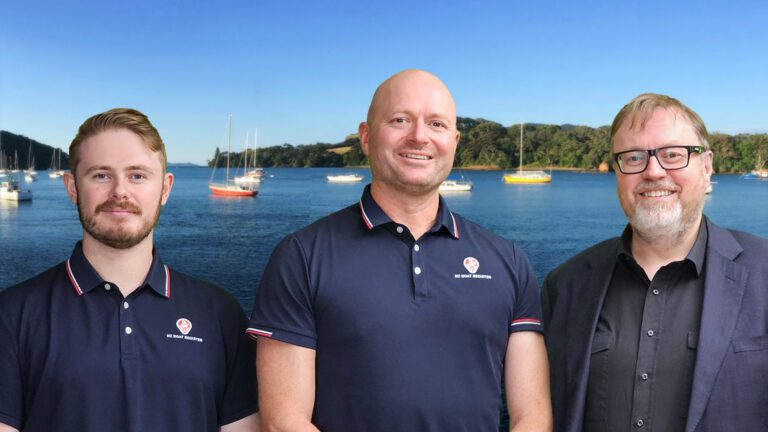
Host Paul Spain is joined by Sam Allen and Nick Walton, co-founders of NZ Boat Register, to explore how Kiwi innovation is improving marine visiabilty and asset tracking using AquaGPS, a Starlink-enabled GPS solution. The conversation also covers the latest in tech news, including:
Special thanks to our show partners: Fortinet, Workday, Spark New Zealand, One New Zealand, 2degrees, and Gorilla Technology.
Read the full transcript
Transcript is computer-generated and may contain errors.
Paul Spain:
Greetings and welcome to the New Zealand Tech Podcast. I’m your host, Paul Spain and privileged to have Sam Allen and Nick Walton, co founders of NZ Boat Register, joining us today. How are you, Sam?
Sam Allen:
Oh, it’s fantastic to be here, Paul. I always love Auckland, It’s a great spot to be. It’s great to see you again.
Paul Spain:
Likewise. And Nick, nice to meet today and thanks for coming in.
Nick Walton:
Yeah, of course. It’s a pleasure to be up here. Always keen to talk tech.
Paul Spain:
Great. Well, to start with, maybe just a kind of a quick 30 second intro from each of you in terms of where you fit into this big wide world of tech. Maybe, Sam, you can do an overview of NZ Boat Register and then you know where your sort of experience lies within the tech sector.
Sam Allen:
Yeah, thank you, Paul. I’ve been in Tech now for about 26 years, spent 18 years of that overseas, came back home and the opportunity was for NZ Boat Register was right there. My dad’s boat had got stolen. We couldn’t prove it was his because obviously boats in New Zealand don’t have registration for recreational boats. We went, let’s fix that. And then my parents got lost in the far north, which wasn’t so great out at sea and if we’d known where they were, it would have made a huge difference. Right. Luckily they got picked up by a trawler, got brought back safe and then went, let’s improve location and identification for craft around the country.
Sam Allen:
And this is where Aqua GPS comes in. It’s the hero product for us to be able to say if we can identify things and we can easily locate them, AquaGPS, then it’s going to be a great outcome in terms of reducing loss and improving recovery. And so that’s where we are. So my tech background just naturally came together and said, how can I help my family? How can I help other bodies? How can I help the marine sector? And here we are, we’ve built something brand new for New Zealand and we’ve got a tech capability which is person in the world. How cool is that?
Paul Spain:
Brilliant. Yeah, that’s good. And Nick, tell us about your background.
Nick Walton:
Oh, I started coding when I was probably, probably 11, doing a little. It was a video game with items in it and I wanted to trade these items automatically. And so I worked up a little project to automate that and that was when I quit my paper on. I knew I was going to do tech shit for the rest of my life then. Absolutely love it. And so for Boat Register, Sam was looking for someone to be on the tools to be on the sticks. And we had a conversation and got along well and was, yeah, let’s make this thing happen. I’ve got a huge deep connection to boats.
Nick Walton:
My dad had us live aboard for six months. Me, my dad, my brother and my mum, between Tonga and Fiji was boat schooled rather than home schooled.
Paul Spain:
So cool.
Nick Walton:
Yeah, it was amazing. Instead of mowing lawns, I scrubbed the bottoms of boats and that’s how I got my pocket money. Yeah, it’s always been a part of my life, so it made sense. I mean, how else are you gonna get to involve coding tech, cloud architecture into a boating product?
Paul Spain:
That’s, yeah, great.
Sam Allen:
And we love marine, right? Of course, love marine. And it’s awesome when you get released into your passion area. So, you know, it’s just naturally turn around and go, hey, how can we create good things? How can we use our capabilities tech to do it? And here we are like building something great for all Kiwi bodies in the marine industry. So excited to talk about it.
Paul Spain:
That’s great. And Nick, you’re also part of, I don’t know if startup’s kind of the right term now, Wipster, which is a tech firm that a bunch of Kiwis would be familiar with as well. So that keeps you pretty busy also.
Nick Walton:
Absolutely, yeah. I mean we’re not doing Butt register full time, so I also work a job for Webster and so that’s around media pipeline delivery and approval. Absolutely love it. It’s a really cool place to work. Always good to be surrounded by cool, smart people. You can always have good conversation. Very supportive. It’s a pleasure.
Nick Walton:
It’s an absolute pleasure.
Paul Spain:
Yeah, great. Well, big thank you to our show partners. So thank you to Spark, One New Zealand, 2degrees, Workday, Fortinet and Gorilla Technology. I really appreciate their support for keeping the New Zealand tech podcast going and also their broader support across the tech and innovation ecosystems in New Zealand. So yeah, super, super appreciate that. So we’ll jump into the New Zealand tech news. There’s some international topics as well to touch on and then really keen to go into the Aqua GPS and New Zealand Boat Register story. First up, one New Zealand have released their AI Trust report for 2026.
Paul Spain:
Their research has shown that AI is getting pretty widely used in New Zealand which I think we all know, but that trust is now the key factor that’s shaping adoption. And there is really a lot of caution there, I think amongst Kiwis. Concerns around misuse or inappropriate use of data, concerns about fairness and the transparency that sort of I guess influences whether they should be engaging with particular AI powered services and their report. And we’ll link to this in the show notes so you can get to that@nztechpodcast.com but there were five key takeaways that, that they really highlighted for New Zealand organizations. And I, yeah, I think it’s, it’s super insightful. So their first takeaway is yes, AI is becoming mainstream but meaningful adoption remains shallow. So yeah, I think like that will, you know, that that maybe doesn’t. Doesn’t surprise anybody.
Paul Spain:
But you know, I think if we’d looked at the, at the sort of hype we’ve had over the past two or three years, the sort of the big transformation that really a lot of people have talked about. Yeah probably hasn’t really happened and in most cases it is that shallow adoption. The second point is that public sentiment is shifting from curiosity to scrutiny. So there is really that concern that trust side in the background. Their third point is trust is being shaped by experience, not just perception. Fourth point, human oversight is becoming now the baseline for trust. And the fifth point, that AI’s value case is actually narrowing as expectations of guardrails rise. So I thought there’s actually some really sound and interesting insights and of course those are just really the headlines.
Paul Spain:
So each of those kind of five key points, there’s a whole lot in the report to kind of delve into to explain. Sam, anything that sort of jumped out at you because I know you’re always very positive around the opportunities that new technologies bring. But this kind of paints a picture that the positivity is not maybe as widespread as maybe we would have expected this far into the Gen AI journey anyway.
Sam Allen:
Yeah, it’s super exciting. I think there’s opportunities in everything that comes along and we’ve seen that generationally through history, right. New things come along and people are like this is going to be amazing. But the reality takes a while to settle in. When you look at new things that are being developed today, they might not be realized in people’s handsets or in their lives for many years down the line. And that hype at the time was like, oh, great. And then people don’t see it and they’re like, oh, well, maybe it’s not coming. Then years later it gets integrated into their normal life and they’re like, oh, this is great.
Sam Allen:
But they forget necessarily about the hype. And there’s a lot of fear about something that you don’t hold in your hands. There’s a lot of fear about things that you can’t tangibly see or interact with. And you go, there’s the opportunity. And then I think when it’s executed, that’s when people get their hands on it. And suddenly the excitement turns into, oh, this is a real thing. And if we can bridge the time between idea to execution, then some of that fear disappears because people actually have it in their hand. It’s a product or something that they can use as a service, but it’s no different.
Sam Allen:
I think you’re talking about a story before about electricity and where it went from gas lamps into electric lamps.
Nick Walton:
New and scary, right? Going to lamps and making that complete change in infrastructure. You’ve got to have all the electrical cables around now. People are seeing all the cables running around. They were just burning. I think it was whale oil, whale blubber in the streets, right? If we look at that now, that’s like crazy. Obviously you’re going to use like incandescent bulbs at the time or LEDs. Now it’s a, it’s a big change and I think that all the change won’t come at once and we will get these little drips and drags. But I think it’s important to also scrutinize, you know, be, be cautious of these things because, yes, there’s a lot of value in AI and there’s a lot of value in electricity and a lot of value in electric lamps.
Nick Walton:
But in the same breath, now there’s no job to refill the lamps, right? No one’s refilling the whale blubber. The whales, the people who are whaling now also don’t have a job, right? And now when we say that now that’s like, okay, not a worry, right? That’s a compromise that we’re willing to make for electric lamps.
Sam Allen:
People are afraid they’re going to lose their jobs, much like the lamp lighters, et cetera, but they all find jobs, right? And I think this new technology is an enabling capability. Like as a startup, we can see how using AI really Makes a huge difference, right? Helps us be able to scale faster because we see the opportunity. But within that, it’s using it responsibly and using it in the right way to get there. And I think the report highlights that it’s use it responsibly, humans are at the center of it, but also challenge, right? Because if we don’t challenge, then we don’t have a balanced conversation about should we be doing this, right? Everything is possible, but should we really be doing it? And it’s a good conversation. This shows that we’ve got a healthy society having healthy conversations about is this the right thing to be doing? And people trying these things out, going, hey, I’ve done this. What do people think? And in some cases it’s gonna be great. In other cases where we need guardrails, it’s gonna be important that humans are like, that’s actually not okay or appropriate. And so let’s put the right controls in place to be able to make sure we’re testing the boundaries, but staying within the lanes.
Nick Walton:
How do you make sure that everyone has their voice in that?
Paul Spain:
Right?
Nick Walton:
Because if you’re addressing a certain target audience, you’re clearly only going to be talking to them, right? How do you make sure everyone has a say in that piece? Right? How do you keep it democratic when, if you’re just asking the tech sector, do you like AI, Obviously they’re going to say yes, right? It’s like asking a farmer if they like farming, they’re going to say yes. And so how do you temper that? How do you balance that off against regular Joe Bloggs down the road who just wants to go to work, come home, see his kids, be happy, right?
Sam Allen:
And it’s the opportunity for New Zealand to grow, right? Like, if we can leverage the opportunity that things like AI and new technologies that come along, like, you know, we’re talking about Holter and what an amazing organization they are and what they’ve done for tech within animal management and farm management. And you sit there and go, if we didn’t adopt new technologies and try them out, like through these startups, right? Of course, like, how are we ever going to know what the next thing could be, right? Everyone started as a small company, everyone started going, oh, there’s a new capability in front of us. And I think that’s where New Zealand could really grow, right? Like taking this report and being able to say, what do we have to worry about? What are some key concerns? But also where the opportunity is sitting underneath that to be able to say, how do we safely grow like New Zealand as a economy are building huge amounts of amazingly smart people and huge amounts of startups like per capita and how good is that for us? Right? I think that’s the positive opportunity that New Zealand can shape into and go, let’s not be afraid about what AI brings, but how do we leverage it to take a small Pacific island nation who is full of smart people, full of access to tech that is well positioned in the world and to be able to leverage that back out to say there’s an industry waiting for us to excel even greater than what we have done already? Is that more money for us? Is that more jobs for us? That’s the positive opportunity that I see. But you got to temper that with within guardrails, within the right perspective because
Paul Spain:
not everything is and there is for those of us that are technologists, where we, as for anyone, we’re going to look at things from, you know, through a different sort of lens than those that aren’t interested. Which brings us to the budget that we had, you know, last week. So that’s always a big thing in Wellington where you guys, where you guys are based. And of course, you know, the technologists are always like, what’s in it? What’s in it for us? And we’ve heard that already from, you know, there’ve been, and I don’t want to go too far into the, try and stay on the sidelines when it comes to the politics but you know, there are a bunch of, of groups that have, you know, obviously already kind of communicated their, their, their dissatisfactions or their satisfactions or, or whatever, but that does, you know, it very much, you know, crosses in to, hey, our trust in AI. So one of, one of the things that happened last week in, in Parliament, the new bill was, was, was passed in relation to modernizing it’s the, you know, public welfare systems in New Zealand. And one of the things that that enables is automated decision making as it relates to benefits. Now I think this is, this will be one of those, one of those areas that, you know, probably will really freak some people out of. Like what, you know, the social welfare system is designed to, you know, to care for people, right? It’s designed to be really humane and to really care for people.
Paul Spain:
Isn’t applying, you know, technology to some of those decisions, especially AI, you know, potentially dangerous. Now there’s a whole lot, there’s a chunk of information on this online. One of the highlights that stood out to me was they’re saying, hey, we’re not using generative AI in this. You know, it’s being used for the sort of decisions that, you know, say, looking at income levels and then based on an income level, you know, there’s a. Maybe there’s some legislation or there’s some guidance that says, hey, if you’re earning this much, then you don’t get. You don’t get this type of benefit and so on. So, you know, there’s. The approach they take, allows Ministry of Social Development MSD to, you know, to move forward in some areas with, you know, with this automated decision making through this.
Paul Spain:
What do they call it, the Social Security Modernisation Amendment bill. So, yeah, which was rushed through under urgency. They’re Talking about a $55 million saving, which of course, when you save money in an area like, you know, decision, very manual decision making, then that makes the money available elsewhere in the budget. Right. So there’s wisdom in doing this sort of thing. But it’s. Have they got it right? Does it land? Well, you know, are there enough kind of checks and balances in the picture? And I guess, yeah. All I can say is I, as you know, as I hope so, you know, we don’t have the sort of level of detail of exactly how they’re going to be monitoring this.
Paul Spain:
We have seen situations in other countries, there’s the Netherlands and Australia where, you know, in both cases over a number of years, they leaned in too much on algorithms without really understanding what was going on. My impression is that this is a very different approach and it’s more for, you know, those more binary decisions. Does somebody fit into this category or, you know, or not and, you know, automating things where rather than somebody be on the phone asking someone a whole lot of questions, maybe they’re using web forms and so on. So, you know, don’t, don’t have that. That full detail. But look, I think this is, this is going to be a reality in a. In a technological world that we need to thoughtfully and with care, you know, bring more technology. And as we’ve talked about.
Sam Allen:
Right, well, it’s nothing new, right? Like, people have used information to make decisions for a really long period of time. And if you took AI out of the conversation, you said, is this new? No. Have you got more information to help improve the context? Yes, but we’ve always done this, right? You go back hundreds, thousands of years, right? You go, oh, if I knew where the bed at grazing is, then I’m going to take my animals. Here you go. That you got better knowledge, better input. Okay, what Are the seasons doing cool? We’re going to move people around and you move all the way through to we’ve had in recent years. Big Data said, oh, Big Data is going to change the world. Watch.
Sam Allen:
It’s going to make us have better outcomes, it’s going to reduce cost, et cetera. Do we realize that outcome for the majority of companies that invested?
Paul Spain:
No.
Sam Allen:
And then you turn around and you go, okay, well we had automation, we had business flow, automation, all the rest of it. Did they make the biggest change? And you go, well, it did help some businesses, but didn’t see the massive reduction in costs and people that they thought it was going to. And now we’ve got AI is the term that’s saying, hey, we’re going to turn things around and with AI it’s going to make all these savings. And you go, you’re getting more information to be most probably more fair in context. In some cases it might have more bias, in which case it will be more unfair. But as we get greater knowledge, greater information, greater data points, using better tools to help us frame context and get better understanding of the people that we’re dealing with is really important, I think goes back to that one New Zealand paper where it’s like, people still have to be in the center. And if we’re using tools to give us better context within, allowing the humans who are engaging with other humans to go, hey, are we helping your situation? We’re getting better context about what’s happening for you. Is this going to help us, your family, Is this going to help us with making sure you got a home? Is this going to help us with the right benefits? And I think there’s the positive reframing.
Sam Allen:
It’s nothing new, we’re just calling it AI, but it’s going to be the measurement of the outcome that we’re going to say if it’s successful or not. Right.
Nick Walton:
I’d also be really interested to see how they backtest it. Right. If they are going to be rolling this out and impacting real people’s lives, I would want to see what’s the hit rate in the past and where it misses. Why did it miss what happened? How do you fix that up? We have the data, we can back test it, we can see where its potential bias could come from. And so how that rolls out into the future would be really interesting to see.
Paul Spain:
They needed legislation to allow them to move forward a bit further in this area. So I think one of the things I appreciate is that our government, when you look at sort of government tech. There’s a lot of passion about that. The people that are involved really care about the outcomes and there’s something to be said for the sort of size and scale of New Zealand and how we can be pretty tight knit on these things means that we’re not off on, you know, hopefully on crazy tangents doing crazy things. There’s a lot of consideration that’s generally given at times that might make us too slow and so on. Just looking at some of the other things from the budget delivered last week there’s I think close to 300 million for health digital investment plan which is supporting priority projects which I guess that the key bit that stood out for me was around strengthening cyber security across, across public health which is, is, is great. And yeah, so you know, yeah, a big chunk, a big chunk there. There’s also yeah a whole lot of money on, on other aspects there from a public health perspective.
Paul Spain:
Some, yeah some funding spread across I guess quite a, quite a number of other buckets. New Zealand Defence Technology Accelerator being established as a business unit. So that’s like okay, yep, that kind of makes sense As a country. You know there is an a level of investment we have to make from a defence perspective now to be debatable how much we should and you know what, what that should look like and you know, who we should align with and, and, and so on. But there’s, there’s a chunk there and one bit that also stood out to me was a bunch of money just trying to find the, the source for it. $48 million over four years for Maori media organizations to adapt to digitization and produce multi language content. So yeah, I thought that, that, that sounded like a positive, positive move. So you know there’s, there’s a huge challenge when it comes to budgeting because there’s never enough money to go around.
Paul Spain:
Right. And I, you know, I think we could sit here and probably throw stones at every, every year because everyone’s going to actually have their own sort of unique perspective on it. But yeah, there’s definitely some positives there. I think the broad kind of view from the tech sector would be not enough and one for me would be hey, great to see that more money’s going into cyber security from health New Zealand to Wharaora perspective. But are we investing enough there, you know, as a country? But look, yeah, I think we could all kind of put our hands up and raise some things so we’ll keep the conversation moving. The next topic from a New Zealand perspective and this one hit the News last week was around New Zealand’s first deep fake porn prosecution. Now pretty, you know, touchy subject this is, you know, will have caused, you know, significant harm for the victims involved. What stood out to me was that the 21 year old perpetrator, you know, has, has been sentenced.
Paul Spain:
Which means that our, our laws were sufficient enough to be able to cope with holding somebody to, to, to account for, you know, what was some, some pretty, you know, some pretty shocking actions in here that, you know, can really take a, take a toll. So you know, we often talk about the legislation and hey, we need legislation for this and that but in this case the legislation we had obviously enough to sort of bring, that, bring the prosecution and hold an individual to account, which is important.
Sam Allen:
Right. So if you looked at what the one New Zealand side about trust in humans, you’re talking about the budget and enabling technology and then you’re talking about AI as well, I guess then come to those outliers, people that are going to use it in a way that isn’t going to be quite good. And this is a good show of how New Zealand’s setting itself up for success by making sure it’s actually having some guardrails in place so when these bad actors come along we can actually sit there and go, ooh, hang on a minute, no, we’re not okay with this as a group, let’s make sure it doesn’t continue.
Nick Walton:
I really like that the New Zealand legislation was robust enough so that someone could be prosecuted in this case because legislation takes so long to draft and go through the process. I am not a legal person but even I know that it takes a long time and getting it right is hard and so I’m glad that they took the time to get it right. This is digital harm that was caused. Yeah, yeah, well I like that it fit right in.
Paul Spain:
Yeah, well the, the Crimes act and the Harmful Digital Communications Act I think were, you know, were in play here. But I understand that there is some grey area and that’s where we’ve seen a new bill called the Deep Fake Digital Harm and Exploitation Bill has been in play. But at this stage it’s just past a first reading and that’s designed to give, you know, absolute, you know, clarity to deep for not deep fake pornography being a crime. And yeah, that sort of brings us into the fact that probably a whole bunch of areas related to our AI that we might assume would be, you know, maybe have some protections around them. But yeah, it’s gonna be a little bit kind of luck of the draw as to what does and doesn’t. But this one was now looking on the international front out of the University of Tokyo. We’ve heard researchers there have developed what is being described as a non volatile quantum switching element using magnets or magnetic electron properties to process data 1,000 times faster than I think traditional processes with minimal heat. Or is it processors or is it memory? I need to look that up.
Paul Spain:
But yeah, the early tests are showing this incredible performance. A thousand times faster than what we have today, but also with an amazing efficiency, which means lower, lower heat, lower use of energy. But the reality is for this type of technology to actually be commercialised, it could be years, could be decades away. So it is always fascinating to kind of hear about these new areas of research and to know that we’re getting better. So, yeah, we’re talking here about processing speed. So this is a processor. I don’t think we’re talking about quantum computer computers. This is kind of a new, a new category.
Paul Spain:
But yeah, fascinating. Fascinating all the, all the same. And yeah. As to whether, yeah. Whether we will see this even in our lifetimes, you know, you never know. Right. Like there are so many university level breakthroughs that are never able to be commercialized. What are your thoughts, Nick? Is this something that excites you?
Sam Allen:
Of course.
Nick Walton:
I mean, how could it not, right? I’m interested in cyber security, I’m interested in. In computing in general. I think it’s really interesting to see big claims come out. A thousand is a big number, right? Plain and simple. A thousand’s a big number. And so it’d be really interesting to see what the metric they’re using to measure is. Right. Are they using something that’s more traditional to quantum computing? That’s not a thing.
Nick Walton:
They’re using something like Shor’s algorithm that is biased towards something that can have. Something can have qubits compared to ones and zeros.
Paul Spain:
Right.
Nick Walton:
It’ll be really interesting to see what it enables because if we’re talking storage, the architecture, from my understanding of quantum computing is complicated. I think would be an understatement of it. I would absolutely love to hear what they’re pointing it at. What’s the algorithm they’re running? How are they calculating that? I’ve got no idea. Without that information, it’s hard to give like a. Oh, well, X, Y, z. So it’d be really cool to see what implications that has for cybersecurity, given the fact that all of our data is kept secret by a couple numbers for encryption with quantum Computing having the capability to potentially break that far faster than we would traditionally expect. It’ll be interesting, especially given it’s all just about prime number factoring for figuring out encryption.
Paul Spain:
I’m excited to see it.
Sam Allen:
That’s the piece, right? We keep moving ahead, of course, right? And then you’ve got to get the guardrails in place, of course. And then you’re like, security, right? And we’ve always got to be moving ahead. So as exciting as it is, it’s actually giving us a bit of a heads up, hey, guess what? It’s faster, bigger, better coming. And if you’re not ready for it, the breaches that you’re seeing today are going to get more widespread, right? Bigger speed, better ability to compute faster. Those security protocols you got in place today won’t be enough. And you’re going to have to start thinking about better security. Like how do we encrypt better, harder, longer, 100%.
Nick Walton:
Because a big part of that for me is you can just capture that data, right? If that data is captured, there’s no reason that we can’t wait for 50 years until we do get a quantum computer and oh, all the government secrets are now leaked, right? You can capture it now and then compute it later. There’s no reason that it has to be now. And so how do you get the, how do you, how do you ratify the, the specs of, of given algorithm so that you can protect for 50, 100, 200 years? I don’t have any secrets that are that old, but I know governments will, I know that some people will, and I know that there is some reason, like maybe we find out about aliens from it, right? Like, ooh, who knows? It’s, it’s, it’s an interesting one. Like what exactly? Like, how do you prepare for the future? How do you keep these things under lock and key for a lock that doesn’t exist yet?
Sam Allen:
But you can’t hold back, you can’t not go forward. You have to move forward. I guess that’s where the government’s budget, that’s where AI adoption, all this is coming through. It’s like, let us move forward, but how do we move forward responsibly and then get excited about the future, but not be so worried about it that we can’t grip it with both hands and go, well, let’s try this out.
Paul Spain:
Also, in terms of thinking about processing capability, Nvidia have announced at Computex in Taipei from Nvidia and Microsoft. And you know what they’re suggesting is Something of a rewriting of the PC playbook with Nvidia’s new RTX Spark superchip. It’s due in laptops soon from Microsoft, hp, Lenovo and others. Microsoft actually launching a whole new laptop series, the Microsoft Surface Ultra Laptop. This looks like a pretty exciting chip. Sort of highlights are the CPU of up to 20 cores, their 20 core Grace CPU which is based on ARM technology, which we know is commonplace in our smartphones and has started creeping into, you know, Windows CPUs as well recently and of course very popular with Apple as well. So it’s going to fuse that up to 20 core CPU with Nvidia’s Blackwell GPU delivering effectively desktop class graphics inside the laptop. It’s being compared with a RTX 5070 graphics card in terms of performance, which sounds absolutely fantastic.
Paul Spain:
Also the NPU or the Neural processing unit is going to be very grunty. The normal ones in the intel and ARM processes we’ve seen for Windows to date need to be 40 tops or 40 trillion operations per second to meet Microsoft requirements for a copilot plus PC. But Nvidia are saying that their top model will be one petaflop which is 1000 trillion operations per second. So if you’re wanting to do some local AI, you’re really going to have that grunt available to do that. And running some pretty decent large language models, you know, locally and privately. I think 120 billion parameter models were suggested as being able to run. Also memory wise it’s gonna support up to 128 gigs of ultra fast unified RAM. So that means that the CPU and GPU can share that full amount of ram.
Paul Spain:
So yeah, there’s a bit more stacked in there, but overall sounds absolutely stunning and will be very interesting to see how this plays out and, and ultimately what it’ll cost, particularly if you want the new Microsoft Surface Ultra laptop with, with the, the top version of the Nvidia RTX Spark and 128Gigs of RAM. I don’t imagine that’s going to come cheap. And the bit that Nvidia was, was calling out and, and some of what was, what was said from their side was they’re talking about 100% compatibility with traditional Windows apps that are written for intel processors. Now to me, from what we’ve seen so far, and even if you go on to what Microsoft have on their website in terms of compatibility, that one’s kind of got me scratching my head a little bit because there is some code that I’m not quite sure how you would emulate and nobody’s been successful in getting that emulated to date. So I don’t know whether that was kind of a slip up in enthusiasm or whether Nvidia have, you know, have something amazing coming through. I know there was an update and I think I’ve got the details on this correctly. But from when the Qualcomm based Windows laptops, such as the Surface Laptop 7, which I’m running today, when those, you know, based Windows devices came out, there was a level of compatibility that through varying software updates has now improved. So, you know, we see much better compatibility now, but also we see more code that is designed to run on the chip.
Paul Spain:
So virtually every bit of software that’s kind of currently available from Microsoft will run on these and Adobe end, end, end, end. Like there’s, there’s just, there’s so much stuff. So from, you know, when the technology that’s in its earliest form sort of became available with these ARM chips which we all know from our smartphones and our tablets and so on, when those became available in Windows devices a decade or so ago. Yeah, not very successful. Apple of course had amazing success with getting people across to their ARM based M series chips. And you know, everyone just went with them a little bit harder with, with the Microsoft Windows ecosystem and that it just, you know, so big and so broad. But maybe Nvidia have, have some secrets up there up their sleeve on, on, on that front.
Sam Allen:
I don’t know, Paul, I don’t know. Like good on them for coming out with a new product, right? Like good on them but like we’re hearing stuff all the time about new stuff coming out and then it’s a great way to say, oh really sorry, don’t support all that stuff that you spend a lot of money on and you’re going to have to upgrade your hardware and then oh really sorry. Yeah, the compatibility didn’t quite work. Like it sounds fantastic. I love it. People are coming out with new stuff all the time, right? But I most probably sit there and go, I’ve got my laptop for the last 11 years. It works really well at what I needed to, but it finally told me, sorry, you can’t do any more updates or anything else because your processor isn’t fast enough to be able to do it. And you think about e waste, do you think about recycling and like stuff used to last.
Sam Allen:
I’m not that old but I know talking to the people before like used to, right? And now it’s this, hey, we’ve got this new chip, do you know what I think of when I hear of Spark? What movie do you think of? Come on. What’s the spark that powers everything? Transformers. Right? And so it was really interesting on the name. They’re like, spark. It excites, like, puts an excitement in you. Like, oh, this is what I think about. It’s going to be super Great. Go forward 18 months.
Sam Allen:
What’s the next thing?
Nick Walton:
Right?
Sam Allen:
But I love that we’re moving forward, but I’m like, what is the game changer? When we talk about AI, it has the potential to be that game changer, right? These new chips give the power to be able to enable access as long as people want to use it. Will people still just be using Outlook and whatever their browser is and be able to go for it and say, oh, yeah, we’re happy with this, we get faster and better. But are we utilizing it? So when you’re talking about investment in health, investment and social media, well, if we’re using better, faster systems to do the thing, are we using their full capability or are we just using this? Hey, we’ve got this new chip that can do things. Are we leveraging this stuff? Are we making it usable and adding the benefits that new tech can bring? I think that’s the interesting part, right? New tech’s cool, but how do we use it to get better outcomes, like measurable outcomes, not just spend money? I don’t know.
Nick Walton:
I’m a big fan of the unified memory. I love the unified memory. I love that that’s becoming a standard. I mean, running frontier AI models requires a lot of memory, right? And getting a, getting a video card, like just a GPU with that much memory, you’re looking at like, we’re talking like 50 grand for something with like 100 gigs. 50 grand is probably a low ball as well. If you can get your hands on one 128 gigs, yeah, you’re not going to be running like, you’re not going to be doing a whole lot of tokens per second, but it means that you will be doing some. With a lot of compute in the back, you’ll be able to have the full model locally. That’s pretty cool, right? If I’m thinking from a, from a software engineering perspective, I, you know, I can now do boring, mundane pieces like adding a new endpoint or changing the way the middleware functions.
Nick Walton:
Right? Boring things that most people, most software engineers be like, okay, cool, yeah, run of the mill, next thing, right? But being able to have that compute locally, I’m a big fan of that. And I think that it’s cool that they’re enabling that. Even though it won’t be at a high speed. I think it’s cool. I think it’s a very interesting privacy move as well. Right. If you do as like as someone who’s interested in security, being able to run that locally, that means you can avoid all of the privacy policy, a large portion of the privacy policy stuff that would be involved in getting a third party in. Right.
Nick Walton:
I’m not having to send stuff over to whoever’s hosting the model. I’m keeping it local. I can see the network connections going out.
Sam Allen:
So is it an accessibility conversation there? Absolutely. Access to capability that people wouldn’t have before. And now it’s going to come standard in some laptops that you can buy. And all of a sudden we might have more people doing development, more people doing AI sitting there. They don’t have to offload it for compute. Is that where you get into.
Nick Walton:
Yeah, absolutely. There are some people that also will just buy Mac Minis. There’s a reason that Mac Minis have been sold out and it’s because people love running the models locally. Most computers can’t do it because you’ve got a split in memory. You’ve got your RAM for your random access and you’ve got your VRAM for your video card. And models need to run in your vram. But with Unified you can use it for the same. And so it’s an interesting architecture.
Sam Allen:
It’s an opportunity, Right? Very cool opportunity.
Nick Walton:
And on an ARM chip, you’ve got super low power consumption. It’s a very interesting mashup.
Paul Spain:
Right.
Nick Walton:
I heard new chip and I went, okay, cool, we’ll get an incremental change. But it sounds like the platform itself enables a cool capability.
Paul Spain:
Yeah. And part of Microsoft’s announcement is that they’re introducing a new Surface Laptop. So they’re bringing in a whole new series they’re calling the Surface Laptop Ultra. So this is gonna be their, I guess, their kind of highest end. Now, whether this is at a crazy, crazy price, you know, probably will be at the high end. What we’ve noticed is that the newest models announced of Microsoft Surface devices coming through with almost laughable, you know, pricing, like, not competitive with say, you know, MacBooks. So, you know, we’ve already seen kind of a taste of that. We don’t know what the real price will be of the Surface Laptop Ultra, but if they’re already starting to, you know, go a little bit silly with their, you know, the latest prices that we’ve seen, you know, for.
Paul Spain:
With the other products then yeah. Who knows whether they are doing this more as a tech demo rather than actually as a product that they expect a lot of individuals and businesses to be acquiring. So I know in years gone by Microsoft would talk about the Surface products as, oh, we’re launching these so we can show the OEMs, the HPS and Lenovo’s and Asus and, and all these other companies, you know, how we think that they should develop. We’re not directly competing with them, you know, et cetera, et cetera. I don’t know if they’re moving more back to that sort of thinking. There is a degree with just how the Surface products have actually been the least reliable laptops in the market that yeah, maybe actually they’re not winning share but they will sell them as expensive tech demos. So I don’t know, we’ll wait and see. Anyway, enough on that.
Paul Spain:
I’m keen to sort of delve in and hear more around Aqua GPS and the New Zealand boat register. So yeah, Sam, maybe you can give us, you told us a little bit at the beginning, but maybe you can walk us through a little bit more around how you started out and what this Aqua GPS offering, you know, looks like today.
Sam Allen:
Yeah, thanks Paul. It’s super exciting. Like I love that we’ve had a startup in New Zealand. We have to partner with people like One New Zealand to make this capable and for the first time, this tiny, this tiny little box that sits right
Paul Spain:
here for those that are listening in. It looks about the size of a cell phone. Yep. Not too much bigger, a bit fatter. But this is something you can actually attach to anything from your, you know, 60 foot, 100 foot, whatever size boat down.
Nick Walton:
Take us out, Paul.
Sam Allen:
That sounds like a nice boat.
Paul Spain:
Paul’s got a nice boat down, down to your kayak. Right.
Sam Allen:
You could put this on anything. Right. So the idea is whether you’re a diver, it’s like follow it along on your float. Whether you’ve got a boat, whether you’ve got a vehicle that’s putting it in the water, a trailer, if you’ve got a marine asset that you really want to keep track of, whether it’s boys on an oyster farm or anything else. Currently it’s really hard to keep track of where something is, mainly because cell reception isn’t across the whole country. Right. And the great thing is with these is it’s starlink enabled.
Paul Spain:
Right.
Sam Allen:
Direct to sale. And that means that black spots from AIs or previous cellular only GPS capability No longer have those black spots. And this is remarkable. Right?
Paul Spain:
So when, like, how far can you, can you track a boat if you’re out kind of, you know, out at sea a bit like, how, how far now with this, can you, can you
Sam Allen:
track 85 nautical miles up to 85 nautical miles? That’s amazing, right? So you think even in Fiordland, which is not 85 nautical miles, but all the way out, there’s visibility, Right. So for people that want security, so you pack up your boat or your batch or you pack up, you know, something in your driveway and you want to make sure it’s there. With one of these, it’s always on location tracking, you don’t have to worry. You can just look it up online, it’s there. Or if your family’s out fishing and they don’t come back, you’re like, oh, where are they? Right. Don’t pick up their phone, battery’s dead. Whatever else, such as the situation with my folks. Right.
Sam Allen:
I could have just looked up online and been able to say, hey, where are they? And the great news is, is that using one of these, I would have been able to say within my couple of meters, they’re right there. Two minutes ago they were there. And that changes outcomes, right. One, you get peace of mind. Oh, I know where something is. I know it’s where I left it. That’s great. But then the other part is if you need to find something, you kind of know where it was really recently.
Sam Allen:
And that’s the difference. Right. Like other GPS trackers out there are cellular only or they’re super expensive to get a hold of on satellite capability. This is affordable cellular and satellite connectivity for any marine asset, any asset at all.
Paul Spain:
Yep. Now, one of the things with, with gadgets, you know, particularly those that we, we want to be able to use over the long term can be challenges with battery life, keeping them charged and, and so on. Now you, you guys have partnered up with a manufacturer who has come up with, with, you know, I guess the unique product in partnership with you guys that actually runs off AAA batteries. Tell me about that.
Sam Allen:
Absolutely. We’ve been waiting for the manufacturer. They’ve got a great line, they’ve got a great history, but this is the first of its kind in line. And we’re like, we really want that. We’re waiting for something great. It’s got three lithium AA batteries, user replaceable, which means that servicing is super easy for individuals. We’ve got. The battery life will last up to a year, which is absolutely amazing.
Sam Allen:
It’s always on, so you’re not pressing a button to turn it on. It just sits on your craft or sits on whatever you wish to track. And it just passively sits in the background because it goes to sleep when it’s not moving. Pings every couple of times. But it’s got accelerometers and other tech inside of it, so when it starts moving, it comes to life and goes, hey, where am I? And starts connecting. And I think the power is that Starlink direct to sale connectivity. Right. Without it, you don’t get the coverage.
Sam Allen:
And so we’ve been waiting 18 months for the right product with the right coverage that is high quality enough for New Zealand’s environment to be useful. And we connect that to a digital record so you know what you’re looking for and where it is and anyone at home can track along with it, which. Really cool. Hey, Nick, like you’ve built this from the ground up.
Nick Walton:
Yeah, it’s a really cool offering. I think the most exciting when I kind of realized, oh my gosh, this is real, we’re actually doing this was when we had. We had a. We had a vessel take one from Wellington all the way up around Gisborne to Auckland and we were able to track it the whole way through, like so many blind spots in cellular there.
Paul Spain:
Yeah.
Nick Walton:
And you’re just watching this thing cruise along as man, like, I’ve built this thing and I’m watching this person sail across New Zealand in near real time. Like, this is awesome. Phenomenal.
Sam Allen:
It was. Yeah.
Nick Walton:
Super fulfilling. It makes me so. It makes me so happy to see people using this in a way that they wouldn’t have been able to say, oh, hey, this is where I’m heading. Check it out. And then share the boat across and then you can see the GPS and track along with it. It’s a. It’s a cool offering. We’ve done some races as well.
Nick Walton:
We’ve seen people use them in races. It’s a. Yeah, it’s so awesome to see adoption and people use it.
Paul Spain:
Yeah, that’d be a really. It is another use case, wouldn’t it? Yes. And how do you price something like this? So it’s at. At the level that it becomes commercially viable, but also, you know, really tempting for people to go, well, hey, at that price, you know, sign me up. I’d be silly not to have one, you know, on my boat, on my kayak, on my water skis, I don’t know, whatever else people attach them.
Sam Allen:
Absolutely. I think the biggest thing is what’s the reason, right? You ask the why. Why? Like when you talk about why and trust and everything else, why are we doing these things? This is like the whole reason for New Zealand by Regis, Aqua Tags and Aqua GPS was personal experience. We’re trying to price them as reasonably as possible to be able to pay for our ongoing costs and make it feasible as a business. Right. But also to allow us to be able to reinvest anything back into communities as well. So marine communities and organizations. So profit for good is where we’re there.
Sam Allen:
We want as many people to have this because, you know, you sit there and you say you’re a private company that’s trying to generate the biggest outcome you can, profit wise. And you go, our driver is better on peace of mind. Driver is better to make sure that people at home can feel more comfortable, they know where the boat is or that if they need to find someone because they’re late coming home, they can go, oh, there they are. And that applies not just to marina, it applies to other markets as well. Right. Where you go, do people want to know where their assets are or where their fleet is? People that are out and can come home and go, oh, yeah, I feel happy they’re coming back or if they aren’t coming back, where are they? How do we reduce the risk for recovery? So with one of these units, it means that two minutes ago, Joe hasn’t come home after eight hours being out. Either Joe’s having a great fishing expedition or Joe’s not coming back. Right.
Sam Allen:
At which point we really hope to press the EPIRB for safety if there are in trouble. But if they haven’t and there is a recovery situation that needs to happen, there’s better information by that family. Loved one at home go, hey, the last place that we know that we were two minutes ago was here. That makes a material difference. And for my family when they were at sea, if I had known where they were, boy, that would have made a difference for me. And if I knew what I was looking for, the digital record, we must probably would have got my dad’s boat back quicker when it got stolen. And so you go, how do you price that? And the pricing comes down to as accessible as possible within the market for such a new technology so that as many people as possible can get a hold of them. It’s amazing, right? We’ve got the highest boat ownership per capita in the world, but we have no recreational boat register until we build it.
Sam Allen:
Right. We’re just little pockets. So we’re trying to connect that ecosystem together. And now with Starlink enabled direct to sale with one New Zealand, we’re able to say we can give the best location tracking capable at a price point that most everyone else can afford. Right. That. That’s the driver. Right.
Sam Allen:
Why do you create a business? And that’s our heart. Right. Better outcomes for Kiwi birdies across the country.
Paul Spain:
Yeah. So in terms of someone wanting to, you know, get. Get Aqua gps, what’s the upfront cost and what’s the. What’s the running. What’s the running cost on a sort of annual basis or monthly basis?
Sam Allen:
Yeah, great call. It’s 3.99 for the product and then we’ve got the contracts. So if you buy for a year, it’s about $22 a month, or you go month to month, 24.95. And that’s the helpers pay for the platform. You get full access to the GIS pieces, but always on. There’s no limit to the amount of location updates as well.
Paul Spain:
Right. So that includes the connectivity piece as well. So you’re not buying a SIM card and a subscription with the mobile carrier.
Sam Allen:
No, that’s all baked in and so quite lucky. And then you get, like, you get your digital record online, so you get to have that really rich digital record about your craft or your asset. And like with cars, we know how many people have owned it beforehand, but until we built the ability to have like a digital transfer between craft or a rich digital record, that didn’t exist before. And, you know, most people are like, what? What do you mean? That’s just logical. You’ve got a $250,000 thing sitting in your yard or in the marina, or you got, you know, a $7,000 kayak with all the gear, but there’s no register of that. There’s no way to be able to turn around and go, oh, that’s my boat. Can you prove it? No, but it’s my boat. And so this is where we came to.
Sam Allen:
Gotta be able to prove, like, in some way or form that’s actually yours. Right. So keep your cereals, keep your pictures, connect with an aqua tag and now go and track it down. Like, my dad’s boat got nicked from the house, right. And we found it, like, over the bridge. And we turned up and the police like, is this yours? I’m like, yes. And they’re like, prove it. Because the number plate got taken off the trailer because the trailer’s registered.
Sam Allen:
Boats aren’t right. My dad’s like, I can’t help you there. They’re like, do you have cereals? No. Pictures? No. Yeah, because back then, you know, there wasn’t, like, cameras like we’ve got now. And so they were like, sorry, can’t help you at the time.
Nick Walton:
Kiwis have a real she’ll be right attitude to it.
Sam Allen:
Yeah.
Nick Walton:
You’re never gonna write down your serial for your engine. Like, if I asked almost anybody in New Zealand, probably 99% of them would go, I don’t know, Taking just a few minutes to sit down, go through it and do your due diligence to say, this is what I have. This is how I know it’s mine. Here’s the proof of it. A platform to enable that makes it easier. So you can go, oh, well, the engine serial is xyz and the hull serial was this. Because what happens if the boat gets parted out?
Sam Allen:
And it’s a really interesting site, isn’t it? It’s like, for less than the pack of pilchards or burley that you’d go fishing with, you can have something that gives peace of mind to people at home and makes you feel happier that you know where your boat is. You know, the she’ll be right attitude, which is, you know, a lot of people have it like, nothing’s gonna happen to me.
Nick Walton:
Never. Not me.
Sam Allen:
Until it does. And then you go, oh, man, I really wish. But then it’s too late.
Paul Spain:
With the New Zealand boat register, what’s involved for people to get, you know, to get on the register. And what does that cost to have their, you know, a digital record of their boat? Folks that are listening and going, oh, yeah, there she is. A good idea. What do they need to do? Regardless of whether they want the, you know, the aqua GPS kind of tracking, how do they get onto the register?
Sam Allen:
Yeah, it’s free. Cost nothing. Why should we charge for something that people should have access to? And it’s a personal choice. Like, your choice is whether you want to keep a record of your assets so that you can use it either for life or to be able to prove transfer of that registration.
Nick Walton:
Maintenance scheduling.
Sam Allen:
Yeah, maintenance scheduling. You can upload all your maintenance details so you actually keep track of your receipts, et cetera. It’s just something that Kiwis should have access to. Right. And because of the great tech capability that Nix brought and the great capability in New Zealand that we’ve got here available to us, we’ve been able to turn around and go, this is just a natural thing Kiwi should have for free, so anyone could go to nzboatregister co NZ and register any type of gear, any type of boat, and there’ll be a way.
Nick Walton:
LAUGHING it’s not all just public. You can choose whether you want your boat to be public or private when you register it. And if you choose for it to be private, no one will ever see it.
Sam Allen:
If you find a kayak washed up on the beach, which has happened in Kapiti up the coast where we are many times, and people go, who owns it? You’ve got two options. One, it’s going to be a search and rescue, which amazing humans go out there and do an amazing job to make sure people are safe. The other option is check whether it’s actually registered. And if it is, a quick tap of a phone on the Aqua tag or a lookup of the serial, right? You can go, oh, hang on a minute. Oh, this is actually connected to someone. So tap an Aqua tag, be able to turn around and go, oh, this is Joe’s vote. Try and connect to Joe. If you get a hold of Joe, Joe’s going to be like, oh, thank you.
Sam Allen:
But if Joe’s not there, you can contact the emergency contacts on the same thing without releasing any private information. Be like, hey, we found this kayak. Do you know where Joe is? Good, good thing. Yeah, Joe just hasn’t picked up his phone. Yeah, he’s here. Other side. No, Joe hasn’t. He’s been out fishing today.
Sam Allen:
Why? What’s going on? And all of a sudden that context change happens.
Paul Spain:
So the Aqua tag, that’s a. That’s an NFC tag that you guys kind of keep, keep, keep database for that you can just, you know, tap any, any phone on to retrieve the info. How does that work? How do you sell that? Is that something through your website as well?
Nick Walton:
Yeah. So XTAG is a capability that I built out. I absolutely love NFC tags. Came from a security perspective to start with, because you use them for access. Right. And so now what we’ve done is we’ve taken that same access form and made it so anyone can hold their phone up to it and go, oh, this is. If the boat’s private, I don’t know whose boat this is, let’s send an email to them. And so it sends an email through our service, we facilitate that.
Nick Walton:
So it keeps the owner private and then the owner has the full choice to just ignore the email or respond. If your boat is public, you can then see some information about it. And so I could see, let’s say, Sam’s boat, and I can see Whatever information he’s made public, maybe that’s just boat length, maybe that’s boat color, maybe a couple pictures. So you can go to the site and you can buy an equal tag, take the boat you’ve already have registered and just link it to it. Super simple. Yeah. Tap your phone and link it.
Paul Spain:
And what do you charge for those?
Sam Allen:
They start at $20 and there’s no ongoing subscription fee. So we’re trying to make it as accessible as possible for people to feel it. And the reason they exist was how we had people coming up going, hey, I’d like to register. That’s cool. We’ve got our boat. But things like tenders get stolen all the time. We can’t prove it’s ours. So what would make that better for you? And they’re like, could you create a tag or something that we could, like, hide and then we can go, oh, that’s ours.
Sam Allen:
And we’re like, yes. So we’re trying to listen to bodies across the country in different industries to go, what do you need around asset management and location? Capability. Capability and building alongside them to make sure that we’re listening and building to the needs of our market.
Paul Spain:
Yeah. Oh, good stuff. Well, really, really fascinating. So folks that are wanting to, want to find out a bit more info, they. They can just go to your website. NZ Boateregister. NZ 100%. Yep.
Paul Spain:
And. And they can get, get further details from there. That’s brilliant. Well, thank you both so much. So absolutely fascinating and love your enthusiasm for, you know, for what you’re building and you look, it’s always great to see these, these new innovations coming out of New Zealand and especially, you know, something that, you know, also has this safety aspect to it as well as that, I guess that fairness help when it, when it comes to kind of, you know, knowing that stuff’s yours and, and so on when things happen. And yeah, I think your story, Sam, if where are my parents that got out of a boat somewhere and got lost? Just as a perfect sort of reason why this sort of use of technology can be super helpful. So that’s great.
Sam Allen:
It’s huge, right? And we fund this ourselves, which is bootstrapped because we really, really believe it. Right. We’re really bootstrapped. If there’s partners that come along and listen to your show, Paul, that go, I really want to be part of that and changing what’s happening in the marine industry, I would love to hear from them as well. That’d be great.
Paul Spain:
Great, great. Well, people know where to get in touch. And both of you are on LinkedIn as well.
Sam Allen:
Absolutely.
Paul Spain:
Yep. Okay, good stuff. So yep, folks can track you down. Yep. Through the website or search for Sam Allen or Nick Walton on LinkedIn and we’ll go from there. Well, thanks everyone for joining us. Of course, a big thank you to our show partners too, to Fortinet, Workday, One New Zealand, 2degrees, Spark and Gorilla Technology for their support. If you’ve been listening to the audio this week, make sure you’re following us on video channels such as YouTube.
Paul Spain:
And of course, if you’ve been watching the video, then make sure you’re following us on the audio channels, Spotify and so on. So thanks everyone. We’ll catch you again next week on the next episode.
Sam Allen:
Awesome.
Paul Spain:
See you then. Cheers. Thanks guys. The New Zealand tech podcast brought to you by Guerrilla Technology, proactive and strategic.