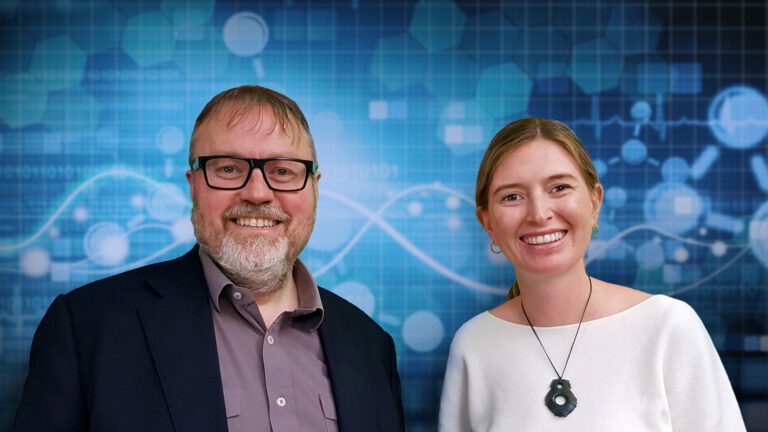
Join host Paul Spain and Francesca Logan (Toku Eyes) and discover how Toku Eyes is using retinal photography and AI to detect and predict a range of health conditions.
They also the latest tech news including:
- Wellington man’s alleged $450 million crypto scam
- Spark’s partnership with Nokia for network efficiency
- China’s space-based supercomputer project
- Groundbreaking gene therapy success
- Amazon’s latest warehouse robot
- Elton John’s criticism of AI copyright policy
- Launch of Motorola Moto Razr 60 Ultra
Special thanks to our show partners: One NZ, 2degrees, Spark NZ, HP, Workday and Gorilla Technology.
Episode Transcript (computer-generated)
Paul Spain:
Hey folks, greetings and welcome along to the New Zealand Tech Podcast. I’m your host, Paul Spain and great to have Francesca Logan joining us from Toku Eyes. How are you?
Francesca Logan:
Thanks for having me.
Paul Spain:
Real privilege to have you on the show. This is your first time, so welcome. Maybe you could give a little bit of an introduction into where you fit into this big wide world of tech and startups and innovation in New Zealand.
Francesca Logan:
Yeah, absolutely. So I am chief Commercial Officer for Toku Eyes. We are an AI health tech company and so we are looking at diagnosing sort of what’s happening in your body through the lens of your eye. So looking at kind of retinal images and what we can see through that in terms of systemic diseases that are happening in the body.
Paul Spain:
Yeah, it sounds really incredible. I’m really looking forward to delving into that during the episode. You’re also up at the NZ High Tech Awards this week with triple nominations. So that’s pretty exciting. So yeah, yeah, looking, looking forward to that. But let’s get started with the local international sort of goings on in the tech world. But first up a big thank you to our show partners, One NZ 2degrees, Spark, HP Gorilla Technology and our new show partner Workday. So great to have them on board supporting and keeping, keeping us going with the New Zealand Tech Podcast.
Paul Spain:
We really appreciate that ongoing support. Looking at New Zealand, you know, there’s always a fair bit going on in the tech world. We’ve got Tech Week happening in New Zealand this week, so an encouragement to listeners to keep an eye out for events and to get involved, you know, where there are things of interest to you. NZ High Tech Awards on Friday in Wellington, if you’re about there, do come and say hi, introduce yourself. It’s always nice to meet new people if we haven’t connected yet or if we have to reconnect. So that’ll be fun. And then yeah, into, into. Some of the news herald have been reporting around a number of arrests and a, and a huge international crypto related scam and somebody from Wellington has been arrested apparently as part of this.
Paul Spain:
So yeah, arrests and I think largely in the U.S. but someone in New Zealand that’s been part of that. So they say he’s been involved in this quite a complex fraud operation targeting investors globally. So you know a bunch of law enforcement type agencies that have been investigating and working, working together and a range of charges including money laundering and deception. I guess this is sort of the global nature of crypto is, you know, these things can be, can be Spread anywhere. You know, we’re used to hearing around all sorts of scams that happen out of, you know, certain parts of the world where I guess it’s become, you know, one of the techniques for generating revenue, you know, in a really weak economy and so on. But yeah, not ideal to see, you know, folks in New Zealand getting, getting pulled into these, these things too. Now Spark have and, and Nokia have shared details around how they’re partnering on managing Spark’s network operations going forward with the aim to really enhance their efficiency, leveraging artificial intelligence and automation.
Paul Spain:
There will be layoffs as part of this. So, you know, Spark have their own network operations team that will then I guess, you know, Nokia’s establishing a capability here in New Zealand. So some of those people will come across by the looks of things, with Nokia establishing their local network operations centre to serve SPARC with sparc, sort of, you know, retaining that, I guess, strategic control. But this fits in with, I guess current challenges in the economy. We’ve seen this across multiple telcos and tech firms with layoffs. I think the New Zealand Herald were pointing to 80 people likely to lose their jobs considering that some might move across from Spark to Nokia as part of that change because the team being disestablished is something like 180 odd people. So, you know, I think it’s pretty tough. We’re seeing a lot of people with these things going on.
Paul Spain:
See Microsoft, they’re cutting back as well, layoffs about 6,000 people, which is maybe 3% of their workforce. Which if you were to, you know, if that were be, well where, you know, all of those impacted, that’s, you know, potentially a really, really big disruption, particularly in this market where it takes more time and harder to find new roles. Haven’t heard anything sort of specifically around New Zealand, but if we look at that, you know, 3% of workforce, last I looked there was, you know, sort of north of 200 people I think in Microsoft locally. So that could be people know a chunk of people that have impacted there. So yeah, tough to see these, these things happen. I did, I saw an interesting piece on LinkedIn that Brett Roberts, who often joins us on the New Zealand Tech podcast, shared from a former Microsoft employee. And they were putting these layoffs in, in reference to AI disruption and was suggesting, well, Microsoft is deep into AI, they can see where things are going to be 24 months out and so they’re kind of preempting that. I think that may have generated a bunch of clicks and a bunch of interest and some agreement.
Paul Spain:
But I Guess looking back at the past, quite regular layoffs we’ve been seeing from Microsoft and others, you know, it didn’t look like it was hugely outside of the sort of cycle of what they do. I think there was a reference saying that this was the largest layoffs they’ve done since 2023. So it wasn’t like the largest layoffs they’ve ever done. It was, you know, just in the, in the last couple of, couple of years, they’re making, you know, good profits. I think this particular item was talking about them having something like US$125 billion in the bank and making 25 billion a quarter in terms of profits. So absolutely true that they could have afforded to not do this, but it does seem to be part of how the big tech firms seem to operate.
Francesca Logan:
Yeah, and absolutely, I think AI could be an element, but as you say, it’s very unlikely to be. You know, this is a passion that Microsoft, all of these big tech firms have. I think I’d be more interested to see how their hiring rates are changing because, I mean, I don’t think, you know, I don’t think they’ve announced any kind of hiring for freeze. I’m sure they are still hiring and, you know, maybe AI is making the workforce kind of go faster and more efficiently. And so maybe the, maybe they are doing layoffs and actually bringing less people in. But I think the layoffs alone, yeah, I don’t, I don’t think would be AI alone.
Paul Spain:
Yeah. And the suggestion that it’s kind of preempting where they see things going in a couple of years. Well, if, you know, if we’re not there yet, then you don’t tend to lay people off one or two years ahead of when need to make a change. So I don’t know. That’s an interesting one and it could be absolutely true, but my first take on it was I’m not so sure. And look, I think it is important though that we have these discussions around how is AI know, impacting the workforce and encouraging, I guess, you know, discourse and thinking around how we, how we navigate what, you know, will be a big disruptor in a whole lot of ways and that we’re leaning mostly in the direction of how we get the good and the positive out of AI. Hopefully we’re part of that as much as possible. Yeah, well, exactly.
Paul Spain:
So, yeah, there’s lots of, lots of positive opportunities and there’s also been new news through in regards to, you know, what the government are doing on Crown research agencies and Science reforms. There’s, I guess a range of news there. So we’ve got three new institutes coming in. The New Zealand Institute of Bioeconomy Science, New Zealand Institute for Earth Science and New Zealand Institute for Public Health and Forensic Science. So, yeah, we, I guess getting increasing progress in terms of, you know, what, what’s going on at a government level when it comes to. Yeah, particularly the sort of science side of things as things progress. Now, looking on an international level, I was quite curious to come across a news item talking about China launching satellites with the aim of building the world’s first supercomputer in orbit. That wasn’t something, I mean, you know, we have these kind of tastes of what the future might look like, but that one sort of snuck up on me that we’re you, we’re now in a world where it makes sense to build supercomputers in orbit.
Paul Spain:
So yeah, apparently they’ve launched a dozen satellites as part of what’s being called the three Body constellation. And that will be a very interesting one to follow. And they’re promising real time computing with a capacity of 1000 PETA operations per second. In some of the reading that I did, it looks as though that they’re certainly not the only ones heading in this direction. It’s a Chinese entity, the. Oh, how do I pronounce that? Xijiang Lab that is doing this work. So I think I butchered that one, but sounded good to me anyway. Yeah.
Paul Spain:
So just interesting to follow what those possibilities are and I guess and there’s a bit of sort of, for those that are kind of curious around this stuff, there’s a bit more kind of online commentary and detail around why it makes sense to have that computing power in space, what that means from a perspective of versus on Earth in terms of what we have to do to call data centers, the communications and all the things that are kind of those uses of having that computing power actually sitting in orbit, which is, I think quite interesting. Yeah. But certainly things seem to just keep accelerating in terms of what’s happening on the space front. So the other thing I saw interesting and I’m just trying to remember the name of this firm, an Australian firm that looks like they’re working to compete in a way with what Rocket Lab are doing. So it looks like we’re getting pretty close to Australia with their, you know, their own. Yeah. Launching their own. Their own locally built sort of rockets.
Francesca Logan:
It hadn’t really crossed my mind that Australia didn’t have an equivalent, but. Yeah.
Paul Spain:
Yeah. So Gilmour Space Technologies, so they’ve been around for about 3, 13, 13 years and based out of Queensland. And yeah, the rocket that they’re trying to get launched, and they had a few issues with it, it should have launched by now, I think, or around now, but they detected some issues. So that hasn’t gone ahead, but it’s designed to carry up to 300kg into a low Earth orbit. So they’re in a kind of a similar vein to, you know, what Rocket Lab can, you know, do currently with their electron. Although of course they’re working on their next rocket, which is a whole lot bigger and helps them take on SpaceX. So that’s one that a lot of people will be following and I hope lots of our listeners have managed to snaffle some, some shears from Rocket Lab prior to them going through the roof, because they’ve done quite well over the, over the last, last year. What are your thoughts on, you know, Australia versus New Zealand on the, on the space front?
Francesca Logan:
I mean, in all honesty, space is a whole nother world to mine. But yeah, I mean, I, you know, when you said it, I sort of was thinking and I didn’t even fully realize that we were so far ahead of them that they didn’t have an equivalent to Rocket Labs already. That’s actually surprising to me. Yeah. But kind of cool that we can, we are so ahead of them.
Paul Spain:
Yeah. And I mean, it is interesting, different sort of data on, you know, New Zealand and Australia. And I guess there’s a lot of opportunities for collaboration as well between our aerospace sectors. But, you know, there’s, there’s a fair chunk of, you know, export earnings that are generated by, you know, by both, you know, both countries. And, you know, we’ve got literally hundreds of aerospace companies in New Zealand, although there’s you know, there’s probably only, you know, a very small number that, that we all know about. And, you know, Rocket Lab is probably the, the main one that most people would know about and, and the rest kind of largely are, I was gonna say fly under the radar, but they’re all over the radar. But anyway, all right, onto other topics. So we’ve got reporting on a baby getting the world’s first personalised gene therapy treatment.
Paul Spain:
And this is a baby with a rare metabolic disorder who’s received this personalised gene therapy, apparently developed in just seven months. And this has, has improved his health and, and, and diet. And, you know, this is, I guess, kind of an early taste of some of the, some of what may well just become a, you know, A normal, normalized thing in, in the years, in the years ahead. And this is, yeah, where innovation and kind of health tech is taking us, isn’t it? Into all sorts of new areas.
Francesca Logan:
I mean, a lot of potential risks as well, but I’m sure, you know, it’ll move slowly through all the processes. But, yeah, really, really cool to see it start to come to fruition because.
Paul Spain:
You work in this area for these sorts of things to happen. How long does it tend to take for something to get to this level? Because it’s, it’s, it’s not usually. It’s very different to, you know, digital kind of tech innovation. You can have an idea in the morning and, you know, in the afternoon. You’ve implemented it, you know, rolled it out to a lot of people. Right.
Francesca Logan:
I mean, for something like this, I think it could easily span, you know, 20 years or so to get into market. You know, a drug would usually take in the realm of kind of seven to ten years to get through you know, all three phases. With clinical trials, it’s, yeah, I could. And then when you add on the actual development time before then, yeah, it would be, it will be a very slow process, which, you know, we’ll see. Theoretically, you know, the FDA is all getting reformed and sped up and all those kind of things. So that might, you know, we’re hoping that there might be some shortening of some of those timelines.
Paul Spain:
But, yeah, I mean, in this case, you know, pretty exciting to hear that, you know, this baby, a rare genetic disease, is now growing and thriving in a way that, you know, wouldn’t normally have been possible. So I imagine, you know, these sorts of things will attract more attention as that matures. So, yeah, all right, a couple of other topics. There’s been some criticism of the UK government’s AI copyright stance, something we’ve kind of delved into a little bit in the past. And yeah, it’s Elton John who’s kind of throwing. Throwing shade at the UK government, calling their ministers losers for rejecting protections for artists. And look, I find this, this, you know, quite fascinating. It, it is a real, you know, challenge as to, you know, exactly how we legislate around, you know, differing forms of, of AI and, and what’s the, you know, appropriate way to handle it? What’s, you know, what’s appropriate from a protection perspective.
Paul Spain:
And it does seem to vary a lot from country to country. And I guess we’ve delved in previously, I think, a little bit of a chat around some of the AI music platforms and some of the music coming out of these platforms is amazing. And that’s partly because it’s drawing on the likes of Elton John’s music and others creativity and then trying to, or literally kind of taking the inspiration and kind of copying you know, elements of that. And so, yeah, I find, I find this is going to be something that probably is going to be a, you know, quite an ongoing, an ongoing challenge I was looking at with the use of AI actually to sort of interpret the legal case for me because someone I know has shared, they shared on their LinkedIn a link to some, in simple terms, I’ll call them book summaries. There was a little, a little bit more to them and I was curious as to how legal is that within a New Zealand context. Right. And for my own team, you know, they’ll read a book and I’ll think, oh, that’ll be good for this, you know, this person or that person and so on. But not everyone wants to listen through, you know, or read a long book and sometimes the essence of it, you know, might be able to be communicated in a, in a fraction of the length.
Paul Spain:
Right. So I was looking at the, the legalities of, you know, summarizing or summarizing certain aspects of, of books. And certainly the AI was using from what it was drawing was highlighting some potential, you know, some potential challenges in that, in a legal context within New Zealand at least. But there are certainly platforms. In fact, you go to Amazon.com right and you’re searching for a book, it’ll come up with the original book and then it’ll come up with a short summarized one. And if you’re not quite careful what you’re clicking on, you might buy someone’s book summary of the actual book when you actually want the original book. And I think there’s. Yeah, so there’s, yeah, there’s some interesting things going on on there and I don’t know how you get the copyright.
Francesca Logan:
I can see the logic of both sides, but I really feel for, you know, the artists and it’s just, it’s tough. You know, I think less and less. I’m not really clicking on any links on Google anymore, you know, all the bloggers and everything, you know, because you’re getting the AI summary at the top, which is almost always kind of covering what you need and it’s, it’s tough.
Paul Spain:
Yeah. Although you obviously get, you know, get challenges with that. And you know, we, we had had one earlier with some of the content within our, our topics for today where we had something that was you know, we’d asked AI to research it and collate it for us and, and what it came back with was blatantly wrong. Yeah, but if it’s more subtle, you don’t necessarily know that as well. Right.
Francesca Logan:
So something’s, everything’s right and something wrong is kind of buried in it. You might not catch it as well.
Paul Spain:
So no doubt some interesting challenges ahead. And I did see news come through that Amazon have produced a new robot called Vulcan. This is their warehouse robot and they say that the hardware can feel what it’s touching. So I guess it’s, you know, they’re trying to emulate a more, you know, human type capability. So if you can imagine for Amazon and the sheer scale of E Commerce that they do, they have a lot of people within their warehouses in the U.S. and other locations around the world, but from their perspective, they would prefer not to be, not to be paying.
Francesca Logan:
Yeah. 247 free labor.
Paul Spain:
So if they can, yeah, if they can get these robots that will, that will be more human in varying ways, like feel what they’re grabbing and not breaking, you know, things. If it’s, you know, collecting a bunch of things from around a warehouse and boxing them up, then yeah, you can imagine that they will be, they will be there as quick as they can. And that’s kind of what seems to be going on here. So apparently there, this, the article I, I read referred to as a two armed beast and it’s already working in their fulfillment centers. Yeah, one one in the US and another one in, in Germany at this stage and has handled half a million orders.
Francesca Logan:
Wow.
Paul Spain:
So yes, this, this technology can get a lot, a lot of work done. It’s, it’s a lot of uh, you know, people hours right there kind of displaced. Although, you know, there’s elements of these sorts of things where some of the sort of work that, you know, robots displace, you know, might not be the most exciting work. But also then you do have a flip side of. Well, if we get rid of a whole, whole lot of, you know, a whole lot of jobs in these areas, which you can imagine if that’s working reasonably well, you know, on a, on a smaller scale, you expect that to, you know, to continue increasing over, over time. So yeah, and yeah, one of the comments was that Vulcan can apparently handle around 75% of the products that exist in, in a typical Amazon warehouse. So apparently they have around a million products, a million stock code units sitting in there in a typical warehouse and this can handle 3/4, then that could be A significant change for Amazon and no doubt for their workforce. And just the last one on the news front saw news through that Motorola have a new phone.
Paul Spain:
The Moto Razr 60 Ultra has been announced internationally. Now this is their compete with Samsung’s Z Flip product. So this is what looks like pretty much like a normal smartphone but can be folded in half. Similar in some ways to their Razr products of old. But of course it’s a smartphone and a folding screen. I’ve been spending some time with the Razr 50 which is the one that’s currently in market, the Razr 50 Ultra and yes, very, you know, from a hardware perspective has a lot of similarities to what Samsung have done with their product. However, yeah, definitely some differences in the software and other elements. So we’ll delve into my experiences with some of the Moto phones on another episode.
Paul Spain:
But I think it’s good for us to have that competition in market and we’re not just Apple and Samsung in the market but we’ve got some other options. The Motorola phones now are owned by Lenovo so and that’s been the case for you know, for a number of years and obviously a pretty well respected brand when, when it comes to a lot of technology. So yeah, interesting to, to see but certainly the physical experience with the handset pretty, pretty solid and pretty capable. But we’ll delve into that more another episode. So time to delve into Toku or Toku Eyes as the company is known as locally here in New Zealand. So yeah, maybe you can give us a little bit of an overview Francesca, on the journey and how long things have been going and where things are at currently. Seems like know very much it’s a focus on exporting, you know, what, what you do. So the large market is everywhere, everywhere but New Zealand, you know, I guess longer term.
Paul Spain:
But US is kind of where you’re already generating revenue. Is that right?
Francesca Logan:
Yeah, that’s right, yeah. Well, I mean as we were saying, health tech never spins up overnight. It’s always a very long journey and kind of including us. So I mean we started in Auckland University as with you know, a lot of the local health tech companies and you know it’s, it’s a spin out of 10 plus years of research in the university and we spun out of Auckland Uni about five years ago and, and you know, and then kind of subsequently raised money with Ice House and things like that but, and I joined about and a half years ago and have been sort of on the journey since then. And you know, as with all startups, many, many twists and turns in terms of, you know, what, what we’re looking at really. The company started looking at retinal images to diagnose eye diseases. And that was, you know, that was the original product, that was the product that was developed at the university was particularly diabetic retinopathy and glaucoma were kind of the first two focus areas. And then as we kind of got further and further down the line and we started collecting more and more data and more and more capability in the team as well, we started realizing that there was actually so much more that you could see in the eye.
Francesca Logan:
And so we sort of at one point did a bit of a right hand pivot, dropped the eye diseases and started focusing on primarily cardiovascular risk initially. And then now we’re kind of going more and more into other diseases that can be detected through the eye.
Paul Spain:
Wow, that’s fascinating. So I’m curious to understand dropping the kind of look at the eye diseases. Why would you do that if you can be doing that maybe alongside the other things or if it’s optometrist who have got, who are looking at and capturing people’s eyes and so on. Anyway.
Francesca Logan:
Well, the thing is with healthcare is that you have to get the regulatory approval, particularly the FDA process. And the cost of taking something to market is always in the multi millions of dollars. So we have the technical capability to do almost all eye diseases. We have to prioritize what are we taking through fda.
Paul Spain:
Okay, so it’s about prioritisation and it’s.
Francesca Logan:
Not saying that we might not do it in the future or acquire it somehow because we would like that capability at the moment. We sort of partner with people. It’s the eye diseases space is becoming a very crowded market. It’s quite an easy product to develop. There’s sort of dozens of companies, you know, and so we kind of have split away kind of almost on our own into these kind of other diseases. So we, you know, we’re definitely the first to bring it to market in the US and so, yeah, so it kind of just enabled us to differentiate a little bit. We’ve ended up kind of leading the world really in this space.
Paul Spain:
What a great pivot.
Francesca Logan:
Yeah. And so it just made a lot more sense. And yeah, we may at some point come back and fill in with the eye diseases as well.
Paul Spain:
Yeah. And what other sort of pivots and tilts and turns have been made along the way? Cause I imagine that, you know, probably after all the research that had been done at Auckland University. And then to maybe, you know, you could probably tell the story better than I can. But you hit a point where you realise, hold on, we’ve got all these competitors that we’d, we’d be, you know, dealing with and you’re trying to work out, well, what, you know, what do we do? Yeah, that’s, that’s probably not the most nice experience to sort of, you know, come across and, and realize. But that sounds like a really good kind of outcome.
Francesca Logan:
Yeah, I mean, it’s always hard to know you’ve got very limited resources in a startup. You know, we’re still operating with a team of about 20 even now, and so, or everything we do is about focusing and we say no to majority of opportunities that come our way these days, just so that we can actually execute on the things that we really need to be able to do. But I mean, yeah, there’s so many different turns. I mean, at one point we were looking at Australia that was going to be maybe our first key market. And then we kind of pivoted across to the US just it’s so much bigger, so much more potential there. I think in terms of what was our target customer, we’ve really looked into. We probably started more on the primary care and other kind of health services and now we’ve ended up really targeted towards just optometrists as being our target customer. So, yeah, I mean, it’s kind of part of being in the startup world that you kind of have to roll with the punches and find your way.
Paul Spain:
Okay, so walk us through that. So you’re working with optometrists but you’re not looking for eye diseases, so. Yeah, tell us how you landed on that as your approach.
Francesca Logan:
Yeah, we actually work really well with optometrists because they can already do the eye diseases themselves. And that was kind of one of the issues with the eye diseases is optometrists didn’t want to buy it from us because they’re already doing it, so they didn’t want to pay extra. It’s like kind of paying for someone to check your homework a little bit. And while there is some value in it, I think they couldn’t get there in terms of actually paying much for them, of opened up a whole new world to them that, you know, that humans really can’t do or certainly, you know, you can’t detect cardiovascular risk, for example, in the eye until it’s at a very advanced stage and then someone may pick it up. But we’re able to do that much earlier. So we’ve opened up a whole new revenue stream for them. And so it’s ended up a really great partnership opportunity to do with optometrists.
Paul Spain:
Wow. So what are, you know, run us through the sorts of things at the moment that, you know, you’re able to detect and you know where those are at from a regulatory, you know, approvals perspective.
Francesca Logan:
Yeah, it’s a bit of a mishmash depending on where you are. But we’ve got one product which is our wellness product, which is Bioage. So that’s available everywhere because it’s a low risk kind of medical device. And so that is looking at your biological age. So we’re looking behind the scenes at your cardiovascular risk or all the, all the influences that would affect your heart, your brain and your kidneys that we can see through your eye. And then we’re comparing are you doing better or worse than what we’d expect for someone of your chronological age. So you can either be younger or older. So that one is the one that we’re really rolling out kind of at pace in the US and then we have two of our medical products going through the FDA journey at the moment.
Francesca Logan:
So we’re just finishing off our clinical trial on our cardiovascular risk assessment. So that is more of a medical device and that one is telling you if you’re at an increased risk of a heart attack or stroke in the next 10 years. And so that one we’re hoping to bring to market either late this year or early next year. And then we have our chronic kidney disease product as well. And so chronic kidney disease, it’s one that I’m really excited for. It’s a very silent, underdiagnosed disease. So nine out of 10 people with chronic kidney disease don’t have no idea that they have it. And so the product that we’ve developed is picking it up at a very early stage.
Francesca Logan:
And it’s a very debilitating one when it gets to kidney failure. Either at that point you’re on dialysis and, or on a kidney transplant list and your lifespan is kind of severely decreased at that point.
Paul Spain:
So walk us through how this works. Someone walks into their optometrist, their optometrist is taking photos of your retina, the back of your eye and then. And which is high resolution in some detail. And then you’ve got sort of machine learning kind of algorithms that then get applied and so you’re able to look for the patterns.
Francesca Logan:
Is that pretty much? Yeah, yeah. So I mean, we use the images that are already been taken today. So if anyone’s been to the optometrist in the last few years, almost definitely they would have had an image taken at the back of the eye. And we use the most basic version. Sometimes they try and upsell you on Oct, which is like a 3D image and all sorts of things. We don’t actually use that.
Paul Spain:
You don’t need it.
Francesca Logan:
We use the stock standard one that they pretty much take on everyone. And then, yeah, they would ask you, do you want to get a cardiovascular risk assessment or other things? And they effectively, once they’ve taken the images, they click a button, it gets spun up to the cloud. We work with Microsoft, with Azure and then about 30 seconds later it comes back with their results. So depending on the product, that can be different things. So either elevated cardiovascular risk or not, or the bio age or the chronic kidney disease down the line.
Paul Spain:
And so then you’ve potentially got a little bit of a shock element. You know, how do you go about delivering this information that your machine learning has been able to detect? Hold on, there are some signs here and I guess, yeah, you hope it’s accurate. I mean, you would have all the sort of smarts to work out where you give those indicators. So you’d have very high confidence presumably to give that. But then there’s a next phase, isn’t there? You don’t just go, here it is and your optometrist has told you you’re gonna die in six months time because of, you know, xyz. It’s not quite like that. Right, so how does that actually play out?
Francesca Logan:
Yeah, it’s probably the area we’ve been most focused on recently because, you know, the result itself is really step one of a hundred step journey. And if someone doesn’t do something with that result, whether it’s high cardiovascular risk or high bioage or chronic kidney disease, it’s almost useless them even knowing it. And so the optometrist plays a role in terms of they are the first person who give the patient the results, but we also support them using digital formats. And so there’s a results portal that they can sign on to, they can find out a lot more about the, you know, their results. But also kind of, more importantly, we’re developing some really strong partnerships mostly over in the US at this point around how handing over the person to the next kind of care provider that can actually change that person’s risk in some ways. So the one that we’ve just launched is with cvs. So it’s a Very large pharmacy chain over there. They have minute clinics which are just basically everywhere.
Francesca Logan:
I mean, there’s thousands of CVS stores. And so their workforce has just been trained on our tests. So that. And then right from our results portal, you can schedule your appointment with a. It’s kind of a nurse provider. You can go, you can get blood tests and get that kind of next level of. It’s called their wellness assessment of what to do. So that’s really been a huge area of focus for us.
Francesca Logan:
I think we’re still learning and the best way to manage that handover. We don’t actually want to take on the care of the patient ourselves, but we really do want to make sure that the person makes it to that next step.
Paul Spain:
So, yeah, look, I mean, I guess this is the disruption of the healthcare, you know, sector as, you know, particularly the sort of machine learning type. Things come through and new capabilities come through, then I guess things can be flipped on the head in varying ways, right?
Francesca Logan:
Yeah, absolutely.
Paul Spain:
And so someone’s listening in and they’re, they’re in an area where they potentially could get access, you know, to this. Where would they go and get their eyes tested to, you know, participate and to get these checks done?
Francesca Logan:
Over in the US is where we’re kind of strongest. So America’s best is in optometry. It’s one of the largest optometry chains over there. We’re in a couple hundred of their locations today, but rolling out probably at least 50 a week at the moment to get to all of their stores by around sort of October, November. Yeah. So over in the US we’ve got a few other big pilots that are just launching at the moment, but, you know, and kind of expecting those to move forward with basically all of the major names over there. There is one in New Zealand that I’m not sure that I’m allowed to say the name of yet, but it’s a name that everybody would know very well that’s hopefully launching July. So.
Paul Spain:
So it could be very soon.
Francesca Logan:
Yeah, and so that one should be coming up, but in terms of price point, we kind of leave it up to them because optometry often exists in bundles. So you don’t. You’re not necessarily paying for like, you know, this part of the exam here and then, you know, you pay for an eye exam and so it’s sometimes hard, but if it is an upsell.
Paul Spain:
Oh, it’s absolutely fascinating. Yeah. Anything else that you think would be of interest to listeners?
Francesca Logan:
I think there’s just how much the thing that continues to amaze me is how much more can be seen through the eye. I mean, yeah, we’ve got the cardiovascular risk and kidney disease today, but at the moment we’re trying to prioritize what are we taking through FDA next. And there’s things kind of as kind of far left field as the Alzheimer’s and Parkinson’s and other neurological conditions. There are certain cancers that can be seen in the eye. There are obviously more of the cardiovascular related diseases. So things like hypertension, high cholesterol, things like that. Preeclampsia. Yeah, it feels like there’s just this huge list.
Francesca Logan:
And so I think that that always continues to amaze me is kind of what the R D team come out with of what else we can see. Before joining this company, I said I was in health tech before but I had not an eyes specifically and I just had no idea.
Paul Spain:
Well, we’ve, you know, we’ve talked varying times and there are, you know, other, other companies. The heart lab used to be in this building. You know, I went and visited an eye clinic in India who were, you know, also sort of taking, you know, retinal pictures, but that was in babies born prematurely to avoid blindness. But yeah, we’ve delved into, I guess, you know, so many potential aspects through mix of technologies, wearables and so on. How much of a role do you think, you know, this capturing of the, you know, the retina, you know, will play in future healthcare and being able to, you know, address issues before we might have known about them otherwise in the future.
Francesca Logan:
Yeah, I think it’s going to be interesting to see where it develops. I think one of the ones we’re, you know, working with, you know, some of the, some of the very, very large multinationals is on the smart glasses side of things. So they’re starting to see, okay, how do we use those for health tracking as well. So it almost becomes a new form of wearable. As in, so you’re looking, they’re trying to kind of see through to the back of the eye and then, and then, you know, we would potentially partner with them on actually, okay, what do you do with that data? So I think it’s, I mean it’s a very much an evolving area and still got a way to go because it’s not the easiest, you know, you really have to be quite still, you know, the cameras that exist today, it’s quite still quite a specific camera that’s needed. I think the other one, you know, we know we don’t really work on the Hardware side, but we partner with them is, you know, obviously people are trying to use smartphones as well to be able to take an image of the eye. And so when that one ultimately does get cracked, I think that will change it up a lot as well. But so there’s a lot of advancements that will be made on the hardware side and so we’re just sort of kind of riding on the back of those a little bit.
Francesca Logan:
Yeah, yeah.
Paul Spain:
And there are some people that are sort of, you know, going after this sort of cyborg version of themselves and wanting to work out how to, you know, live forever and so on. Do you see these, these technologies are going to open up and bring, you know, huge transformation in our lifespans. We already live, you know, on average probably a lot longer than, than, you know, what people were living, you know, one or 200 years ago. Do you see?
Francesca Logan:
It’s the Brian Johnson’s and everything, isn’t it? I think, I mean to me it’s not about lifespan, it’s about health span. I think there’s no point in just living longer if you don’t have quality of life. So I think that’s what everyone should really be aiming for. It’s not, it’s actually okay, how many years can you live and have a really great quality of life? And I think there are a lot of tools that can help people, you know, do that more and more and a lot, a lot of information as well and education. But it’s, you know, it’s not. I think there’s also a lot of things that are working against that in terms of, you know, the food and environment, various environment, environmental factors that actually make that quite hard for people as well. So I think, yeah, I think that there’s kind of both, both things working together but.
Paul Spain:
Right, well it’s been really fascinating delving in and learning a little bit about Toku. All the best for the NZ High Tech Awards and for what’s next folks that are maybe interested in finding a little bit more online. Is your website the best place to, to go?
Francesca Logan:
Yeah, probably just tokawise.com oh that’s great.
Paul Spain:
All right, well thank you very much for joining us. Thank you for having me and big thank you to everyone for listening in. Of course, appreciation to our New Zealand tech podcast partners to One NZ, 2degrees, Spark, HP, Workday and Gorilla Technology. Of course, if you’ve been listening to the audio, which is most of our audience, then of course worth following us on the video types of platforms, the likes of YouTube, you can follow myself on LinkedIn for the live streams that we do on there as well. And we’re across X and Facebook as well. So thanks, everyone and we’ll look forward to catching you again next week. All right, see ya.