
Exploring AI Agents and the Future of SaaS with JD Trask
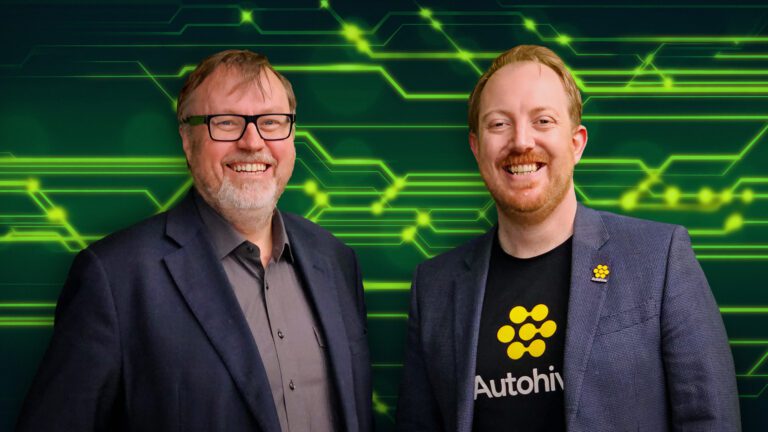
Join Paul Spain and JD Trask (Raygun & Autohive) as they dive deep into the future of AI, SaaS businesses, and the evolution innovation. Discover JD Trask’s journey from founding Raygun to launching Autohive, hands-on insights from adopting AI across teams, and candid commentary on innovation, risk, security, and growth in a rapidly changing tech landscape. Essential listening for anyone passionate about technology, entrepreneurship, and AI’s impact on business.
Special thanks to our show partners: Fortinet, Workday, Spark New Zealand, One New Zealand, 2degrees, PwC New Zealand, and Gorilla Technology.
Read the full transcript
Transcript is computer-generated and may contain errors.
Paul Spain:
Greetings and welcome along to the New Zealand Tech Podcast. I’m your host, Paul Spain. Privileged to have JD Trask joining us back on the New Zealand Tech podcast again. He’s co founder and chief executive of two firms. Firstly, Raygun, launched in 2014, a global software as a service platform helping software developers monitor and improve application performance used in well over 100 countries. Secondly, he also heads up Autohive, launched just over a year ago. Autohive is a SaaS AI company providing an artificial intelligence platform that makes automation and AI agents more accessible to everyday businesses here in New Zealand and internationally too. JD Trask, great to have you back on the podcast.
Paul Spain:
How are you?
JD Trask:
I’m very good. Thanks for having me back, Paul.
Paul Spain:
I’m excited to hear more about Raygun and Autohive, which I guess has been launched between when we last podcasted. And also we’re going to dive into a little bit of a tough love session where we’re going to comment on AI learnings related to New Zealand’s favourite software company, Xero. But first up, a huge thank you to our show partners for making New Zealand Tech Podcast possible. Thank you. Spark, One New Zealand, 2degrees, workday, Fortinet, PwC and Gorilla Technology. And of course we really appreciate their broader support of New Zealand’s tech and innovation ecosystems too. Now today I’m keen to hear about your journey in technology, so maybe you can tell us a little bit about your background for listeners who haven’t heard your story.
JD Trask:
I often joke with people. One of my biggest blessings was probably knowing that I wanted to build software companies from a very young age and was able to focus on that. So kind of did a lot of programming through my teenage years. Absolute hit with the ladies. So yeah, that was me. I got a Comp Sci degree, went and worked for Integen for three years. When I graduated, they hired me into their grad program. I met Tony Stewart at one of the first interviews.
JD Trask:
So Tony was the managing director there and I really liked what they were about. They were big on Microsoft Stack. And when I’d even started at university one of the things that stood out to me was that they were only teaching Java and I was like, well hang on, we all know that Microsoft is like the 800 pound gorilla here. Why don’t I learn C? So I went and picked up Microsoft Visual Studio 2002 academic edition before I realized that you could have got it free from the uni. It cost me $200 still on my desk at work actually and learnt C. So I think I came out of university as one of the only actual developers who could say no. I’ve built quite a bit in C and I know how Net works. That I think helped make me more attractive to them as they were a Net shop.
JD Trask:
I just threw myself into it, huge learning opportunity, sucked up as much information as I possibly could, saved every penny I could because I knew I did want to start a company at some point. I’d even told Tony this in the first and I think I was very lucky that they were so entrepreneurial that they didn’t see that as a negative, saw it as a positive. I met so many key people in my life. I learned a lot from the folks there and then struck out on my own at 23 with a company called Mindscape. Mindscape built DevTools but we did a bunch of services work as well to pay the bills because I was, you know, didn’t come into it with a lot of Money. I was 23.
Paul Spain:
Yeah, yeah. So what was your vision for Mindscape?
JD Trask:
Well, initially having joined Integen and worked with. Own object relational mapping technologies and things like that. Keep in mind this was in 2004 and I was like this is really cool stuff. This is really accelerating delivery but there’s not really standards out there or products that people are using around this time. This was of course pre Microsoft putting link to SQL and Entity Framework and that would come years later. And so we decided to focus on developer tools to accelerate the delivery of software. We built a range of different products that we sold mostly internationally still which was great. Everything was priced in USD.
JD Trask:
That was back when the New Zealand dollar was at about 80, 85 cents I think. So it’s come down quite a bit. Yeah, so we sold those products but we were really bootstrapped. So we also did joint venture work. So we teamed up with Natalie Whitaker and the Movac folks to deliver things like Give a Little. So we were a shareholder and creator of that platform. We also built a business valuation company, an inbox mining business a few different Things like that. While we were sort of figuring it out, it was all about accelerating software delivery.
JD Trask:
So how could we just make teams more productive, more effective and deliver things faster? And so that was our sort of lens was developer tools built by actual developers, not just a cookie cutter factory with shitty products that don’t work okay
Paul Spain:
during this time, as well as give a little. All the other things that you were involved in building. What became Raygun was one of those projects. Tell us how that got started, because Raygun’s gone on to incredible success as a product. How did that kind of begin?
JD Trask:
Yeah, so we built Raygun in 2012, we launched it in 2013, and interestingly enough, it was built in entirely off something I’d learned from JB when I’d started at Intagen, which was he taught me when I first started. He said, look, put a bit of code in here that when an unhandled error occurs, it sends you an email about what happened. I said, oh, that seems like a smart idea. He’s like, yeah, this way you can fix something before the customer actually bothers to contact support. Because most won’t even bother to tell you that something’s broken. And I was like, well, that sounds really cool. And then we were thinking about what products would help software teams. And it was like, why don’t we productize that whole notion of keeping you informed about things going wrong automatically.
JD Trask:
And so we built Raygun for that. And at the time, Raygun was simply a product of Mindscape. But as you say, it took off on us, which was really great. And we were getting people sort of confused, contacting us, going, what is this Mindscape? On my build, they didn’t understand that Mindscape was Raygun, those sorts of things. And so eventually we actually sunset everything else that Mindscape was doing and just basically converted the company into Raygun. It’s a great product. It’s still a great product. It still sells well.
JD Trask:
And the thing that always catches people off guard is firstly, how easy it is to put in and how quickly you start to find just mind numbingly bad problems with your software. And I keep saying that to people. Software is always built for the benefit of humans. If you’re not actually seeing how often it’s breaking, you’re flying blind. It’s almost. Even though it’s for a tech team, I would argue that it’s probably the best growth accelerant you could put into your software. I always think this scene from the Simpsons where Sideshow Bob is getting the rake in the face every Direction he steps and it’s like, well, that unfortunately is how software is for most users. It’s incredibly bad software.
JD Trask:
And dare I cross the beams for a second here, but this is something that frustrates me when I hear people saying AI is not very good, it makes mistakes. And I’m like, we have this unique experience of being on the receiving end of billions of the mistakes that humans already made. And I’m not seeing any discernible difference in the rate of mistakes other than that humans don’t think the machines are as good as them. And it’s like, no, no, we’re all making mistakes, guys.
Paul Spain:
That’s so true. That’s so true. Yeah, maybe we can delve a little bit into the US time and tell us about the trigger. It’s a pretty big deal to decide to up and move to the US
JD Trask:
Moved up there, moved to Seattle. Picked Seattle in part because of the closeness to Amazon and Microsoft, the two big guys that we sort of deal with the most. We actually had azure.com as a customer of Raygun. So they were running for example our monitoring across their entire public facing sites for about three years. We expanded into trying enterprise sales, those sorts of things up there in retrospect. And I like to try and be as transparent as possible with folks like what did we get right and what did we not get right? What we got right was me. Being in Seattle was probably a good thing. I built relationships across Amazon, Microsoft, all those things.
JD Trask:
Building a sales team in Seattle was probably not a smart idea in terms of just pure cost of folks in that area. I had people saying, look, if you’d built this in Arizona, it would have cost you about a third the amount and been more effective. Now I didn’t end up shutting that down out of any sort of necessity. But around the end of 2018 was the birth of my first child. So we decided to move back to be closer to family. And then with COVID hitting, we still had some folks up there, but largely it was very difficult obviously to manage a foreign team at that point. And so we had tritted that down. We still today we’ve got some people in the US again, but not in the sales capacity overall.
JD Trask:
So lessons were learned. We did acquire the revenue off the back of it and it’s certainly probably a learning for me to take into if future businesses and things we’re doing.
Paul Spain:
Yeah, it’s fascinating. And what is your view on the futures of SaaS businesses in New Zealand? Obviously we’ve got Xero been the one that We’ve all kind of followed for a long time. And they’re probably very similar to a lot of the big global software companies. If you look at their, their share price, yeah, they’ve dropped massively, 50% or more in terms of that share market valuation in this last period. Do you see a future for traditional software companies? And if you do, what does that look like? And I guess this is also, you know, somewhat introspective too, right? Since you’re in that, you’re, you’re in that business with Raygun and you Autohive. How do you look at that? Because there, you know, there is a viewpoint of, well, we’ll be using AI for, we’ll be using AI for everything. We’re not going to be clicking around in an accounting tool like Xero in the future. We’re going to be working, you know, we’re going to be operating from a prompt.
Paul Spain:
We’ll be, you know, talking to an AI or, or chatting with an AI. You know, the AI agents are going to preemptively send me what I need to see, when I need to see it, and so on. How do you think that actually plays out?
JD Trask:
I think it’s a possible future. I think it’s further out than people think. I’ll describe this since not everybody’s going to be watching, but I think with AI, we are actually in a fast takeoff. So traditionally with fast takeoff, people think of the Terminator movies. Skynet comes online, kills us all immediately. I think of it as we are in an innovation, fast takeoff. This is going much, much, much faster than anything else we’ve seen. I mean, you and I have been around a little bit.
JD Trask:
This is going very quickly. But what I try to remind myself and my team and others to stay grounded is it doesn’t really matter if the curve is exponential on innovation. Where the wealth is going to be built is understanding that the human adoption rate is a very slow linear line. Right. It’s not that humans are slow at change. And it doesn’t, you know, the AI will be way ahead of people. In fact, frankly, it already is. People just don’t even realize, you know.
JD Trask:
And so to that end, it’s like, how long is it going to take for people to change? And I think that could still take a decade, two decades, three decades in fact. I hate to say it, but maybe it requires a few of us to actually like, you know, turn off this old mortal coil for the actual change to fully, it would be realized. So I think that that’s the, you know, that’s something I think about a bit and I realized that you could attack this argument. But the reason this was on my mind was actually Covid look at the explosion of E commerce and you’re like guys, this was quarter of a century into E commerce and you’re telling me that it exploded because we suddenly couldn’t leave the house. That’s the human adoption piece right there. So I think that’s an issue. Now flipping it back though, and I’ll be honest, what I’m seeing is two speed SaaS companies and I may be wrong or simplifying this too far, but founder led versus not founder led and I’m going to pick on Xero here for a second. Right.
JD Trask:
I think Xero is dropping the ball horrendously in the field of AI. I think that they’re making all the moves of an organisation that thinks that its future is to trap the customer data inside its platform and set up a toll bridge for people to access their own data. If you want a fastest way to ensure that Xero doesn’t exist in 20 years, keep going with that strategy. Guys, I’m watching how many agent first agentic accounting platforms are launching and the hostage takers will not win. It should probably be a wake up call to them that their own co founder, technical co founder is working for an agentic accounting partner company building the future of AI accounting. That’s a person who doesn’t have to work right is still choosing that. That’s the future. Meanwhile, Xero is putting in place punitive pricing around their API to say our future is billing you to read your own transactions.
JD Trask:
And I think that this is a problem that’s occurring across a lot of software. I’ve picked on Xero, but it’s no different to Slack. It’s no different to a lot of these companies where again they’re lacking the innovative founder spark. They have got middle management vibes written all over the product strategy. They might make money in the short term, but it’ll kill them in the long term.
Paul Spain:
There’s a lot to unpack there.
JD Trask:
Well, we’re a zero customer but it’s. I’ll give you an example.
Paul Spain:
It’s hard to disagree.
JD Trask:
Yeah, we’re a zero customer. In fact we were at when I started, we’re one of the first 10 customers and I sit here looking at what they’re doing. I’m like man, I don’t even want to get off this because I’m quite patriotic about it. I was a shareholder in it, you know, I know so many people who are associated with it. Most not anymore. Right. And it kind of kills me to watch because I’m like, wow, you guys became myob. You know, like, remember when they used to charge you to get the OBDC driver so that you could even query your, your own accounts? They’ve become myob.
Paul Spain:
It’s probably, it’s pretty hard to hear to be, you know, to be fair, because I, you know, I think, you know, for Kiwis, particularly in the, in the tech space, you know, zero zeros the company that really everyone’s tried to learn from and follow and to emulate.
JD Trask:
I just think you want to follow the Drury years, not the professional management years.
Paul Spain:
Yeah, I guess when I’ve looked at software and of course a key part of my own business is helping organisations to leverage technology. So always looking at software, does the software really help an organisation succeed or not? Is the bit of software that someone’s just told us they’re about to acquire or they just signed off without, you know, without mentioning it to their technology specialist partners. You know, makes sense. And really, when you look at, certainly from my perspective, when I look at software, I’m looking at when did it first come out, how has it evolved? And with most products, they have a lifetime where they’re really successful. They come in, they shake up the market. I’m just thinking this through in my head, sort of aligning it with the Xero vs. MYOB story. That’s exactly what happened with Xero.
Paul Spain:
And unless a product completely sort of reinvents itself and usually is rebuilt from scratch, as the eras change, then that becomes yesterday’s product and it dies. And we’ve seen that happen with so many, you know, so many products over the years. There’s some that have managed to sort of stay relevant for a longer period, but usually with some pretty significant kind of changes in terms of mindset. So, yeah, it’s really interesting having that kind of just laid out to think about because, you know, I guess Xero is, you know, probably for many also being considered, you know, a bit of a, a golden goose for, you know, for our tech, our tech exports.
JD Trask:
I agree, but at the same time, you know, it’s something I say to my own team is like, we don’t want to get high on our own supply here, guys. If we start believing, you know, things that aren’t true, we’ll lose. And that’s why I think they need that energy of a founder who comes in and says, we’re going to shake this up, you know, we got to. If they don’t, if they do not disrupt themselves, they will be disrupted. Yeah, yeah.
Paul Spain:
Tell us a little bit about, you know, you’ve got this dual focus now. You’ve got Raygun and you’ve got Autohive. Walk us through how Autohive came about.
JD Trask:
Yeah, sure. So as we’ve sort of covered a little bit, I’m a nerd. You know, I’m an engineer at heart. I don’t write code during the week, but I do love coding and thinking about software and systems. So 2023 kind of comes along, the ChatGPT moment plays out, and I was like, didn’t know how to be super clear, but I was like, this changes absolutely everything. And so I had our all hands in March 2023. And to be honest, normally I go in there and say, right, team, here’s where we want to be in a year’s time. Let’s figure out how we get there.
JD Trask:
Rah, rah, rah. And all I knew was that actually it was kind of like a base law of physics had changed and I didn’t know what it was going to, what I was going to do. And so I was feeling a little bit of stress because I was thinking, God, you know, like those sorts of meetings to me, anyway, I feel like that is my time to shine, to really rally the troops behind something, and I don’t have a really clear picture to sell them. And so I shifted gears and I thought, rather than actually painting a picture for the future, I’m going to go and do a retrospective on how different business leaders had handled substantial change when it was occurring. So we walked through stories like Jeff Bezos leaving the hedge fund when he saw, I think it was 2,400% annualized growth rates in the Internet, and sort of saying, hey, when you see that sort of growth rate, there’s something to it. We analyzed Bill Gates, Internet tidal wave memo. We talked about all these concepts and what we had to do. So really more sort of set the scene that not only were we going to have to think really hard about what was going to change, we were also going to have to invest a lot in our people.
JD Trask:
This isn’t meant to sound as arrogant as it’s going to sound, which was, I also wanted to ensure that I could have the highest caliber conversations with our own people about AI. Didn’t matter if I was going home and spending all night and all weekend tinkering with this stuff. If I couldn’t have high quality conversations at work. And I can control some things at work so I could make space. So I said to our board, I think in April that firstly, if anybody left the business, we weren’t going to backfill anybody. I believed so much in the potential of what AI could do. And I said, we’re going to pause the company for a week in May. So in May 23, we paused for a week and what we did was we.
JD Trask:
The first few hours of Monday morning, I had the whole company do a software engineering hiring test, but they were allowed to use ChatGPT. And so suddenly, you know, bookkeepers, customer success agents, that everybody was passing an engineering test. And might brag a little bit here, but like, we have a bloody high bar on engineering talent in our business. I’ve always wanted to attract the people who want to work on hardcore stuff. And so the fact that everybody could pass that test was a real oh my God kind of moment for particularly the non engineers. And then we broke everybody up into separate cross functional teams and we built agents for the whole rest of the week and that the idea was to present them on Friday midday over sort of a, a brown bag lunch. And we already had people running local models with speech to text, text to speech, asking questions about how the company operated, what are the processes for this? And it would talk back and all of this. And it really sort of helped open the eyes to the potential of what was happening.
JD Trask:
And it did do what I was hoping, which was help us have higher caliber conversations. Suddenly people were like, no, I know what an agent is because I built one last week. I know where the limits were, I know what hallucination is, I know why I wouldn’t TR this or how to strengthen some of these prompts. And you know, everybody loves to call it change management, but it went fairly well, I will say, you know, for those first two years, 23, 24, we, like a lot of organisations had some believers and some non believers. And so a lot of the folks that left over those two years left like, I still kind of chuckle because the primary reason in the exit interviews was I’m so sick and tired of JD talking about AI. I’ve got to go somewhere where there’s no AI. And so that was sad watching people leave or not see the future, not get excited about the future, but it helped. And it turns out that that all went pretty well to plan in 2024.
JD Trask:
I was sort of starting to look at what the strengths and weaknesses were of using these different AI tools. And I largely mapped out like, where are the weaknesses for me as A business leader on how I both run our company and how the company operates with AI. So examples of this is, it seems absolutely absurd to me that everybody sits inside their own little AI tool. I’m like, okay, a business is a multiplayer sport and yet none of you are collaborating with this. That seems dumb. Let’s build a collaborative platform where everybody’s in one place, okay? We’re seeing people say, hey, we’re a Claude shop. We’re in the first five minutes of the revolution and people have already proposed marriage. I’m like, what the hell is wrong with you? Every other week something changes here.
JD Trask:
So I wanted access to all of the best models that were out there for the whole team. They shouldn’t have to go and ask somebody to procure a different subscription. They should just have them all in the box. We also knew that agents were the future. So we knew that we wanted to ensure that it was multi agent. So, you know, that doesn’t mean just like, hey, Claude runs a sub agent. It means I can have teams of tens or hundreds of different specialized agents with different backing models, different pricing, all of these sorts of capabilities collaborating together. So we built that into Autohive.
JD Trask:
I don’t say that we built it as a initially as a replacement to any of those products either. I’m not saying to people that they shouldn’t use Claude or they shouldn’t use ChatGPT. They should just be aware that they get all of Claude, all of ChatGPT, all of Gemini, all of Grok, all of the open source models in one place with one billing system, with business wide auditing, with all of, you know, all the things you have around, guardrails, authorisation at company level or workspace, et cetera, et cetera. But I largely felt at the time in 2024 that this was the missing piece for how I would operate the company. Put another way, I was going home in the weekend and doing research into AI and I’d be using say the coding agents. I was like, these things are bloody fantastic. And then I’d put my CEO hat on on Monday and be like, oh, cool. Gemini can summarize a two sentence email like, what the hell is this? This is not the future.
JD Trask:
So it was like, no, how do we run a company this way? So we built Autohive through the end of 2024 and early 25. We were dog fooding it ourselves and I was having conversations with people because there was still, and there still is a lot of non believers around AI, but it’d be like, but how are you achieving some of these things. And I would explain to them what we were doing. And there was an increasing demand to say, well, can I see this? Can you show me this thing? Can you, you know, not sure. Okay. So we decided we would launch it as a product. And so we launched that in late June 25th. So we’re just coming up to one year of the product being out there.
JD Trask:
It’s doing really well. Our own team uses it a lot. And the thing that’s different between Autohive and Raygun is Raygun sells definitely into a tech team. It is used by software developers, product managers, SRE people, those sorts of things. Autohivers for business. And so yes, there are specialized agents that will do things like code reviews for you and your banking stuff for you and all sorts of stuff. Whatever you can imagine it can do.
Paul Spain:
How have you made the decisions around what are the top things to focus on and to build out for your customers?
JD Trask:
Well, I always say to the team that before we ship, it’s like 98% vision. And once you ship and you’re in contact with the customers, it should become 90%. What is the customer pain that has to be resolved because you don’t want the arrogance of your way of working to not apply elsewhere. And so we’ve just been relentlessly buffing out any of the things that are confusing to people, making it better in their overall, the product led growth stuff in particular. And we’ll take a step down into this because the audience might find this interesting. It’s things like saying, hey, AI is expensive. Okay, so we have a freemium model with Autohive. You can sign up for free.
JD Trask:
We don’t have that with Raygun. If you then invite team members, we’ll give you even more free credits. If you actually make agents and publish them, we’ll give you more free credits. And so we try and create this thing where it’s like, this is a safe place to come and use AI. But right now, within AI, everybody’s trying to figure it out. And so people are really hungry for that human connection. Actually teach me how to use this. So we’ve been running events for the last year across New Zealand training people.
JD Trask:
We’ve probably trained well over a thousand people on using Autohive and AI in general. And I do say that to people, which is a lot of what is on Autohive is portable. I just want to see Kiwis really level up their understanding. This is a magical, magical technology. And so the more of that I can help drive into New Zealand, the Better.
Paul Spain:
Those are really good, by the way. I’ve attended a couple of those sessions and yeah, really helpful. And as you say, even if somebody isn’t, say, committed to Waterhive as their platform for AI, there’s some really good learnings and takeaways from doing those sessions. So it’s a brilliant initiative. It’s great to see those happening as actual, real world, in person events, be it across the road at Auckland Business Chamber or. I think you’ve been doing them, you know, all around the country, right?
JD Trask:
Yeah, we’ve been, we’ve been pretty busy on them. I mean, I’m partly up here because I’m speaking at a few things. I’m doing a training session this afternoon with a large customer up here. It’s really, it’s really great getting in there. The thing that makes it actually super fun is watching people click to AI. It’s like, oh, man, once you see people go, wait, I can do that. Oh, this, you know that that’s actually a real, real gift to be able to enjoy that moment.
Paul Spain:
Yeah. And there are possibilities probably for every person, just about every person and just about every role where there’s something that AI can do that will surprise you, usually in a positive way. Now, there’s also a flip side to AI. You mentioned hallucinations. There’s prompt injection as well. How do you look at the challenges of AI? And that’s sort of putting aside the, the fear of people losing their jobs and so on. I tend to be more on the positive side when it comes to, hey, as we find, you know, more efficient ways to do things, we usually tend to come up with other things to do. And I’m not expecting, you know, there to be people sitting around with nothing to do in the future.
Paul Spain:
That said, I think there’s certainly some interest from a lot of people out there. If they only had to work 30 hours a week rather than 40, hey, I’ll take it. But yeah, how do you look at, say, prompt injection, for instance, which is a security challenge when it comes to every AI platform that hasn’t been solved at this point in time?
JD Trask:
Yeah, no. And it is a huge problem. So our big push on that is really around the human in the loop controls across the platform. So being mindful of any destructive action or action that could cause embarrassment, making sure that a human needs to actually approve that, that. So in Autohive, every time you connect up a tool and we integrate with more than 100 plus, obviously MCP is available. But the idea is, let’s say you connected it to your Gmail account and you say, look, I’m totally fine if you have read access and you don’t need me to give you an okay to read my email. But I might say, if you’re going to send an email or delete an email, then you got to ask me. And so we have that built into the system today, those requests for approval as well.
JD Trask:
Both are in the web app, but they’ll also push Notify to your phone. So you can kind of go, yes, yes, no on there. One of the key things, and this goes back to what I was saying about, like, we’re not telling people that they shouldn’t use Claude or they shouldn’t use ChatGPT. We’re just saying you should use them within Autohive. Because we’re building on the shoulders of those giants, you know, in much the same way as that’s how platforms should work. You know, we didn’t sit there and go, you know, who should own the entire software stack? Intel, because they invented the x86 instructions. This, to me is partly why we’re so damn early, is everybody always jumps to this, like, they’ll capture the entire thing. Don’t think that’s going to happen.
JD Trask:
But what that means is that some of those problems, like the hallucinations or prompt injection or jailbreaking, even I feel they largely are resting on those providers. So, you know, we’re watching what’s playing out at the moment with the Department of War in the US and Anthropic. I kind of rolled my eyes when they said, oh, well, all Anthropic has to do is make sure it can’t be jailbroken. I’m like, guys, they’ve been working on this for how many years? You know, it’s getting better, but it’s not solved. And they’re certainly not going to solve it, like in an afternoon to meet an export control.
Paul Spain:
Yeah. For those that aren’t familiar with jailbreaking and in an AI context, can you.
JD Trask:
Yeah. So you want to give an AI sort of the guardrails that says, hey, you’re going to do this. And I’ll use a silly example which might be a. A chatbot to help you buy something on a website. And it pops up and people realize that they could just ask it anything they want. So they could say, hey, write me a computer program that does this. And it costs like $500 in tokens. And you as the business are kind of going, that’s not what the Helpbot was for.
JD Trask:
But technically it’s capable. So you put in place guardrails that say you’re only going to answer questions about the products that we sell, nothing else. And those work. Okay. But then people figure out basically, how do I get out of jail? How do I break out of these constraints? And so far, almost every single guardrail ever put in place with an AI, people have figured out a way to work around it because they are probabilistic, which means without determinism you run into the problem that you can kind of trick it any way you want. I also find this a fascinating topic though, because I would. I would similarly make the argument that human beings almost are the same, where it’s like I remember reading something years ago. In fact, I remember I was at Intergen at the time where it said most people would give up their password for a chocolate bar.
JD Trask:
And I’m like, yeah, humans can be jailbroken. Now, we do want AI to be more reliable than that. But yeah, at the moment there’s a bit of unlocked back door, if you will, on some of those. So it does come down to what you’re trying to constrain it. So, for example, if you’re actually just running AI in your business and you’ve got no major risk of low integrity within your team, it’s probably less of a concern. It’s really when you open these things up publicly to exploitation. And part of that is because it is bloody expensive to run AI. So you’re attracting every man and his dog who wants to figure out how to rob you of tokens and have you pay for them.
Paul Spain:
Yeah, and I guess there’s. Yeah, in varying kind of business workflows, there’s risks, be it an incoming invoice that’s actually not a legitimate invoice, but somewhere in the text on that, it might be hidden text, but it’s trying to take control of trying to take control of your AI to do something untoward. Or the resume that comes in that has something hidden that says put me to the top of the stack, and so on. So there are some interesting elements in there. And this is part of the reason why it’s important to have good expertise in the mix, that you don’t just necessarily trust whatever is being put on offer.
JD Trask:
Yeah. One of the ones I liked the most was, I think it’s on LinkedIn that people put in their bio, something like, if you message me, write it as a pirate shanty or include your favorite cookie recipe so that, you know, okay, spam, spam, spam, spam. Why am I getting all these cookie recipes.
Paul Spain:
Yes. You mentioned MCP before. There’ll be some people listening in be mcp. I’ve heard of that before. But what is that and how is that relevant?
JD Trask:
Yeah, sure. So for listeners who may be a little less nerdy. So we already had these things called APIs, Application Programming Interfaces. This is a way for a piece of software to talk to another piece of software. And so a lot of software already has that. Using the example earlier, Xero had an API to read their data. Right.
Paul Spain:
And they were quite groundbreaking on that front. Yes, it was. One of the things that stood a bit out about Xero was they allowed you to interact with Xero from other software and move data in and out of Xero in a way that sort of really led when it came to the accounting software sector globally.
JD Trask:
Well, absolutely. It was a huge win. And the idea is you should own your data. You ideally want a system of record that you can actually read from, however modern way. Yes. And so what Anthropic, I think it was anthropic, sort of outlined at the end of 2024 was this new thing called MCP Model Context Protocol. And so what this largely does is simply put a wrapper around some of those APIs to make it so that an AI agent can kind of understand it more naturally. So typically, any organisation that already has an API is simply putting a wrapper around that with their own MCP.
JD Trask:
So for example, at Raygun, it took us 24 hours to launch an MCP after Anthropic released it, because we have an API for Raygun that people can read from. And that has become a standard where, whether you’re using Claude, whether you’re using ChatGPT, Autohive, really almost anything. Now you can add those MCPs in. This is useful because AI and agents really do follow the standard of garbage in, garbage out, which is if you don’t give them very much context or the context is bad, they will give you terrible outcomes. It’s no different to dealing with a human being in that regard. And so what we’re starting to see is the more context you can bring in, say, from your business, the better overall. So traditionally, back in the day, what you would see is as a vendor, let’s say it was Autohive, you would see us go and build dedicated integrations and you’d sort of contact us and go, hey, do you integrate with Jira or Xero or whatever? And we would say either yes or hey, we’ll put it on the list. And those are the Ones that we do have more than 100 of already.
JD Trask:
What MCP does is it allows you to not have to wait on the vendor. If they simply add support for you to put an MCP in there, suddenly that product can talk with, with any service that supports the mcp. So that’s quite cool. And you are seeing companies launching MCPs all the time. There’s larger registries of them that are pretty tried and true at this point on how you connect things together.
Paul Spain:
Yeah. And yeah, I guess back to the zero topic. There are lots of the big software vendors that have an MCP capability. It’s built in, you just use it. It’s not sort of heavily limited and you’re not necessarily charged for using it. But in the Xero case, they don’t have that integrated in. They released an open source one and then you’ve got your API fees and so on.
JD Trask:
Yes, well, where this is going to break down eventually is you won’t need an MCP anyway. It’s just going to go through the web page and they won’t even know it’s not a human user. So like putting up the walls is kind of a temporary play.
Paul Spain:
All right, well, we’ve covered lots of ground, but it’d be great to hear maybe some one or two examples from you JD in terms of how you’re using AI in your day to day as a business leader.
JD Trask:
Yeah, great question. I did a talk on this on Friday and I’m doing another one tonight on the same thing. But I was detailing how I’ve built an agent called Telos for myself and I built this all on autohive and I use it as an example to provide some inspiration to others. So I’ve worked on this not a hell of a lot, maybe an hour or two here and there for a few months. But what makes this agent particularly capable is it’s actually an interface to a multi agent system. So an agent really is an AI that can take action through other systems and act with some autonomy. So I work with this agent, but this agent then has children. So one of the children is our growth leader agent and that one has children.
JD Trask:
And it has access, for example, to read only access to our database of information about what the users are doing in the software has access. It has another child which is an expert on our marketplace and has access to understanding all of the telemetry data from that has access to our Slack. And so I can go in there and say hey, write me a report on everything I should focus on in the business Within a couple of minutes, those agents will all work together to sift through the data and of actual user actions, all of our revenue data, all of the product actions that are occurring, cross reference them with what our team is discussing inside of Slack and then that will bubble back up to Telos, my agent with that. But Telos itself is grounded in the business goals, my personal goals, the way that I want the business to operate. So I consider Telus more of an orchestrator and personalisation layer to the goals of the business. In the demo that I gave to folks the other day, as I say, within a couple of minutes you’re getting a report that I think is more actionable than say a board pack or weekly summary. It’ll basically say, this is the biggest blocker in the business. This is the thing you should focus on this week to solve.
JD Trask:
And what we’re working towards is getting to a point where this is then provided to everybody in the business. Because one of the things that we see with AI is as people start to automate more of the toil work, it actually frees them up to sort of pop their head up a little bit and they start thinking more strategically, they start seeing how other parts of the business interact. And so part of this year’s sort of 12 month goal is to sort of reframe it, that rather than people all working in the business, we’re all actually working on the business, we’re trying to delegate as much of the actual doing to these agents.
Paul Spain:
Yeah, I think there’s so many exciting possibilities there in terms of leveraging these tools for, for good. We do have to be aware there’s the bad sides, there’s things that can go wrong. So there’s an architecture around the technology and the data that often is going to need some real technical ownership to have a look at those things so that you’re not actually blowing up your CRM system or whatever it is that your AIs can talk into. But, but the overall, if we as a country get our head around the right ways to utilise AI has got to be really positive.
JD Trask:
I think it really would enable New Zealand to make a step change if we really lean into this.
Paul Spain:
Well, thanks very much jd, really appreciate having you on the show. Thank you everyone for listening in and of course a huge thank you to our incredible show partners, to PwC, Fortinet, Workday One New Zealand, 2degrees Spark and Gorilla Technology. Really appreciate your support and all you do for tech in New Zealand. Well, that’s us for this episode of course, if you’ve been watching the video, make sure you’re following us on your favourite audio platform as well. And if you’ve been listening to the audio podcast, do be sure to follow us on YouTube and we’re also across on LinkedIn and so on as well. So, thanks, everyone. Thank you, jd. Much appreciated.
JD Trask:
Real pleasure.
Paul Spain:
Cheers.