
Inside New Zealand’s Aerospace: Founders, Innovators and Investors
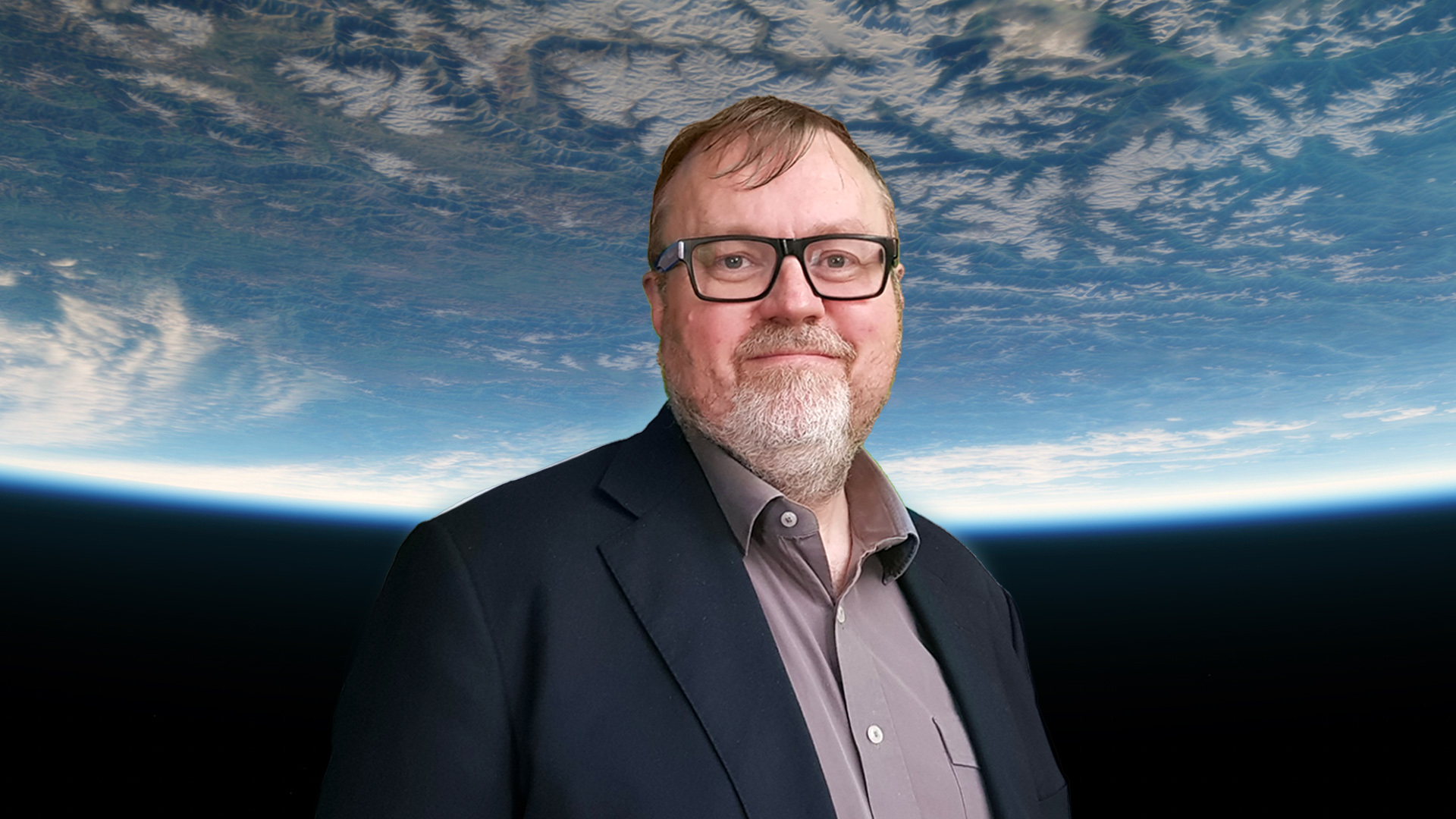
New Zealand’s aerospace sector is gaining momentum, and the recent Aerospace Summit in Christchurch brought together the people helping drive that growth.
In this first of a two-episode series, Paul Spain sits down with founders, investors, industry leaders, and event organisers to explore the innovation emerging from New Zealand’s aerospace ecosystem. From advanced aviation technologies and aerospace engineering to commercial opportunities, investment, and global ambitions, these conversations offer a unique look inside one of the country’s most exciting industries.
Hear from:
- Stefan Powell, CEO of Dawn Aerospace
- Martin Cudd, General Manager Innovation & Business Growth at ChristchurchNZ
- Adam Wade, Founder of Abstract Space
- William Hunter, Co-founder and CTO of Astrix Astronautics
- Angus Blair, Managing Partner at Outset Ventures
Read the Full Transcription
Transcript is computer-generated and may contain errors.
Paul Spain:
Greetings, I'm your host, Paul Spain. Welcome to the first of our special New Zealand Tech Podcast episodes focused on the New Zealand Aerospace Summit for 2026, which I recently attended in Christchurch. In this 2-episode series, you'll hear directly from the people building innovative companies, attracting investment, and helping shape the future of aerospace from right here in New Zealand. Thanks to the Aerospace Summit team for their hospitality and to the Christchurch NZ team for bringing me down for the event. Thanks also, of course, to our incredible show partners who make the New Zealand Tech Podcast possible and get behind New Zealand's innovation and technology ecosystems. So a big thank you to Spark, One NZ, 2degrees, SAP, Workday, PwC, and Gorilla Technology. And first up, Stefan Powell, Chief Executive of Dawn Aerospace.
Paul Spain:
joins us. Let's jump in.
Stefan Powell:
Dawn Aerospace, we're a space transportation company. It's all about bringing rapid reusability to spaceflight because ultimately we want to be able to scale the amount of stuff we're getting to orbit, the amount that things move around in orbit, like by not 5x but like 100x. So we really want to bring airline scale to spaceflight. Just for a bit of context, spaceflight does about 300 flights a year now. The airline industry does 300 flights in about 4 minutes. So that's the sort of, you know, scale difference. And I'm not saying we can get all the way to the airline scale, but even getting 1% of the way there would be fantastic. So, you know, we're building rapidly reusable aircraft, the highest performance aircraft ever built.
Stefan Powell:
You know, that's— Aurora is really a demonstration of that, but also a product in itself. Very, very useful aircraft for many different applications, both civil and defense. And in-space propulsion is all about moving things around in space in more scalable and sustainable ways. That started with replacing really toxic fuels, and now it's about bringing reusability to spacecraft by making them refuelable. You know, even just having a second tank of gas means that that satellite can be, you know, have twice the lifetime, twice as useful as what it was before.
Adam Wade:
Yeah.
Stefan Powell:
And that second tank of gas is incredibly incredibly valuable. So we actually just had, just 12 hours ago, we had the first spacecraft with a Dawn propulsion system with a refuelling port on it launch to space. So very stoked to be making real headway there as well.
Paul Spain:
Fantastic. So yeah, maybe walk us through sort of over the last 12 months, what have been the milestones and the achievements that you're feeling you know, most chuffed about? Because some of the things you're dealing with aren't easy, whether that's on the commercial front or whether it's on the, you know, the technical front.
Stefan Powell:
So in the last 12 months, we've flown a mission for the New Zealand Defence Force flying Aurora, you know, up to 70-odd thousand feet, flying back down at that ship and show, like, basically testing to the limits of their radar. So, you know, that helps them understand what is the limits of their capabilities so that they can go out and operate in these dangerous environments in a more safe way. So very proud of that work. You know, we've raised a Series B, that was $25 million US, US lead investor as well, Valerian Space Ventures. That really sets us up well to be able to deliver on that dream of in-space refueling. So, you know, that's a funded program now. We're building that spacecraft now. We'll launch that in 2028.
Stefan Powell:
So, you know, these satellites that, you know, we're seeding the market with now, you know, there's a good handful of customers there. They'll be running out of fuel in the, like, you know, late 2020s, early 2030s. And we want there to be a real commercial service that they can actually purchase at that point. You know, they can, it's actually a decision for, do I build another satellite or do I refuel the one that I have? So yeah, we're making real progress on multiple fronts.
Paul Spain:
And how important do you think that refuelling will be? Because I guess the technology kind of keeps getting better. So there's probably often that built-in obsolescence, right? Where it's like, well, we'll build this for X period and then it's going to deorbit versus actually building something for a longer term. I mean, how How are you seeing kind of feedback within the space sector around having that longer potential life with your refuelling?
Stefan Powell:
Refuelling just gives our customers way, way more options. Instead of that single tank of gas being a life-limiting thing and you are locked into buying a new satellite and maintaining this whole supply chain, which includes launch, by the way. And 3 years ago, people would've said launch is a solved problem. It's, it's almost a commodity. You can buy it from SpaceX for $5,000 a kilogram. Um, it looks like they're going to turn off the taps in 2028 and suddenly people are scrambling of like, how do we get to space? If your satellite was refuelable, you might say, well, look, we're just going to elect to at least keep the technology that we have going. Um, you know, that's optionality. That's, you know, fuel is no longer a life-limiting asset.
Stefan Powell:
It's a, you know, it's, it's OpEx. It's, it's, um, you can just pay more to keep your thing going.
Paul Spain:
How real do you think it is that SpaceX would change how easy it is to get access to launch through them?
Stefan Powell:
Well, if we look at history, that's the direction it's trending. You know, more and more they're becoming first a broadband company and now an AI company, and launch is more and more becoming a strategic capability for them, but not a revenue center. So, There might be some drivers for them to still provide capability to key customers for them, but exactly how much will be available for, say, you know, a key customer of ours, the Dutch Air and Space Force? Are they going to be able to get a ride with SpaceX to orbit, or are they going to have to go with one of the, you know, a European launcher that's already booked out from— by Amazon? And Germany's building $35 billion worth of satellites that all got to get launched. Like, it's just— not going to be enough capacity to go around. If push comes to shove, is SpaceX going to elect to launch their own Starlink satellites that they generate much more revenue off of, or are they going to give away that capability?
Paul Spain:
Yeah. And then sort of pivoting back to Aurora, to the space plane, maybe walk us through your sort of milestones to date and what's next.
Stefan Powell:
Yep. So the version of Aurora we've flown to date was really about proving that we can get supersonic, that we can fly up to the edge of the atmosphere, but it wasn't equipped to be able to fly beyond there. So the vehicle that we're building now is essentially— it's aerodynamically identical, but it's otherwise almost a complete clean sheet redesign. Landing gear's different, takeoff weight's about twice as high, there's now fuel in the wings, not just in the fuselage, comms, massive comms upgrade. Massive engine upgrade. And by virtue of all of these things, you know, it's going to go from being able to fly Mach 1.1 to 80,000 feet, it's going to fly close to Mach 4 and over 100 kilometres, you know, that's 330,000 feet. So, you know, the vehicle we have out there now, that's the highest climb rate aircraft in the world, 118 seconds to 66,000 feet, 20 kilometres. The vehicle we're building will be the highest flying and the fastest flying vehicle to ever take off from a runway, as well as the highest climb rate aircraft.
Stefan Powell:
So like, that will— those will be the big milestones. That vehicle's through CDR now, like critical design review. So we're pretty damn sure if we can actually build the vehicle that we have on paper, it'll be able to do these things. And now we're going through the actual manufacturing of, you know, laying up the carbon, you know, putting it together, building the engines, testing them. You know, all the hard work to actually put it together.
Paul Spain:
Yeah. Yeah. And how's your team? You know, I think last time we chatted, you were growing pretty swiftly. Obviously need access to some pretty smart, pretty capable people to actually pull off these things that have never been done before.
Stefan Powell:
Yep. Yep. I'd put integrity at the top of the list. Integrity, intelligence, and energy are the 3 things we want. And, um, you really want the first one, otherwise the next 2 become, become dangerous. Um, so yep, uh, we're about 160-odd people now, um, growing, growing reasonably rapidly. Um, especially, you know, after Series B funding, that certainly helps us, um, open up the taps a little bit more and invest a little bit more, um, in, in R&D. Um, but yeah, very happy with how that's going.
Paul Spain:
Yeah. And, um, you know, you've got that, order from Oklahoma, that, you know, partnership there, you know, is that looking like it's headed in the right direction?
Stefan Powell:
Yeah, oh, absolutely. Oklahoma's been an awesome partner. I'm actually heading there to the States for groundbreaking of the flight facility that they're building out there. You know, that's shovels in the ground on October 13th. So yeah, that's going to be a pretty significant facility out there. We're going to have 10-odd people in Oklahoma operating this aircraft. And yeah, that should make Oklahoma the busiest spaceport in the world.
Angus Blair:
Wow.
Stefan Powell:
So very, very stoked about that.
Paul Spain:
So when are you expecting for Aurora to fly from Oklahoma?
Stefan Powell:
Yeah, that'll sort of be mid-2027.
Paul Spain:
Yeah.
Adam Wade:
Yep.
Paul Spain:
Exciting. Exciting. And in terms of your sort of broader expansion, obviously you've been New Zealand and Netherlands to date. How does that sort of picture scale further? You've just mentioned having a team in Oklahoma, but what are the other potentials?
Stefan Powell:
Yeah, we have a US subsidiary, we have a French subsidiary, we just opened a German subsidiary as well. Certainly like Europe is very much a stronghold for us, but more and more US is growing as well. There's certainly a lot of need for our products on both sides of the business in the US. And we already have, you know, a dozen-odd US customers. So yeah, growing our presence there is really to just support that customer base.
Paul Spain:
Yeah. And, you know, when we talk about the aerospace sector, you know, defence seems to, you know, is a very big, you know, part of the industry. How does that look? for Dawn?
Stefan Powell:
It's an important part of the industry for sure, but we believe it's important to have a mix, like most aerospace companies do. You know, we— just to highlight one on the civil side, you know, we recently signed a contract with Astral Materials who are developing next-generation semiconductors. They would normally go to orbit to develop these, but they think they can develop them much more quickly by using our suborbital vehicle. You know, they'll be able to do 2 or 3 iteration cycles in a week where going to space would have required, you know, the iteration cycles there a couple of years. So yeah, that could be a real unlock for them.
Paul Spain:
Right. So that's sort of in, what do you call it, in space or—
Stefan Powell:
Yeah, in space manufacturing.
Paul Spain:
Yeah, in space manufacturing. I guess it's more sort of R&D than traditional manufacturing.
Stefan Powell:
Yeah.
Paul Spain:
What does that opportunity look like?
Stefan Powell:
Oh, that's a huge opportunity, but I wouldn't profess to know everything about that. You know, a core bit of our philosophy is we don't actually really know exactly where the value is in space. We know that there's huge value there, and anyone trying to get that value is going to need to get to space and move around in space. So, you know, we're going to— that's the underlying infrastructure. So we're going to build that infrastructure. It's going to be more available, more scalable, more efficient, lower cost, all those things that really are needed to enable these next-generation services. And a huge one that's coming into play now is orbital data centers. There's a lot of speculation around like, does it make sense? Does it not make sense? But I think it's pretty clear that if you get the cost of getting to space down low enough, there absolutely is a breakpoint where it's undisputed, a data center in space is going to be not only better for the planet because, you know, you're, you're not emitting a bunch of carbon on the ground, you're not impacting the Earth, but it's going to be lower cost as well.
Stefan Powell:
And so we're, we're pretty excited about that future because you start to tap into, you know, it's, it's $800 billion a year that are going into data centers. It's absolutely insane money. You know, like what's that, 4 or 5 times the GDP of New Zealand is going into data centers.
Stefan Powell:
So even if only a few percent of that landed in space, that's a massive opportunity for our industry to scale up and really harness the sort of like airline scale that we're trying to bring to the industry.
Paul Spain:
Yeah. And I guess looking at the next sort of 12 to 24 months ahead, what are the big challenges and things that you're looking at?
Stefan Powell:
Just delivering on all the things that we said we're going to do, building the highest performance aircraft ever built, getting in-space refuelling to be a real thing. There's been a lot of space planes before us and all of them have failed. So, you know, it's going to be the first commercially successful space plane. We're going to be the first commercial company to refuel in space. There's plenty on our plate.
Paul Spain:
Yeah. And how do you kind of see your, you know, if you were to look 5 years out, how would you see the revenue split between, you know, the parts of the business? How do you think that looks?
Stefan Powell:
Like hard to say for sure, but that we're a very commercially driven business, so we really respond to customer needs as they come. But it could go either way at this point.
Paul Spain:
Yeah, okay, excellent. Oh, thank you, Stefan. Great to have an update and, you know, always exciting to, you know, catch up on what's happening at Dornier Aerospace.
Stefan Powell:
Yeah, no, pleasure to talk to you, Paul.
Paul Spain:
Excellent, thank you. Cheers.
Paul Spain:
Okay, now we're talking to Martin Cudd, General Manager of Innovation and Business Growth at Christchurch NZ. discussing how Canterbury is making a deliberate play to become a globally significant research, test, and innovation centre for aerospace technologies.
Paul Spain:
Maybe you can tell me a little bit about the Aerospace Summit and the role for Christchurch NZ in aerospace and in these other areas of innovation that you've committed to.
Martin Cudd:
Yeah, absolutely. So the Aerospace Summit is an incredible event, and it's been— we're really proud to have partnered with it for the entire time it's been here. So the team at Aerospace New Zealand do a fantastic job, a shout out to Mr. Mark Rockett. So our role is very much a supporting role with the Aerospace New Zealand team. You know, we help with displays, we connect people in, you know, we really look to support them in everything they do. So a keystone event for the sector, and it's one that is just going from strength to strength. You know, last year was fantastic that we were so close to IAC in Sydney, we were able to really leverage that.
Martin Cudd:
And I'm really proud that the event has, you know, hasn't dropped off after that. So it's a real testament to the work that is going on in the sector and the industry. And, you know, so we're really pleased to be a part of it.
Paul Spain:
So what do you see as this, what's the broader, broader opportunity for aerospace and for, you know, for Canterbury as a, as a region because you've chosen specifically— Yes, we have. To focus on the 4 areas in terms of economic development. Can you walk us through that a little bit more, please?
Martin Cudd:
Yeah, absolutely. So we've got a really clear intentional strategy, what we're calling our growth sectors. And what we mean by that, these are sectors where we think we've got a really clear Christchurch position, Christchurch and Canterbury position, position. We've got something that's meaningful and it's global. And I'll talk a bit later how that relates to the aerospace sector. It's a sector where, you know, it's worth going after. It's a, you know, we're not saying we're going to be the Silicon Valley of the South Pacific or anything like that. We're saying we're— but we're going after opportunities which we think are material.
Martin Cudd:
And sorry, back to the Christchurch piece, it's really important that The strength that we talk about is place-based. So these are strengths we see and we have, and so it's not transferable. And the third criteria we talk about is existing momentum. And by momentum, I mean we want to see a really clear, you know, private sector, and we can see that. You know, Dawn Aerospace, incredible company, Kia Aerospace, SPS Automation, you know, some of the manufacturers that support the sector, the Argus Manutechs and so forth. So there's a great private sector momentum which is going after this stuff. Really important to have academic buy-in and an innovation pipeline. You know, we've got a fantastic university in the UC programme with the aerospace minor at undergraduate and the master's degree, and a fantastic UC rocketry club, which we're really proud of.
Martin Cudd:
Getting the investment community And I think that's, it's a little bit more dispersed, but because we are focusing on sectors, that means you can be really intentional in how you build those relationships and, you know, and also how you present Christchurch and the right Christchurch opportunities. And then government. Government is a really important part of this. And yes, the piece that I'll signal for the aerospace sector in particular is the regulation. opportunity that they've provided with the sandbox regulation out at Tāwhaki to allow innovators to go out there, test change, and the regulatory advantage is significant.
Paul Spain:
So for those that aren't familiar with Tāwhaki, what can you—
Martin Cudd:
Yeah, good question. So Tāwhaki is a JV between Turunaka out on Banks Peninsula and the Crown. And it's a dual-purpose facility, which is about creating a test test and launch centre for aerospace technologies, but also restoring the whenua and the land. It's a dual-purpose thing and it's super powerful and it's got a really interesting, authentic partnership. And, you know, it is a super important piece of infrastructure, which I'll talk a little bit later about the why Christchurch and why Canterbury and aerospace in particular. So that's kind of the strategic framing. So we've got 4 growth sectors that we chase, that we feel we've got the positioning in. Health tech and biotechnology, the bioeconomy.
Martin Cudd:
Of course, we're an agricultural province and we stand on the shoulders of giants who've created some incredible bioeconomy and food and fibre companies. Clean technologies. And we're supporting actually the New Zealand Hydrogen Council and their their hydrogen rollout. And that also really is quite interesting for an aerospace. And then aerospace, where we've got a really clearly articulated goal, a strategy, which is on the website. You can put a link down below this video, Paul.
Martin Cudd:
And that's to create a globally significant research, test, and innovation centre for aerospace technologies. And we're talking everything from advanced aviation you know, through to, you know, we'd love to have, you know, some more infrastructure that allows us to do more sort of stuff. So again, the why Canterbury? Our clear skies. It was really interesting seeing Stefan from Dawn present at this event last year where he put a flight map of, you know, Florida up where some of the launches happen versus a flight map of Christchurch. There's a clear advantage. You know, the Tāwhaki launch site is a 45-minute drive from the international airport, which is pretty significant. The regulation that we have at Tāwhaki, which allows us to innovate, is a relevant competitive position. We've got some fantastic manufacturers that sit in this town that work for the— with and for the aerospace community.
Martin Cudd:
We've got a great tech background and we've got an amazing university. So we feel those ingredients— allow us to really say, hey, we want to be this great innovation test centre. And it's not an entity, it's an ecosystem. And we're really interested in that ecosystem approach. So we believe we can add over $1 billion in GDP, you know, to our economy by 2035. And that's the number we originally came up with. I actually believe we can do more than that in the future for some of the technologies. So our role really, you know, there's a little bit of cat herding, but there's a bit of telling that ecosystem story.
Martin Cudd:
And we also have, you know, some levers that we do, you know, that we can help. So, you know, our commercial attraction team, for example, we're really interested in bringing business, a lot of businesses to Christchurch and Canterbury. And, you know, we're really proud of our economy, but we're really, really interested in and particularly aerospace businesses. And I will say our tagline is we're really interested in aerospace for good. So we're really interested in how do we, you know, aerospace technology that helps humans.
Paul Spain:
And how important is the role of, you know, you mentioned UC, how important is the University of Canterbury within the picture? And, you know, what are you seeing there, you know, both for those that are coming from wherever they're coming from around New Zealand, around the world? to study in terms of that as a pathway into the sector?
Martin Cudd:
Yeah, look, I think the UC is an incredible institution and the engineering school does a fantastic job. We know that the future workforce is going to be a STEM-led workforce. You know, that's irrefutable. And the quality of the engineers that are out of that institution are really, really good. So I think what we want to do and continue to do and continue to do a little bit better is kind of, connecting up those pathways. So how can we do more sort of deliberate, intentional connections? I'm saying they're good at the moment, but also storytell around, you know, not just come to UC to do engineering, come to UC, get a job at Dawn, you know. And then of course there's the great Christchurch and Canterbury lifestyle where you can, you know, surf and ski in the same day and get to Electric Avenue and watch the, you know, get along to the new stadium and watch the mighty Crusaders. you know, and go for their 16th Super Rugby title.
Paul Spain:
Yeah, good stuff.
Paul Spain:
Oh, well, thanks so much for your time, Martin.
Martin Cudd:
No worries, Paul. Appreciate the opportunity to have the chat.
Paul Spain:
Next up is Adam Wade, founder of Abstract Space, who are focused on building a new generation of reaction wheels.
Adam Wade:
Right. So my name's Adam Wade from the UK, living in New Zealand. I've been doing so for about 4 years and I've just started a company called Abstract Space. And the idea behind Abstract Space is to help people kind of with those hard and boring problems, right? So everyone gets really excited about the applications of space and, you know, and they're like, yeah, we'll go vertical and build these massive constellations. But actually there aren't very many people that know how to do it. So there are certain aspects that I can help with, and then I want to kind of attract people and kind of build that up. So everyone else can sort of concentrate on the exciting stuff and I help them with all the kind of boring but hard stuff that, you know, might bring down their constellation.
Paul Spain:
Nice, nice. What's your background?
Adam Wade:
So I'm an aerospace engineer who then became a mechanisms engineer. So yeah, aerospace is a very broad term, right? So I graduated from the University of Surrey in the UK. had like a failed attempt at a PhD because I didn't really know what I wanted to do. Worked for IBM for a little bit. So I was a performance and capability analyst, which sounds about as boring as it really was. Pivoted back into the space industry. So I'd done a placement at SSTL over a year. So that's a company in the UK that manufactures satellites.
Adam Wade:
And then I worked for them for like 3 5 years. I then moved into research again. So I was looking at artificial hips, of all things, for 2 years, the tribology of artificial hips. Then I went back to space tribology. So I was at the European Space Tribology Laboratory. And then a job came up in New Zealand to work for Rocket Lab. And so I worked for Rocket Lab. And then a very windy sort of thing.
Adam Wade:
And then once that was all done, I worked at the University of Auckland for the past year with the National Satellite Test Facility. Now I'm trying my own thing.
Paul Spain:
And you're based here in Christchurch?
Adam Wade:
I am now based here in Christchurch.
Paul Spain:
Aerospace hub?
Adam Wade:
At the Canterbury Aerospace Hub, yep. So I'm, I don't know what number tenant I am, but I'm pretty early up on the list.
Paul Spain:
Yeah.
Adam Wade:
So yeah, so I'm based there with Aerospace New Zealand. There's Astrid Aeronautics as well. Yeah. Or Astronautics. And yeah, so it's going well.
Angus Blair:
Yeah, great.
Adam Wade:
I say I've only been there 3 days, but.
Paul Spain:
Well, congratulations. So break down what you're doing with abstract space?
Adam Wade:
Yeah. So the first product I'm looking at is reaction wheels, because that's what I'm an expert in, right?
Paul Spain:
So for those listening that have no idea what a reaction wheel is, you should probably start there.
Adam Wade:
Yeah, I should probably start there, right? So there's a great trick in physics that if you spin something one way and you're not attached to anything, you'll spin the other way, right? So quite often people, like, if you're on a wheelie chair and you kind of do this, the wheelchair will move. That's effectively how satellites move, right? So they're not attached to anything.
Paul Spain:
Yeah.
Adam Wade:
So as you spin the wheel up, the satellite will start spinning the other way. So if you have more than one of those, so you have 3 at a minimum, you can spin in all 3 axes. So you can use it as attitude control. And pretty much not— there are— so that all satellites tend to have them. Not all, like the smaller they get, you can't fit them. So there are other ways of doing attitude control, but for most decent-sized satellites, reaction wheels are the way to go. There are other options as well, but it's like, right, it's the shovels thing, right? It's like everyone needs them.
Paul Spain:
Everyone needs them. And in fact, you know, your work with Rocket Lab, I mean, they, you know, they publicly announced, I don't know when it was, but a little while back, you know, that that was now, you know, a part of their Yeah.
Adam Wade:
So it's one of those supply chain constraint things, right? Pretty much anyone that wants to build a mega constellation has to figure out, cool, well, we used to make hundreds of these things, now we need to make thousands of them. Can we do that? So that's what Rocket Lab did. They, again, public information, they acquired Sinclair Interplanetary, was a Canadian company that made reaction wheels, and they built on that. So that's what I did in my time at Rocket Lab, was helping them build that.
Paul Spain:
So, yeah. So what are you doing now? You're doing something a bit different with Reaction Worlds?
Adam Wade:
Yeah. So the great thing of being a company of one is you don't have to ask for permission. So you can just go for it, right? So all of those kind of pain points I've had with, like, production and everything, I can just go a bit crazy, right? So Whilst I was at the University of Auckland, once I was sufficiently clear legally for Rocket Lab, I did start looking at these kind of like, what do I think a reaction wheel should look like? Right.
Paul Spain:
Yeah.
Adam Wade:
And so there's this thing in the space industry, we kind of get confused. We think that redundancy means reliability, and it doesn't always, right? Redundancy quite often just means extra complexity, and that's less reliable. And so, you can see that in a lot of the approach of, like, some of the big companies, like the Raptor 3 engine, right? It's, like, trying to get rid of all of that or integrate it in some way.
Paul Spain:
Yeah, in a different generation.
Adam Wade:
Exactly. Those Raptor engines from SpaceX. So, I've, like, made lots of reaction wheels for SSTL, and it's like, you know, and then Rocket Lab is like, if I were designing one from scratch, what would one look like? Because I've only ever been involved when the problems start, right? So like the reaction wheels are already designed, and I'm like being brought in to help qualify them.
Paul Spain:
To try and fix them or modify them or whatever.
Adam Wade:
And so now it's like, what does a reaction wheel by me actually look like? And so I've gone pretty radical. And so I'm down to like 4 machined parts. And then like various things that I'm doing mean that I could put 4 together a day, right? Wow. Okay. Because I've got other things to do. Like, if I was just doing it full-time, I could do 8. But, you know, now that sounds great and impressive, but the problem is not making them. The next step will be, how do I test? So I can make 8 a day.
Adam Wade:
It doesn't mean 8 a day will pass through testing, right? So that's the bit that I now have to kind of focus on. So how do I—
Paul Spain:
Exciting. So at this point, you Raising funds? What's, you know, what's, what are the next steps?
Adam Wade:
I need to figure out, the next step for me is to figure out how many, how much funds I need.
Paul Spain:
Yeah, because this is something very new for you, right? You've been thinking about these things for a long time, but you've only formally started just now.
Adam Wade:
The technical stuff I've been doing like part-time for a year or whatever, or like since last December, right? So I'm, I, that bit's fun. That bit's my bread and butter. And now it's like, ah, how do you actually build a business? This. So, like, doing even simple things that I've never had to worry about before, like liability insurance, or, like, you know, how do I, like, what's a business plan look like, all that kind of stuff. And so, at the moment, it's really reaching out to those people that can help me with that kind of stuff. So, like I said, I've only been in Christchurch for 2 weeks, 2 or 3 weeks. So, it's like, uh-oh. And this conference is very useful for that.
Adam Wade:
I can go around to all the people who are like, oh, I need to talk to you, I need to talk to you, because How do you do your thing? Exactly. So over the next few months, it will be like, how much money do I need? Where do I get it from? How do I talk to VCs? All the lingo today that I didn't really understand.
Paul Spain:
So for anyone that's listening and they'd like to get in touch in some way, what's the best way to do that? You're on LinkedIn, you've got a website?
Adam Wade:
I've got LinkedIn and search for Adam Wade. There are multiples, but if you search for Adam Wade New Zealand, I think that's a much smaller one. Or you can just email me at adam.wade@adamwade.co.nz. at abstractspace.nz and you'll get through to me.
Paul Spain:
Oh, well, thank you so much, Adam.
Adam Wade:
You're welcome.
Paul Spain:
Great to have you on the show.
Paul Spain:
And we look forward to following your journey and see how that progresses.
Adam Wade:
See where we get to.
Paul Spain:
Excellent.
Adam Wade:
Thank you.
Paul Spain:
Cheers.
Paul Spain:
Next up is William Hunter, co-founder and Chief Technology Officer of Astrix Astronautics.
Paul Spain:
William Hunter, welcome to the podcast. Maybe you can tell us a little bit about yourself and your Aerospace startup.
William Hunter:
Yeah, sure. So yeah, I'm Will Hunter. I'm the CTO and co-founder of Asterix Astronautics. We produce lightweight infrastructure for space. So in the same way that on Earth we base all infrastructure off of land, for example, roads, buildings, bridges, all based off land, in space obviously we don't have that. So what we need to do is we first need to deploy out surface area. And so that's what we do in a nutshell.
Paul Spain:
Fantastic. So what is it that you're doing with Asterix that's different from what others have done in the past? What really is your differentiator?
William Hunter:
Typically to deploy things in space, I say deployment because on rockets, the mass that you take up on the rocket and the space that you take up on the rocket, is extremely very limited. What you do is you fold it up to launch and then you deploy it once it's in space. Currently, this is done with rigid panels and springs and hinges. So this means that, you know, these are fixed panels connected together with a series of hinges. And— But this, This approach is quite heavy, it's quite bulky, and when it's folded up, it uses up a lot of space. So what we do is we use inflation instead. So the inflatable deployment mechanism, much like an inflatable tent or inflatable air mattress, right, it expands in space. So it's much more lightweight.
William Hunter:
than the conventional mechanism. And on top of that, it's also, you only need one inflatable mechanism regardless of how large the array is. So we can deploy very large arrays much simpler than with the conventional mechanisms.
Paul Spain:
That sounds great. And in terms of, you know, making sure that'll be reliable in space, what, you know, what's been your your approach and how do you think that will compare with existing mechanisms?
William Hunter:
Yeah, so it's really interesting doing something like what we're doing, which is a completely, it's like a step change in the industry. Like what we've seen is these conventional hinge-based mechanisms that have been used since the dawn of the space age, several decades. So whenever there's a step change, there's lots of, there's just a different way of thinking and different way of things that you have to worry about. So for example, you know, just the whole idea of, you know, the concept of a solar array having pressure in it, for example. So, you know, we have to— I like to think of engineering as it's really not about like what are you worried about the most, it's about making sure that in any engineering system there's going to be tens or hundreds of things that could possibly go wrong, right, and it's my job as an engineer to make sure that none of them go wrong, that in every single aspect there is the appropriate margin and then the appropriate analysis that we've done on that and then the appropriate testing to make sure that the analysis is done right on all different things. So things like making sure that the pressure is going to be right under all the different temperatures, Making sure that there's, the leak rate is extremely low, like there's no leaks in space, making sure that like the combined pressure and temperature is going to be fine, making sure that, you know, under the vibration of launch, under thermal cycling, everything handles fine. So it's a bit interesting in terms of the usual things that you have to worry about for spacecraft, but also just adapting them. into just this kind of new way of thinking.
Paul Spain:
Yeah. And you're basing yourself where? Tell us about that.
William Hunter:
We were founded in Auckland. So I met my co-founder Max at University of Auckland. We spun out Asterix as a company. And so we were operating out of Auckland and then recently we've located our engineering headquarters here in Christchurch. We're at the Aerospace Hub, which is just a fantastic place because aerospace has quite specific needs, and it's good to be able to talk to other engineers who also have experience in that specific area as well. So yeah, it's fantastic. to be down here. Great.
Paul Spain:
And you, are you currently raising funds at the moment?
William Hunter:
Yeah. So we're raising our seed round. So in space, heritage is key. So our customers, you know, the spacecraft will be worth millions or tens of millions of dollars. And a solar array or an antenna, which is the product that we sell, you know, the larger the area, deployed area for a solar array, the more power you get. Larger the antenna, the more data rate you can get, for example. So with those customers, yeah, they really want to see that this has had, and that those solar laser antennas are critical, mission-critical systems for those multi-million dollar spacecraft. So what they want to see is heritage before they want to sign those kind of contracts on terms of the constellations.
William Hunter:
So that's the purpose of the seed round is to do those 6 trial missions in 3 different sizes, small, medium, and large. And so we have, yeah, we have a term sheet at the moment and we're looking to close out that round very soon.
Paul Spain:
Excellent. No, I wish you all the best. It's really exciting to see it progressing. You know, just Lastly, how do you, how are you protecting your IP at this point? Have you patented it or, you know, you're doing something new?
William Hunter:
Yeah, so it's a bit of a mix. We have a granted patent in the US at the moment protecting our inflatable deployment mechanism. There's also a process called rigidization, which goes hand in hand with inflation because over time and space, There's micrometeorites zipping around at tens of thousands of kilometres per hour, so any inflatable will have microscopic punctures over time. So what we do is we rigidise it once it's inflated. This means that it's going to stay rigid even when we vent the inflation gas. And then so this inflation process, this rigidisation process, currently trade secrets. So to be patented soon. And yeah, we're also the first company to get a flight heritage on an inflation used as a deployment product in space.
William Hunter:
We had a successful demonstration of our deployment mechanism in space in 2022.
Paul Spain:
Oh, wow.
William Hunter:
Okay. Yep. The video is online if you want to Google Asterix. Yeah. But we have a mission to fly early next year. This is exciting because it's long-term. Because the mission before, it was only just, you know, does it deploy? We catch a video of it.
Paul Spain:
Yes.
William Hunter:
Okay, let's continue. This is going to last for the 5-year lifetime of the spacecraft. It's going to power the spacecraft. And it's with a customer as well.
Paul Spain:
That's great. Well, thank you for your time, William Hunter. Great to have you on the show.
William Hunter:
Yeah, thanks for having me.
Paul Spain:
Cheers.
Paul Spain:
Now we're talking with Angus Blair, managing partner at Outset Ventures. He's a venture investor, longtime supporter of New Zealand's deep tech startup ecosystem.
Paul Spain:
Angus, thanks for joining us on the podcast.
Angus Blair:
My pleasure.
Paul Spain:
Enjoyed your session on raising venture capital within the aerospace sector. Maybe you can, you know, just tell us a little bit about, you know, what's been your background in terms of involvement with aerospace and, you know, what's that led to?
Angus Blair:
So this is our 3rd year sponsoring the summit here. And it's, you know, it's one of my favourite ways to engage with both the sector and to get down to Christchurch as well. We've got just a really rich, you know, deep tech ecosystem of startups, both in aerospace and beyond. So we're going to keep showing up here because, yeah, Again, fantastic, fantastic community down here with all of aerospace. Obviously, we've built this venture fund business over the last 6 years, built off of 20 years of community and Parnell, really kicked off by Rocket Lab. And so it's fantastic, you know, continue to work with Pete on trying to support the next generation of entrepreneurs. And that's really what we're here for, right? When Rocket Lab started in New Zealand, there was no venture investment for Rocket Lab from there. Fortunately, you know, Vinod Khosla came down from the, from the US to do that.
Angus Blair:
And today there's, you know, there's a rich venture scene here as well. There's a rich startup scene that means more and more people are willing to dip their toes in and some are willing to fully jump into supporting some of the great companies that are getting started here in this category. And more and more of those are also willing to engage on sort of the defence elements of those technologies as well. So that's sort of one of the main shifts that I've seen in the last 3 years. You know, social licence is a complicated thing. in New Zealand, but it is sort of moving directionally along with the realities of today's world. So I'm excited to be here.
Paul Spain:
Yeah. And so talk to us, you know, a little bit about that from, you know, from an investment perspective, that, you know, social license to, you know, invest in companies that have got a defence aspect to their operation.
Angus Blair:
Yeah, New Zealand has a unique position in the world. You know, we're one of sort of like 5 trusted countries within the Five Eyes that puts us in a position to engage with these markets. And New Zealand's also got a very strong international reputation, period, and strong rule of law and a really strong foreign ministry as well that helps companies navigate what sort of technologies are appropriate to be working with, what are our allies' needs, what is New Zealand's own needs. And so as those mature, you've got a really good ecosystem, I think, for making this typically quite illegible type market into something that the best entrepreneurs, they're very mission-driven, right? They're going to go after the very biggest problems that they think that they can tackle. And more and more today, those are some of the major security challenges around the world. And so that's attracting best and brightest. And venture capital likes to follow the best and brightest founders. And so to the extent that that continues to remain a trend and New Zealand continues to be a place where that's a good market for doing that in because we've got such good engineering talent, because we're very good at doing things fast and cheap, retiring some of that technical risk, understanding the market, and more and more being able to test some of those technologies using some of the uniqueness of the New Zealand environment.
Angus Blair:
You know, I think it's going to be a, you know, a really important sector in New Zealand, not just because of the security climate, but also from an economic development lens as well.
Paul Spain:
Yeah. Now, you know, we heard a few days ago that you've invested with SIOS. Of course, we did a podcast with Sam Vye earlier on in the year. You know, walk us through, you know, that type of investment. What makes that, you know, good for you and good for SIOS?
Angus Blair:
Yeah. So SIOS is, you know, it's a very, very exciting company in New Zealand. I won't lie, investing in a company that's, you know, the vast majority of its revenues are defence-focused is complicated in New Zealand. So we, we led that investment syndicate and included a few other New Zealand funds who are also typically syndicating outside of their core vehicle so that we can get the right investors who understand this technology and have the sort of the appetite for that exposure to come through. Now, that doesn't apply to all funds in New Zealand. At the moment, most funds in New Zealand have New Zealand Growth Capital Partners as a core LP, and that sort of helps set the framework for what an excluded investment looks like. And so that conversation's always ongoing, and, you know, talking to your stakeholders and helping to sort of understand needs there is really important. When I'm investing, I'm always thinking about the context of New Zealand's, you know, treaty obligations and how we act as a global citizen in these domains.
Angus Blair:
New Zealand is at the very forefront of those conversations and has been for for a very, very long time. We're leaders in nonproliferation, not just in nuclear, but also in understanding other domains and thinking about things like autonomy, human in the loop, and some of these more complicated questions that are becoming quite evident in countries like Ukraine today. And so I've really appreciated, I guess, getting up to speed with how New Zealand government at large thinks about this. Not everyone thinks about it in the same way, but we navigate through to the right answer for the company. And so ultimately, It was about getting the money into this company so that it can grow faster, continue to meet some of the urgent needs in the world, and really go out and win as one of the best engineering cultures and product companies in the world. I'll let Sam speak to some of the achievements that they've managed to unlock since you last spoke with them. But they're a tremendous organization with a lot of the best DNA from New Zealand industry sitting inside that company. And they've continue to deliver.
Paul Spain:
Yeah, and, um, you know, when you look at the overall aerospace world, um, you know, what's— what else is, uh, is exciting you? And, you know, when you maybe look out over the next, next decade or so, you know, where are you expecting New Zealand to do well?
Angus Blair:
I would love to see a New Zealand constellation, right? Like, I think New Zealand at its best would start to have more sovereign capability here in aerospace. Not just within the startups that we've got that are progressing really well and doing interesting things and within Rocket Lab, but what are some of the other sort of national capability that we want to see more of and how can government be a really high-quality customer to some of those institutions so that we can have a really well-established, you know, ISR platform, so we can have a really well-retained advanced manufacturing sector and potentially, you know, standing up and delivering our own satellites domestically and then you know, potentially launching those domestically here as well. So if we're back here in 5 years having that conversation, that's some of the industry shift that I would be really excited to see happen here.
Paul Spain:
Right. You think that there would be a, there'd be a real advantage for New Zealand to actually have its own capability in those areas?
Angus Blair:
100%. It's a very ambitious take. I don't think it's an easy one to take when we've got, you know, cost of living challenges and all of those sorts of things. But I, but I, but I do think it is one that would be, that would be worth, worth swinging at, worth taking some risk on. I know that I certainly have an appetite to invest there and we will, we will see, you know, what entrepreneurs and what New Zealand government, I guess, asks of this sector over time. But in the meantime, you know, you can build a fantastic technology export business here. You don't need to be beholden to, you know, having New Zealand as a customer. But I think that's an opportunity for New Zealand rather than an opportunity necessarily for the companies.
Paul Spain:
Do you or, you know, others that you're talking to see some really specific gaps like that, say that search and rescue and so on, like, you know, what are the, what are the holes that aren't being filled by others?
Angus Blair:
Yeah. So, I mean, so we, you know, we have a, you know, Defence Force and a Coast Guard and sort of existing institutions that help us synthesize a lot of the data that's, that already exists. We've got this huge airspace, we've got this huge maritime domain that we need to monitor. There's a huge opportunity, I think, to develop the technologies and systems to do that even better. And that, that is the sort of system that could also be a major export business for New Zealand as well. So we're not just scratching our own itch, but we're, we're helping to figure out how to use our natural geographic advantages to develop technologies that can help in, you know, search and rescue, fisheries, and defense. These are, you know, all domains that benefit from having a better, better knowledge about the environment that you're in. There are, of course, you know, satellites that provide a bunch of that today.
Angus Blair:
but not necessarily to the level of detail or to the uniqueness of need that we might have here in the future.
Paul Spain:
OK, excellent. Well, thanks very much for your time, Angus, much appreciated.
Angus Blair:
My pleasure, thanks for having me.
Paul Spain:
Cheers.
Paul Spain:
Well, some fascinating insights there, great to learn about what's happening in the New Zealand aerospace ecosystem. Hope you really enjoyed that and of course, you know, big thank you to everyone involved at Aerospace New Zealand for putting that together. and the Christchurch NZ team for arranging this visit to Christchurch for me. And of course, a big thank you to our incredible show partners, to PwC, SAP, Workday, 2degrees, Spark, Gorilla Technology, and One New Zealand. And be sure to join us again to hear the second episode in this series where, you know, we speak to more of those incredible people that were at the New Zealand Aerospace Summit. We will catch you again on the next one.
Paul Spain:
See you then.