Rethinking the Future of Work in the AI Era — Dr Autumn Krauss, SAP
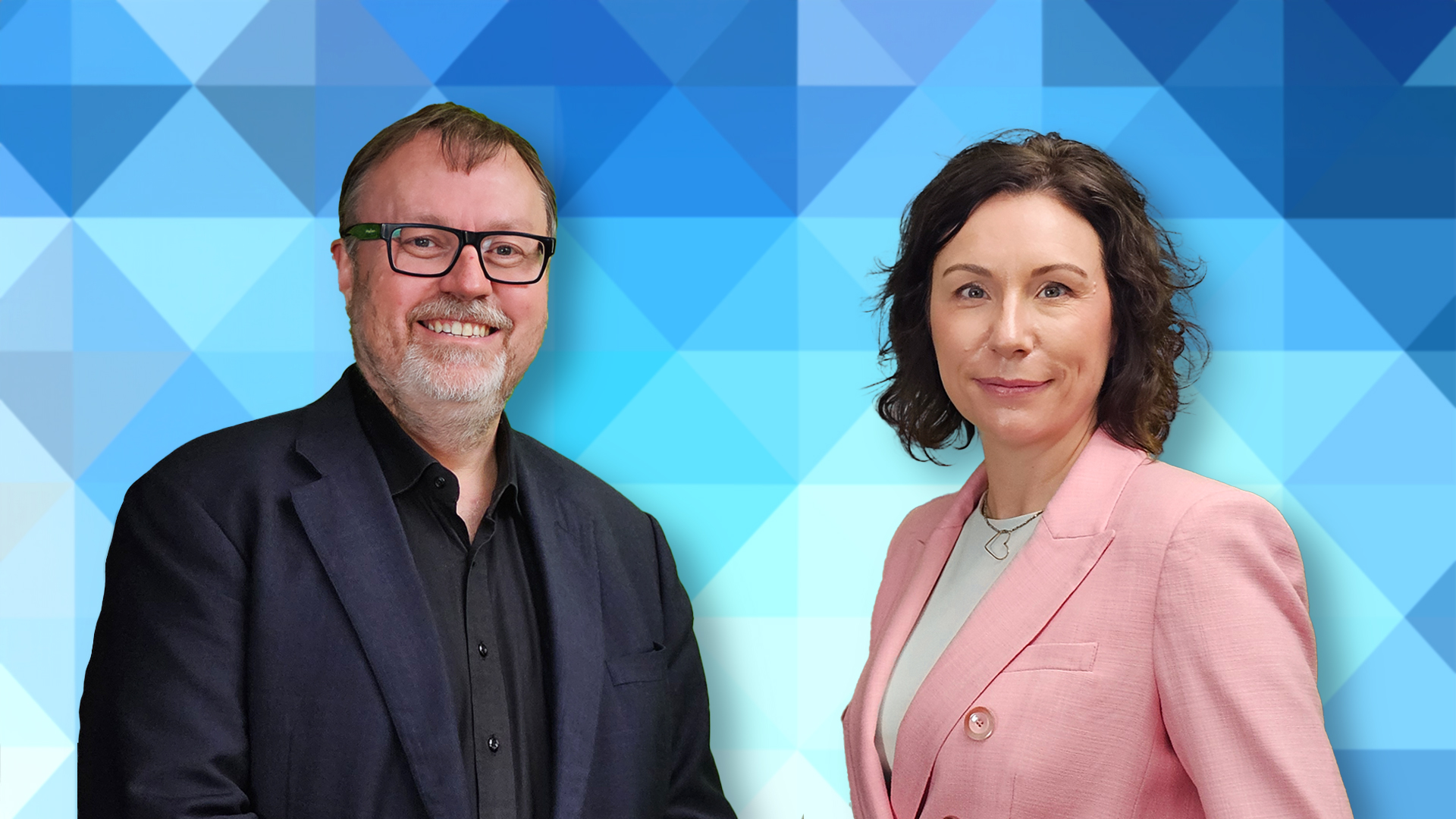
Join Paul Spain as he speaks with Dr Autumn Krauss, Chief Scientist at SAP's Future of Work Research Lab, about how AI is transforming jobs, management, career development, and workforce planning. Discover why 57% of employees would consider an AI manager, what skills will matter most in the future, and how organisations can redesign work for greater impact, innovation, and human potential.
Read the Full Transcription
Transcript is computer-generated and may contain errors.
Paul Spain:
Hey folks, greetings and welcome along to the New Zealand Tech Podcast. I'm your host, Paul Spain. Today on the show, we're very privileged to have Dr. Autumn Krauss, Chief Scientist at SAP SuccessFactors Future of Work Research Lab. Now, Autumn leads global research into how AI is reshaping jobs, management, workforce planning, career development, and also workplace performance. Her team studies emerging trends across thousands of employees and workplaces around the world to understand what the future of work might look like 5 years out from here. Now, Autumn will be sharing some early insights into their upcoming SAP report on the future of work.
Paul Spain:
I should mention, because that's not out yet, do make sure you are signed up at nztechpodcast.com for our email newsletter because we will let you know when that's available and we'll provide a link. All right, let's jump in. Welcome to the show. Great to have you here.
Dr. Autumn Krauss:
Thank you, Paul. I'm looking forward to it.
Paul Spain:
Well, before we jump in, of course, a big thank you to our incredible show partners, Spark, One NZ, 2degrees, SAP, Workday, PwC, and Gorilla Technology. Great to have that support. Great to have you on the show, Autumn. Now, maybe you could just give us a little bit of background on what brought you into this work studying the future of work.
Dr. Autumn Krauss:
Yeah, absolutely. So I lead a team of PhD organisational scientists. We sit inside product and engineering at SAP SuccessFactors. And we are identifying all of those emerging trends, but then also, as you said, conducting our original research to inform our product strategy and the vision where we want to invest as we build our HR technology, but also providing guidance to companies at a moment that is pretty unsettling, right? So a lot of ambiguity. It's pretty cacophonous as far as the AI transformation, what it's going to mean for both organisations and workers. So even though I've had my PhD and been an organisational psychologist for 20 years, this is a very interesting moment to be at the apex of how organisations are navigating this and what work will look like on the other side. It is, as I like to say, a good gig.
Paul Spain:
Yeah. Wow. And, you know, where are you based and, you know, what does your team kind of look like in terms of day-to-day things that you work on?
Dr. Autumn Krauss:
Absolutely. So we— I'm based in the States, in Colorado. My team is global. So I have PhDs of various specialties on my team. So quantitative psychology, decision-making psychology. I have a cross-cultural psychologist because we're really thinking about how The changing nature of work impacts different cultures and geographies around the world. We're very much focused on global research to inform our product development, customer strategies. So yeah, on a day-to-day basis, we are doing a lot of that secondary monitoring.
Dr. Autumn Krauss:
It's important to be pulling in business signals of what's happening and detecting those changes, and then doing our own qualitative, quantitative research. We focus on employees, people managers, HR leaders, and the broader C-suite, trying to gather different persona perspectives, triangulate that into some evidence-based point of view on where this is all heading and what companies can do to try to, I'll say, get to the right side of it or a more positive state of the future.
Paul Spain:
Fascinating. Well, I'm really looking forward to delving in. Maybe we can start by leaning in on where AI and the redesign of work is at right now. What is your view on sort of the current status? Because AI is moving so quickly.
Dr. Autumn Krauss:
Mm-hmm.
Paul Spain:
And often technology will move far faster than organisations and individuals can keep up. Sometimes we're forced, like COVID times, everyone was dealing with lockdowns and the like. really big changes that you couldn't get away from there. And, you know, we hear, I guess, and, you know, everybody will probably have a different opinion on how they feel about AI, the kind of the good and the bad. But, you know, what's your view on, you know, where we're at in that journey into a new future with work?
Dr. Autumn Krauss:
Yeah, that's a— I think it would be important to kind of anchor to the original predictions of the next 5 years that we made last October, which, as we're sitting here today, almost a year ago, 2 of the predictions centered on this idea of where organisations are going to get the most value from AI. And we posited 2 potential futures. Now, to be clear, there's multiple potential futures that could emerge and we see emerging. But for the purposes of trying to just give organisations enough direction in that moment, We're struggling even to know what could be the future. And so we tried to offer, here's one option, here's the other. And the reason I bring that up is because one future was very much centered on using AI to gain more efficiency and therefore productivity in current workflows. We kind of called that the AI upgrade, if you will.
Paul Spain:
Sure.
Dr. Autumn Krauss:
And it also took on a very much what we were framing as AI maximalist approach. So essentially the question is, if AI can do it, It should do it. And you're really trying to get— we've affectionately been calling it more juice from the squeeze. You're just trying to get faster, more widgets in your current work. And so that has been one potential future. The other potential future that we foresee is this idea of AI overhaul and this approach where we're not really just trying to get more efficiency out of current workflows and automation, but we're actually re-envisioning what work we should be doing at all. Like, where's the transformational gains? Where can we get derivative work products? What new markets can we enter? Like, much more strategic types of questions. And I know that I'm saying that more at an organisational level, but it also is for individuals.
Dr. Autumn Krauss:
Like, if you were to redesign the work with just the outcome in mind, you probably wouldn't do it the exact way you're doing it now. And so I think when you ask what's happening in the current state, everything is very much— the center of gravity is focused on the first future. It's very much about those efficiency and productivity gains, the automation opportunity. And I think what we want to counsel organisations and leaders on is, yes, and. Let's not wait till we're satisfied and can tick the box that we got all the gains we want from efficiency and then go after the bigger strategic opportunity. You're never going to get there. Can we do both at the same time? And so that's what I would really hope for. And we've studied a lot that there's advantage here to do more of the the future-oriented transformational work too.
Dr. Autumn Krauss:
Um, the only— I kind of guess I kind of share one statistic with you is just that employees have said that 42% on average of the work they do today can be automated by AI. But then when you get that capacity gain, the large work is that I'm just back to doing more of the same. I'm not really doing anything novel or new. And I think that that's a missed opportunity.
Paul Spain:
What do you think, Ideally, that would look like if individuals are freeing up time, they're interested in stepping back a little bit, and organisations.
Dr. Autumn Krauss:
Mm-hmm.
Paul Spain:
How do you see that actually playing out in a context where it's well thought out and well considered rather than where we're just working people to death as one extreme, which we're definitely you know, hearing around AI sort of psychosis and, you know, people that are feeling like, well, hold on, I've got AI, but I seem to have twice as much work to do now.
Dr. Autumn Krauss:
Yeah, we'll always fill in around with more work, right? I don't think that the idea that all of a sudden we're all going to take a nap as AI does our jobs is maybe for a few, but not for the vast majority. And ultimately, that isn't what we're suggesting. We're suggesting that there's a way to redesign the job itself. that would get the efficiency and optimal gains from AI, but also better the employee experience. So maybe I'll give you a couple examples. I think— and what I would say to validate that is that employees want that too. And they're optimistic. I know that there's a lot of commentary sentiment about employees and the concerns.
Dr. Autumn Krauss:
But we found that 4/5 of employees say that they think AI could make their work more valuable. Could make it if it was built and baked differently.
Paul Spain:
Mm-hmm.
Dr. Autumn Krauss:
And so, We have now— fast forward almost a year later— are about to publish our latest research that looks more at what should be the future of work. How should work shift? And so we have 6 shifts in how work gets done. And I can just give you just a couple examples. So one is the shift from the focus on specialists to generalists.
Paul Spain:
OK.
Dr. Autumn Krauss:
And so the idea being here is that we have deep value for people having domain expertise, depth of their understanding in a specific specialisation. But if you have AI, you should be able to work broader. So, like, widening the aperture of how you're spending your time, working in adjacent spaces. We already see that with software development. So the idea of building squads around product managers, designers, engineers, architects working together to build product instead of having their individual responsibilities. And so what would that look like more broadly is that now employees can increase the breadth of how they're spending their time and therefore the variety of the job they're doing. It's just one example. There's 5 other shifts that we're working through.
Dr. Autumn Krauss:
But the idea— another example would be moving from output to impact. So instead of focused on completing tasks and your goals are attached to deliverables, but instead, how are you really impacting the broader business or the workers around you? So these types of things are going to require different practices. You can't redesign work at the individual level. It's a system. And so how those shifts will actually, again, not only improve efficiency, but also employees' enrichment in the jobs that they're sitting inside.
Paul Spain:
Yeah, it's interesting to look in at these changes. And yeah, I've been having a fair few discussions about this idea of becoming more generalist, which in the New Zealand market is reasonably common. We're not as specialized because of the size and scale often of our businesses. So there's probably a lot more generalists, say, you know, per capita, as it were, compared to, say, the US, where bigger firms and people are likely to be a lot more specialized.
Dr. Autumn Krauss:
That's interesting.
Paul Spain:
But one of the things that we've been hearing is folks that are really, you know, I guess, pushing back on how AI might change their work. I guess where they don't believe that they're getting an uplift in job satisfaction, where they feel, hey, it's going the other way. And there was a particular YouTube video in the last couple of weeks you might have seen, an individual software developer saying no. He's basically saying no to AI. He's sort of walked through the journey over the last few years and he's decided he doesn't want to go down that track. Which creates a pretty challenging conundrum when that's really, if you're gonna be in the software development world today, it's gonna be reasonably hard to make a living if you're not using the current tools in the same way. If you are running an accounting practice and you're expecting to do everything with a pen and paper, Mm-hmm. commercially, that's not necessarily going to, work out.
Paul Spain:
And I think, you know, that's, you know, certainly the case probably in other areas where, you know, folks are kind of feeling like, oh, I'm being made to change, but I actually liked what I was doing before, maybe don't like so much, you know, where things are headed. Have you come across much of that sort of, you know, feedback from people? What have you—
Dr. Autumn Krauss:
Oh, yes.
Paul Spain:
What have you learned and how are firms, you know, navigating that? Because We want our people to have a positive experience in their work, not to kind of feel like this AI thing is—
Dr. Autumn Krauss:
Is being done to them.
Paul Spain:
Yeah.
Dr. Autumn Krauss:
Yeah, eat your AI vegetables. Yes, I do think that this is a fundamental problem. I painted a picture of what good would look like if we really were strategic and intentional about this work design. Not the stage of how things are being rolled out. And we have plenty of lessons learned. When I said that we had done that paper in October and we said what could be the future of work, and now we've gotten to the point where we're being more prescriptive of what should it be, it was because we watched a year of companies not choosing wisely as far as how they've been rolling this out. And so 2 things that I would kind of call out there. One, the sentiment around those were tasks I enjoyed, back to like work redesign.
Dr. Autumn Krauss:
We very much endorse a study by Stanford that found that 41% of tasks that were being automated were actually work that people wanted to do. So not having incumbents or employees in the work on the tools, having a voice and agency on how they're deploying AI and what aspects of their work they want to retain, is a risk. Certainly, the assumption that it's going to take all the administrative operational work that nobody wants to do, the drudge work, and then everyone else will get all this, like, high-value strategic work on the other side also seems shortsighted if we think about what AI could be capable of in the future. And so baking in employee agency and voice into how they're using AI to do their job, not to say that they can choose not to use it at all, but to create more respect and value for their point of view is critical. The other thing that I would say of how can we get employees to engage with it, what we found in our research— this is our empirical study— is that there were 2 factors that interacted to predict employee AI adoption and value. The first one— and they're both going to be buzzy terms, Paul. Stick with me. I promise you it'll get more deep.
Dr. Autumn Krauss:
But AI literacy and psychological safety. And you think, oh, that's all in the news. Those are very like everyone's saying that you need them. Realistically, those are actual psychological constructs and something that's more detailed and concrete than we're acting like it is. So AI literacy is not training on how to use the tools. It's about deeply understanding how AI works, trying to figure out, build the basic acumen around the ethics and the fit-for-purpose use cases, regardless of what tool it is. It's much more foundational than that.
Paul Spain:
Mm-hmm.
Dr. Autumn Krauss:
And then the psychological safety piece equally being critical. This is the part I wonder if you're in your conversations with others or seeing this, But the openness to be able to experiment, to try and fail, to get in a cul-de-sac, to call it out. You know, I burned 3 hours and it didn't yield what I wanted, but at least I know how I pushed it to the limits. You know, those types of norms need to be baked into the organisation. And I don't think, back to the point of why we're getting some of the pushback and the blowback around AI use, is we implemented it at a time when we didn't have a lot of that foundational trust and culture, it wasn't as positive as it could have been. It's a hard thing to layer on something that could create fear at a time when you couldn't say, like, don't worry, we've got your back, we can trust you. And so I think some of that's missing in this conversation. We need to keep being willing to experiment with AI at the exact same time when, you know, people are starting to throttle down token use and being concerned about the cost, right? Like, how do you, how do you hold both of those at the same time?
Paul Spain:
Yeah, and it reminds me of a conversation I had. I visited a factory in the South Island in Christchurch, and they had this one particular line in their factory. It's for a well-known global firm. I had no idea this manufacturing work was being carried out in New Zealand. But what they highlighted to me was that that particular line in their business had been completely unprofitable. They were going to have to shut it down. It was likely to move to somewhere else in the world. But they brought their team together.
Paul Spain:
They looked at how they could redesign the work. And they had a conversation around how robotics and automation might work on the factory floor. And together, they came up with some changes, some automation. And they were able to flip that from a scenario where all of those involved would have lost their jobs to where it was profitable, where there was the automation as part of the production line, but not in the scenario where they'd shoved this automation onto staff who might feel like the robot was actually taking their job.
Dr. Autumn Krauss:
Yeah.
Paul Spain:
And therefore, as sometimes happens in these situations, staff might be tempted to not necessarily sabotage the machines, but not necessarily help it to be super successful. But they really had flipped that in a direction that became a win-win for everybody. Everybody kept their jobs and it became a profitable area. And I guess we've got to navigate this in such a manner that it does become that win-win so people are happy and successful and the business is successful too.
Dr. Autumn Krauss:
Yeah, I think I want to pull on a couple of the threads of the example you shared. I think it's a great example because you're threading a needle there where employees are involved. You're respecting that they have incumbent understanding and expertise to bring to bear. And at the same time, you're not just giving them an AI tool and saying, good luck out there, kind of energy. There's enough shepherding and guidance of, okay, this is the current state of the business requirements and the outcomes we're trying to achieve. We're going to be tight on giving you the mission. We're going to be tight on the KPIs and the productivity gains that we need to see for this specific line. But we're going to be loose enough that you get to get in the game and kind of collaborate on what that new workflow looks like.
Dr. Autumn Krauss:
And I think that that's the part that organisations are kind of missing the trick on at the moment. They're either— they're taking one approach, which is, give everyone the AI tool and assume that flowers will bloom and magic will happen. Or the alternative, which is like this, like, overlord, you will do it this way, down to like a very narrow and detailed directive where we could find a middle ground where employees are involved, but we're still pointing them in the direction of business.
Paul Spain:
Mm-hmm.
Dr. Autumn Krauss:
And I think that that is where the magic will happen. And you've given a great example of that.
Paul Spain:
Is there work that you've landed on and got a clear picture on that should never be handed over to AI?
Dr. Autumn Krauss:
No, no, no. And I'm a psychologist. I'm pro-people, right? It's not like I'm saying there isn't a space for them in the future. I think that the narrative right now is a bit shortsighted because I'll go back to— I mentioned it briefly, but I'll double down because I think the conversation of it's going to take all the admin operational work and we're all going to be left with the strategic work. I think many of us have ended up in pretty strategic conversations with AI and what it's capable of generating and synthesizing. And so I don't think that that is the future. Instead, what our team is focused on with work redesign is to try to figure out where the human or AI strengths lie. Think about it almost as like a calibration tool.
Dr. Autumn Krauss:
And so you have AI on one side and humans on the other, and in any given task, it would be more or less inclined towards one or the other, but I don't feel comfortable to say, with technology constantly evolving, this is squaring out only this for humans. And the other reason I'm hesitant on doing it, it feels like such a defensive posture. Well, keep your hands off this part, 'cause this one's mine.
Paul Spain:
Mm-hmm.
Dr. Autumn Krauss:
Versus instead saying, no, actually, I'm gonna think of, like, whole new things that I could contribute. Because just as the technology is evolving, so can my contribution. And I think that is a better state of affairs. I will say, if you want me to summarize what the general research suggests, is that we're going to be more responsible as far as humans on the judging and deciding and the monitoring aspect of work, the critical thinking aspect of work, the critique of the work product. I can get behind that to some degree, but I do think that also runs risks. I mean, humans aren't cognitively set up to spend all day monitoring minute work products and identifying errors. We want to find places where we can contribute that's more inclined to our capabilities too.
Paul Spain:
Yeah. And I think we've already heard that pushback from folks who don't necessarily want to spend their day not doing what they did before and being the you know, the AI's mother, you know, and sitting, you know, checking up how the AI's doing on something. But there obviously are some things to navigate in terms of how these things will fit together.
Dr. Autumn Krauss:
What do we do instead?
Paul Spain:
Right.
Dr. Autumn Krauss:
Like, and how— and that's where I get back to we could be ideating on whole new work that doesn't exist today versus trying to like carve out our space in existing work. And I do— one of the things that my team is very passionate about is multidisciplinary research. and what other disciplines can we bring to bear? And we know plenty about machine and human interaction that we should be thinking about here now. I know AI is a different kind of machine, different advanced capabilities, but let's not forget that we have decades of understanding of some of these base concepts that we should be applying here. And so backing us into the monitoring of AI job is shortsighted for multiple reasons. I want more expansive thinking.
Paul Spain:
Mm-hmm.
Dr. Autumn Krauss:
Can we do other things?
Paul Spain:
On that sort of human machine, what learnings, you know, really stand out to you from, you know, from years past so far?
Dr. Autumn Krauss:
Yeah, exactly. Yeah, the cognitive biases. Very quickly, if we are put into a box where we're supposed to be monitoring and detecting errors in, like, minute levels, then our brain doesn't work that way. We get tired, we get switched off, we get lazy. So that type of work is actually the opposite, that AI would be good at that. Because it can constantly monitor and look for those anomalies and detect. And so the idea that AI is— that we become like the orchestrator of watching where AI is failing isn't a good place for us as humans. We have much more capacity towards something that's like more bigger strategic types of thinking than that monitoring and diagnosing job.
Dr. Autumn Krauss:
Yeah, that's the part that I think is kind of missed at the moment. There's like some foundational research even Like TSA is a great example. So in the States, you know, the Transportation Security Administration, there's lots of research that's been done of the errors that are detected as TSA agents are responsible for like kind of monitoring and observing as everything goes through the machines. This is an example, obviously it feels maybe less AI applicable, but it's an example that humans are— that we miss things in those circumstances. It's not like really reliant on our cognitive strength.
Paul Spain:
And what do you sort of see as the longer-term future in terms of— Elon Musk has sort of put together this vision of the future where there'll be great abundance and more than enough for everyone, but we won't really have to work. I don't know, I kind of struggle to put the dots together on on that myself. Has your research given you, you know, any insights in terms of that type of future? Do you feel there's going to be plenty of work for everyone to do? Do you have a view on the new jobs that might come about?
Dr. Autumn Krauss:
I think one of the things that we have gone back to, like fundamentals, is what work serves for humans. And I think if we go back to like Adam Smith and Frederick Taylor and the Wayback Machine, '20s, 1920s, we know that it was much more a transactional exchange for remuneration. It was like this very much like, I give my effort, you give me compensation, I'm on my way. But over the course of at least the— I mean, only the past 100 years, we've expanded what it means to work. Like there's motives that are baked into that that are fulfilling our human needs. So it gives us connection. to others because it's relational. It impacts our well-being on a good day in a positive way, on a bad day negatively, but the boundary between work and life is more permeable in this moment.
Dr. Autumn Krauss:
Not for everyone. There's certainly some people, and I don't want to paint this picture that all of us go to work every day to seek meaning. There's lots of reasons why people work, but it's evolved into this element that is more than just for compensation. I struggle with a future where that isn't part of what gets us up in the morning and how we feel like we're contributing to society.
Paul Spain:
Yeah.
Dr. Autumn Krauss:
And so that's something that I don't foresee. And I don't even know how we would feel connected in that instance, right? So I do think work persists, but to your point, like what jobs become, We envision some jobs that, as AI takes more of the technology aspects, that there will be jobs that are more about being stewards of the human experience. And certainly, HR traditionally would be responsible for that. But what about people managers? We're studying people managers deeply and their role being disrupted by AI. 57% of employees said they'd rather be managed by an AI agent than their human manager. We can go there if we want to go there. It's a spicy one.
Paul Spain:
I want to hear more about that.
Dr. Autumn Krauss:
It's an interesting one.
Paul Spain:
Who wants to be managed with AI?
Dr. Autumn Krauss:
Well, it turns out people who don't like their manager very much. But yeah, but in this— and the point being is that that doesn't mean that manager roles go away, full stop. But it does mean, do we have a need in the future as technology becomes more of the fabric of how work gets done to also invest in the human experience more than maybe we have?
Paul Spain:
And is that an area where our human skills become more valuable in a world where we have more AI?
Dr. Autumn Krauss:
I do think that's true. I think the nuance there is that— let's stay on people managers because they're an interesting lot at the moment. The people manager role, so thinking about how AI is being deployed to people managers right now, is focused very much on if we give AI tools to people managers, then that'll take care of back to the admin operational aspects and allow people managers to be more— I'm going to call it people-y, right? So on the shop floor, having the coaching conversations, mentoring others, being much more involved in the people aspects of leadership versus management. And so that is the growing narrative at the moment. But what we find is that back to your point, the human skills, is that a lot of our managers today didn't get into management because they loved being the people-y part, right? They were promoted for various reasons. That was the only way they could kind of get ahead or move up. And so we've ended up with a slate of people in this role that as we give them AI to do more of the tactical aspects of their job, they're either not motivated or not suitable to do that part. And so it has vast implications to who we should be hiring in these roles and how we would develop them going forward.
Dr. Autumn Krauss:
I think there's an opportunity to emphasize and invest in the human skills. I just think we're at a friction point where the people who are now responsible for that are not necessarily cut out for it.
Paul Spain:
So I guess, what are those skills that become more valuable, I guess, in general in the AI future?
Dr. Autumn Krauss:
Yeah, I think what we hear— I'll say people management is one example, but also early talent. Who are we going to hire into early talent jobs? Jobs going forward. And it's a lot more about the professional skills, the ability to influence, to be able to collaborate towards work products, to have creativity in your thinking of what you deliver, those aspects of work that emotional intelligence of how we engage with others and how we perceive and respond And so those pieces of how humans will collaborate alongside AI to deliver work products become more important.
Paul Spain:
Do you think we can teach those skills in the education system so that folks coming through into the workforce have a reasonable balance of skills that are useful? Because we're all wired differently in terms of our natural traits, and some folks aren't necessarily going to fit the cookie cutter of what some businesses are going to be looking for, right?
Dr. Autumn Krauss:
Yeah, I think you are raising a very provocative point that the future of work doesn't mean it will be cut out for everyone at some degree. There's a dispositional aspect to some of these pieces. We do think that education needs to change dramatically, focus less on the technical development, but more the workforce readiness aspect. In the United States, we We look a lot at our traditional 4-year colleges and what they're churning out, and also how that has become kind of the— I guess it's valued more than your workforce readiness or your trade schools or some of these other pieces of the education system, at least again in the States. And so trying to not be so indexed on a 4-year degree, but instead how can we reposition education to build more of those professional skills you're talking about? I think what we found is that employers, when we've asked them, we've done a lot of survey work for early talent, like, what are you looking for now going forward? And they said, we're not looking as much for the technical skills. We just— are people ready for the workforce? So they have some of those base understandings of how to show up and be professional and look someone in the eye and have communication and some of those elements that in the past maybe we took for granted. So certainly, I think education systems can work towards the readiness of that. But there will be some aspects of personality where you'll be more suited towards some of these AI-oriented jobs or not.
Dr. Autumn Krauss:
I can think about learning agility, the desire to constantly be learning and openness to experience and how that will become more important as work continues to evolve and the breadth of your job increases.
Paul Spain:
Yeah. Now, you mentioned a rather large percentage of people being interested in being managed by AI rather than a person. Maybe just sort of delve into that a little bit more.
Dr. Autumn Krauss:
Yeah.
Paul Spain:
It's certainly not my kind of natural world to think about being managed by an AI. That said, I do have AI mechanisms, you know, set up that help me plan for my day. And, you know, they're in place to, you know, to chase me up and to, you know, check in on how I've progressed on things. So there is that sort of level where AI is in, you know, is in that picture.
Dr. Autumn Krauss:
Mm-hmm.
Paul Spain:
But how do you see it kind of looking for, you know, for folks to effectively being managed by an AI? How would you define that?
Dr. Autumn Krauss:
I think that this is more likely than we're clocking at the moment for various reasons. I think right now the frame that you just shared, Paul, and how you're using it, like you're managing it as your assistant in some respects, that is very much the current state. But this survey question that I referenced, we've asked this multiple times across multiple global surveys, and we continue to find around half of employees voicing their receptivity to being managed by AI in some respects. And The people, the profile of people who are more inclined towards that, because you always slice the data. Okay, who are these people? Are ones that are more AI literate. They're often younger, which is usually correlated with AI literacy in some respect. And so why? And also they have, let's call it mediocre current experiences with people management. And I think that as much as you want to, one might want to focus on that statistic being about AI's.
Dr. Autumn Krauss:
capabilities, it's also a testament of the current state of people management inside business. I mean, I don't know if you work for yourself or you have a manager, but in large enterprises, people management is in kind of a state of disrepair. Like, people— the people managers themselves aren't as engaged as they used to be. We've burdened them with a lot of responsibilities that are more than just management of execution of work. And so it's a role that if you follow a lot of the global market data, people aren't raising their hands. They don't want to become managers as much as they used to in the past, right? So it's ripe for change. This would be an example, as I was mentioning earlier, instead of trying to claw onto something and hold onto the current state of management, let's just take a blank sheet of paper. What would it look like if we did it differently? And the reason I say that as well is in our research, we asked people managers, what would it feel like if you weren't a manager anymore? And only 10% of our global people manager survey said that they would be disappointed if they didn't have direct reports anymore.
Dr. Autumn Krauss:
So this also isn't working for them, right?
Paul Spain:
Mm-hmm.
Dr. Autumn Krauss:
How can we change what this looks like? And so we asked employees, if you were managed by an AI agent, what would you lose and what would you gain? And what we found was that they said they would lose, you know, personal connection and a lack of empathy and understanding of their situation. But they would gain 24/7 accessibility and in other ways maybe connected more to the business. What I want to clarify with this is it's not about a generic tool managing you. It's an enterprise level modeled against organisational strategy objectives. Think about all of the right prerequisites of a good AI tool at the enterprise level, and then compare it to your average people manager. I think there's plenty of room for improvement there. It's an interesting one. Have I sold you on it or no? You're still not sure.
Paul Spain:
It fascinates me. I'm picking this as one of the areas where your research is very much influencing SAP's product.
Dr. Autumn Krauss:
We're thinking about the idea of what tools we can give to people managers to make them more successful. We're not pushing it to the limits of, of no autonomous management, let's call it that way, at the moment. But we are really much thinking how— what we can deliver from an AI perspective to make people managers in a hybrid sort of way, to be able to make them more successful in the work they're doing. The last point I'll make about management is we did some research where we had 21 manager responsibilities. So if you broke people management down, it's basically 21 things that they do. And we asked HR leaders, Can AI do this and should AI do this? And the research showed that on the whole, AI can do it. It's more about should it do it? Do we feel comfortable with it doing it? Do we feel comfortable with it deciding compensation and pay? Do we feel comfortable with it deciding who to hire or who gets promoted? And on the whole, people aren't comfortable with it making those decisions. But then what if I told you that it had more reliable data? And it was able to weight that data more effectively than maybe your people manager might.
Dr. Autumn Krauss:
So there's more to unpick here. It's not as obvious as you might think.
Paul Spain:
Yeah. I mean, it's a fascinating area because I think anyone who manages people will have their shortcomings. I know I do. And so we can certainly look at the AI as being able to be more consistent. And there's a whole lot in there. But yeah, it certainly triggers some concerns around how we get this right. And if you go down that track, you know, how far down that track do we go to? Do you end up saying, well, hey, why do we need a prime minister or a president or, you know, members of parliament? You know, surely an AI would be more consistent than them.
Dr. Autumn Krauss:
Mm-hmm.
Paul Spain:
And then you're down the kind of technocracy track. And, you know, there is, you know, probably some limitations. And I'm thinking, in terms of how much we should be giving over, right?
Dr. Autumn Krauss:
Yeah, 100%.
Paul Spain:
And so it's fascinating, yeah.
Dr. Autumn Krauss:
Yeah, and when I think about the future of managers and what aspects would be better if managed through an agent, but then what do those managers then— we started this conversation around management of what are the human skills? What do we go redeploy those managers to do? To be cultural stewards, to be supporters of mentors. We have a whole vision where managers can get untethered from their employees and the hierarchy and go where these dynamic teams might need institutional knowledge. And so there's other ways to think about the value of management. I think the answer isn't we don't need managers. It's who do they become in service of the business and the workforce going forward, not necessarily just automating the current role.
Paul Spain:
Now, a topic that does seem to keep coming up is what happens to entry-level roles. And in varying areas, we've at times had to have sort of incentives to hire. So, you know, you'll have, say, you know, an apprenticeship program that the government supports for electricians, for instance.
Dr. Autumn Krauss:
Right.
Paul Spain:
So, yeah, that's been, you know, something that, you know, has probably worked, you know, reasonably well in the professional world. You know, a lot of graduates kind of coming into firms. But in a world where a bunch of those sorts of tasks can be automated, then there becomes less of a direct need to actually hire those sorts of roles. How do you see that playing out?
Dr. Autumn Krauss:
Yeah, this has definitely been, at least sitting in the States, very well aware. And we've been monitoring the labor market globally, but particularly in the States, a huge commentary about the stunted job market for early early talent. We did our own analysis on this. We used aggregate system data from Smart Recruiters. That's one of the— that's one of our recruiting products in the SAP SuccessFactors suite. And we were able to see that the applicant pools have doubled for early talent roles.
Paul Spain:
Mm-hmm.
Dr. Autumn Krauss:
So this is, like, a real phenomenon and not just our own data, like, market-level data that we've observed. And so, yes, that might be the current state. I think everyone realizes it's shortsighted. Like, we need to open that back up again. But the question is, what— to your point of what does success look like, what's the profile of who we're going to hire? And then how are we going to develop them? Like, we're not going to set them into a discrete role and sit them down and say, okay, you know, listen and learn for 3 years and then you'll become a senior specialist. You know, that's not really the future of how early talent need to get brought inside the business. At the same time, I think there's a wrinkle in this story that's getting less attention because we're focused on Okay, there's no jobs for early talent. But on the other side, when we talk to companies and we ask them, what would be the value proposition? What's your business case for hiring early talent? Hopefully you have one.
Dr. Autumn Krauss:
Many don't, unfortunately. But when they do, they talk about the fact that, oh, this early talent will come in with AI fluency. So they'll be AI native, and they'll be more familiar and comfortable with the tools, et cetera. And I think what we're finding in that instance is that, yes, that's true, but they don't have any of the context or the ability to judge and critique what's being produced. And so there's a lot of commentary and examples that's come through our research, it's gotten in the media, where you end up having these early talent that are producing these large works products, but ultimately, once you look under the hood, lots of errors and built on a assumptions that they wouldn't know any better. And so how can you— I think that's where we're focused is how can we give them enough scaffolding so they can develop and build their understanding and while at the same time increasing their time to productivity? The answer is not that, oh, because they have AI, they'll be able to, you know, be a senior associate in 3 months. They don't have the base understanding to know what they're even doing, right? How do you still need to provide that?
Paul Spain:
And what do you think is the sort of mindset that we need to be teaching, supporting, encouraging within those that are coming into the workforce?
Dr. Autumn Krauss:
Yeah, it's like a balancing of curiosity and initiative with humility. I'm going to make a little concoction of personality characteristics. But I do think that that is the part that we want them to have. be more proactive. We want to see more opportunity to perform, I would call it, compared to what we might have treated and how we would have treated them in the past as new hires and early talents. But at the same time, with a level of asking questions and seeking to learn throughout, I think that that is on the responsibility of the organisation and management to be able to create that norm. where it's also OK for them to fail and ask questions. I know that probably sounds like, oh, we always were supposed to be doing that.
Dr. Autumn Krauss:
But it feels like more important now in the current state of affairs.
Paul Spain:
Yeah. Now, I want to dive into a topic that I think is really important. How should organisations measure somebody's success, their contribution, when traditionally we were looking at work work outputs, or you've achieved these things. And an individual can get a whole lot of output from AI very, very quickly. But sometimes that can have a really negative result. We've seen that with organisations who have created major reports, not reviewed them properly, submitted something that might be a 500-page report that's that's gone out to a client, but it might have really fallen flat because it didn't deliver. So obviously the number of pages and the varying things in there, that wasn't actually helpful as a metric to be measuring, right? So we've got to think about these things differently. How are you thinking about that now?
Dr. Autumn Krauss:
Yeah, this is a fundamental one for us. This is something we've been studying. So the future of performance and rewards. A topic that we've been spending a lot of time on. If we think about work itself being redesigned, and I started to reference that a little bit, then we need to totally reinvent what our talent system looks like and how we want to measure performance and manage it and reward it going forward. And so we've studied that with both global employee data as well as speaking with HR professionals who own those practices inside organisations. And the way we're thinking of it is a move from looking at that, like you said, output, which right now is proliferating, and arguably with AI becoming pretty indistinguishable as far as the amount of it as well, and also the tone and the content of it, and really looking more at what the impact is. So what signals can you pull in to actually know how that's ultimately impacting the business, as well as are you impacting others? And I think that this is a big part, like AI tools and the focus right now is on individual productivity, but how is it affecting the broader collaboration model? You would think about some people that are not only getting value out of their own work and delivering against their own goals, but I'm making you better because I'm contributing to your work.
Dr. Autumn Krauss:
I'm multiplying my impact through you. And so how can we start to measure some of those things and start to manage towards that type of expectation, so that idea of output to impact. The next one is around— the key insight from our research was that manager visibility of good performance is so narrow. I don't get to see— I mean, I manage a global team. They're PhD psychologists, so I should be able to evaluate their work product. But on the regular, I'm not watching what they're doing. I don't see all the ways that they're influencing and impacting our business. And so can we treat it more as distributed signals and some passive system signals flowing through to understand the better picture of what they're doing and how? And then the last one is much more around the rewards and the idea that it doesn't really matter where you sit inside the business.
Dr. Autumn Krauss:
You could have outsized impact. And that part, I think, is really critical. This kind of turns it on its head because we would be very much attached to job levels and salary bands and— this is how much value you create inside the business. And I think now we have an opportunity to recognize that value could come from anywhere and that we should be able to measure and also reward outsized impact. And that includes individual contributors. They're on the tools and an opportunity to maybe have them be compensated more and recognized more than some of our most senior and tenured talent.
Paul Spain:
Right. So we could have a scenario where someone who's just entered the workforce is an incredible talent, delivers an impact for the organisation that is so outsized that they could be earning maybe as much or more than somebody who's sitting in a CEO-type position in the future? Is that what you believe?
Dr. Autumn Krauss:
I am going to say yes. Yes, fundamentally. Now, will our systems and our processes allow for that? Not in all circumstances, probably. But we see that already. Part of our research has been focused on interviewing founders of AI-native startups. And they're the best-case scenario. They got to start with a blank sheet of paper. How are they designing it? And I do think that this is a way that we can recognize where this could head if we would allow it to.
Dr. Autumn Krauss:
This is— and we already know from a compensation standpoint that we need to recalibrate our current compensation models. And this is a way that we could go about doing it.
Paul Spain:
I'm keen to delve into another aspect, which is planning of workforces in an AI world. And I know some talk about putting AIs on an org chart. I've struggled a little bit to get my head around that because I've always thought of it as a people chart. And AI is not people, but it's actually not called a people chart. It is called an org chart. So I'm coming to grips that maybe that's a possibility. But how should organisations, from your research and your thinking, be considering how AI and people should fit together as they plan ahead for change and growth and scaling and so on.
Dr. Autumn Krauss:
Yeah. We've been studying the relationship between workforce planning and how workforce planning needs to evolve alongside work redesign and how the two intersect. And this morning, I had the pleasure of spending some time with about 10 New Zealand customers, so CHROs and HR leaders. And one of the topics that we were envisioning was that HR actually becomes in charge of the, quote unquote, total workforce. So human workforce and digital workforce and how those two come together. So clearly, it wouldn't be called human resources anymore. But it is this idea that that's about capability inside a business. And to be able to do the work redesign that we've just been talking about, Paul, we need visibility into both human capability and digital capability to bring to bear to execute any of the work needed for the company.
Dr. Autumn Krauss:
And so that was an interesting conversation. I had the discussion today in Auckland and then yesterday in Wellington with public sector. So different take, but a little bit of surprise of, oh, what would that look like? But also receptivity to the idea that we want to have that shared view And need that to be able to determine the best use of humans versus AI to deliver work. So I do think that that's one element of workforce planning. The other trends that we're focused on in workforce planning is one around the shared spend. So it's not just capability. And I think you'll be across this, but maybe not all your viewers are aware that there's a lot of conversation, not just about human skills, but agent skills. Skills and the idea of having a taxonomy and visibility of both the skills of humans and the skills of agents and where they sit inside our business.
Dr. Autumn Krauss:
And so back to that kind of capacity view, but also the spend associated with that and the idea of bringing together workforce spend and technology spend for like a shared financial planning in this circumstance. We have an idea that people managers sitting all across the business not only would be responsible for having their headcount budget, but also their AI token budget and how they want to distribute that amongst their workforce. To me, that's also workforce planning and the idea of people managers having that shared view and then deciding how they want to delegate that out to their teams and their functions.
Paul Spain:
Yeah, it probably brings up a bit of an uncomfortable discussion around Yeah. Effectively that as people, we really are going to have to compete in some regards against, well, can an AI carry out this function or should it be a person? And what are the unique values that a person brings to the table versus having technology, AI, carry out that task or function.
Dr. Autumn Krauss:
Yeah, this is where I do think workforce planning evolves into understanding the business strategy and the objectives and then backing into, is that humans or is it AI to deliver that or the shared delivery of that? And they both come with a spend. It's not like humans are the only ones with a line item. I mean, our technology spend is significant. And so trying to determine what the optimal delivery is, both from a cost perspective, but a capability, back to what humans can offer that AI can't, and where that toggle is on that spectrum. I think the other piece that I'm thinking about when it comes to workforce planning is the idea of that being now a continuous process. And something that, if we think about traditional workforce planning models, They were much more either operational headcount planning in the short term— how am I going to staff this project or how I'm going to make sure I have my schedules full for any given operational cycle? But— and then you had strategic workforce planning, which was this large visionary, you know, 5-year kind of exercise. And I think our perspective is that this is going to become much more continuous and dynamic if we think about bringing both workforce and AI to bear in any given situation to deliver work. The other— the one thing I do want to mention, you started talking a little bit about the org chart, and we feel very strongly as the Future of Work Research Lab, we don't endorse this idea of anthropomorphizing AI.
Dr. Autumn Krauss:
We don't think that it's a work bestie or a teammate in that regard. We do think it has capabilities that you want to consider as we're designing work and how work But there should be a place, and SAP has a place in our Agent Hub at LeanIX as a different product inside its suite of products that focuses on where all the agents are inside your organisation, what permissions they have, what skills they have, how effective they are, what they're delivering against the cost of them. That visibility will be critical to do work like this. workforce planning and work redesign doesn't necessarily need to sit in like a human chart for it to be accessible.
Paul Spain:
Is there room going forward for organisations who want to say no to AI? Is there room for the more, I don't know, artisan-type entity? Or in most cases, would you think that that just won't work?
Dr. Autumn Krauss:
No, I think absolutely there's room for that. I mean, some— I'm not a labor economist. I listen to a lot of labor economists and try to get smart from their perspective. And there's a whole conversation about the idea that as, as we end up making more of our— some enterprise markets and industries more digital, that there'll be a desire for humans to have this bespoke artisan experience in other ways. A whole new service offerings or products may emerge where people decide to spend their money and to to seek out that type of experience. I've certainly listened to that. I can foresee that there'd be plenty of, from the worker side, desire from some people to go there.
Paul Spain:
Yeah.
Dr. Autumn Krauss:
My son is at university, week 1, so early days. The honeymoon period is still upon us. But when I was there for orientation last week, the Dean of Undergraduate Education said that some of the students, when the question was raised, how are you using AI in education? How are you deciding when and how to let students use AI? It's a big question for education at the moment. The dean said that some students are deciding to abstain because they have personal concerns about it from an environmental impact standpoint. We have to allow for different sentiments and create space for all aspects of how AI gets embedded in our lives. And we'll vote with our dollars and our applications and all those pieces.
Paul Spain:
And just lastly, looking at AI in New Zealand, you know, we're a different marketplace to other countries. You know, a lot of smaller businesses. Often we can be, you know, more agile. We have, you know, a work culture that are more likely to be generalists rather than specialists. What do you see as the uniques or the opportunities or even disadvantages that New Zealand might have on a global stage because of being different?
Dr. Autumn Krauss:
I appreciate the question. This is my 3rd visit to New Zealand. I feel like— and every time I'm just so welcomed and also really just in awe of what you all are doing with the organisations you have here. Spent the past 2 days, as I said, with customers in Wellington and Auckland, just really roundtabling and picking this apart. And I think you raise the exact point that a lot of my commentary is that the small and medium-sized business has a real opportunity here, that if we think about the shifts that we just discussed over the past little while, it's going to require a lot of conviction and investment and intention for large enterprises to try to move in this regard and really breaking a lot that they've built when it comes to cultural and operational infrastructure and processes. And so in that respect, you can anticipate not all of them making the transition as rapidly versus I found the customers here to be fast thinkers and more inclined to think about what could be ahead and more receptive to be agile and nimble in this moment. And so I think there's a real advantage in that regard and an opportunity to move faster and to have the mental model of trial and experimentation and give it a go in a practical way versus maybe other larger organisations will struggle to make the move.
Paul Spain:
Yeah. And one last question. How do you think individuals can future-proof their careers?
Dr. Autumn Krauss:
I was in a meeting in London in April. And I was on the show floor talking to customers and engaging with them about the future of early talent. And one of the catering staff came up to me at the very end of the event while I was packing up and said, I've been listening to you all day, and I just— do you mind if I could ask you a question? And I said, oh yeah, sure. Like, I'm, you know, been in the business zone all day. And they said, oh, I've been listening to you. How do I find a job? Like, I'm really trying, you know. And so it's just deeply human in this moment. This is not just a business-to-business conversation.
Dr. Autumn Krauss:
This is a personal experience that many of us are going through. And I think the What I would offer in this situation is just the constant learning orientation, like the continuous learning mindset that all of us need to have at this moment, and the opportunity of the wide exposure of what is happening in this world of work. That's the best I can do. That's for all of us, Paul, not just early talent to future-proof our career. This is the drinking from the fire hose opportunity to just continue to learn and absorb everything that's happening.
Paul Spain:
Yeah. Dr. Autumn Krauss, what a privilege to have you on the New Zealand Tech Podcast. Thank you so much for joining us today.
Dr. Autumn Krauss:
Yeah, I appreciate the time. Thank you for the opportunity.
Paul Spain:
Well, thanks so much everyone for joining us on this episode of the New Zealand Tech Podcast. Of course, a big thank you to our incredible show partners, Gorilla Technology, Spark, OneNZ, 2degrees, Workday, SAP, and PwC. Now, just a little reminder, we do now have a New Zealand Tech Podcast newsletter that you can sign up for at the website. So jump in there, especially if you would like to be updated once SAP release their upcoming Future of Work report for 2026. That's coming up in October. So I hope you've enjoyed this episode. We'll catch you again on the next one. All right, see you then.