Flying Cars, Government Drones and Workday’s AI strategy
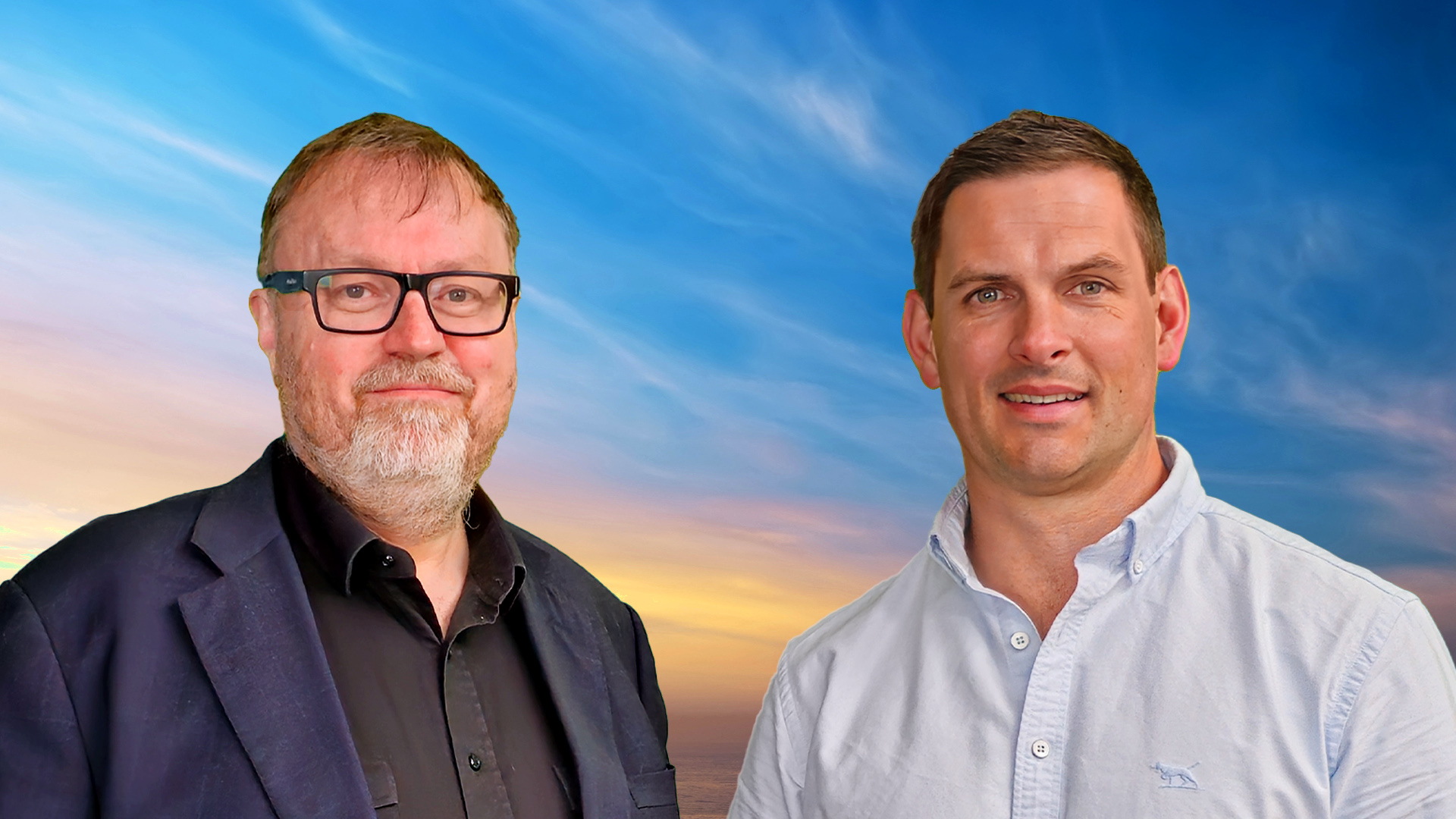
Paul Spain is joined by Jonathan Brabant, New Zealand Director at Workday, to explore the rapid rise of AI agents and what they could mean for the future of work, including agentic AI, headless enterprise software, MCP integrations, and how platforms like Claude, Copilot and Workday are increasingly working together. They also discuss where organisations are drawing the line between automation and human decision-making.
They also discuss the latest tech news including:
- NZ Expands Drone Surveillance Capabilities
- Gisborne council wins award for AI mapping project
- Last calls for New Zealand’s public phone booths
- Websites fighting back against AI agents
- Tesla’s Rocket-propelled flying car
Read the Full Transcription
Transcript is computer-generated and may contain errors.
Paul Spain:
Greetings and welcome along to the New Zealand Tech Podcast. I'm Paul Spain. Joining us again on the show today is Jonathan Brabant, New Zealand Director at Workday. Jonathan has spent more than 15 years working across enterprise technology and digital transformation, and today helps New Zealand organisations navigate the rapidly changing world of cloud, AI, and the future of work. How are you, Jonathan?
Jonathan Brabant:
Thanks, Paul. Good to be here again.
Paul Spain:
Great to have you back on the show. Looking forward to delving in, getting an update of what's been happening in your world, in the world of Workday. And of course, you've just had the big Rising event for Workday in Vegas. So a little bit on those announcements. But first up, we'll run through some of the tech news and what's happening in the world. And of course, a big thank you to our incredible show partners. So Thank you to Spark, One NZ, 2degrees, SAP, Workday, PwC, and Gorilla Technology. Really appreciate all the support that keeps us rolling right through the year.
Paul Spain:
Well, let's jump in. First up on the New Zealand front, we understand that, you know, as a country we're expanding our use of, you know, particularly drone surveillance technology across the Pacific and Southern Ocean with new maritime capabilities targeting transnational crime. And the New Zealand Defence Force is currently seeking to invest $20 million in a drone, in a polar drone capable of operating from the HMS HMNZS Aotearoa and tracking vehicles up to 100 nautical miles away. Yeah, I find this really, really interesting as we see drones, which I guess we go further back where they were always a very, very expensive sort of military item that you'd think of as the US. And then during the time of this podcast, really in those earliest days, we started seeing the consumer drones come through from, from the bottom. Now that the technologies are meeting sort of somewhere, somewhere in between and, you know, really getting very, very capable. So this idea of, you know, a polar drone, you know, capability to monitor, you know, remote ocean areas and, you know, the Ross Sea is, you know, I think a reflection of how much the technology has, has matured. The fact that these things are are able to run in a really broad range of environments.
Paul Spain:
And obviously the technology that gets selected is going to vary according to where it is. I think for those sort of distances and so on, we're not talking about a consumer drone with a little lithium battery. Right. That's some pretty serious kit. But I think it's good to see I guess, a broad range of aspects of government entities, you know, thinking about, well, actually, would this technology be appropriate? And I think there are times where technology's appropriate and other times where it's not.
Jonathan Brabant:
Yeah.
Paul Spain:
Yeah.
Jonathan Brabant:
Seems to make sense, doesn't it, with that amount of ocean to cover rather than, you know, ships chucking diesel around trying to, you know, locate. And I thought it was interesting, my take on it was fantastic that there are a lot of New Zealand contractors who'll be putting their hand up and that capability's come so far in New Zealand as well to be able to compete for that tender. And then the other side of it for me, which was interesting, was mainly around stopping the drugs, right? And spent a lot of time in Pacific Islands. So anything we can do from an aid point of view to try and cut that stem of drugs is, yeah, I mean, it seems like money well spent.
Paul Spain:
Yeah. And that's part of the challenge. You know, here in New Zealand and in the Pacific Islands, there's a fair amount of drugs that comes into the markets for varying reasons and motivations, but there's money to be made. And so a lot goes into concealing those types of shipments. And so there does need to be an investment made to help, I guess, balance up the— The balance. playing field a bit. True. And we've heard the Gisborne City Council have won some recognition for their use of AI drone imagery and mapping to tackle the woody debris left from Cyclone Gabrielle.
Paul Spain:
Their system identifies and prioritises high-risk debris and is helping recovery teams direct resources efficiently and along the way significantly reducing assessment costs. Apparently, the Turning of the Tide project, which was developed with Interpine, has supported around $50 million worth of recovery work. So that shows, it's pretty expensive getting this work done. But, you know, because of this technology use, they're saying that they've saved over $1 million. So, you know, that does— it's, you know, when you're talking about a $50 million spend, that doesn't seem like a huge amount. But, you know, I think you've got to get in there. It does look a bit— And that's $1 million that can go back into, you know, the rest of the community and so on. So these are positive things.
Jonathan Brabant:
What's the bet the tooling that was used was, I would imagine it was probably some of these AI tools, they're not huge amounts to run. It's more a case of just having an individual that knows how to, has got an idea, had a light bulb moment around the type of data they can feed into it. And then the tooling does the work and you've saved $1 million. I mean, I'd love to know more about what tools they actually use, but In my experience, it's just one or two people who've got an idea and know how to, you know, get around these things. And next thing you know, that's $1 million back in the ratepayer's pocket.
Paul Spain:
Yeah, yeah. And I think when we look at rates around New Zealand and, you know, other challenges that we have, I think there would be, you know, a fair level of keenness from most Kiwis to see, you know, Yeah, these things brought back down. So yeah, I think encouraging and good use of technology leverage. Now something that caught me by surprise was communication from Spark. I think this came through Friday, was a news update from them that they're saying goodbye to running phone booths across New Zealand. Now, I remember, I can't remember where I was, somewhere traveling on a holiday and sort of noticing a phone booth in some sort of random location, but also noticing that it was offering a Wi-Fi type of capability in a remote location and thinking, oh, That's really interesting. Spark's got this unique thing, you know, they get to have a bit of their brand presence scattered all up and down around the country. You know, I wonder how that actually works out commercially because along the way they've kept up, from what I can tell, and made varying changes from copper, which they all used to be just old-school payphones.
Jonathan Brabant:
Yeah.
Paul Spain:
I even remember as a youngster using Payphones. There was a window of time growing up our family didn't have a phone in the house, uh, and so public, you know, public phone up the street, that was, that was kind of the option.
Jonathan Brabant:
I got sent out to parties with a card that used to have a, like, a code on it.
Paul Spain:
Yeah.
Jonathan Brabant:
And then you could find a, you know, find a payphone, you could call home and tell your parents you were going to be late.
Paul Spain:
Yeah.
Jonathan Brabant:
I just remember I remember a card in my wallet that used to work in the payphones. It's just nostalgia, isn't
Paul Spain:
it? It, it is. It's It's such an interesting thing to sort of try and get your head around that this would be ending because most of us have largely moved on. I remember getting my first cell phone and, you know, reasonably young at the time, but there was also a bit of stigma attached to having a having a cell phone, I think, in those kind of earlier days. Yeah. But what I recognized was it brought a transformation. And at that stage, I was probably more interested in my personal life than my work life. And I was using it because it really helped. It was being paid for because it really helped work-wise.
Paul Spain:
But I recognized from a social perspective, it was transformational in terms of you know, organizing life and, you know, catching up with people and, you know, saying to someone like, oh, I wish all my friends had this technology. Yeah. 'Cause it's so painful communicating, you know, without it. But I think a part of that actually you could apply back to the phone booths because I was looking through and saw about some stats in Australia. And I think I did a count, I think 300,000 emergency calls in Australia that come through their phone booth network. Incredible. So I don't know what the numbers are for New Zealand, but if we sort of translated that, that could be 50,000 calls a year.
Jonathan Brabant:
I wonder if that's remote region.
Paul Spain:
It'd be interesting to get the data on it. But yeah, I think there is a flip side to sort of sort of turning off the phone booths is that actually that provides connectivity for a range of scenarios and a range of people. Whether it's someone who's in a domestic violence situation, doesn't have access to a cell phone, whatever the scenario is, someone on a— A boat. you know, remote location where maybe there isn't even, you know, great, great coverage or, you know, their batteries run out, whatever the scenario is, knowing, oh, there's these phone booths around.
Jonathan Brabant:
I can tell you, I'd have absolutely no idea where there would be one phone booth in Auckland.
Paul Spain:
Really?
Jonathan Brabant:
No, but I didn't grow up here. I guess you would. Do you mean, could you, could you walk to the nearest phone booth within 5 kilometres, do you think?
Paul Spain:
I can think of where where I think one is near my home. That's quite a close walk. But they don't sort of stick in my mind as they would've once because they were things that I was using regularly. No, they just don't. Well, probably not using that regularly, but the one that I used as a youngster at the end of our street to call someone I quite liked having a chat with as a youngster, I was like, oh yeah, I can— Yeah, I can totally remember that. So there's a little bit of it's reminiscing, but I think there is something that we potentially lose by getting rid of this. So I think it'd be interesting to see how it plays out. I would've thought that there would be able to be some agreement, but SPARK are sort of saying, hey, they've tried with Auckland Council who wanna do a revenue share.
Paul Spain:
Yeah. And apparently the investment for them to kind of keep all these things running is actually pretty significant. Sure. So I don't know the commercials, but I don't know, it seems like that's a public service that could be worth keeping. Sure. And even having that sort of Wi-Fi capability, I know our mobile networks are pretty solid these days, but there are people that run outta credit or folks from overseas that maybe haven't bought a local SIM card and so on where that connectivity could be useful. So I guess we'll see how it plays. But at the moment, Spark have basically said, that's it.
Paul Spain:
And they will end these things really over the next couple of years. We'll see. Yeah. the phone booths disappear around the country. And yeah, I just think there's a public service element to this that maybe we've missed. Maybe. And I don't know whether, you know, if they don't want to have them commercialised by Spark, who I think they want to pay for it with advertising or what have you on the phone booths, then maybe the government needs to step in and provide as some sort of an essential capability, an essential service, certainly in remote locations. I don't know how you maintain these things in a world where, I know we look at France at the moment and people are burning all sorts of things down and things don't always get treated with respect and looked after.
Jonathan Brabant:
Yeah, I wonder what the— surely there'd need to be some public direction around what people are to do in a situation where they need access to a phone. For example, there's only 212 left in the whole of New Zealand.
Paul Spain:
I think it's— oh yeah, 2— yep, okay, compared with 2,500 at their peak.
Jonathan Brabant:
Yeah, libraries, police stations, there's got to be a range of public service offerings for people, but I guess that's all. And just also relying on fellow Kiwis is going to be what it was maybe before phone booths. In some ways everything's cyclical, isn't it? And we go back to how things were.
Paul Spain:
Yeah, I actually, I thought it was more than that. I'm just trying to see where that, where that number had, had come from. I know that, um, yeah, they're saying 90% of booths are now disconnected from copper as part of the removal program. So Yeah, there's a lot. Yeah, it'd be interesting just to have a little bit more clarity around that. So yeah, they're saying they offer free calls, Wi-Fi, and phone charging. Well, that's what they were going to move to, funded through digital advertising. So yeah, but if it's down to only a couple of hundred, from that peak of 2,500.
Paul Spain:
Pretty dramatic. That's not a big number to kind of build something commercial around, but it's still going to be a significant cost to probably keep them running. But also that's, I guess, less of a capability to the country if there's only 200. How many does that mean in each place? Not too many, right?
Jonathan Brabant:
Yeah, with the math I was running, yeah.
Paul Spain:
Yeah. All right, well, we'll see, we'll see how that, that one, uh, that one plays out. But I, I tend to think you want to, you want to leave that type of infrastructure in place. But, uh, on the, on the international front, um, we're, we're reading that, um, website, uh, owners are, are really sort of pushing back against, uh, AI agents in, in some cases. And, you know, I think this is an interesting one to see as we go through a bit of a transition between, you know, most things online being done by humans. And then over time, I think we see an increase in things being, you know, much more automated where, you know, AI agents are able to do things on our behalf. And, you know, I think that's something over time we probably will gain confidence in. However, the likes of Amazon, we've got Delta Airlines listed there, Yelp, who aren't really big in this part of the world, and a whole range of other entities are restricting agent access to their websites.
Paul Spain:
And Yeah, for some that's a bit of a frustration and like, hold on, I want AI to shop for me to do this and so on. But yeah, of course, website owners get that choice as to how much they do and don't open up to AI. And I think this is quite an interesting time where we— I think we're in a little bit of a no man's land where You know, there probably are plenty of us that are using AI in ways where we would want our AI to be able to get into a website. I mean, I had a use case yesterday. I was needing to sort a couple of things out and go to some stores. I was trying to find a particular battery product and I was using— in the Tesla, you've got that kind of built-in capability with Grok. which is amazing when it works. But there were scenarios where it says, oh, you know, this store has got— they appear to have, you know, what you want, but actually they won't let me in to kind of get the information I need.
Paul Spain:
And so, you know, you can ask it and it'll open it up in the browser on your screen. But when you're driving, you want to be able to use your voice and have, you know, have the AI do that running around for you and to figure it out and to— Yeah. you know, map out where you need to go rather than you having to be there to do all this lifting, working out, you know, who's got the right product and where to go. So, you know, it seems to me we've got a little bit of an interesting time ahead on this front as we work out what are the, what are the right ways to join up the technology. I saw, I think it was Musk saying, oh, should I be launching an Amazon competitor because Grok wasn't able to get, you know, get into Amazon to do whatever, whether it's locking up prices or placing orders. I'm not sure what the specific, you know, roadblock was there, but I imagine that's just a little bit of a— Jab. A jab to try and encourage them to be a little bit more friendly. But I don't know how these things play out.
Paul Spain:
And we know about sometimes when Musk jokes about, you know, things that he might do in the future, you know, attach rockets to cars and things like that. You never quite know whether he'll actually do it, right?
Jonathan Brabant:
Yeah, I mean, he bought Twitter, didn't he? On the back of saying he was going to do it and did it. But I mean, there's a gentleman in the Workday team who's been quite advanced with building vibe coding websites and doing all sorts of things. And he set up an AI agent that does a supermarket shop for him. And he was giving a demo to the team the other day. Now you can have a basket that you hold in your shopping cart with New World or whoever, and it just does it right. But he didn't like that because prices fluctuate and things come in and out of season and things change. So he just set up his agent with criteria around cherry tomatoes need to be this and this needs to be that and this has to be in these months and we don't want strawberries in April. We want them, so the agent knows, been trained to shop like us.
Jonathan Brabant:
Yeah. But the agent has to be connected to the site to be able to scrape and do its work. So in a shopping environment to restrict access to an agent where there's like huge carts seems like we're going backwards a little bit on what the agents can do. as opposed to connecting to a bank to pull out your financial statement? Sure, okay, maybe not. But I just think, yeah, to your point, it's no man's land, isn't it? Around what should and shouldn't be allowed based on industry, based on value, based on location.
Paul Spain:
And, you know, there are things where businesses have sort of certain information, they don't just necessarily want it all to be, you know, completely open to everybody all the time. We are moving more and more in that direction. But also there's a cost, right? So if they're going to say, well, anything can access all of my information all the time, then that can have an impact on them in terms of loads and things like that. But I think in this day and age, that's probably not too great. And in fact, it will be the— AIs will be taking over an element of you know, like in my case where I was asking the AI to look these things up, it's just running around doing what I would have done. Yes, it might look in a few more places than I would have because it moves so quick.
Jonathan Brabant:
Mm.
Paul Spain:
Uh, but yeah, so there's a degree to which you, you know, replace one set of traffic with, uh, with, with another. Um, but, you know, every business is going to be looking at it through the lens of how does this, you know, help them help their customers? How does it help them generate profitable sales? So those are the things getting weighed up, right? Yeah. Yeah. And on that Musk front, we've probably— everybody listening, I'm picking, will have seen at least a few seconds of footage of what is apparently the new Roadster design from Tesla with its, you know, high-pressure thrusters that allow it to launch into the air, the suction that allows it to drive upside down and, you know, effectively becoming a flying car. What was your reaction? You know, seeing these videos kind of, you know, hit the world on Friday?
Jonathan Brabant:
I mean, I was blown away when I first saw it and I actually showed my wife and said, this is real. And then someone sent me another message or a meme or whatever. And all of a sudden I thought, well, maybe that's not real. And I had to go back and double-check with someone else. Is this actually real or not real? And then finally had it confirmed for a third time that yes, it's real. You need to go watch the source content on YouTube to really, you know, understand what they did and how they demonstrated it. And then, um, yeah, like incredible halo project to show what's possible in real world. Just my own personal views, uh, I see it as like it's kind of a crazy distraction for an organization that is, you know, trying to compete with BYD and should really— in my mind, you know, it's an— it's a cool project and why not? And it's fun and it's fun for the internet.
Jonathan Brabant:
It breaks the internet and everything, but— the realities of having huge fans that suck cars to the road and rocket boosters that fly you over things, I was like, ah, it's cool, it's good, I'm glad it exists, people have got to push the boundaries but I don't know how many people are going to be signing up for that. What did you think?
Paul Spain:
Yeah, I mean, my first thing was, is this actually real? So yeah, it was like, let's have a look at the whole presentation, what's going on online, OK, there is an audience there, OK, this thing actually looks real because it did just look so, so insane. And so yeah, I mean, I think it's a mind-blowing achievement from that perspective of just sort of pushing the limits and yeah, Musk doing this thing that I'm not sure people had really thought that it would make any sense to put any sort of propulsion type, you know, capability attitude control on a vehicle. But there you go, that's what happens when you've got a trillionaire or whatever he is these days with a rocket company and an EV company and you marry some of that technology together. The flip side is this is a car that is overdue for those that have put down their deposits. You've got probably millions of customers who have been promised one thing and maybe it hasn't been delivered. So my 2019 Tesla Model 3, on their website said it was going to have an ability to autonomously drive on city streets by the end of the year in 2019. You know, here we are 7 years later, you know, they haven't delivered. So I, you know, I think there are always kind of multiple sides to looking at anything that, you know, Musk is involved in.
Paul Spain:
You know, he comes up with some incredible things but doesn't always deliver where it—
Jonathan Brabant:
Are you able to put this up? Do you know how they have the subscription for self-drive now?
Paul Spain:
Yeah.
Jonathan Brabant:
Is that something you can subscribe to?
Paul Spain:
So this one's got it's got the FSD paid for with the purchase for life.
Jonathan Brabant:
Got you.
Paul Spain:
But of course they've changed the hardware and to get that, to get FSD other than on the motorway, yeah, that's not being delivered at this point in time to hardware from that era so it's an interesting thing. It is if you're in the US but here in New Zealand they haven't bothered to deliver it Their note to me when I wrote to them from their legal beagles was that the technology hadn't, from a legislative perspective, was not able to be released in New Zealand, which we know because they've now released that on newer cars if you're willing to pay a monthly subscription, and there are a few that bought at the right time, were able to transfer subscriptions over. That's not the issue because, you know, there's, you know, you can go and, you know, you can turn up at Tesla and, you know, take one for a drive or take one to be a passenger and have it drive you around. So the technology is there to that degree. Yeah, okay. Still not the sort of scenarios that obviously were kind of hyped, you know, over quite a long period of time just yet. There's no falling asleep in your car while it drives you to—
Jonathan Brabant:
Unless you're in Texas, maybe.
Paul Spain:
Around the country.
Jonathan Brabant:
I see they've rolled out the, what is it, the Model 2, the robotaxi?
Paul Spain:
The robotaxi.
Jonathan Brabant:
The steering wheel-less vehicle. I think they're doing it, is it? I can't remember what state it is, but.
Paul Spain:
Yeah, yeah. But I think with those, there's somebody effectively available to remotely assist that, right? So it's not, It's not completely, you know, all just the technology. And you can't buy that and have it drive, you know. Yep. That's not something you can kind of own as such. So, yeah. But, you know, very, very interesting, very interesting times. So I think, yeah, this is just the nature, I think, of, you know, the things Musk does.
Paul Spain:
You know, he's been, you know, really incredible, I think, in terms of pushing varying aspects of technology forward. SpaceX is, I think, generating something like over $20 billion a year from their data centres. So he's obviously able to apply a futurist mindset in a whole wide range of domains. What they've achieved with SpaceX is mind-blowing. So that I'm sure will continue in a range of areas. But yeah, come on, Musk, don't forget your existing customers. Yeah, take us with you.
Jonathan Brabant:
Take us to Mars.
Paul Spain:
Yeah, no thanks. Well, yeah, great to sort of, you know, chat through some of the, some of the, you know, general tech news things that are happening locally and internationally. But yeah, really keen, Jonathan, to get in and, you know, where Workday, you know, fits for organizations. Maybe just a quick reminder of— Yeah,
Jonathan Brabant:
absolutely. So Workday is a software company. We build HR, finance, procurement, and planning software. We became, I think, pretty well known for our HR capabilities, but have acquired and built a large platform of capability now. So we currently have around 150 customers in New Zealand. A lot of the largest enterprises in New Zealand run Workday. And yeah, pushing really hard to expand into different markets at the moment, like payroll. And yeah, and definitely working hard to bring all our Agentic capability into New Zealand as well.
Paul Spain:
Really what you're seeing from your seat at Workday, where you're talking to and interacting with a lot of organizations where Workday is really deeply engaged with integrating AI capabilities, that just seems to continue to evolve kind of—
Jonathan Brabant:
Mm-hmm.
Paul Spain:
You know, month in and month out, there's, there's, you know, new, new things going on behind the scenes. And then, and then at times those things come through in announcements. You know, what are the particular trends and things that are, you know, standing out for you at the moment when you kind of look across the tech world that, you know, that you're observing that you think, Maybe you've had a unique viewpoint on?
Jonathan Brabant:
Yeah, sure. Well, like we were talking about earlier, we've just had our major US conference, or global conference called Workday Rising in Las Vegas. So 20,000 people up there, 3-day event, and all the executives and product and technology owners outlining the roadmap for Workday and where we are and what's important to our clients. But then being the country manager at Workday New Zealand, trying to kind of, I guess, reconcile that with where the New Zealand clients are and how we try and get them there. And I think starting with New Zealand, the first thing which is still of interest to me is that we're still laying the foundation to get our clients to the start line of adopting AI. And it's really unglamorous, relatively boring things that need to happen, to be honest. And I'll get to the fun parts out of Rising in a second. But like, first of all, just getting people in like contract structures that they're able to adopt artificial intelligence delivered by Workday, that, that's something that requires a review of a lot of the T&Cs, terms and conditions, data processing, all those types of things.
Jonathan Brabant:
So it has been a 12-month journey just to kind of move clients to the right contracting structures to be able to adopt AI. And then once you do that, then you've got to start having conversations around— some organisations call it token usage, we call it flex credits, but the pendulum swings on the cost structures. And so being really proactive and transparent around how clients are going to adopt. And we've given our AI to all our customers this year at no charge to get them moving and made it available in sandbox environments so they can play with it and just start to see, you know, where they're able to get some easy wins in their business. So that's my viewpoint from New Zealand, is just getting them to the start line a lot of the times. And then what we're seeing coming down from global is there was a couple of messages that really resonated with me. So first of all was, um, we don't want to deliver 600 micro agents to our clients. We're not, we're not in a race to deliver small improvements and small tasks.
Jonathan Brabant:
So we're really focused at Workday on 20 agents that can actually perform work across the domain of HR, finance, procurement, planning, so they can move and do more powerful tasks. And then the other thing which I found really interesting is we've moved to a— we're giving our clients optionality now around whether they want to run headless with some of the frontier models. So We announced a huge partnership with Anthropic and Claude, and you can now come into Workday through Cowork.
Paul Spain:
Yep. So that terminology of headless is probably something not everyone will be familiar with. So what do you mean by running that AI? Headless
Jonathan Brabant:
versus
Paul Spain:
native. Headless. I'm presuming this is use your AI front end of choice. It could be Anthropic, it could be, you could be using OpenAI, could be using Copilot. So that becomes your front end. And then you've got an MCP type connection, Model Context Protocol, linked to Workday. Is that kind of how it works? And then that just becomes a part of the pool of systems that you can access.
Jonathan Brabant:
Yeah, spot on. That's exactly it.
Paul Spain:
And data systems and data, right?
Jonathan Brabant:
Yeah, so Workday has a native agentic interface which is called Sana. So Sana is a, it's an agentic native platform that Workday acquired for $1 billion around probably 18 months to 2 years ago, I would say, maybe not even quite that long ago. And essentially that gives us like that agentic interface to Workday, and it's become our de facto interface to interact with Workday data now. So you can have the experiences that you're familiar with working with ChatGPT, any of the front-end models, ChatGPT, Claude, Groq, you name it, right? You can have that same experience with Sana, with Workday. Now, some organizations have already got what I would call a roadmap or a strategy around, to your point, Could be Copilot, could be whatever it is. And in that situation, that agent or that through an MCP, they talk directly to Sana, our agentic, and it's that agent-to-agent MCP protocol that then I guess gives the data back to the to the front-end models or to the front end. So, but the the really key part about it for us at Workday, which is another huge part of Workday Rising, was talking about. Lawful agents, lawful access.
Jonathan Brabant:
So any data that is given back to that front-end model— so I'll just, I just call them front-end models, but we all know what I'm talking about now— it's controlled by Workday's business processes, security protocols, and it's got to pass all those checks and balances before it's allowed to be exported through MCP layers. And that's a really, really important distinction that our customers are I guess, trusting, relying on Workday to ensure that everything is locked down and secure.
Paul Spain:
Yeah, yeah. Well, that's really important, isn't it? I mean, yeah, when you get in front of an AI, if it's able to access or to even change data that you as a person shouldn't be able to change, then that's a problem. And I think we are kind of evolving where your agent will be given, I guess, a specific subset of capabilities. So as a person, you might have certain access, your agent might have, and I think probably in a lot of cases, that's in between having no access and what you've got, right? And I guess it's how you ensure that that certainly doesn't go beyond what you as an an individual would have, or are you seeing use cases where an agent would have more access than the user that they may be working on behalf of?
Jonathan Brabant:
Well, I think, so you've touched on quite an interesting area of this whole conversation, which is around what is work, what is the role of a person in the work? And you'll note that a lot of traditional job descriptions now are being broken down into essentially skills and tasks. So you're able to separate out what can only a person do versus what can an agent or a machine do. And all technology companies who operate in the HR space now are starting to think in this way. And Workday's been on this journey for about 4 or 5 years now with our Skills Cloud. So then when you figure out what is a job, what is your job, what do you do in your day, and you break it down, then you need to know what access do you need for each particular task or skill that you perform. And then we're able to lock that down with our agent security to say this agent can perform these things just like Paul can perform these things, different access. So that's a really, I think, but to bring it to life, I'll give you an example. So Workday have come out and said that Workday will never make a hiring decision.
Jonathan Brabant:
Okay, so if you're running a recruitment process, if you ran Workday here and you were going through a recruitment process The machine would never ever make that decision. That's a human decision, that particular skill of a manager, the hiring piece. But then the scheduling of the interviews and all the information that needs to be captured and exchanged, that's fair game.
Paul Spain:
Yeah.
Jonathan Brabant:
Right, that should all be—
Paul Spain:
There's lots of things in between that it can do that are useful and might be appropriate. Some of those might be debatable and debated.
Jonathan Brabant:
Exactly.
Paul Spain:
But certain areas that end up basically being, hey, the technology can't tick that box or, you know, shouldn't make—
Jonathan Brabant:
Whether it's ethical or whether it's a performance standard or a security concern or for whatever reason, a machine shouldn't do that. And so then we have this concept of in the loop, on the loop, out of the loop. Okay, so, you know, when you think about what agents are doing in your enterprise environment, are you in the loop? So you're controlling or watching the work, um, you know, you're a gatekeeper to the work, or you're on the loop, you're just watching it happen, okay, monitoring it, or you're out of the loop and it just runs automatically. And a lot of, like, for example, that one I just gave you around interview scheduling, that's an on-the-loop task, right? So it just happens with our recruitment software. But then the actual hiring process is in the loop, okay? You can't actually do it without a human. So every job It's being broken down like that now. We're taking our clients from static job descriptions to skills mapping, and then we're delivering agents into certain parts of their role. So that's our strategy at Workday.
Paul Spain:
How much are you seeing this transition to AI interviewers? sort of varying people around their experiences with, especially with larger organizations who have, you know, quite quickly recognized, well, we can get a massive efficiency gain if maybe the first interview is human to agent.
Jonathan Brabant:
Mm-hmm.
Paul Spain:
And there was an amusing video the other day that was doing the rounds of a human to agent one, but the human brought in their agent into the conversation and then the human left the room. And when they realised it was with an agent. What are you seeing and do you think we're coming to conclusions around how and when agents should take over doing these sort of functions of an interview? Because there will be some people that just will be completely uncomfortable with having to turn up and talk to a fake human.
Jonathan Brabant:
Some people prefer it.
Paul Spain:
Right? Yep.
Jonathan Brabant:
Believe it or not.
Paul Spain:
Yeah, well, and this is the thing, you're gonna get varying sort of responses. So how do you see that evolving?
Jonathan Brabant:
I tackle that question in a couple of different parts. So there's the Workday-on-Workday part. So Workday run Workday. And our internal policies are that no interview can be recorded, no transcripts can be loaded into any AI tooling. And it's up to the personal— the person interviewing and the judgment of the panel who complete the interviews to assess on skills and then to benchmark on those skills. And we've been on that journey as Workday. And we don't provide any tooling to our clients to be able to do that in an automated way. But, you know, with 5,000 clients around the world, I don't know.
Jonathan Brabant:
I couldn't talk to what they're doing around how they record interviews and what they potentially do outside of Workday, or whether they're using any form of bot, you know, to actually interact in an interview-like format. That's not— that's not a technology we offer. So our candidate experience, you could call it a bot, chatbot, agent, whatever you like. It's all around what I'd call precursor. So, you know, do you meet these requirements and can you do an interview at this point in time? And it just takes care of all the grunt work around it, but never anything to do with the actual skills assessments.
Paul Spain:
Yeah.
Jonathan Brabant:
So I think, and that's the most important thing with any area of AI, is it's the client's data and you are just training the data in an environment, right? So we don't provide an environment for that, but there are other softwares, obviously you can totally do that in other
Paul Spain:
Do you have a gut feel of how these things land? I mean, I think what we've generally seen over time is we tend to, you know, if there's a way to automate and use technology for something, we do tend to, you know, go reasonably well down that track. But there are times, well, I'm trying to think of any examples. There are times in my mind anyway, whether they're actually real or not, where we try some technologies and we step back, you know, we step back a little bit and go, maybe that's a little bit too much or it doesn't work to varying degrees. So, I mean, one example there would be if you called my team at Guerrilla Technology during business hours, we don't have a press 1 for this, press 2 for that, or any sort of AI agent between getting to speak to a human because we want a really human experience when it comes to— Hey, if you're calling up, whether it's help desk or whatever else you need, we want you to get in touch with a real person as soon as possible. That said, I don't think that that should be for every business. And using technology in some of these places is a huge, huge win. And also, I don't— but I also don't want to have to say, well, let's have let's have our staff answering calls 24/7 as well, right? So— Yeah. These are these points you come to and you go, oh, okay, well, in this scenario, we do it differently.
Paul Spain:
And I can think of an organisation that maybe needs to be more efficient and they're gonna look and go, well, how can we be more efficient? Let's say they hire 500 people a year. In that type of scenario, you can see from the business's perspective why they might say, well, actually, we're going to automate this chunk. And there'll be some great people they might miss out on because people are not willing to do that. But that might also be what's appropriate for them as an organisation. So it is an interesting time to navigate, isn't it?
Jonathan Brabant:
Oh, definitely. And we will automate. And we will use agents. And the way that Workday's approaching it, like I spoke about before with the agents that we're delivering in the platform, it's very much in the flow of work. And you and I spoke about this before we came into the podcast, which was about we have to make it easy for people to adopt these agents in their flow of work as delivered capabilities. So we just, for example, were speaking about the recruitment agent, which is easy for people to Visualize that you can choose to have the agent schedule every interview for all the candidates for 10 jobs in 30 seconds if you want, or you can do it yourself. But that's delivered capability in the flow of work. And it's the same when we've also got agents that do financial close.
Jonathan Brabant:
Okay, so they look through the entire general ledger and they look through the chart of accounts and they look for anomalies so that you're able to speed up the close at month end. And there's a payroll agent that essentially looks for errors in your pay runs. and then highlights these. So we're finding our agents are proactively looking for ways to speed things up. Now, I think when you think about how far you take it, where you can't go is when it starts to mess with the data quality of an organisation. So we talk about at Workday deterministic versus probabilistic outcomes. Did Shaun talk about that when he was here?
Paul Spain:
We have talked about that in the past, yeah.
Jonathan Brabant:
Yeah, exactly. So you can't run payroll 90% to a 90% accuracy 90% of the time. It has to be 100% right 100% of the time.
Paul Spain:
It's deterministic.
Jonathan Brabant:
It's deterministic. It's a determined outcome that you must get it right every time. When you close the books, they have to be 100% right 100% of the time. When you do a call centre call, to go back to your kind of statement or the area we're discussing here, and someone says, I've got a complaint about a refund. This is probabilistic now. Like, well, what's the complaint about? Is it really— is it about wait times? Is it about— and so the machine starts to make predictions and it tries to get to an outcome, and sometimes it's right, sometimes it's not quite right, and they go, I want to speak to a human. We don't operate in that domain. That's not the domain Workday operates in.
Jonathan Brabant:
We operate an enterprise-grade solution, so we have to be right all the time. So how we overlay AI, we have to be a lot more considered around driving value, but not at— we can't be any, I guess, risk to the deterministic processes that run.
Paul Spain:
Yeah, yeah, yeah. I think it's quite fascinating, some of the distinctions that you're making around where AI is, and I guess some of these are your internal distinctions you've made around where AI maybe isn't in the hiring process that you're sort of saying no to recording and transcribing and so on, those interviews. I think that's quite fascinating. I'm curious how some of these things evolve over time as well, 'cause what we decide in 2026 isn't necessarily— Yeah. exactly what we're going to be doing in 2030, right?
Jonathan Brabant:
Yeah. Well, our CEO did a bunch of interviews with Forbes and Fortune and was pretty open about the fact that the job disruption is coming and he sees it as a 5-year transition. And so yeah, I think the automation is going to be at a level that we should expect disruption. Absolutely. So Yeah, I mean, it's definitely coming. It's just a matter of how we move there. And I'm not sure whether we talked about this before, but philosophically, do you believe that organizations are going to run with no people? Or philosophically, do you believe that we should be elevating humans? And our position is very much that we should be elevating humans. So there's a line.
Jonathan Brabant:
That we don't want to cross around making your job and your day better. And to be fair, not all our competitors see it that way. There are other ERP enterprise tech software companies that do see full autonomous environments, which we think is quite bleak and quite grim. It's not a place that we particularly want to entertain.
Paul Spain:
Humans have got a fair way to run, a lot of potential ahead, put it that way. Yeah, no, no, that's fascinating to delve into. Now, one of the things we've talked about a little bit in the past is when you can access a system such as Workday through Claude, Copilot, Teams, Slack, through these different types of interfaces where that kind of replaces the, I guess, click ops where you're clicking around and having, you know, having to do things. And you could use your voice, you could type, but you ask for what you want and you get, you get the results back. What do you, what do you think that, that kind of means for, you know, for the future of, you know, software, you know, Workday, for instance? Like, How do you then sort of differentiate if people aren't actually directly using what for decades has been the norm? If you want to use a bit of software, you're either going to be using a keyboard or a mouse to interact with the user interface that's been created for that software. And now that's being obfuscated and you could just be having a conversation and saying, hey, Workday, How's the pay— where's our payroll at? What's happening? Where am I at on staff annual reviews? Give me a reminder of what's coming up, et cetera, et cetera, that you can just interact that way. How do you think that kind of changes the game?
Jonathan Brabant:
Yeah.
Paul Spain:
And how do you differentiate in that world where it's like, well, we don't actually ever ever see your kind of shiny, you know, front end and so on? There's so many ways
Jonathan Brabant:
I want to
Paul Spain:
answer this. It's, it's, I mean, it's, it's just fascinating to me, this, yeah, the, the, this future and, and how it ultimately is going to play out.
Jonathan Brabant:
I should have taken some, like, keyword notes down because there's quite a lot of, like, parts to that question. But I mean, first of all, it's, it's hugely exciting. Like, that's the first comment I'd make is getting early access, um, being, you know, Workday on Workday.
Paul Spain:
Yeah.
Jonathan Brabant:
To see what it's like to interact through these agentic tools now and to be able to, so like I mentioned, we have our agentic front door, it's called Sana. I've got Sana connected to Workday, to my Gmail, to my Slack. Salesforce is coming as a connection point. And the amount that I'm able to do in there day to day in my natural workspace and the way that I can interact with it, all my one-on-ones are recorded, email actions go out. It's so cool. It's really cool. And then we just announced the partnership with Anthropic, so cowork will be connected too. I think what's really amazing in the business environment is that, you know, the IT budgets and the smart people who sit in these IT teams, which are giving me the connections— and we use Sana again, but other companies are going to use whatever they use— I've never got to a point in my personal life where I've— I use ChatGPT in my personal life I haven't connected it to hardly anything because I just never got around to it.
Jonathan Brabant:
But I go into my corporate environment and the IT team are making all of these tools available as connections. So with the muscle of the organization behind this development, it's just really exciting. And I think agentic capability in the corporate environment will blow people away more than it does in their personal lives because of the fact so much more of it is delivered to them and they don't have to get it sorted out themselves. So It'll push people's minds in the next year far more than their personal lives ever did. But then where's the value? Where does our value sit as Workday? Well, first of all, we do offer a front door for clients who want it. But secondly, if you don't have Workday underneath your Agentic front door, let's say you run Chord Cowork and you don't have Workday and you want to take leave. So you say, take annual leave on, and it goes, Claude Cowork doesn't know where to go, doesn't know where to look, doesn't know what the rules are. It looks at a spreadsheet and it goes, fine, leave.
Jonathan Brabant:
It doesn't book it anywhere. There's nothing around it, right? It doesn't have any business context. There is no predetermined business process flows or anything that governs what can and can't be done by the agent. And so these Frontier Labs, They all— these Agentic front doors, they need systems like Workday to be able to function in an enterprise environment. So Cowork on Workday or Sana on Workday, it would, in that scenario, it would check in Workday, right, does Paul have a leave balance that allows him to take this type of leave? Okay. And then yes, it returns, yes, you can take that leave. Okay, hit leave, bang. And then, then all of a sudden in the gateway of your boss, it's— there's still an approval.
Jonathan Brabant:
So how you interact is very different to the rules and processes that need to be maintained around deterministic systems. Yeah. So in that environment, Workday still has a very important role to play. And, and the model that we're moving to around flex credits and tokens, for example, is if you don't click in Workday, that's okay. From a Workday perspective, you're still hitting our APIs and you're still hitting our system and our backend. And so that's monetized for us. So clients can— so the revenue model of Workday and the value clients get from Workday in an enterprise environment, we come back to that term, run headless if you want, run it in Workday if you want. But I do think more and more it's going to become headless.
Jonathan Brabant:
That's my personal view because the experience to go full circle is just so good.
Paul Spain:
And what do you see about, and this might not be purely a Workday perspective, because most software vendors haven't necessarily made any big announcements around any changes in the way we pay for software, but it does It does seem to me as though paying for tokens is on the rise, and certainly in some spheres anyway. So not necessarily in sort of enterprise software world, but in some areas, and maybe this is more at the consumer end, that folks are getting frustrated with having to pay subscriptions. Mm-hmm. in your personal life, say, for me, for instance, there's times I want to use the Adobe Creative Cloud. It's like, oh yeah, I want to do XYZ. I need Photoshop or Illustrator, have a play around and use that tool. But realistically, I don't use that software very often. Yeah.
Paul Spain:
And so you've got some newer kind of entrants into the market who might be saying, ah, Well, our version that does similar stuff is free. Oh, but if you wanna do the fancy stuff, then you pay for the tokens.
Jonathan Brabant:
Mm-hmm.
Paul Spain:
And there's a couple of variants of that. One which has been big in the media in recent weeks, ArtCraft, who apparently have used Claude to write their kind of clones of Adobe, Adobe products, you know, where they're saying, hey, yeah, this software, it's, it's, it's open source. And yeah, there is no cost to have the core software. But then when you want to, want to do other things, well, it just happens they sell, you know, tokens and, and have an AI capability. Canva own, own— what's the company they acquired? Affinity, and they've made available the Affinity software suite, at least for consumers, it's free. I'm not sure what their current story is on the enterprise front.
Jonathan Brabant:
Similar to the other ones.
Paul Spain:
Yeah, so that crosses over with Adobe Photoshop, Adobe Illustrator, and Adobe InDesign. It's kind of a combined product that they've combined sort of multiple things together into into one that will do what those— the non-AI functions of those. But there is a big kind of, you know, button for AI functionality. And that's the bit where you actually start paying. Sure. Now, theirs might not be tokens that might then put you onto a subscription as well. But I do just find it fascinating to see these things, you know, taking, taking place and, and And it does make me wonder, you know, where are we going to be in 5 or 10 years' time and how are we going to pay for software? Certainly for something that's not kind of core essential to your business. And I think, yeah, tools like Workday sit in a different kind of, you know, field and category.
Paul Spain:
You can't really turn that off for, you know, 3 months and come back to it, right? Yeah. Like there's a capability there that that's going to be getting used you know, all the time. But these things, it does leave me kind of curious as to how will this land? And I guess those examples I've given are real, they're happening now, right? Yeah. Their adoption is probably very low, certainly within a business context. But I think will potentially grow, you know, reasonably quickly within that consumer or our sort of smallest sort of businesses, which is, we have a lot of in New Zealand, which might be 1 or 2 people.
Jonathan Brabant:
Yeah. So all the, most of the main enterprise technology providers have been playing with their licensing and subscription and flex credit and token models over the last couple of years. When I look at Salesforce, who's one of our partners, they've been trying different things. Then you look at the consumer area. I was watching something a couple of weeks ago trying to understand the differences between Gemini, ChatGPT, Claude, and Grok. And for $20 a month, they're all pretty similar, but some have a hard limit. When you hit the amount of prompts, they stop and some revert to a lesser model. So you can keep going with your work.
Jonathan Brabant:
So There's nuance between consumer-grade AI capabilities and same in the enterprise. The way that we're approaching it at Workday is that we never degrade, we will never degrade the contractual agreements that we have with our clients. So the core platform is always available to them to run payroll, to process business transactions, to report, prepare for board, do all the things you need to do to run your business.
Paul Spain:
Yeah, I can imagine the nightmare. You miss payroll because you used up your tokens, right? Exactly. Sorry, everyone gets paid next month instead or some expired date.
Jonathan Brabant:
Yeah, no one's getting paid because all the developers use their tokens for web coding. So no, you can't do that, right? So what we do is we have a rate card of Agentic capability that, and then we have what we call a platform consumption console. And there are administrators of the platform consumption who can see what agents are getting used. And how much usage there's been, and they can monitor it, and they can choose whether they want to close a capability or they want to buy more. Now, I'll give you an example to bring it to life. One of our, I think, best agents that we've brought to market is called Self-Service Agent. And if you're an employee and you are going on maternity leave, you just don't quite know what the policy is or where to get the information. You go to the HR team and get someone to help you through it.
Jonathan Brabant:
We have an agent that works like a call centre, but it's not a call centre. It's an HR. it's a trained HR agent that knows all our policies, all our protocols. It knows the individual employee location, legislation, leave balances, and can give tailored personalized answers. And that might consume some credits around self-service agent because the person didn't go to an employee, they used the agent, got all the things they need. But if you got to the end of the quarter or the month or however you're set up in our billing cycle and self-service agent's been absolutely smashed with queries and done an amazing job. Well, you've got a choice to make, right? Like, are you going to turn that off and direct it back to the HR team, or do you want to run a balance? And this is what our clients are facing at the moment. It's understand the work, understand the queries, understand what should go to humans, what should go to agents.
Jonathan Brabant:
And we're just starting to work with our clients to flex it at the moment.
Paul Spain:
Yeah, I'm just curious how that evolves. That's great. Thank you, Jonathan. Lots packed in there. There's probably a lot more we could chat about. Anything else that you wanted to add?
Jonathan Brabant:
No, we've covered a lot of ground. Last time I was here about a year ago, we announced payroll. So we're still building that. Early adopters are going live in April. The legislative environment's changing around holiday pay in New Zealand. I don't know if you keep up with any of those changes that are coming in 2028. So that's a huge amount of work for us. New Zealand getting, getting ready and getting prepared.
Jonathan Brabant:
So yeah, other than that, we just, um, it's an exciting time in New Zealand with everything picking up and companies seem to be out there doing things and busy. So, uh, yeah, that's all really.
Paul Spain:
That's great, that's great. Well, thanks, Jonathan. Uh, it's been great to catch up, great to have you back on the show. Uh, and of course, a big thank you to Workday, to PwC, Gorilla Technology, Spark, 2degrees, SAP, and One NZ for their support of the New Zealand Tech Podcast. Thanks everyone for listening in. If you've been listening to the audio, do make sure you're following us also across on LinkedIn and YouTube. And of course, if you're catching the video, make sure you're following us on your favourite audio platform, whether that's Spotify, Apple Podcasts, YouTube Music, etc. Um, yeah, great to have you listening in, and, uh, thanks again, Jonathan.
Paul Spain:
Great to have you here.
Jonathan Brabant:
Thanks, Paul.
Paul Spain:
Cheers.
Jonathan Brabant:
Cheers.