AI, Engineering and the Future of Startups with Max Olson
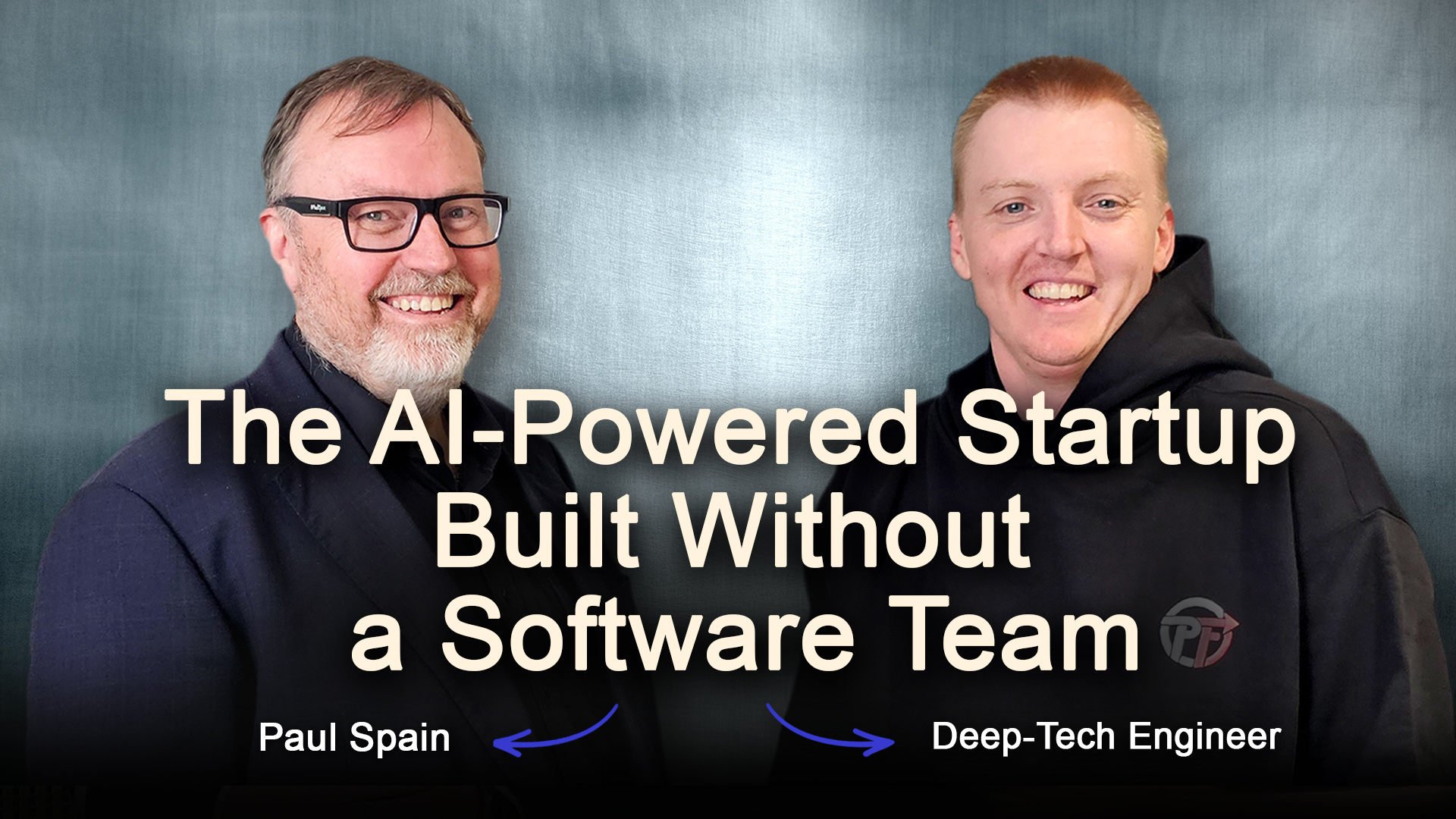
Host Paul Spain talks with Max Olson, founder of Pretty Fast, about building ambitious deep-tech companies and AI-powered manufacturing. Max shares the thinking behind Halter, Vessev, and his latest venture, Pretty Fast, an instant-quote laser-cutting business built with a lean technology stack. Hear how hydrofoils can cut boat energy use by up to 80%, why ferries are a practical starting point for electric vessels, and how AI let Max build software, manufacturing workflows, and a business without hiring a software team. Paul explores the bets and pivots behind it.
Read the Full Transcription
Transcript is computer-generated and may contain errors.
Paul Spain:
Greetings and welcome along to the New Zealand Tech Podcast. I'm your host, Paul Spain. Our guest today is Max Olson, founder of Pretty Fast and a serial deep tech entrepreneur who previously founded 2 standout New Zealand technology companies, Halter and Vessev. Max has built a career around tackling ambitious engineering challenges and turning bold ideas into real-world technology. Well, before we jump in, of course, a big thank you to our incredible show partners. So thank you to Spark, One New Zealand, 2Degrees, SAP, Workday, PwC, and Guerrilla Technology. Well, let's jump in. How are you, Max? Great to have you here.
Max Olson:
Very well, thank you, and thanks for having me.
Paul Spain:
Yeah, a real honour. Um, yeah, so look, you've spent your career, Max, you know, very much in the tech world, but how did all that get started for you?
Max Olson:
Yeah, it was quite unintentional really, but, um, it probably started at university. I went into engineering school I met Craig, who subsequently, him and I started Halter together in our 4th year of university. And then that was kind of my first taste of the world of startups and tech and entrepreneurship. And then sort of just continued from there.
Paul Spain:
Just sort of a quick summary of what Halter was all about sort of solving in terms of a problem.
Max Olson:
Yeah, so Halter is an agtech product founded 10, 11 years ago, a 10-year overnight success story like they all are. And essentially comes down to how can you make farming easier by shifting cows and fencing cows without the traditional electric fence. And now it is How do you grow more grass using your cows more effectively? And it's become almost like a complete AI farming— well, not AI farming tools, sorry. It's become a complete farming platform. And someone at Holter will do a much better job of explaining that than I will. But they, yeah, I mean, it's been
Paul Spain:
a while. And most well known for the collars that the that the cattle wear and hence the halter name, I suppose.
Max Olson:
Yes, that is. Yeah, that's right. And the halter is the thing that goes around the cow's head to lead it round. Not really used so much in day-to-day farming. But yes, it's a collar around the neck and solar powered. It talks back to, back to a tower. Tower's also very important. You'll see those first before the collars.
Max Olson:
And you— and then either to Starlink or back, back via cellular or broadband, depending on where you are.
Paul Spain:
Fantastic.
Max Olson:
To the farmer's phone.
Paul Spain:
Halter has gone on to, you know, incredible success. But, you know, tell us why you decided to, you know, leave Halter. Was that something where you stood back, you looked at it super objectively and you were like, you know, Craig's the right person to sort of, you know, take this forward, I'm not needed, or was there a bit more to it?
Max Olson:
Yeah, I think I probably looked, stepped back and looked at it objectively with all the, with all the vision of a 23, 24-year-old or whatever I was. So probably not perfect. But yeah, I think, I think it was, I always tell people it was a mix of, yeah, it wasn't, it wasn't quite my world, the farming world. Craig and I were probably a bit too similar in our skill sets, and I felt like there might be someone better to lead the company. And I kind of had other dreams that I wanted to chase at that point, at the time. Who knows if that was a good decision, but I think overall it's all worked out all round.
Paul Spain:
You know, do you, do you look back on some of the sort of past decisions and relitigate them in your mind at all, or is that something you move on, you're on to the next thing and you're too busy to think about them?
Max Olson:
I mean, impossible to not go back and think just a little. Yeah, I think anybody would probably reflect from time to time on leaving a company like Halter very early in the piece. But no, I think I always look at it like, if I want to go back and reclaim the things that I lost by leaving, then I also have to accept that I'm going to give up everything else that's gone on that's positive in my life since then, so yeah, no regrets.
Paul Spain:
Yeah, yeah. Now maybe walk us through getting from, you know, you're working with Craig Piggott, you're building Halter, but there were some other ideas and so on that came along. In simple terms, what, what was FreightFish and, you know, what was the business that you were really originally thinking that you'd build?
Max Olson:
Yeah, originally we were going to move 40-foot containers of freight on hydrofoiling boats across oceans. That was to split the difference between air travel, like air freight and sea freight. And then that subsequently became Sea Change, which was Ro-Packs or your car ferries essentially. And similar payload. capacity to the freight, but higher margin, higher revenue cargo and simpler, shorter routes. And then all the way into passenger and passenger ferries and workboats with, with Vessev. So the tech stayed very constant, but the, the market sort of changed and evolved as we went.
Paul Spain:
Right. Which part of the technology stayed constant? I'm picking the hydrofoil element. What about the way that the vessels were to be powered?
Max Olson:
The vessels were originally going to be diesel powered. Like it wasn't really a goal. And electrification seems crazy to think, but it was actually quite new at the time and wasn't really a, wasn't really a hot space necessarily. Plus the ranges that we were going to do with freight, which was just untenable. We started looking at electrification On our very first prototype. Originally it had 2 2-stroke engines in it, which ran down to the props. And at a certain point, those were giving us so much grief that it became easier to convert that prototype to an electric boat. And then that was sort of our little start of electrification.
Max Olson:
And then from there, everything became electric and we realized how good that could be and what an awesome experience that would be.
Paul Spain:
Yeah. Now, varying discussions I've, I've had with people about electrifying boats, and they usually come back to, Paul, that's, that's, that doesn't, that doesn't work. But the picture changes once you're hydrofoiling. How much does that equation, you know, efficiency equation change when a boat is able to hydrofoil? rather than, you know, sitting in the water in a traditional sense?
Max Olson:
Yeah, it varies across use case and boat size and everything else. But at sort of the top end, you're looking at an 80% reduction in energy consumption going from a boat that is, you know, planing or displacement to a hydrofoiling boat. And that's at the sort of smaller end of the boats. And as you get bigger, Yeah, that probably moves more towards like a, you know, 60, 50% improvement in energy efficiency. But that's huge because it's not just the, you know, it doesn't just reduce the battery capacity you need on the boat, but it also reduces your infrastructure costs and charging requirements and everything else that comes with it.
Paul Spain:
Yeah, fantastic. Yeah, I remember going out with Hamilton Jet in Christchurch on a hybrid electric boat that they had, and they, they seem to use the, you know, electric bit to sort of, you know, get around the harbour a little bit. And then, you know, once they get out, they were, you know, back to, back to conventional fuel. And, you know, this was for, you know, for exactly that sort of reason that they just wouldn't have had the battery capacity for, for the full journey.
Max Olson:
Yeah, no, it's a, it's a tricky problem on the water. That water is Water creates a lot of drag.
Paul Spain:
Yes. Hydrofoiling, batteries, what constraints does this ultimately sort of put on the use cases of the boats that, you know, that you've landed on for Vessel? Does that mean that sort of ferry-type scenarios where they're able to stop and charge, you know, somewhat regularly as a really ideal use case?
Max Olson:
Temper myself slightly. Yeah. At the moment, ferry services work well because you've got consistency in where you start and where you stop. And so you always know that you're going to be by a charger at some point. As the networks of electric boats grow and as we get more charging and we increase uptake of electrification on the water, that will get easier and it will become less, you know, less scary of where am I going to find a charger? But yeah, ferries are a great place to start.
Paul Spain:
So there's really a journey over, you know, over a period of years from starting out as FreightFish to ultimately landing as Vessev today. Maybe you can tell us a little bit about those, you know, transition and, you know, just the sort of the key points. What would be a short way of covering those off because it's not unique in that startups regularly go through pivots. But yeah, these were quite big changes.
Max Olson:
Yeah, in a lot of ways they were quite big changes. And in a lot of ways what was happening internally, it was just the same stuff. And I think we went from, you could almost break it up in terms of what is the team currently building or engineering or designing? And so for a start, it was, you know, we built one prototype, you know, called Bearfish, and that was a sort of 3-meter prototype to really just a demonstration of technical capability. It wasn't necessarily proving anything new in the, in the hydrofoiling space. It was just sort of us saying, hey, here's a team, we can build something that flies. And then we sort of stepped up to a bigger prototype at the— still under FreightFish. And then when we pivoted, like, actually the platform and the technology stayed the same. Our sort of business development team was pretty small, so the pivot is easy when there's only sort of 2 or 3 of you working on that side of the business.
Max Olson:
And then we were sort of building with a I think about a 10-person team. And then we got that flying, we got that flying and then started building the first VS9 essentially. Like, well, take out some messy bits in the middle of some crazy times. But yeah, like I would say, yeah, sort of like we had the phases of being a 4-person team, being a 10-person team, being a 25-person team, being a 10-person team again. And now it's sort of hit its stride. And it's, I think it's like 50 or 60 people. Yeah, it's a behemoth now.
Paul Spain:
Yeah.
Max Olson:
Well, relatively speaking.
Paul Spain:
What was the size and scale that you were initially targeting for vessels with FreightFish, did you have a clear view on what that would look like?
Max Olson:
Yes. Initially it was 3 40-foot containers, I think, which is— it's been a long time since I've kept these numbers in my head. A 40-foot container can hold 26 tonnes of cargo. So 75 tonnes payload, which is a little bit easier when you're not carrying the weight of batteries around. Yeah, so they were big vessels and I think it was 20, we were trying for just sub-25 metres overall because of regulations, it's easier to be under 25.
Paul Spain:
OK. So you stepped out of day-to-day involvement with Vessev I think earlier on this year, how did you know that that was kind of the right move for you?
Max Olson:
I don't think you even know if that's the right move and you're sort of leaving your, leaving your baby, which you've raised for 8, 8 years or whatever it, whatever it was. Yeah, I think, I think as the company grew, it's like, yeah, I very much love just being deeply involved with all the engineering and we're sort of moving from this super heavy R&D phase into sort of productionizing these boats and And life was changing and I had twin girls right before I sort of decided it was time. And it was like, this is pretty stressful and something's probably got to give. And so yeah, that was kind of— I don't think you really know, you just take a good guess. Like, I probably didn't fully know when I left Halter and I didn't know when I left This bit is the company better or worse? Yeah. How do I know? I didn't know. The end.
Paul Spain:
So yeah, tell us about, you know, PrettyFast, you know, what is it, you know, and who's the customer and what are you solving for them?
Max Olson:
Yes. PrettyFast is an instant quote laser cutting shop is the simplest way you could put it. And Yeah, I've seen sort of these places called like digital fabrication or a bunch of different names you can put on it. But essentially a customer can come to our website, they bring their files in whatever format they use, they can drag and drop them into our website. It gives them an instant price, it gives them certainty on when they'll be manufactured, it tells them if there's any issues with manufacturing, and then they check out. Pay by card and we ship their parts out to them or they come and collect them. But yeah, just essentially trying to drop all the very high-touch emails back and forth and lose all the sort of, create a lot more transparency in what they're paying for and what they're getting. versus the sort of black box approach that traditional manufacturing maybe is more used to.
Paul Spain:
Right. So they're bringing sort of 3D design files and then what they're getting back is metal that's been laser cut to their requirements.
Max Olson:
Yeah, I suppose, I suppose they're 2D design files. Yeah, for laser cutting. So right now it is just laser cutting and so they bring a, they bring a 2D design file But we expand that into sort of metal folding and we expand it into welding and sort of deeper into fabrication. And with this idea that the whole way as we bring these new services online, it always comes with instant quote and manufacturability feedback so that the customer knows what they can and can't build without having to, you know, ask us. Because that's very— Putting the limitation on the human there is, is not good for anyone. Yeah.
Paul Spain:
The problem that you're solving is that it's been a lot harder than that in the past.
Max Olson:
Yeah.
Paul Spain:
If you want to get something fabricated, that's a, that's a challenging, slow process. It's not like a, it's not like an Uber order. But what you're talking about here is a much more digital end-to-end type process for, for the customer at least. But even behind the scenes, you're automating a lot of it, right?
Max Olson:
Yeah, it is. Yeah, it is like, it is automation, right? Like right the way through. Like the process before is like, okay, well, like on the face of it, not that bad. You send an email, they put it into their quoting software. They send you a price back, you say, yes, please. Depending on whether you're a trade customer or not, like if you're a trade customer, it's probably just going to go in your account, they'll just start cutting it, you say yes. If not, they send you a quote and they say, okay, sweet, please pay 50% by bank transfer. You pay 50% via bank transfer.
Max Olson:
They come back to you and say, yep, we have received it, we'll start production, please pay the rest. And like the number of contact points in that is like— And you might be just cutting 10 circles. But also, because it's quite manual, the amount of time that they, like, they spend roughly the same amount of time, whether it's 5 circles or it's, yeah, $50,000 of sheet metal parts. And so if you need the 5 circles and someone else at the same time needs the $50,000 of parts, Um, you ain't going to get a reply to your email. Like, that other— like, they're dealing with that other person, like, they're going to get that moving because no one, no one cares. Um, and, and it's like, fair enough. It's like, that's very— like, that's just how it— like, that's just how it is. Um, but now, like, I mean, like, credit to SceneCutSend in the US who have been doing this long before AI.
Max Olson:
Um, albeit a very deep market in the US. So like your ROI on building that software in the US to automate everything from, you know, first interaction with a customer, giving you the parts, and then loading it through this manufacturing system. And keeping in mind, it's like a lot of production is what you like, full like production engineering, you're making the same thing all the time. This is like the other end of the spectrum. It's like a high mix engineering. or high-mix manufacturing. Every single part you're handling is different and unique and different customer and different material. There's lots and lots of things going on.
Max Olson:
So I was like, well, like, it seems like a pretty good time right now. We've sort of got access to AI tools that could maybe even speed it up a little. Maybe we could design some, build some software. I think at the start I was like, I should probably, I'm going to have to hire 2, 3 software developers. That was like earlier this year. That was the state of AI. It's like, but I could probably do the rest.
Paul Spain:
Right. So your view from the get-go was you need a software team, you're going to need a whole bunch of different people across different disciplines.
Max Olson:
Yes, I thought, well, actually I thought just about everything I could sort. And I've run CNC routers, which is similar enough to a laser. And like, I understand a bit about manufacturing, like very first principles of like, I just love to build things up from there, like from their fundamentals. And, and sometimes it does mean I come back around and go like, oh, I probably should have read how other people do it before I, before I started doing this. But sometimes it's also— that's a learning process in itself. And then so Yeah, but I was like, okay, I'll need to hire someone. I'll just, I'll mock it up in AI and see how that goes. And then I started doing that and I was like, I wonder if I could get it to import DXF files.
Max Olson:
It's like, that seems like a pretty gnarly little problem. I don't know how to do file uploads. I've never built software before. I've never built a software product before.
Paul Spain:
So DXF being AutoCAD format?
Max Olson:
Yes, AutoCAD. file format that describes lines, similar to like a vector format for computers like SVG. Like they're all flavors of vector files, just— Yeah. DXF is for engineering things, carries units and other stuff and layers and yeah. Anyway, so we do that. I was like, okay. And yeah, I got to like, I got to the like, you know, the localhost, you know, bit of vibe coding. I was like, yeah, yeah, check this out.
Max Olson:
It's hosted right here on the localhost, whatever that is. And then, okay, I need to go, like, I don't know really how to host. Craig Pickett was back from the US and he was just hanging out and he was sort of showing me a bit of like, you know, how, how Holti users they are. And I was like, that's pretty cool. He's like, yeah, I've started pushing some, started pushing some features. Wow. I was like, okay, okay. And then I'm like, well, how do I, like, how do I do this? He's like, ah, you gotta set up Git, just ask it.
Max Olson:
And I was like, okay, how do I set up Git? Okay, and I like got that. He's like, I think you just need to remember, yeah, whatever it is, like some Git commands, if you know roughly what they do, that helps. And then what about like hosting? He's like, I think people use like, obviously Holter's well beyond this, like Vercel. I heard someone talking about Supabase the other day. I'm like, okay. There's like enough keywords where it's like, It was like, okay, cool, I'll go look those things up. And then I sort of quickly found like, actually the way that I was interrogating AI, it's a lot like going back and forth with an engineering team of like, you're just like, are you sure that's the right way? And then it became, and then I went and saw a friend of mine and, do you think I'll need a software engineer to build this? And he thought I was a bit crazy that I was thinking like, quite a bit of money and just like, he's like, do you have a cash flow? Like you sort of mapped it out? I was like, nah, it's kind of just up here. We'll work it out in a bit.
Max Olson:
And I was like, do you think I'll need a software engineer? He's like, yeah, I reckon you will, but like see how you go. I think we were like maybe Opus for 4.6, was that this year? Office 4.6 came out.
Paul Spain:
Yeah.
Max Olson:
And I was like, yeah, I just started and learned a lot, read a lot, worked out how auth's supposed to work and security and like, you know, like got to the point where you're a little bit, like I feel comfortable saying it's beyond vibe coding, where it's like you understand, like I would never call myself a software developer. Um, but man, I know so much more than I used to. Um, it is like being incredibly fun. Like, you just learn so quickly. And so that's been like weirdly rewarding. We went into day one opening. So what was it? Yes, April we ordered the machine. Like, we— I ordered the machine, also ordered some stuff from China, racking.
Max Olson:
And yeah.
Paul Spain:
So the machine you're talking about, what, what
Max Olson:
machine?
Paul Spain:
A key part of the puzzle, right? There's your software and there's your machine.
Max Olson:
Yeah. So yeah, so we started So we started on— incorporated April 1st. Good April Fool's joke. Start a manufacturing company. Yeah. Incorporated the company shortly after that, placed the deposit on a 6-kilowatt fibre laser. And then, yeah, and started just building the software, all the, all the user, like, portal and, like, you know, the instant quoting. How do we price? Didn't do a whole lot of the internal manufacturing tooling.
Max Olson:
It seemed like it was just, there were just so many decisions to make, like without having the factory, without having the laser cutter, like how do you even, like where do you begin? I didn't want to be running like 100 different SaaS tools because it's kind of always where you end up is like brain thin. It's like you've got to be everywhere.
Paul Spain:
It becomes really complex to put it all together, right? So if you could simplify that technology stack, that was what was on your mind.
Max Olson:
Yeah, and like, and give me a— and yeah, and also like focus my mind just generally of like, I've got one place I need to go each morning, and that is like into our internal tool. And then that has all our content management for our website, it's got all that administration and auth and everything that goes on there, it's got the orders flowing in for the day, it's got dashboarding, it's got everything, error reports, like everything sort of flows into this one place. That's also sending it down to the machines. And we've gone as far as we write. So a laser cutter talks G-code, which is CAM software. CAM software, computer-aided manufacturing, is what writes G-code.
Paul Spain:
Sure, sure.
Max Olson:
And this, you buy, you have a CAM software and then you post-process it, which turns it into like, from generic G-code into specific G-code, which runs on a specific machine. Not every CAM software can talk, can post-process for every machine. You can probably write post-processes for every machine, probably quite easily now actually. It used to be hard, probably not anymore. Anyway, at a certain point I realized that this CAM software that I had, I was like, this is, it doesn't do the things I want. Like I'm not gonna be able to automate the way I want. And so you just, you know, clawed. Claude, make me, make me a G-code, like make me CAM software.
Max Olson:
Obviously it's like not that easy, but yeah, it's just like, I dunno, it's just like any other problem in mechanical engineering, it's just like incredible persistence. Eventually you will like result in this thing. And so now we have, we are 3 months in, see? And then you just see a little trickle. I think the first big milestone was, someone who didn't already know me placing an order. And I think that happened. I think they paid $22. Uh, it was like, yes, $22 from someone I've never met. Um, that's new.
Max Olson:
Uh, and it's very different to like the Vesseve sales cycle where it's super personal, you're seeing them all the time. This is just like someone's just like, boom, here's money. Like, it's— to a lot of people that's very normal. To me it's just like completely new. Um, and then it very quickly went from that to Well, this is stressful. Like, you know, I'd built all this software and it was seeming quite good. And then, you know, like one day someone went, like, you know, one of my friends tried to log in, like, oh, I couldn't, it's a bit weird, I couldn't log in with my login, but then I used my Google, you know, Google identity and it was fine. I was like, okay, I'll look into that.
Max Olson:
Yeah, get investigating. Yeah, no one's been able to log in for 5 days.
Paul Spain:
Ouch.
Max Olson:
I was like, oh my God. And then it became like, okay, now we've gotta log errors a lot better. And then so like that became the next thing of like, and like DXF files, I just, yeah, I didn't know there could be so many formats of anything, let alone like, This, yeah, just every single software puts out a file in a different format. And not only that, it's like, it's not perfectly straightforward data to parse. It's like, what do you do with, you're kind of like trying to get customer intent and we don't run AI within that loop. We, you know, it's purely like, um, um, you know, it's like, um, deterministic.
Paul Spain:
You want it, yeah, you want it to be deterministic and clear. It's not something that can be open to interpretation, right? It's got to be this exact.
Max Olson:
But then, yeah, it's just like, yep, like a lot of edge cases. And so you're like fighting those and, yeah, logging it better, getting better data. Um, and then at the same time, like, you've got the customers like coming in and you've also got like keep the machine going. So we've now got our own, you know, we've built our own nesting software so the parts get nested onto sheets. Um, nobody touches it between the customer. I say nobody touches it. We— it goes through a review where you get to look at the part and get the chance to send it to secondary review. I've never sent anything to secondary review.
Max Olson:
Um,
Paul Spain:
check, check you're not making handguns for people and whatever else.
Max Olson:
Just like a, just a sense check. Yeah, we do have that. We do have that I'm not making a handgun check checkbox, um, which is, um, which is good to have. Yeah, that's Kind of required. It's quite lengthy. It's quite long. I actually don't like our terms of service. They're really long.
Max Olson:
Annoys me. And then, yeah, and then like it just got hectic. Like it just went, I think for the first 6 weeks felt painfully slow. And then I don't think I slept for the next 2, 'cause it just like just exploded. And I just got no idea how people are finding us. It's been incredibly fun and rewarding. So that's good. And seem to have some happy customers.
Max Olson:
Lots of them coming back and every day we bust out some parts and we ship them out and just like helping, very fun helping people like advance like their projects.
Paul Spain:
Look, I'm always fascinated by folks that are, you know, really leaning in on AI and varying discussions recently, I'm starting to kind of hear a different shape of startups coming through where you talked about thinking, oh, maybe I'll need sort of 3 software engineers to be able to build this thing out. But we're kind of in this world now where, and obviously every startup's different, right? But where I'm sort of hearing from more startups where folks are saying, oh, we didn't need to raise venture capital. We were able to move a whole lot faster because of AI. We didn't need to hire sort of a big team of software engineers, certainly not in the early stages. And we're not sure what that future will look like. We're going through a really interesting time in the world. Of course. But I think everyone probably has their own particular viewpoint on how this plays out.
Paul Spain:
I mean, in your case, you've been able to do something that, you know, who knows whether it actually would have worked without AI being part of the picture. Do you think about that? Do you stop and think like, oh, could I have done this if I didn't have access to current AI models?
Max Olson:
So I can write a bit of code. I shouldn't, nobody should let me write code, but I do. I've written some code. But usually it's like scientific code, like Python, like trying to do simulations. And like even as late as last year, I did some boomer coding on doing a magnetic simulation of some couplings or gears, I can't quite remember, and like pulling libraries and like, but like— 'Cause often I think, I just like, this is so easy, anyone could do it. Like, give me someone off the street. Which to something like a little bit is true. Like, often people are like, can you show me how like you use AI? And usually my approach is like, I'll just think of the like dumbest prompt I can possibly think of, of like, just like, just not like a dumb, like not like do something dumb, but just like usually showing people that it's like, It's just talking, like it's just talking.
Max Olson:
You're just telling it what to do. And then you get better over time. Like sometimes my prompts are 1,000 words long and it's probably a bit too long, but if that's how I feel like describing it, that's how I'll describe it.
Paul Spain:
You've got a full description, you're gonna get a better first up result.
Max Olson:
And I can always copy and paste it out. I do a lot of thinking about how I want a system to work and then describing it and then realizing that my descriptions are bad and then like, trying to like hone in on this like behavior I want. 'Cause a lot of like production flow is like, yeah, how do you make sure that it always moves to the right spot? How do you describe edge cases? How do you describe geometry? And like, yeah, so it's kind of like been quite good. I think like I've got this very unique situation where I have this like thing that I'm ultra passionate about. I have not enough money nor time to hire a software engineer And I don't really know what I want to build. That's the other thing, that's probably the biggest thing of, if I change my mind as much as I change my mind with AI, with a software engineer, I think they'd kill me. It would be so brutal to work for— if the AI was a real human, it would be brutal to work for me because it's like, you throw it all out. We're doing it again, and this time we're doing it different.
Max Olson:
It's like, you just can't— yeah, you can't do that to a software developer. It's like, it's awful.
Paul Spain:
Do you have a view on sort of startups and new companies that they're going to really proliferate in an AI world, that we'll have a lot more? Do you, you know, do you— because the, the shape of the world's going to change, right?
Max Olson:
I think one thing is it's easier to try, like, essentially pretty fast is like, yeah, we're building a whole bunch of tech, but like we're taking a business model that's now quite obvious and is proven and we are like deploying it into this market, which is very different from Halter and Vessev where it's like we are taking something that no one believes is possible. Like no one's out there telling me that I don't think you can build an instant quote laser cutting company, because like obviously it's possible. Um, it does allow you to test that in a new market, allows you to test it quicker. Probably previously, like, you might even have been— yeah, you might have even been like, wait, like for some of— maybe not this particular product, but you might almost wait for like someone to like franchise down here or someone global to bring it down here, and then like, oh, now you've got it. But now you can like you get the economics of these types of products. Um, your, your startup costs are so much lower because it's— and therefore you can just like, you can just try it out and you can make it work with much lower like revenues, much lower sales numbers, much lower whatever, much lower profit because you like your, like your ROI is so much better. So yeah, I think that's really interesting. I think on the flip side, it's like you see who is making, like, who around, um, is like making real things with their AI and who is making— is this derogatory to say who is making an AI consulting website with their AI? Is that— that's— no, you don't.
Max Olson:
Yeah, anyway, but that's like, yeah, like, yeah, like, that's like, there's like a—
Paul Spain:
That's happening, right? And there's probably a lot of it where Yeah, there aren't necessarily the tangible results.
Max Olson:
And it's like all the same skills that I was using at Vessev have like, and Holter, have flowed across. You've got to be a bit of a, you've got to be a bit bloody persistent. There's a lot of, it's still hard, there's still lots of decisions to make, you still wake up every morning and there's You know, you've got time to make 3 features today and there's 50 in the backlog and you're still making hard decisions. Do I do this? What machine do I buy? Do I, like, it's just like, it is relentless. And so it hasn't stopped that, I don't think. And we're not at the point yet. Maybe we'll get, I don't know, we'll get to that point where you can say, go AI, but then it's just like— If everyone's got that, then no one's got that. Like, feels like, oh yeah, I don't know, maybe I'm naive on that, but it feels like the differentiator is still like, today the differentiator is still the human behind the wheel.
Paul Spain:
Yeah. Like, and there's also those that are leveraging AI can get a real leap on those that aren't, right? And there's still a big gap and that's I guess, you know, to a degree, that's where there's an opportunity for those who are helping, like, you know, being the AI consultants, helping other people, because there is a degree where a lot of people are still working stuff out as it goes. And even being one step ahead of somebody else, if you can then help them move ahead, that can be helpful. Sometimes that probably ends in a lot of tears.
Max Olson:
Yeah, I mean, I still get Some people, like, not in like, I don't mean this in a mean way, they don't mean it in a mean way, who'd be like, yeah, but like, you know, AI can't really like make all the like software yet, can it? I'm like, yeah, yeah, it can. It's like, yeah, but like, doesn't it like make mistakes all the time? And like, you can't really, it's like, oh, like you kind of just, yeah, you're looking at it and there's still like that belief of like, well, nobody's actually making businesses. Yeah. built on top of AI. That sort of gets run around Twitter and it's like, yeah, yeah, I've yet to see one. So it does, I'm not proud of it. I think it's interesting. I'm not proud of the use of AI.
Max Olson:
I just think it's interesting and it brings me joy. But it is very real. It's not fake. Anyone can come by and have a nosy if they ever were like, I don't believe you.
Paul Spain:
Well, anyone can go to your website.
Max Olson:
Even go to the website. Yeah, but yeah, exactly. It's like, it's a real thing. It's a real thing. And it's been, yeah. But we are like, timing-wise, completely accidentally, like, we're probably on the front end of that wave. Like, just so happened that this happened at the same time that the AI models got really good. I think if we were still on Opus 4.6 right now, it probably, I would've gotten stuck somewhere.
Max Olson:
Yeah. And would've been saved by better models coming along. Like, yeah. Like at one stage it was like, I stopped for however long Fable was down for. I stopped. It was just like, I'm not going back. Which is like, I had other things to do, which was quite nice. But yeah, it was just like, yeah, it's like, it was quite lucky that at all, like that progression happened.
Max Olson:
'Cause like the progression since has been a lot slower. Yeah, we've like kind of just hit that wave.
Paul Spain:
Fascinating to, you know, hear about your journey, to hear about Pretty Fast. And I think, you know, I'm kind of interested to see where you'll get, you know, a business that's, what are we, you know, 6, 7, you know, months old, uh, you know, when you go and visit the website and, you know, having looked at the backend as well, like, you know, this facility where people can go in and load in their, their designs and out the other end, you know, you're able to give them whatever they've, they've designed and that you've been able to leverage AI to, you know, to, to achieve that, you know, end to end with a company that's very light in terms of your software stack. I think, you know, where we chatted earlier, you've got, you know, Google for your email, you've probably got some Xero in there. Yeah. Slack, you know, a couple of other tools, and then everything else you've built using Fable largely, right?
Max Olson:
I think the most niche we get is of like the most specific tool we run that's not our own, it's PostHog. But yeah, everything else, yeah, I think it's 5 subscriptions. Who needs the rest?
Paul Spain:
Yeah.
Max Olson:
I'm smart enough not to try to build my own Slack. I just know that that's like a step harder than it would— tiny help. Very important help desk. I have not tried to build my own help desk.
Paul Spain:
Yeah, yeah. You know, there's some lessons here for, you know, probably for everyone. I think it can be great to look at a small new business that's really leveraging technology well, and it probably helps others who are maybe in a bigger established business to think a little bit about, well, okay, if this is possible, what's possible, you know, in where I work or what's, what's going to be possible, you know, in our careers over a kind of a longer, longer period. So, you know, I hope those that are listening in aren't kind of, you know, fearful around, oh, AI is going to take all our jobs and so on. But, you know, we're exploring and thinking about what the, what the possibilities, you know, are with, with this technology because we need to look for, you know, how we maximize the good, good outcomes. And, you know, I think it's always It's exciting to see the good, the good things that comes from the technology. Well, thanks, Max. Great, great to have you on the New Zealand Tech Podcast.
Paul Spain:
Lots of insights packed into the show. So thanks very much for your time. Awesome.
Max Olson:
Thank you very much. Great, great to be here.
Paul Spain:
Of course, a huge thank you to our incredible show partners, Spark, One New Zealand, 2Degrees, SAP, Workday, PwC, and Guerrilla Technology. And yeah, thanks everyone for listening in. We'll catch you on the next episode next week. See you then.